

MS-LS2-1: Resource Effects on Ecosystems

Presentation
•
Science
•
7th Grade
•
Practice Problem
•
Medium
+3
Standards-aligned

Barbara White
Used 15+ times
FREE Resource
12 Slides • 19 Questions
1
Resource Effects on Ecosystems
Middle School

2
Use data to see how available resources affect organisms and populations.
Explain how living and nonliving factors can limit the growth of populations.
Predict how resource changes affect population size using cause and effect relationships.
Define and compare limiting factors, competition, and carrying capacity in an ecosystem.


3
Key Vocabulary

Limiting Factor
A limiting factor is an environmental element that restricts a population's size and stops its growth.
Biotic Factor
A biotic factor is any living or once-living component that affects another organism in an ecosystem.
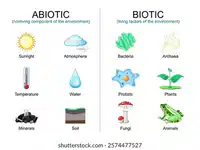
Abiotic Factor
An abiotic factor is a non-living chemical or physical part of the environment, like temperature or water.
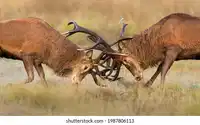
Competition
Competition is the struggle between organisms to get limited resources like food, water, and shelter.
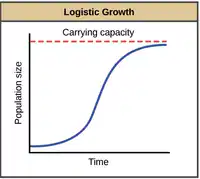
Carrying Capacity
Carrying capacity is the maximum population size of a species that an ecosystem can sustainably support.
Resource Availability
Resource availability refers to the supply and accessibility of essential materials for organisms to survive and reproduce.
4
Key Vocabulary
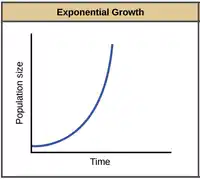
Reproduction Rate
Reproduction rate is the measure of how quickly a population can grow and produce offspring.
Predation
Predation is a biological interaction where one organism, the predator, hunts and eats another organism.
5
What Are Limiting Factors?

The maximum rate a population can grow is its reproductive potential.
Limiting factors are environmental conditions that constrain population growth.
They can be biotic (living) or abiotic (non-living).
6
Multiple Choice
What is the primary role of a limiting factor?
To increase the reproductive potential of a population
To constrain the growth of a population
To describe the living parts of an ecosystem
To eliminate all non-living things from an environment
7
Multiple Choice
What is the main difference between biotic and abiotic limiting factors?
Biotic factors are animals, while abiotic factors are plants.
Biotic factors are harmful, while abiotic factors are helpful.
Biotic factors are living, while abiotic factors are non-living.
Biotic factors affect growth, while abiotic factors affect reproduction.
8
Multiple Choice
A plant population is growing at its maximum reproductive potential in a stable environment. If a severe drought occurs, what is the most likely outcome?
The population's growth rate will decrease due to a new limiting factor.
The population will continue to grow at its maximum rate.
The population's reproductive potential will increase.
The drought will be considered a biotic factor.
9
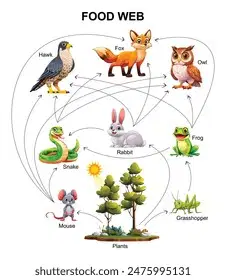
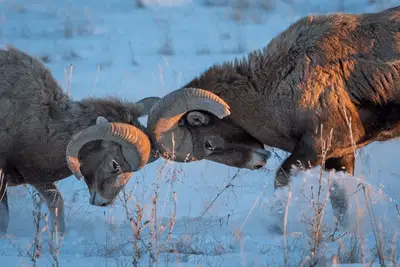
What Are Biotic Limiting Factors?
Organisms compete for resources like food, water, and space, limiting population growth.
A predator hunting prey is a limiting factor that controls the prey's population size.
The scarcity of resources like food and water directly affects population size and survival.
Diseases spread quickly in dense populations and can cause a rapid decline in numbers.
10
Multiple Choice
What is the main effect of biotic limiting factors on a population?
They help populations grow without any limits.
They limit the growth and size of a population.
They only affect the predators in an ecosystem.
They increase the amount of food available.
11
Multiple Choice
What is the relationship between the amount of available resources and the size of a population?
When there are fewer resources, a population's size will likely decrease.
The amount of resources available does not affect a population's size.
When there are fewer resources, a population will always find new ones.
The size of a population determines the amount of resources available.
12
Multiple Choice
If a rabbit population in a small, enclosed field becomes extremely large and crowded, what is the most likely outcome?
The rabbit population would continue to grow forever.
The number of predators hunting the rabbits would decrease.
A disease would likely spread quickly, causing the population to decline.
The amount of available food and water would increase.
13
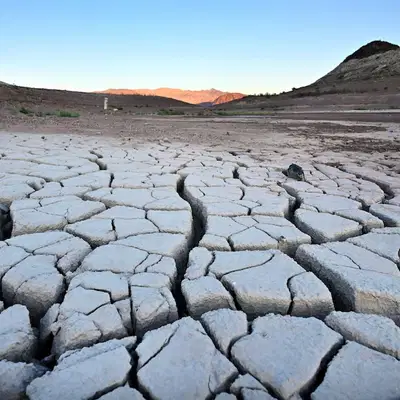
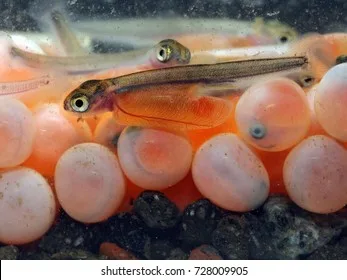
Abiotic Limiting Factors
The availability of water can limit the size and growth of populations.
A severe drought can have a devastating impact on an entire ecosystem.
Organisms need specific non-living conditions like clean gravel for salmon eggs to reproduce.
Winter and long-term climate change are major limiting factors for many populations.
14
Multiple Choice
What is the primary role of an abiotic limiting factor in an ecosystem?
To restrict the size and growth of a population based on non-living conditions.
To increase the number of organisms that can live in a habitat.
To describe the interactions between living organisms in an ecosystem.
To provide a source of energy for producers like plants.
15
Multiple Choice
Why is a specific condition like the availability of clean gravel considered a limiting factor for a salmon population?
Because the gravel provides a food source for the young salmon.
Because the salmon depend on this specific condition to reproduce successfully.
Because the gravel helps adult salmon hide from larger predators.
Because the gravel filters pollution from the water.
16
Multiple Choice
If a region that is normally wet experiences a severe, long-term drought, what is the most likely outcome for the ecosystem?
Only the plant populations will be negatively affected.
The animal populations will immediately adapt to the dry conditions.
The growth of many populations in the ecosystem will be limited due to the lack of water.
The ecosystem's overall stability will not be affected by the drought.
17
What Is Carrying Capacity?
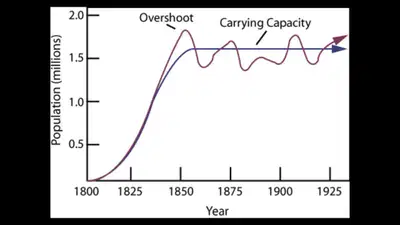
Carrying capacity is the max population an environment can support long-term.
This capacity is determined by available resources called limiting factors.
Exceeding this limit depletes resources, causing the population to crash.
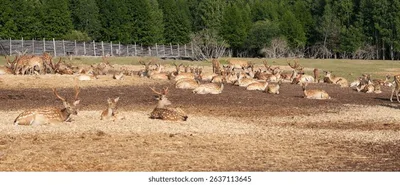
For example, too many deer will eat all plants, causing their population to drop.
18
Multiple Choice
What does the term 'carrying capacity' refer to in an ecosystem?
The maximum population size an environment can sustain over time.
The total number of different species living in an area.
The amount of food a single animal needs to survive.
The speed at which a population can grow.
19
Multiple Choice
What is the relationship between limiting factors and an environment's carrying capacity?
Limiting factors, such as the availability of resources, determine the carrying capacity.
Carrying capacity determines the number of limiting factors in an environment.
Limiting factors only affect populations that are far below the carrying capacity.
Carrying capacity and limiting factors are unrelated concepts in an ecosystem.
20
Multiple Choice
If a population of deer grows larger than its environment's carrying capacity, what is the most likely outcome?
The deer population will eventually decrease because of resource depletion.
The environment's carrying capacity will automatically increase to support the deer.
The deer will quickly adapt to need fewer resources to survive.
The plants will grow faster to provide more food for the deer.
21
Analyzing Data: Cause and Effect
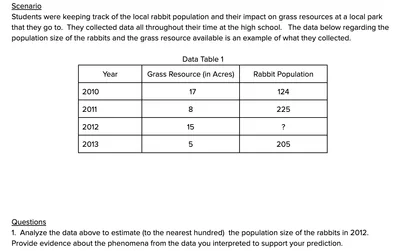
Scientists use data to find cause-and-effect relationships between different factors.
A change in resources is a cause that directly affects a population.
For example, less food can result in fewer organisms and slower growth.
This helps scientists predict how a population might change in the future.
22
Multiple Choice
What is the primary purpose of analyzing data according to scientists?
To find cause-and-effect relationships between factors
To prove that all scientific ideas are correct
To count every organism living in an ecosystem
To create a list of all resources available in an area
23
Multiple Choice
Which of the following describes a direct effect of a population having fewer food resources?
A decrease in the number of organisms
An increase in the population's growth rate
The organisms immediately find a new food source
No change in the population size
24
Multiple Choice
A scientist's data shows that a severe drought has limited the growth of clover, the main food for a rabbit population. What is the most likely prediction the scientist can make?
The rabbit population will likely decrease because of less available food.
The rabbit population will grow because there are fewer predators.
The rabbit population will not be affected by the change in weather.
The rabbits will immediately adapt to eat different types of plants.
25
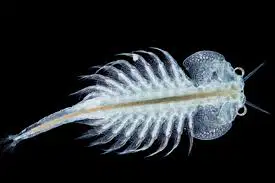
Seasonal Changes and Populations
In winter, algae populations grow rapidly due to abundant nutrients and few predators.
In spring, brine shrimp hatch and eat algae, causing the algae population to fall.
In summer, migrating birds eat the shrimp, so the shrimp population starts to decline.
In fall, populations are low and shrimp lay dormant eggs for the next year.
26
Multiple Choice
What is the primary factor that drives the changes in the algae and shrimp populations throughout the year?
The changing of the seasons
The depth of the water
The amount of salt in the water
The presence of fish in the area
27
Multiple Choice
What is the direct cause of the algae population decline in the spring?
Migrating birds arrive and eat the algae.
There are not enough nutrients for the algae.
Brine shrimp hatch and consume the algae.
The water becomes too cold for the algae to survive.
28
Multiple Choice
If fewer migrating birds arrived in the summer, what would be the most likely impact on the algae population?
The algae population would likely increase due to a lack of predators.
The algae population would be unaffected by the change in the bird population.
29
Misconception | Correction |
|---|---|
A population can grow forever. | Populations are limited by resources, predators, and disease. |
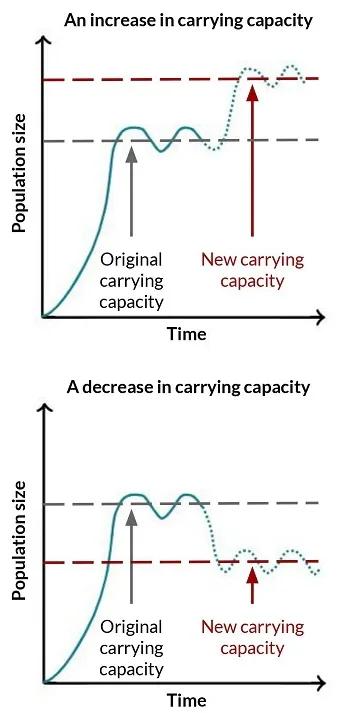
Carrying capacity is a fixed number. | Carrying capacity can change with ecosystem conditions. |
Correlation is the same as causation. | Two trends happening together doesn't mean one causes the other. |
Only living things limit populations. | Non-living factors like water and temperature also limit populations. |
30
Population sizes are controlled by biotic and abiotic limiting factors.
The availability of resources limits the growth of organisms and populations.
Carrying capacity is the maximum population size an ecosystem can sustain.
Scientists analyze data to understand cause-and-effect relationships in populations.
31
Poll
On a scale of 1-4, how confident are you in analyzing data to predict how resource availability impacts a population?
1
2
3
4
Resource Effects on Ecosystems
Middle School
Show answer
Auto Play
Slide 1 / 31
SLIDE
Similar Resources on Wayground

24 questions
Potential and Kinetic Energy
Presentation
•
7th Grade
25 questions
Classification
Presentation
•
7th Grade
25 questions
Natural Resources
Presentation
•
7th Grade
25 questions
Physical and Chemical Changes Review
Presentation
•
8th Grade
25 questions
Biodiversity
Presentation
•
7th Grade
26 questions
Catastrophic Events
Presentation
•
7th Grade
24 questions
Human Impact on Biodiversity
Presentation
•
7th Grade
24 questions
7th science- Human Impact (Air edition)
Presentation
•
7th Grade
Popular Resources on Wayground
10 questions
Safety Day 2026 – Student Review

Quiz
•
9th Grade
21 questions
Continents and Oceans
Quiz
•
6th Grade
20 questions
Parts of Speech
Quiz
•
5th Grade
16 questions
Subject & Predicate
Quiz
•
5th Grade
25 questions
Multiplication Facts
Quiz
•
5th Grade
12 questions
Map Skills
Quiz
•
3rd Grade
22 questions
Continents and Oceans
Quiz
•
5th Grade
15 questions
Rounding Decimals
Quiz
•
5th Grade
Discover more resources for Science
10 questions
Exploring Chemical and Physical Changes

Interactive video
•
6th - 10th Grade
14 questions
Week 1 Falcon Flex Fast and Curious
Quiz
•
7th Grade
42 questions
Explore Plate Tectonics and Boundaries
Quiz
•
7th Grade
21 questions
Waves and Wave Properties
Quiz
•
6th - 8th Grade
16 questions
Photosynthesis and Cellular Respiration Review
Quiz
•
7th Grade
20 questions
Food Webs + Energy Pyramids
Quiz
•
7th Grade
9 questions
Biology: Cell Structure
Interactive video
•
7th Grade
8 questions
Diffusion and Osmosis Review
Presentation
•
6th - 8th Grade