
- Resource Library
- Science
- Physical Science
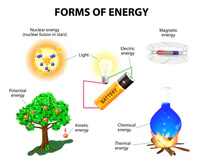
- Forms Of Energy
- 8/25 Lesson 2 Other Forms Of Energy Pgs. 14 23
8/25 LESSON 2 Other Forms of Energy Pgs. 14-23

Presentation
•
Science
•
6th Grade
•
Practice Problem
•
Hard

Gina Gattavara Peterson
FREE Resource
9 Slides • 12 Questions
1
2
Multiple Choice
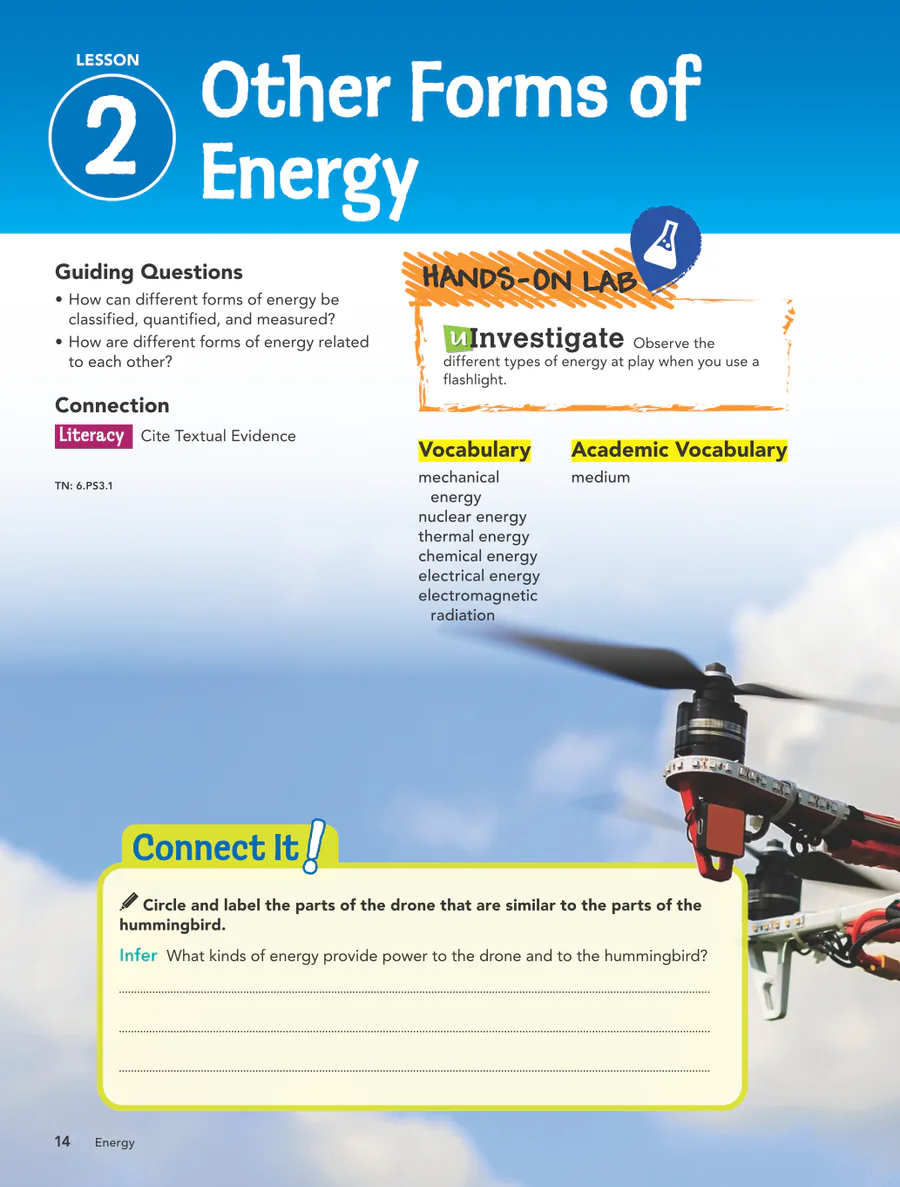
Why is it important to understand the different forms of energy and how they are related to each other?
Because it helps us use energy more efficiently and safely
Because it is required for passing exams
Because energy is only used in science experiments
Because it makes machines work faster
3
4
Multiple Choice
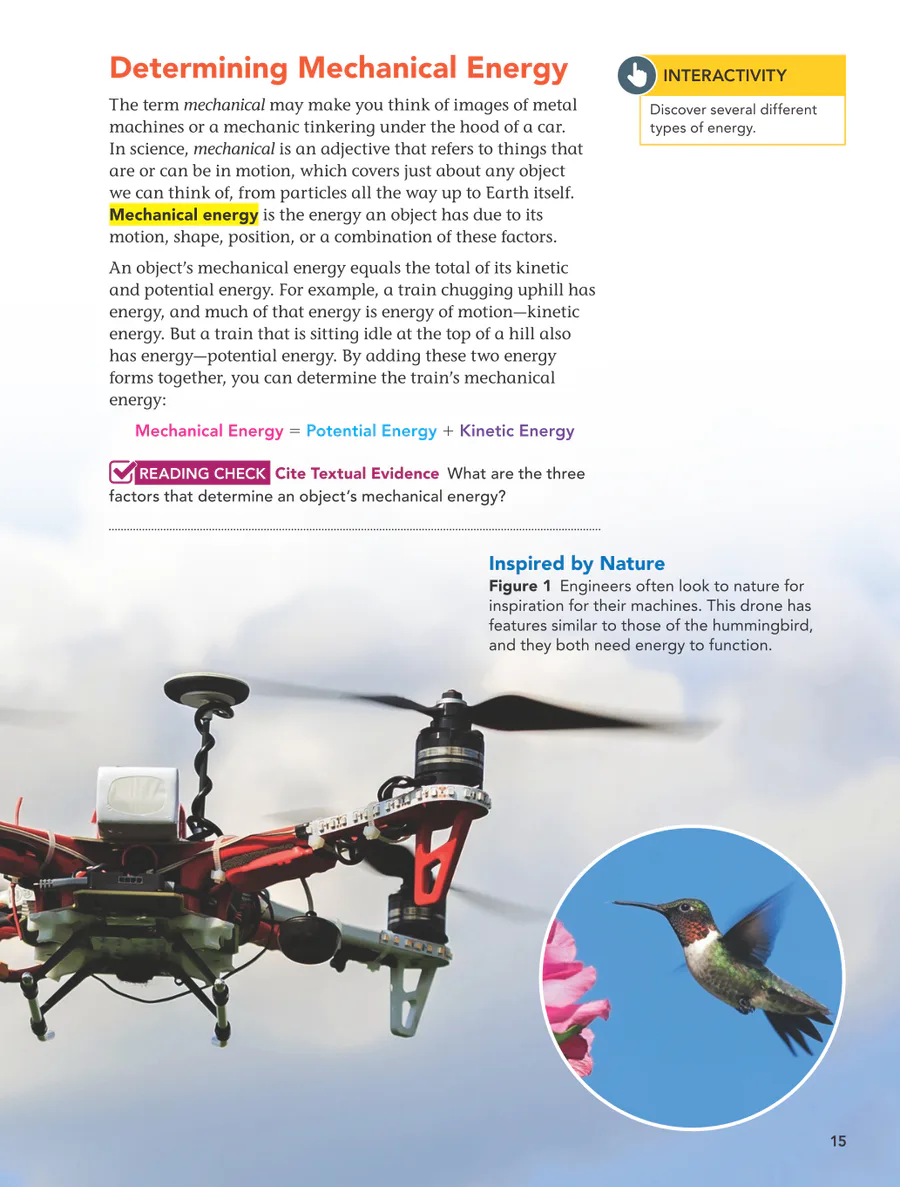
Mechanical Energy is best described as...
the energy an object has due to its shape & position ONLY.
the energy an object has due to its motion & position ONLY
the energy an object has due to its shape & position ONLY.
the energy an object has due to its motion, shape, position, or a combination of these factors.
5
6
Multiple Choice
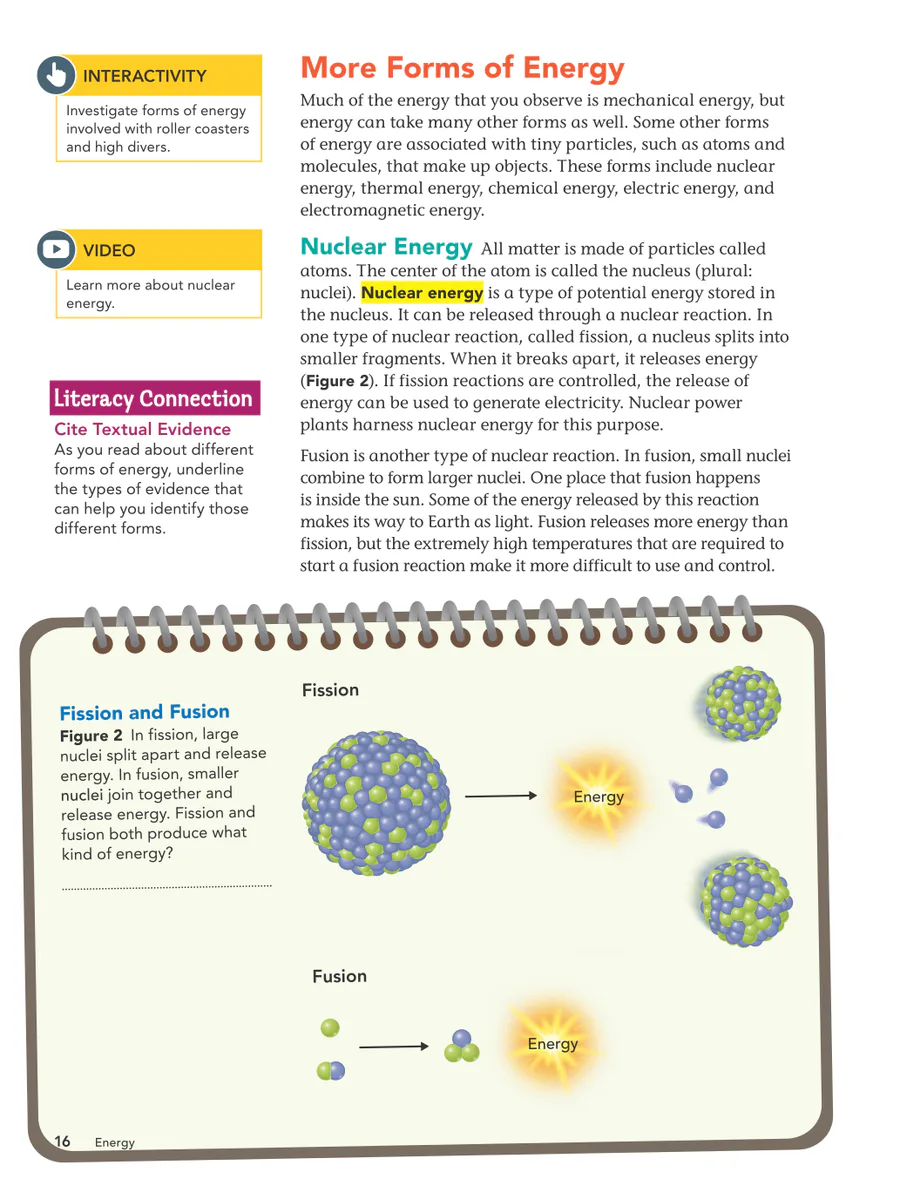
Which of the following forms of energy is released when the nucleus of an atom splits or combines?
Thermal energy
Chemical energy
Nuclear energy
Electrical energy
7
Multiple Choice
An objects mechanical energy equals the total of its ______ and _________energy.
kinetic & thermal
kinetic & potential
kinetic & solar
kinetic and chemical
8
XXX
9
Multiple Select
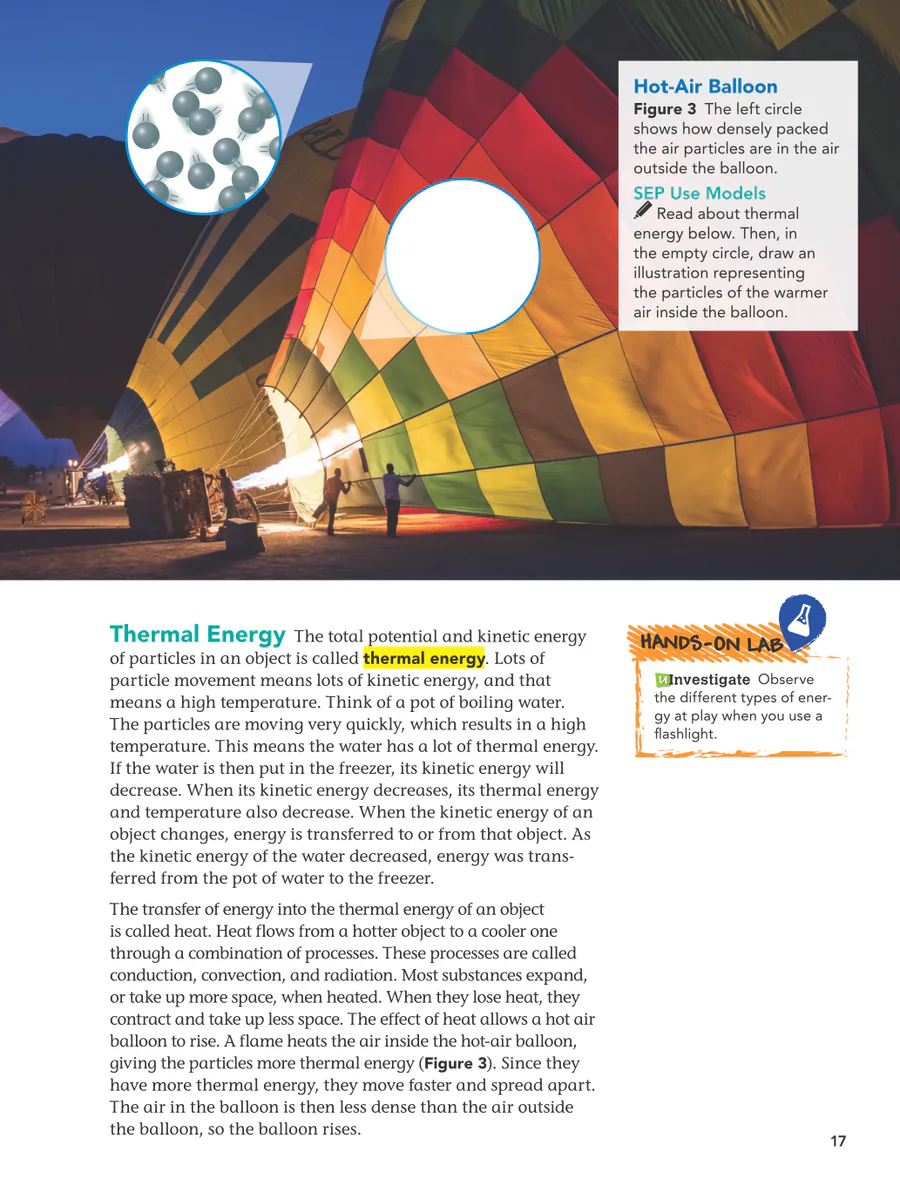
Which of the following statements about thermal energy are correct?
Thermal energy is the total potential and kinetic energy of particles in an object.
Thermal energy increases as the particles move faster.
Thermal energy is only present in hot objects.
Thermal energy can be transferred from one object to another.
10
11
Fill in the Blanks
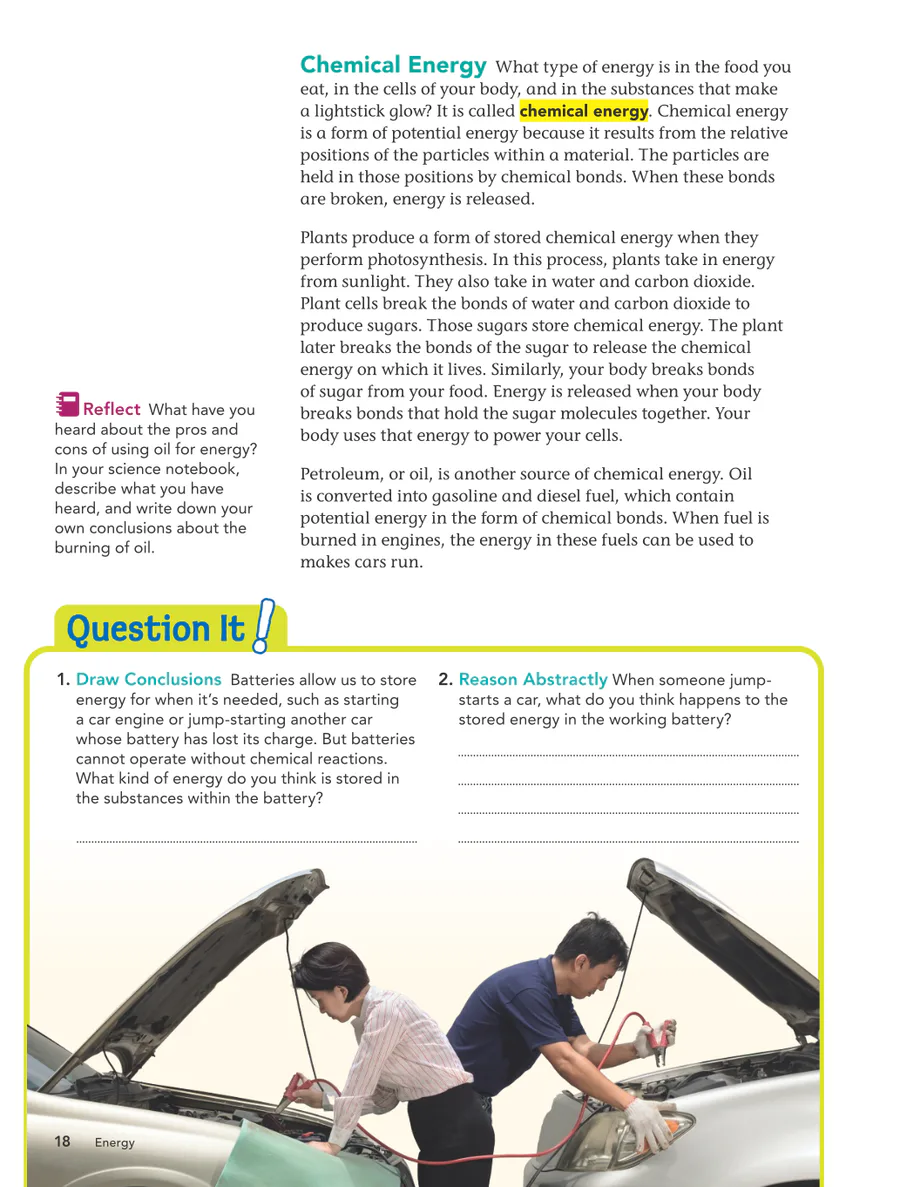
Batteries allow us to store energy for when it’s needed, such as starting a car engine or jump-starting another car whose battery has lost its charge. But batteries cannot operate without chemical reactions. What kind of energy do you think is stored within the battery?
12
Fill in the Blanks
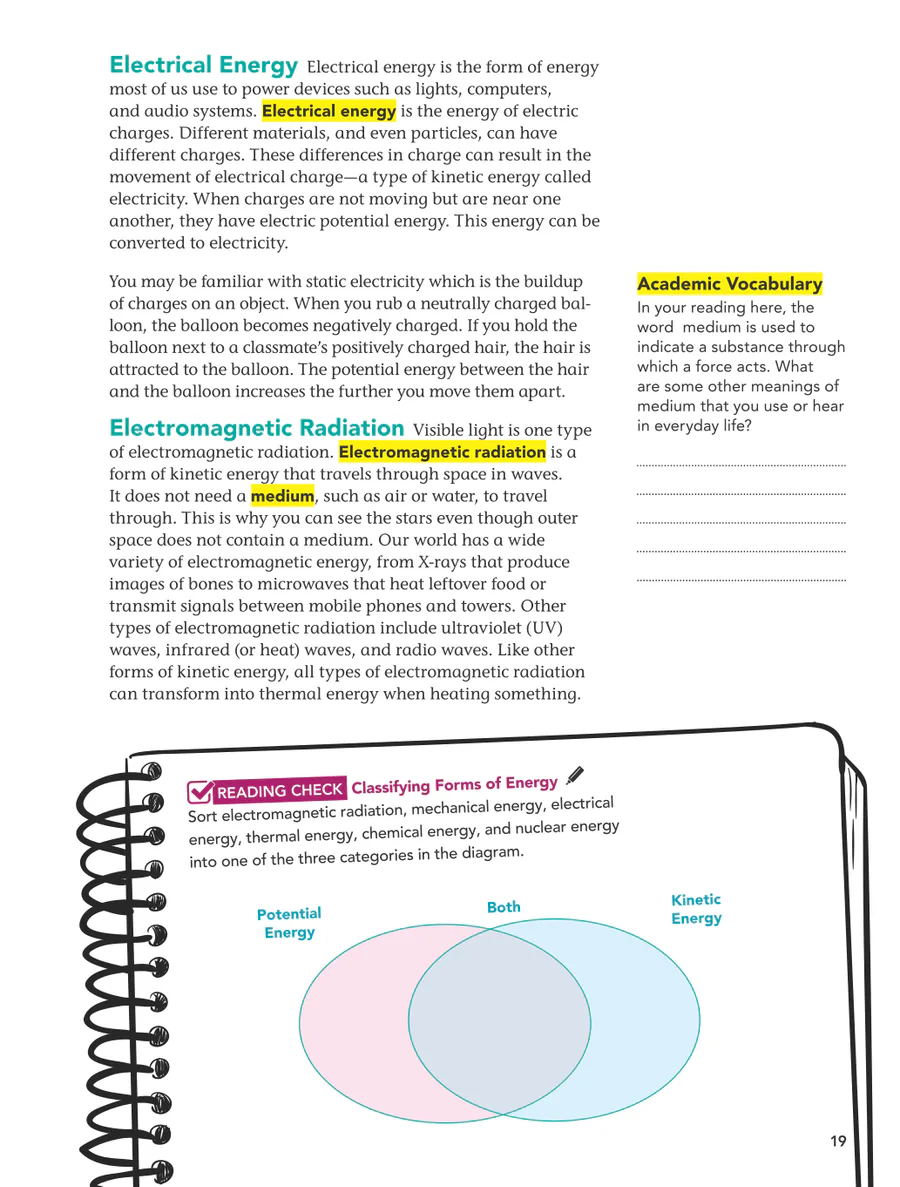
Chemical energy is stored in the
13
Fill in the Blanks
Plants produce a form of stored chemical energy when they perform photosynthesis. In this process, plants take in energy from
14
15
Multiple Choice
Which form of energy is most directly involved when you turn on a flashlight?
Chemical energy
Nuclear energy
Thermal energy
Electrical energy
16
LOOK
17
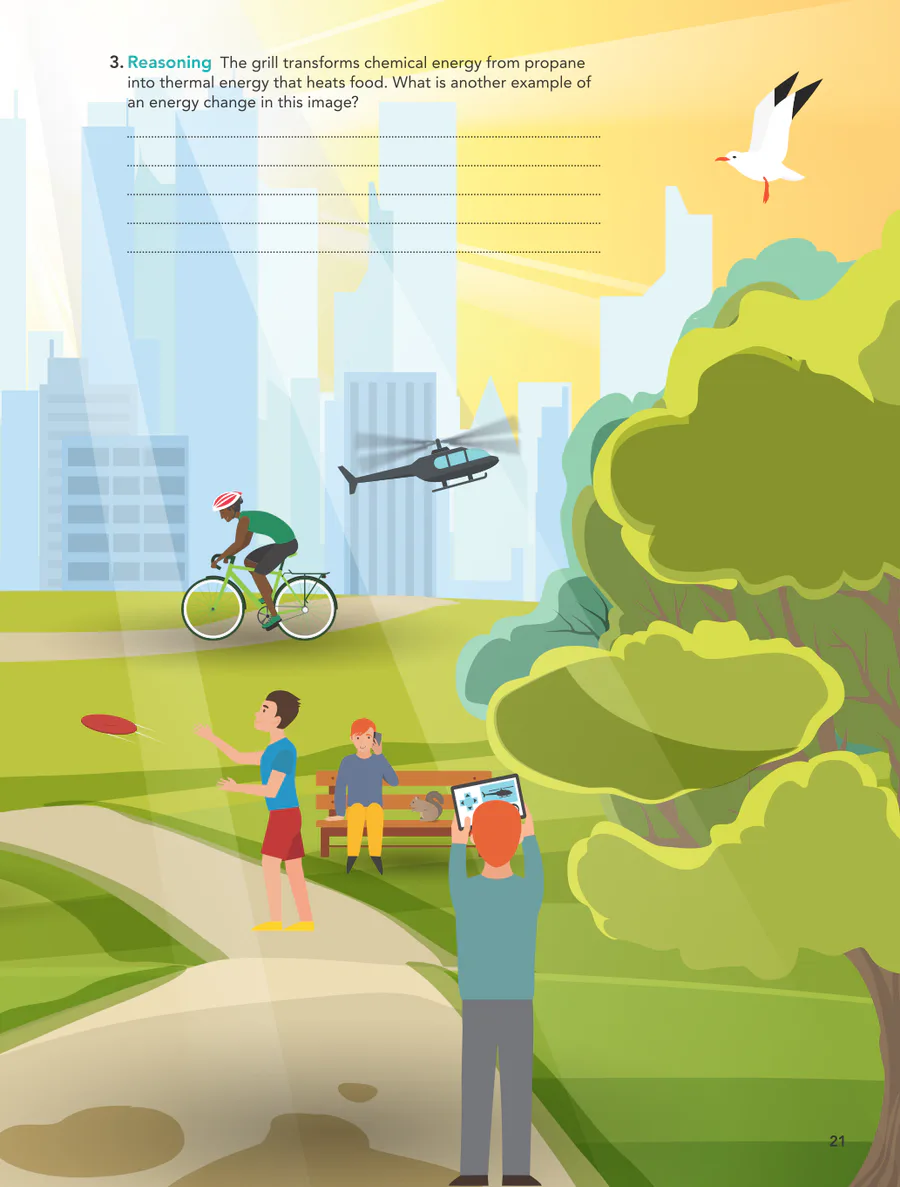
LOOK
18
Open Ended
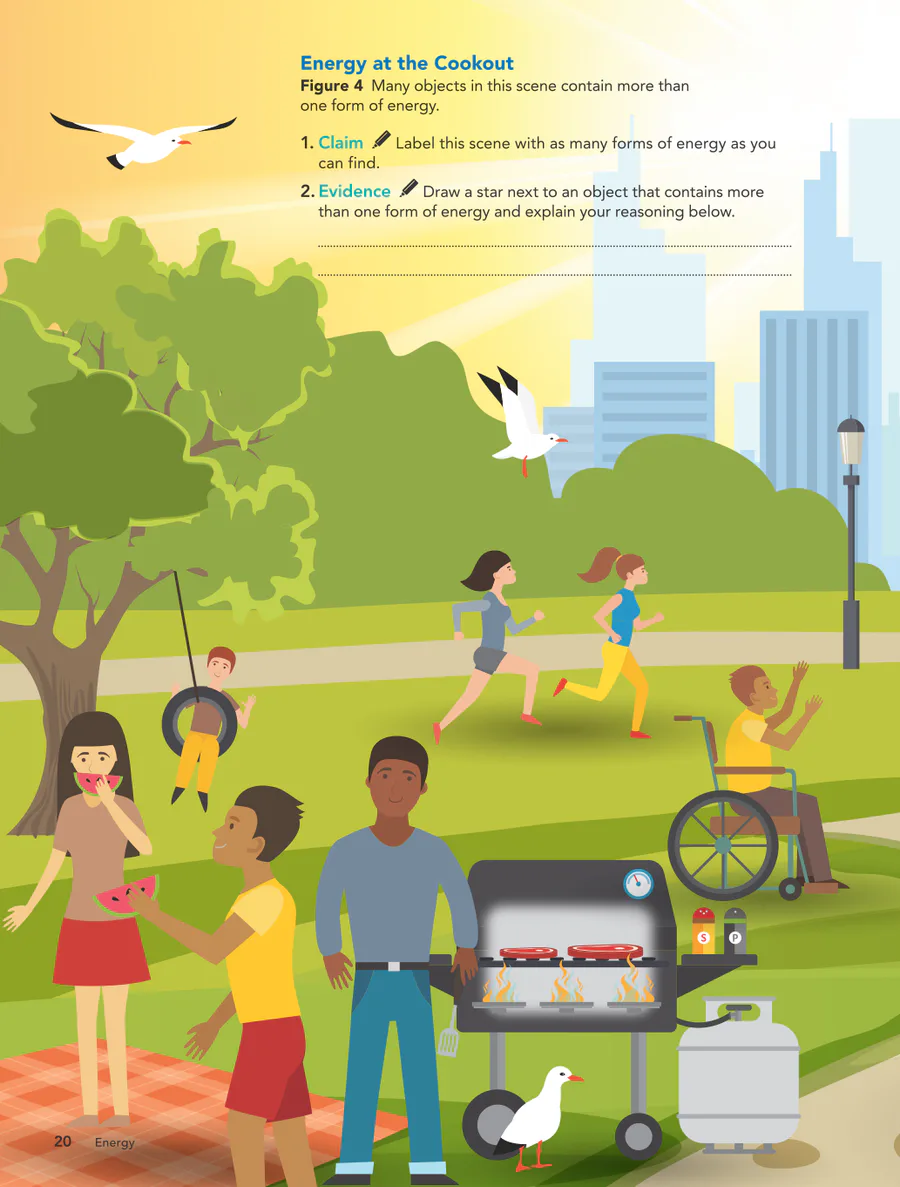
Describe an example from the park scene where energy changes from one form to another. Explain the forms of energy involved in your example.
19
20
Multiple Choice
Which of the following are the two main types of energy that make up mechanical energy?
Thermal energy and chemical energy
Potential energy and kinetic energy
Electrical energy and nuclear energy
Electromagnetic energy and medium
21
Multiple Choice
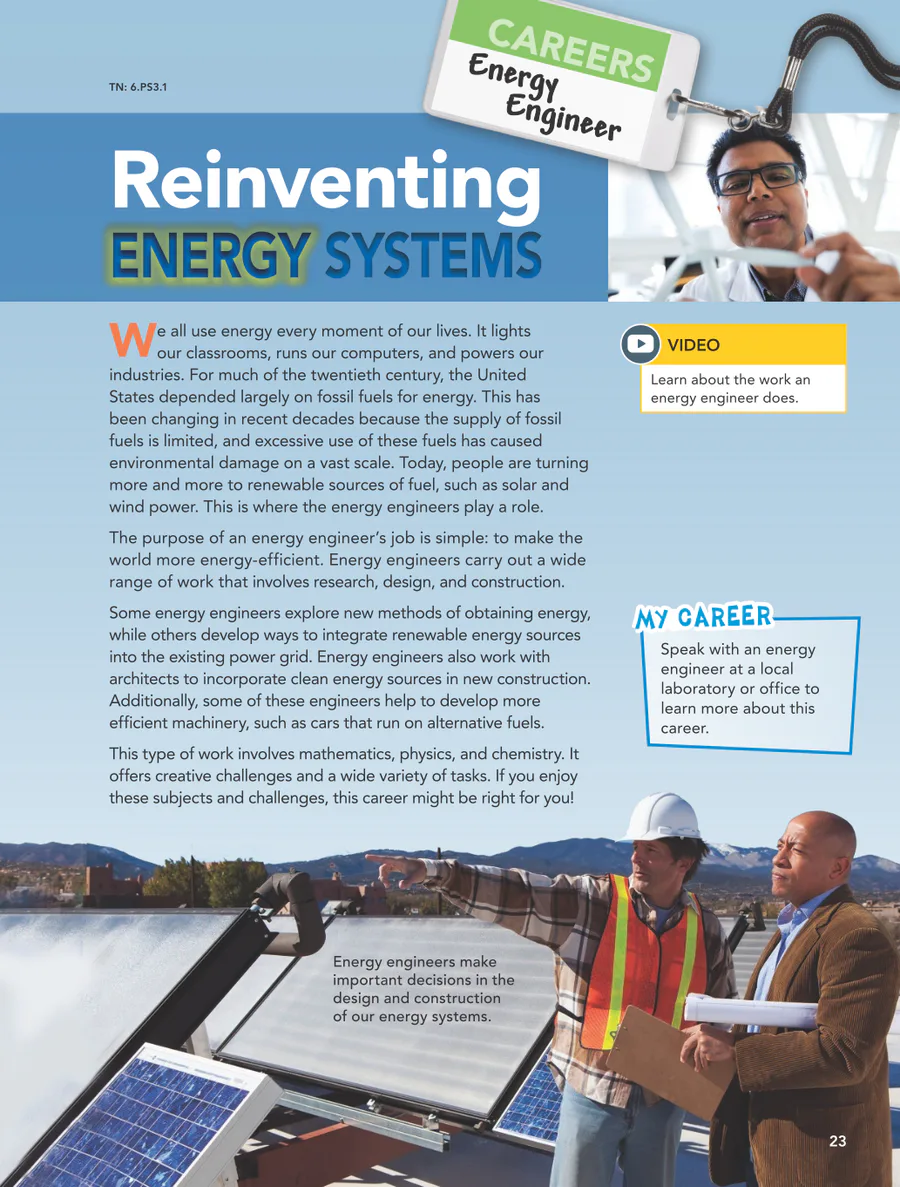
Which of the following is NOT a responsibility of an energy engineer?
Designing energy systems to be more efficient
Integrating renewable energy sources into the power grid
Making decisions about energy system construction
Performing surgery on patients
Show answer
Auto Play
Slide 1 / 21
SLIDE
Similar Resources on Wayground

17 questions
Weather & Climate
Presentation
•
6th Grade
14 questions
Quantitative vs. Qualitative Observations
Presentation
•
6th Grade
18 questions
Insulators and Conductors
Presentation
•
6th Grade
18 questions
Wegner and Continental Drift
Presentation
•
6th Grade
14 questions
Types of Energy Quiz
Presentation
•
6th Grade
17 questions
Body Organization
Presentation
•
6th Grade
15 questions
Populations
Presentation
•
6th Grade
17 questions
Simple Machines
Presentation
•
6th Grade
Popular Resources on Wayground
10 questions
Impact of 9/11 and the War on Terror

Interactive video
•
10th - 12th Grade
21 questions
Continents and Oceans

Quiz
•
6th Grade
5 questions
9/11
Interactive video
•
9th Grade
20 questions
Parts of Speech
Quiz
•
5th Grade
16 questions
Subject & Predicate
Quiz
•
5th Grade
10 questions
Riddles Riddles fun Riddles
Quiz
•
6th - 12th Grade
21 questions
Lab Safety
Quiz
•
10th Grade
6 questions
PRIDE in the Hallways and Bathrooms
Presentation
•
12th Grade
Discover more resources for Science
20 questions
Lab Safety
Quiz
•
5th - 8th Grade
10 questions
6.6D - Relative Density Review
Quiz
•
6th Grade
20 questions
Elements, compounds, and mixtures
Quiz
•
6th Grade
20 questions
Claim, Evidence and Reasoning (CER)
Quiz
•
6th - 8th Grade
10 questions
Exploring Chemical and Physical Changes
Interactive video
•
6th - 10th Grade
22 questions
Metals, nonmetals, metalloids
Quiz
•
6th Grade
11 questions
Science 6-8 Vocab #1
Quiz
•
6th - 8th Grade
10 questions
Scientific Method
Quiz
•
6th Grade