

Enzymes

Presentation
•
Science
•
1st Grade
•
Practice Problem
•
Hard

Wayground Resources
FREE Resource
12 Slides • 13 Questions
1
2
3
Multiple Choice
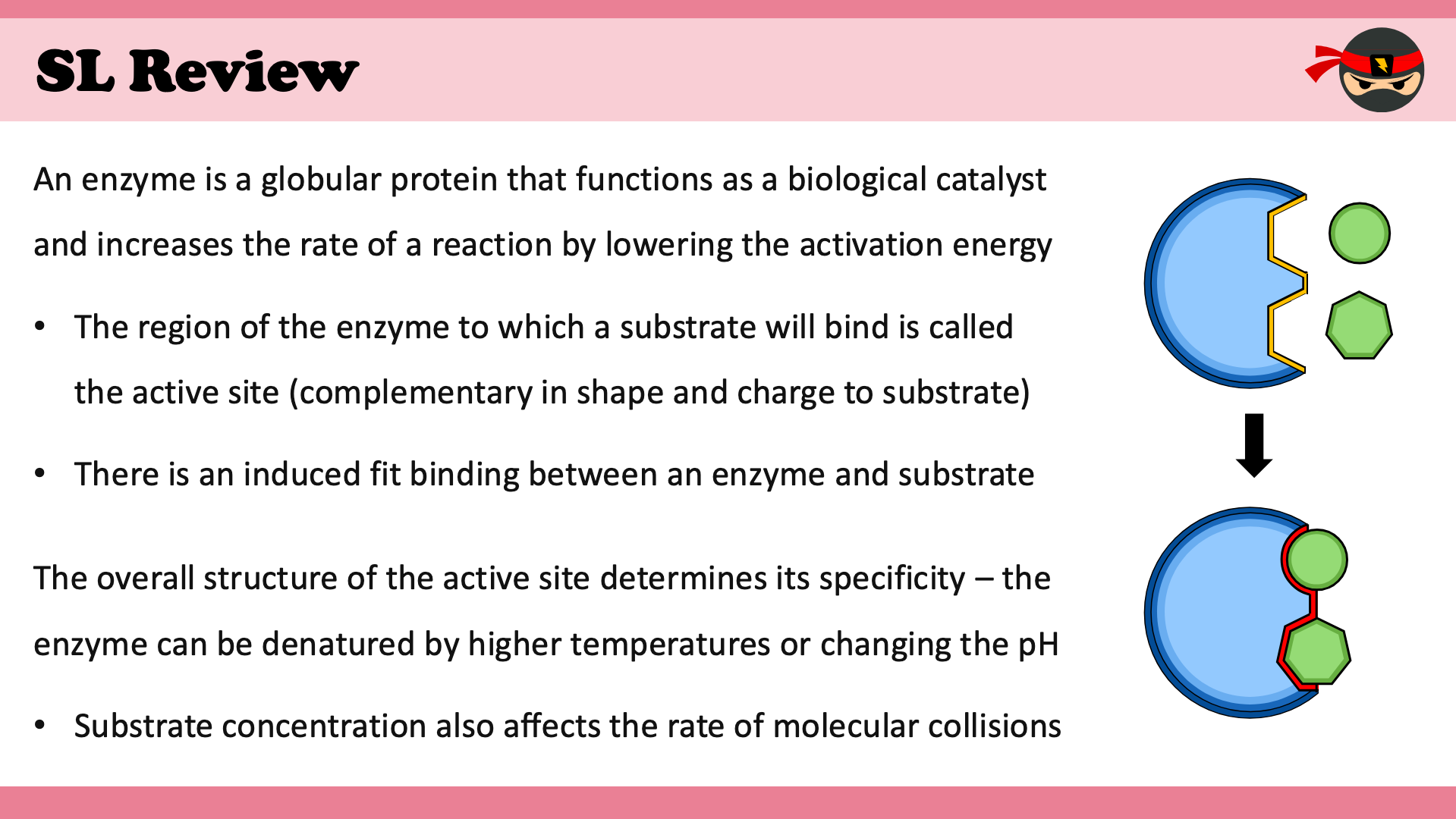
Which of the following factors can denature an enzyme and affect its activity?
High temperature
Low substrate concentration
Changing pH
Increasing substrate concentration
4
Open Ended
Why are enzymes important for metabolic reactions in living organisms?
5
6
Multiple Choice
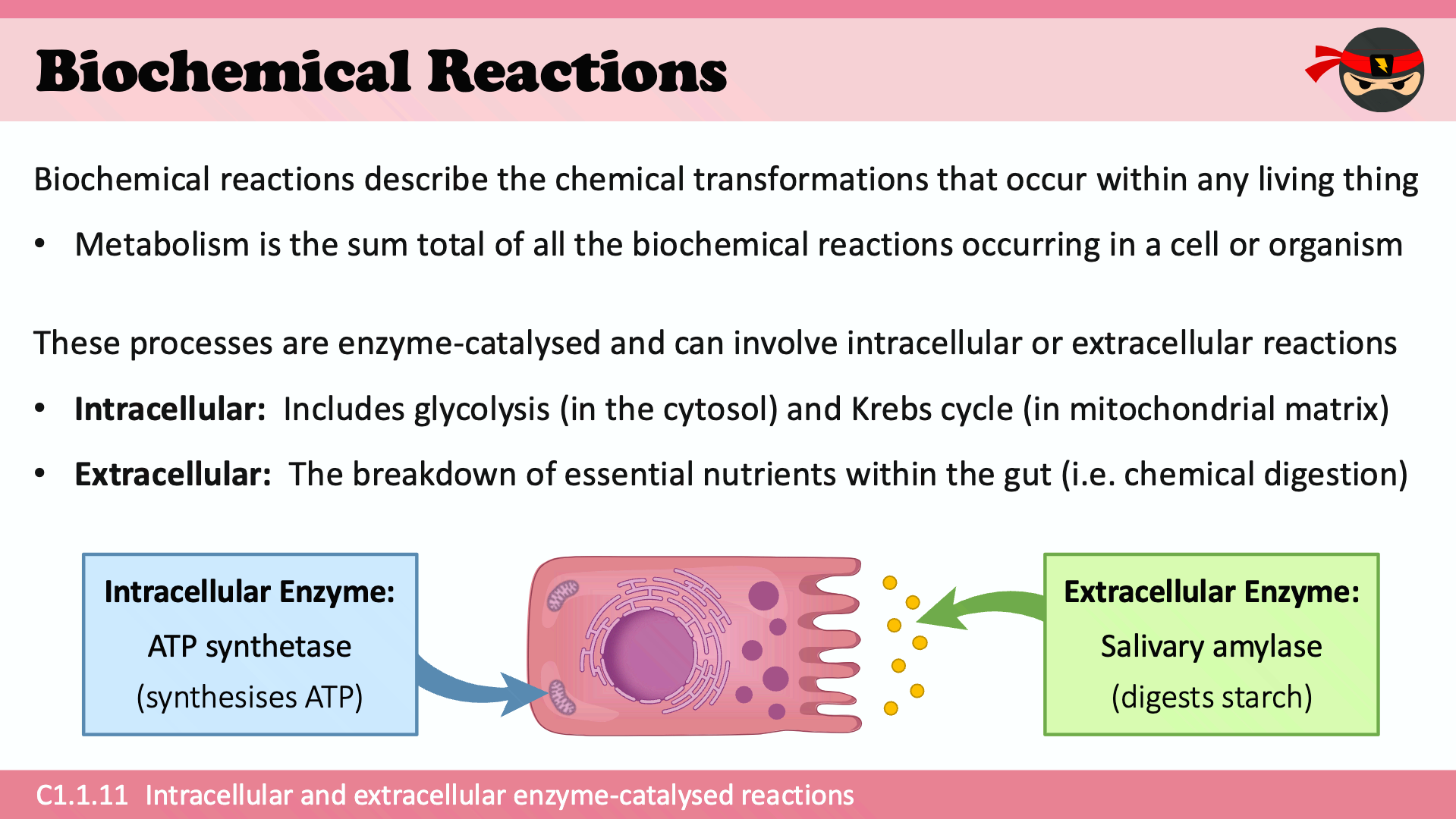
Which of the following best describes the difference between intracellular and extracellular enzyme-catalysed reactions?
Intracellular reactions occur outside the cell, while extracellular reactions occur inside the cell.
Intracellular reactions involve the breakdown of nutrients in the gut, while extracellular reactions involve ATP synthesis.
Intracellular reactions occur within the cell, such as glycolysis and the Krebs cycle, while extracellular reactions occur outside the cell, such as the breakdown of nutrients in the gut.
Intracellular reactions are not enzyme-catalysed, while extracellular reactions are enzyme-catalysed.
7
8
Open Ended
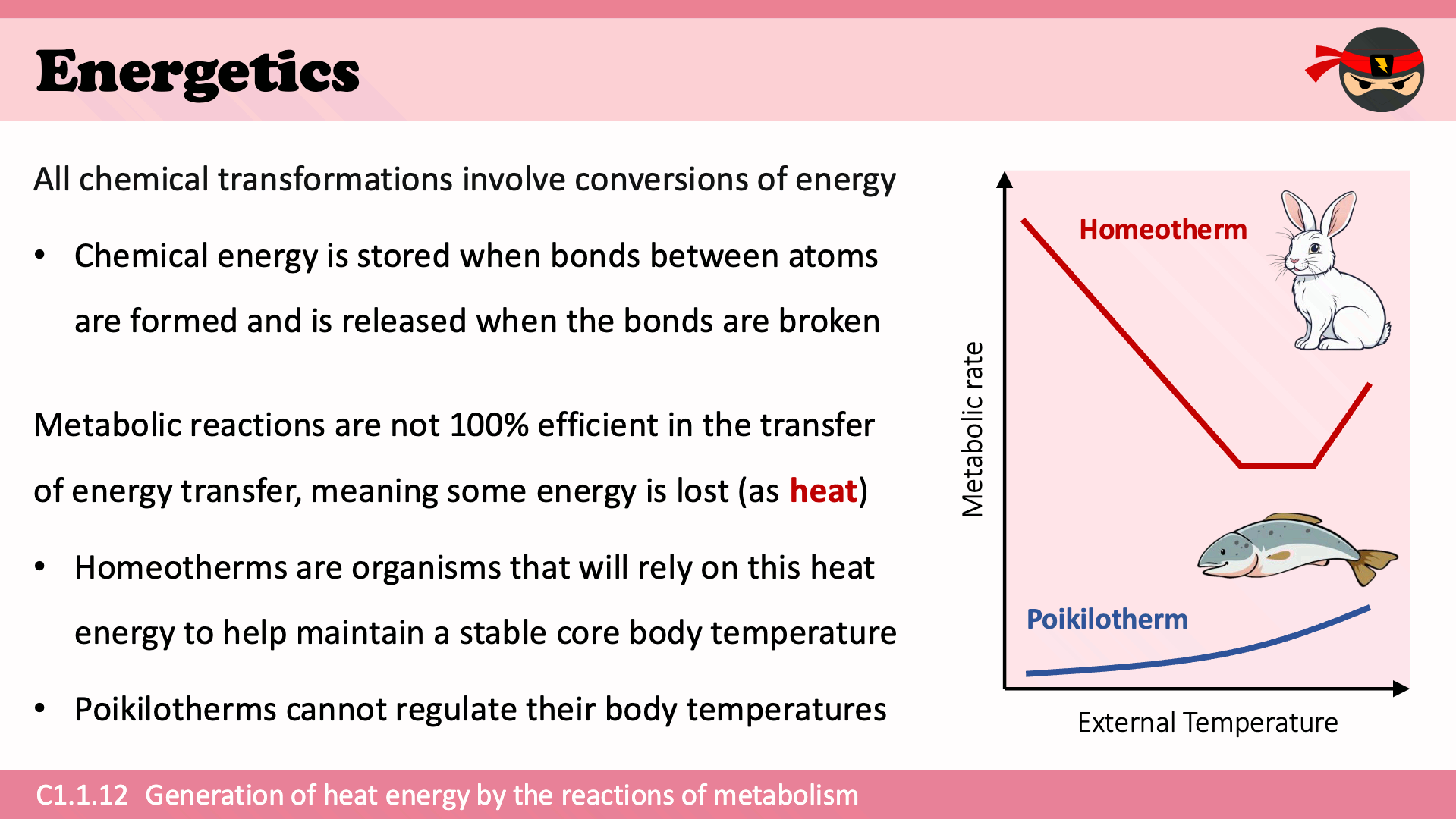
Explain how metabolic reactions contribute to the regulation of body temperature in homeotherms and poikilotherms.
9
10
Fill in the Blanks
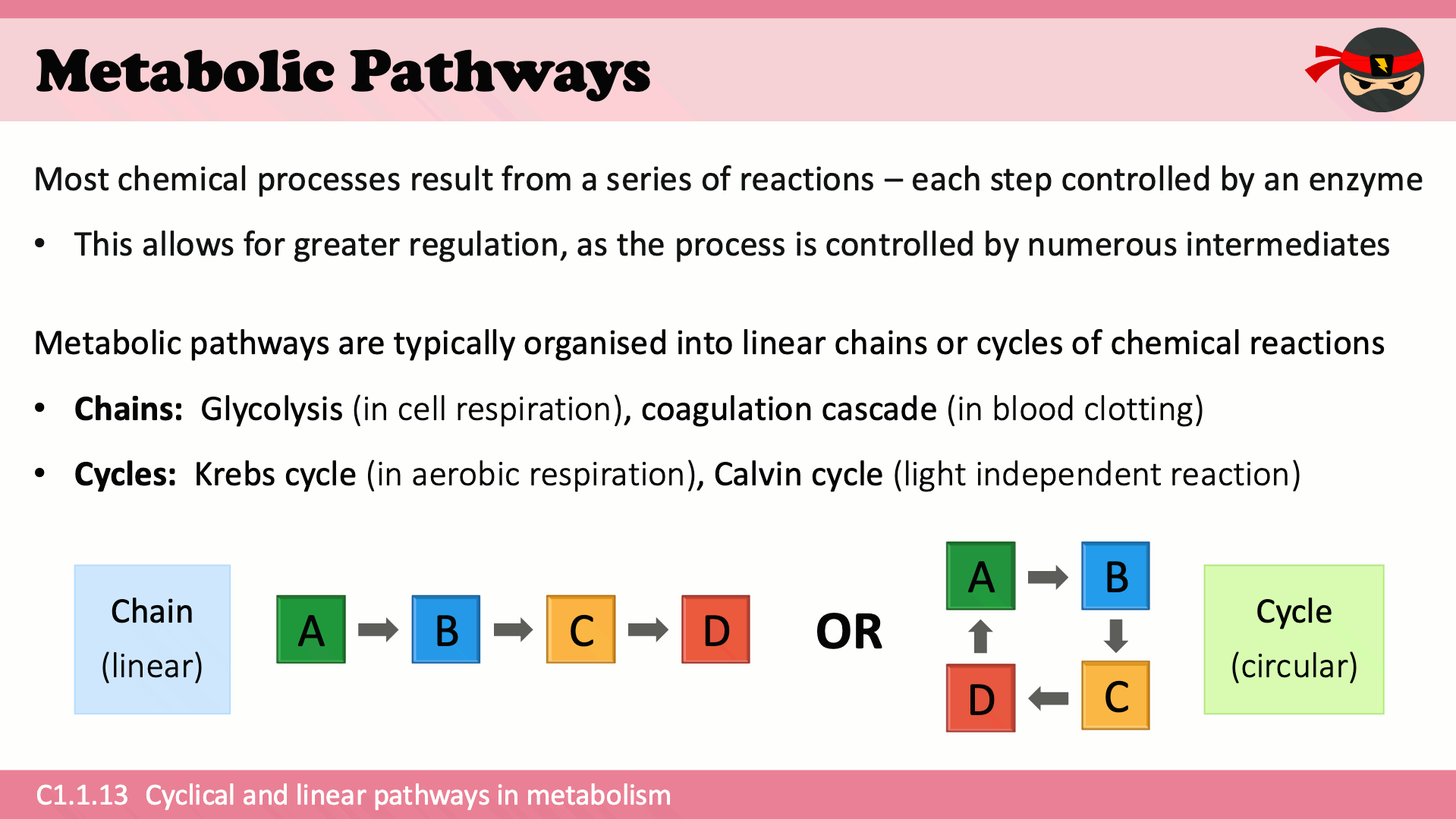
Fill in the blank: The Calvin cycle is an example of a metabolic pathway organized as a
Type answer...
11
12
Multiple Select
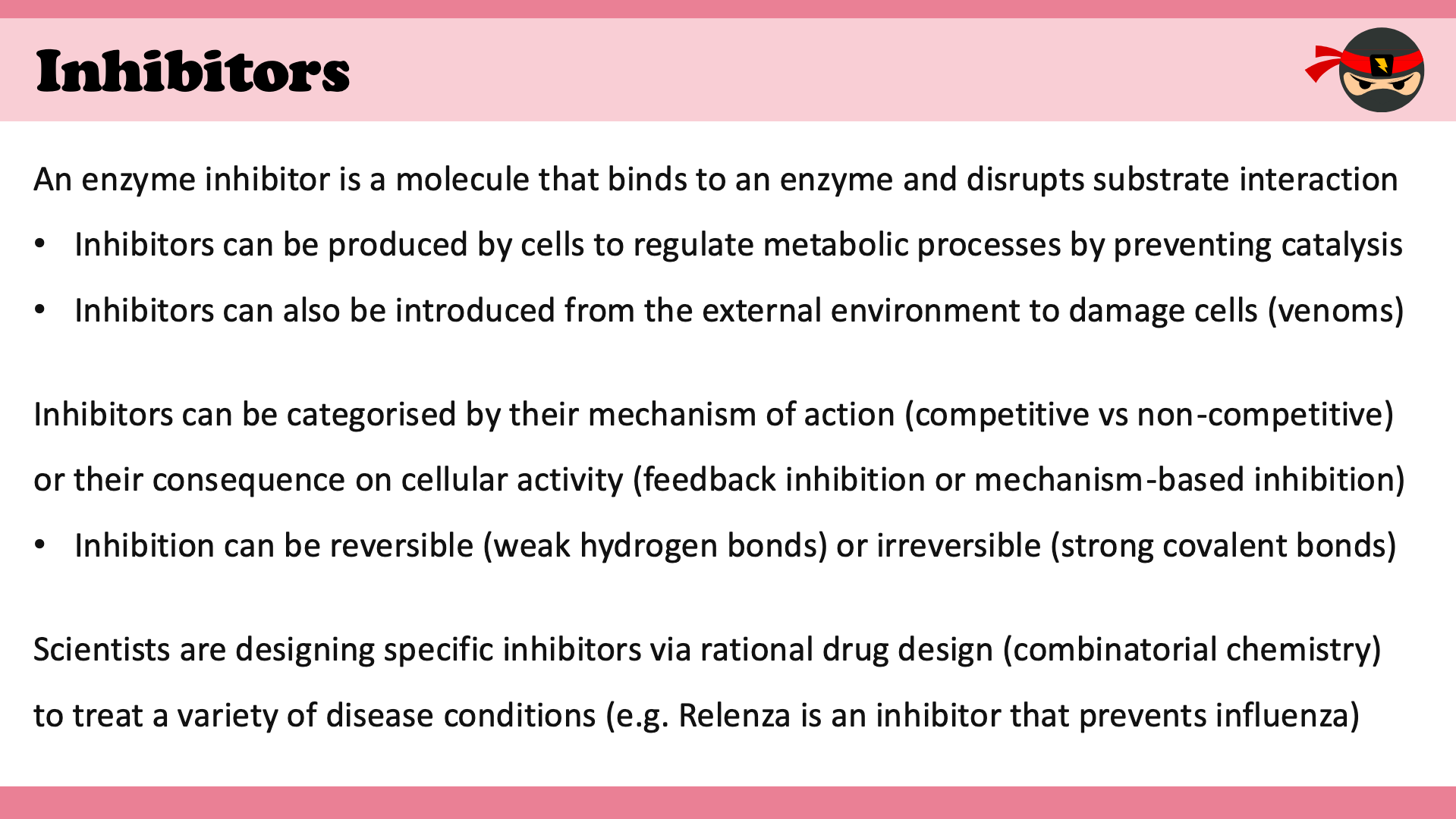
Which of the following statements about enzyme inhibitors is/are correct?
Inhibitors can be produced by cells to regulate metabolic processes.
All inhibitors bind irreversibly to enzymes.
Inhibitors can be introduced from the external environment to damage cells.
Inhibition can be reversible or irreversible.
13
14
Open Ended
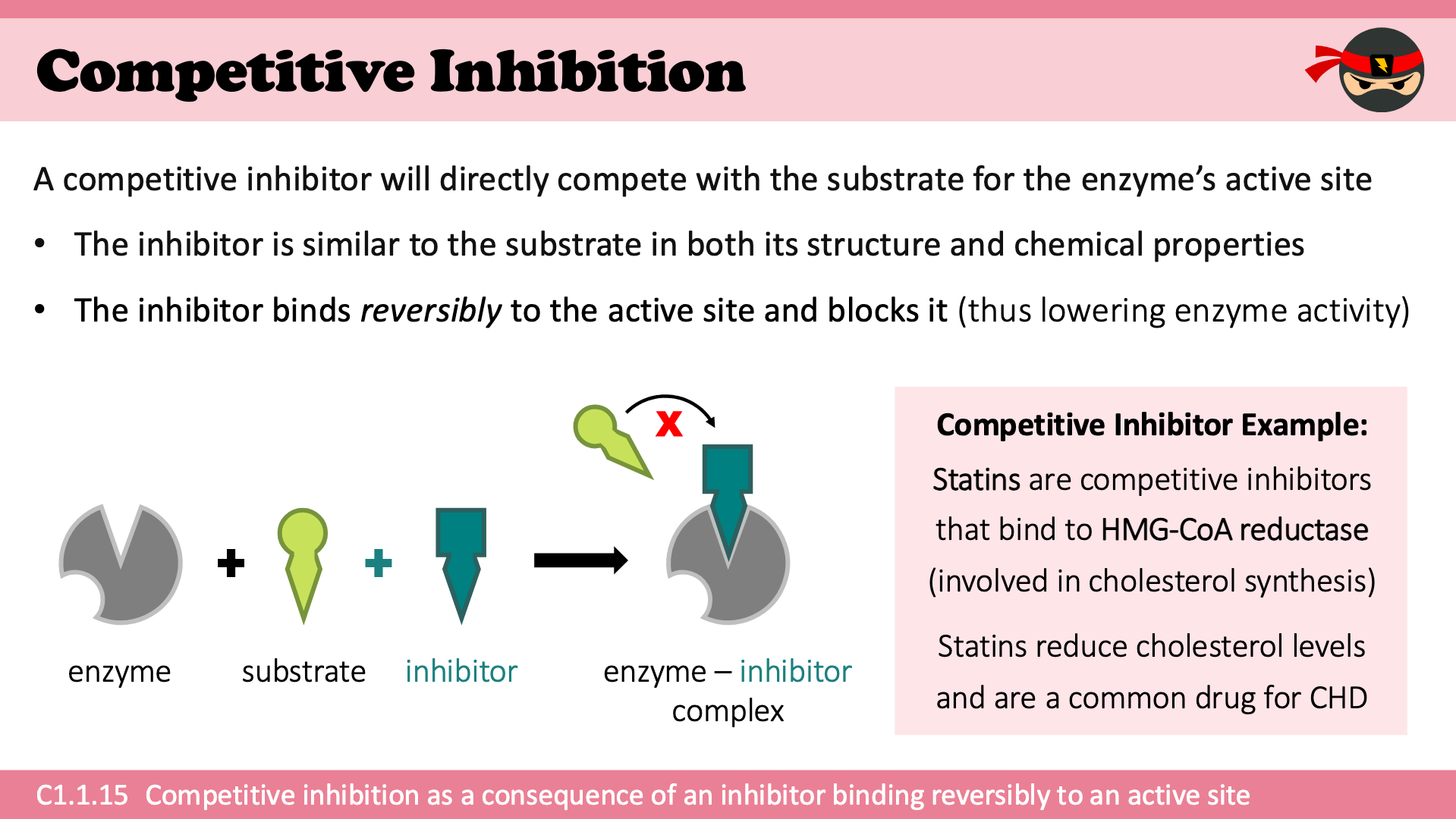
Describe the mechanism of competitive inhibition and provide an example of a drug that acts as a competitive inhibitor.
15
16
17
Multiple Choice
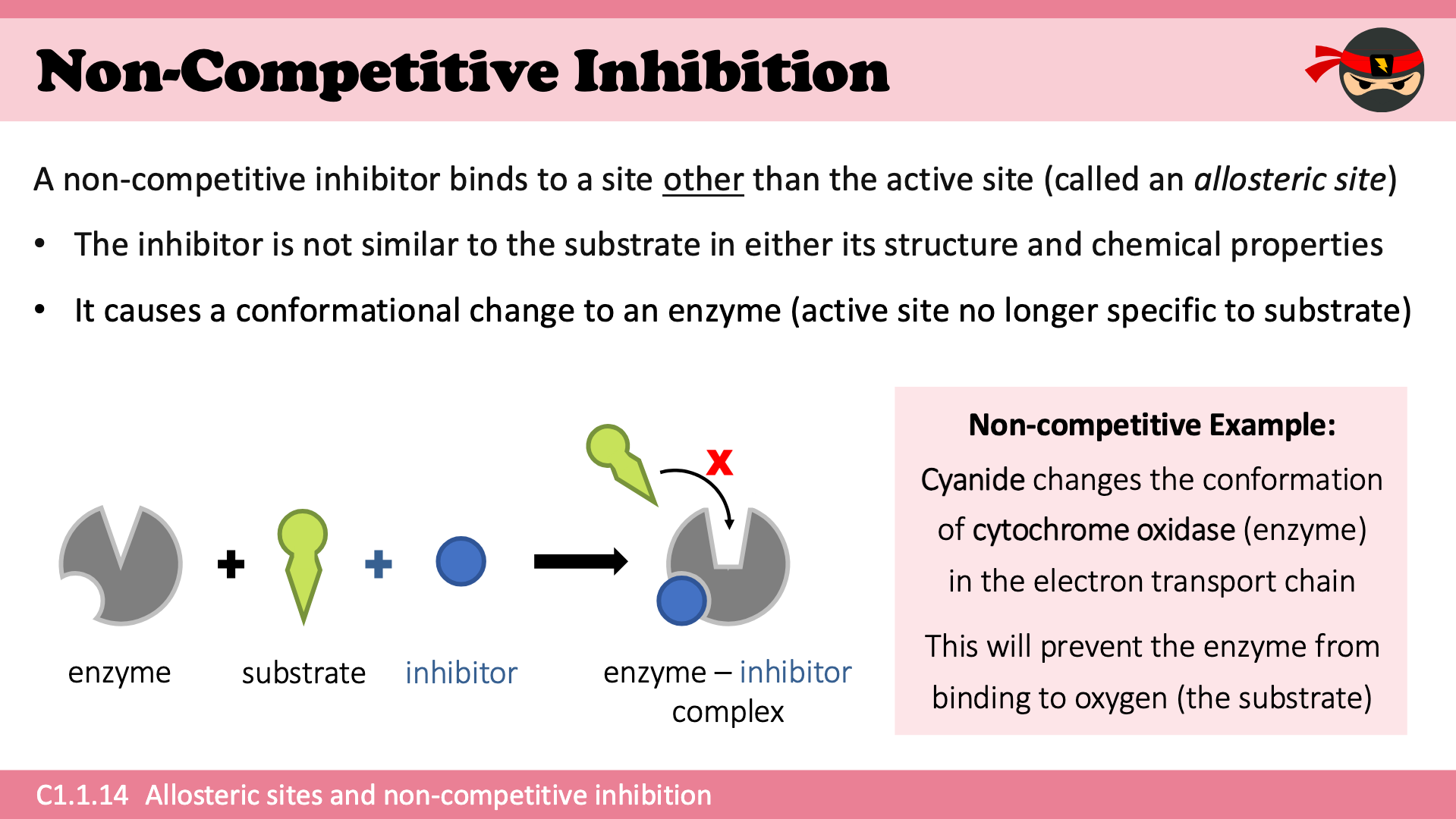
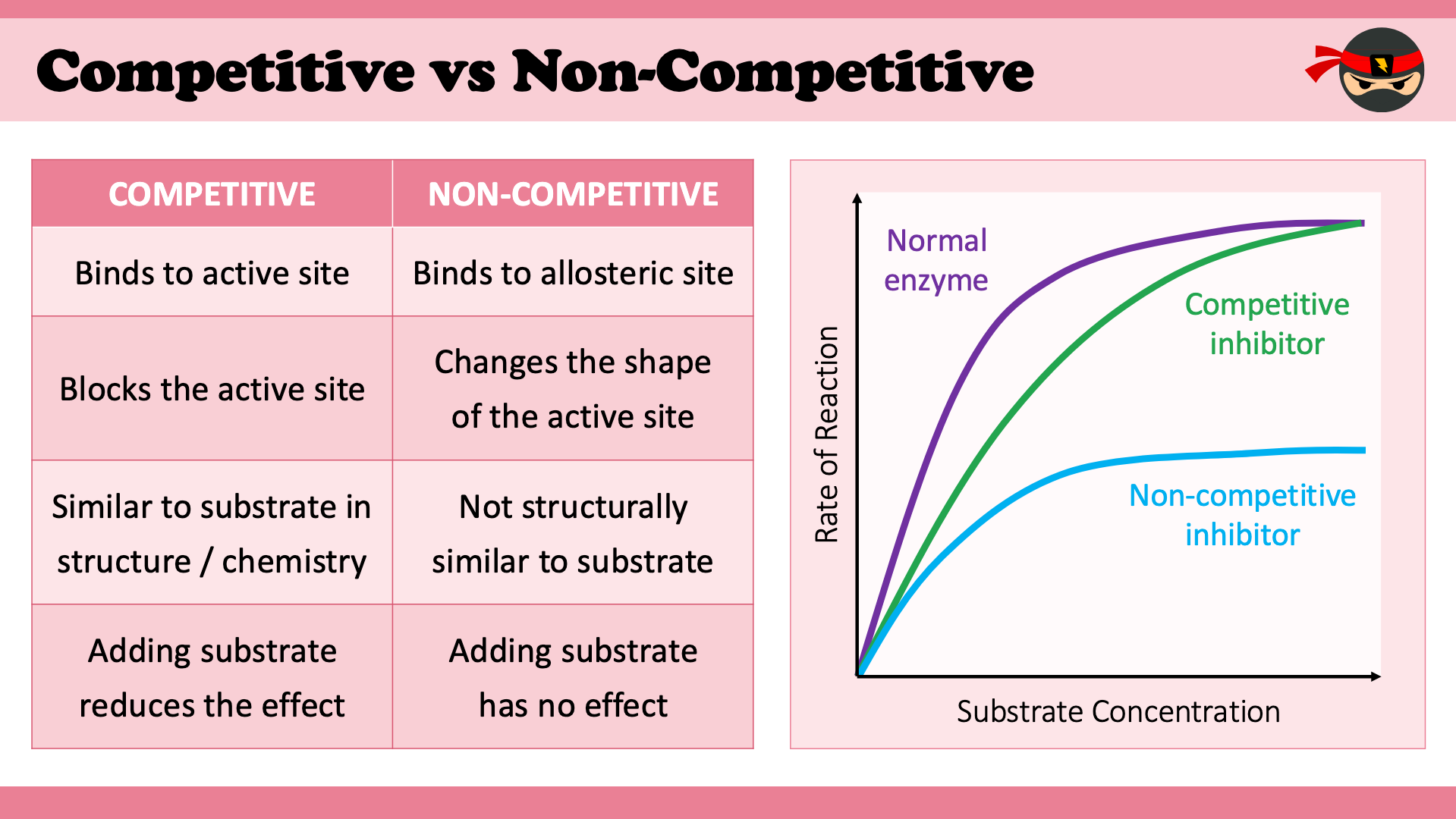
Which of the following statements correctly distinguishes between competitive and non-competitive enzyme inhibition?
Competitive inhibitors bind to the active site, while non-competitive inhibitors bind to the allosteric site.
Competitive inhibitors change the shape of the active site, while non-competitive inhibitors block the active site.
Non-competitive inhibitors are structurally similar to the substrate, while competitive inhibitors are not.
Adding substrate reduces the effect of non-competitive inhibitors, but not competitive inhibitors.
18
19
Open Ended
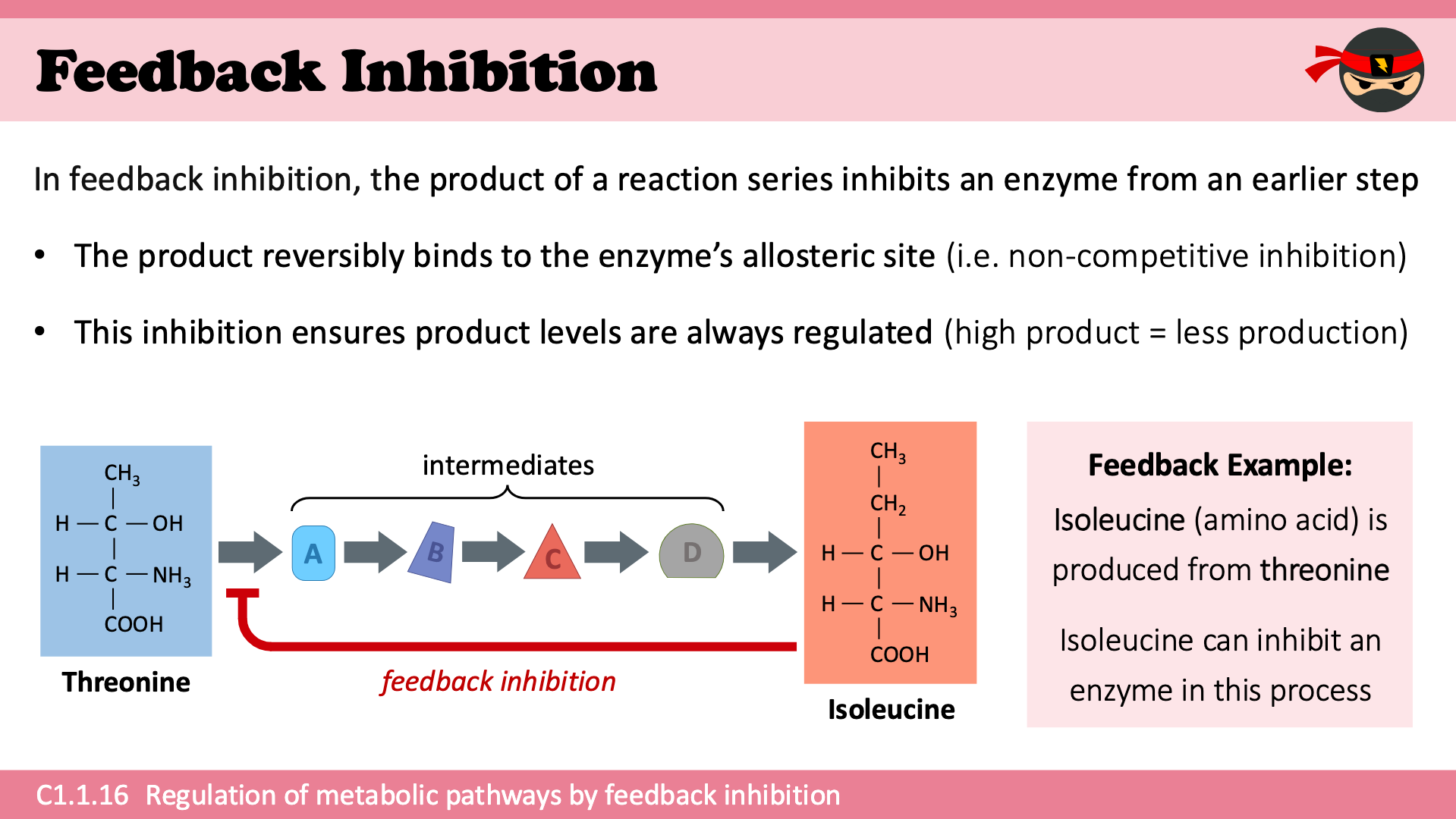
Explain how feedback inhibition regulates metabolic pathways, using the example of isoleucine synthesis from threonine.
20
21
Fill in the Blanks
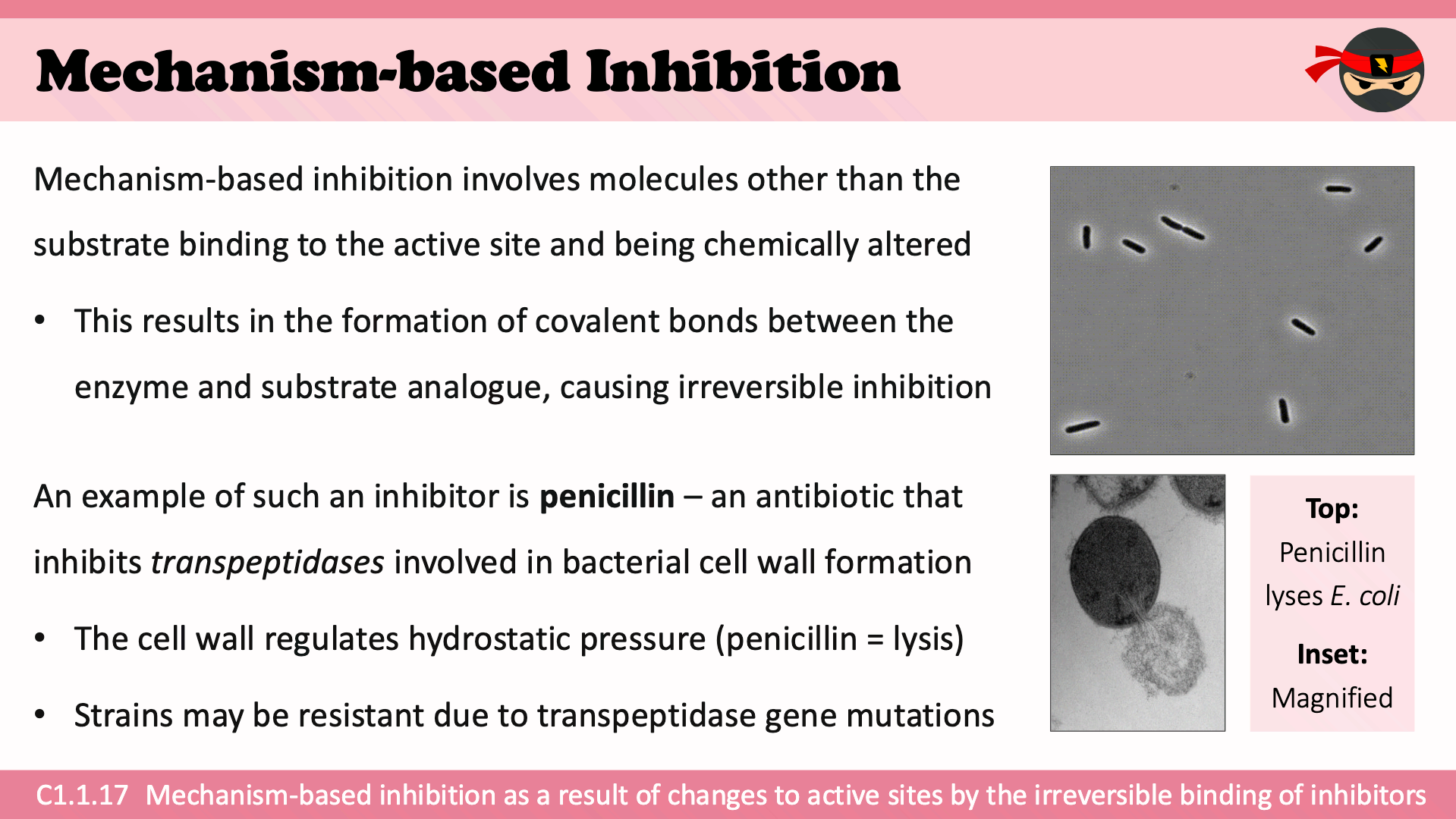
Penicillin inhibits bacterial cell wall formation by binding irreversibly to the enzyme
Type answer...
22
23
Multiple Select
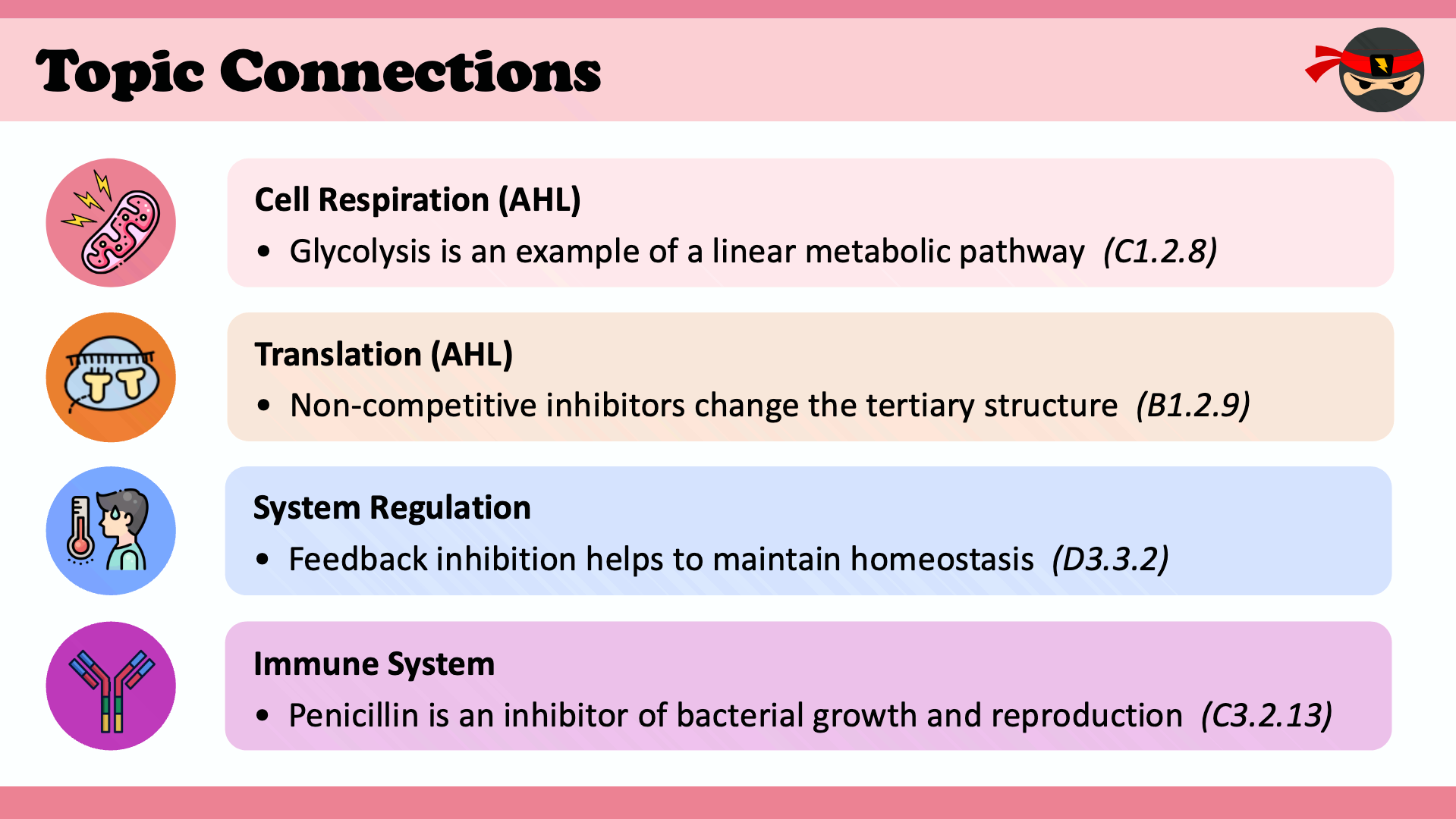
Which of the following processes are connected to enzyme inhibition as described in the lesson?
Cell respiration
Translation
System regulation
Immune system
24
Fill in the Blanks
The region of the enzyme where the substrate binds is called the
Type answer...
25
Open Ended
Explain how the structure of an enzyme's active site determines its specificity and how changes in temperature or pH can affect enzyme activity.
Show answer
Auto Play
Slide 1 / 25
SLIDE
Similar Resources on Wayground

19 questions
Internet.
Presentation
•
1st Grade
19 questions
Animal senses
Presentation
•
1st Grade
19 questions
TALLER INTERPRETACIÓN DEL HEMOGRAMA
Presentation
•
1st - 3rd Grade
19 questions
Atmosphere (Extended)
Presentation
•
KG
17 questions
Scarcity
Presentation
•
1st Grade
19 questions
Plant Divisions
Presentation
•
KG
17 questions
Google Class
Presentation
•
1st Grade
19 questions
La familia
Presentation
•
KG - 1st Grade
Popular Resources on Wayground
10 questions
How much do you know about our Portrait of an Eagle?

Quiz
•
10th Grade
10 questions
Fast Food Slogans
Quiz
•
6th - 8th Grade
21 questions
Continents and Oceans
Quiz
•
6th Grade
20 questions
Parts of Speech
Quiz
•
5th Grade
16 questions
Subject & Predicate
Quiz
•
5th Grade
25 questions
Multiplication Facts
Quiz
•
5th Grade
12 questions
Map Skills
Quiz
•
3rd Grade
22 questions
Continents and Oceans
Quiz
•
5th Grade
Discover more resources for Science
10 questions
Identifying Physical and Chemical Changes

Interactive video
•
1st - 5th Grade
10 questions
Discovering the Properties of Matter
Interactive video
•
1st - 5th Grade
7 questions
1st RC1 English
Quiz
•
1st Grade
5 questions
Sense and Response
Quiz
•
1st Grade
10 questions
science review
Quiz
•
1st - 5th Grade
10 questions
Exploring Physical and Chemical Changes in Chemistry
Interactive video
•
1st - 5th Grade
10 questions
Exploring the Formation of Landforms
Interactive video
•
1st - 5th Grade
7 questions
1st RC1 Spanish
Quiz
•
1st Grade