Search Header Logo
Module 2 Stars, Galaxies and the Universe

Module 2 Stars, Galaxies and the Universe

Assessment

Presentation

Science

12th Grade

Practice Problem

Easy

NGSS
MS-ESS1-1, MS-ESS1-2, HS-ESS1-1

+7

Standards-aligned

Used 2+ times

FREE Resource

48 Slides • 56 Questions

1

media

2

media

3

Open Ended

Why do you think it is important for us to study objects in the night sky, such as stars, galaxies, and planets?

4

Multiple Choice

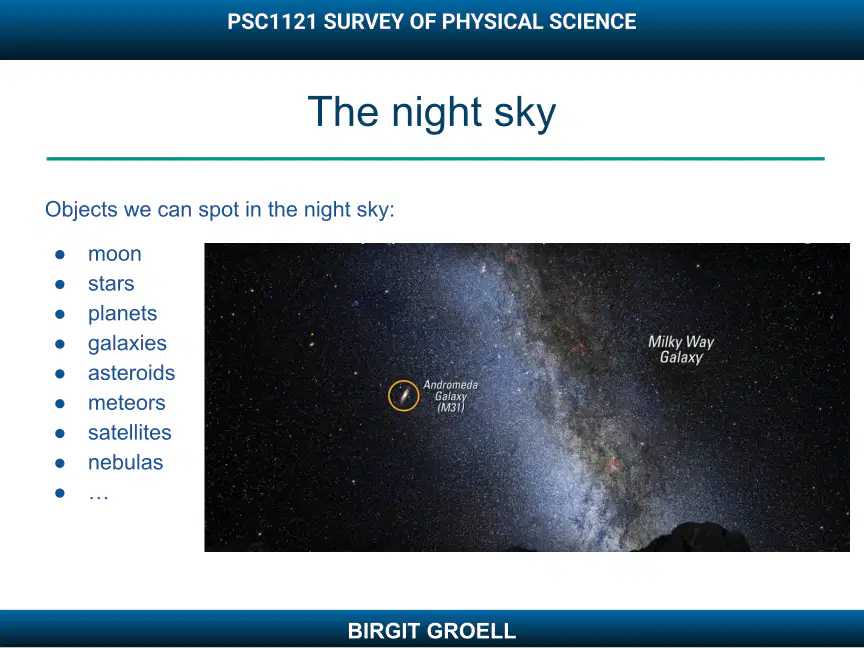
Which of the following objects can be seen in the night sky?

1

Moon

2

Stars

3

Planets

4

All of the above

5

Open Ended

Why do you think it is important for us to study objects in the night sky such as stars, galaxies, and planets?

6

Multiple Choice

Which of the following objects can be observed in the night sky?

1

Moon

2

Stars

3

Planets

4

All of the above

7

media

8

Multiple Choice

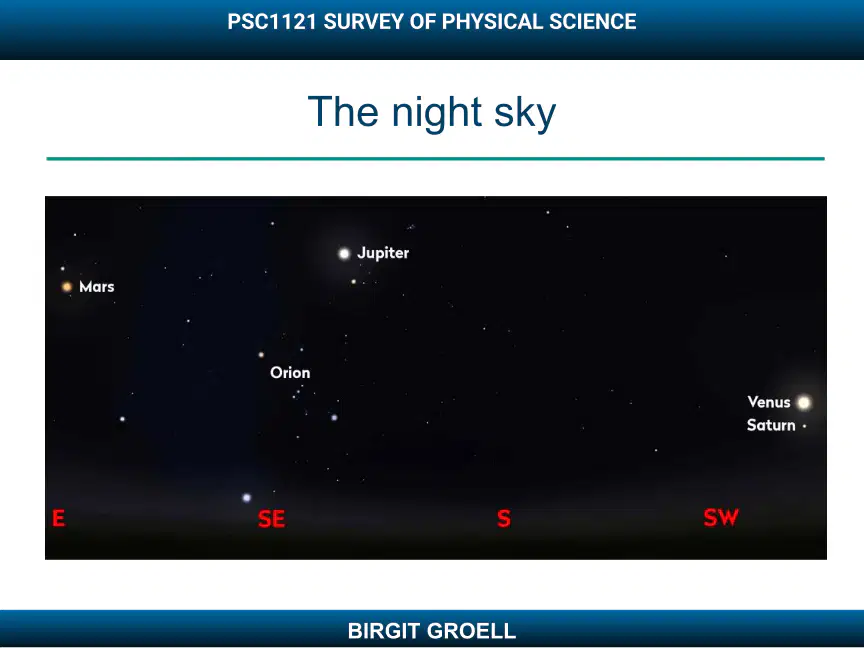
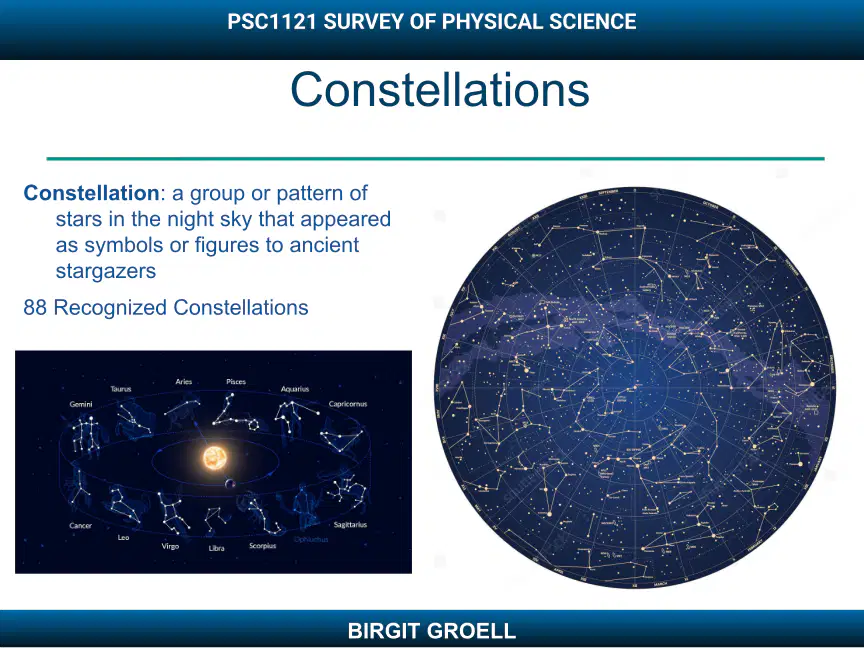
Which of the following objects can be seen in the night sky as shown in the image?

1

Mars, Jupiter, Venus, Saturn, Orion

2

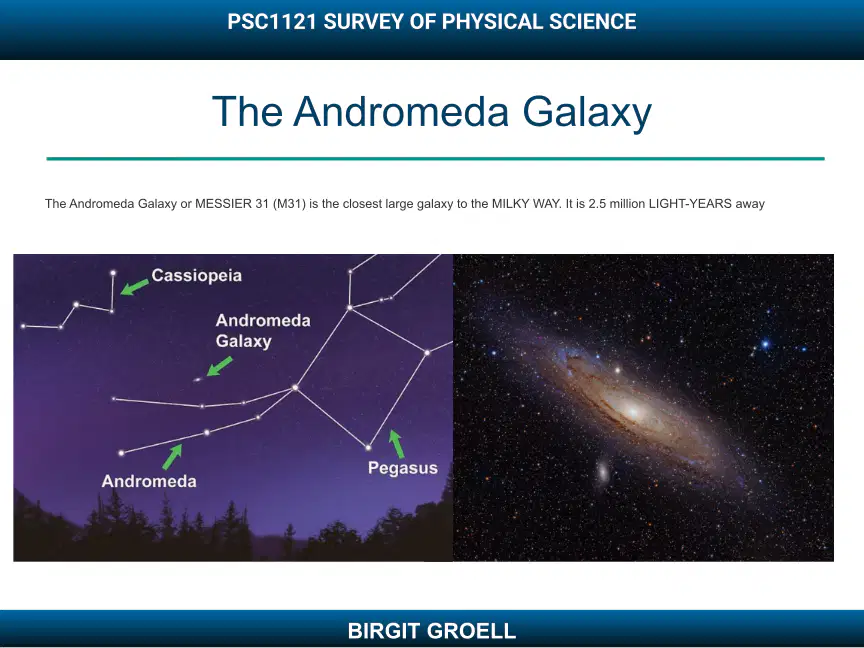
Mercury, Neptune, Pluto, Andromeda

3

Earth, Moon, Sun, Sirius

4

Uranus, Neptune, Cassiopeia, Betelgeuse

9

media

10

Multiple Select

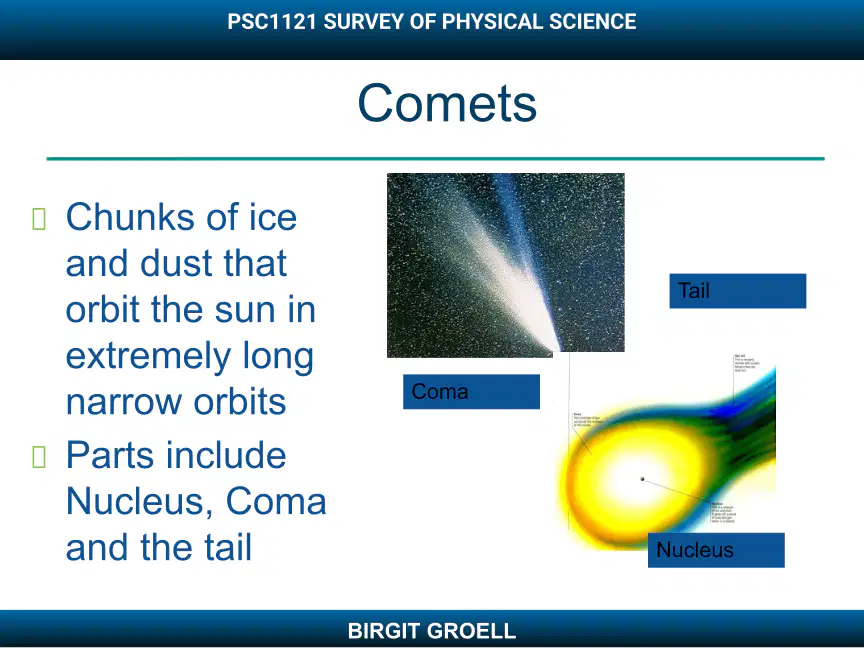
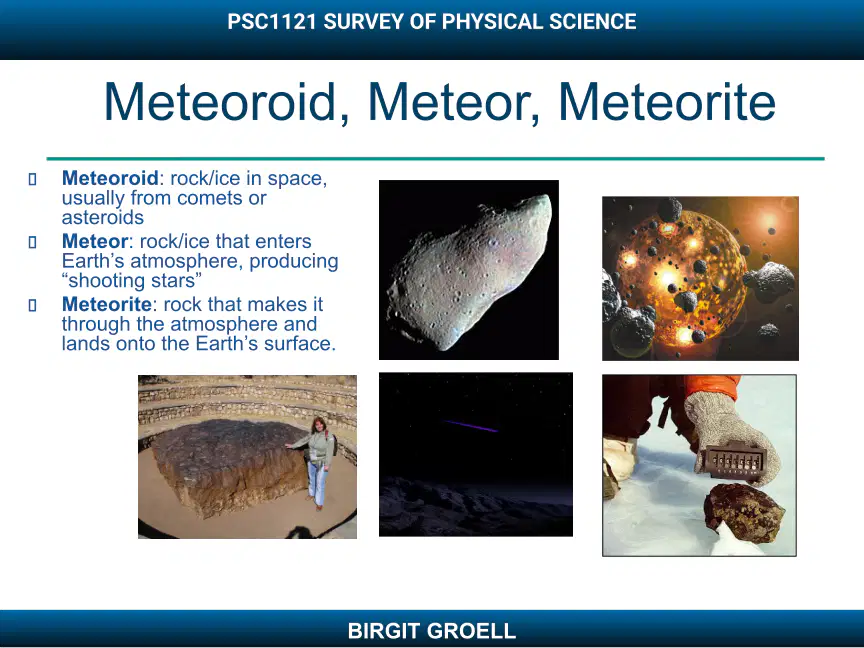
Which of the following are parts of a comet?

1

Nucleus

2

Coma

3

Tail

4

Core

11

media

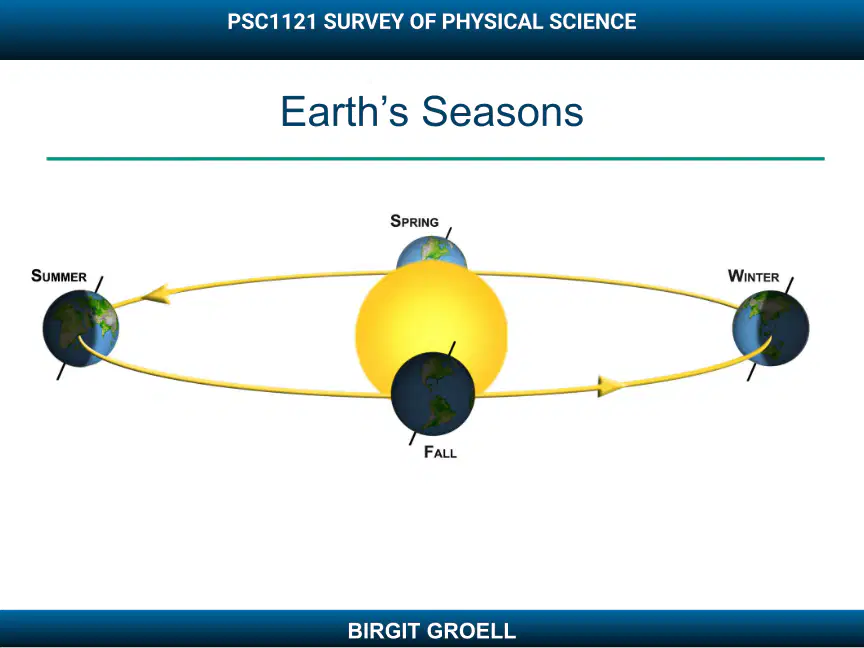
12

Multiple Choice

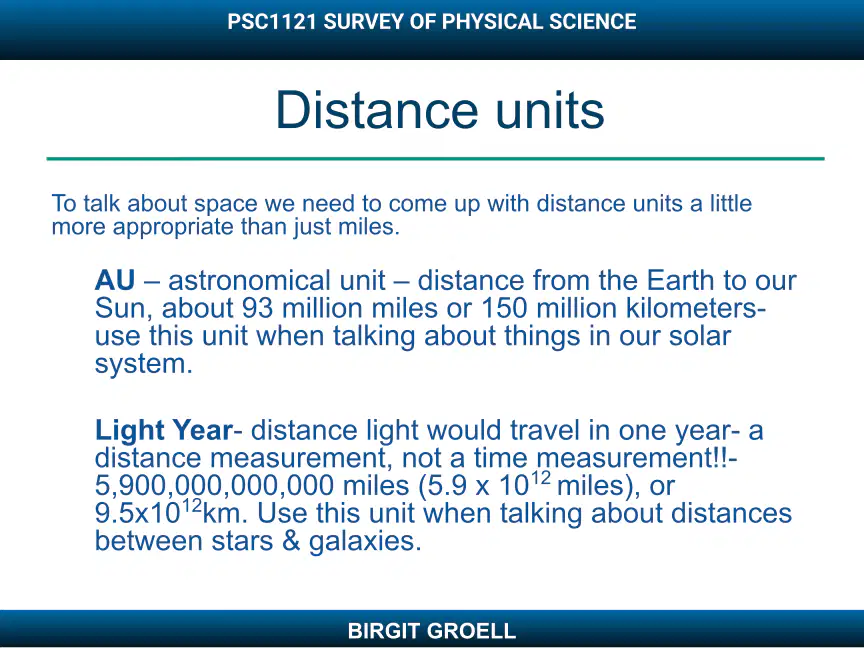
Which unit would you use to measure the distance between stars in different galaxies?

1

Astronomical Unit (AU)

2

Miles

3

Light Year

4

Kilometers

13

Open Ended

Explain the main differences between a comet and a meteorite based on their composition and behavior in the solar system.

14

Multiple Choice

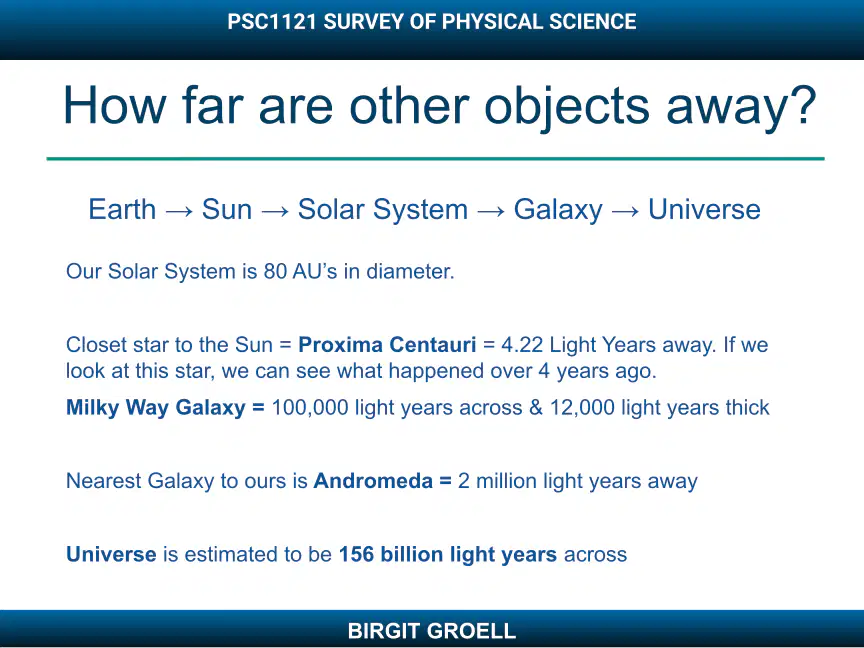
Arrange the following in order of increasing distance from Earth: Solar System, Universe, Sun, Galaxy.

1

Sun, Solar System, Galaxy, Universe

2

Solar System, Sun, Galaxy, Universe

3

Sun, Galaxy, Solar System, Universe

4

Galaxy, Sun, Solar System, Universe

15

media

16

Fill in the Blanks

Type answer...

17

Open Ended

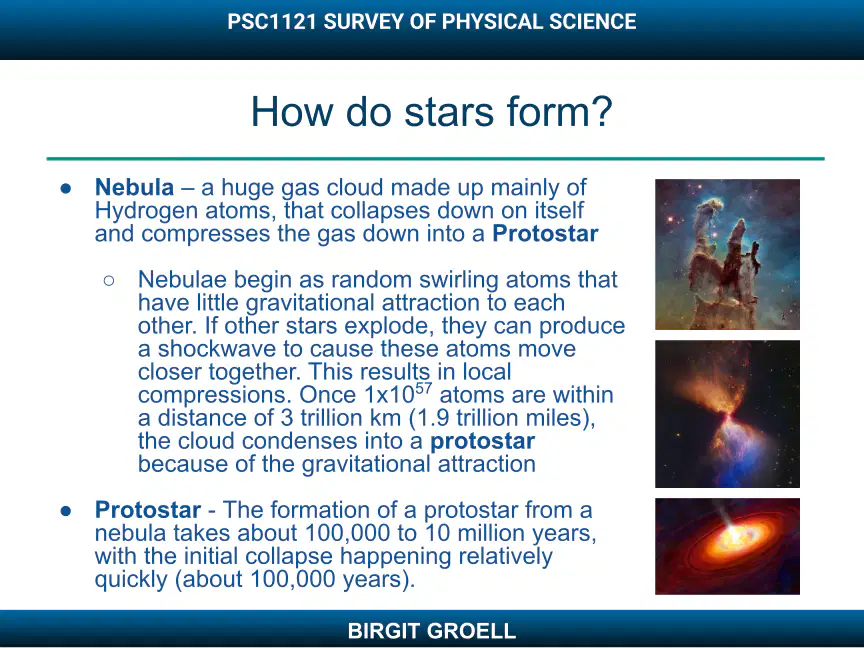
Explain how a nebula leads to the formation of a protostar.

18

media

19

Fill in the Blanks

Type answer...

20

Open Ended

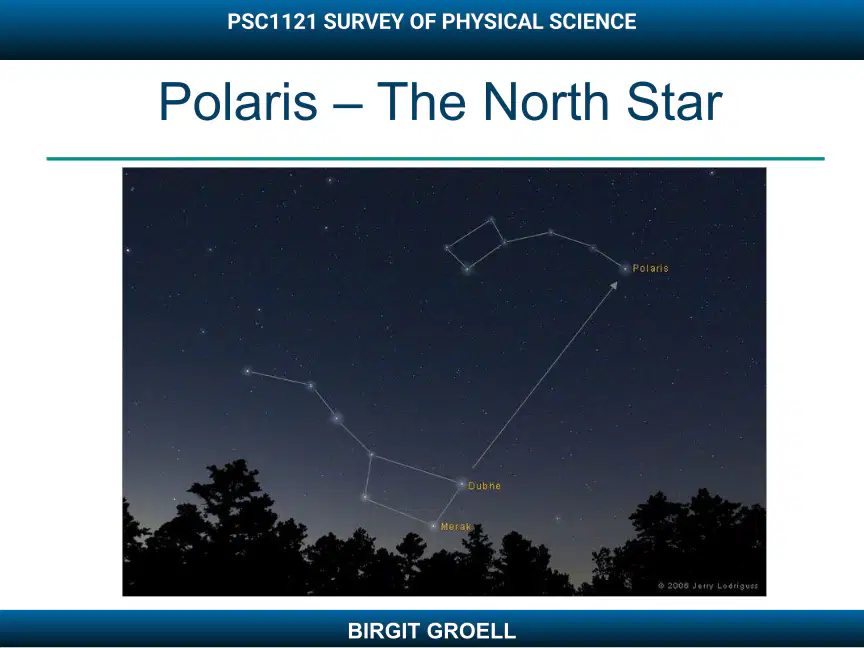
Why is Polaris referred to as the North Star and how can it be located in the night sky?

21

Open Ended

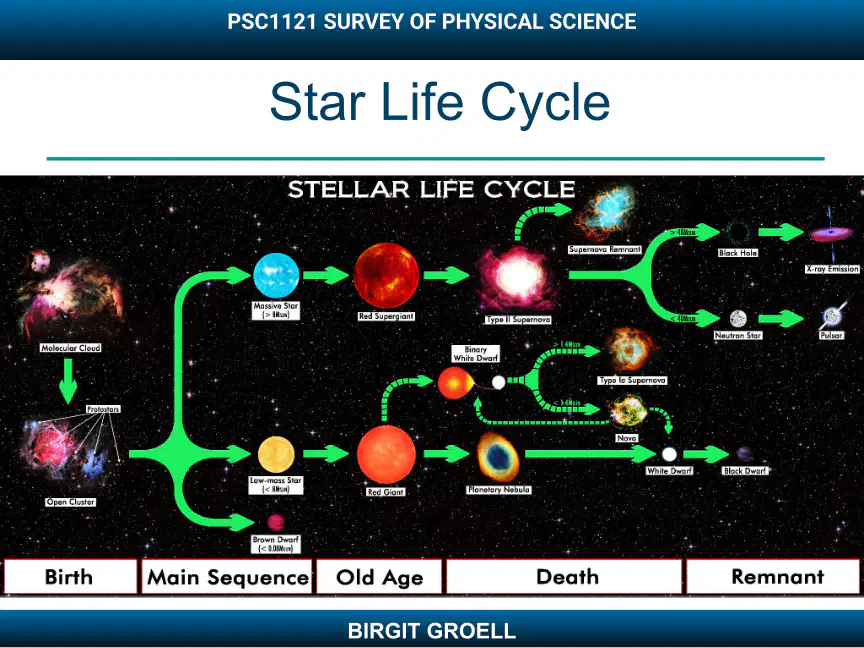
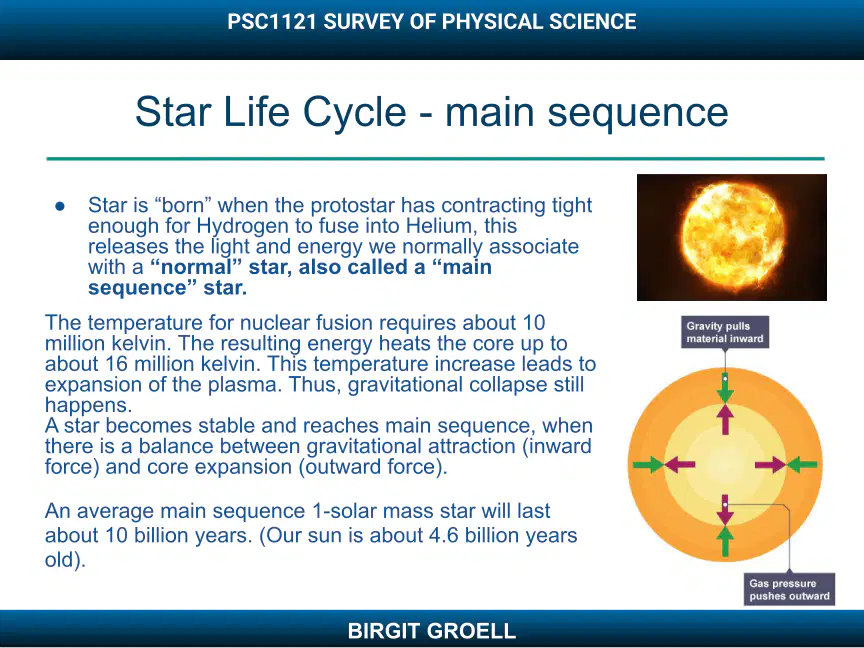
Compare the main sequence stage and the red giant stage of a star's life cycle in terms of core processes and stability.

22

Multiple Select

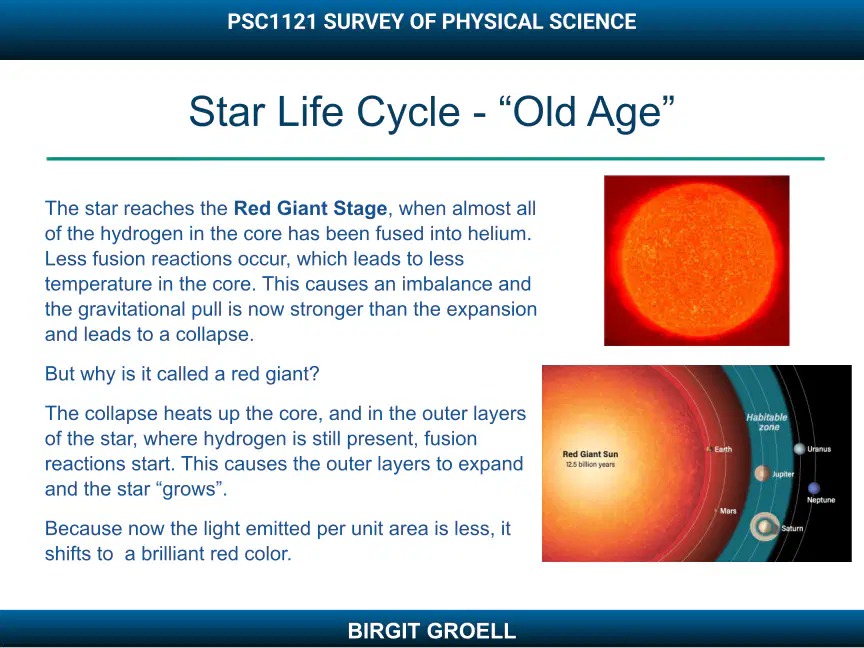
Which of the following are true about the Red Giant Stage of a star's life cycle?

1

The core temperature increases due to less fusion reactions.

2

The outer layers of the star expand and the star grows.

3

The star emits more light per unit area than before.

4

The star shifts to a brilliant red color.

23

media

24

Multiple Choice

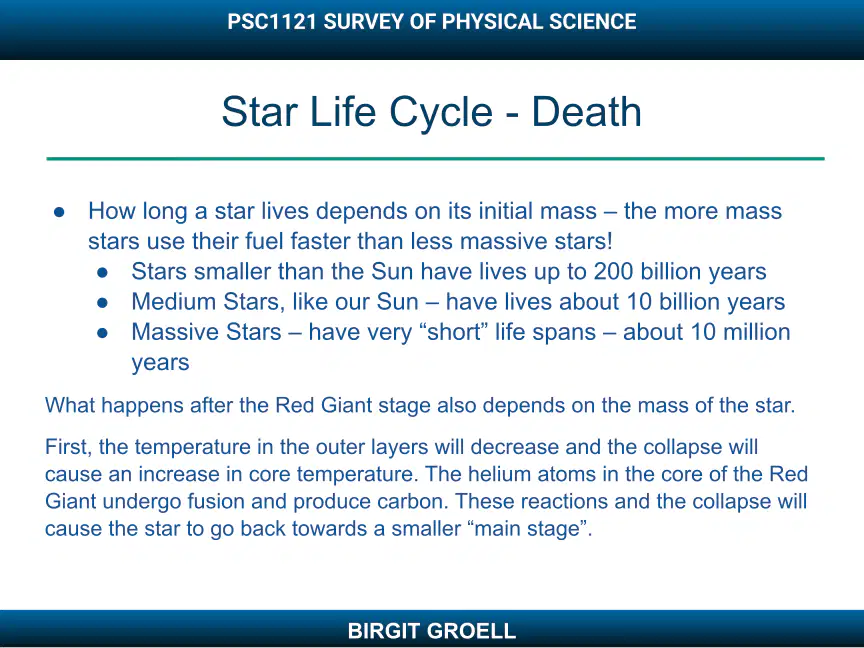
Which of the following best explains why massive stars have shorter lifespans compared to less massive stars?

1

Massive stars use their fuel faster than less massive stars.

2

Massive stars are farther from the Sun.

3

Less massive stars undergo more fusion reactions.

4

Less massive stars are hotter than massive stars.

25

Fill in the Blanks

26

Open Ended

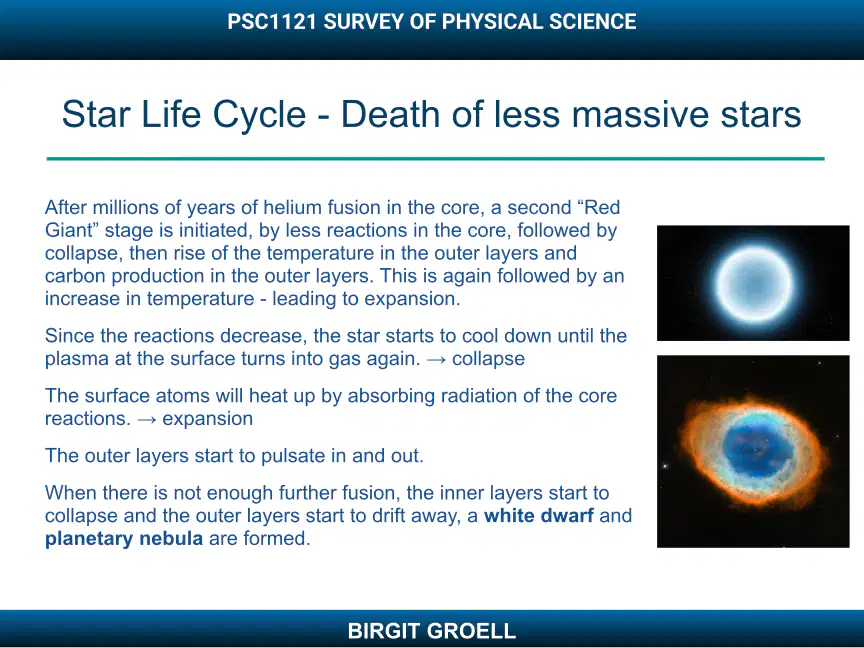
Describe the process that leads to the formation of a white dwarf and a planetary nebula in less massive stars.

27

media

28

Multiple Choice

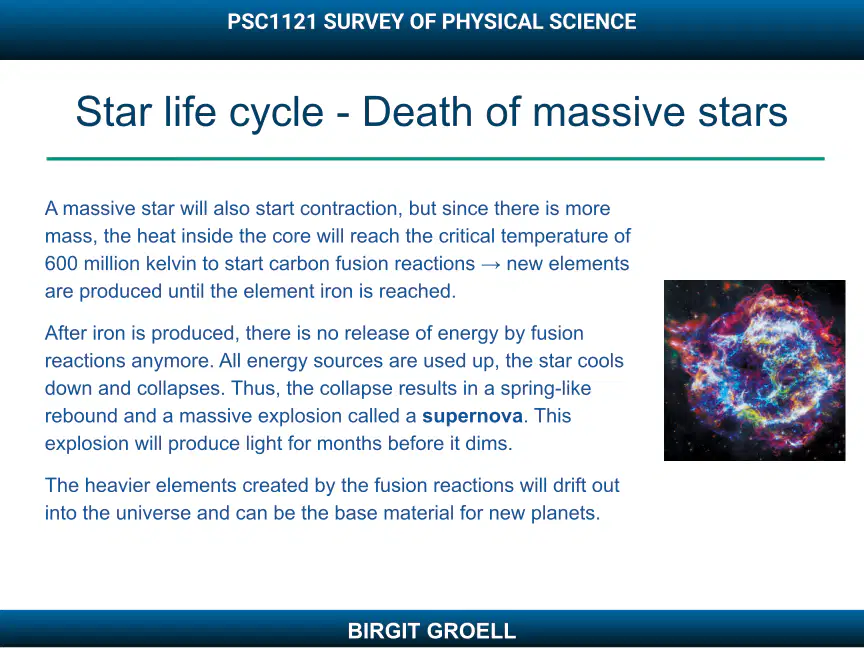
Which of the following events occurs after a massive star has exhausted its energy sources and iron is produced in its core?

1

The star becomes a white dwarf.

2

The star explodes as a supernova.

3

The star turns into a red giant.

4

The star forms a planetary nebula.

29

media

30

Multiple Select

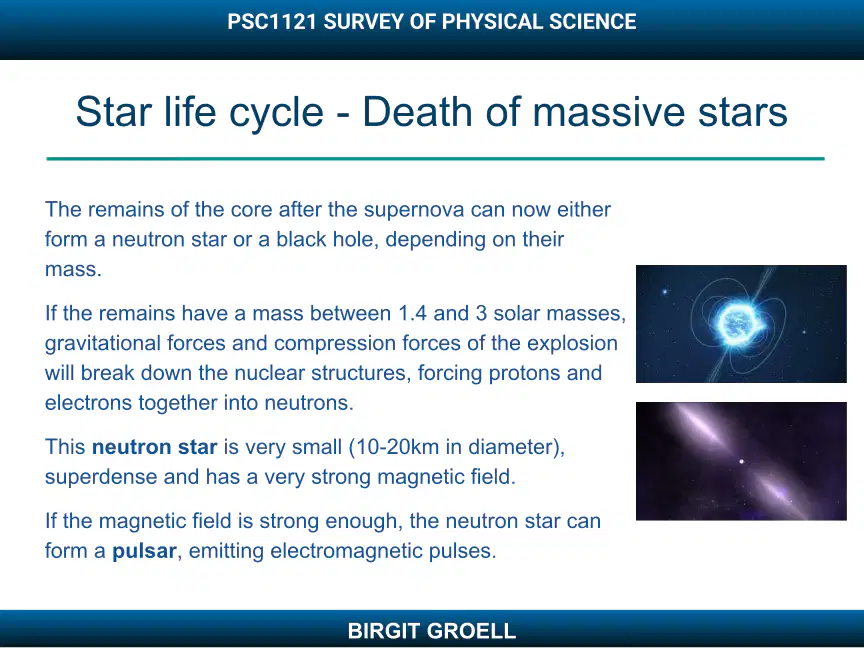
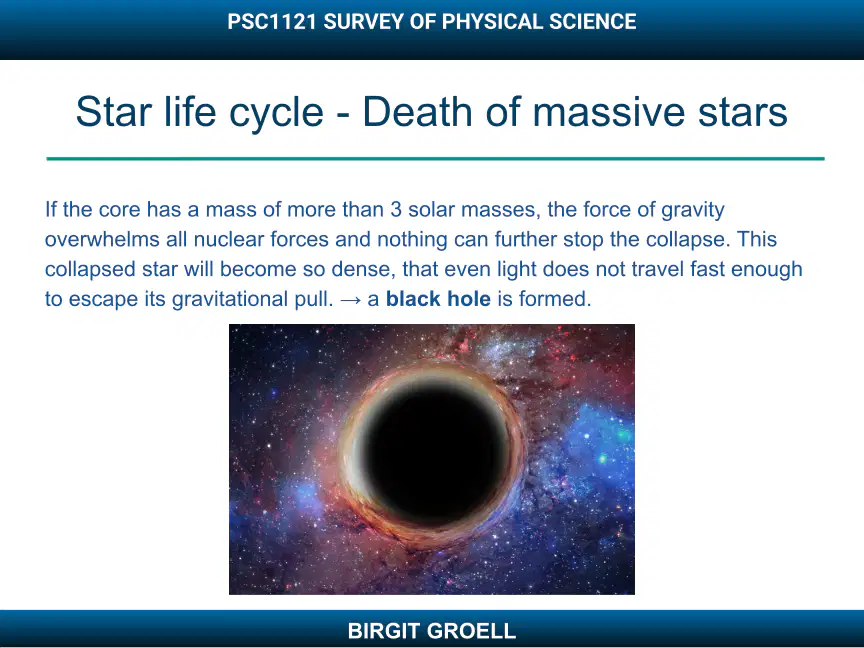
After a supernova, what are the possible remnants that can form from the core of a massive star?

1

Neutron star

2

White dwarf

3

Black hole

4

Planetary nebula

31

media

32

Fill in the Blanks

Type answer...

33

media

34

media

35

Multiple Choice

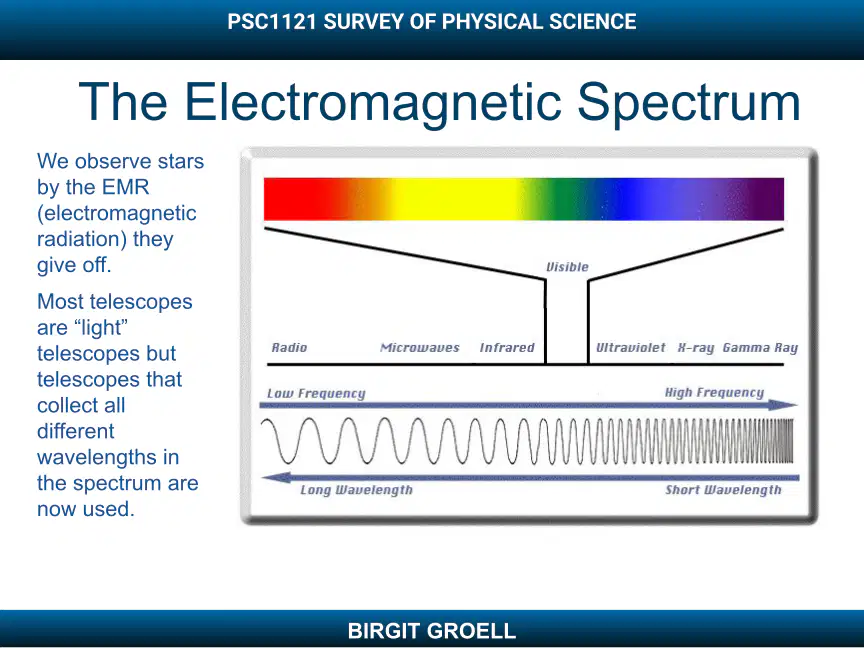
Which part of the electromagnetic spectrum do most telescopes traditionally observe, and why are telescopes that collect all wavelengths now used?

1

Visible light; because it is the only part we can see with our eyes

2

Infrared; because it penetrates dust clouds

3

Radio waves; because they travel the farthest

4

All wavelengths; to gather more information about stars and other objects

36

Open Ended

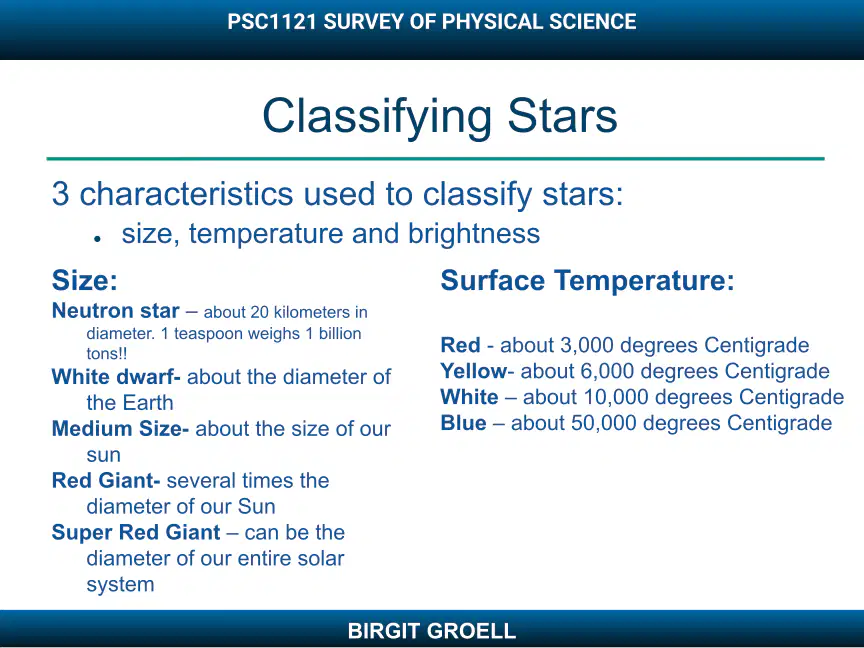
List and briefly explain the three main characteristics used to classify stars.

37

media

38

Open Ended

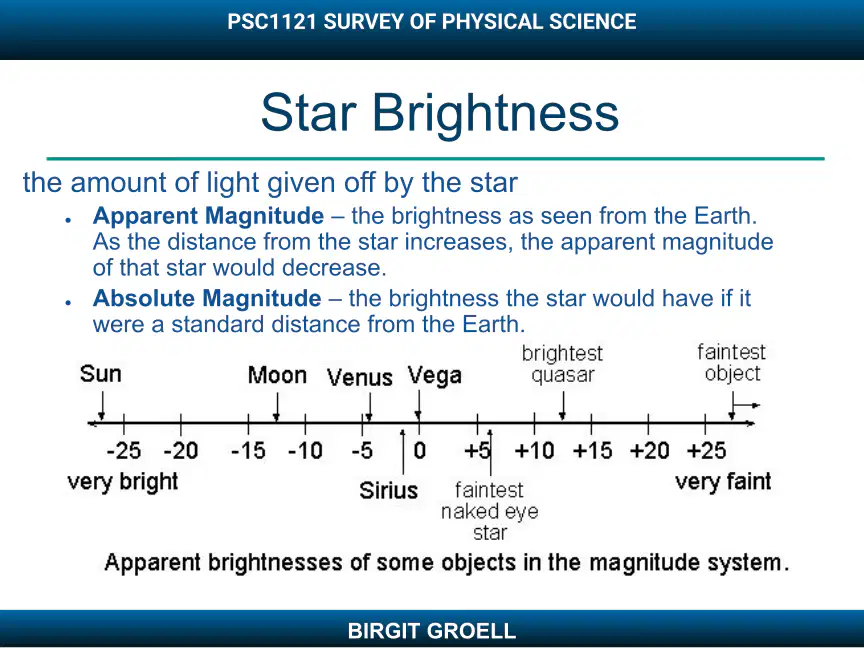
Explain the difference between apparent magnitude and absolute magnitude when measuring the brightness of stars.

39

Multiple Choice

Which of these is NOT a step in the lifecycle of stars with low mass, medium mass and high mass?

1

White Dwarf

2

Red Giant

3

Main sequence

4

Protostar

40

Multiple Choice

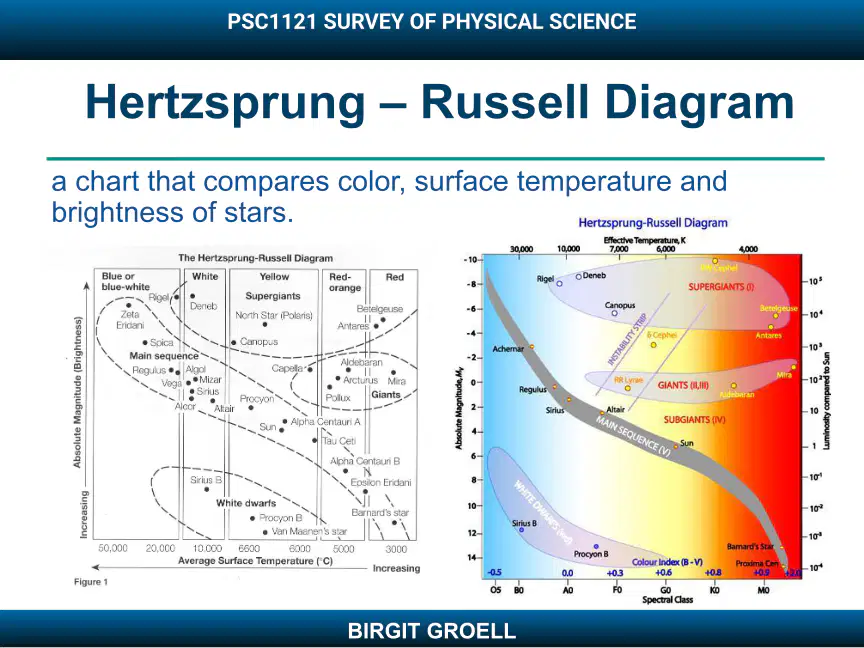
Which of the following statements about the Hertzsprung–Russell Diagram is correct?

1

It compares only the color of stars.

2

It shows the relationship between a star's color, surface temperature, and brightness.

3

It is used to measure the distance of stars from Earth.

4

It only includes main sequence stars.

41

media

42

Multiple Choice

Which of the following correctly matches the type of star with its typical lifespan?

1

Stars smaller than the Sun: about 10 million years

2

Medium stars like the Sun: about 200 billion years

3

Massive stars: about 10 million years

4

Massive stars: about 10 billion years

43

media

44

Open Ended

Describe the process that leads to the formation of a white dwarf and a planetary nebula in less massive stars.

45

media

46

media

47

media

48

Drag and Drop

Match the terms to their descriptions:

Main Sequence -


Protostar -


Nebula -


Supernova -


Neutron Star -​
Drag these tiles and drop them in the correct blank above

Main Sequence

Protostar

Nebula

Supernova

Fusion from Hydrogen to Helium produces energy.
The cloud starts collapsing
A region of space with a high density of gas and d
An explosion of a star at the end of its life.

A massive system of stars, stellar remnants, interstellar gas, dust, and dark matter

A very small, superdense form of matter.

49

Reorder

Reorder the following

Nebula

Protostar

Red Giant

Supernova

Black Hole

1
2
3
4
5

50

media

51

media

52

Multiple Choice

Which type of electromagnetic radiation has the shortest wavelength?

1

Gamma Ray

2

Radio

3

Infrared

4

Visible

53

media

54

Open Ended

Explain the difference between apparent magnitude and absolute magnitude of a star, and why these distinctions are important in astronomy.

55

media

56

Multiple Select

Which of the following properties are compared in the Hertzsprung-Russell diagram?

1

Color

2

Surface temperature

3

Brightness

4

Distance from Earth

57

media

58

Fill in the Blanks

59

media

60

Open Ended

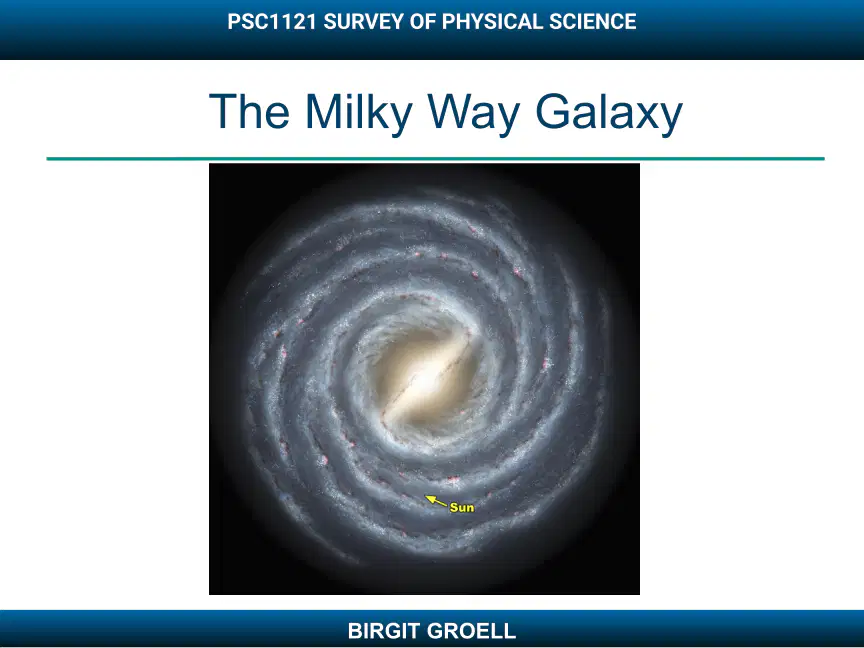
Describe the location of the Sun within the Milky Way Galaxy based on the diagram.

61

media

62

Multiple Select

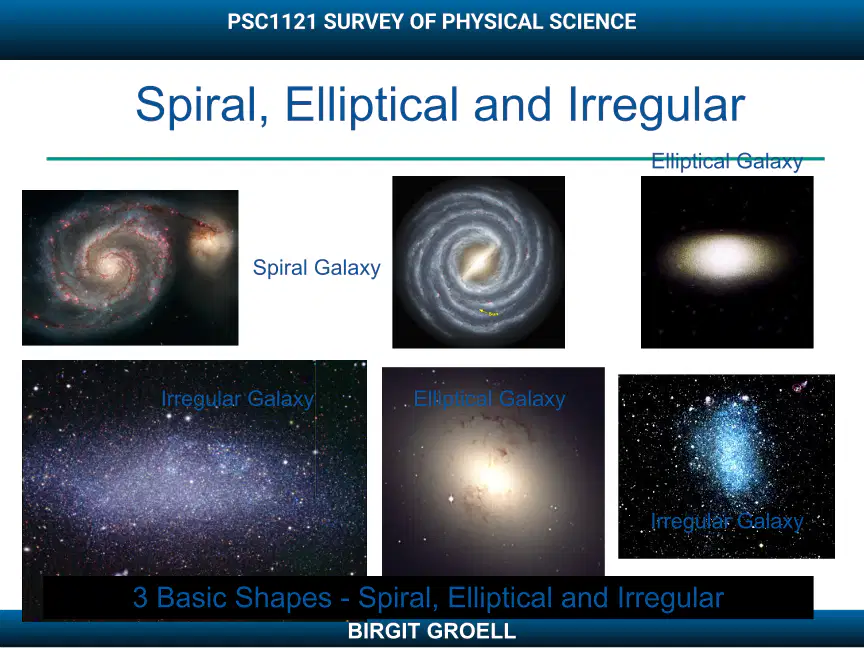
Which of the following are basic shapes of galaxies?

1

Spiral

2

Elliptical

3

Irregular

4

Rectangular

63

media

64

media

65

media

66

Multiple Choice

Which of the following is NOT typically spotted in the night sky?

1

moon

2

stars

3

planets

4

clouds

67

Open Ended

Reflecting on what you learned about the night sky, which object would you most like to observe and why?

68

media

69

media

70

media

71

media

72

media

73

media

74

Multiple Choice

What does the rotation of the earth cause us to experience?
1
seasons
2
year
3
day & night
4
eclipse

75

Multiple Choice

What is the longest day of the year?
1
winter solstice
2
summer solstice
3
fall equinox
4
spring equinox

76

Multiple Choice

Why do we experience the changing of the season on the earth?
1
distance from the sun
2
rotation of the earth
3
change in solar output
4
tilt of the earth's axix

77

media

78

Multiple Choice

Question image

What are the inner planets called?

1

Gas Giants

2

Dwarf Planets

3

Terrestrial Planets

4

Terrestrial Giants

79

media

80

Multiple Choice

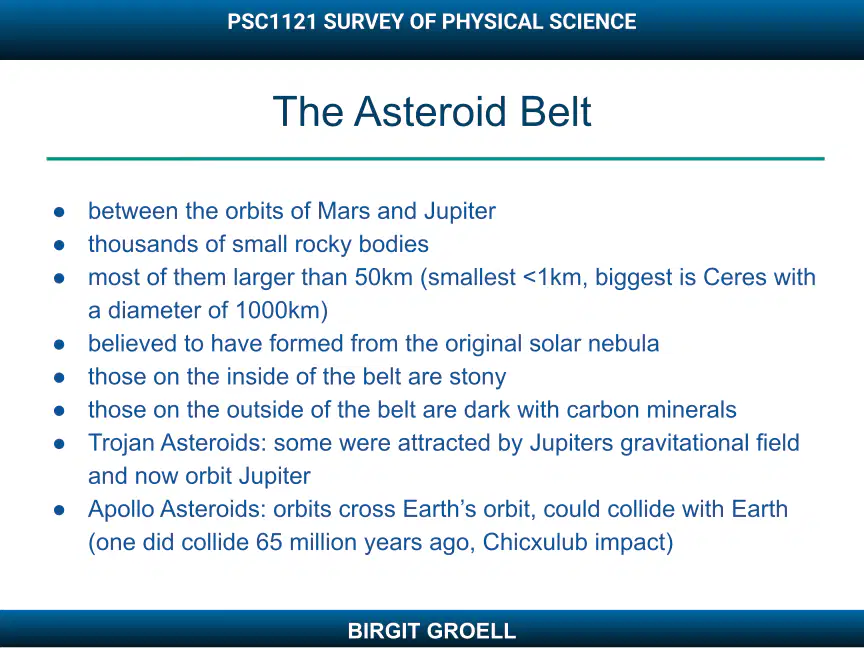
Where is the Asteroid Belt located in the Solar System?

1

near Neptune

2

between Mercury and Venus

3

between Mars and Jupiter

4

around the Sun

81

media

82

media

83

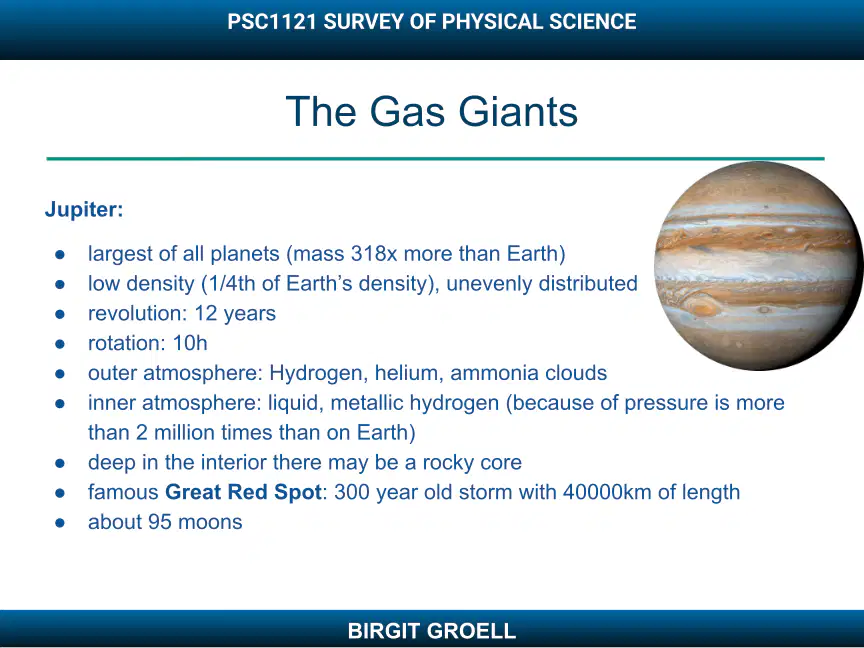
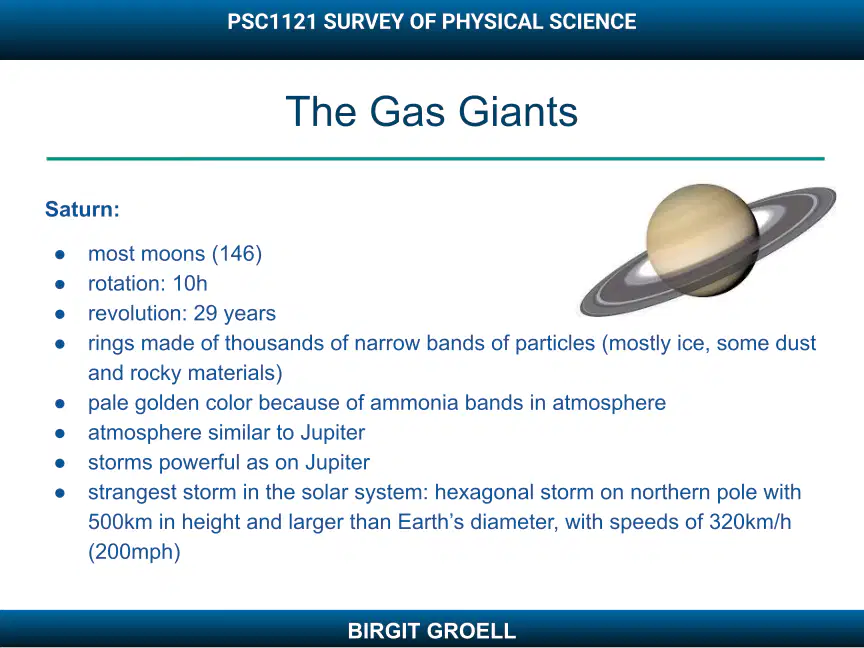
Multiple Choice

The surface of the two gas giants is mainly made of

1

ammonia

2

Carbon dioxide

3

Hydrogen

4

Helium

84

media

85

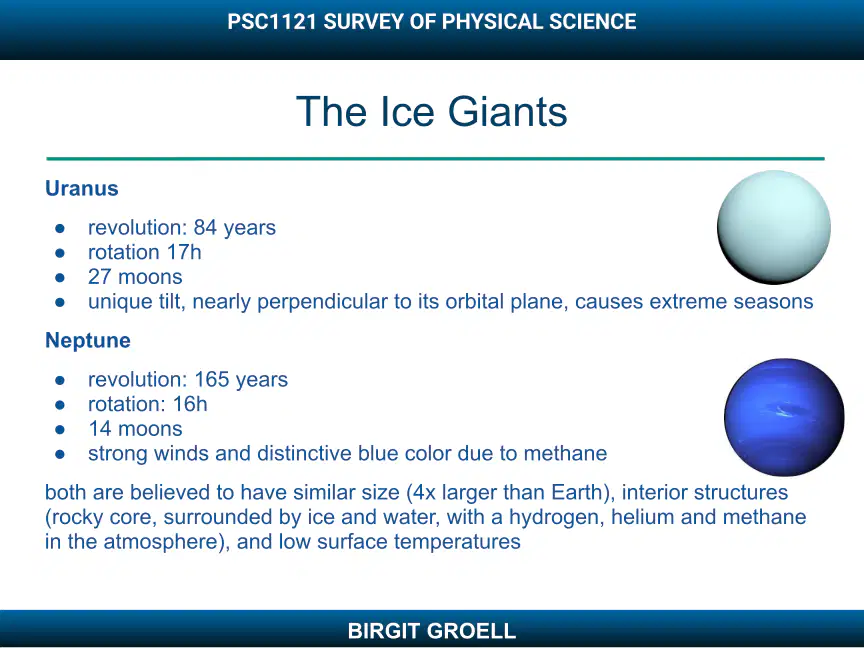
Open Ended

What is special about Uranus?

86

media

87

Multiple Choice

Question image

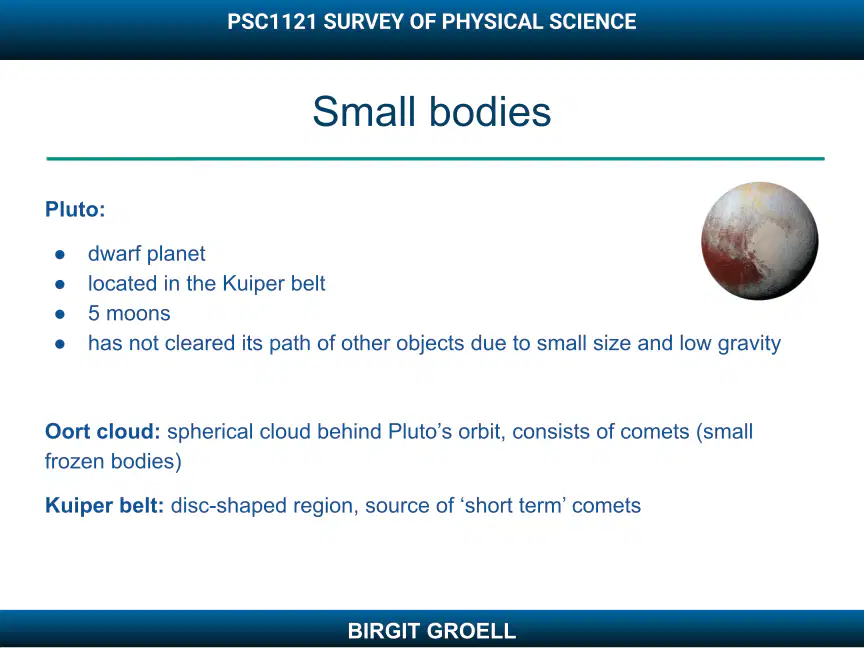
Why is Pluto no longer considered a planet?

1

It is too small

2

It does not orbit the Sun

3

It's too far away

4

It doesn't dominate it's orbit

88

Fill in the Blanks

media image

89

Labelling

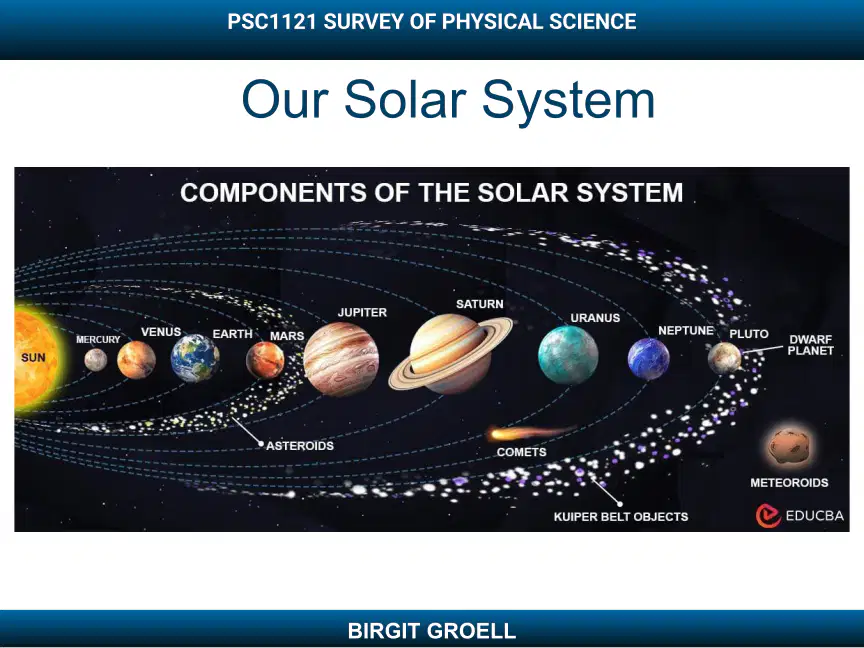
Label the planets in our solar system

Drag labels to their correct position on the image

Saturn

Neptune

Mercury

Venus

Mars

Jupiter

Uranus

Earth

90

media

91

media

92

Reorder

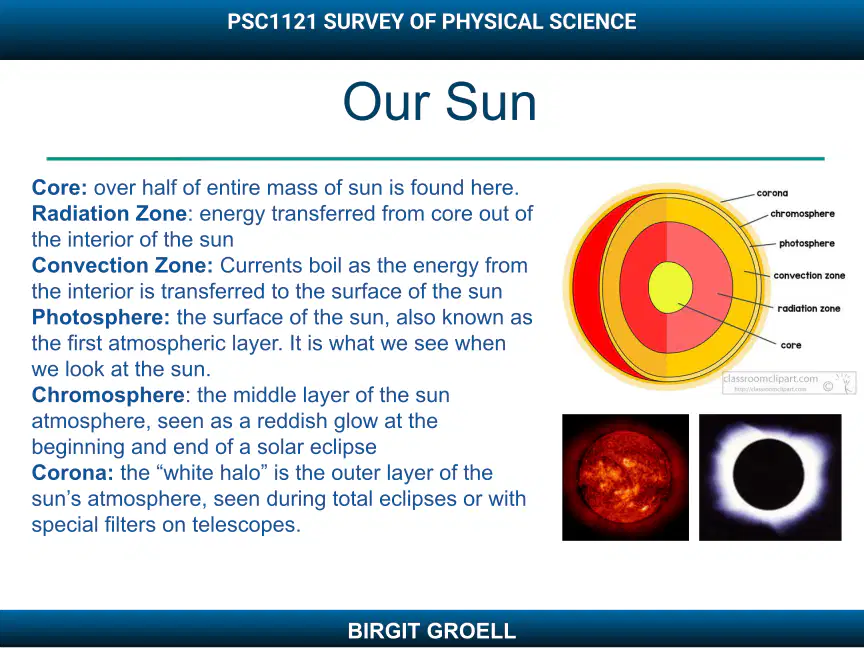
Reorder the following from inside to surface of the sun

Core

Radiation Zone

Convection Zone

Photosphere

Corona

1
2
3
4
5

93

media

94

Open Ended

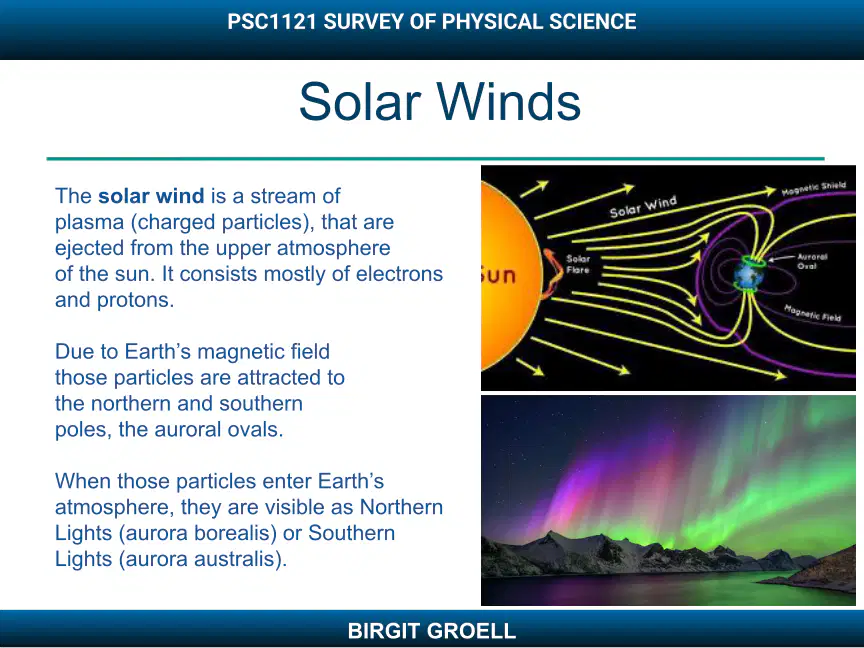
What causes the Northern and Southern Lights?

95

media

96

media

97

Multiple Choice

Question image
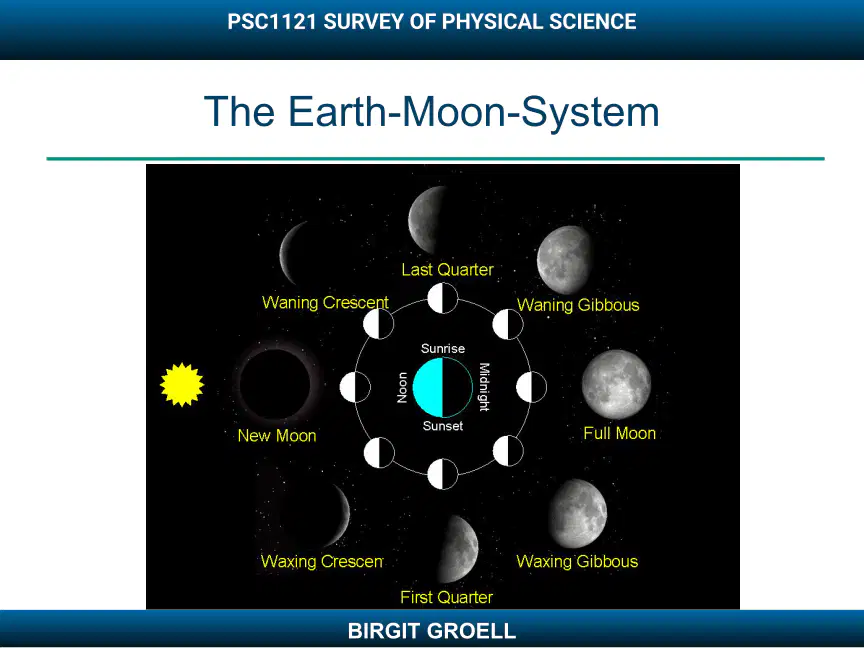
Name the moon phase
1
waning crescent
2
waxing crescent
3
waning gibbous
4
waxing gibbous

98

Multiple Choice

Question image
Name the moon phase
1
Waning Crescent
2
Waxing Crescent
3
Waning Gibbous
4
Waxing Gibbous

99

Multiple Choice

Question image
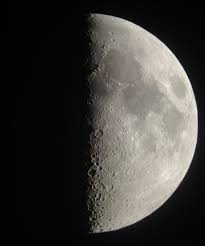
Name the moon phase
1
First Quarter
2
Last Quarter
3
New Moon
4
Full Moon

100

media

101

media

102

Multiple Choice

Question image
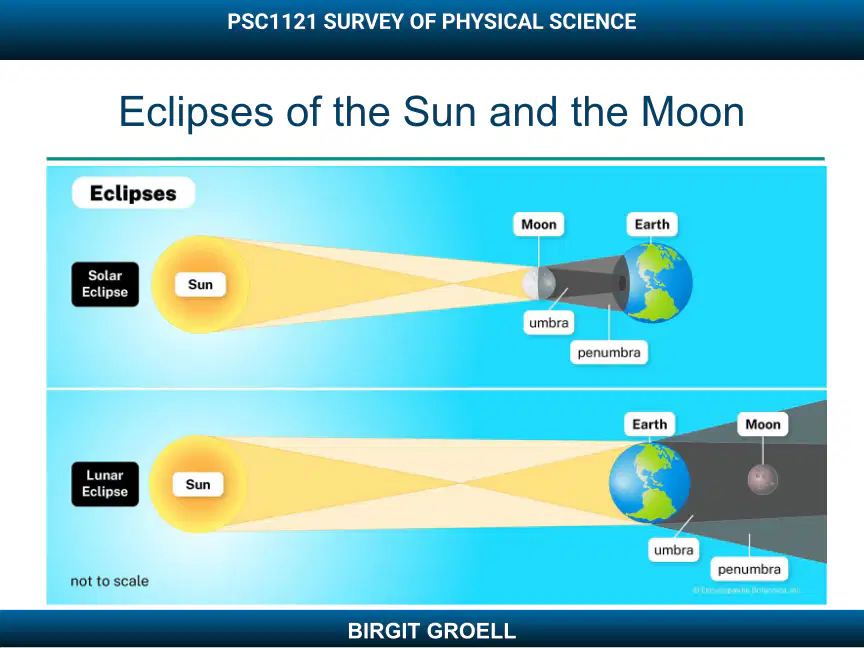
For a solar eclipse to occur, what has to happen?
1
The sun must be directly between Earth and the moon.
2
The moon must be directly between Earth and the Sun.

103

Multiple Choice

Question image
In a Lunar Eclipse what is in the middle of the lineup?
1
Sun
2
Moon 
3
Earth
4
Jupiter

104

Multiple Choice

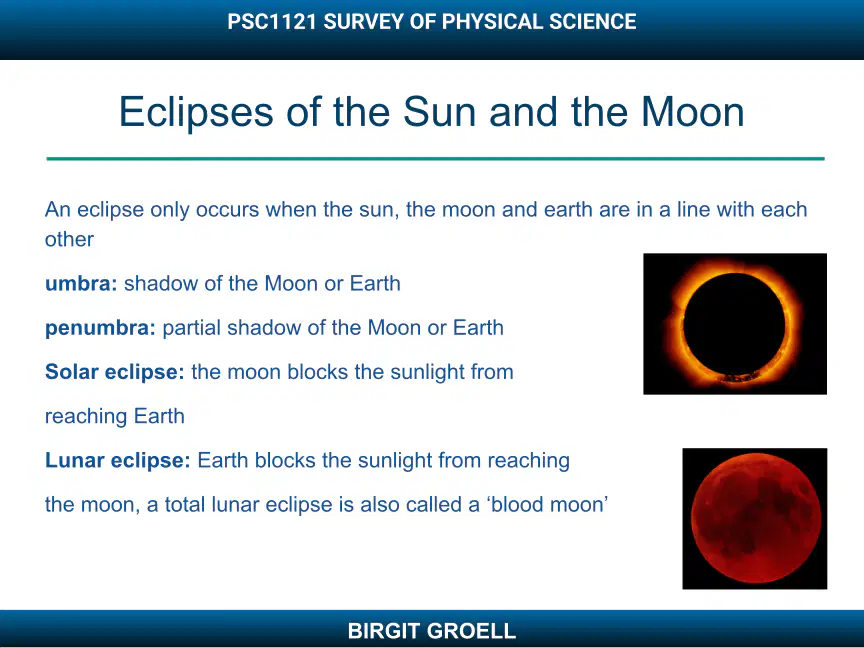
Since some light will still illuminate the moon, it will appear

1

red

2

green

3

yellow

4

blue

media

Show answer

Auto Play

Slide 1 / 104

SLIDE