Topic 2 BIO110 Chemistry of life & Biomolecules Openstax
Presentation
•
Biology
•
University
•
Medium
+5
Standards-aligned
Sara Hines
Used 2+ times
FREE Resource
48 Slides • 26 Questions
1
2
3
4
5
Multiple Choice
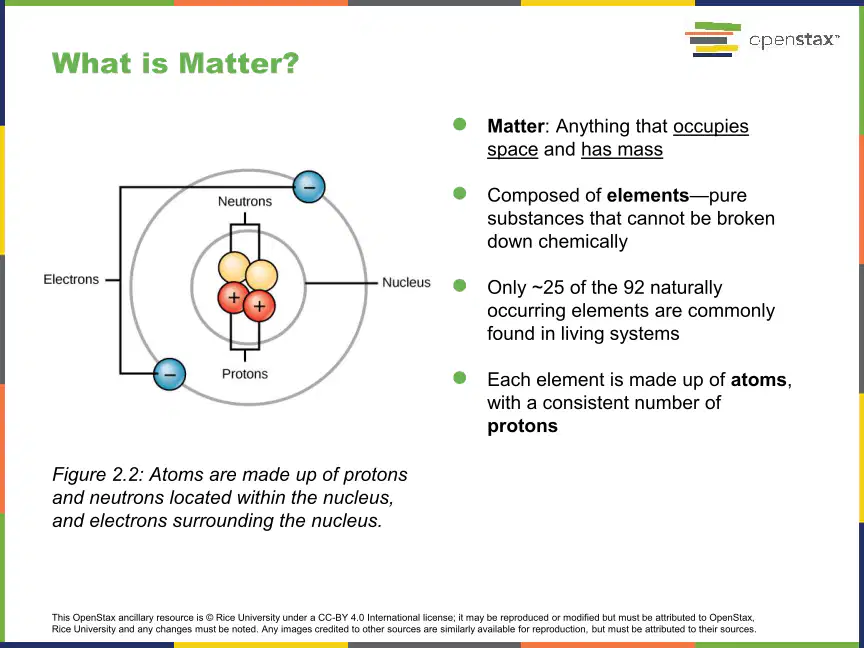
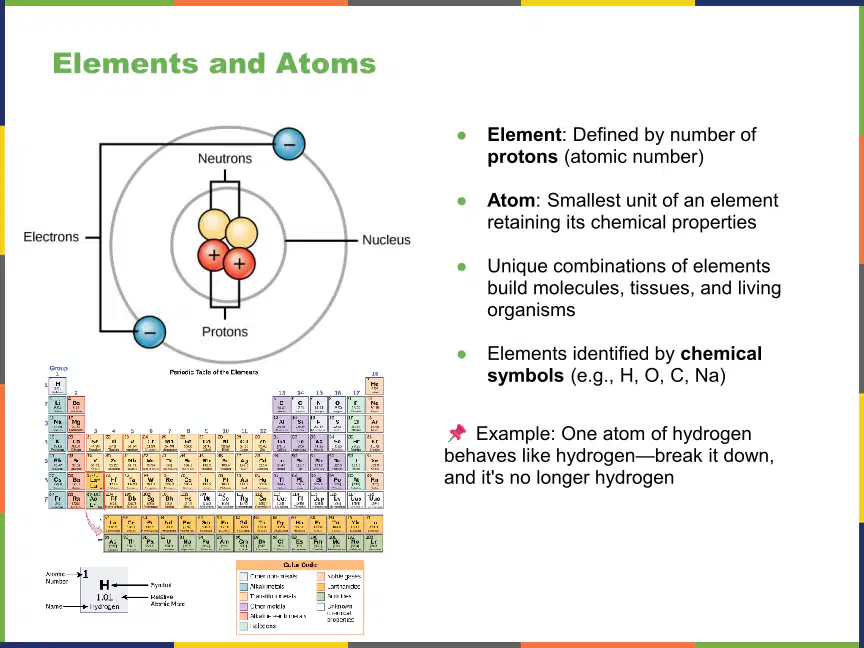
The smallest unit of an element that retains its chemical properties is called an ___.
cell
organelle
molecule
6
Multiple Choice
Which subatomic particle determines the identity of an element?
Proton
Neutron
Electron
Nucleus
7
8
Multiple Choice
Which subatomic particles are found in the nucleus of an atom?
Protons and neutrons
Electrons and protons
Neutrons and electrons
Only protons
9
10
Multiple Select
Which of the following contributes to the mass number of an element
protons
neutrons
electrons
11
12
13
Multiple Choice
Which of the following statements about isotopes is correct?
Isotopes have the same number of protons but different numbers of neutrons.
Isotopes have different numbers of protons and neutrons.
Isotopes have the same number of neutrons but different numbers of electrons.
Isotopes have the same number of electrons but different numbers of protons.
14
15
Multiple Choice
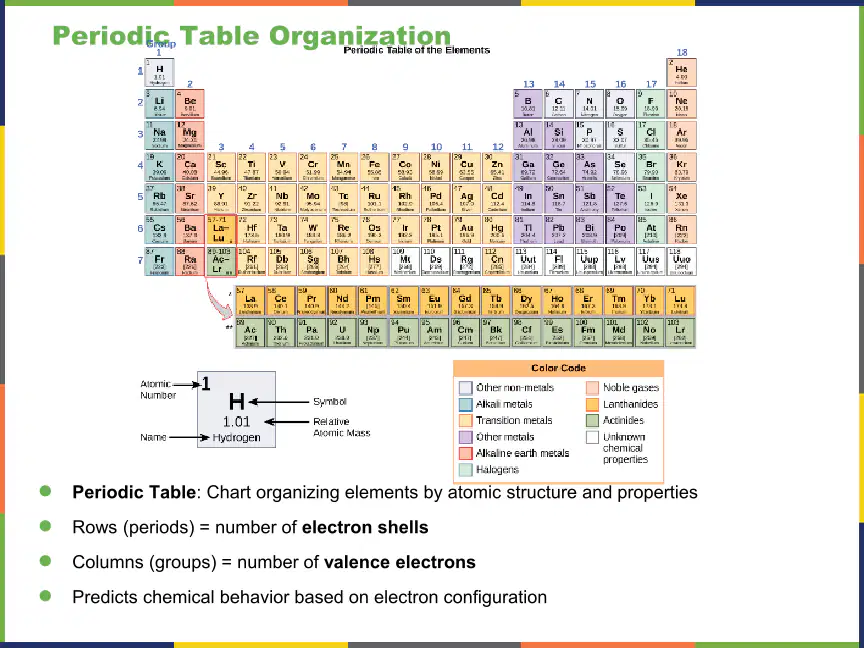
Which of the following best describes what the rows (periods) and columns (groups) represent in the periodic table?
Rows represent electron shells; columns represent valence electrons.
Rows represent valence electrons; columns represent electron shells.
Rows represent atomic mass; columns represent atomic number.
Rows represent atomic number; columns represent atomic mass.
16
17
Show the Periodic Table Trick
18
Multiple Select
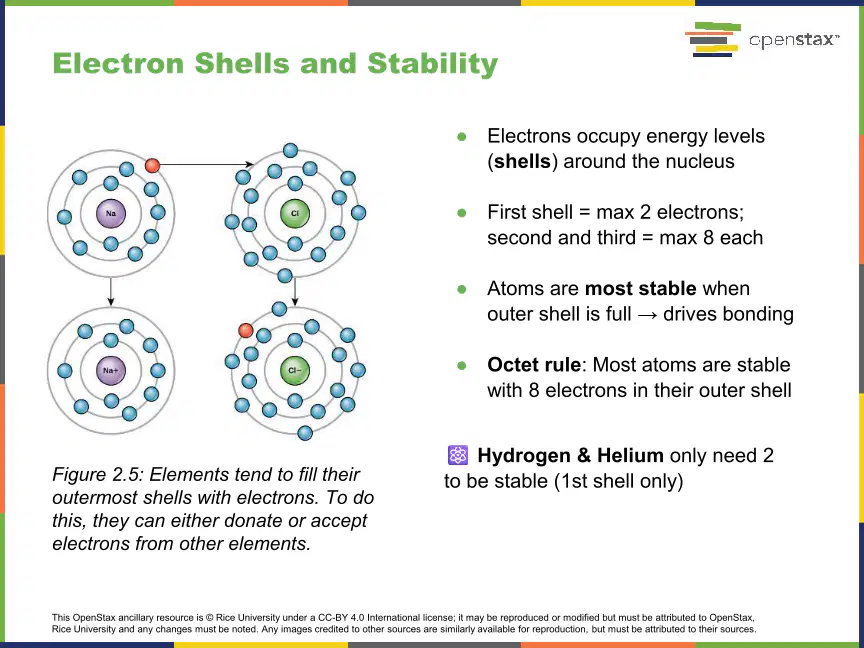
Which of the following statements about electron shells and stability are correct?
Atoms are most stable when their outer shell is full.
The first shell can hold a maximum of 2 electrons.
Most atoms are stable with 8 electrons in their outer shell.
Hydrogen and Helium need 8 electrons to be stable.
19
20
Multiple Choice
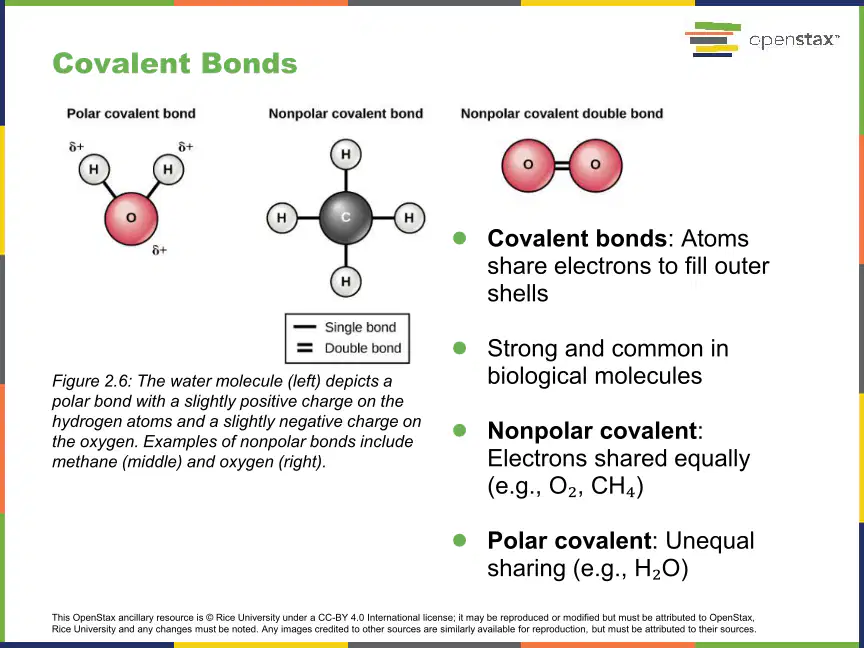
A covalent bond involves the ___ of electrons between atoms.
transfer
gain
loss
21
Multiple Choice
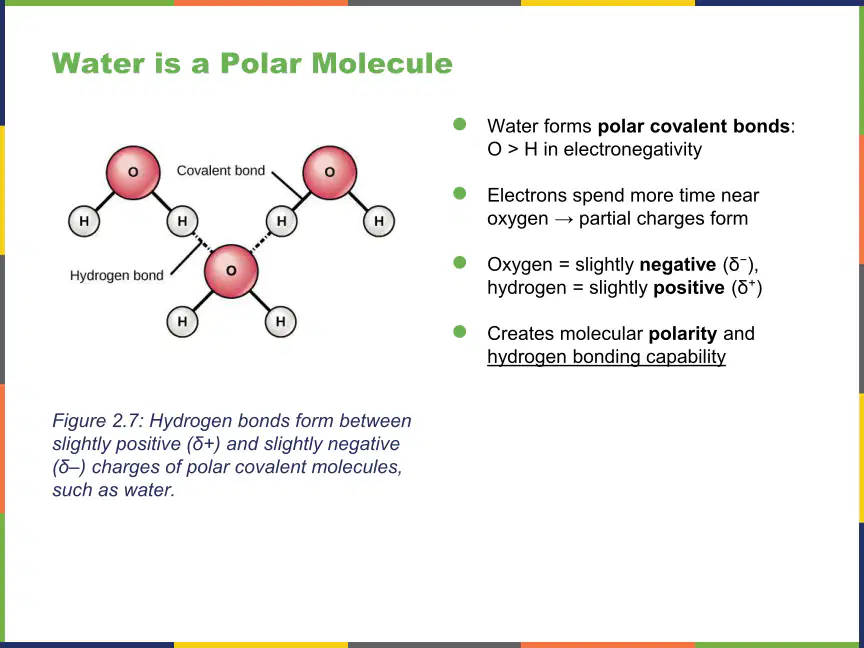
What is the main difference between polar covalent and nonpolar covalent bonds?
Polar covalent bonds involve unequal sharing of electrons, while nonpolar covalent bonds involve equal sharing.
Polar covalent bonds involve the transfer of electrons, while nonpolar covalent bonds involve sharing.
Polar covalent bonds are weaker than nonpolar covalent bonds.
Polar covalent bonds only occur in metals, while nonpolar covalent bonds occur in nonmetals.
22
23
24
Multiple Select
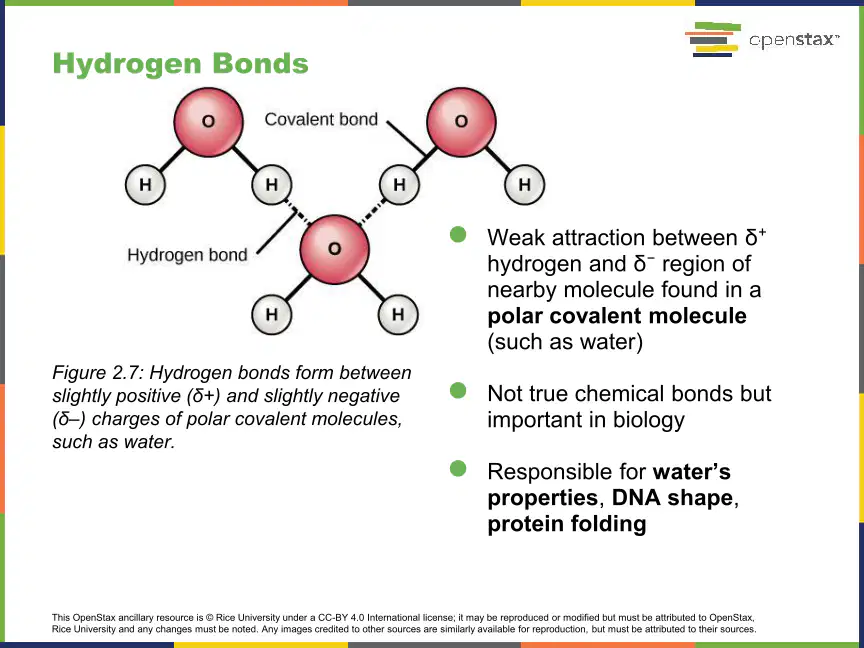
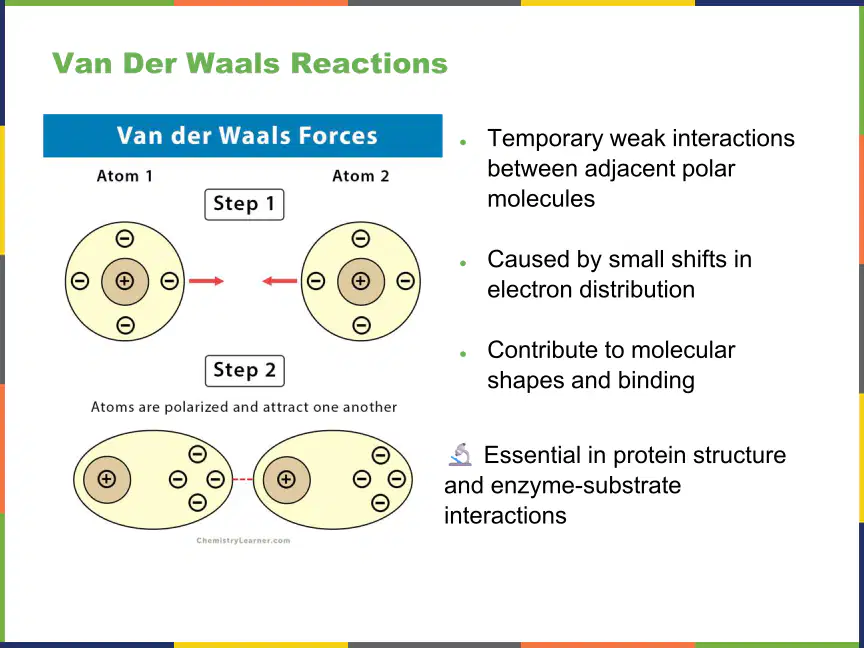
Although hydrogen bonding is not a true chemical bond, it is important for:
Water properties
Holding together a singular water molecule
DNA's shape
Protein folding
25
26
27
28
29
30
31
32
33
34
35
Multiple Choice
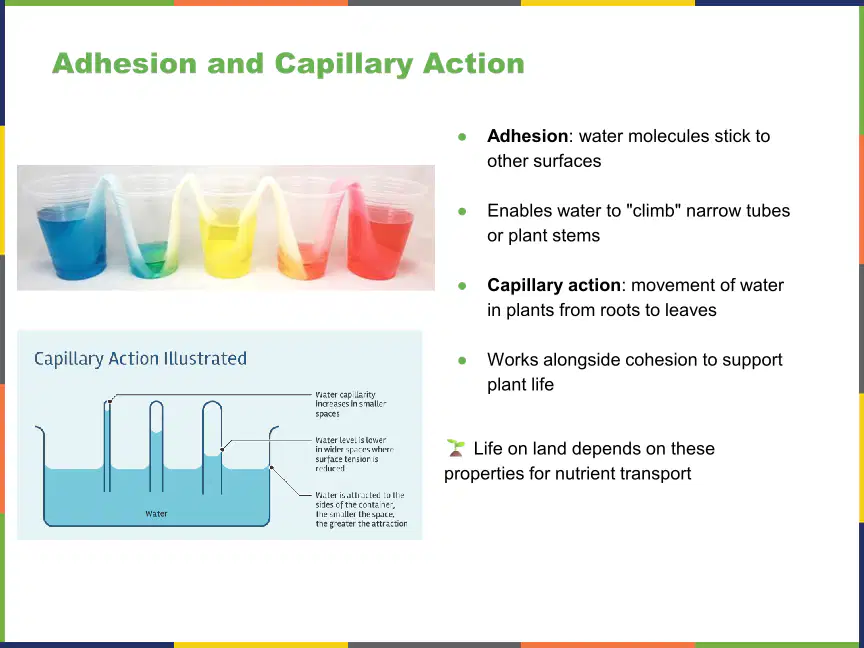
The movement of water in plants from roots to leaves is called ___.
capillary action
cohesion
evaporation
condensation
36
37
Multiple Choice
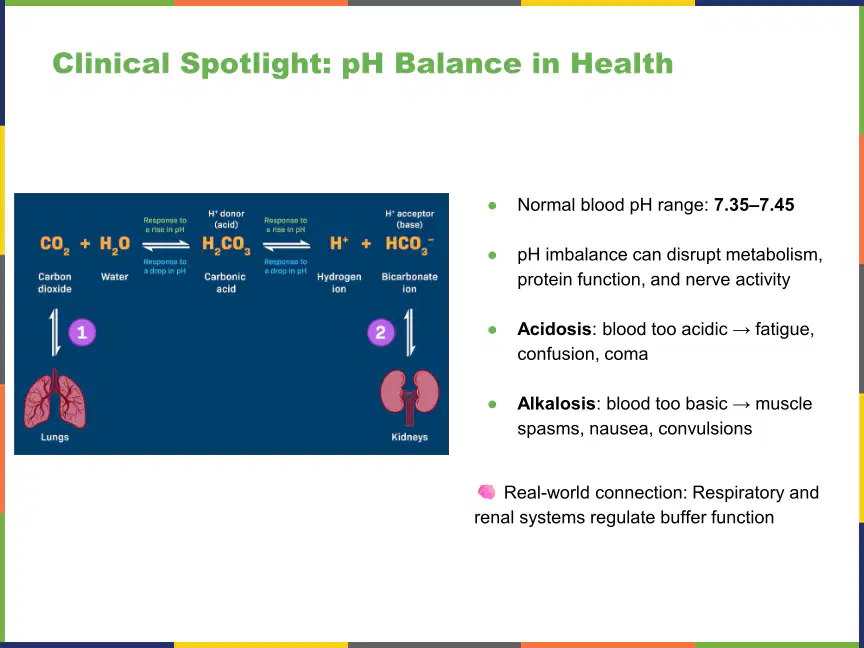
What does a low pH value (less than 7) indicate about a solution?
It is basic and has low hydrogen ion concentration
It is acidic and has high hydrogen ion concentration
It is neutral and has equal hydrogen and hydroxide ions
It is neither acidic nor basic
38
39
40
41
42
43
44
45
Multiple Choice
46
Multiple Choice

47
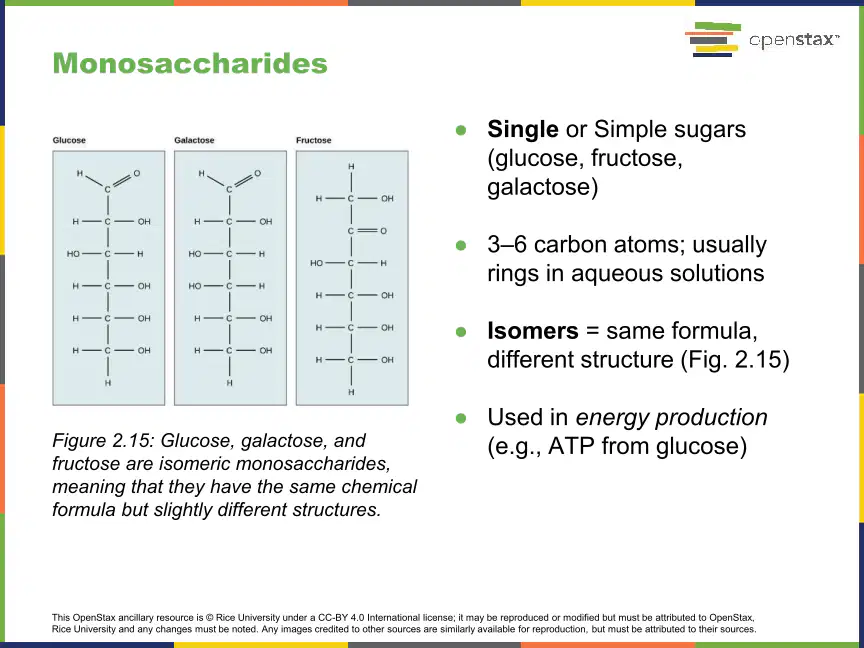
48
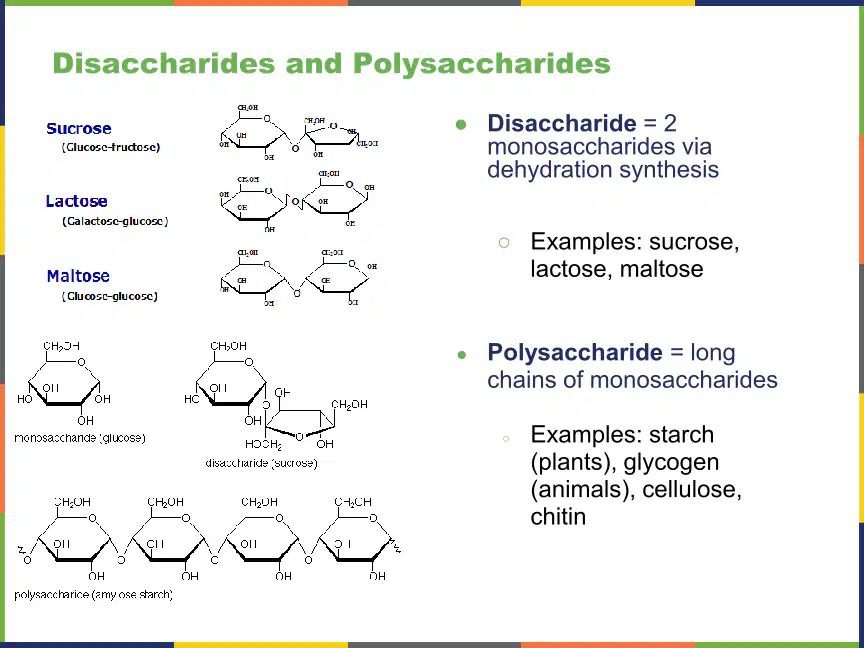
49
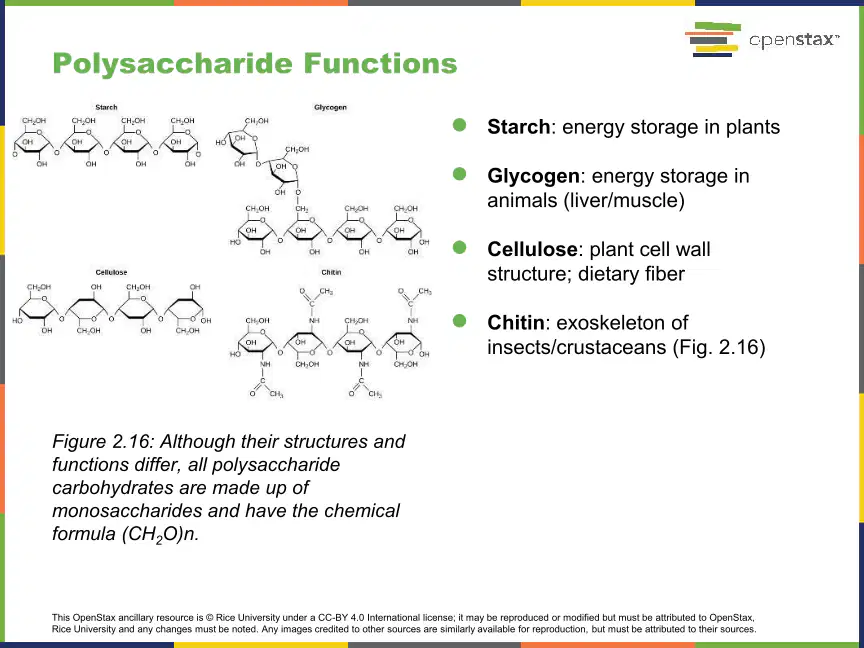
50
Multiple Choice
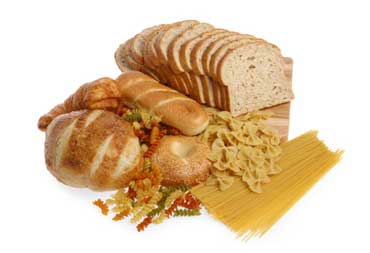
Cellulose is a structural carbohydrate found in-
plants
fungi
insects
polyvinyl
51
Multiple Choice
Which of the following correctly displays the paired forms of stored energy?
glycogen = liver and starch = potatoes
glycogen = potatoes and starch = liver
potatoes = liver and starch = glycogen
52
53
Multiple Choice
54
55
56
Multiple Choice
57
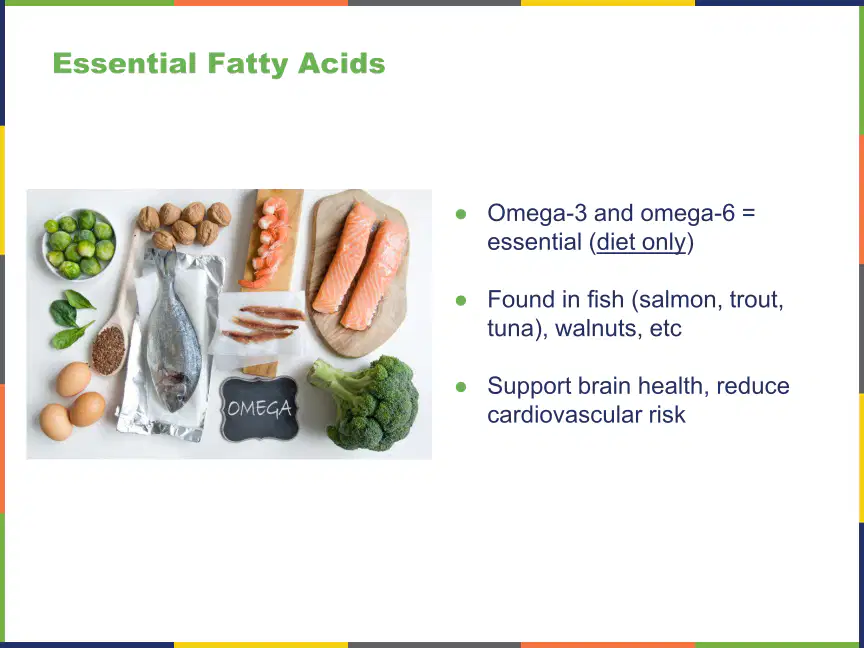
58
59
Multiple Choice
60
Multiple Choice
61
62
Multiple Choice
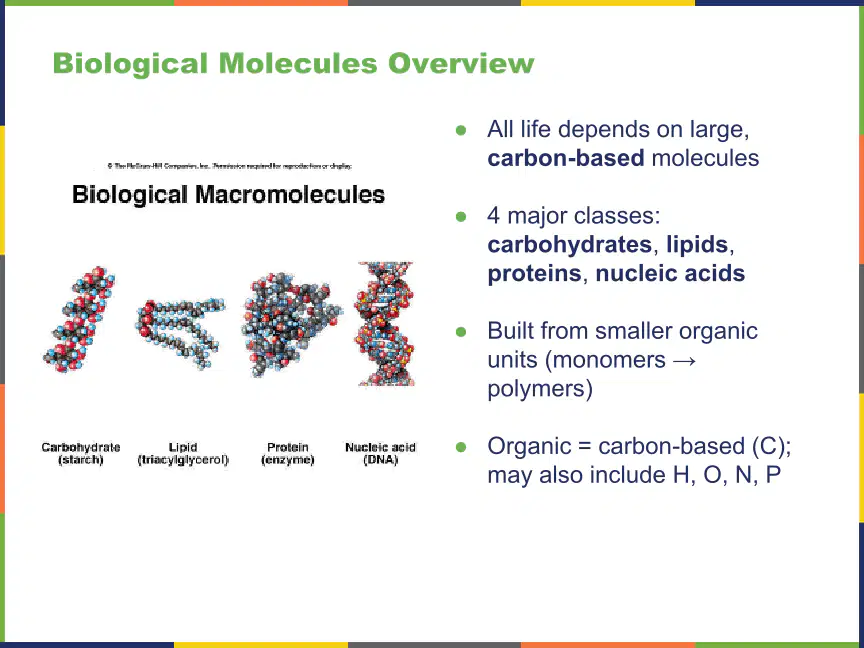
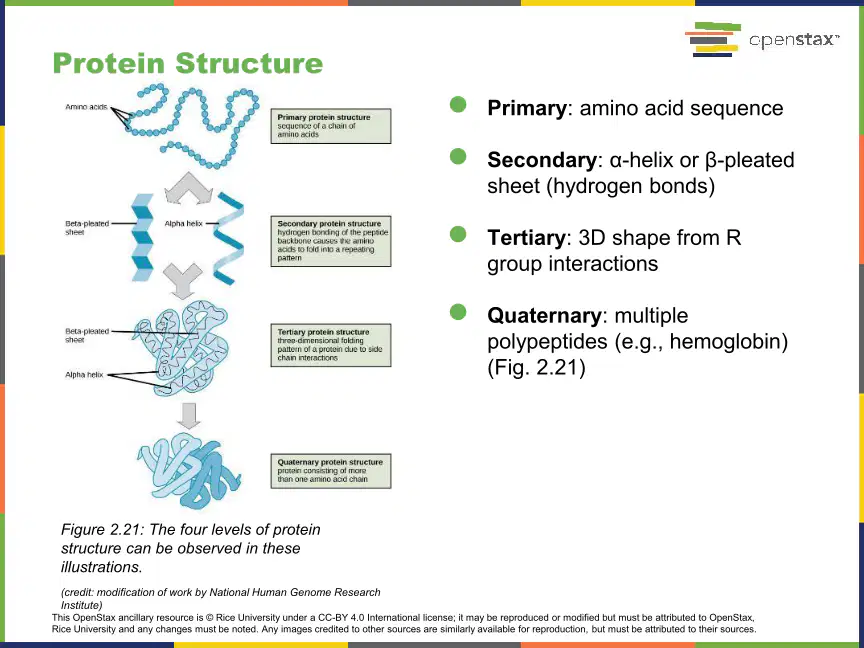
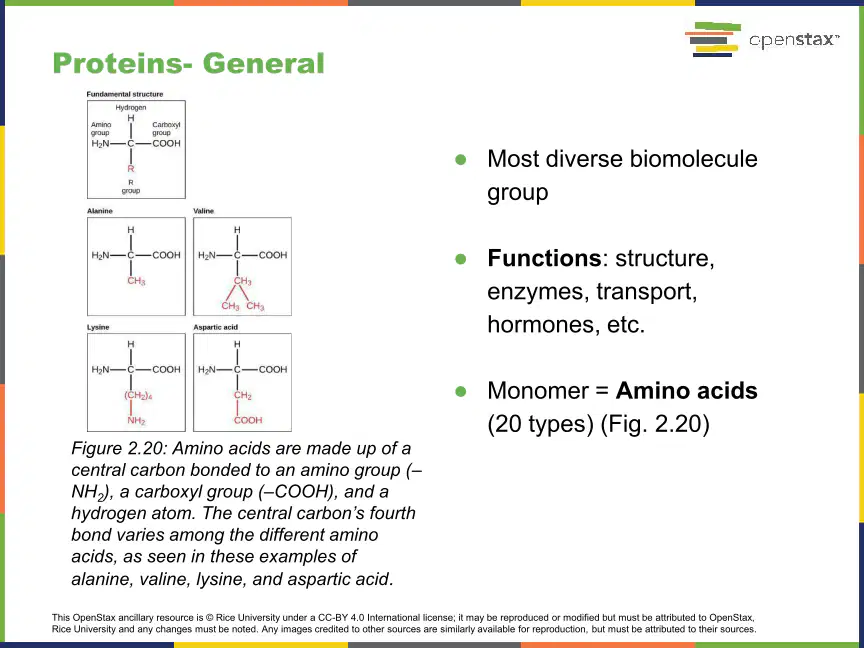
Which of the following is the monomer of a protein?
Amino Acid
Monosaccharide
Nucleotide
Steroid
63
64
Multiple Choice
Which of the follow elements is found in all proteins?
Nitrogen
Helium
Magnesium
Sulfur
65
66
67
Multiple Choice
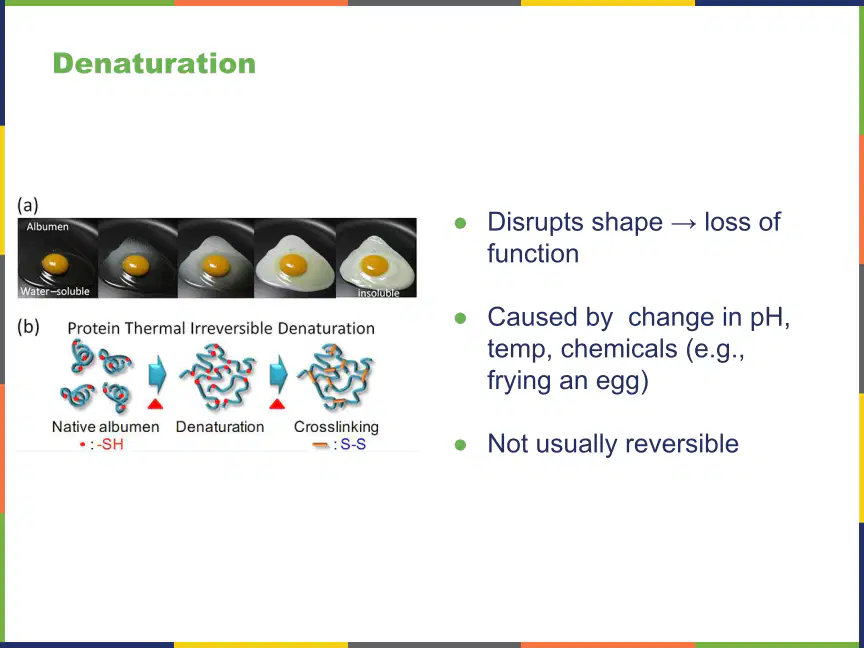
When proteins are exposed to heat, acid, base, or mechanical disruption and lose their shape
Acidification
Denaturation
Transamination
Disruption
68
69
Multiple Choice
70
71
Multiple Choice
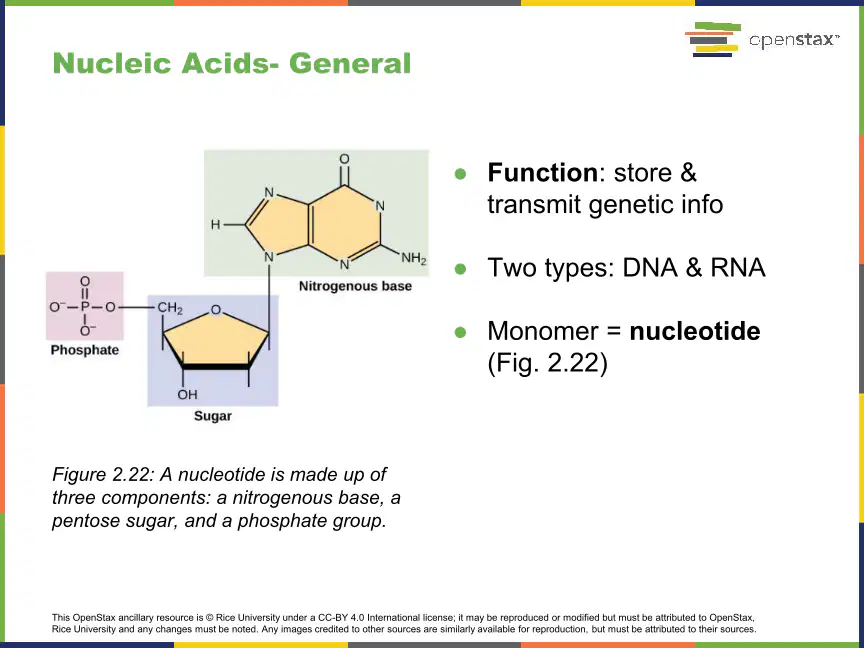
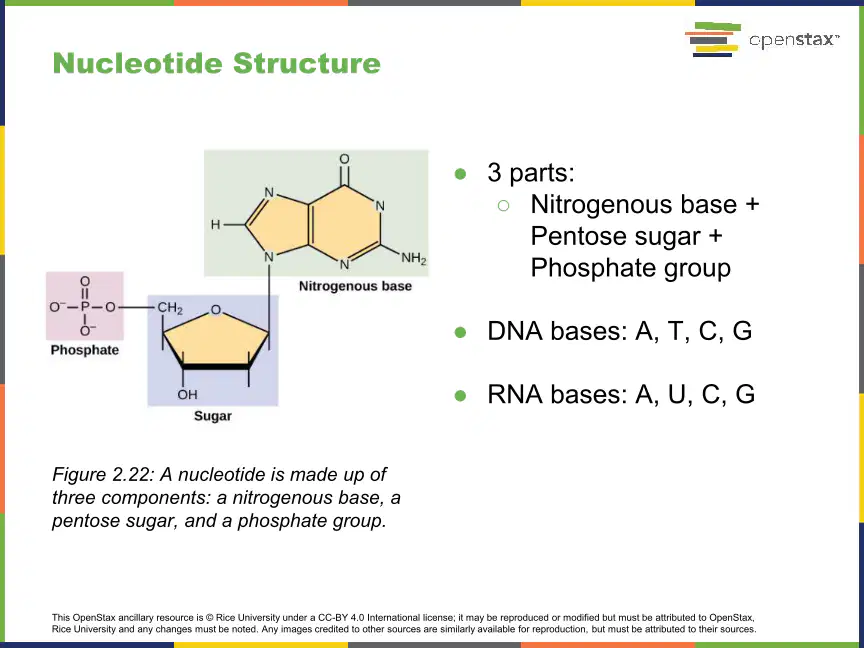
What are the components of a nucleotide?
nitrogen base, phosphate group, and sugar
pentose sugar, purine, and pyrimidine
nitrogen base and a phosphate group
DNA, phosphate group, monosaccharide
72
73
Multiple Choice
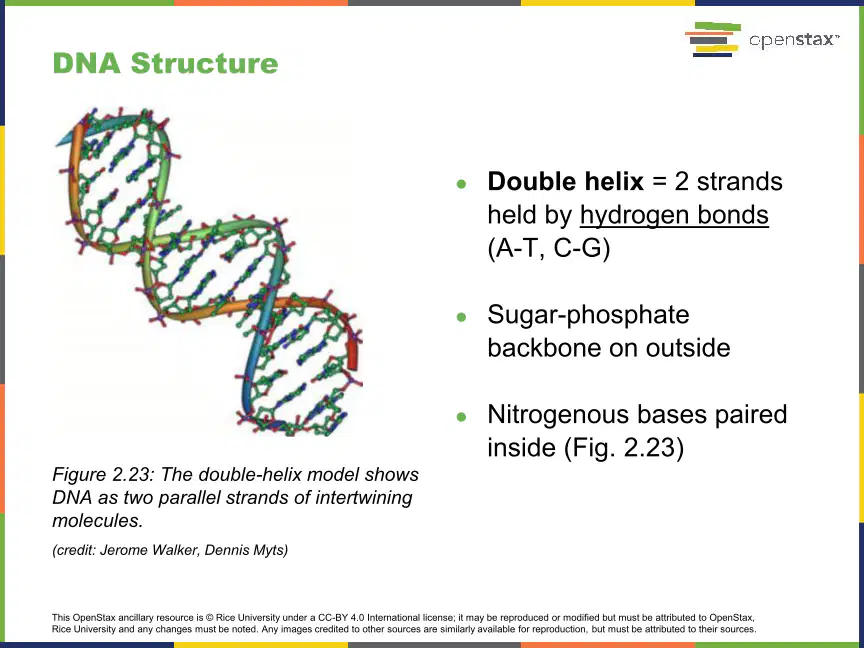
One prominent feature of DNA is its ______________ -helix structure.
single
double
triple
none
74
Show answer
Auto Play
Slide 1 / 74
SLIDE

Similar Resources on Wayground
68 questions
CHEMICAL EQUATIONS AND REACTION TYPES
Presentation
•
University
67 questions
Quiz#1 Review (P1 of 3) - Ch1
Presentation
•
University
74 questions
Genetic Engineering and Cloning
Presentation
•
University
70 questions
Bahasa Inggris 1 Week 10 and Week 11
Presentation
•
University
70 questions
Advertising in Arabic
Presentation
•
University
68 questions
Chapter 2 Measurement and Problem Solving
Presentation
•
University
69 questions
Regional Human Rights Protection
Presentation
•
University
Popular Resources on Wayground
20 questions
Math Review
Quiz
•
3rd Grade
15 questions
Fast food
Quiz
•
7th Grade
20 questions
Context Clues
Quiz
•
6th Grade
20 questions
Inferences
Quiz
•
4th Grade
19 questions
Classifying Quadrilaterals
Quiz
•
3rd Grade
20 questions
Figurative Language Review
Quiz
•
6th Grade
20 questions
Equivalent Fractions
Quiz
•
3rd Grade
10 questions
Identify Fractions, Mixed Numbers & Improper Fractions
Quiz
•
3rd - 4th Grade