

Introduction to Metabolism

Presentation
•
Biology
•
University
•
Medium
+1
Standards-aligned

Lee Ott
Used 5+ times
FREE Resource
26 Slides • 21 Questions
1

2
Multiple Choice
Why is metabolism important for living organisms?
It helps in the breakdown and synthesis of molecules necessary for life.
It only helps in digestion.
It is responsible for movement only.
It is not important for living organisms.
3

4
Open Ended
Explain the significance of the three stages of catabolic reactions in metabolism.
5
6
Multiple Choice
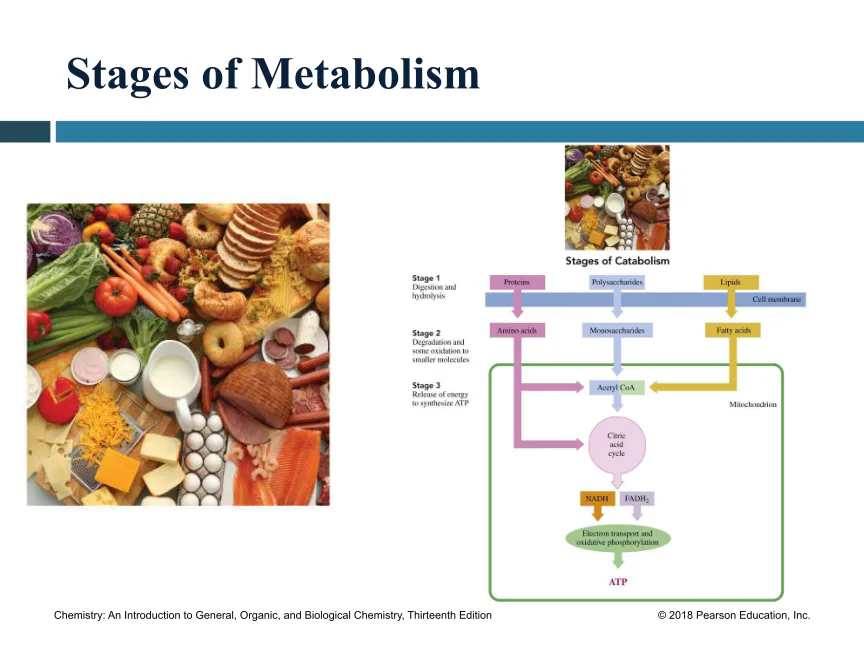
Which of the following is the correct order of the stages of catabolism as shown in the diagram?
Digestion and hydrolysis, Degradation and some oxidation to smaller molecules, Release of energy to synthesize ATP
Degradation and some oxidation to smaller molecules, Digestion and hydrolysis, Release of energy to synthesize ATP
Release of energy to synthesize ATP, Digestion and hydrolysis, Degradation and some oxidation to smaller molecules
Digestion and hydrolysis, Release of energy to synthesize ATP, Degradation and some oxidation to smaller molecules
7

8
Multiple Select
Which of the following are major components of a typical animal cell as shown in the diagram?
Nucleus
Mitochondrion
Chloroplast
Ribosome
9

10
Multiple Choice
What is the main function of the mitochondrion in animal cells?
Contains genetic information for the replication of DNA
Contains the structures for the synthesis of ATP from energy-releasing reactions
Site of protein synthesis using mRNA templates
Separates the contents of a cell from the external environment
11

12
Fill in the Blanks
Type answer...
13

14
Open Ended
Explain how the hydrolysis of ATP provides energy for cellular processes.
15

16
Multiple Choice
ATP links which two types of reactions in the cell?
Catabolic and anabolic reactions
Photosynthesis and respiration
Hydrolysis and condensation
Oxidation and reduction
17

18
Multiple Choice
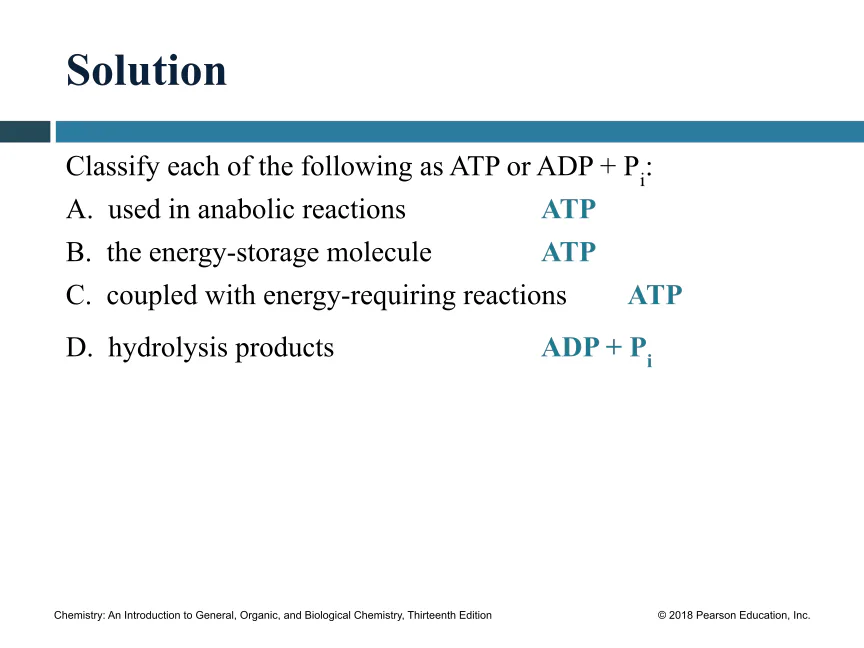
Classify each of the following as ATP or ADP + Pi: A. used in anabolic reactions B. the energy-storage molecule C. coupled with energy-requiring reactions D. hydrolysis products
A: ATP, B: ATP, C: ATP, D: ADP + Pi
A: ADP + Pi, B: ATP, C: ADP + Pi, D: ATP
A: ATP, B: ADP + Pi, C: ATP, D: ATP
A: ADP + Pi, B: ADP + Pi, C: ATP, D: ATP
19
20

21
Multiple Select
Which of the following statements about glycolysis are correct?
It takes place in the cytoplasm of the cell
It requires oxygen to proceed
It degrades six-carbon glucose to three-carbon pyruvate molecules
It is a metabolic pathway that uses glucose
22
Open Ended
Explain why glycolysis is considered an anaerobic process and discuss its significance for cells.
23

24

25

26

27
Multiple Choice
Which enzyme is responsible for the isomerization of dihydroxyacetone phosphate to glyceraldehyde-3-phosphate in glycolysis?
Triose phosphate isomerase
Hexokinase
Phosphofructokinase
Aldolase
28
29
Open Ended
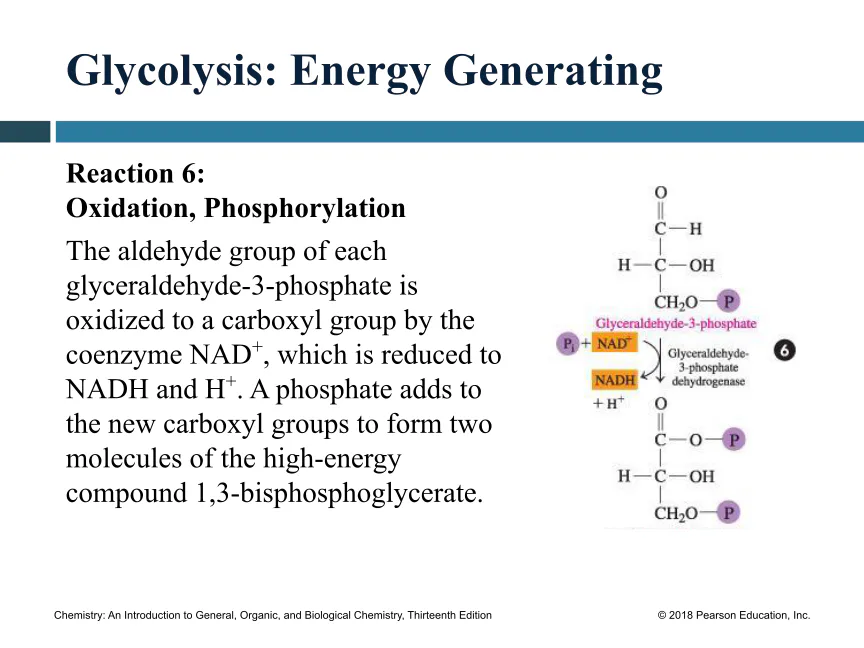
Explain the significance of the oxidation and phosphorylation step (Reaction 6) in glycolysis.
30
31

32
Fill in the Blanks
33
34
Multiple Choice
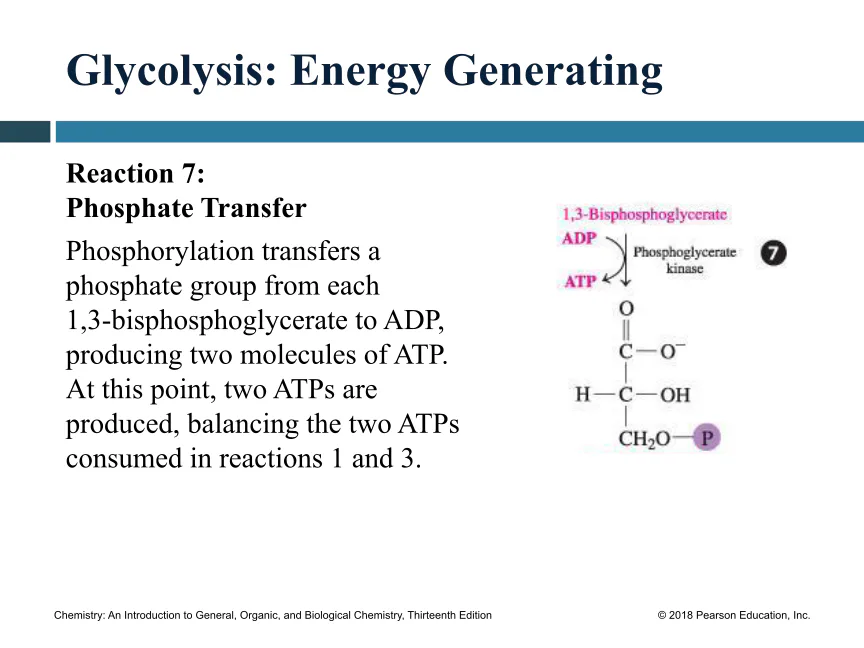
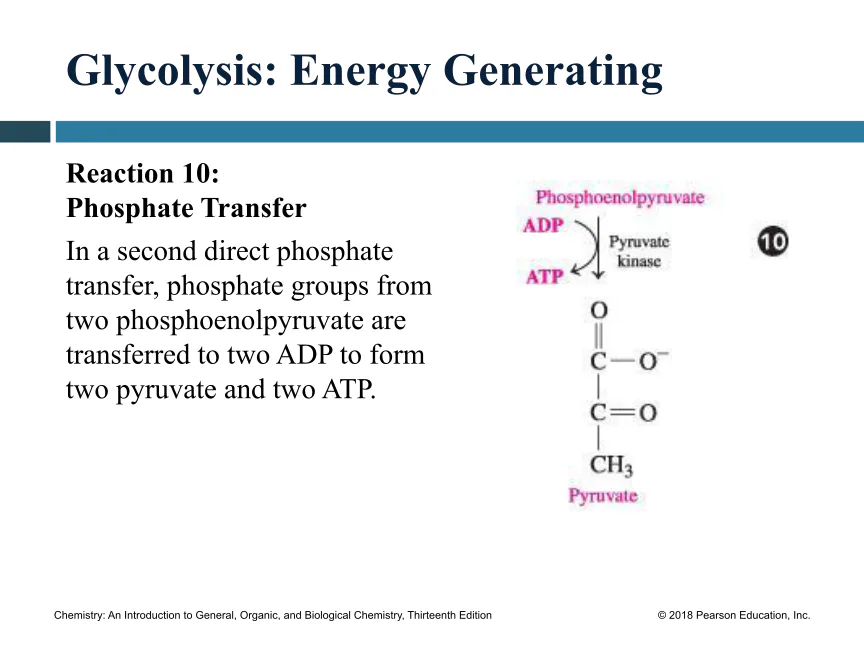
Which reactions in glycolysis are responsible for the direct production of ATP?
Reactions 7 and 10
Reactions 5 and 6
Reactions 8 and 9
Reactions 1 and 3
35

36
Multiple Choice
In glycolysis, how many net ATP molecules are produced per molecule of glucose?
2
4
6
8
37
Open Ended
Describe the overall energy yield (ATP and NADH) from one molecule of glucose during glycolysis.
38
39
Multiple Choice
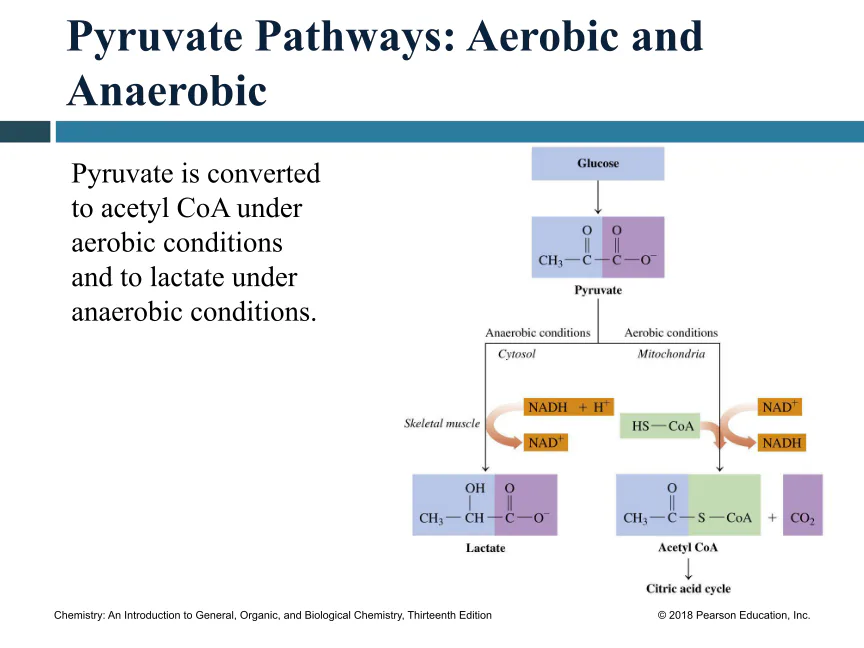
What are the two possible fates of pyruvate under aerobic and anaerobic conditions?
Converted to acetyl CoA and lactate
Converted to glucose and ethanol
Converted to fatty acids and amino acids
Converted to ATP and CO2
40

41
Multiple Select
Select all statements that correctly describe aerobic and anaerobic pathways during glycolysis.
Aerobic pathway produces more ATP than anaerobic pathway.
Anaerobic pathway occurs in the mitochondria.
Aerobic pathway uses oxygen as the final electron receptor.
Anaerobic pathway ends in the cytoplasm.
42

43
Fill in the Blanks
44

45

46

47
Open Ended
Explain the significance of gluconeogenesis during periods of starvation and how it relates to glycolysis.
Show answer
Auto Play
Slide 1 / 47
SLIDE
Similar Resources on Wayground

41 questions
EJS Week II (14-19 Aug 2023)
Presentation
•
University
41 questions
The Properties of Real Numbers
Presentation
•
Professional Development
42 questions
Introduction to Medical Terminology
Presentation
•
12th Grade
42 questions
Muscular System Labeling and Movements
Presentation
•
University
41 questions
Natural Selection and Evolution Lessons
Presentation
•
University
41 questions
Introduction to Evolution and Natural Selection
Presentation
•
University
42 questions
B1 week 2
Presentation
•
University
Popular Resources on Wayground
24 questions
PBIS-HGMS Day 10

Quiz
•
6th - 8th Grade
10 questions
HCS SCI 03 Summer School Review 3
Quiz
•
3rd Grade
11 questions
Home Scope
Quiz
•
7th - 8th Grade
15 questions
HCS SCI 05 Summer School Assessment 3 Review
Quiz
•
5th Grade
35 questions
Lufkin Road Middle School Student Handbook & Policies Assessment
Quiz
•
7th Grade
18 questions
Geo 11.3 Area of Circles and Sectors
Quiz
•
9th - 11th Grade