Unit 2 Notes (Cell Specialization)
Presentation
•
Science
•
10th Grade
•
Practice Problem
•
Easy
+5
Standards-aligned
Mark Chromik
Used 2+ times
FREE Resource
10 Slides • 11 Questions
1
2
Multiple Choice
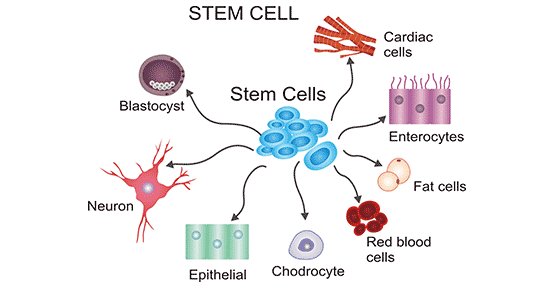
These diagrams show a variety of cells from the same organism.
How can cells from the same organism have such different shapes and functions?As each cell differentiates, the DNA changes so that each type of cell has different DNA once it reaches maturity.
As each cell differentiates, the DNA changes so that each type of cell has different
Mutations in the cells’ nuclei lead to new combinations of DNA, resulting in different shapes and functions in the different types of cells.
During differentiation, different parts of the DNA in each type of cell are activated, resulting in the different structure and function of the cells.
During differentiation, different types of cells produce proteins which destroy the nonactive DNA, leading to cell specialization.
3
4
Multiple Choice
What is the correct order of organization?
cells->tissue->organs->organ systems-> organism
tissue->cells->organs->organ systems-> organism
organs->organ systems-> organism->cells->tissue
5
6
Multiple Choice
Which of the following is true about cell differentiation?
Different cells contain different DNA, which leads to specialization
All cells eventually reach G0 and stop dividing
Different cells have the same DNA, but express different genes--leading to specialization
Even though a cell is differentiated, it can always turn into another cell type
7
8
9
Multiple Choice
Which characteristic of stem cells makes them useful for treating Stargardt’s disease?
They can differentiate into retinal cells.
They are readily available from especially created embryos.
They transport white blood cells to the eyes.
They divide by binary fission so provide sufficient cells.
10
11
Open Ended
What would happen if cells could not specialize?
12
13
Match
Match the following
Red Blood Cell
White Blood Cell
Neuron
Platelet
Muscle Cell
Transports oxygen
Fights infection
Conducts nerve impulses
Helps in blood clotting
Facilitates movement
Transports oxygen
Fights infection
Conducts nerve impulses
Helps in blood clotting
Facilitates movement
14
Open Ended
Each body cell contains the same genetic information, but can differ in appearance
and size. The diagram below shows three different types of cells found in the human
body.
A. Identify one similarity, other than the genetic information, that these body cells have.
15
Open Ended
Each body cell contains the same genetic information, but can differ in appearance
and size. The diagram below shows three different types of cells found in the human
body.
B. Explain why differences in these human body cells are a biological advantage.
16
17
Match
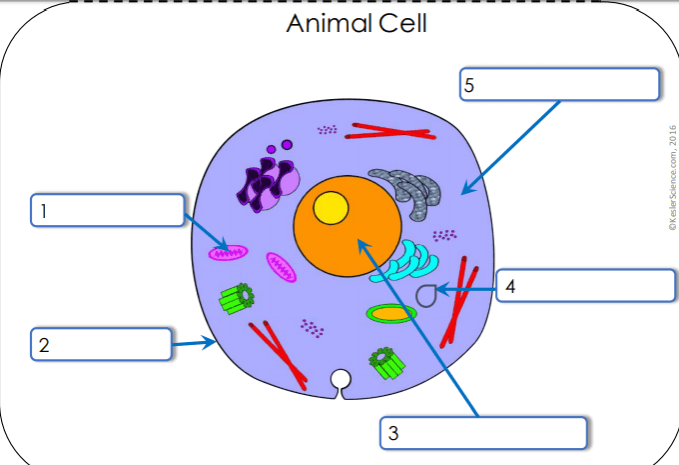
Match
1
2
3
5
Not in animal Cells
Mitochondria
Cell Membrane
Nucleus
Cytoplasm
Cell Wall
Mitochondria
Cell Membrane
Nucleus
Cytoplasm
Cell Wall
18
19
Match
Match the following
CHO 1:2:1 (about)
CHO (No monomer)
CHON
CHONP
(Phosphate Backbone)
Carbohydrate
Lipid
Protein
Nucleic Acid
Carbohydrate
Lipid
Protein
Nucleic Acid
20
21
Open Ended
What molecule do you think helps a plant stay upright within a skeleton?
Hint: In combination with a cell wall.
Show answer
Auto Play
Slide 1 / 21
SLIDE

Similar Resources on Wayground
16 questions
Sex-linked traits
Presentation
•
10th Grade
13 questions
VSEPR theory
Presentation
•
10th Grade
15 questions
ATP
Presentation
•
9th - 10th Grade
15 questions
Earth's Layers
Presentation
•
9th Grade
16 questions
Position time Graphs, Distance and Displacement
Presentation
•
9th - 10th Grade
18 questions
Cell membrane
Presentation
•
9th Grade
15 questions
Velocity Time Graphs
Presentation
•
10th Grade
15 questions
Revising
Presentation
•
10th Grade
Popular Resources on Wayground
20 questions
"What is the question asking??" Grades 3-5
Quiz
•
1st - 5th Grade
20 questions
“What is the question asking??” Grades 6-8
Quiz
•
6th - 8th Grade
10 questions
Fire Safety Quiz
Quiz
•
12th Grade
20 questions
Equivalent Fractions
Quiz
•
3rd Grade
34 questions
STAAR Review 6th - 8th grade Reading Part 1
Quiz
•
6th - 8th Grade
20 questions
“What is the question asking??” English I-II
Quiz
•
9th - 12th Grade
20 questions
Main Idea and Details
Quiz
•
5th Grade
47 questions
8th Grade Reading STAAR Ultimate Review!
Quiz
•
8th Grade
Discover more resources for Science
10 questions
Exploring Light and Waves Concepts
Interactive video
•
6th - 10th Grade
10 questions
Evolution Review
Presentation
•
10th Grade
10 questions
Exploring Plant Structures and Adaptations
Interactive video
•
6th - 10th Grade
5 questions
Evolution (Darwin)
Interactive video
•
9th - 12th Grade
10 questions
Classification and Properties of Matter
Interactive video
•
6th - 10th Grade
10 questions
Exploring Natural Selection Concepts
Interactive video
•
6th - 10th Grade
16 questions
Taxonomy and Classification
Quiz
•
6th - 12th Grade
10 questions
Exploring the Phases of the Moon
Interactive video
•
6th - 10th Grade