

Natural Disasters

Presentation
•
Geography
•
9th Grade
•
Practice Problem
•
Easy

Noe Cardenas
Used 1+ times
FREE Resource
13 Slides • 17 Questions
1

2
Open Ended
Why is it important to study natural disasters and understand their impact on people and places?
3

4
5
Multiple Choice
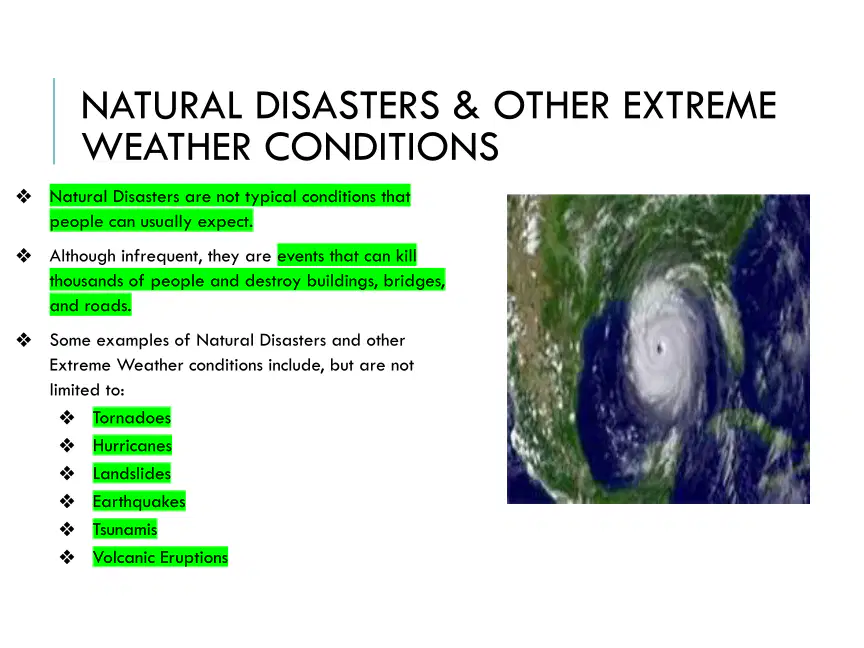
Which of the following is NOT considered a natural disaster or extreme weather condition?
Tornadoes
Hurricanes
Rainbows
Earthquakes
6
7
Multiple Choice
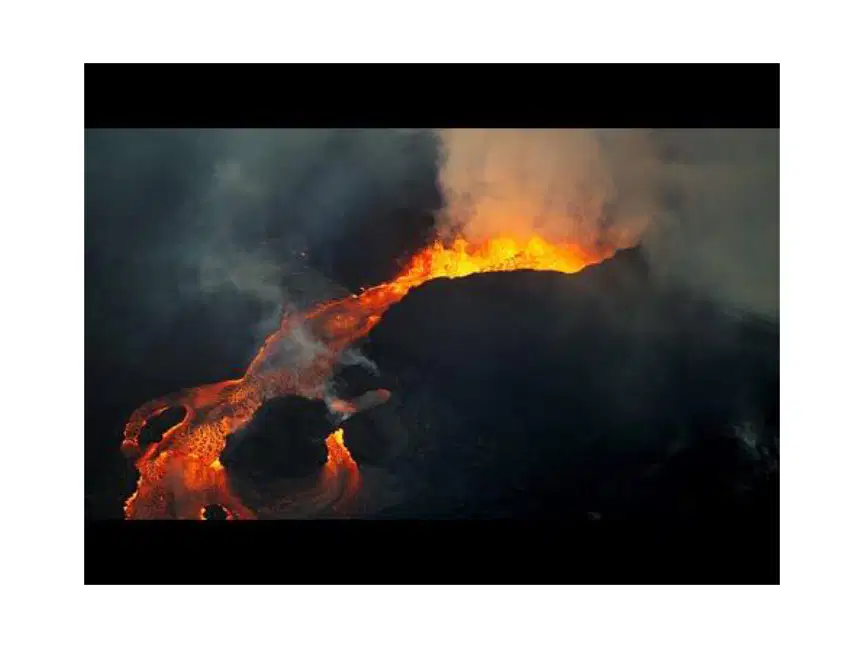
Which of the following is a Dormant Volcano?
Kilauea
Yellowstone
8
Fill in the Blanks
9
Multiple Select
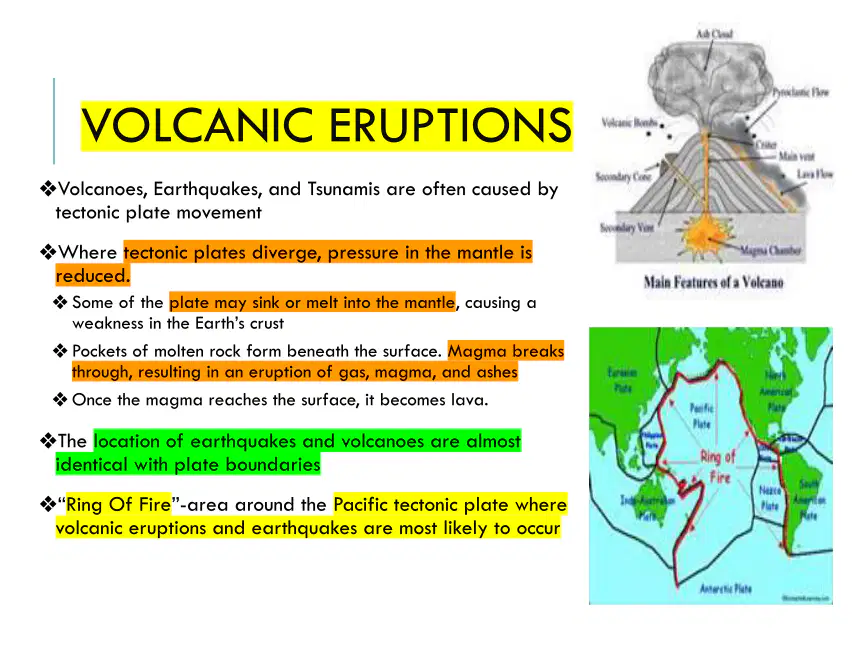
Which of the following statements about volcanic eruptions are correct? (Multiple answers)
They are often caused by tectonic plate movement.
The Ring of Fire is an area with frequent volcanic eruptions.
Volcanoes never occur near plate boundaries.
Magma breaks through the surface, resulting in eruptions.
10
11
12
Open Ended
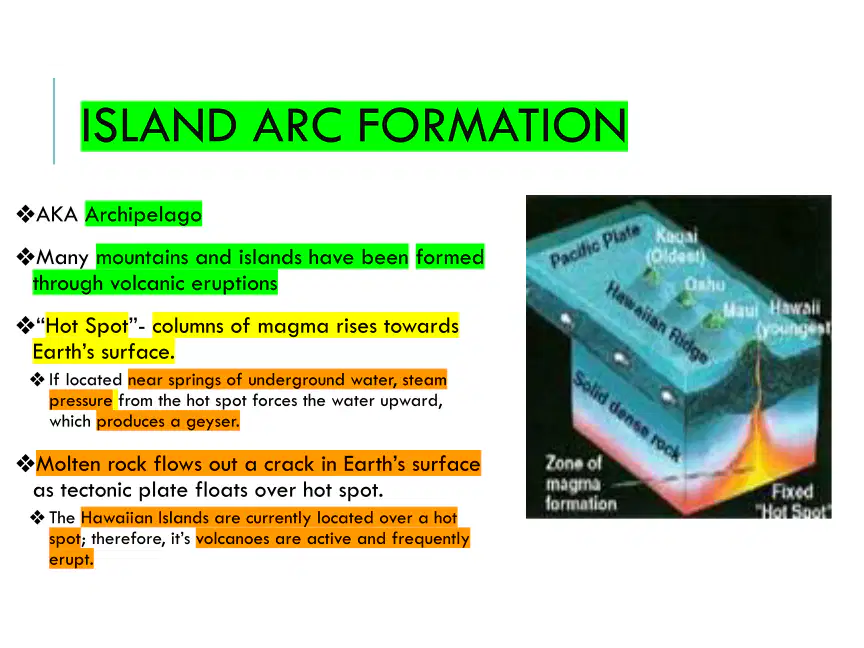
Explain how island arcs are formed and give an example of where this process occurs.
13
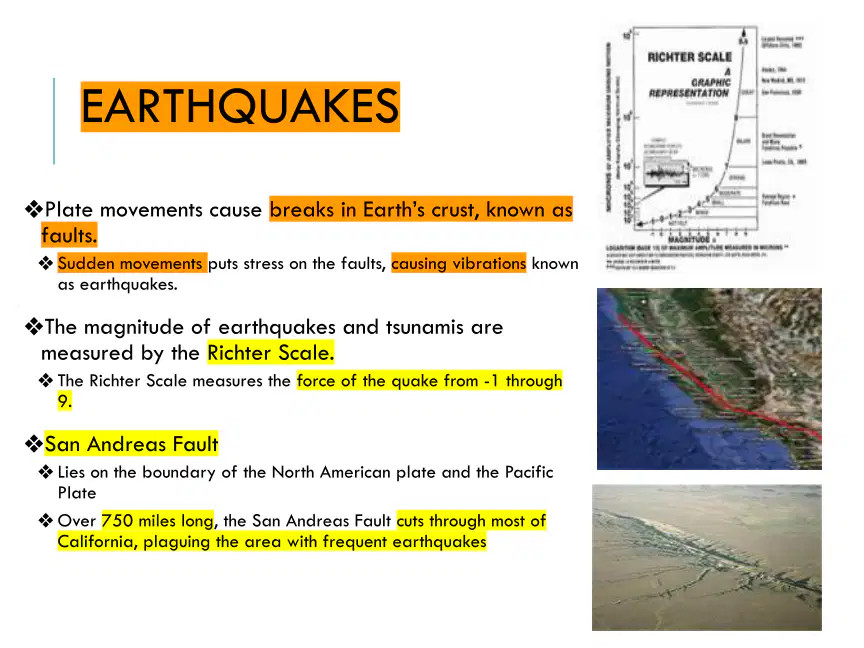
14
Multiple Choice
What does the Richter Scale measure?
The speed of tectonic plates
The magnitude of earthquakes and tsunamis
The amount of rainfall during hurricanes
The height of tsunami waves
15
Multiple Choice
Which American islands are currently volcanically active?
Hawaiian Islands (Big Island)
16
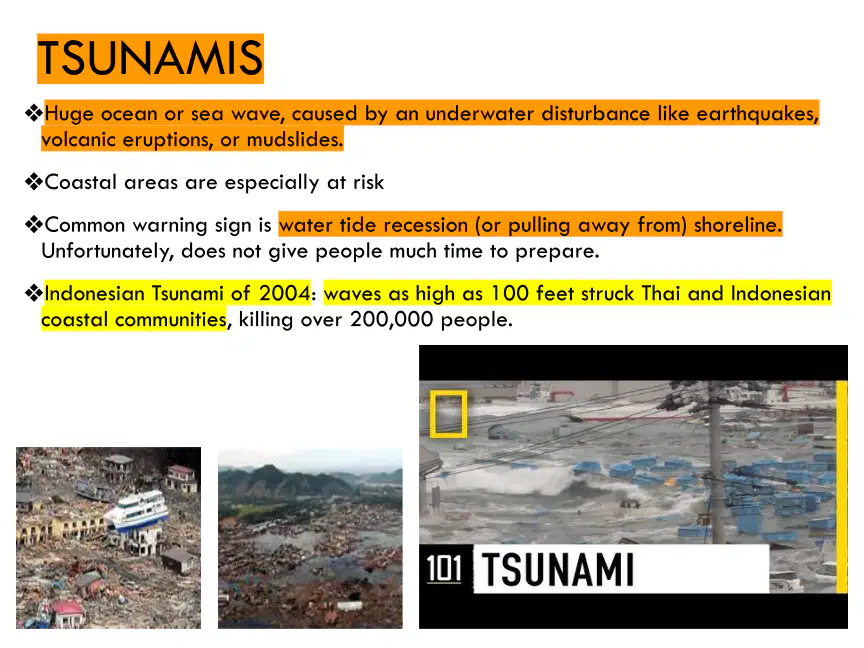
17
Multiple Select
Which of the following are common causes of tsunamis?
Earthquakes
Volcanic eruptions
Heavy rainfall
Underwater landslides
18
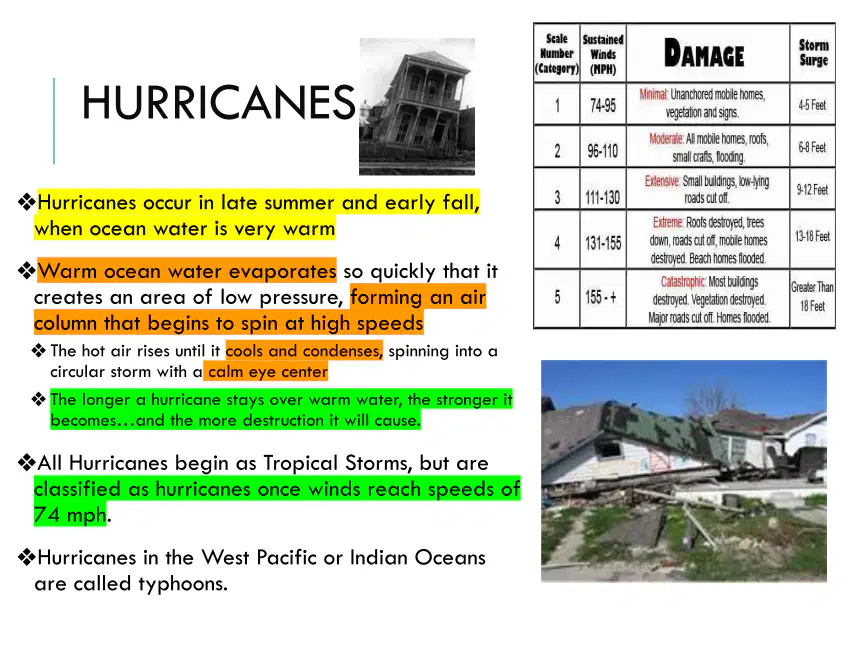
19
Multiple Choice
Which of the following is necessary for the formation of a hurricane?
Warm ocean water evaporating quickly
Collision of warm and cool air masses over land
Heavy rainfall in low-lying areas
High pressure systems meeting low pressure systems
20
Multiple Choice
How fast can a Tsunami move in open ocean?
Tsunamis can move at speeds of 100 miles per hour in open ocean.
Tsunamis typically travel at 50 miles per hour in deep water.
Tsunamis can move at speeds of 500 miles per hour in open ocean.
Tsunamis can reach speeds of 900 miles per hour in open ocean.
21
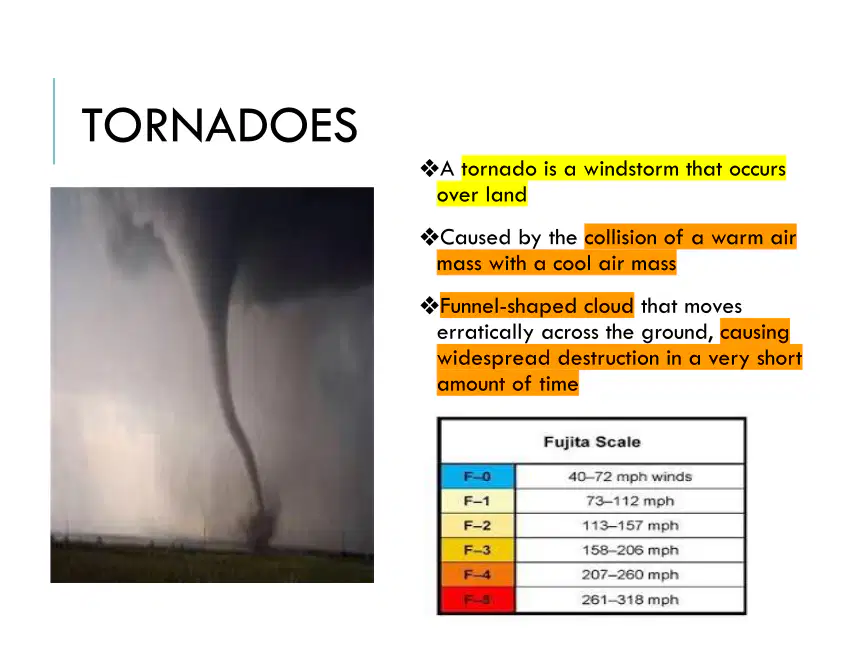
22
Multiple Select
Which of the following statements about tornadoes are correct?
They are windstorms that occur over land.
They are caused by the collision of warm and cool air masses.
They always form over water.
They have a funnel-shaped cloud that causes widespread destruction.
23
24
Multiple Choice
There is no warning for an approaching blizzard.
false
25
26
Open Ended
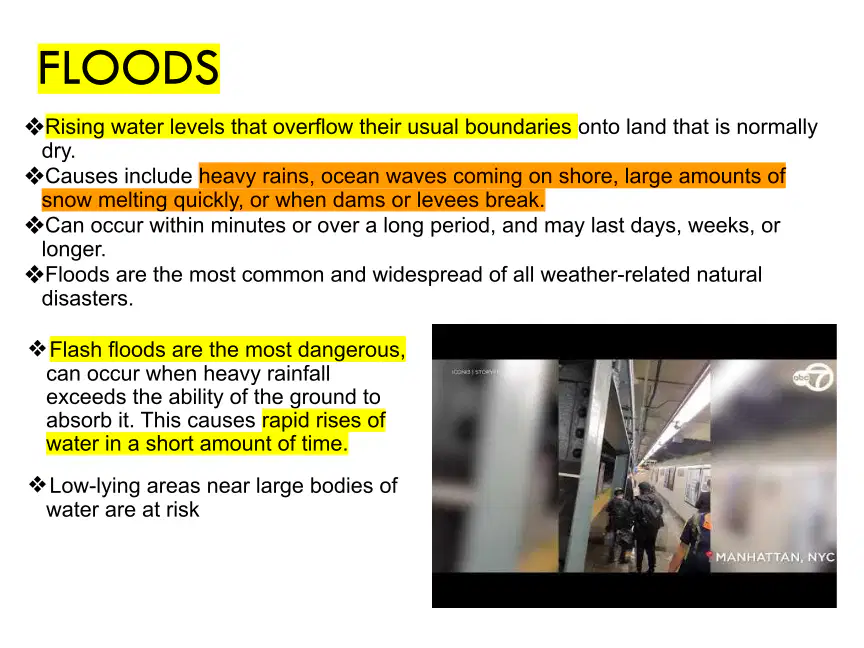
Explain why flash floods are considered the most dangerous type of flood. Use information from the slide to support your answer.
27
Open Ended
What was your experience with the flood during March of 2025?
28
29
Multiple Choice
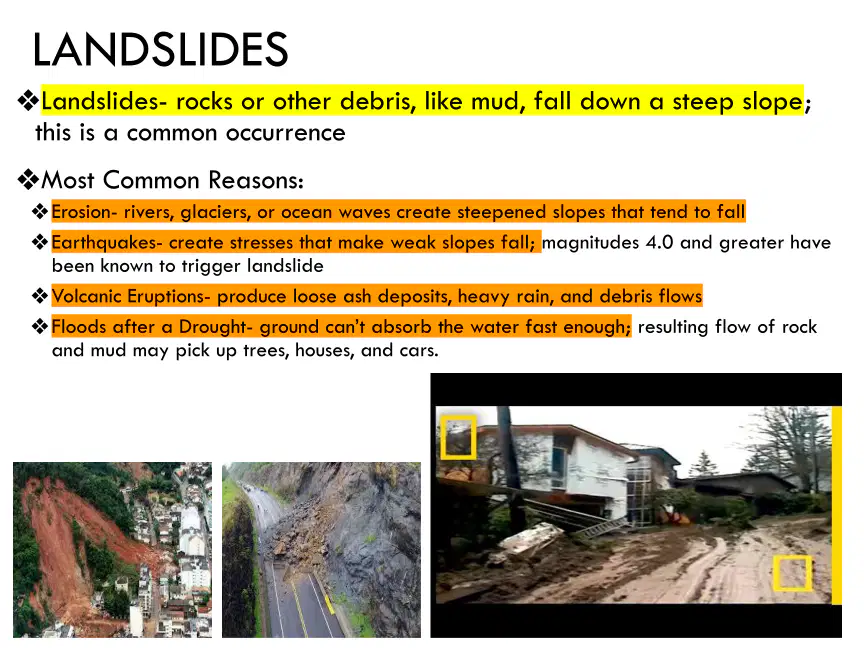
Which of the following is NOT a common cause of landslides?
Erosion by rivers or glaciers
Earthquakes
Volcanic eruptions
Tornadoes
30
Open Ended
What is one thing you learned about natural disasters that you found interesting or surprising?
Show answer
Auto Play
Slide 1 / 30
SLIDE
Similar Resources on Wayground

23 questions
Population Pyramids
Presentation
•
10th Grade
23 questions
6C: Protein Synthesis
Presentation
•
9th Grade
22 questions
G9 Chap 1.3 - Methods of Science
Presentation
•
9th Grade
22 questions
Natural Selection & Speciation
Presentation
•
9th Grade
23 questions
Structure of the Earth
Presentation
•
9th Grade
22 questions
Parallel and Perpendicular Lines
Presentation
•
9th Grade
25 questions
East Asia Climate and Vegetation
Presentation
•
9th Grade
26 questions
East Asia Physical Geography
Presentation
•
9th Grade
Popular Resources on Wayground
6 questions
Secondary Safety Quiz
Presentation
•
9th - 12th Grade
10 questions
MyPath Diagnostic Overview
Presentation
•
6th - 8th Grade
20 questions
Lab Safety Quiz

Quiz
•
6th Grade
21 questions
Continents and Oceans
Quiz
•
6th Grade
20 questions
Adding and Subtracting Decimals
Quiz
•
5th Grade
20 questions
Parts of Speech
Quiz
•
5th Grade
16 questions
Subject & Predicate
Quiz
•
5th Grade
21 questions
Lab Safety
Quiz
•
10th Grade
Discover more resources for Geography
20 questions
World Geography Unit 1 Review
Quiz
•
9th - 12th Grade
15 questions
Population Pyramid
Quiz
•
9th Grade
25 questions
Types of Regions
Quiz
•
9th Grade
18 questions
5 Themes of Geography
Quiz
•
9th Grade
20 questions
Spanish-Speaking Countries Map Practice (ALL)
Quiz
•
9th - 10th Grade
26 questions
AP Human Geography Unit 1
Quiz
•
9th Grade
24 questions
Demographic Transition Model
Quiz
•
8th - 9th Grade
15 questions
5 Themes of Geography
Quiz
•
9th Grade