Search Header Logo
Persia and Greece

Persia and Greece

Assessment

Presentation

•

History

•

9th - 12th Grade

•

Practice Problem

•

Medium

Created by

Nikole Dickson

Used 6+ times

FREE Resource

30 Slides • 24 Questions

1
media

2

Multiple Choice

Question image

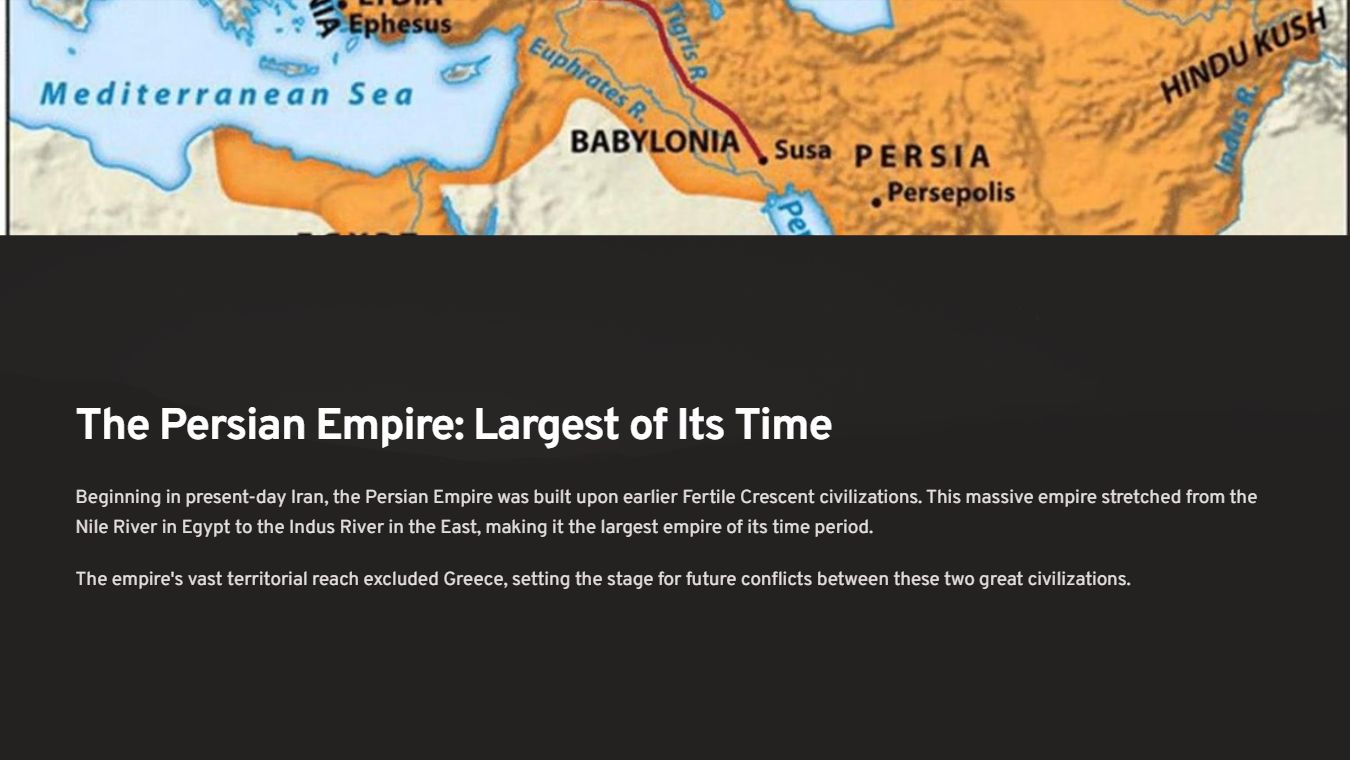
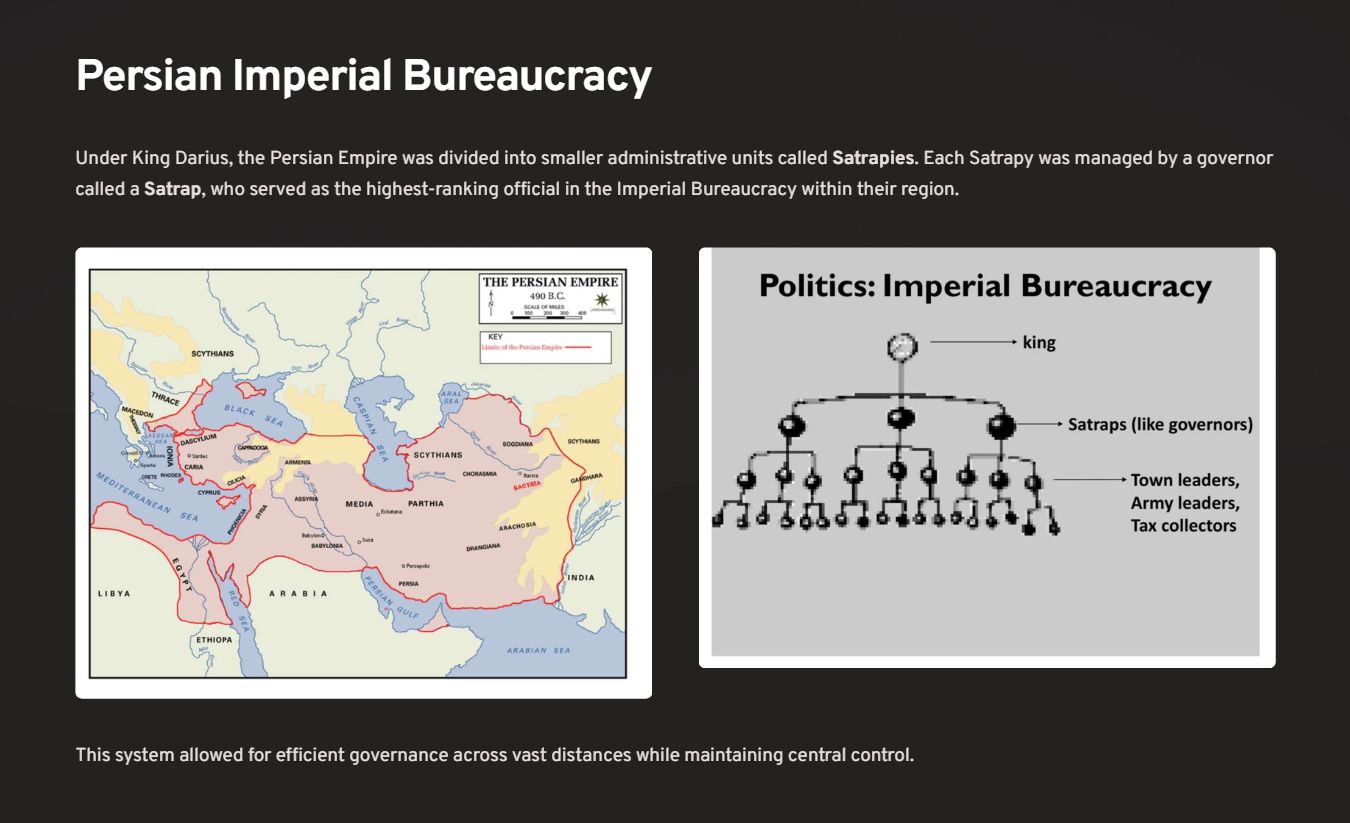
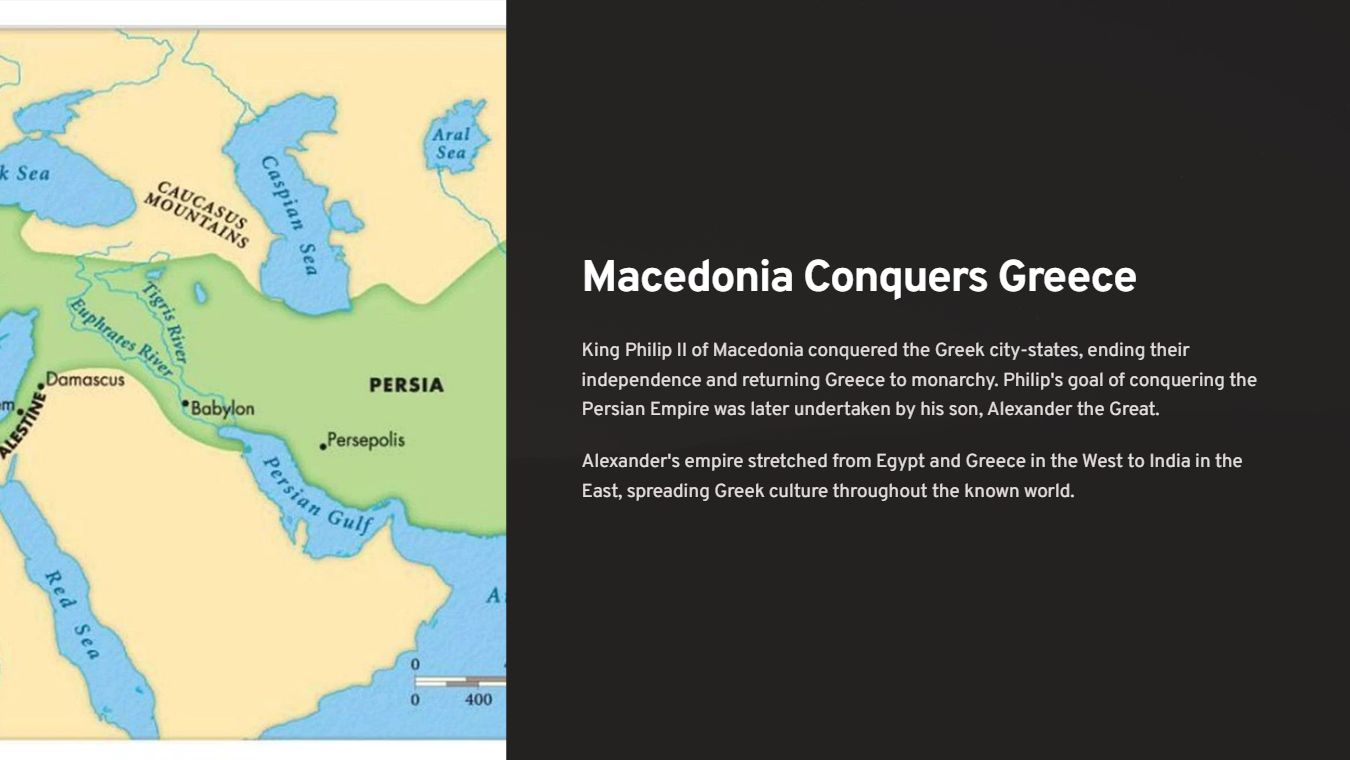
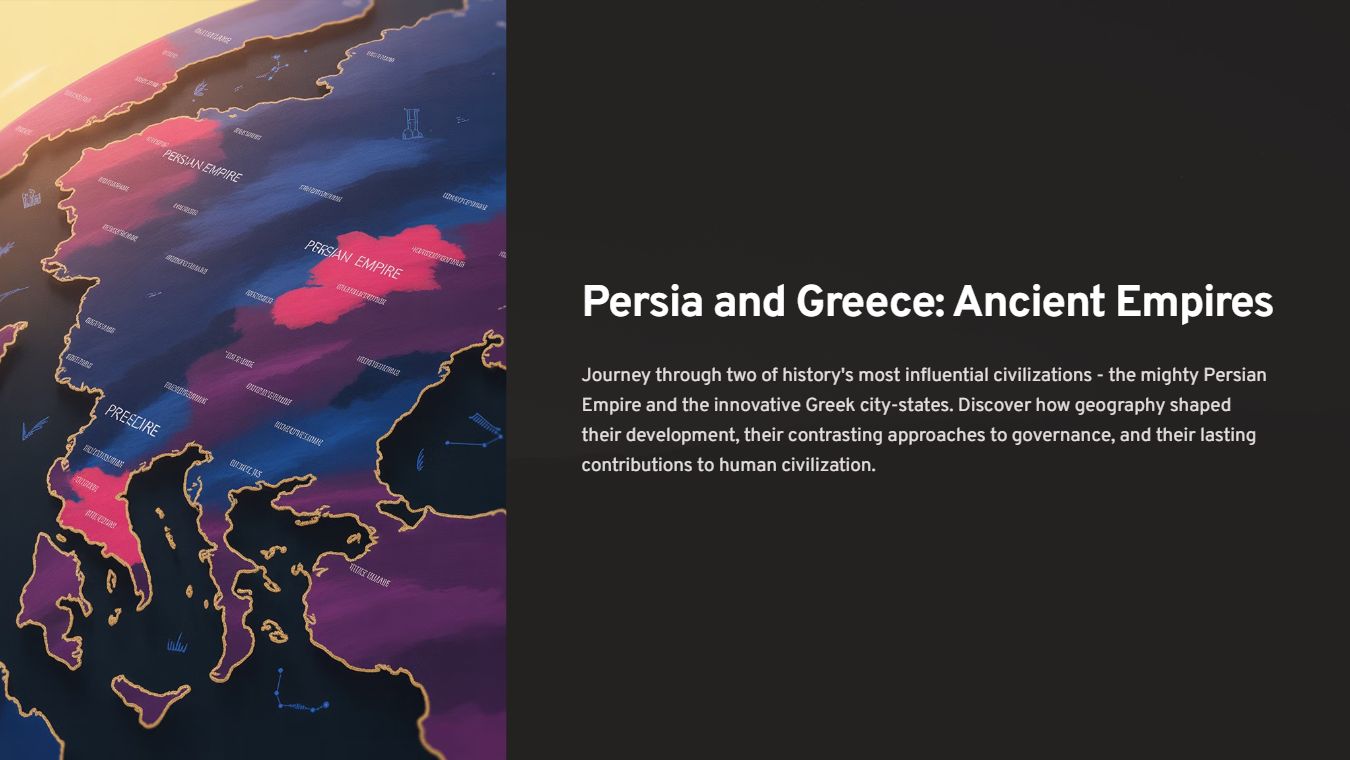
Whose empire is pictured in the map?

1

Alexander the Great's Empire

2

Persian Empire

3

Muslim Empire

4

Roman Empire

3

media

4

Multiple Select

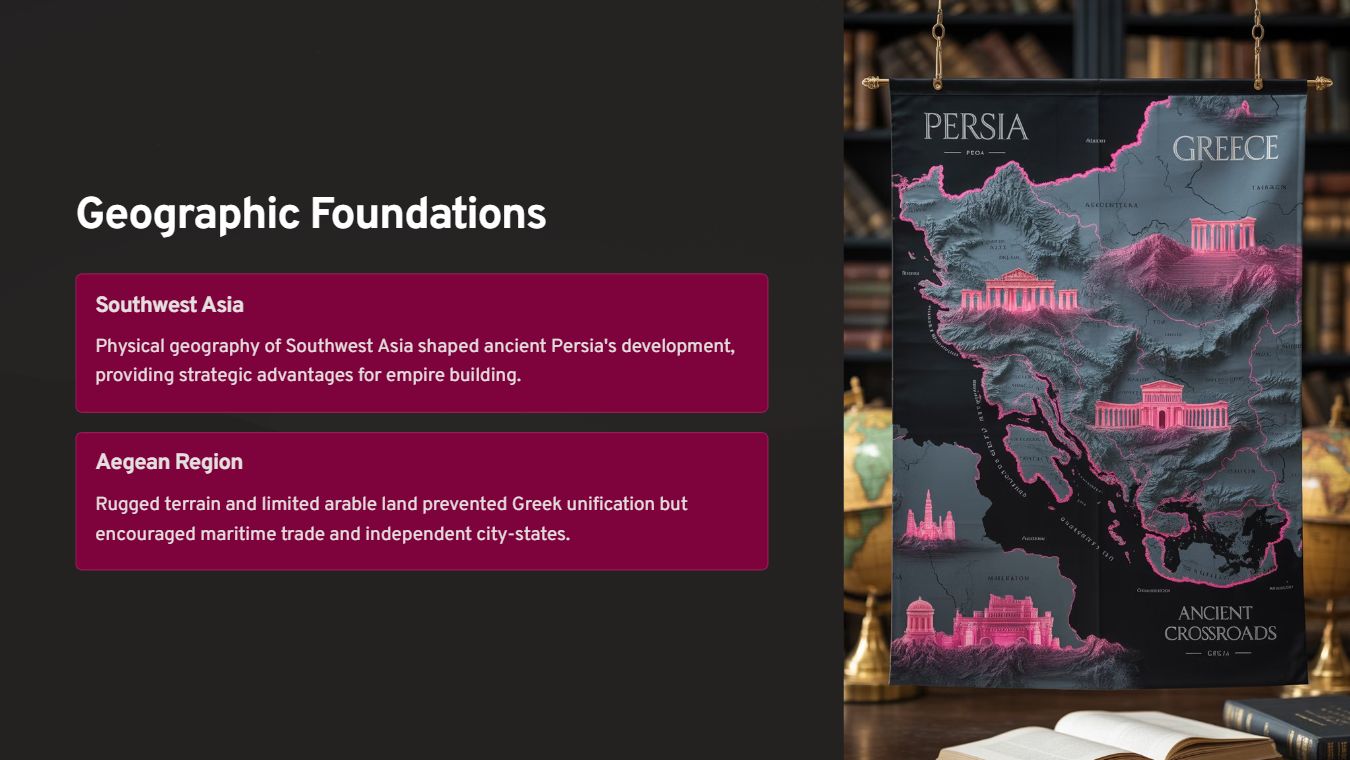
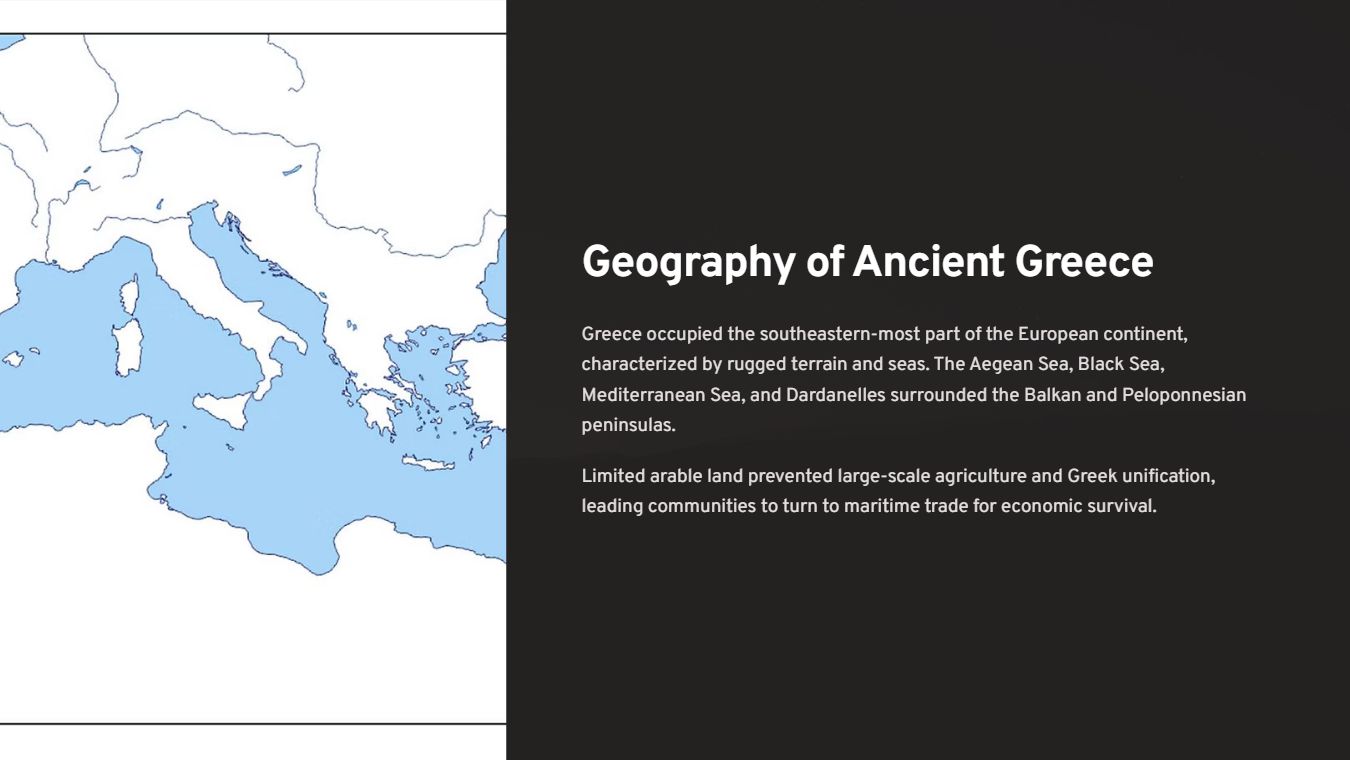
How did the geography of the Aegean Region affect Greek civilization?

1

Promoted unification

2

Encouraged maritime trade

3

Limited arable land

4

Facilitated empire building

5

media

6

media

7

Multiple Choice

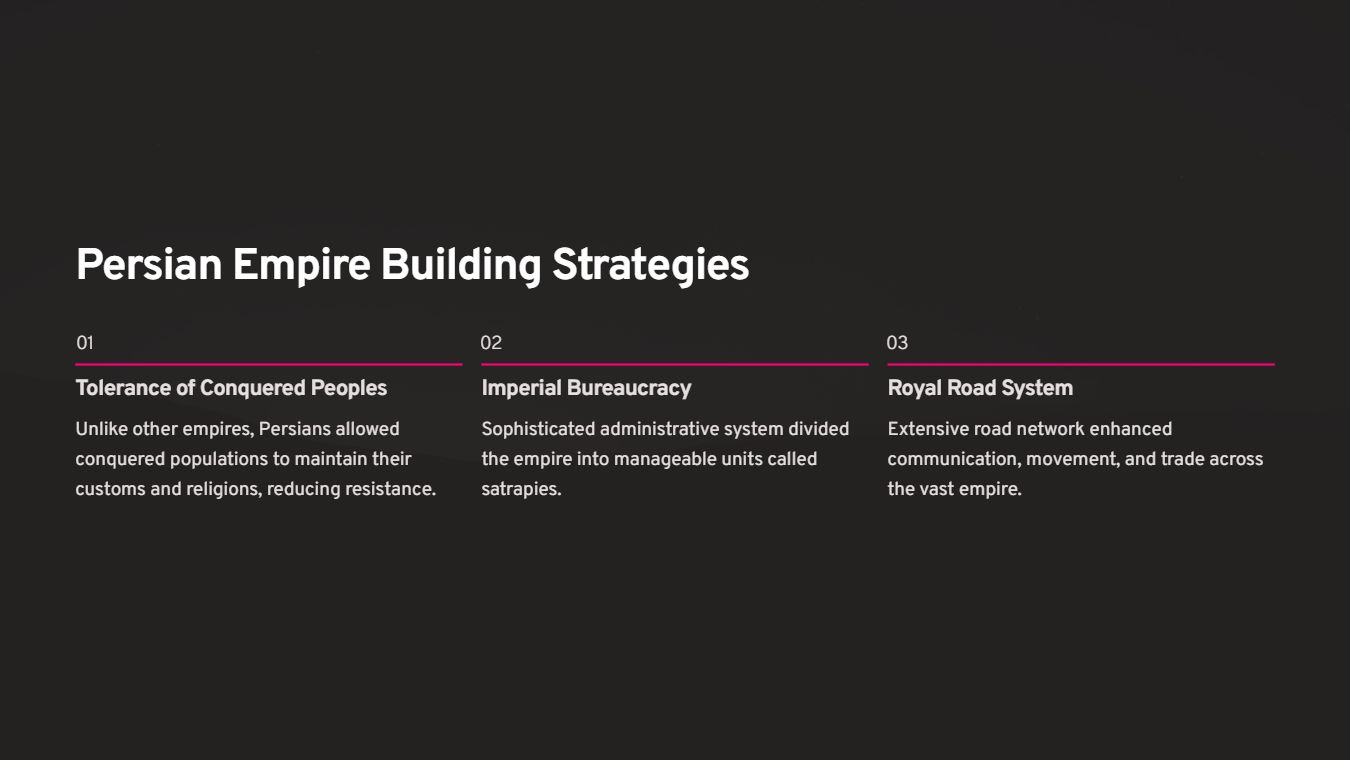
What was the purpose of the Royal Road System in the Persian Empire?

1

To enhance communication

2

To reduce resistance

3

To maintain customs

4

To divide the empire

8

media

9

Multiple Choice

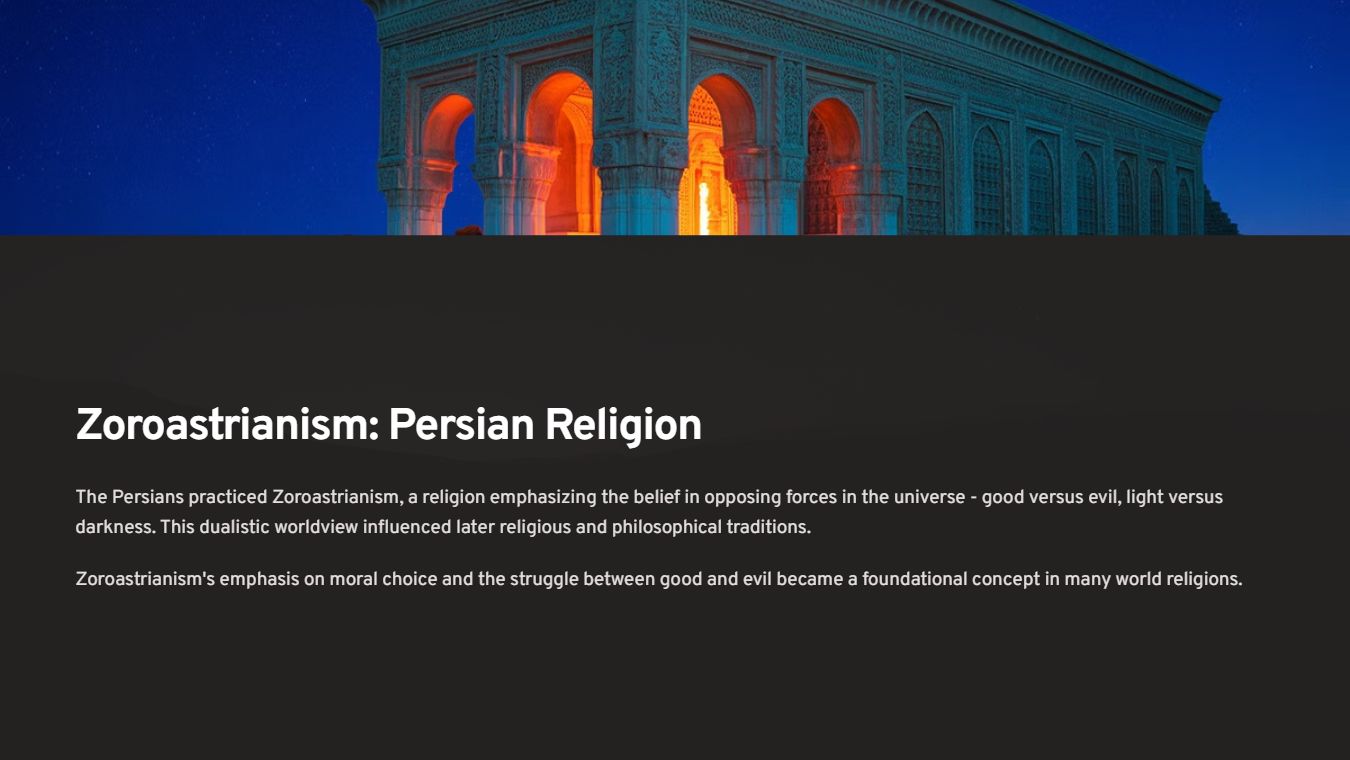
What are the opposing forces emphasized in Zoroastrianism?

1

Good and evil

2

Light and darkness

3

Life and death

4

Truth and falsehood

10

media

11

Multiple Choice

The Persian Empire was known for its "bureaucracy." Which is an example of a strong "bureaucracy?"

1

Creating a navy that can conquer different regions of the Mediterranean Sea for colonies.

2

Establishing an educational system that trained priests and future government rules.

3

Dividing the kingdom into many areas, each with its own ruler, who reported back to the King.

4

Having one main religion, but allowing other people in the Empire to believe in their own religions.

12

media

13

Multiple Choice

Which feature of Greece's geography explains the ancient Greeks' move towards trade?

1

the mountainous landscape

2

the location along the seacoast

3

the location along the boundary between Asia and Europe

14

media

15

Multiple Choice

Question image

Which element was one of the main differences between the societies of ancient Athens and Sparta?

1

the importance of slavery

2

the existence of social classes

3

the type of education given to boys

4

the participation of women in politics

16

media

17

Fill in the Blanks

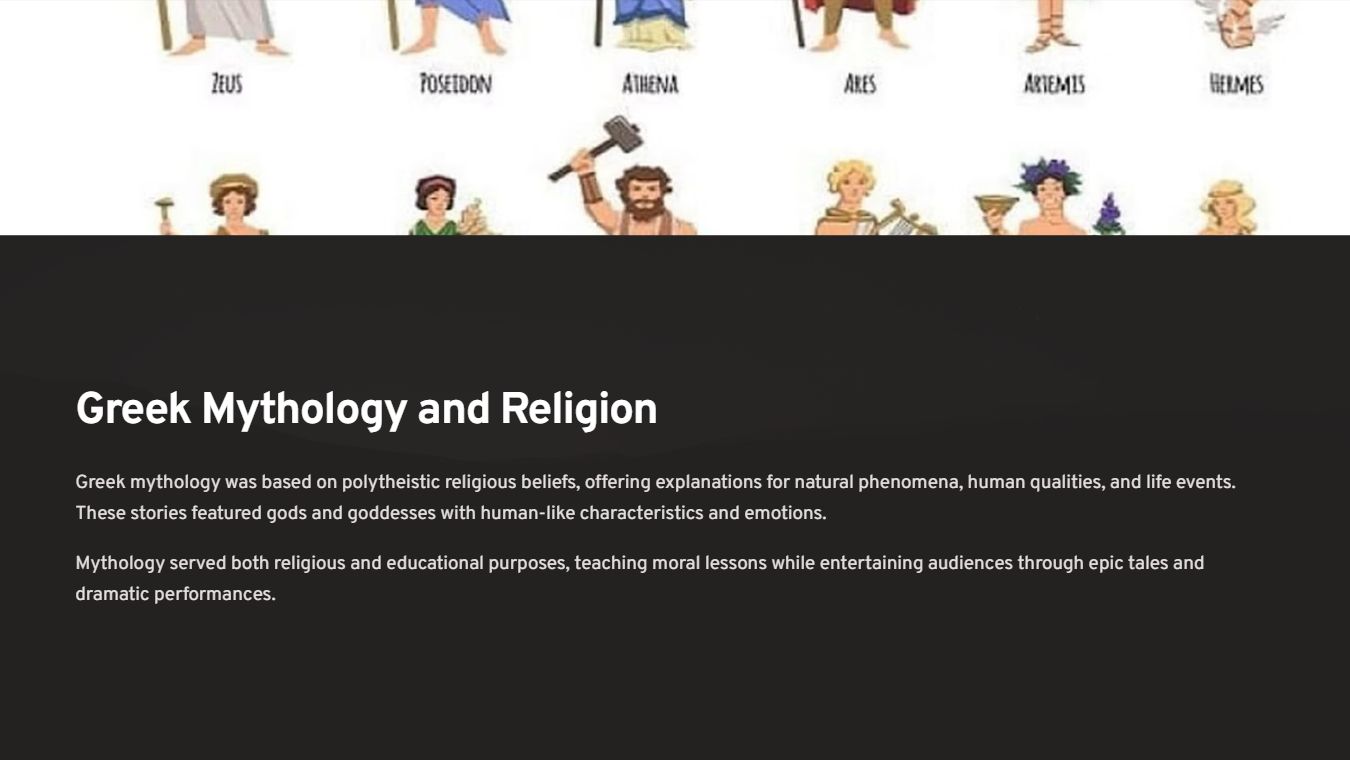
Fill in the blank: Greek mythology served both religious and educational purposes, teaching moral lessons while entertaining audiences through

tales.

18

media

19

Multiple Choice

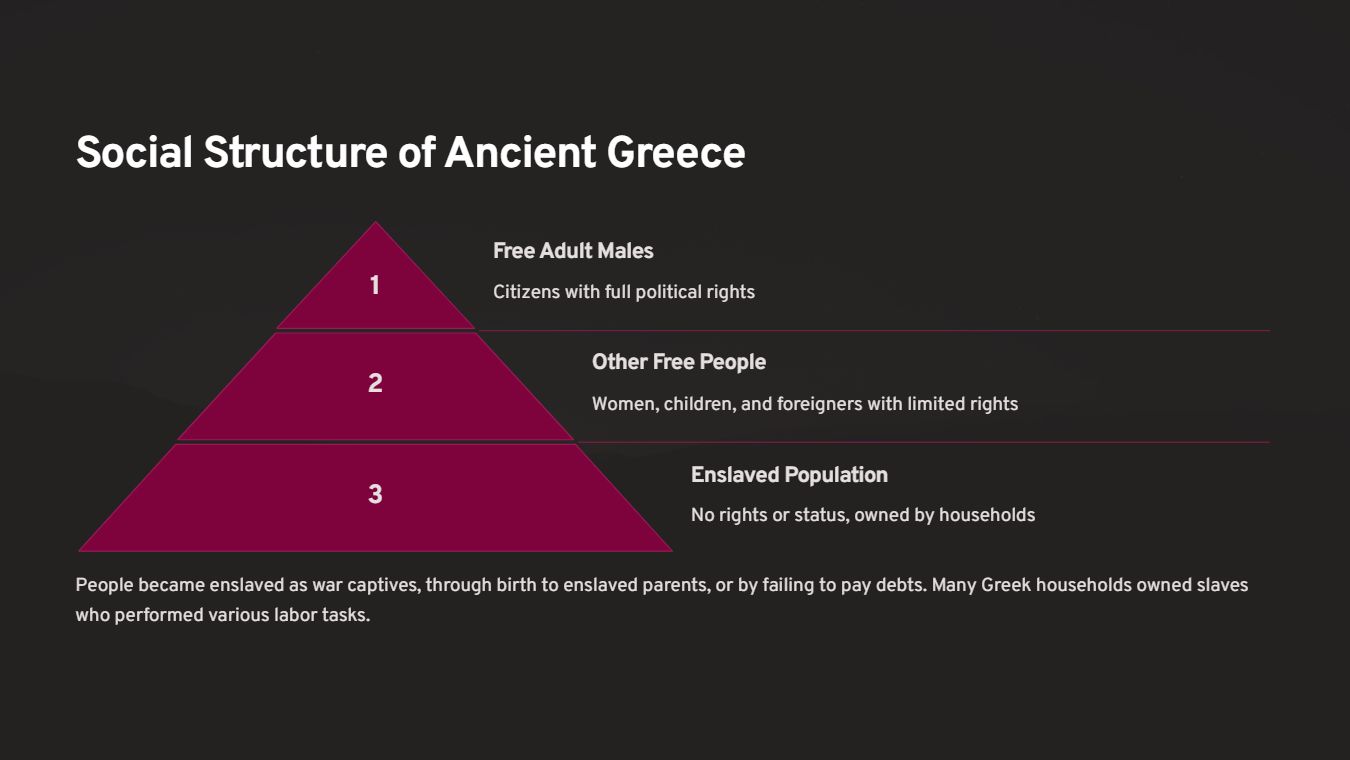
What are the three main categories of the social structure of Ancient Greece?

1

Free Adult Males

2

Other Free People

3

Enslaved Population

4

All of the above

20

media

21

Multiple Choice

Question image

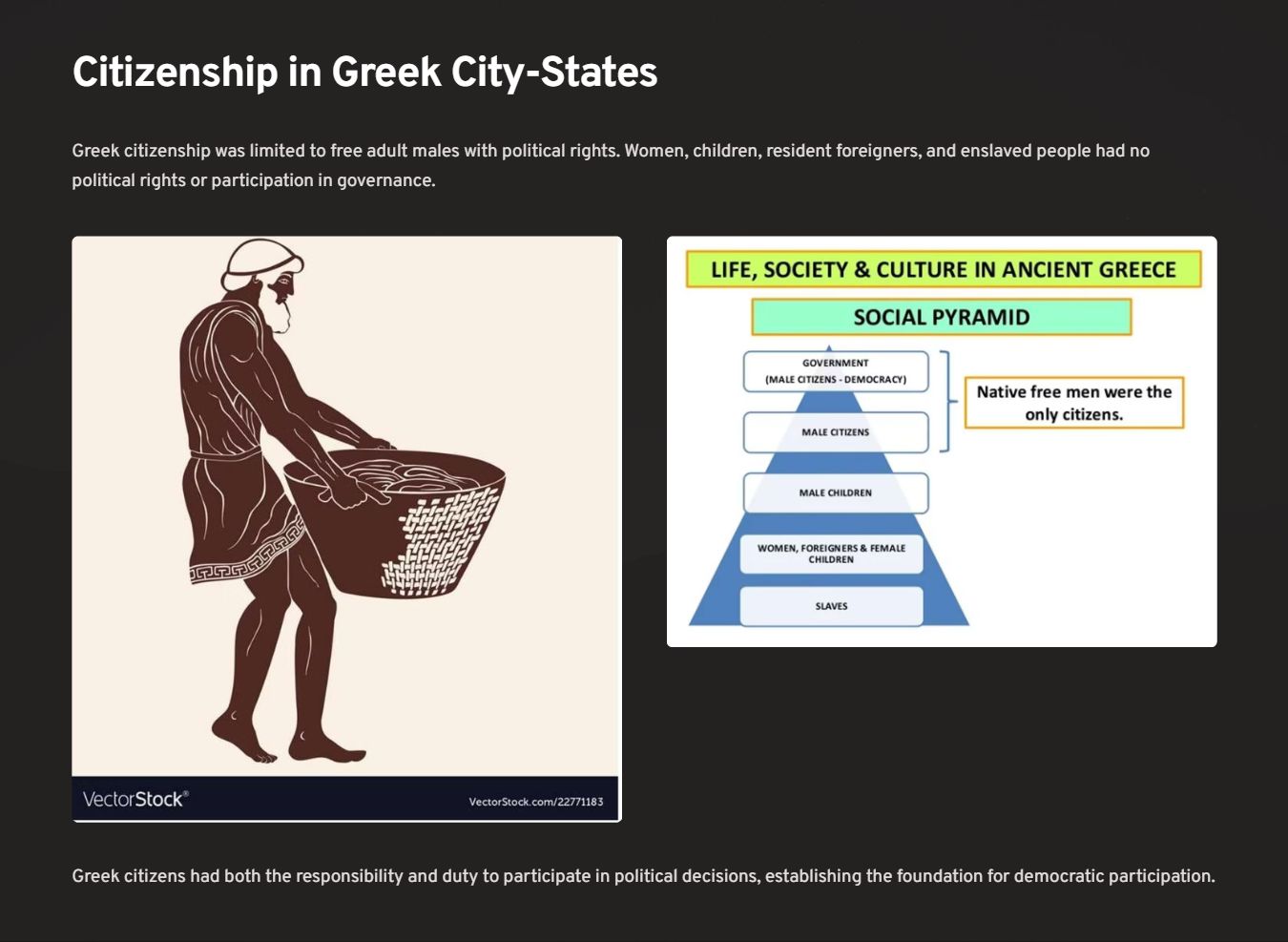
Who were the true citizens of ancient Greece?

1

Wealthy men and women

2

Males only, including foreigner and slaves

3

Free land-owning men born in the polis

4

Nobles and soldiers only

22

media

23

Multiple Choice

What are the four stages of government that Athens evolved through?

1

Monarchy, Aristocracy, Tyranny, Direct Democracy

2

Monarchy, Democracy, Oligarchy, Tyranny

3

Aristocracy, Democracy, Republic, Monarchy

4

Tyranny, Oligarchy, Democracy, Monarchy

24

media

25

Multiple Choice

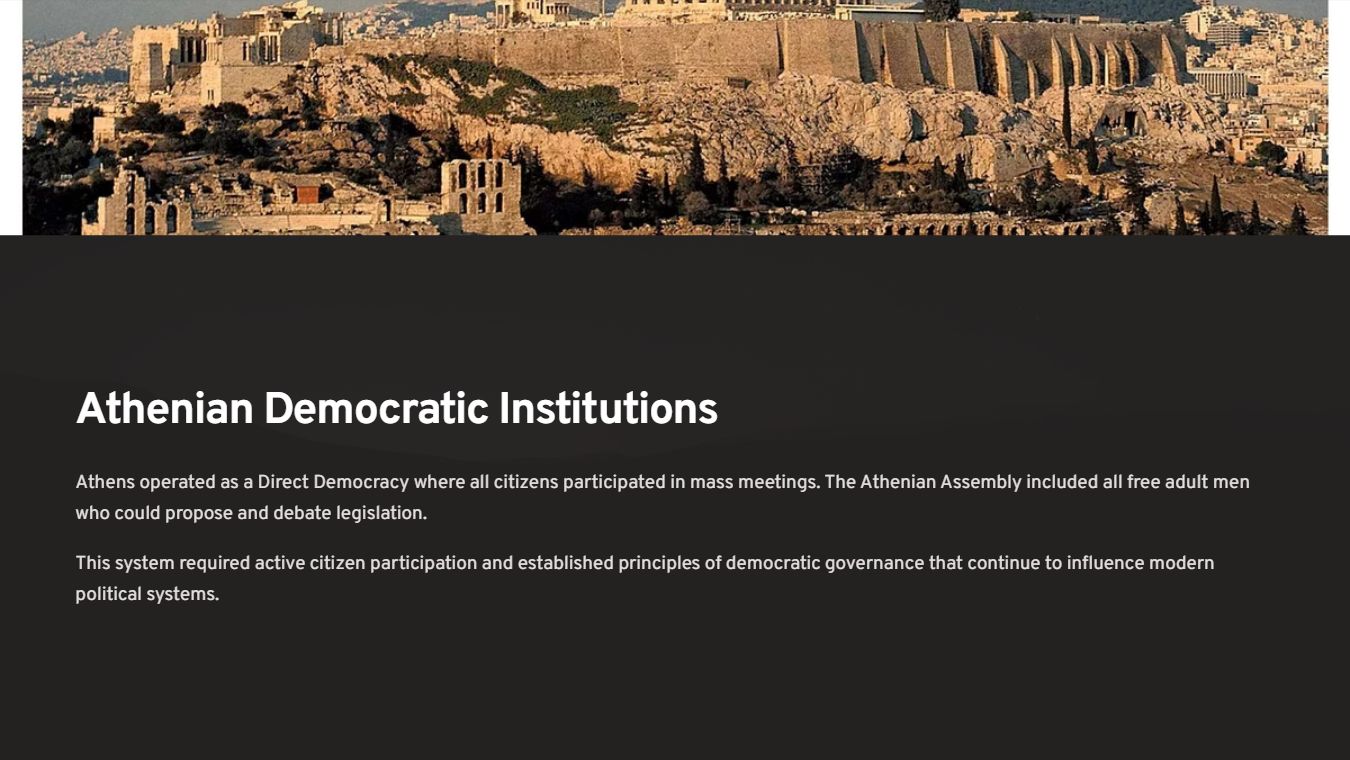
What was the role of the Athenian Assembly in the democratic process?

1

To propose laws

2

To enforce laws

3

To judge laws

4

To interpret laws

26

media

27

media

28

Multiple Choice

How did the geography of Greece play a role in the Battle of Salamis?

1

The mountainous terrain favored the Greek infantry

2

The narrow straits allowed for effective Greek naval tactics

3

The vast plains were ideal for Persian cavalry

4

The dense forests provided cover for Greek ambushes

29

media

30

Multiple Choice

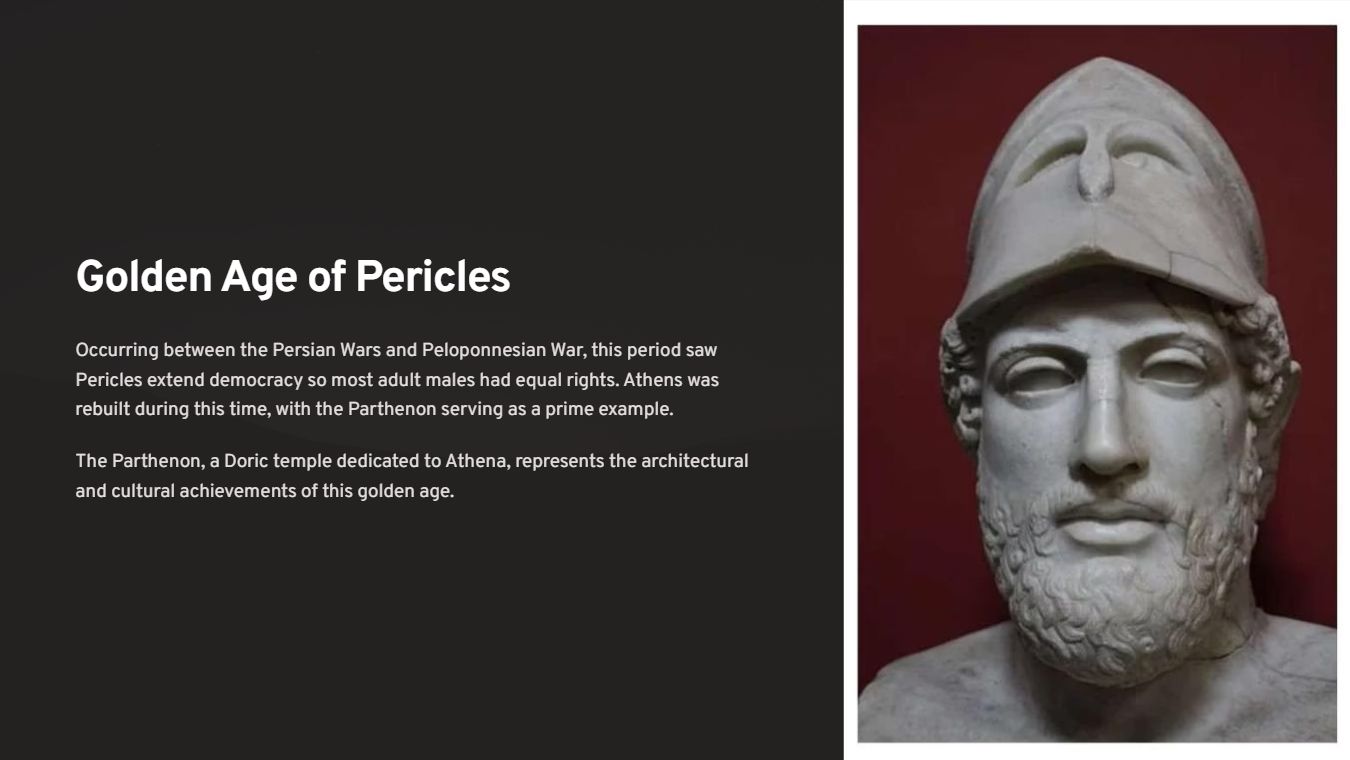
What significant changes occurred during the Golden Age of Pericles?

1

Extension of democracy

2

Construction of the Colosseum

3

Decline of Athenian power

4

Rise of Sparta

31

media

32

Multiple Choice

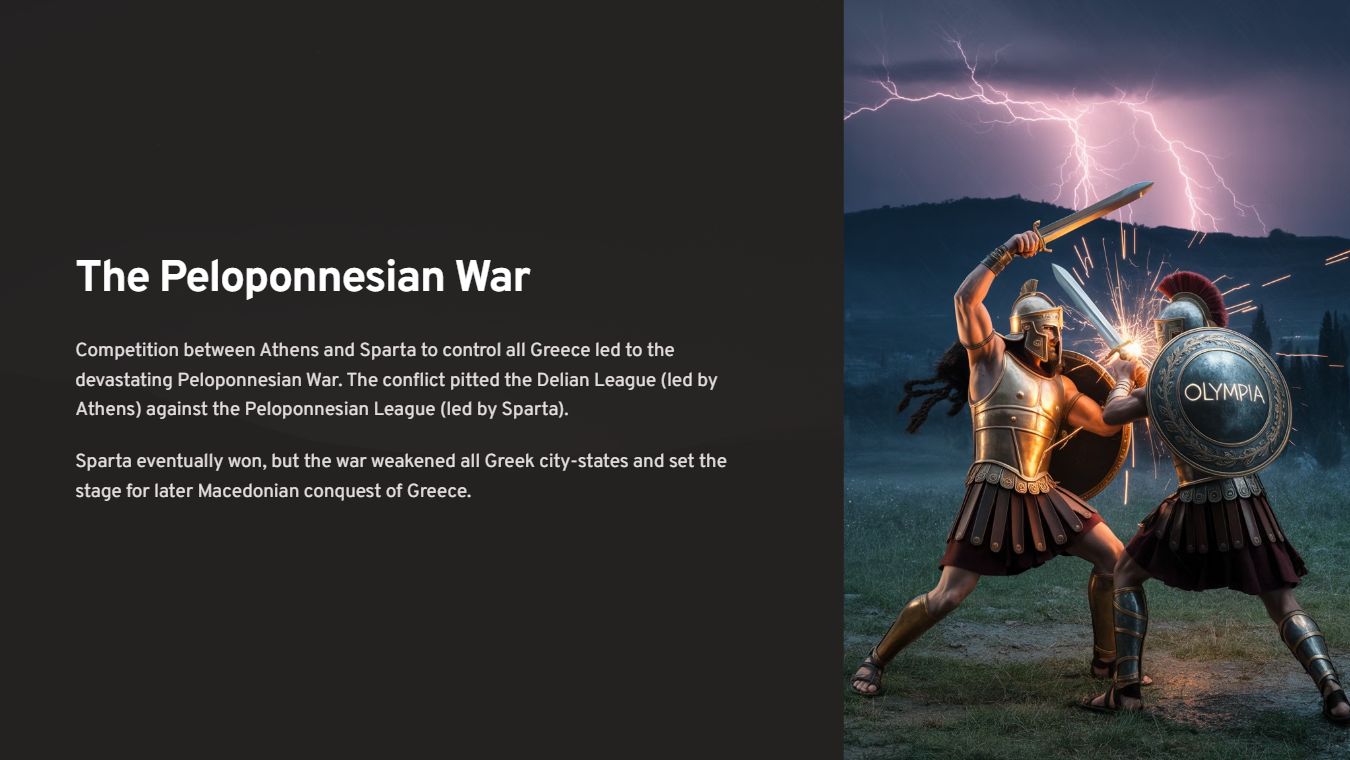
What were the main causes of the Peloponnesian War?

1

Competition for control of Greece

2

Economic disputes

3

Cultural differences

4

Territorial expansion

33

media

34

Multiple Choice

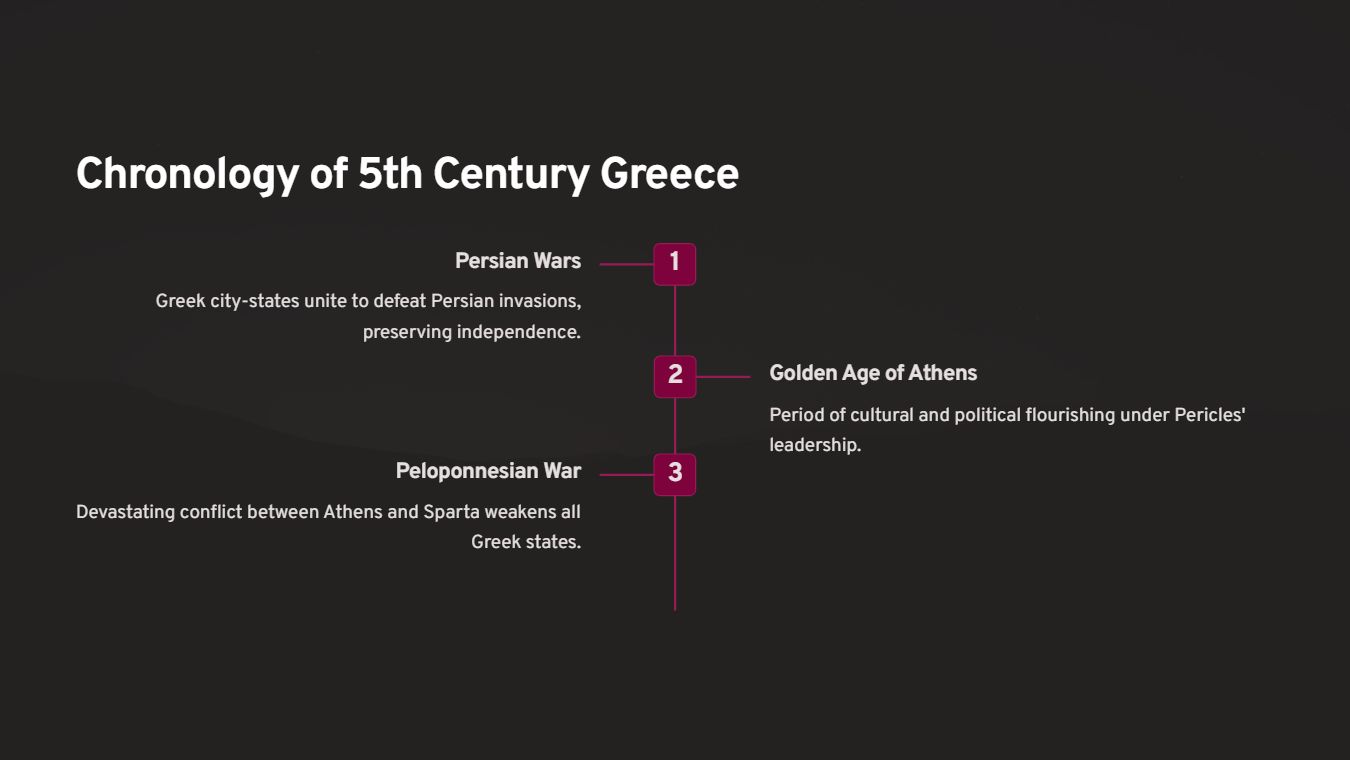
What were the key events in the chronology of 5th Century Greece?

1

Persian Wars

2

Golden Age of Athens

3

Peloponnesian War

4

All of the above

35

media

36

Multiple Choice

Question image

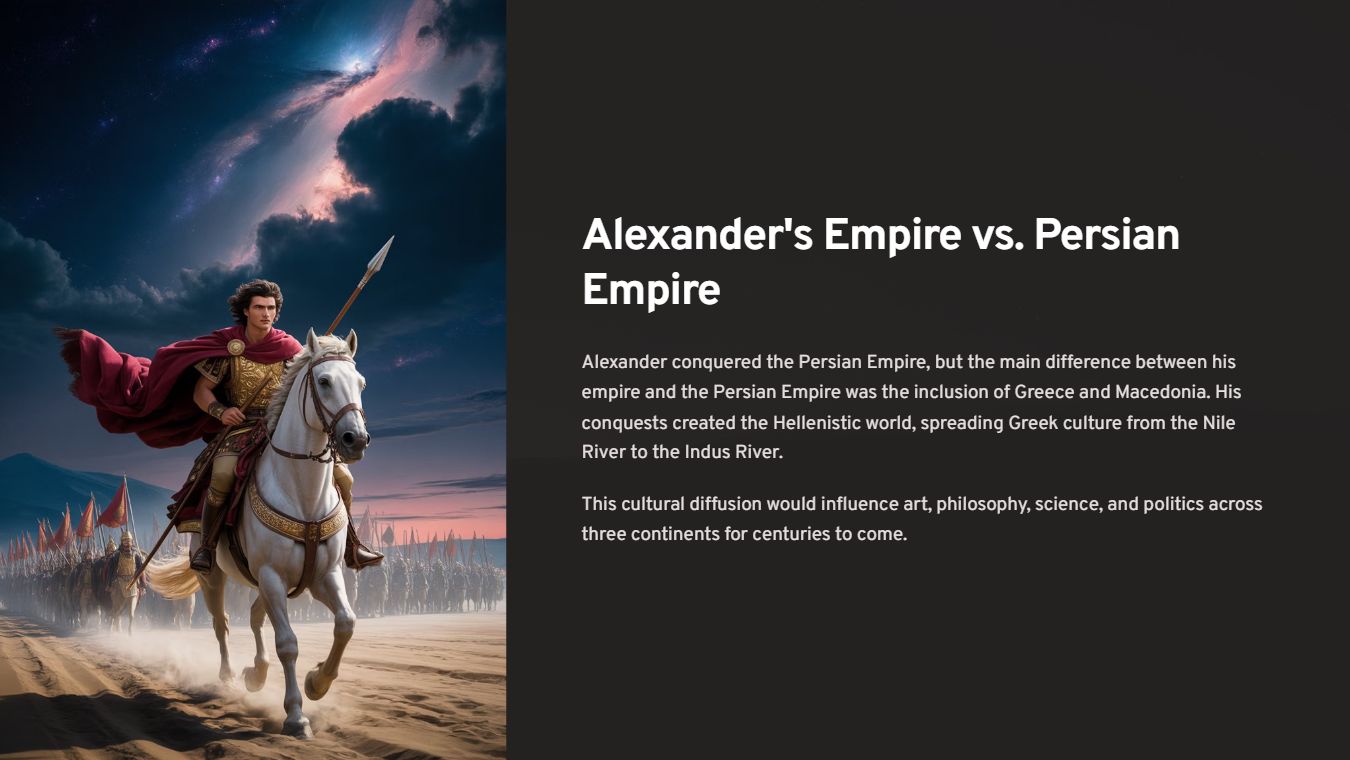
Which of the following describes Alexander’s conquests?

1

He attacked the Persian Empire and conquered from Greece to North Africa and lands extending to the Indus River in India.

2

He attacked and conquered Athens and Sparta, but lost to Persia.

3

He attacked the Persian empire but lost most of it before his death

4

He was attacked by the Persians and managed to defend most of Greece and Macedonia

37

media

38

Multiple Choice

Question image

Based on this image, Hellenism was the result of ___

1

military strength

2

combining cultural ideas (cultural diffusion)

3

 isolation of Egypt, India, Persia, and Greece

4

urbanization

39

media

40

Multiple Choice

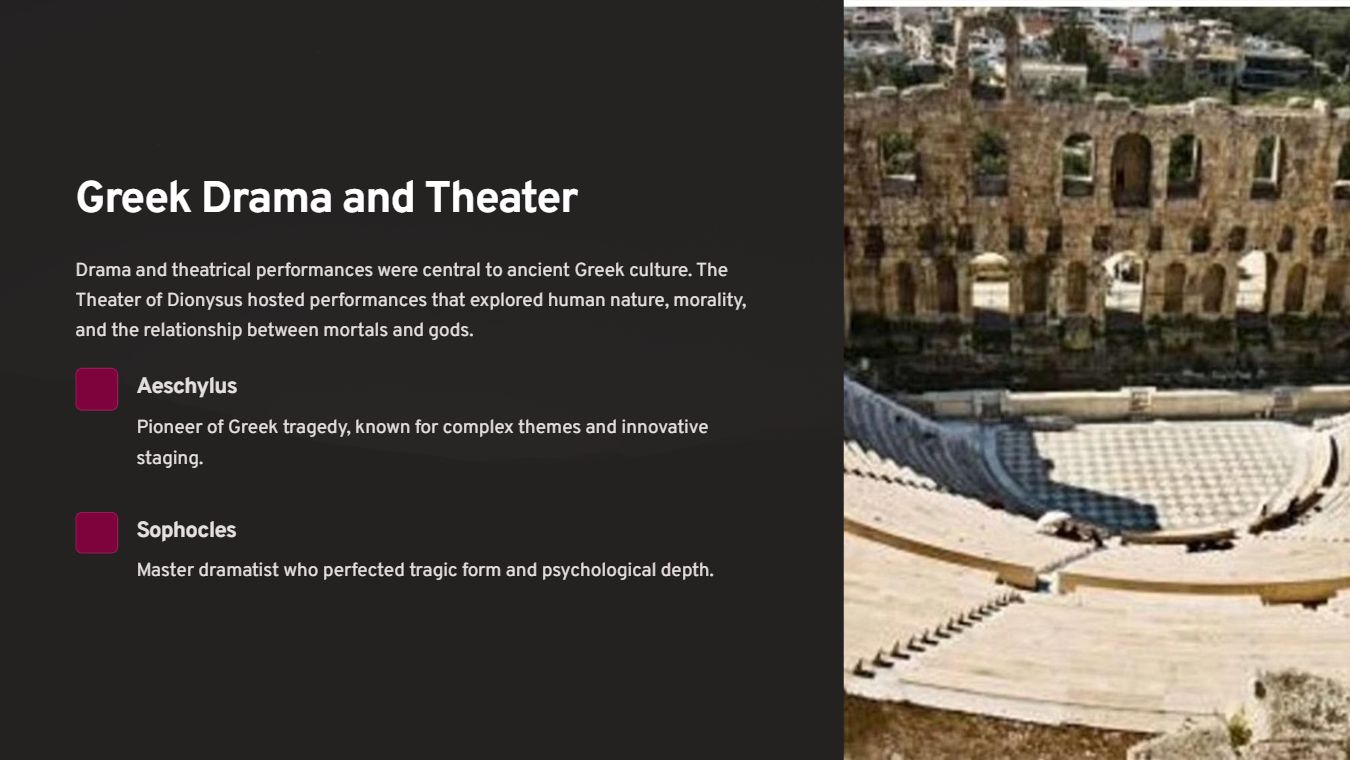
Who is known as the pioneer of Greek tragedy?

1

Sophocles

2

Aeschylus

3

Euripides

4

Aristophanes

41

media

42

media

43

Multiple Choice

What are the contributions of Herodotus and Thucydides to historical methodology?

1

Herodotus focused on military events

2

Thucydides documented the Persian Wars

3

Herodotus is known as 'The Father of History'

4

Thucydides emphasized evidence-based research

44

media

45

Multiple Choice

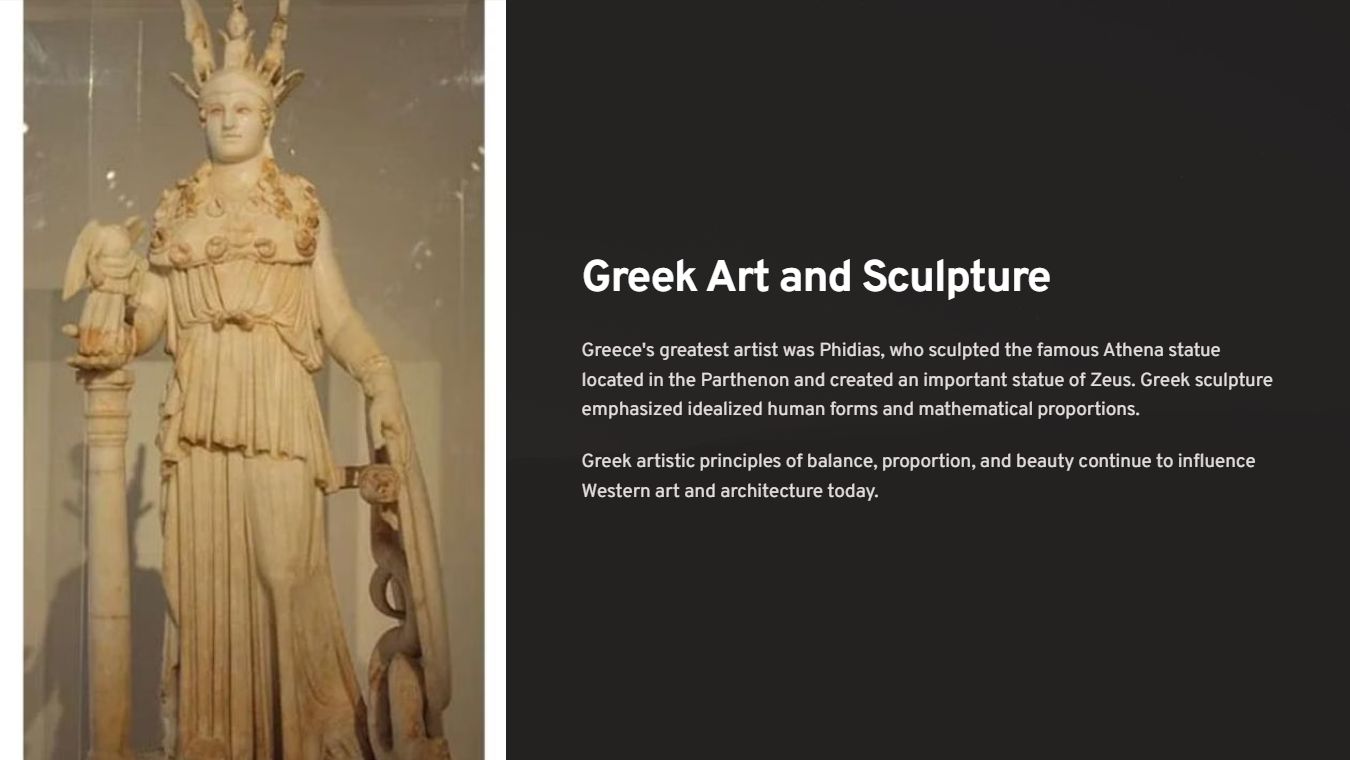
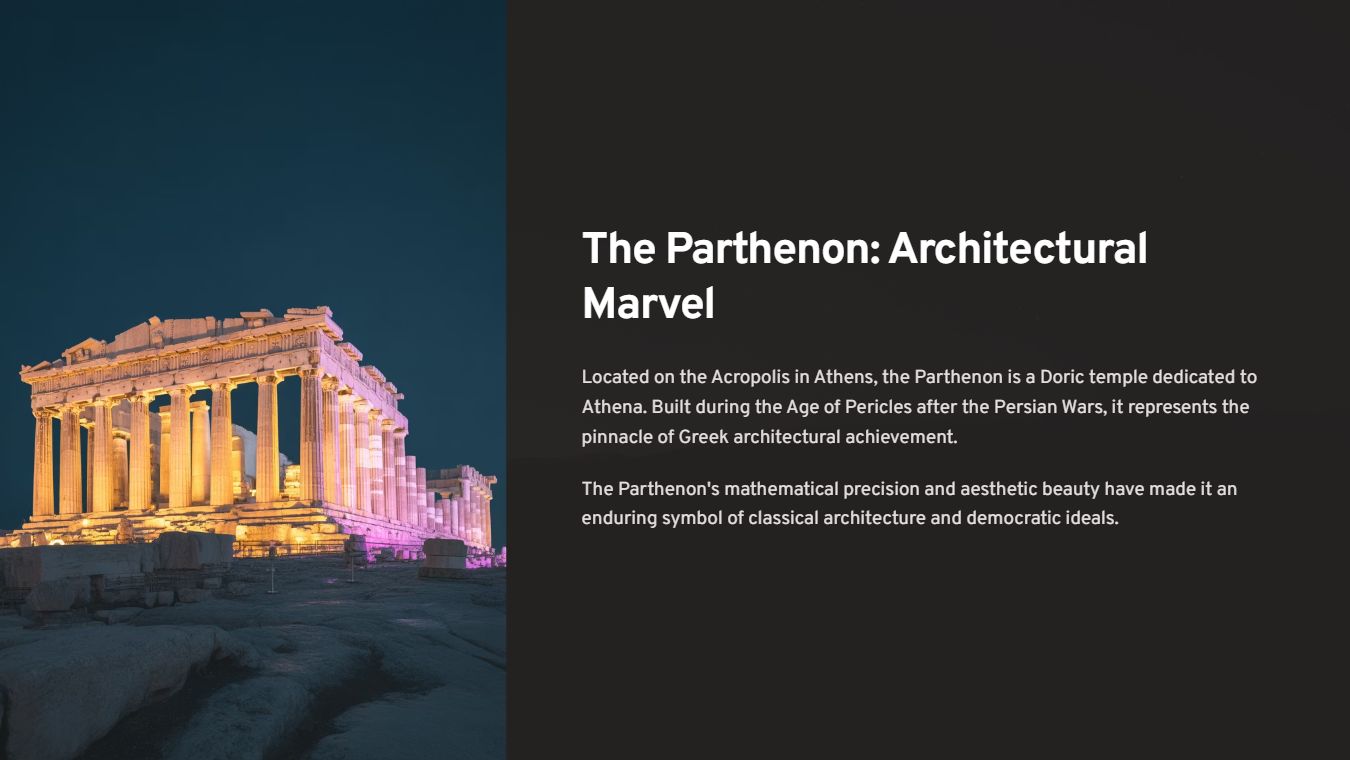
Who sculpted the famous Athena statue located in the Parthenon?

1

Phidias

2

Zeus

3

Athena

4

Hercules

46

media

47

Multiple Choice

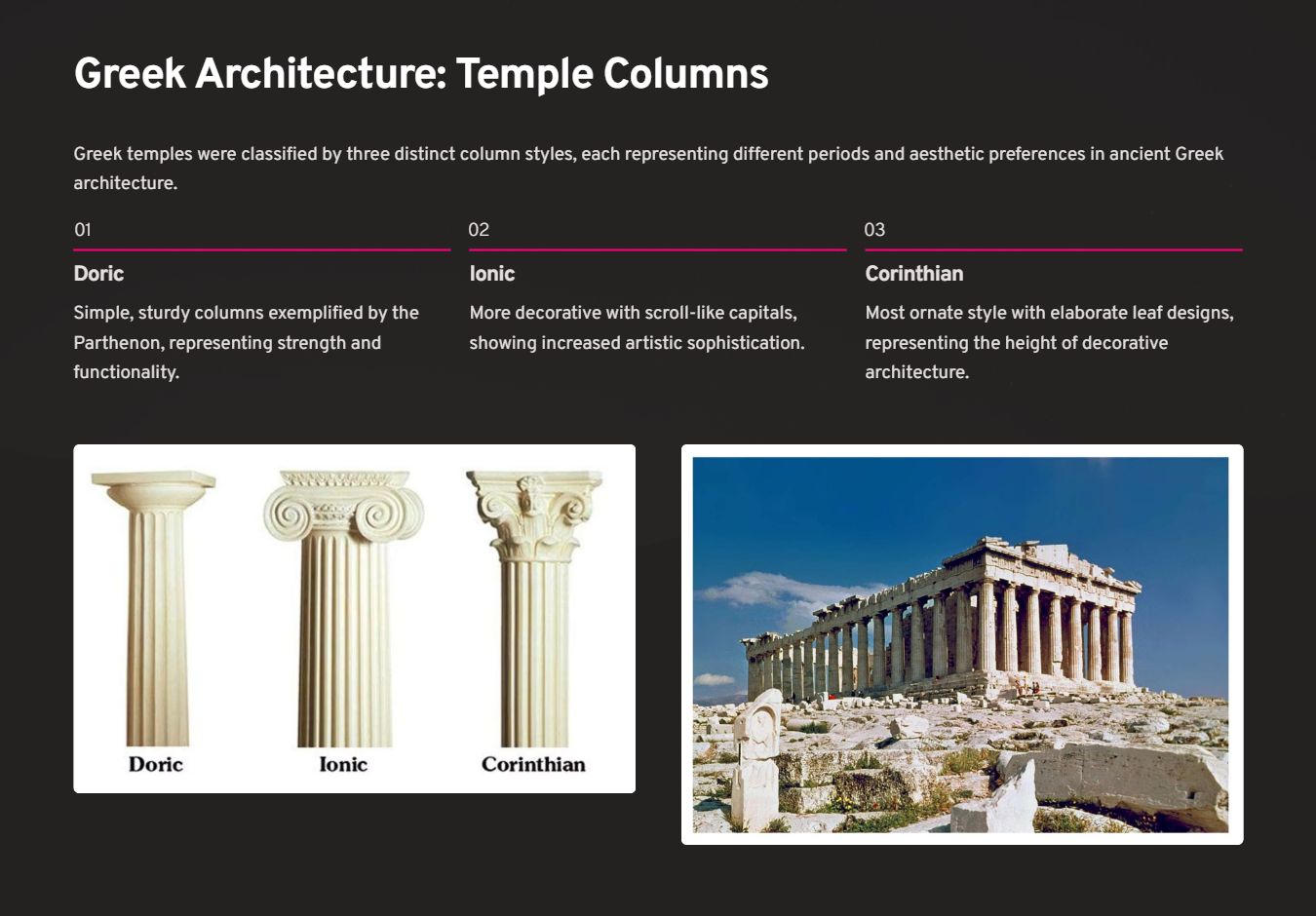
Which column style is characterized by simple, sturdy columns and is exemplified by the Parthenon?

1

Ionic

2

Corinthian

3

Doric

4

Tuscan

48

media

49

Multiple Select

Question image

What are characteristics of classical Greek architecture?


Select all correct answers.

1

bold columns or pillars

2

sculptured figures as decorative elements

3

the use of simple lines and marble and stone

50

media

51

media

52

media

53

media

54

Multiple Choice

Which of the following describes the Persian policy towards people with different cultural traditions who lived within the empire?
1
Respect and tolerance for non-Persian traditions
2
Forced assimilation to the Persian way of life
3
Taxation of those who continued to practice non-Persian traditions
4
Suppression and elimination of non-Persian traditions
pattern-tertiary
media

Show answer

Auto Play

Slide 1 / 54

SLIDE