Search Header Logo
Unit 1 Class Review

Unit 1 Class Review

Assessment

Presentation

Geography

9th - 12th Grade

Easy

Created by

Eric Rodgers

Used 5+ times

FREE Resource

6 Slides • 54 Questions

1

media

Unit 1 Class Review

By Eric Rodgers

2

Open Ended

What is World Geography?

3

media

5 Themes
Location, Place, Region, Movement, Human Environment Interaction
Geographer's Tools
Maps, Globes, Databases
Working with Maps
Longitude & Latitude
Using Coordinates to find Absolute Location
Miscellaneous
GIS

4

Labelling

Label the 5 oceans on the map.​ ​ ​ ​ ​

Drag labels to their correct position on the image

Atlantic Ocean

Southern Ocean

Arctic Ocean

Indian Ocean

Pacific Ocean

5

Match

Match the following Geographic Themes with their correct defintions

a position of a map

the physical and human characteristics of a location

an area characterized by a unifying set of physical or human characteristics

describes how people, goods, and information move from one place to another

Describes how humans interact with their environment

location

place

region

movement

human environment interaction

6

Match

Match the following themes of Geography with the correct photo

Location

Place

Region

Movement

Human Environment Interaction

7

Dropdown

There are two types of location. The

is the exact position on map that a place can be found. While​
describes a place in comparison to other places around it.

8

Match

Match the following types of Regions with the correct picture

Formal

Region

Perceptial Region

Functional Region

9

Open Ended

What is a map?

10

Multiple Choice

Question image

The illustration above demonstrates –

1

Relative and absolute locations

2

How plate tectonics has affected the US throughout time

3

How different cartographers view the US

4

How distortion affects maps

11

Match

Match the following

Define these grid lines

Define the Red Line

Define the Red Line

Define these grid lines

Lines of Latitude

Prime Meridian

Equator

Lines of Longitude

12

Labelling

Label the 4 hemispheres on the map.​ ​ ​ ​ ​

Drag labels to their correct position on the image

Eastern Hemisphere

Northern Hemisphere

Southern Hemisphere

Western Hemisphere

13

Drag and Drop

Question image
What continent can be found at 45°N, 105°W: ​
, & at 45°N, 105°E: ​
Drag these tiles and drop them in the correct blank above
North America
Asia
South American
Europe
Africa

14

Multiple Choice

Question image

What continent can be found at this location 30°S, 145°E: _______________

1

Africa

2

Asia

3

Australia

4

Antarctica

15

Fill in the Blank

A Database of Geographic Information used to create maps is a called ______

16

media

Layers
4 Spheres
Continental Drift

Water Cycle
Landforms

Structure of the Earth

17

Labelling

Match the following layers of the earth.

Drag labels to their correct position on the image

mantle

Inner core

crust

outer core

18

Multiple Choice

Question image

Identify the percent of Earth's surface that is covered in water.

1

1%

2

100%

3

50%

4

75%

19

Multiple Choice

Question image

In what layer of the Earth do people live?

1

Outer Core

2

Mantle

3

Inner Core

4

Crust

20

Match

The 4 Spheres

Match each Sphere with its correct defintion

An envelope of gases that encirlces the earth

Contains all the water on the Earth's surface

The upper part of the mantle, the tectonic plates, and the continents

Contains all living things

Atmosphere

Hydrosphere

Lithosphere

Biosphere

21

Multiple Choice

Question image

This sphere is created by the three other spheres and is composed of all the living things. 

1
Hydrosphere 
2
Biosphere 
3
Atmosphere 
4
Geosphere 

22

Multiple Choice

Question image

What is the name of the original supercontinent?

1

Panterra

2

Pangaea

3

Super Continent

4

Continent Drift

23

Open Ended

Question image

What does the photo represent?

24

Labelling

Correctly label the Water Cycle with the below terms.

Drag labels to their correct position on the image

Condensation

Evaporation

Precipitation

25

media

Tectonic Plates
Plate Boundaries
Ring of Fire
Weathering
Erosion

Internal & External Forces

26

Open Ended

What are the large moving pieces of the Earth's lithosphere?

27

Multiple Choice

Mountains

Rift valleys

Ocean trenches


The landforms listed in the box are created by the physical process of —

1

plate tectonics

2

wind erosion

3

weathering

4

soil-building

28

Multiple Choice

Question image
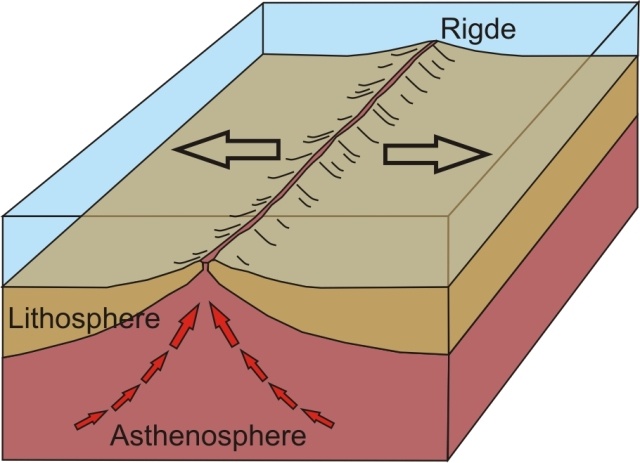
What kind of plate boundary is shown here?
1
divergent
2
convergent
3
transform
4
submergent

29

Multiple Choice

Question image
What kind of plate boundary is shown here?
1
divergent
2
convergent
3
transform
4
strike slip

30

Multiple Choice

Question image
What kind of plate boundary is shown here?
1
divergent
2
convergent
3
transform
4
subducting

31

Multiple Choice

An earthquake is a physical process that most affects the —

1

biosphere

2

lithosphere

3

atmosphere

4

hydrosphere

32

Multiple Select

What geologic feature/event generally occurs at a plate boundary?

1
Earthquakes
2
Volcanoes
3
Mountains
4
Rift Valleys

33

Open Ended

Due to having the majority of the Earth's active volcanoes, what is the outter edge of the Pacific Rim known as?

34

Multiple Choice

Question image
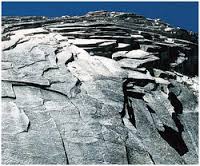
What is mechanical weathering?
1
Process through which rocks are physically broken into smaller pieces.
2
Rocks are broken down through chemical changes.
3
Rocks are worn away from acid in plant roots.
4
Rocks broken down by machinery.

35

Dropdown

Question image
The illustration depicts what type of mechanical weathering?​

36

Multiple Choice

Question image
oxidation produces rust on some rocks containing iron
1
chemical weathering
2
mechanical weathering
3
erosion
4
deposition

37

Multiple Choice

Question image
What is erosion?
1

The process by which
wind, water, or ice
moves fragments of rock
and soil.

2

The process by which
wind and water change the surface of the earth

3
The breaking down of
Earth’s crust into smaller
and smaller pieces.

38

Match

Match the following

The physical breaking down of rocks into smaller fragments or sediment

The movement of weathered material thru wind, water, or ice

The natural features of the earth's surface

The process that changes the internal makeup of a rock - such as carbonation

These external forces shape the earth's surface thru weathering and erosion

Mechanical Weathering

Erosion

Landforms

Chemical Weathering

Wind and Water

39

media

Earth-Sun
Relationship

Earth's Tilt
Rotation, Revolution
Seasons
Rainshadow Effect

40

Multiple Choice

Question image

Based on the diagram, how does the Earth-Sun relationship affect the climate of different regions of the world?

1

It creates a pattern where different areas of the globe receive differing amounts of sunlight.

2

It creates a pattern in which the warm ocean currents bring monsoon rains to some regions.

3

It creates a pattern in which the summers and winters are longer than fall and spring seasons.

4

It creates a pattern where the eastern and western hemispheres have seasonal differences.

41

Multiple Choice

What factors cause the seasons on earth?

1

The earth's tilt and rotation as it travels around the earth

2

The earth's climate

3

The sun's tilt and the rotation of the earth

4

Heat from the sun

42

Dropdown

Rotation =​​


Revolution =​


Tilt + Rotation + Revolution =​

43

Multiple Choice

Question image

How would this barrier affect the climate on the leeward side?

1

The temperatures would be warm and the amount of precipitation low.

2

The temperatures would be warm and the amount of precipitation high

3

The temperatures would be very cold and the amount of precipitation high.

4

The temperatures would be extremely cold and the amount of precipitation low.

44

media

Currents
Zones of Latitude
Greenhouse Effect
Climate Regions
Types of Climates

Factors in Weather & Climate

45

Open Ended

Question image

What does the photo represent -

46

Multiple Choice

Geographers have divided the earth into 3 zones of latitude known as -

1

Low, middle, and temperate

2

Tropical, temperate, and low

3

Tropical, temperate, and polar

4

Tropical, High, and Polar

47

Labelling

Using the map label each of the latitude zones.

Drag labels to their correct position on the image

High or Polar Latitudes

Middle or Temperate Latitudes

Low or Tropical Latitudes

48

Hotspot

Which location is found in the TROPICAL (or Low) latitude zone?

49

Multiple Choice

Which of the following would you likely find at a low latitude?

1

desert

2

tropical rain forest

3

tundra

4

ice flow

50

Hotspot

Which location is found in the POLAR (or High) latitude zone?

51

Hotspot

Which location is found in the Temperate (or Middle) latitude zone?

52

Multiple Choice

Temperature ranges in areas near oceans usually —

1

vary widely because of the effects of storms

2

do not vary much because land heats and cools quickly

3

vary widely because some oceans are warmer than others

4

do not vary much because large bodies of water warm and cool slowly

53

Multiple Choice

Which of the following best explains how elevation influences temperature?

1

Higher elevations experience cooler temperatures compared to lower elevations.

2

Higher elevations experience warmer temperatures compared to lower elevations.

3

Higher elevations experience very little temperature variation from lower elevations.

4

Higher elevations experience varied temperatures depending on proximity to oceans.

54

Multiple Select

Which of the following factors influences climate?  Select all that apply - 

1

Wind and Ocean Currents

2

Zones of Latitude

3

Longitude

4

Topography (Landforms)

55

Multiple Choice

Geographers generally classify climate regions into the following categories - 

1

Tropical, Dry, Mid Latitudes, Temperate, and High Latitudes

2

Tropical, Dry, Mid Latitudes, High Latitudes, and Polar

3

Tropical, Dry, Mid Latitudes, High Latitudes, Highland

4

Tropical, Mid Latitudes, High Latitudes, Polar, and Highland

56

Multiple Choice

What type of climate is characteristic of temperate grassland biomes?

1

Low temperatures and low amounts of precipitation

2

High temperatures and large amounts of precipitation

3

Low temperatures at high altitudes and large amounts of precipitation

4

Seasonal shifts in temperature and variation in amounts of precipitation

57

Dropdown

The temperature and other outside conditions (such as rain, cloudiness, etc.) at a particular place over a long period of time is called - ​

58

Multiple Choice

Question image

The greenhouse effect is a natural process

1

true

2

false

59

Multiple Choice

What does greenhouse effect do?

1

Reflects the sun's energy

2

Blocks the sun's infrared radiation

3

Reflects enough of the sun's energy to keep the earth cool, but also absorbs enough heat to warm the earth

4

Helps light up the moon at night

60

Match

Match the correct Climate Map with its specific Climate

Tropical Wet - Hot all year, rains daily

Tropical Wet & Dry - Warm temps all year

Humid Subtropical - Hot w/ mild winters

Humid Continental - Warm w/ cold winters

Highland - Found in mountanous regions

media

Unit 1 Class Review

By Eric Rodgers

Show answer

Auto Play

Slide 1 / 60

SLIDE