

FB 9/18

Presentation
•
Social Studies
•
9th - 12th Grade
•
Practice Problem
•
Medium

Brittany Greenlief
Used 1+ times
FREE Resource
16 Slides • 13 Questions
1

2
3
Multiple Choice
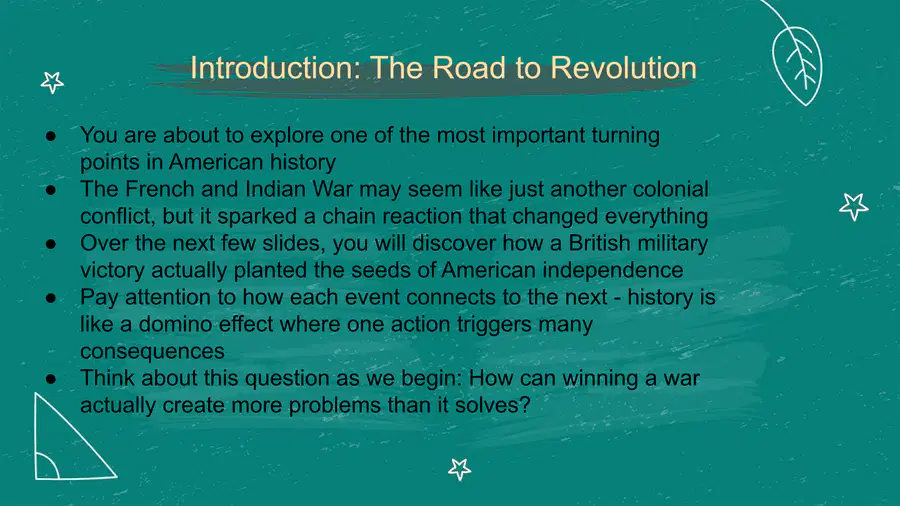
The French and Indian War affected relations between the British and the colonists in which of the following ways?
The colonists challenged British authority.
The British respected the American way of government.
The colonists became more dependent on the British.
The American colonists were treated as equals by the British.
4
5
Multiple Choice
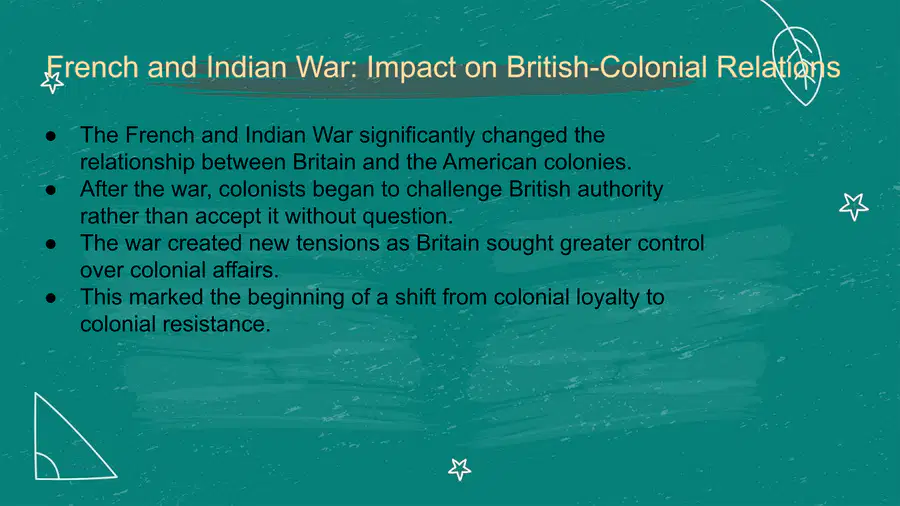
What was one result of the British victory in the French and Indian War?
The French were forced to give up their major land holdings in North America.
The British were able to purchase land west of the Mississippi River from the French.
The Cherokee were punished and forced to move to lands west of the Mississippi River.
The American colonies sought an alliance with Spain to achieve independence
6

7
Multiple Choice
What action did the British take as a result of the French and Indian War to make it easier to manage the American colonies?
They seized control over shipping in Boston Harbor.
They took control over the Massachusetts colonial government.
They banned the spread of slavery into the Northwest Territories.
They prohibited colonists from settling west of the Appalachian Mountains
8
9
Multiple Choice
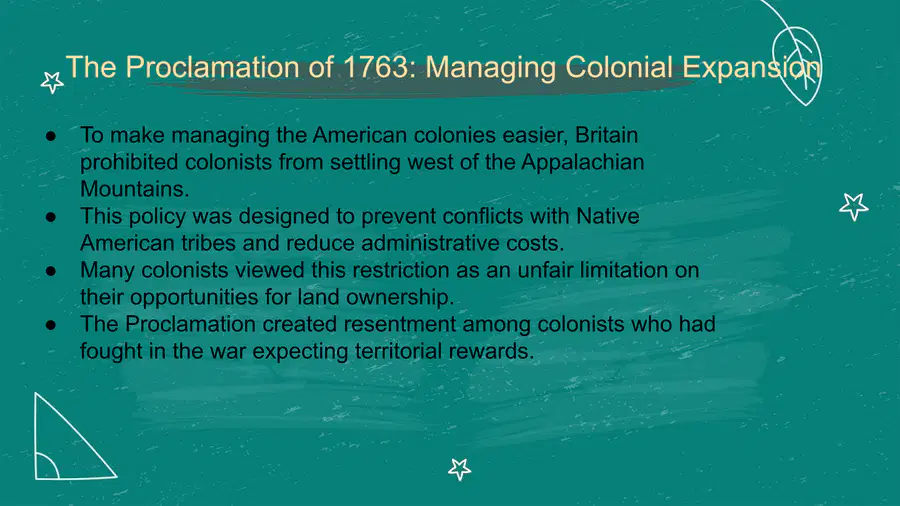
How did the British victory in the French and Indian War contribute to the call for revolution in the American colonies?
Great Britain forced the colonies to end the Atlantic slave trade during the war.
Great Britain instituted a blockade on American ports after the war.
Great Britain eliminated colonial legislatures after the war.
Great Britain began increasingly taxing the colonies to pay for the war.
10
11
Multiple Choice
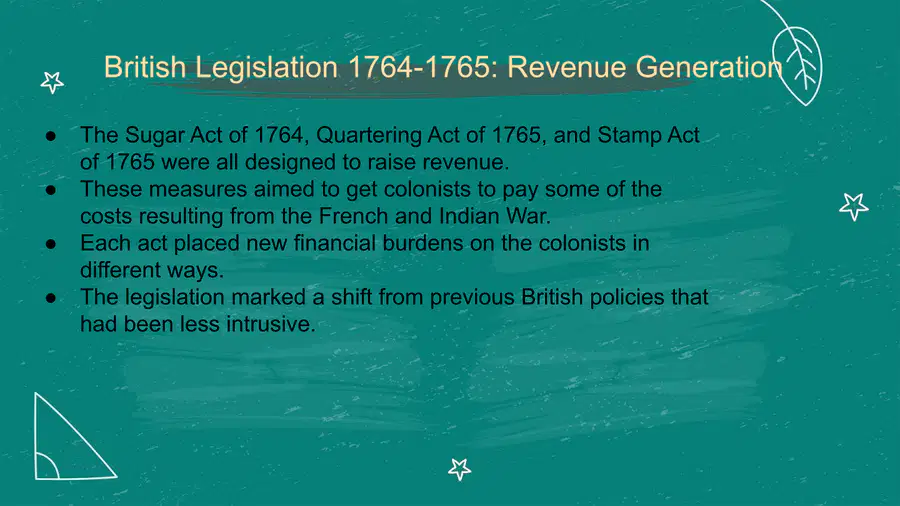
British Legislation in North America, 1764–1765
Stamp Act, 1764
Quartering Act, 1765
Stamp Act, 1765
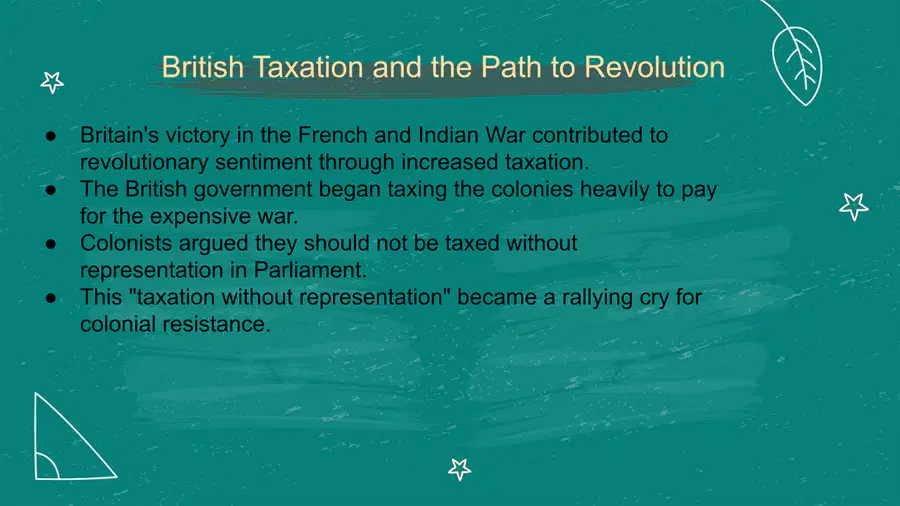
What was the purpose of these measures?
to promote trade between the colonies and other European countries
to penalize the colonists for acts of rebellion committed against British rule
to raise revenue needed for improving roads and building canals in the colonies
to get colonists to pay some of the costs resulting from the French and Indian War
12
13
Multiple Select
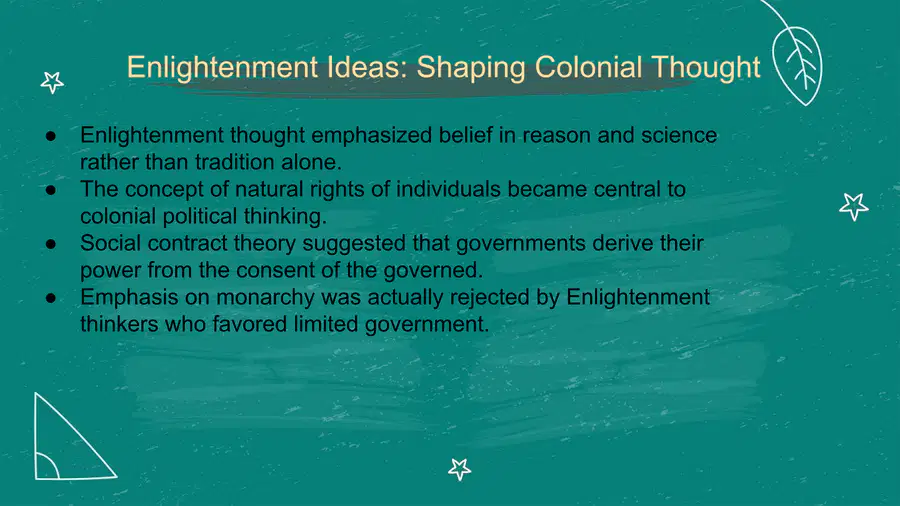
Which of the following describe characteristics of Enlightenment thought?
Emphasis on monarchy
Belief in reason and science
Natural rights of Individuals
Social contract theory
14
15
Dropdown
16
17
Multiple Choice
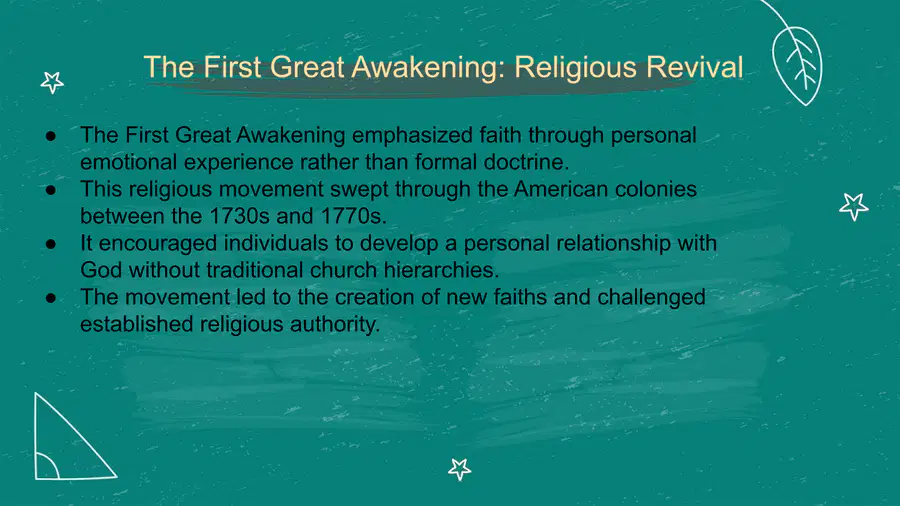
The First Great Awakening emphasized:
strict church doctrine
faith through personal emotional experience
obedience to the king
religious tolerance through law
18
19
Multiple Choice
Use the list below to answer the question.
• Criticized traditional church hierarchies
• Focused on a personal relationship with God
• Led to the creation of new faiths
Which of these is the best title for this list?
The Temperance Movement
The First Great Awakening
The Great Migration
The Social Gospel Movement
20
21
Match
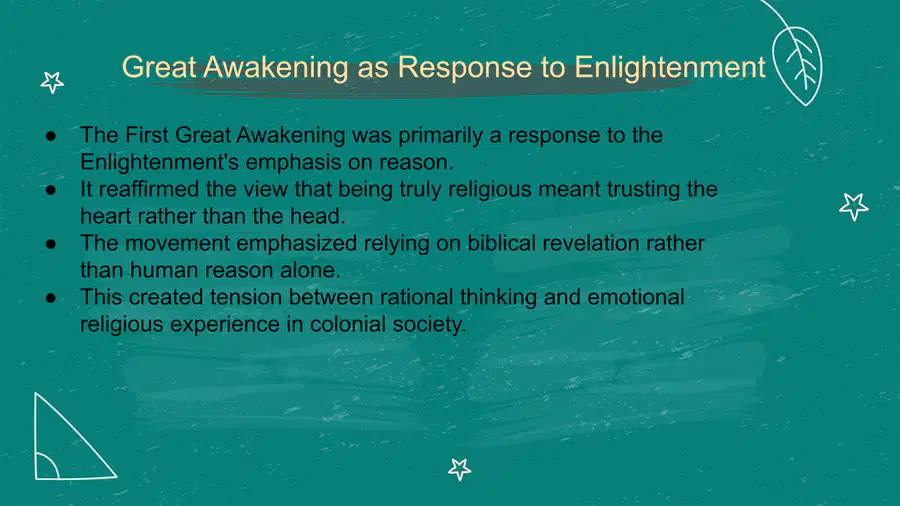
Match each event with its cause or effect leading to the American Revolution
British attempt to assert greater control over the colonies
Colonial protest against taxation without representation
British response to the Boston Tea Party
British debt and colonial resentment over war expenses
Stamp Act
Boston Tea Party
Coercive Acts (Intolerable Acts)
French and Indian War
Stamp Act
Boston Tea Party
Coercive Acts (Intolerable Acts)
French and Indian War
22
23
Multiple Choice
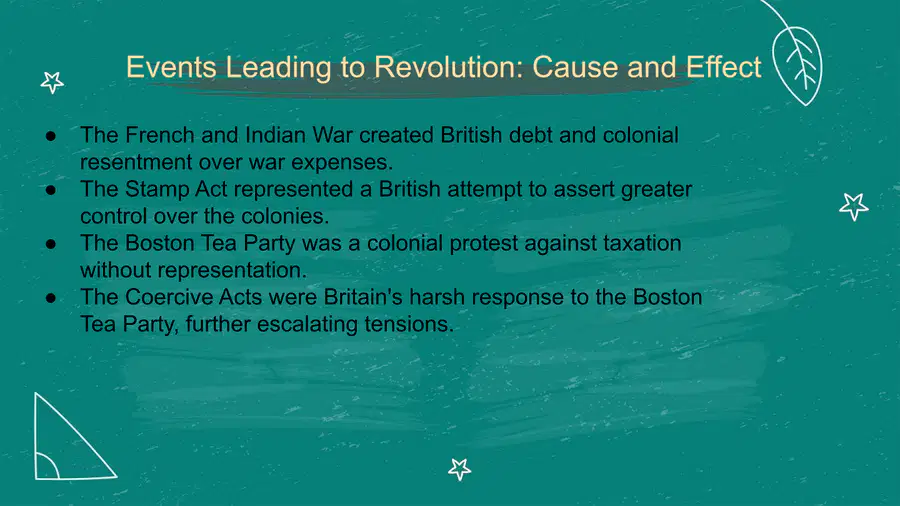
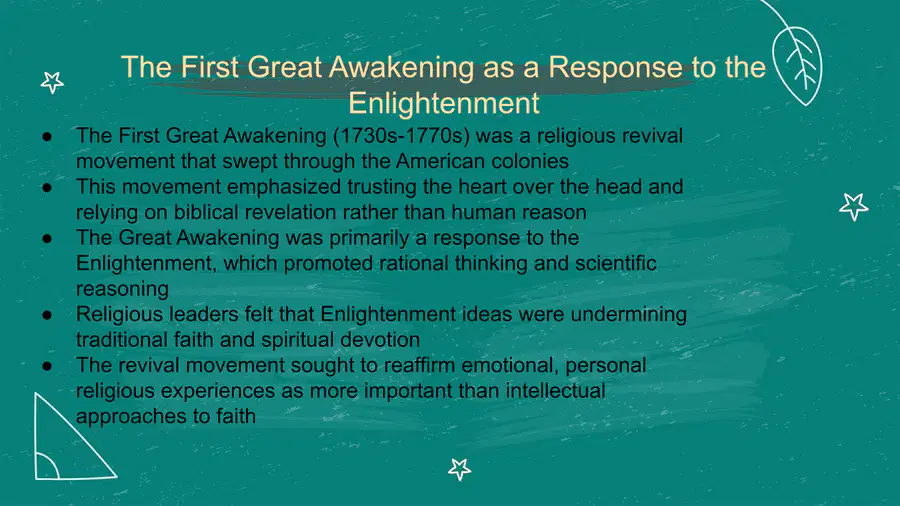
Based on this excerpt, the first Great Awakening was primarily a response to
[T]he first Great Awakening . . . [was] a revitalization of religious piety that swept through the American colonies between the 1730s and the 1770s. . . . [It reaffirmed] the view that being truly religious meant trusting the heart rather than the head . . . and relying on biblical revelation rather than human reason. —Christine Leigh Heyrman, “The First Great Awakening” (National Humanities Center, 2008)
the Enlightenment.
the Industrial Revolution.
mercantilism.
democracy.
24
25
Multiple Choice
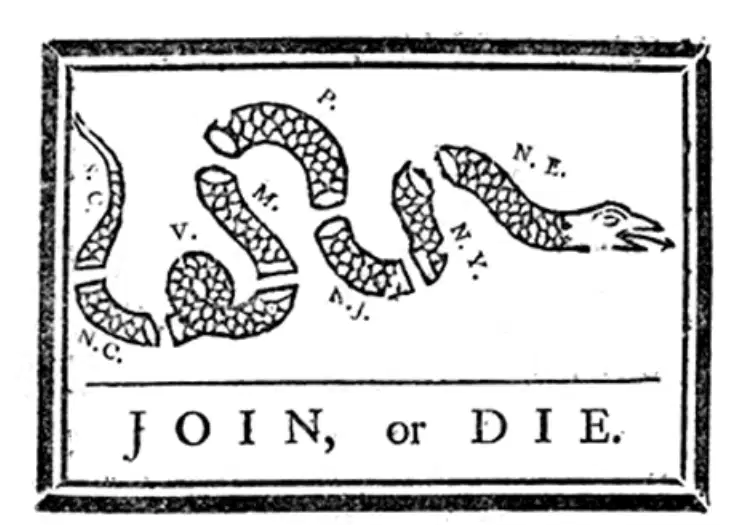
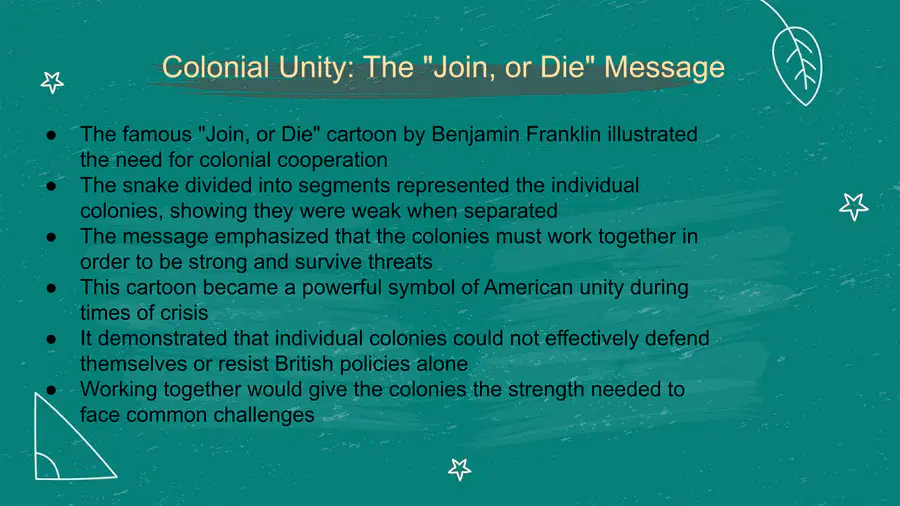
Which option best reflects the message of the cartoon?
The colonies must work together in order to be strong.
The colonies should remain loyal to England.
Colonists needed to acquire new territory.
Colonists should ally with the French to defeat the British.
26
27
Multiple Choice
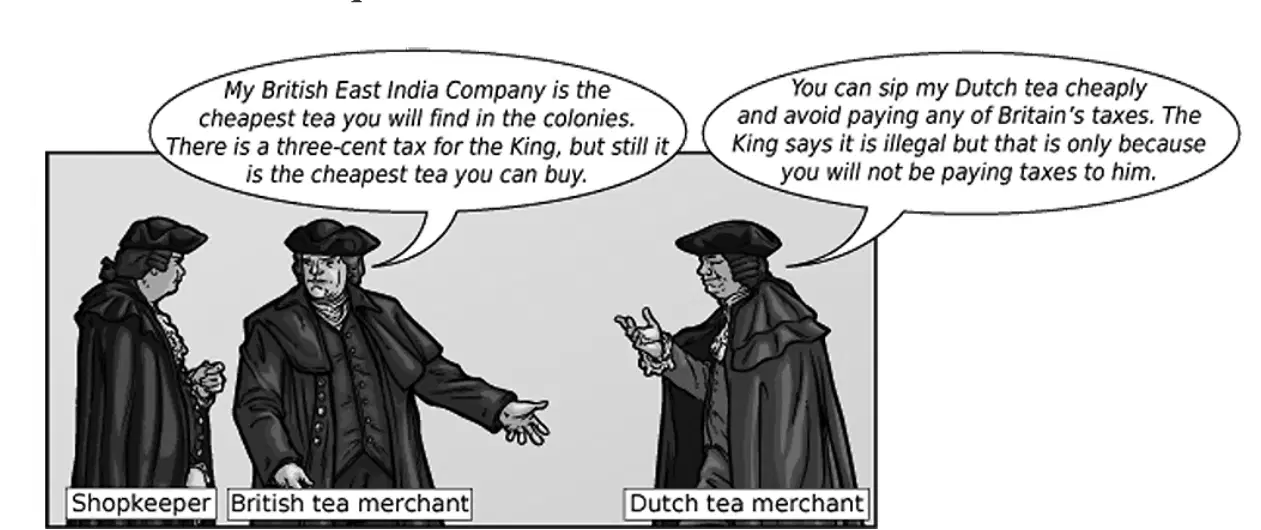
Which cause of the Boston Tea Party is described to the shopkeeper?
Colonists wanted British tea but could not afford it.
Colonists believed British subjects should buy only British tea.
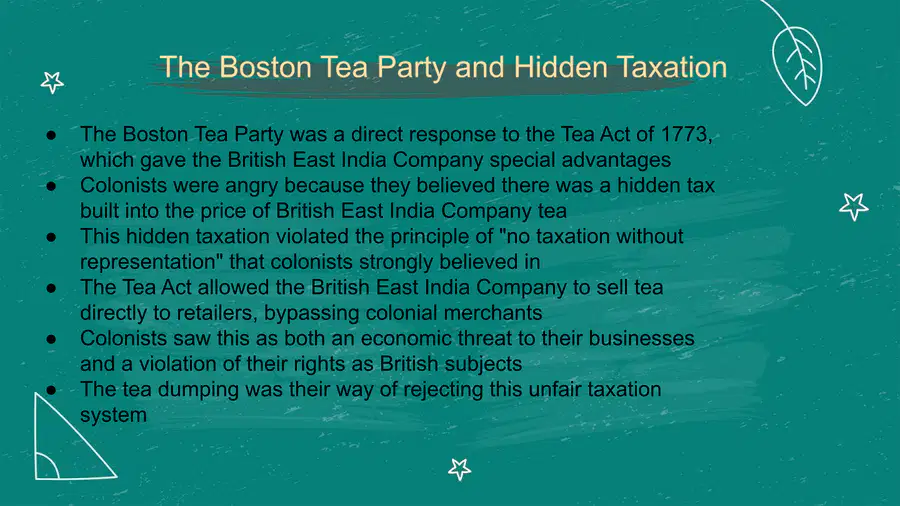
Colonists did not want to pay a hidden tax in the British East India Company tea price.
Colonists liked Dutch tea but did not want to buy it because the King said it was illegal.
28
29
Show answer
Auto Play
Slide 1 / 29
SLIDE
Similar Resources on Wayground

22 questions
FDR and The New Deal (Intro)
Presentation
•
9th - 12th Grade
21 questions
Chapter 3: Managing Stress
Presentation
•
9th - 12th Grade
20 questions
Criminal Justice Process
Presentation
•
9th - 12th Grade
22 questions
Economics Unit 1 Exam Review
Presentation
•
9th - 12th Grade
20 questions
The Origins of Buddhism
Presentation
•
KG - University
21 questions
Age of Exploration
Presentation
•
10th - 12th Grade
23 questions
Early Civilizations: Mesopotamia
Presentation
•
9th - 12th Grade
21 questions
Interaction & Diffusion Review
Presentation
•
9th - 12th Grade
Popular Resources on Wayground
10 questions
HCS SCI 03 Summer School Review 4

Quiz
•
3rd Grade
11 questions
HSMS - Standard Response Protocol
Quiz
•
6th - 8th Grade
16 questions
1.1-1.2 Quiz Review
Quiz
•
9th - 12th Grade
12 questions
Exponent Expressions
Quiz
•
6th Grade
20 questions
Adding and Subtracting Integers
Quiz
•
6th - 7th Grade
11 questions
Northeast States
Quiz
•
3rd - 4th Grade
10 questions
Characterization
Quiz
•
3rd - 7th Grade
10 questions
Common Denominators
Quiz
•
5th Grade