

1.) Chapter 1 - Rotating Electrical Machines

Presentation
•
Engineering
•
University
•
Practice Problem
•
Medium

Joseph Maghanoy
Used 6+ times
FREE Resource
12 Slides • 10 Questions
1
Chapter 1
ELECTRICAL MACHINERY GENERALIZATION
By: Joseph D. Maghanoy, M'Eng.
School of Engineering - Electrical Department
Eastern Visayas State University - Tacloban City
Leyte, Philippines
2
Rotating Electrical Machines
By Joseph D. Maghanoy, M'Eng.
3
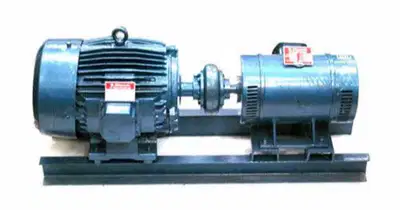
Armature Windings
Built of laminated steel cores with good magnetic permeability. In all motors and generators, the armature current is alternating, regardless of AC or DC type.
Generators:
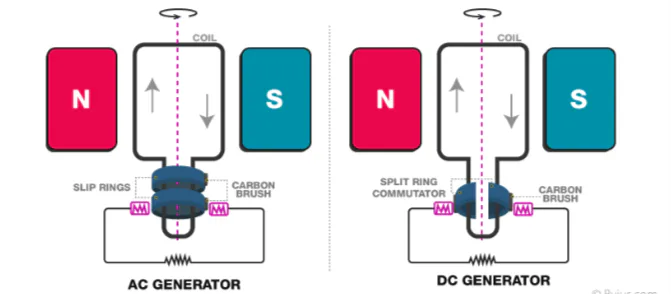
AC Generator → Alternating EMF delivered directly to the load.
DC Generator → Alternating EMF is rectified by commutator and brushes into DC output.
Motors:
AC Motor → Receives AC directly and uses it in the windings to produce torque.
DC Motor → Supplied with DC at the brushes, but it flows as alternating current inside the armature winding due to the commutator.
4
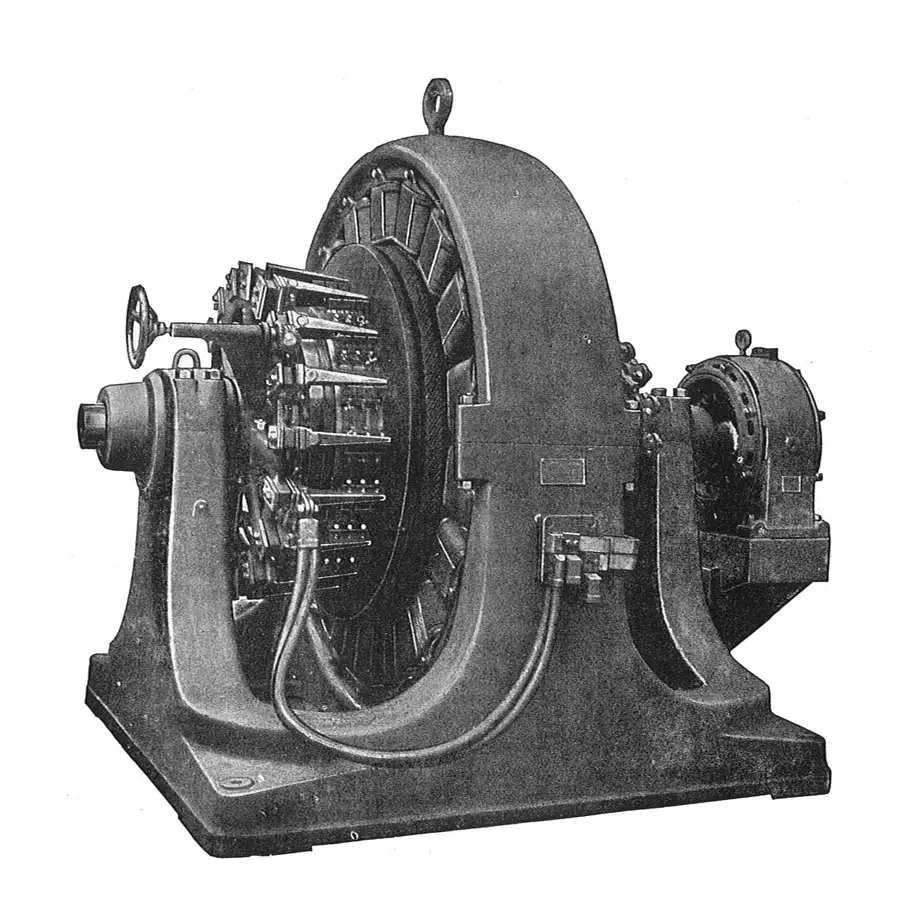
Rotary Converter → Changes AC to DC or vice versa.
Frequency Converter → Changes the frequency of AC supply.
5
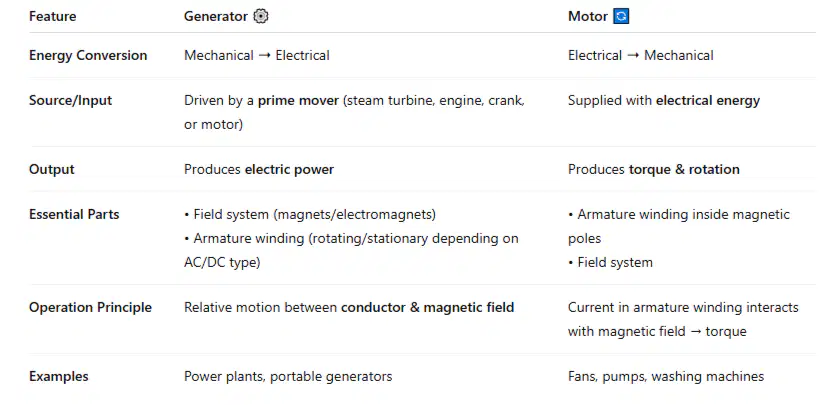
Generator vs. Motor ( Comparison)
6
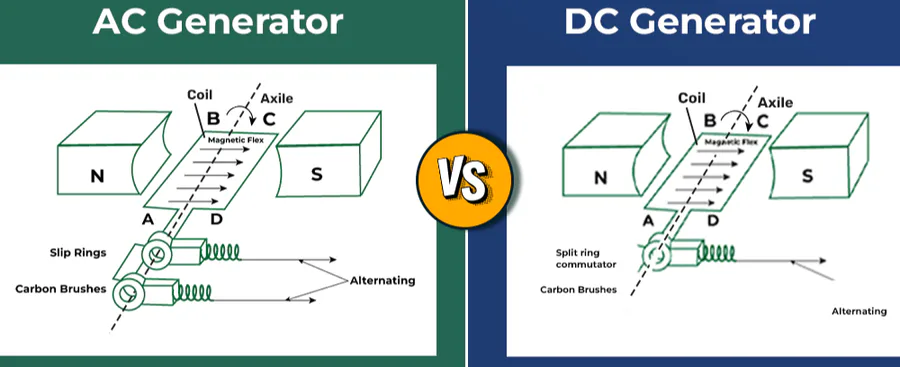
Field Structures of AC and DC Generator
7
Difference between AC and DC Generator
8
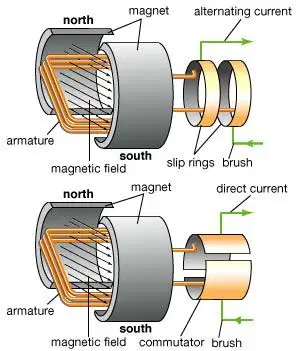
Actual Field Structures of AC and DC Generator
9
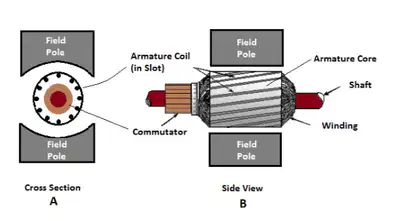
Armature Windings
By Joseph D. Maghanoy, M'Eng.
10
Rotating Electrical Machines: Convert energy from one form to another.
Main Types:
Generator → Mechanical ➝ Electrical
Example: Power plants (turbine driving a generator).
Motor → Electrical ➝ Mechanical
Example: Electric fan, washing machine.
Other Types (less common):
Rotary Converter → Changes AC to DC or vice versa.
Frequency Converter → Changes the frequency of AC supply.
Key Point for Students:
Generators supply power, motors use power.
11
Field Poles
By Joseph D. Maghanoy, M'Eng.
12
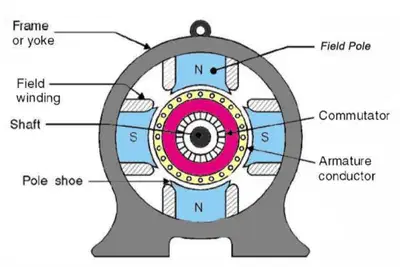
Field Poles
Electromagnets (field poles) used in DC machines, AC generators, and some AC motors.
Always in even numbers.
Construction:
Laminated steel core (rectangular cross-section).
Surrounded by copper coils.
Pole shoe (wider face) spreads magnetic flux over a larger armature area.
Mounting Types:
Stationary-field machines → Poles bolted to a yoke, projecting inward toward the armature.
Rotating-field machines (salient poles) → Poles bolted to a hub on the shaft, projecting outward toward the stationary armature.
High-speed alternators → Use a cylindrical (non-salient) rotor field construction.
13
Multiple Choice
The main function of rotating electrical machines is to:
Store energy
Convert energy from one form to another
Measure electrical energy
Control frequency
14
Multiple Choice
The two most common types of rotating electrical machines are:
Transformers and rectifiers
Generators and motors
Converters and inverters
Turbines and alternators
15
Multiple Choice
Generator action occurs only when there is:
Voltage across the load
Relative motion between conductor and magnetic field
A commutator present
Alternating supply input
16
Multiple Choice
In a DC generator, the armature winding:
Is stationary inside a rotating field
Rotates in a stationary magnetic field
Does not carry current
Converts AC to DC without a commutator
17
Multiple Choice
In AC motors, the armature winding is usually placed in the:
Rotor
Laminated stationary core
Commutator
Shaft hub
18
Multiple Choice
A synchronous motor is characterized by
Slip during operation
A DC excitation generator on the shaft
Brushes only
Induction without magnets
19
Multiple Choice
The current in all armature windings (AC and DC machines) is always:
Direct
Alternating
Pulsating
Zero
20
Multiple Choice
In stationary-field machines, poles are:
Fixed on the shaft
Bolted to a yoke ring projecting inward
Mounted outside the casing
Connected to slip rings
21
Multiple Choice
In rotating-field (salient pole) machines, poles are:
Bolted to the yoke
Bolted to the hub on the shaft projecting outward
Fixed in the armature
Eliminated entirely
22
Multiple Choice
Torque in a motor results from:
Flux interaction with current in conductors
Shaft rotation only
Brushes sliding
Eddy current reduction
Chapter 1
ELECTRICAL MACHINERY GENERALIZATION
By: Joseph D. Maghanoy, M'Eng.
School of Engineering - Electrical Department
Eastern Visayas State University - Tacloban City
Leyte, Philippines
Show answer
Auto Play
Slide 1 / 22
SLIDE
Similar Resources on Wayground

16 questions
1- Pathologie inflammatoire: intr+ médiateurs: par groupe
Presentation
•
University
16 questions
The Dover Bronze-Age Boat Part 1
Presentation
•
University
9 questions
Unit 1: Lesson 2
Presentation
•
University
20 questions
PTS PKWU SEMSTERT GANJIL
Presentation
•
12th Grade
18 questions
PHS - Ch. 2 (slides 1-19) Personal Traits & HI Careers
Presentation
•
12th Grade
20 questions
USO DEL MULTÍMETRO AUTOMOTRIZ
Presentation
•
Professional Development
10 questions
Road to My Dream Campus
Presentation
•
University
17 questions
Proficiency Speaking Part 1 Questions
Presentation
•
University
Popular Resources on Wayground
15 questions
Grade 3 Simulation Assessment 1

Quiz
•
3rd Grade
22 questions
HCS Grade 4 Simulation Assessment_1 2526sy
Quiz
•
4th Grade
16 questions
Grade 3 Simulation Assessment 2
Quiz
•
3rd Grade
19 questions
HCS Grade 5 Simulation Assessment_1 2526sy
Quiz
•
5th Grade
17 questions
HCS Grade 4 Simulation Assessment_2 2526sy
Quiz
•
4th Grade
20 questions
Equivalent Fractions
Quiz
•
3rd Grade
24 questions
HCS Grade 5 Simulation Assessment_2 2526sy
Quiz
•
5th Grade
20 questions
Math Review
Quiz
•
3rd Grade
Discover more resources for Engineering
36 questions
8th Grade US History STAAR Review
Quiz
•
KG - University
25 questions
Spanish future tense
Quiz
•
10th Grade - University
55 questions
Post Malone Addtion (Tres)
Quiz
•
12th Grade - University
15 questions
Quotation Marks vs. Italics for MLA
Quiz
•
9th Grade - University
20 questions
Disney Trivia
Quiz
•
University
50 questions
AP Biology Exam Review 2017
Quiz
•
11th Grade - University
215 questions
8th Physical Science GA Milestones Review
Quiz
•
KG - University
20 questions
Ch15_review_TEACHER
Quiz
•
University