
Activity 3.03 Breaking Down the Prompt

Presentation
•
English
•
10th Grade
•
Practice Problem
•
Easy
+27
Standards-aligned

Donna Kapa
Used 1+ times
FREE Resource
9 Slides • 14 Questions
1
Activity 3.03 Breaking Down the Prompt
By Donna Kapa
2
Activity 3.03 Breaking Down the Prompt
Objectives
review the characteristics of expository writing
identify the topic, task, and expectations of an expository writing prompt
3
Activity 3.03 Breaking Down the Prompt
Assessment
3.03 Breaking Down the Prompt quiz.
4
Activity 3.03 Breaking Down the Prompt
Review
The characteristics of expository writing
5
Multiple Choice
You are writing a report on climate change. The heading you see in a section says “Rising Sea Levels and Coastal Cities.”
What is the most likely topic of this section?
The history of ocean exploration
The impact of sea level rise on cities
How to build a boat
The politics of city governments
6
Multiple Choice
Which text feature usually tells you the overall purpose or main idea of the entire article?
Glossary
Caption
Table of contents
Title
7
Drag and Drop
8
Multiple Choice
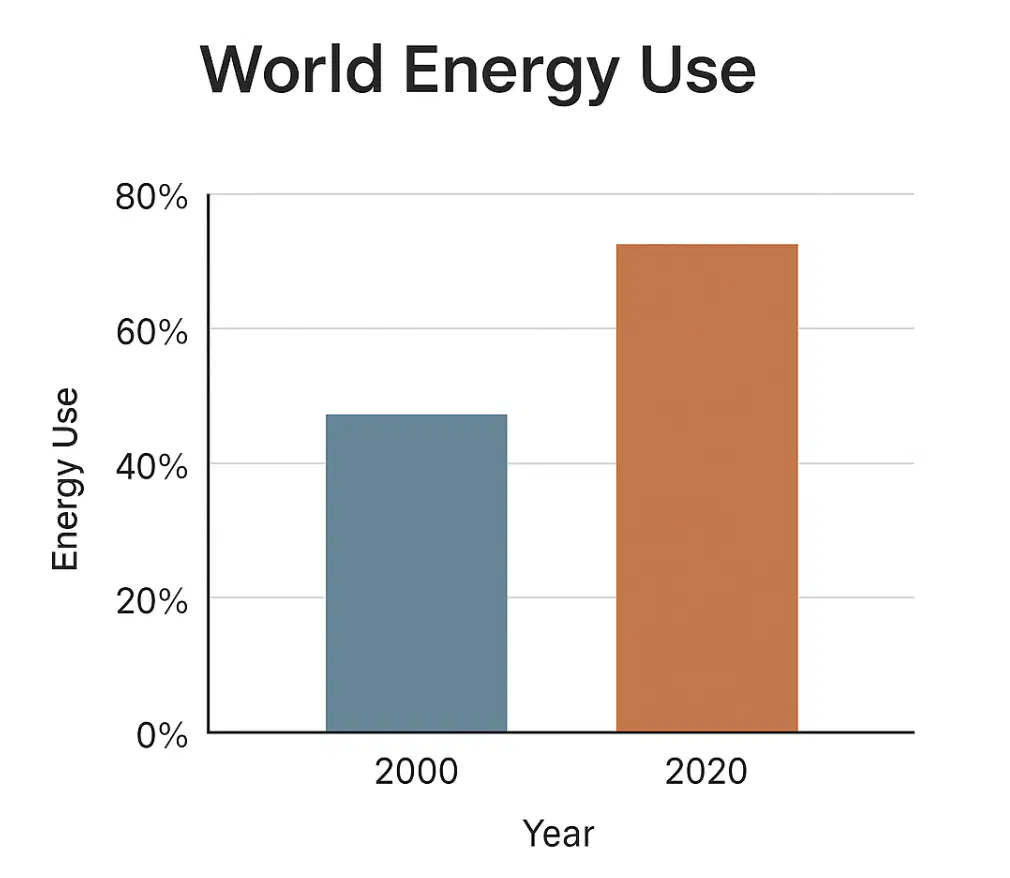
Look at the chart titled “World Energy Use.” What does this chart most likely help you do?
Learn the definition of global energy use
Determine the author’s opinion
Visualize changes in Global energy use over time
Brainstorm solutions to minimize energy use in the future
9
Multiple Choice
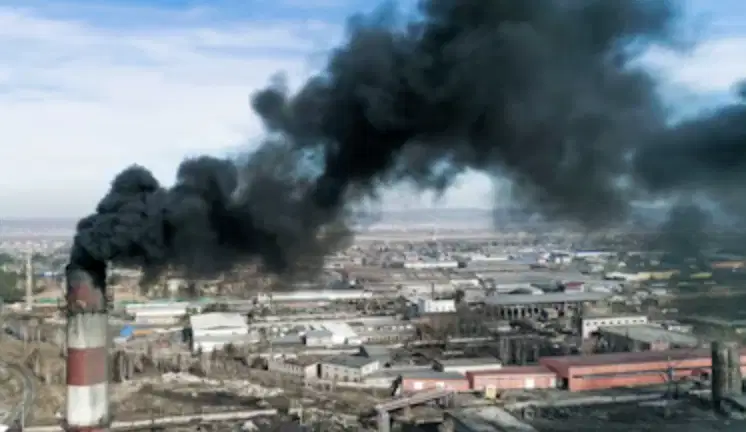
A photograph of a factory with a caption reading “Coal plant emissions contribute to greenhouse gases” supports which likely purpose?
Illustrate a cause of air pollution
Persuade readers to build more factories
Entertain readers with a scary story
Describe a factory owner’s business philosophy
10
Drag and Drop
11
Multiple Choice
Which of the following is the primary purpose of expository writing?
To entertain with fictional stories
To argue for or against a position
To explain, inform, or clarify a topic
To persuade readers to take action
12
Multiple Choice
Which sentence best reflects the style of expository writing?
“The storm was a monster, roaring across the plains.”
“First, gather your materials. Then, follow these three steps to build your model.”
“I believe everyone should try this recipe—it’s the best!”
“What if you could live forever?”
13
Multiple Choice
Which of the following is NOT a common signal word for cause and effect?
Because
Therefore
As a result
Similarly
14
Expository Writing
Purpose: To inform and explain an issue, problem, or concept.
Tone: Neutral — no taking sides, no trying to persuade.
Central Idea: Presented clearly so the reader understands the topic better.
15
Expository Writing
Key Features:
Clear central idea
Facts, examples, and explanations
Signal words (because, for example, first, next, as a result) that show structure
Objective tone — no “I think” or “you should”
16
Multiple Choice
Read this passage:
“Some companies have experimented with shortening the work week from five days to four. Studies show this can lead to increased productivity and better employee well-being. However, others worry that it could reduce overall output.”
To argue that all companies must adopt a four-day work week
To persuade readers to demand shorter work weeks
To explain the pros and cons of a four-day work week
To entertain with a story about working less
17
Drag and Drop
“Some companies have experimented with shortening the work week from five days to four. Studies show this can lead to increased productivity and better employee well-being. However, others worry that it could reduce overall output.”
The signal word in this passage that shows it uses a compare/contrast or pros/cons structure is
18
Match
Matching:
Match the signal word to the text structure:
Because
Likewise
To begin
As a result
Temporary fixes
Cause/Effect
Compaer/Contrast
Chronological
Cause/Effect
Problem/Solution
Cause/Effect
Compaer/Contrast
Chronological
Cause/Effect
Problem/Solution
19
The Prompt
In the world of academic writing, finding a starting point can feel tricky.
Good news: prompts are here to help!
A prompt is like a GPS for your writing — it guides you toward your destination.
When you read a prompt, look for keywords — especially action verbs and signal words — that tell you what to do.
20
The Prompt
In the world of academic writing, finding a starting point can feel tricky.
Good news: prompts are here to help!
A prompt is like a GPS for your writing — it guides you toward your destination.
When you read a prompt, look for keywords — especially action verbs and signal words — that tell you what to do.
21
The Prompt
After reading the two articles on automation in the workplace, write a multi-paragraph essay that explains how advances in automation are changing job roles and worker skills.
22
Multiple Choice
Read the following prompt:
After reading two texts about renewable and non-renewable energy sources, write a multi-paragraph informational essay that examines the relationship between these energy types, especially in terms of their impact on the environment.
Which structure would best fit this essay type?
Problem/Solution
Chronological
Cause/Effect
Compar/Contrast
23
Multiple Choice
Read the following prompt:
After reading two texts about the rise of food waste in the United States, write a multi-paragraph informational essay that explains the problem of food waste and presents two or more solutions supported by evidence from the texts.
Which structure would best fit this essay type?
Problem/Solution
Chronological
Cause/Effect
Compar/Contrast
Activity 3.03 Breaking Down the Prompt
By Donna Kapa
Show answer
Auto Play
Slide 1 / 23
SLIDE
Similar Resources on Wayground

20 questions
Poetic Devices
Presentation
•
10th Grade
17 questions
Future forms
Presentation
•
10th Grade
15 questions
Revising
Presentation
•
10th Grade
19 questions
Estratégias de Leitura
Presentation
•
10th Grade
20 questions
RL.9-10.4 / RI.9-10.4
Presentation
•
9th - 10th Grade
16 questions
Figurative Language
Presentation
•
9th - 10th Grade
14 questions
Who or Whom?
Presentation
•
10th Grade
18 questions
Improving Paragraphs
Presentation
•
10th Grade
Popular Resources on Wayground
24 questions
PBIS-HGMS Day 10

Quiz
•
6th - 8th Grade
10 questions
HCS SCI 03 Summer School Review 3
Quiz
•
3rd Grade
11 questions
Home Scope
Quiz
•
7th - 8th Grade
15 questions
HCS SCI 05 Summer School Assessment 3 Review
Quiz
•
5th Grade
35 questions
Lufkin Road Middle School Student Handbook & Policies Assessment
Quiz
•
7th Grade
18 questions
Geo 11.3 Area of Circles and Sectors
Quiz
•
9th - 11th Grade