Active Transport
Presentation
•
Science
•
9th - 12th Grade
•
Practice Problem
•
Easy
Standards-aligned
Chelsea Briggs
Used 6+ times
FREE Resource
18 Slides • 17 Questions
1
2
3
Multiple Choice
Why is the cell membrane important for maintaining homeostasis in a cell?
It controls the movement of substances in and out of the cell.
It produces energy for the cell.
It stores genetic information.
It breaks down waste products.
4
5
6
7
8
Multiple Select
Which of the following statements about the sodium-potassium ATPase pump are correct?
It moves sodium ions out of the cell.
It moves potassium ions into the cell.
It requires ATP to function.
It moves ions with their concentration gradient.
9
10
Open Ended
Explain why energy is required for active transport but not for passive transport.
11
Fill in the Blanks
12
13
Fill in the Blanks
14
Multiple Choice
Which process allows cells to engulf large molecules from the outside environment?
Endocytosis
Exocytosis
Osmosis
Diffusion
15
16
17
Multiple Choice
What is the main difference between endocytosis and exocytosis?
Endocytosis moves materials into the cell, while exocytosis moves materials out of the cell.
Endocytosis moves materials out of the cell, while exocytosis moves materials into the cell.
Both endocytosis and exocytosis move materials into the cell.
Both endocytosis and exocytosis move materials out of the cell.
18
Multiple Choice
19
Multiple Choice
Moves substances Against the concentration gradient
low to high uses energy/ATP
20
21
22
Multiple Choice
Which of the following statements correctly describes phagocytosis and pinocytosis?
Phagocytosis involves ingestion of solid particles, while pinocytosis involves ingestion of liquids and small molecules.
Phagocytosis involves ingestion of liquids, while pinocytosis involves ingestion of solid particles.
Both phagocytosis and pinocytosis involve ingestion of only solid particles.
Both phagocytosis and pinocytosis involve ingestion of only liquids.
23
24
25
26
27
28
Open Ended
Compare and contrast passive and active transport in terms of energy requirement and direction of molecule movement.
29
DOL
30
Multiple Choice
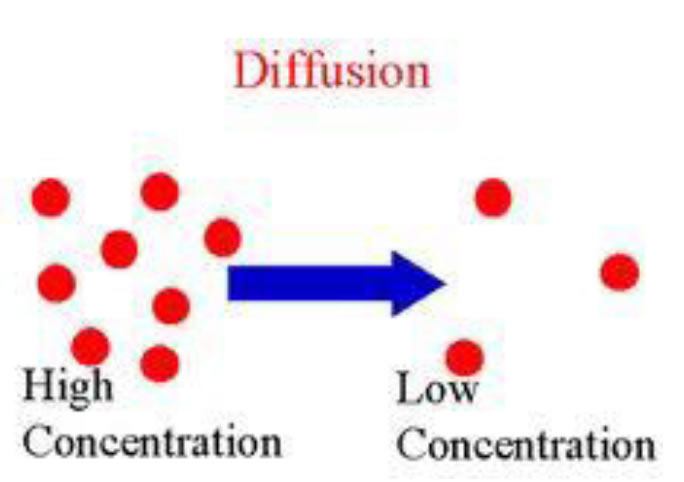
Susan sprayed perfume in one corner of the room. John, who sits across the room and is allergic to perfume, soon begins to sneeze. Perfume travels across the room by -
active transport.
osmosis.
endocytosis.
diffusion.
31
Fill in the Blanks
32
Multiple Select
Select all that are true about exocytosis.
It moves materials out of the cell.
It requires energy.
It moves materials into the cell.
It involves vesicles fusing with the plasma membrane.
33
Multiple Choice
Which of the following best describes the process of exocytosis?
Moving molecules into the cell using vesicles
Moving molecules out of the cell using vesicles that fuse with the plasma membrane
Moving water across the cell membrane by osmosis
Transporting ions through protein channels without energy
34
Multiple Select
Which of the following are types of passive transport?
Simple diffusion
Osmosis
Facilitated diffusion
Endocytosis
35
Fill in the Blanks
Show answer
Auto Play
Slide 1 / 35
SLIDE

Similar Resources on Wayground
31 questions
Unit 8 - Types of Waves (focus: mechanical waves)
Presentation
•
9th - 12th Grade
28 questions
Human Population Growth w video
Presentation
•
9th - 12th Grade
32 questions
Human Impact
Presentation
•
9th - 12th Grade
26 questions
Cell Organelles
Presentation
•
9th - 12th Grade
25 questions
Unit 5 - Phase Change
Presentation
•
9th - 12th Grade
32 questions
Body Systems
Presentation
•
10th - 12th Grade
24 questions
Types of Forces
Presentation
•
9th - 12th Grade
Popular Resources on Wayground
6 questions
Secondary Safety Quiz
Presentation
•
9th - 12th Grade
10 questions
Afterschool Activities & Sports
Quiz
•
6th - 8th Grade
19 questions
ROAR Week 2026
Quiz
•
9th - 12th Grade
20 questions
Lab Safety Quiz
Quiz
•
6th Grade
15 questions
Cool Tool:Chromebook
Quiz
•
6th - 8th Grade
22 questions
would you rather
Quiz
•
3rd - 11th Grade
21 questions
Continents and Oceans
Quiz
•
6th Grade
20 questions
Parts of Speech
Quiz
•
5th Grade
Discover more resources for Science
10 questions
Scientific Method (The scientific method)
Interactive video
•
9th Grade
9 questions
Scientific method
Interactive video
•
9th - 12th Grade
10 questions
Lab Safety Essentials
Interactive video
•
6th - 10th Grade
10 questions
Essential Guidelines for Science Lab Safety
Interactive video
•
6th - 10th Grade
20 questions
States of Matter Quick Check
Quiz
•
9th Grade
14 questions
Flinn Lab Safety
Quiz
•
9th - 12th Grade
10 questions
Exploring the Steps of the Scientific Method for Kids
Interactive video
•
6th - 10th Grade
35 questions
Flinn Lab Safety
Quiz
•
11th Grade