

2025 ORG Foundation Cell Transport ppt

Presentation
•
Biology
•
9th - 12th Grade
•
Practice Problem
•
Hard

Belinda Gay
FREE Resource
34 Slides • 84 Questions
1

2
Open Ended
Why is cellular transport important for the survival of living organisms?
3
Multiple Choice
Why is cellular transport important for the survival of living organisms?
It allows cells to communicate with each other.
It enables cells to take in nutrients and remove waste.
It helps cells to move from one place to another.
It causes cells to divide uncontrollably.
4
Open Ended
Why is cellular transport important for the survival of living organisms?
5

6
Multiple Choice
Which of the following best describes the function of the cell membrane?
It controls the movement of substances in and out of the cell.
It produces energy for the cell.
It stores genetic information.
It breaks down waste materials.
7
Multiple Choice
Which of the following best describes the relationship between cells, tissues, organs, and organ systems?
Cells make up tissues, tissues make up organs, organs make up organ systems.
Tissues make up cells, cells make up organs, organs make up organ systems.
Organs make up cells, cells make up tissues, tissues make up organ systems.
Organ systems make up organs, organs make up tissues, tissues make up cells.
8
Open Ended
Describe how the structure of cells, tissues, organs, and organ systems are related to their functions in living organisms.
9
Open Ended
Why is cellular transport important for the survival of living organisms?
10
Multiple Choice
Which of the following best describes the relationship between cells, tissues, organs, and organ systems?
Cells form tissues, tissues form organs, organs form organ systems.
Organs form tissues, tissues form cells, cells form organ systems.
Cells form organs, organs form tissues, tissues form organ systems.
Organ systems form organs, organs form tissues, tissues form cells.
11
12
Multiple Choice
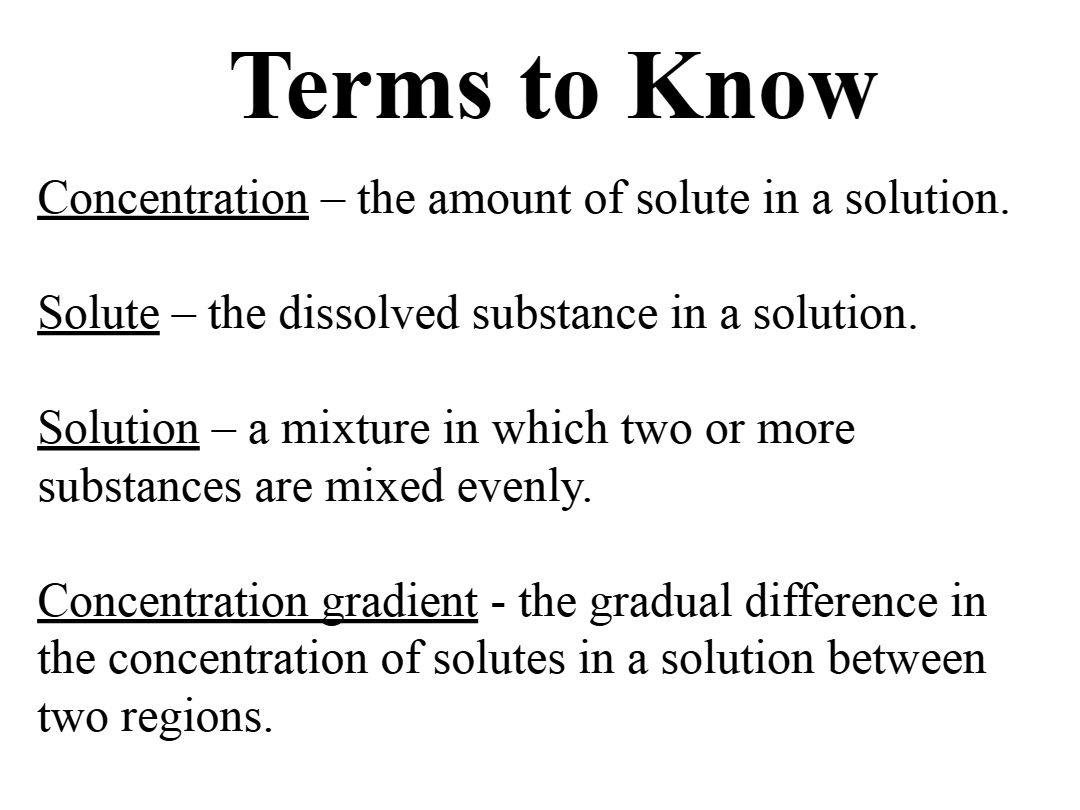
Which of the following best describes a concentration gradient?
The amount of solute in a solution
The dissolved substance in a solution
A gradual difference in the concentration of solutes between two regions
A mixture in which substances are mixed evenly
13
Multiple Choice
Which of the following best defines a concentration gradient?
The amount of solute in a solution
The dissolved substance in a solution
The gradual difference in the concentration of solutes in a solution between two regions
A mixture in which two or more substances are mixed evenly
14
Multiple Choice
Which of the following best describes a concentration gradient?
A mixture in which substances are evenly mixed
The amount of solute in a solution
The gradual difference in the concentration of solutes between two regions
The dissolved substance in a solution
15
Multiple Choice
Which of the following best describes a concentration gradient?
The amount of solute in a solution
The dissolved substance in a solution
The gradual difference in the concentration of solutes between two regions
A mixture in which substances are mixed evenly
16
17
Fill in the Blanks
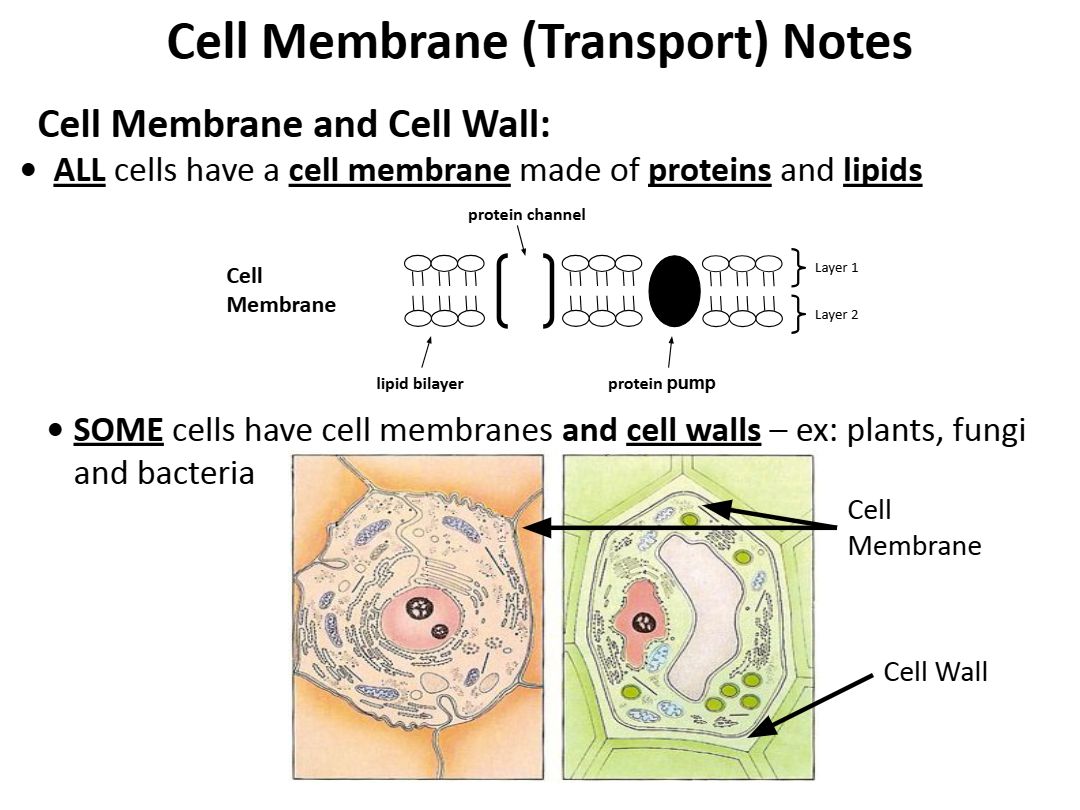
Fill in the blank: The cell membrane is made of proteins and
Type answer...
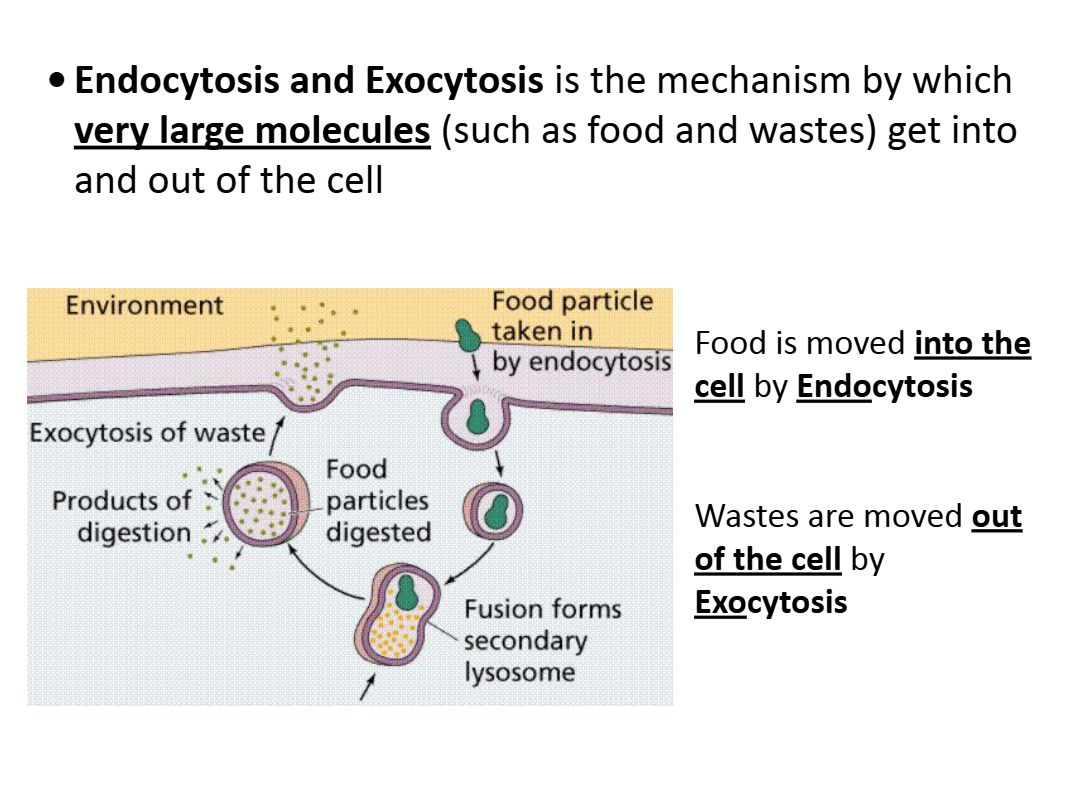
18

19
Open Ended
What are the main structural differences between cell membranes and cell walls in plant cells, and what is the significance of cellulose?
20
Multiple Select
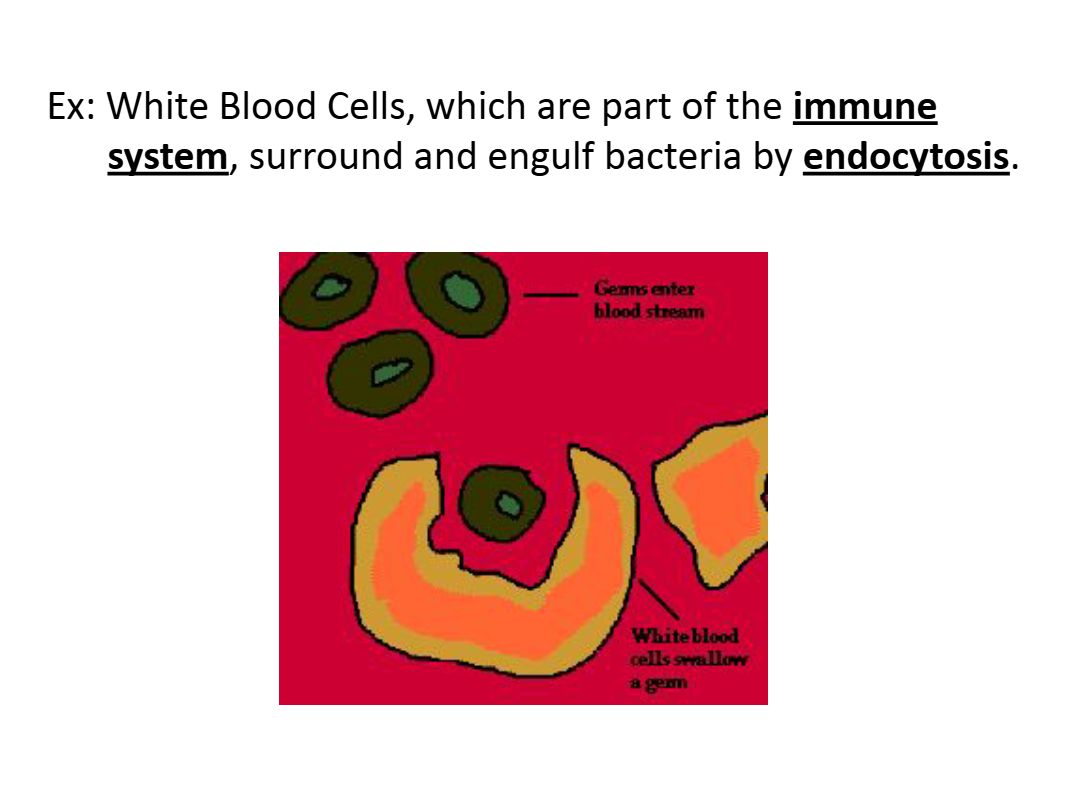
Which of the following statements about cell membranes and cell walls is/are correct?
All cells have a cell membrane made of proteins and lipids.
All cells have cell walls made of cellulose.
Some cells have both cell membranes and cell walls.
Bacteria and fungi have cell walls that do not contain cellulose.
21
Open Ended
What are the main structural differences between cell membranes and cell walls as described in the images?
22
Multiple Choice
Which of the following statements about cell walls is correct?
All cells have cell walls made of cellulose.
Only plant cells have cell walls made of cellulose.
Bacteria and fungi have cell walls made of cellulose.
Cell walls are not porous.
23
Open Ended
What are the main differences between cell membranes and cell walls in terms of structure and function?
24

25
Fill in the Blanks
Cell membranes are described as
Type answer...
26
Open Ended
Explain how the cell membrane helps maintain homeostasis within a cell.
27
Fill in the Blanks
The cell membrane is described as
Type answer...
28
Multiple Select
Select all functions of the cell membrane.
Regulates the flow of materials into and out of the cell
Provides energy for cellular processes
Helps maintain homeostasis
Separates the cell from its environment
29
30
31
Multiple Choice
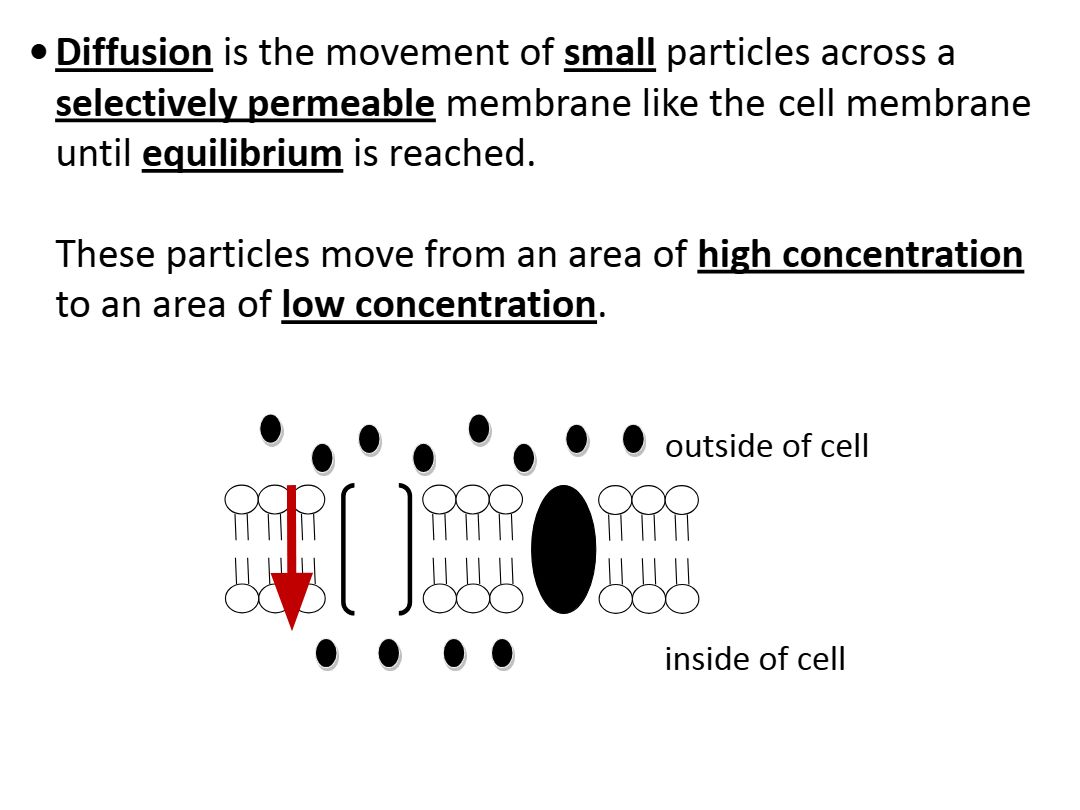
What is the main difference between diffusion and osmosis as described in the images?
Diffusion involves the movement of all types of particles, while osmosis involves only water.
Diffusion requires energy, while osmosis does not.
Osmosis occurs only in plants, while diffusion occurs in animals.
Osmosis moves particles from low to high concentration, while diffusion moves from high to low.
32
Open Ended
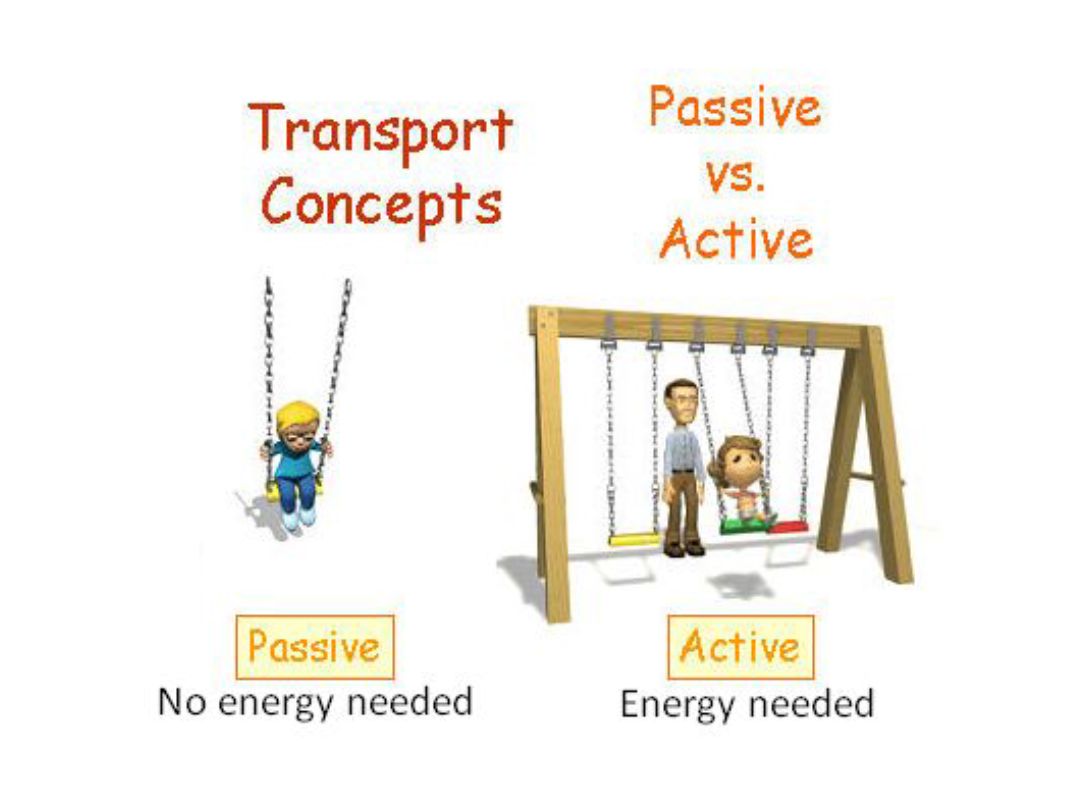
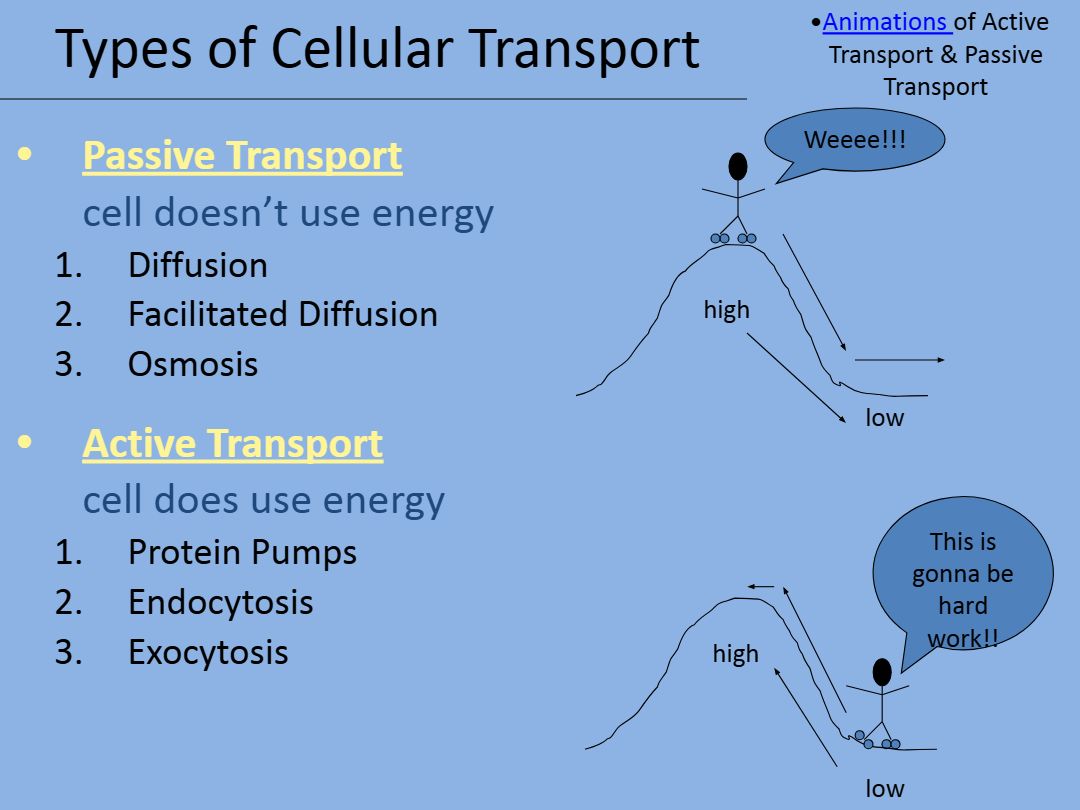
Compare and contrast passive and active transport in terms of energy usage and direction of movement across the cell membrane.
33
Multiple Choice
Which of the following types of cellular transport require energy?
Diffusion
Facilitated Diffusion
Osmosis
Protein Pumps
34
Open Ended
Compare and contrast passive and active transport in terms of energy usage and examples.
35
36
37
Fill in the Blanks
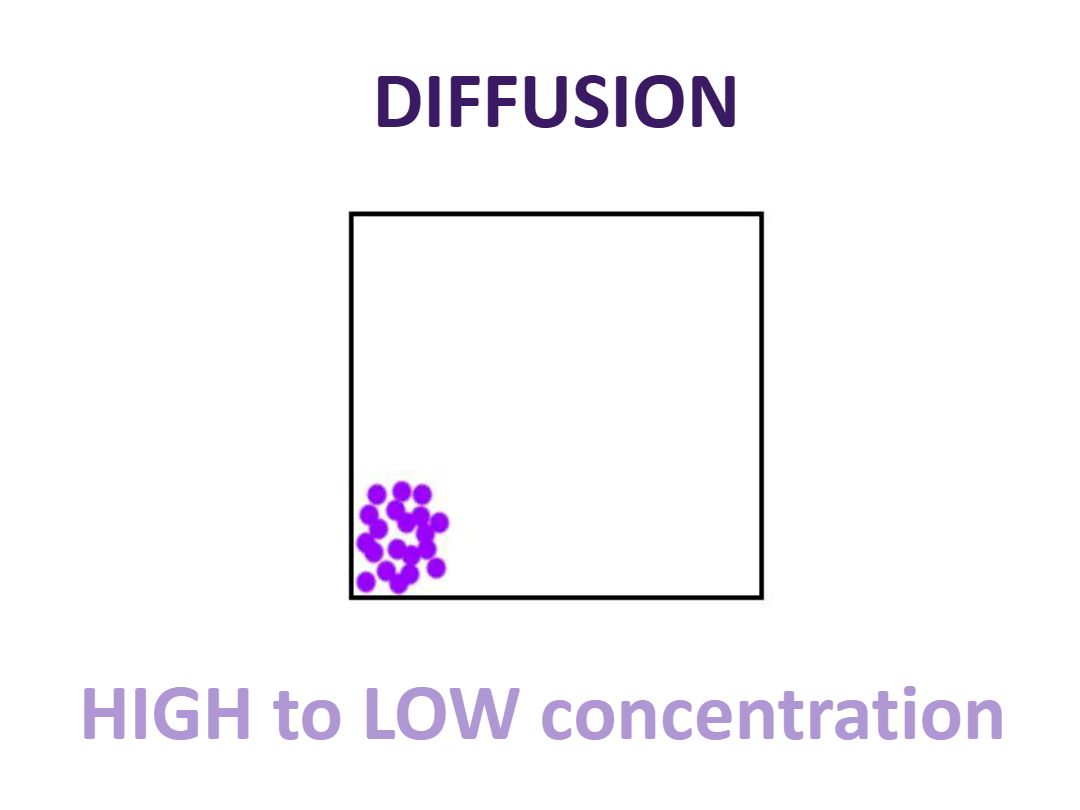
Diffusion moves particles from an area of
Type answer...
38
Fill in the Blanks
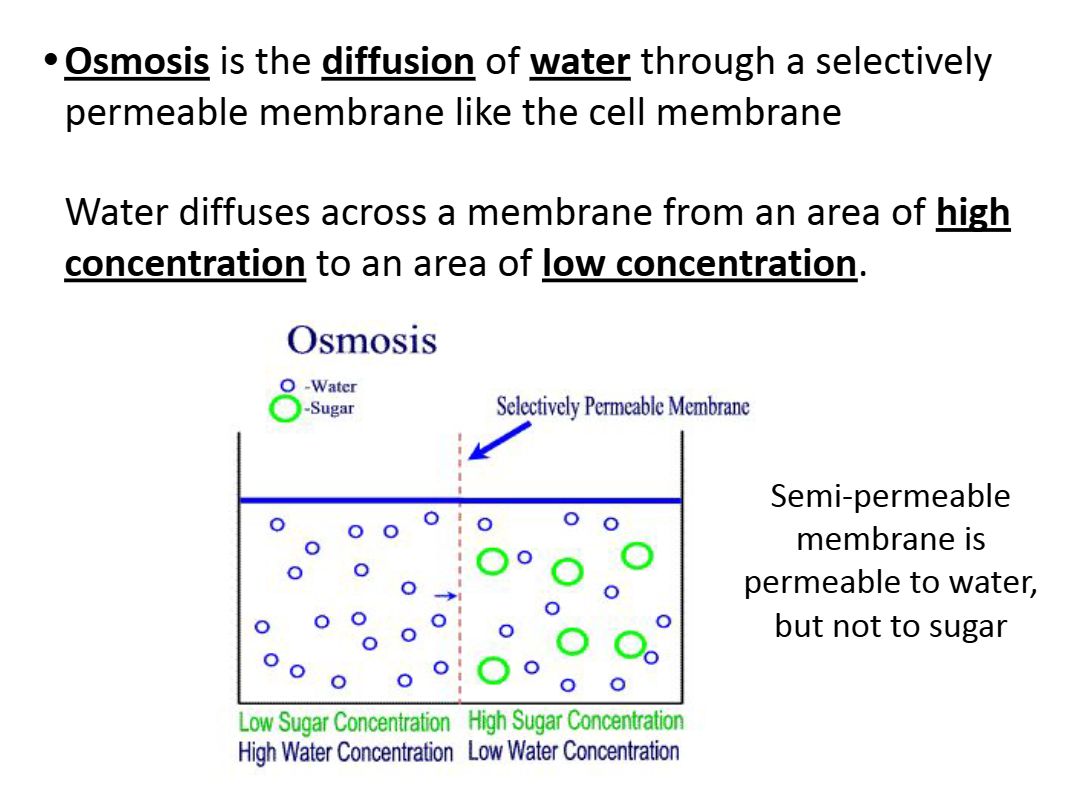
During osmosis, water moves from an area of
Type answer...
39
Fill in the Blanks
The movement of molecules from an area of high concentration to an area of low concentration is called
Type answer...
40
Multiple Choice
Which process describes the movement of small particles from an area of high concentration to an area of low concentration across a selectively permeable membrane?
Diffusion
Osmosis
Facilitated diffusion
Active transport
41
42
Open Ended
Explain how the selectively permeable membrane affects the movement of particles during diffusion and osmosis.
43
Multiple Choice
What is the main difference between diffusion and osmosis as described in the images?
Diffusion involves all particles, osmosis involves only water
Diffusion requires energy, osmosis does not
Osmosis involves only large molecules, diffusion involves small molecules
Osmosis occurs only in plants, diffusion occurs in animals
44
Multiple Select
Which of the following statements are true about osmosis?
It involves the movement of water molecules.
It requires a selectively permeable membrane.
It moves water from low to high concentration.
It is a type of diffusion.
45
Open Ended
Explain the difference between diffusion and osmosis in terms of the types of molecules involved and the direction of movement.
46

47
Open Ended
Explain the difference between diffusion and osmosis, using examples from the diagrams provided.
48
49
Open Ended
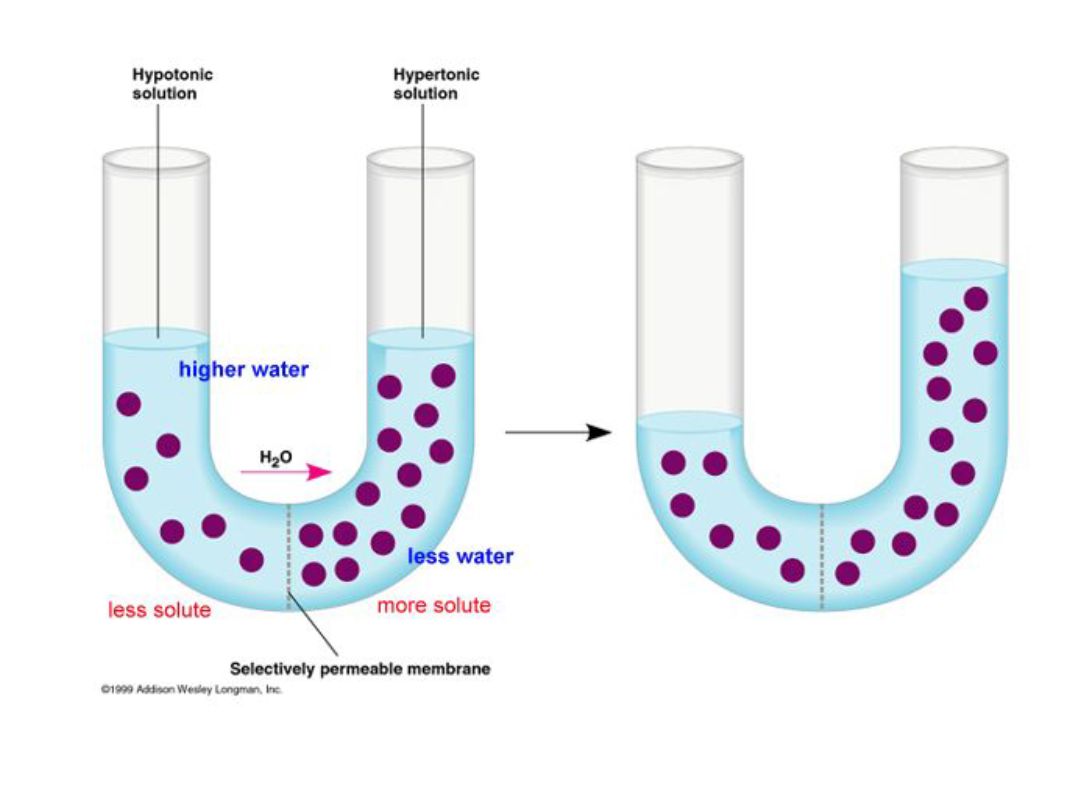
Describe what happens to the water level in the U-tube experiment and explain why this occurs.
50
Open Ended
Describe what happens to the water level on each side of the selectively permeable membrane in the U-tube experiment and explain why this occurs.
51
Multiple Choice
Based on the diagram, what happens to the water level on each side of the selectively permeable membrane after osmosis occurs?
The side with higher solute concentration gains water.
The side with lower solute concentration loses water.
Both sides remain unchanged.
Water moves to the side with less solute.
52
Multiple Select
Which of the following statements about osmosis are correct?
Osmosis involves the movement of water molecules.
Osmosis requires a selectively permeable membrane.
Osmosis moves water from low to high concentration.
Osmosis is a type of diffusion.
53

54
Multiple Select
Select all processes that involve movement of molecules from high concentration to low concentration.
Diffusion
Osmosis
Facilitated diffusion
Active transport
55
Multiple Choice
Which of the following types of transport across the cell membrane requires energy?
Diffusion
Osmosis
Facilitated Diffusion
Active Transport
56
Multiple Choice
Which of the following statements about facilitated diffusion is correct?
It requires energy from the cell
It moves large molecules through protein channels
It only moves water molecules
It occurs only in plant cells
57
Multiple Choice
What role do protein channels play in facilitated diffusion?
They allow large molecules to pass through the membrane.
They actively pump molecules against the concentration gradient.
They block all molecules from entering the cell.
They only allow water to pass through.
58
Multiple Choice
What is the main function of protein channels in facilitated diffusion?
To help large molecules cross the cell membrane
To actively pump ions against the concentration gradient
To break down large molecules
To allow water to pass freely
59

60
Multiple Choice
Which type of membrane protein allows molecules to pass through the cell membrane without the use of energy?
Protein channel
Protein pump
Carrier protein
Enzyme
61
Multiple Choice
Which of the following best describes the function of carrier proteins in the cell membrane?
They allow specific molecules to pass through the membrane by changing shape.
They provide structural support to the membrane.
They produce energy for the cell.
They synthesize proteins for the cell.
62
Multiple Choice
Which type of membrane protein allows molecules to move across the cell membrane without the use of energy?
Protein channel
Carrier protein
Protein pump
Enzyme
63

64
Multiple Select
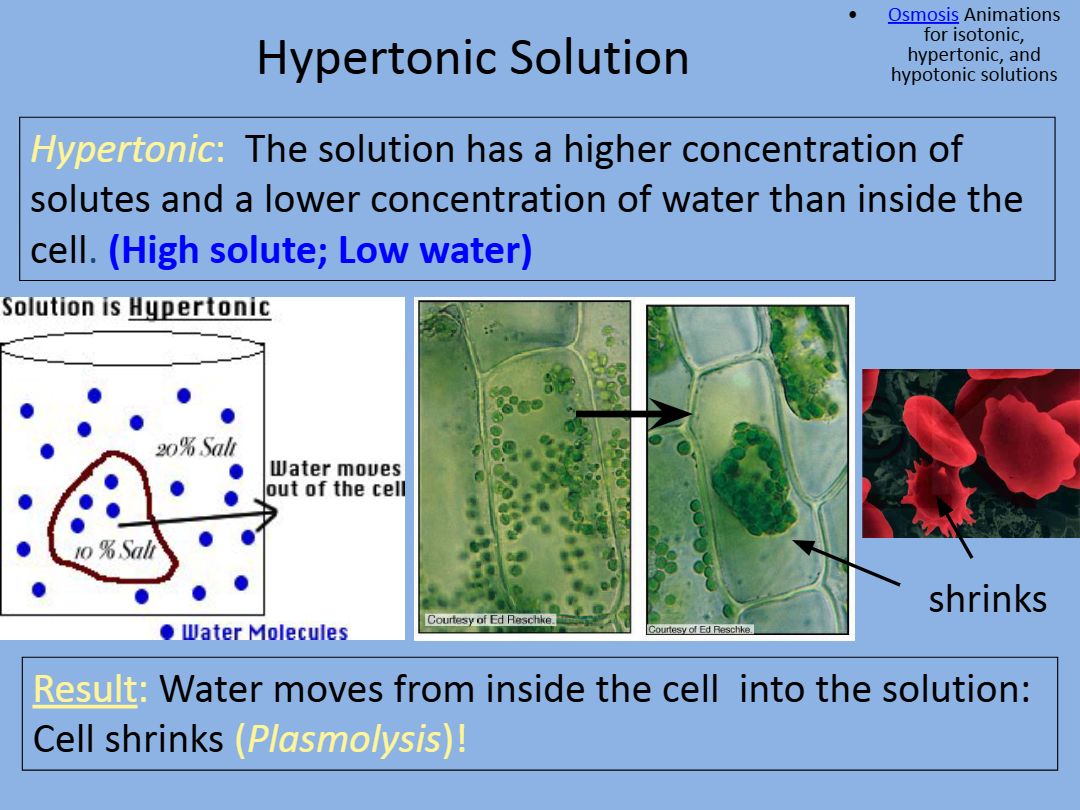
Which of the following statements about hypertonic, hypotonic, and isotonic solutions are correct?
A hypertonic solution causes water to leave the cell.
A hypotonic solution causes the cell to swell.
An isotonic solution causes water to move in and out at the same rate.
A hypertonic solution causes the cell to explode.
65
Fill in the Blanks
When a cell is placed in a hypotonic solution, it will
Type answer...
66
Fill in the Blanks
When a cell is placed in a hypotonic solution, water diffuses
Type answer...
67
Multiple Select
Which statements about hypertonic, hypotonic, and isotonic solutions are correct?
A hypertonic solution causes water to leave the cell.
A hypotonic solution causes water to enter the cell.
An isotonic solution causes water to move in and out of the cell at equal rates.
A hypotonic solution causes the cell to shrivel.
68
Multiple Select
Which of the following statements about hypertonic, hypotonic, and isotonic solutions are correct?
A hypertonic solution causes water to leave the cell.
A hypotonic solution causes the cell to swell.
An isotonic solution causes water to move only into the cell.
A hypertonic solution has a higher solute concentration than the cell.
69

70
Fill in the Blanks
In a hypotonic solution, water moves
Type answer...
71
72
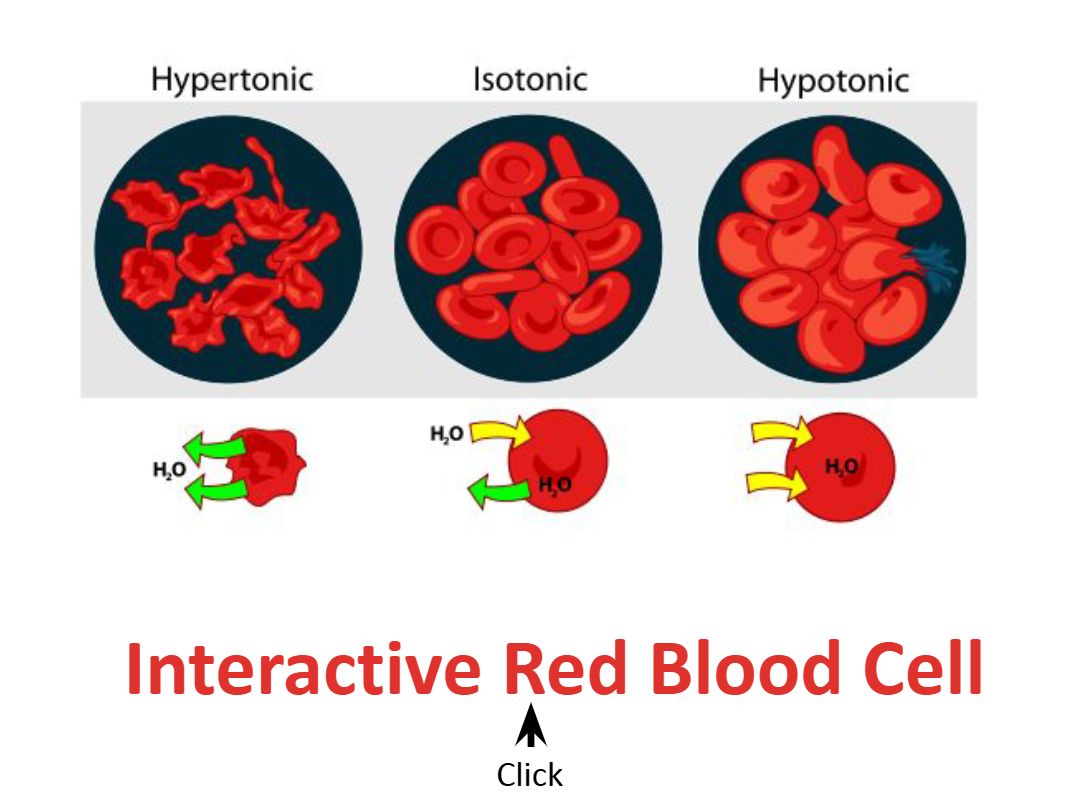
Open Ended
Explain what happens to a red blood cell when placed in a hypertonic, isotonic, and hypotonic solution.
73
Multiple Choice
What happens to a red blood cell placed in a hypertonic solution?
It shrivels
It swells and bursts
It remains the same
It divides
74
75
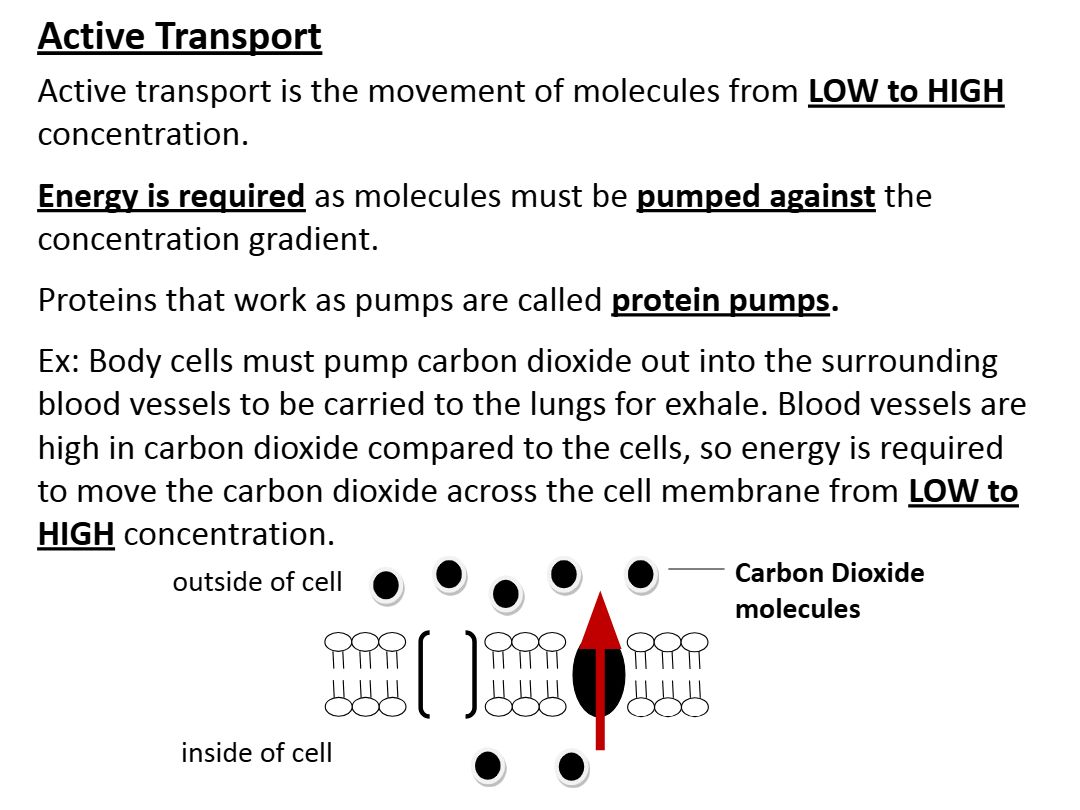
Multiple Choice
What is required for active transport to occur across a cell membrane?
Energy
Osmosis
Diffusion
Facilitated diffusion
76
Open Ended
Explain the difference between passive and active transport in terms of energy requirement and direction of molecule movement.
77
78
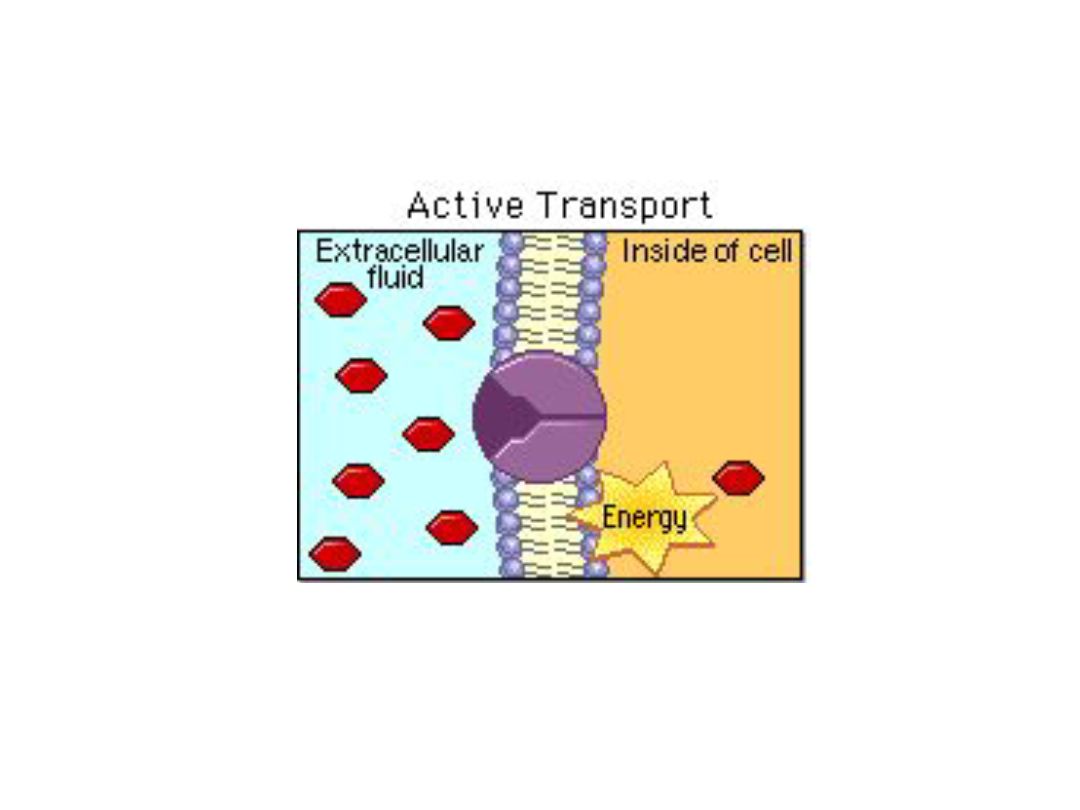
Multiple Choice
Which type of transport across the cell membrane requires energy?
Diffusion
Osmosis
Facilitated Diffusion
Active Transport
79
Fill in the Blanks
Active transport moves molecules from
Type answer...
80
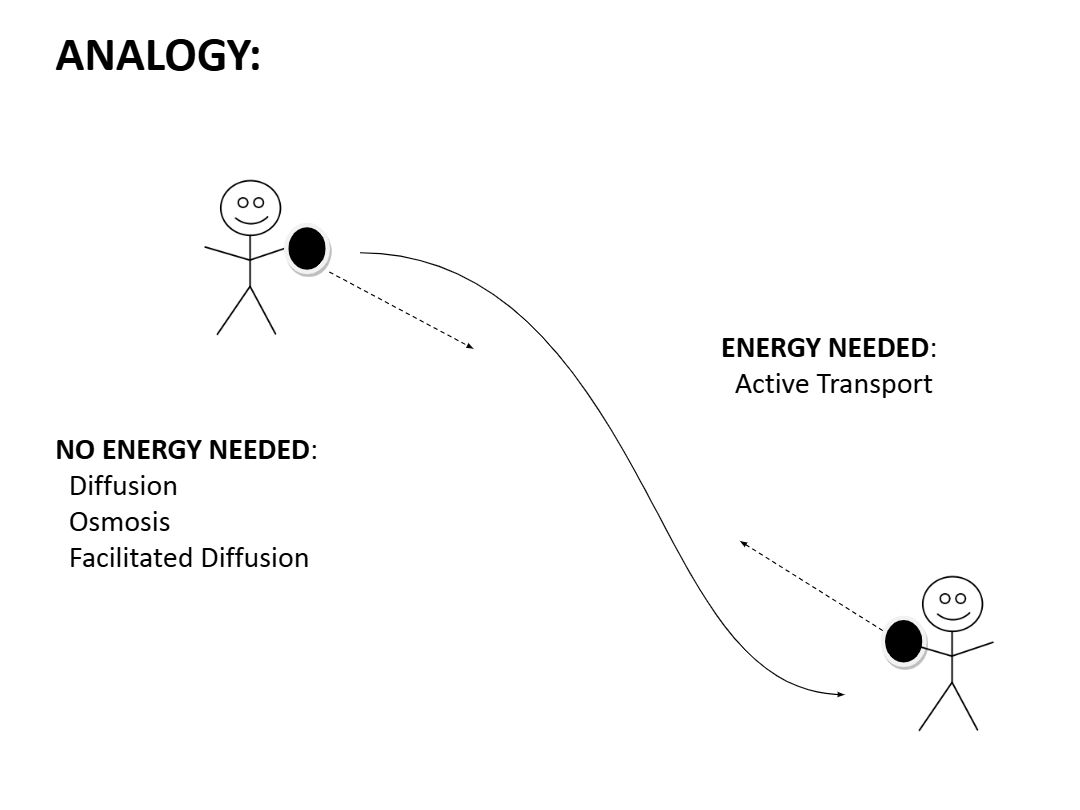
Multiple Choice
How do the structures of the cell membrane contribute to its function in cellular transport?
The cell membrane acts as a rigid barrier that blocks all substances.
The cell membrane is selectively permeable, allowing certain substances to pass through.
The cell membrane dissolves completely to allow transport.
The cell membrane only allows water to pass through.
81
Multiple Choice
Which process requires energy to move molecules from a low concentration to a high concentration across the cell membrane?
Active transport
Passive transport
Diffusion
Osmosis
82
83
Multiple Select
Which of the following are examples of passive transport?
Diffusion
Facilitated diffusion
Active transport
Osmosis
84

85
Open Ended
Compare and contrast passive transport and active transport across the cell membrane.
86
Multiple Select
Which of the following are examples of passive transport?
Diffusion
Facilitated Diffusion
Active Transport
Osmosis
87
Multiple Select
Which processes are examples of passive transport?
Diffusion
Facilitated Diffusion
Active Transport
Osmosis
88
Multiple Choice
Which of the following types of transport across a cell membrane requires energy?
Diffusion
Osmosis
Facilitated Diffusion
Active Transport
89
Fill in the Blanks
Very large molecules such as food and wastes get into and out of the cell by ___ and ___.
Type answer...
90
Open Ended
Explain the difference between passive transport and active transport in terms of energy usage and direction of molecule movement.
91
Multiple Choice
Which of the following types of transport across the cell membrane requires energy?
Diffusion
Osmosis
Facilitated Diffusion
Active Transport
92
93
Fill in the Blanks
Food is moved into the cell by
Type answer...
94
Open Ended
Explain how endocytosis and exocytosis help move large molecules into and out of the cell.
95
Open Ended
Explain how white blood cells use endocytosis as part of the immune response.
96
Fill in the Blanks
Very large molecules such as food and wastes move into and out of the cell by the processes of ___ and ___.
Type answer...
97

98
99
Multiple Choice
What is the main function of exocytosis in cells?
To bring water into the cell
To release large amounts of material from the cell
To transport oxygen across the membrane
To absorb nutrients from the environment
100
Multiple Choice
What is the role of white blood cells in the immune system as shown in the diagram?
They produce antibodies
They engulf bacteria by endocytosis
They release hormones
They transport oxygen
101
Open Ended
Describe how white blood cells use endocytosis as part of the immune response.
102

103
Multiple Choice
Which process forces material out of the cell in bulk and requires energy?
Diffusion
Osmosis
Exocytosis
Facilitated Diffusion
104
Multiple Choice
Which of the following statements about exocytosis is correct?
It moves material into the cell.
It requires energy and changes the shape of the cell membrane.
It is a type of passive transport.
It only occurs in plant cells.
105

106

107

108
109

110

111
Open Ended
Reflecting on what you learned about the structure and function of cells, tissues, organs, and organ systems, what is one question you still have or something you would like to know more about?
112

113
Multiple Choice
How do the structures of the cell membrane contribute to its function in cellular transport?
The cell membrane allows only water to pass through.
The cell membrane acts as a barrier and regulates what enters and leaves the cell.
The cell membrane provides energy for the cell.
The cell membrane stores genetic information.
114

115
Multiple Choice
Which of the following best describes how tissues, organs, and organ systems serve the needs of cells?
They provide cells with oxygen, food, and waste removal.
They only help cells divide.
They make cells larger.
They prevent cells from interacting with their environment.
116
Open Ended
Reflecting on what you learned today, how do cells, tissues, organs, and organ systems work together to support the needs of an organism?
117
Open Ended
How do the structures of the cell membrane support its function in cellular transport?
118
Multiple Choice
How do the structures of the cell membrane contribute to its function in cellular transport?
The cell membrane allows only water to pass through
The cell membrane is rigid and does not allow any substances to pass
The cell membrane is selectively permeable, allowing certain substances to enter or leave the cell
The cell membrane only allows waste to exit the cell
Show answer
Auto Play
Slide 1 / 118
SLIDE
Similar Resources on Wayground

112 questions
Quiz
Presentation
•
11th Grade
110 questions
BTEC Comp 3 Revision Lesson
Presentation
•
9th Grade - University
110 questions
LEARNING ACTIVITY SHEET: GRADE 9
Presentation
•
9th Grade - University
116 questions
Race and Ethnicity
Presentation
•
KG - University
113 questions
Nahuatl, Cambios Radicales, Pretérito, Reflexivos
Presentation
•
11th - 12th Grade
109 questions
Lesson | Unit D_Sci8 - sts 4.1 - 4.2 | evaluate the design and function and develop and apply a set of criteria
Presentation
•
8th Grade - University
119 questions
Gerund and to-infinitive
Presentation
•
9th - 12th Grade
105 questions
Cell Division and Cycle
Presentation
•
9th - 12th Grade
Popular Resources on Wayground
10 questions
Safety Day 2026 – Student Review

Quiz
•
9th Grade
21 questions
Continents and Oceans
Quiz
•
6th Grade
20 questions
Parts of Speech
Quiz
•
5th Grade
16 questions
Subject & Predicate
Quiz
•
5th Grade
25 questions
Multiplication Facts
Quiz
•
5th Grade
12 questions
Map Skills
Quiz
•
3rd Grade
22 questions
Continents and Oceans
Quiz
•
5th Grade
15 questions
Rounding Decimals
Quiz
•
5th Grade
Discover more resources for Biology
20 questions
Cell organelles and functions
Quiz
•
10th Grade
20 questions
Cell Transport
Quiz
•
9th - 12th Grade
25 questions
photosynthesis and cellular respiration
Quiz
•
9th Grade
20 questions
Cell Cycle
Quiz
•
9th Grade
8 questions
DNA vs. RNA
Presentation
•
9th - 12th Grade
14 questions
Ecological Succession: Primary and Secondary
Quiz
•
9th Grade
20 questions
Macromolecules
Quiz
•
10th Grade
20 questions
Characteristics of Life
Quiz
•
9th - 10th Grade