
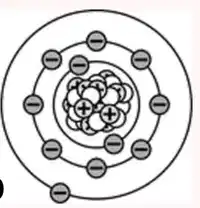
Science 6 Unit 2 Atomic Adventures
Presentation
•
Science
•
6th Grade
•
Practice Problem
•
Hard
Dyana Steely
FREE Resource
15 Slides • 17 Questions
1
2
Multiple Choice
Why is it important to understand the number of protons, electrons, and neutrons in an atom when studying elements like oxygen?
Because it helps us understand the element's chemical properties and behavior.
Because it tells us how heavy the element is.
Because it shows us how the element looks.
Because it helps us know the color of the element.
3
4
Drag and Drop
5
6
Open Ended
How do the different elements in the atmosphere, living things, oceans, and Earth's crust help support life and the environment?
7
8
Multiple Choice
Which of the following elements is NOT one of the 11 most common elements on Earth?
Gold (Au)
Oxygen (O)
Silicon (Si)
Iron (Fe)
9
10
Multiple Select
Select all the elements that are among the most common on Earth, according to the periodic table and the highlighted list.
Oxygen (O)
Chlorine (Cl)
Gold (Au)
Aluminum (Al)
11
12
Fill in the Blanks
Type answer...
13
14
Multiple Choice
Which element makes up the largest percentage of the average mass of the human body?
Oxygen
Carbon
Hydrogen
Nitrogen
15
16
Multiple Choice
In Earth's oceans, which two elements are found in the greatest abundance?
Hydrogen and Oxygen
Sodium and Chlorine
Nitrogen and Carbon
Calcium and Potassium
17
18
Multiple Choice
Which element is the most abundant in the Earth's crust according to the information provided?
Oxygen
Silicon
Iron
Aluminum
19
20
21
22
23
Multiple Choice
Based on the dot representation in the chart, which element is present in the highest percentage in living things?
Oxygen
Carbon
Hydrogen
Nitrogen
24
Multiple Choice
Which elements make up the majority of living things on Earth?
Carbon, Hydrogen, Oxygen, Nitrogen
Oxygen, Silicon, Aluminum, Iron
Hydrogen, Oxygen, Sodium, Chlorine
Nitrogen, Oxygen, Calcium, Potassium
25
Fill in the Blanks
Type answer...
26
Multiple Choice
Which of the following elements are found in all four of Earth's major components: atmosphere, oceans, living things, and Earth's crust?
Oxygen
Hydrogen
Nitrogen
Carbon
27
Open Ended
Compare the most abundant elements found in the Earth's crust, atmosphere, oceans, and living things. What similarities or differences do you notice?
28
29
30
Open Ended
After learning about the atomic structure of oxygen and nitrogen, do you have any questions or topics you would like to explore further?
31
Open Ended
Reflecting on today's lesson about atomic structure, what is one thing you learned about the Bohr Model or the structure of atoms that you found interesting or surprising?
32
Open Ended
Which element is found in the atmosphere, living things, oceans, and the crust?
Show answer
Auto Play
Slide 1 / 32
SLIDE

Similar Resources on Wayground
23 questions
Cell Transport
Presentation
•
6th Grade
25 questions
Rocks & Minerals
Presentation
•
6th Grade
25 questions
Cells and their organelles
Presentation
•
6th Grade
26 questions
Volcanoes
Presentation
•
6th Grade
24 questions
Comets, Asteroids, and Meteors
Presentation
•
6th Grade
24 questions
8.3 Air Masses and Fronts
Presentation
•
6th Grade
23 questions
DIGESTIVE SYSTEM
Presentation
•
6th Grade
23 questions
Unit 4B Earth Stewardship
Presentation
•
6th Grade
Popular Resources on Wayground
10 questions
HCS SCI 03 Summer School Assessment 1
Quiz
•
3rd Grade
15 questions
HCS SCI 05 Summer School Assessment 1 Review
Quiz
•
5th Grade
22 questions
Day 9 Equations and Inequalities Review
Quiz
•
9th Grade
10 questions
Writing and Identifying Ratios Practice
Quiz
•
5th - 6th Grade
7 questions
PYRAMID PERSPECTIVES part 1
Presentation
•
9th - 12th Grade
12 questions
Understanding the Fourth of July
Quiz
•
9th Grade
15 questions
Soccer World Cup Quiz Questions
Quiz
•
7th Grade