

2 Progressive Era--Urban, State, National Reforms

Presentation
•
Social Studies
•
11th Grade
•
Easy

Phillip Jenkins
Used 12+ times
FREE Resource
54 Slides • 35 Questions
1

2

3

 Unsupported video type
4

5
Open Ended
What problems existed within city, state, and national governments?
6

7

8

9
Multiple Choice
How did monopolists influence politicians according to the document?
By promoting fair trade
By supporting labor laws
By using their wealth
By reducing monopolies
10

11
Multiple Choice
What was one of the main goals of reformers in city governments during the 1880s?
To increase patronage
To end patronage by passing the Pendleton Act
To reduce taxes
To expand city boundaries
12
Multiple Choice
How did reformers aim to make city governments more efficient in the 1880s?
By increasing the power of machines
By reducing the number of city commissions
By shifting power to city commissions and managers
By eliminating city managers
13

14

15

16

17
Multiple Choice
What role was added by some cities to carry out the day-to-day operation of government?
City Manager
City Treasurer
City Planner
City Auditor
18
Multiple Choice
How were the changes described in the text compared to traditional city governments?
More corrupt and less efficient
Less efficient and equally corrupt
More efficient and less corrupt
Equally efficient and more corrupt
19

20
Multiple Choice
What type of laws did states pass to protect children and women during the progressive reform?
Laws increasing work hours
Laws limiting work hours
Laws eliminating work hours
Laws promoting child labor
21

22
Multiple Choice
Which university's academic experts were used to help create state laws in the Wisconsin Idea?
University of Michigan
University of Illinois
University of Wisconsin
University of Minnesota
23

24

25

26
Multiple Choice
What is the purpose of the referendum mentioned in the image?
To decrease taxes for existing programs
To increase taxes for new programs
To eliminate taxes altogether
To maintain current tax levels
27

28
Multiple Choice
What was one reason city governments were in need of reform?
Efficient political machines
Corrupt political machines
Transparent political processes
Honest political leaders
29

30

31

32

33

34
Multiple Choice
What was the name of Theodore Roosevelt's agenda of progressive reform?
New Deal
Fair Deal
Square Deal
Great Society
35

36
Multiple Choice
What was one of the reforms Theodore Roosevelt was committed to?
Breaking up harmful monopolies
Increasing taxes on imports
Reducing military spending
Expanding the national highway system
37

38
Multiple Choice
What was Theodore Roosevelt's view on the duty of the president?
To strictly follow the Constitution without exception
To act as a steward of the people and address their needs
To delegate all responsibilities to Congress
To avoid making any decisions without public approval
39

40
Multiple Choice
What was the purpose of the Interstate Commerce Commission (ICC) formed in 1886?
To regulate railroads
To manage banking systems
To oversee agricultural practices
To control immigration
41

42

43

44

45

46

47

48

49

50

51
Multiple Choice
How many acres did the government protect as off limits to businesses under Roosevelt's conservation program?
100 million acres
150 million acres
195 million acres
250 million acres
52

53

54
Multiple Choice
What was one of the reasons Theodore Roosevelt's presidency was considered important?
He reduced the national debt
He protected the environment
He expanded the U.S. territory
He abolished income tax
55
Multiple Choice
What was a significant aspect of Theodore Roosevelt's presidency regarding the national government?
It reduced military spending
It regulated big business
It increased foreign aid
It abolished tariffs
56
Multiple Choice
Theodore Roosevelt's presidency was significant for which environmental action?
Reducing pollution
Protecting the environment
Expanding urban areas
Increasing industrial output
57
Multiple Choice
Theodore Roosevelt's presidency was important for assuming responsibility for the welfare of which of the following?
Farmers and landowners
Workers and consumers
Politicians and diplomats
Teachers and students
58
Multiple Choice
Who began the first national environmental conservation program in the United States?
Abraham Lincoln
Franklin D. Roosevelt
Theodore Roosevelt
George Washington
59

60
Multiple Choice
In what year did Theodore Roosevelt choose not to run for re-election?
1900
1904
1908
1912
61

62

63
Multiple Choice
During his presidency, what did Taft accomplish in terms of monopolies?
He broke up twice as many monopolies as Roosevelt.
He broke up half as many monopolies as Roosevelt.
He did not break up any monopolies.
He broke up the same number of monopolies as Roosevelt.
64
Multiple Choice
What bureau did Taft create to address child labor issues?
The Children's Bureau
The Labor Bureau
The Youth Bureau
The Family Bureau
65

66
Multiple Choice
What action by Taft angered progressives during his presidency?
He reduced tariffs to help small businesses.
He supported a high tariff which helped monopolies.
He increased funding for conservation efforts.
He opposed all forms of business regulation.
67
Multiple Choice
What did Taft allow a cabinet secretary to do that upset progressives?
Increase taxes on businesses.
Sell 1 million acres of conservation land to businesses.
Nationalize major industries.
Ban all forms of monopolies.
68

69

70
Multiple Choice
Who decided to run for president in 1912 but was not chosen by the Republican Party as their candidate?
Woodrow Wilson
William Taft
Theodore Roosevelt
Franklin D. Roosevelt
71
Multiple Choice
What was the name of the party created by Theodore Roosevelt in 1912?
Democratic Party
Republican Party
Progressive ("Bull Moose") Party
Reform Party
72

73

74

75

76

77
Multiple Choice
Which amendment created the first income tax in U.S. history?
16th Amendment
17th Amendment
18th Amendment
19th Amendment
78
Multiple Choice
What did the 17th Amendment allow for?
Outlawing alcohol
Direct-election of U.S. Senators
Granting women the right to vote
Creating the first income tax
79
Multiple Choice
Which amendment is associated with prohibition?
16th Amendment
17th Amendment
18th Amendment
19th Amendment
80
Multiple Choice
What right did the 19th Amendment grant?
Right to free speech
Right to bear arms
Right to vote for women
Right to a fair trial
81

82
Multiple Choice
What did the Clayton Anti-Trust Act aim to limit?
Formation of monopolies
Taxation on imports
Immigration quotas
Military spending
83
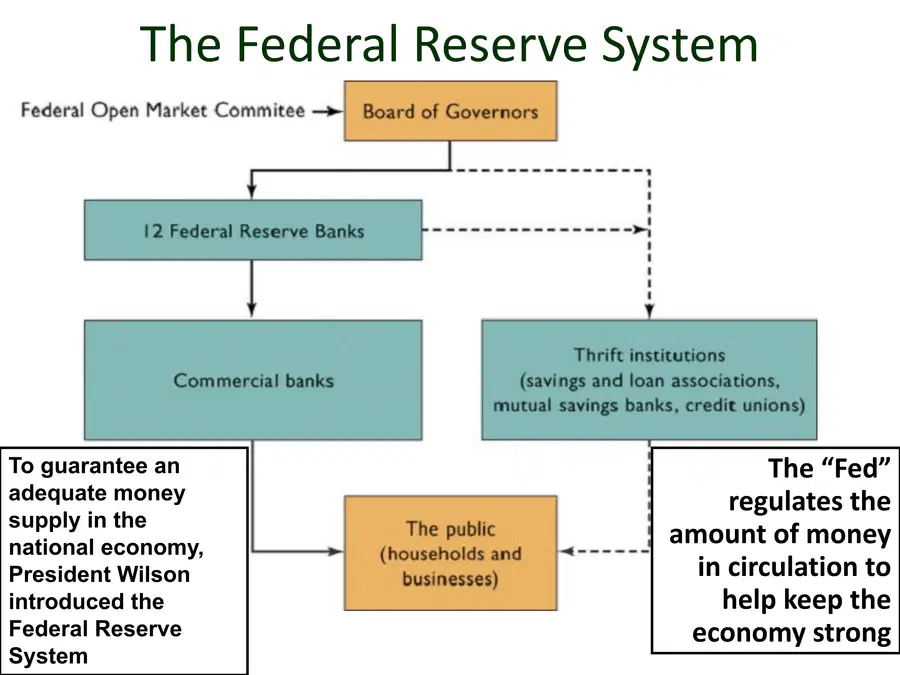
84
Multiple Choice
Which of the following best describes the Federal Reserve System's structure as shown in the diagram?
A centralized system with one main bank
A network of banks and institutions
A single government agency
A private corporation
85

86

Unsupported video type
87

88
Multiple Choice
What major changes did the Progressive Era (1890-1920) bring?
Increased taxes
Government regulation of big business
Decreased urbanization
Less democracy for the people
89
Multiple Choice
What was a primary goal of the Progressive Era regarding democracy?
To limit voting rights
To increase public participation
To centralize power
To reduce government size
Show answer
Auto Play
Slide 1 / 89
SLIDE
Similar Resources on Wayground

84 questions
Decade week
Presentation
•
11th Grade
86 questions
Networks Wide Area Networks/The Internet
Presentation
•
10th - 11th Grade
82 questions
South/Southeast US Physical/Political Map
Presentation
•
9th - 12th Grade
84 questions
Different Elements Classifications
Presentation
•
12th Grade
84 questions
AP Political Socialization
Presentation
•
11th - 12th Grade
83 questions
Dc Government
Presentation
•
12th Grade
85 questions
MOY Unit 2/3 Review
Presentation
•
11th Grade
86 questions
Legislative Branch
Presentation
•
10th Grade
Popular Resources on Wayground
24 questions
PBIS-HGMS Day 10

Quiz
•
6th - 8th Grade
10 questions
HCS SCI 03 Summer School Review 3
Quiz
•
3rd Grade
11 questions
Home Scope
Quiz
•
7th - 8th Grade
15 questions
HCS SCI 05 Summer School Assessment 3 Review
Quiz
•
5th Grade
35 questions
Lufkin Road Middle School Student Handbook & Policies Assessment
Quiz
•
7th Grade
18 questions
Geo 11.3 Area of Circles and Sectors
Quiz
•
9th - 11th Grade