Chp. 10 PP Bio CR
Presentation
•
Science
•
9th Grade
•
Medium
+1
Standards-aligned
Meredith Lawhorn
Used 6+ times
FREE Resource
17 Slides • 17 Questions
1
2
Multiple Choice
What process is shown in the figure?
photosynthesis
cellular respiration
mitosis
fermentation
3
Multiple Choice
4
5
Multiple Choice
Which organelle is primarily responsible for cellular respiration in both plant and animal cells?
Chloroplast
Mitochondria
Nucleus
Ribosome
6
7
Multiple Choice
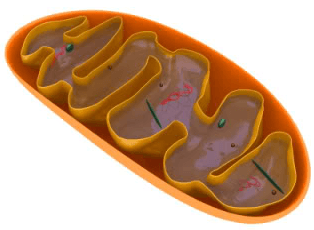
Which organelle is shown in the images and what is its primary function in the cell?
Mitochondrion; produces energy through cellular respiration
Chloroplast; conducts photosynthesis
Nucleus; stores genetic information
Ribosome; synthesizes proteins
8
Multiple Choice
9
10
Multiple Choice
What are the reactants and products of the cellular respiration equation shown in the image?
Reactants: Glucose, Oxygen; Products: Carbon dioxide, Water, ATP
Reactants: Carbon dioxide, Water; Products: Glucose, Oxygen, ATP
Reactants: Glucose, Water; Products: Oxygen, Carbon dioxide, ATP
Reactants: Oxygen, ATP; Products: Glucose, Water, Carbon dioxide
11
12
13
Fill in the Blanks
Type answer...
14
15
Multiple Select
Which of the following statements about NAD+ and its role in cellular respiration are correct?
NAD+ acts as an electron carrier.
NAD+ becomes NADH after gaining electrons and a hydrogen ion.
NAD+ is similar to NADP+ in photosynthesis.
NAD+ is used to break down glucose directly.
16
17
18
Multiple Choice
Which of the following statements best describes why fermentation is considered anaerobic?
It requires oxygen to occur.
It does not require oxygen to occur.
It produces more ATP than aerobic processes.
It only occurs in the mitochondria.
19
20
Fill in the Blanks
Type answer...
21
22
Open Ended
Compare and contrast the main functions and products of photosynthesis and cellular respiration.
23
24
Multiple Select
Which of the following are true about the Krebs Cycle?
It requires oxygen to take place.
It breaks down pyruvic acid into CO2.
It produces a large amount of ATP.
It is part of cellular respiration.
25
26
Fill in the Blanks
Type answer...
27
28
Multiple Choice
Why is cellular respiration considered more efficient than glycolysis alone?
It produces more glucose.
It produces more ATP molecules.
It requires less oxygen.
It occurs in the cytoplasm.
29
30
Multiple Choice
Which process provides quick energy in the absence of oxygen?
Lactic Acid Fermentation
Cellular Respiration
Photosynthesis
Alcoholic Fermentation
31
32
33
Fill in the Blanks
Type answer...
34
Multiple Choice
What is the main function of cellular respiration in living cells?
To produce glucose
To release energy by breaking down food molecules
To absorb sunlight
To store oxygen
Show answer
Auto Play
Slide 1 / 34
SLIDE

Similar Resources on Wayground
30 questions
(Unit 3 Lesson 3) Amoeba Sisters: The Cell Cycle (and Cancer)
Presentation
•
9th Grade
25 questions
Bio Unit 5 - Lesson 1: Cell Respiration
Presentation
•
9th Grade
26 questions
Exploring the Universe with Technology
Presentation
•
8th Grade
25 questions
8.5 D: Counting Atoms with Coefficients
Presentation
•
8th Grade
28 questions
ATP and Photosynthesis
Presentation
•
9th Grade
29 questions
Vocabulary for Chemical Reactions
Presentation
•
9th Grade
26 questions
5.2 Weathering and Soil
Presentation
•
9th Grade
28 questions
The Respiratory System: Structure and Function
Presentation
•
9th Grade
Popular Resources on Wayground
6 questions
Secondary Safety Quiz
Presentation
•
9th - 12th Grade
10 questions
MyPath Diagnostic Overview
Presentation
•
6th - 8th Grade
20 questions
Lab Safety Quiz
Quiz
•
6th Grade
21 questions
Continents and Oceans
Quiz
•
6th Grade
20 questions
Adding and Subtracting Decimals
Quiz
•
5th Grade
20 questions
Parts of Speech
Quiz
•
5th Grade
16 questions
Subject & Predicate
Quiz
•
5th Grade
21 questions
Lab Safety
Quiz
•
10th Grade
Discover more resources for Science
10 questions
Scientific Method (The scientific method)
Interactive video
•
9th Grade
9 questions
Scientific method
Interactive video
•
9th - 12th Grade
10 questions
Lab Safety Essentials
Interactive video
•
6th - 10th Grade
10 questions
Essential Guidelines for Science Lab Safety
Interactive video
•
6th - 10th Grade
10 questions
Exploring Scientific Variables and Their Roles
Interactive video
•
6th - 10th Grade
15 questions
counting significant figures
Quiz
•
9th Grade
10 questions
Structure of Water and Hydrogen Bonding
Quiz
•
9th - 12th Grade
20 questions
Quiz #1: Lab Safety and Scientific Method
Quiz
•
9th - 12th Grade