

Lesson 12: The Decline of the Inca Empire Reading Portion

Presentation
•
English
•
1st - 5th Grade
•
Easy
+33
Standards-aligned

Giron Giron
Used 2+ times
FREE Resource
10 Slides • 12 Questions
1

2
Poll
Let's predict:
Which of the following might be a reason for the decline of a powerful civilization like the Inca Empire?
Predijemos:
¿Cuál de las siguientes podría ser una razón para el declive de una civilización tan poderosa como el Imperio Inca?
Natural disasters/
Desastres naturales
Invasion by foreign forces/
Invasión de fuerzas extranjeras
Internal conflicts/
Conflictos internos
Technological advancement/
Avance tecnológico
3

4

5
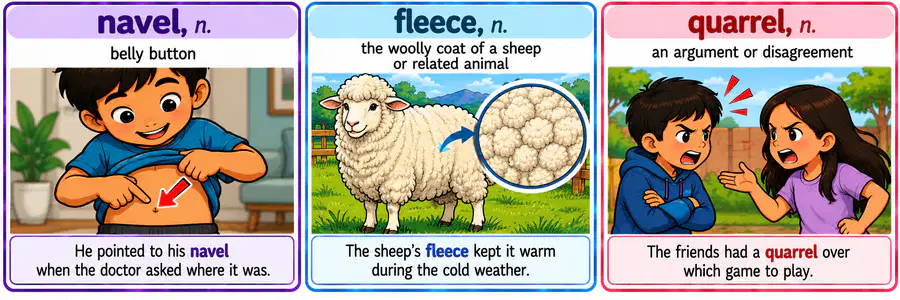
6
Draw
Select one of the 3 vocabulary words and draw the meaning.
7

8

9
Multiple Choice
Cuzco means “navel of the world.” Knowing that navel is another word for belly button, why do you think the Inca would have named their capital city that?/
Cuzco significa "ombligo del mundo". Sabiendo que "ombligo" también significa ombligo, ¿por qué crees que los incas le habrían puesto ese nombre a su capital?
Because it was shaped like a circle./
Porque tenía forma de círculo.
Because all roads led to Cuzco, making it the center of the empire./
Porque todos los caminos conducían al Cuzco, convirtiéndolo en el centro del imperio.
Because the city was small and hidden./ Porque la ciudad era pequeña y estaba escondida.
10
Multiple Choice
What was unique about the buildings and the people in Cuzco?
¿Qué tenían de especial los edificios y la gente de Cuzco?
The buildings were made of wood and clay./
Los edificios estaban hechos de madera y arcilla.
The people lived in small huts./ La gente vivía en pequeñas chozas.
The Inca used giant stones, fitted tightly without mortar, and the city was filled with nobles and government officials./
Los incas usaban piedras gigantes, colocadas firmemente sin mortero, y la ciudad estaba llena de nobles y funcionarios del gobierno.
11

12
Multiple Choice
Why is it so amazing that Sascahuaman was constructed without the use of wheels?
¿Por qué es tan sorprendente que Sascahuamán se construyera sin el uso de ruedas?
Because they moved and fit massive stones perfectly using only animals, ropes, and ramps./
Porque movían y encajaban piedras enormes a la perfección utilizando únicamente animales, cuerdas y rampas.
Because the Inca carried all their stones by hand./ Porque los incas llevaban todas sus piedras a mano.
Because wheels would have broken on the rocky ground./ Porque las ruedas se habrían roto en el suelo rocoso.
13
Multiple Choice
What two things were distinct about clothing in every region?
¿Qué dos cosas eran distintivas en la vestimenta de cada región?
The length of the tunics and the color of the sandals./
El largo de las túnicas y el color de las sandalias.
The type of wool used and the shape of belts./ El tipo de lana utilizada y la forma de los cinturones.
The patterns woven into cloth and the different styles of hats./ Los patrones tejidos en tela y los diferentes estilos de sombreros.
14
Multiple Choice
What government action killed two birds with one stone, or served two purposes at once?
¿Qué acción gubernamental mató dos pájaros de un tiro o sirvió para dos propósitos a la vez?
Relocating conquered people so they could both provide needed workers and prevent rebellion./ Reubicar a los pueblos conquistados para que pudieran proporcionar los trabajadores necesarios y evitar la rebelión.
Teaching everyone to speak Quechua./
Enseñando a todos a hablar quechua.
Making commoners serve in the army./ Obligar a los plebeyos a servir en el ejército.
15

16
Multiple Choice
What was the quarrel between the two royal brothers?
¿Cuál fue la disputa entre los dos hermanos reales?
Who would get married first./
¿Quién se casaría primero?
Both wanted to rule the entire empire after their father died./
Ambos querían gobernar todo el imperio después de la muerte de su padre.
Who owned the gold mines./
¿Quién era dueño de las minas de oro?
17
Multiple Choice
What role did the Spanish, led by Francisco Pizarro, play in the brothers’ quarrel?
¿Qué papel jugaron los españoles, liderados por Francisco Pizarro, en la disputa de los hermanos?
They stayed out of it completely./
Ellos se mantuvieron fuera de él por completo.
They forced the brothers to share power./ Obligaron a los hermanos a compartir el poder.
They supported Huascar, imprisoned Atahualpa, then betrayed him for his gold./ Apoyaron a Huáscar, encarcelaron a Atahualpa y luego lo traicionaron por su oro.
18

19
Fill in the Blanks
Machu Picchu is often called the '
20
Multiple Choice
Why is Machu Picchu considered one of the world’s most important archaeological sites?
¿Por qué Machu Picchu es considerado uno de los sitios arqueológicos más importantes del mundo?
because archeologists must rely on preserved sites like this for clues about how the Inca lived/
porque los arqueólogos deben confiar en sitios preservados como este para obtener pistas sobre cómo vivían los incas.
Because the Spanish used it as their capital./ Porque los españoles la usaron como su capital.
Because it was built as a royal palace for the Spanish/Porque fue construido como palacio real para los españoles.
21
Open Ended
What is something that you learned from this chapter?
22

Show answer
Auto Play
Slide 1 / 22
SLIDE
Similar Resources on Wayground

15 questions
Descubrimiento de América
Presentation
•
1st - 5th Grade
16 questions
Unlocking the Potential: Side Hustle Opportunities for Nurses
Presentation
•
1st - 5th Grade
18 questions
Indian in the Cupboard Vocab Ch. 9-16
Presentation
•
1st - 5th Grade
17 questions
Nadia the girl who couldn't sit still
Presentation
•
1st - 5th Grade
14 questions
La libertad 1. Qué es la Ilustración
Presentation
•
KG
15 questions
Hst 6Lets go
Presentation
•
1st - 5th Grade
15 questions
The Ant and the Grasshopper
Presentation
•
1st - 5th Grade
20 questions
PHRASAL VERBS
Presentation
•
KG
Popular Resources on Wayground
10 questions
How much do you know about our Portrait of an Eagle?

Quiz
•
10th Grade
10 questions
Fast Food Slogans
Quiz
•
6th - 8th Grade
21 questions
Continents and Oceans
Quiz
•
6th Grade
20 questions
Parts of Speech
Quiz
•
5th Grade
16 questions
Subject & Predicate
Quiz
•
5th Grade
25 questions
Multiplication Facts
Quiz
•
5th Grade
12 questions
Map Skills
Quiz
•
3rd Grade
22 questions
Continents and Oceans
Quiz
•
5th Grade
Discover more resources for English
20 questions
Parts of Speech
Quiz
•
5th Grade
16 questions
Subject & Predicate
Quiz
•
5th Grade
20 questions
Inferences
Quiz
•
4th Grade
20 questions
Figurative Language Review
Quiz
•
4th Grade
15 questions
Subject/Verb agreement
Quiz
•
4th Grade
14 questions
Verbs
Quiz
•
3rd Grade
15 questions
Singular and Plural Nouns
Quiz
•
4th Grade
12 questions
Figurative Language Review

Interactive video
•
5th Grade