Search Header Logo
Unit 1: Macromolecules Quizizz

Unit 1: Macromolecules Quizizz

Assessment

Presentation

•

Biology

•

9th Grade

•

Medium

•
NGSS
HS-LS1-6, HS-LS3-1

Standards-aligned

Created by

Sally Perry

Used 1+ times

FREE Resource

24 Slides • 26 Questions

1

media

2

media

3

media

4

Multiple Choice

Which of the following is NOT one of the four main types of macromolecules found in cells?

1

Carbohydrate

2

Lipid

3

Protein

4

Vitamin

5

media

6

Multiple Choice

What is the main similarity in the construction of carbohydrates, proteins, and nucleic acids?

1

They are all made of repeating subunits called monomers.

2

They all contain fatty acids.

3

They all have the same chemical formula.

4

They are all used for energy storage.

7

media

8

media

9

Multiple Choice

Which of the following pairs correctly matches the macromolecule with its monomer?

1

Carbohydrate - Amino Acid

2

Protein - Nucleotide

3

Nucleic Acid - Nucleotide

4

Lipid - Monosaccharide

10

media

11

Fill in the Blank

The chemical formula for monosaccharides typically has a ratio of ___:___:___ (C:H:O).

12

media

13

media

14

Multiple Choice

Which of the following foods is NOT a common dietary source of carbohydrates?

1

Pasta

2

Rice

3

Bread

4

Fish oil

15

media

16

media

17

Multiple Choice

Which of the following are functions of lipids?

1

Long-term energy storage

2

Insulation

3

Make up cell membranes

4

All of the above

18

Fill in the Blank

Lipids are made up of the elements ___, ___, and ___.

19

media

20

media

21

media

22

media

23

Fill in the Blank

DNA is shaped like a ___ helix.

24

Multiple Select

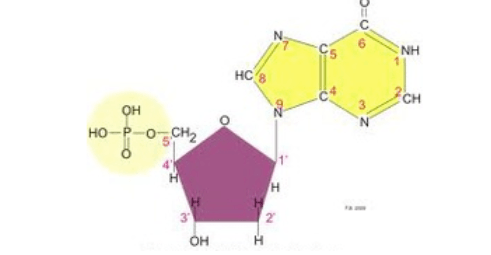
Which of the following are parts of a nucleotide monomer?

1

Nitrogenous base

2

Pentose (5-carbon) sugar

3

Phosphate group

4

Amino acid

25

Multiple Choice

Which of the following is NOT a function of nucleic acids?

1

Storing hereditary information

2

Providing energy currency for cells

3

Storing protein synthesis code

4

Acting as structural support for cells

26

media

27

media

28

media

29

media

30

Multiple Choice

What is the main difference between dehydration synthesis and hydrolysis?

1

Dehydration synthesis breaks down polymers, hydrolysis builds them.

2

Dehydration synthesis removes water to bond monomers, hydrolysis adds water to break bonds.

3

Dehydration synthesis adds water to bond monomers, hydrolysis removes water to break bonds.

4

Both processes add water to bond monomers.

31

media

32

media

33

media

34

Fill in the Blank

The monomers that make up proteins are called ___.

35

Multiple Select

Which of the following are functions of proteins in the body?

1

Transport oxygen

2

Speed up chemical reactions

3

Store genetic information

4

Defend against disease

36

media

37

media

38

Multiple Choice

What is the main characteristic that defines an organic molecule?

1

It contains carbon and hydrogen and/or has carbon-carbon bonds.

2

It contains oxygen and hydrogen only.

3

It is always found in living organisms.

4

It is always a gas.

39

Multiple Choice

This macromolecule makes up enzymes, blood, and antibodies

1

carbohydrates

2

lipids

3

proteins

4

nucleic acids

40

Multiple Choice

Which of the following is one way in which carbohydrates differ from lipids:

1

Only lipids are made up of carbon, hydrogen and oxygen

2

Only carbohydrates are made up of carbon, hydrogen and oxygen

3

Lipids provide long term energy while carbohydrates provide short term energy

4

Carbohydrates do not have a monomer and lipids do.

41

Multiple Choice

Question image
Which major macromolecule is being represented in this image? 
1
carbohydrate
2
lipid
3
protein
4
nucleic acid

42

Multiple Choice

Question image
What type of carbohydrate is this?
1
polysaccharide
2
disaccharide
3
monosaccharide
4
it isn't a carbohydrate

43

Multiple Choice

Question image
Glycerol and fatty acids combine to form...?
1
Carbohydrates
2
Lipids
3
Proteins
4
Nucleic Acids

44

Multiple Choice

Question image
What is the monomer of a protein?
1
amino acid
2
monosaccharide
3
fatty acid
4
nucleic acid

45

Multiple Choice

Question image
Which biomolecule is this a picture of?
1
Protein
2
Nucleic Acid
3
Lipid
4
Carbohydrate

46

Multiple Choice

Which elements are mostly found in proteins?

1

C,H,O

2

C,H,O,N

3

C,H,O,N,P

4

C,H,O,N,S,Ca

47

Multiple Choice

DNA and RNA are examples of...
1
proteins
2
nucleic acids
3
carbohydrates
4
lipids

48

Multiple Choice

RNA contains the sugar ______.

1

Deoxyribose

2

Glucose

3

Ribose

4

Lipids

49

Multiple Choice

Nucleic Acids are made of

1

CHO

2

CHON

3

CHONP

4

CHONS

50

Multiple Choice

Question image
Guanine is complementary to what other nitrogenous base?
1
Cytosine
2
Adenine
3
Thymine
4
Uracil
media

Show answer

Auto Play

Slide 1 / 50

SLIDE