Search Header Logo
Unit 2 Review

Unit 2 Review

Assessment

Presentation

Biology

10th Grade

Medium

NGSS
MS-LS1-6, MS-LS1-7, HS-LS1-7

+8

Standards-aligned

Created by

Raegan Jackson

Used 5+ times

FREE Resource

10 Slides • 43 Questions

1

media

2

media

3

Multiple Choice

When a virus invades a living cell, its _______
takes over the cell's functions.
1
outer coat
2
genetic material
3
core
4
cytoplasm

4

Multiple Choice

What do viruses need to reproduce?
1
they need genetic material
2
They need a host cell
3
They need  bacteria
4
They need insulin

5

Multiple Choice

Question image
What is the main function of the projections on the surface of a virus?
1
They aid in respiration
2
They help the virus grow
3
They help the virus invade its host by attaching to specific sites on the host
4
They help the virus digest food molecules

6

Multiple Choice

Reasons that viruses are considered to be nonliving is because
1
They are not cellular
2
They cannot reproduce on their own
3
They cannot make proteins
4
all of the above

7

Multiple Choice

Which of the following is not a way to prevent or treat viruses?
1
antibiotics
2
antiviral medications
3
vaccines
4
wash your hands

8

Multiple Choice

prokaryotic organisms with strong cell walls containing peptidoglycans

1

bacteria

2

archaea

3

capsule

4

endospore

9

Multiple Choice

What helps prevent viral diseases?

1

Vaccines

2

Antibiotics

3

Herbal tea

4

Gene Therapy

10

Multiple Choice

All bacteria are
1
unicellular
2
multicellular
3
eukaryotic

11

Multiple Choice

Bacteria are prokaryotes, meaning they ________.

1

lack a nucleus

2

are very large

3

contain no DNA

4

have a cytoplasm

12

media

13

media

14

Multiple Choice

What are the reactants in the photosynthesis equation?

1

oxygen and glucose

2

nitrogen and hydrogen

3

sodium and chloride

4

carbon dioxide and water

15

Multiple Choice

What are the products in the photosynthesis equation?

1

carbon dioxide and water

2

adenosine triphosphate and carbon dioxide

3

glucose and water

4

glucose and oxygen

16

Multiple Choice

What is the primary pigment involved in photosynthesis?

1

hemoglobin

2

chlorophyll

3

melanin

4

carotene

17

Multiple Choice

Where does photosynthesis occur in plants?

1

chloroplasts

2

vacuole

3

nucleus

4

mitochondria

18

Multiple Choice

What is the main energy molecule produced in cellular respiration?

1

ADP

2

GTP

3

NADH

4

ATP

19

Multiple Choice

Where does cellular respiration occur in cells?

1

cytoplasm

2

mitochondria

3

cell membrane

4

nucleus

20

Multiple Choice

What are the similarities between photosynthesis and cellular respiration?

1

Production of ATP

2

Exchange of gases

3

Conversion of energy

4

Involvement of chloroplasts

21

Multiple Choice

Which of the following best describes the energy transformation in photosynthesis?

1

Chemical energy to light energy

2

Light energy to chemical energy

3

Heat energy to chemical energy

4

Mechanical energy to light energy

22

media

23

media

24

media

25

Multiple Choice

Contains the elements, carbon, hydrogen, oxygen, and nitrogen.

1

carbohydrates

2

lipids

3

proteins

4

nucleic acids

26

Multiple Choice

The function is energy and structure

1

carbohydrates

2

lipids

3

proteins

4

nucleic acids

27

Multiple Choice

Can be saturated or unsaturated.

1

carbohydrates

2

lipids

3

proteins

4

nucleic acids

28

Multiple Choice

Candies and pasta would have high amounts

1

carbohydrates

2

lipids

3

proteins

4

nucleic acids

29

Multiple Choice

Made of monomers called nucleotides

1

carbohydrates

2

lipids

3

Proteins

4

Nucleic Acids

30

Multiple Choice

Functions include enzymes, muscle contraction, and cell transport (has many others too)

1

carbohydrates

2

lipids

3

proteins

4

nucleic acids

31

media

32

Multiple Select

What are examples of passive transport? Choose all that apply

1

Simple Diffusion

2

Cold Blood

3

Facilitated Diffusion

4

Scavenger

33

Multiple Choice

What is diffusion?
1
when molecules move 
2
when molecules move from a high concentration to a low.
3
no movement 
4
molecules move everywhere

34

Multiple Choice

What a cell needs to transport particles by active transport?
1
Sun
2
Wind
3
Energy
4
Channels

35

Multiple Choice

Passive transport requires no
1
concentration gradients
2
osmosis
3
motion
4
energy

36

Multiple Choice

Low to High
1
Passive Transport
2
Active Transport

37

Multiple Choice

In passive transport, molecules move from an area of __________ concentration to an area of __________ concentraiton
1
high, low
2
low, high
3
water, salt
4
active, passive

38

Multiple Choice

What is the energy molecule for all living cells?

1

ADP

2

ATP

3

Protein

4

Sugars

39

Multiple Choice

Question image
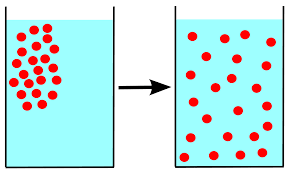
The picture below is an example of _________________.
1
osmosis
2
isotonic
3
diffusion
4
active transport

40

Multiple Choice

Question image
_______ regulates what enters and leaves a cell.  
1
Cell Membrane
2
Nucleus
3
Mitochondria
4
Cytoplasm

41

Multiple Choice

Endocytosis and exocytosis both use energy to engulf substances with the cell membrane. However, _____________ brings substances into the cell, while ____________ takes substances out of the cell.

1

endocytosis, exocytosis

2

exocytosis, endocytosis

3

endocytosis, endocytosis

4

exocytosis, exocytosis

42

Multiple Choice

Question image
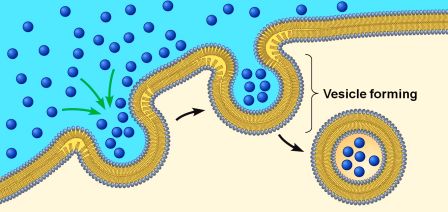
Which form of active transport is being shown?
1
Facilitated Diffusion
2
Exocytosis
3
Endocytosis
4
Protein Pumps

43

Multiple Choice

Question image
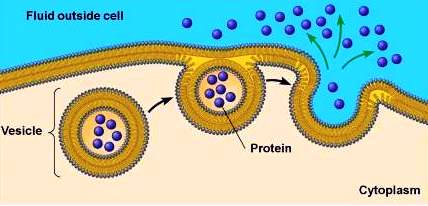
Which form of active transport is being shown?
1
Pinocytosis
2
Endocytosis
3
Exocytosis
4
Osmosis

44

media

45

Multiple Choice

Question image

Which organelle does cellular respiration occur?

1

chloroplast

2

mitochondria

3

chlorophyll

4

polarity

46

Multiple Choice

Question image

Which of the following occurs during cellular respiration?

1

Light energy and water are converted to ATP

2

Carbon dioxide and water are converted to ATP

3

Glucose and oxygen are converted to ATP

4

Light energy and oxygen are converted to ATP

47

Multiple Choice

Question image

How many carbons are in a glucose molecule?

1

5

2

13

3

12

4

6

48

Multiple Choice

The energy needed to perform daily cellular activities comes from _________

1

the production of gases during anaerobic respiration.

2

the breakdown of protein molecules.

3

energy released from ATP.

4

the synthesis of DNA.

49

Multiple Choice

Question image

"aerobic" means _______

1

with oxygen

2

without oxygen

50

Multiple Choice

Question image

In aerobic respiration _________ & __________ mix together to make ATP

1

carbon dioxide and lemonade

2

glucose and carbon dioxide

3

carbon dioxide and oxygen

4

glucose and oxygen

51

Multiple Choice

The word "anaerobic" means ___________

1

with oxygen

2

without oxygen

52

Multiple Choice

Fermentation is an example of _____________

1

aerobic respiration

2

anaerobic respiration

53

media
media

Show answer

Auto Play

Slide 1 / 53

SLIDE