Search Header Logo
Molbio M2_L1-L2

Molbio M2_L1-L2

Assessment

Presentation

Biology

University

Easy

NGSS
HS-LS3-2, HS-LS1-4

Standards-aligned

Created by

Michaella Sayo

Used 2+ times

FREE Resource

22 Slides • 24 Questions

1

media

2

media

3

Open Ended

In what ways do you think molecular biology has transformed the diagnosis of diseases in recent years?

4

Multiple Choice

Why is the diagnosis of disease considered a crucial aspect in the field of medical technology?

1

It helps in choosing the right treatment and improving patient outcomes.

2

It is only important for research purposes.

3

Diagnosis is not necessary if symptoms are obvious.

4

It is mainly used for administrative records.

5

Multiple Choice

Question image
What is cancer?
1
The heart does not receive enough blood.
2
Sudden disruption of blood flow to part of the brain.
3
Blood filled weak spot.
4
Uncontrolled growth and spread of abnormal cells.

6

Multiple Choice

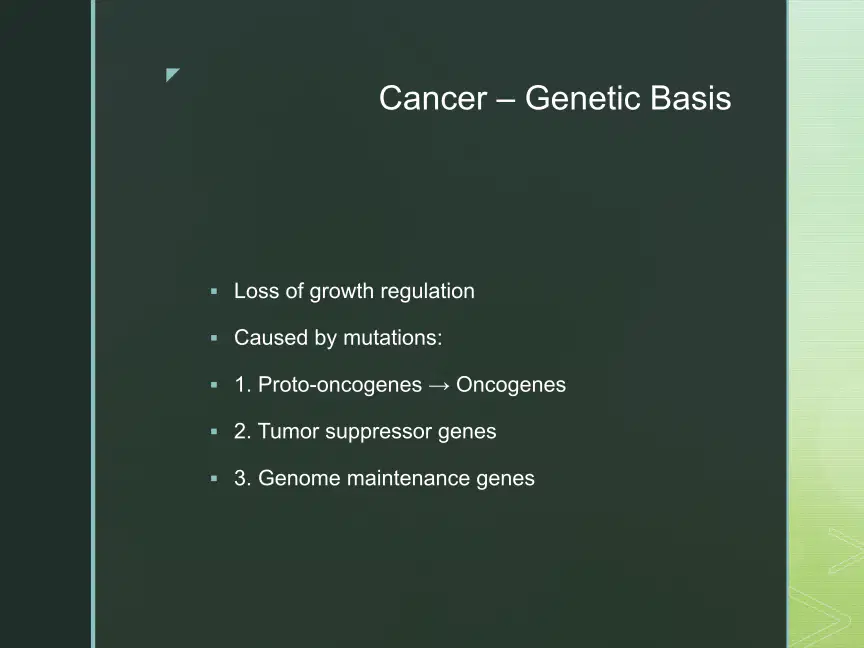
Which of the following gene types, when mutated, can contribute to the development of cancer?

1

Proto-oncogenes

2

Tumor suppressor genes

3

Genome maintenance genes

4

All of the above

7

media

8

Open Ended

Explain how mutations in proto-oncogenes and tumor suppressor genes can lead to cancer.

9

Multiple Choice

Question image

Substances or radiation that is known to produce or promote cancer are called

1

carcinogens

2

kinases

3

cyclins

4

malignancies

10

media

11

Multiple Select

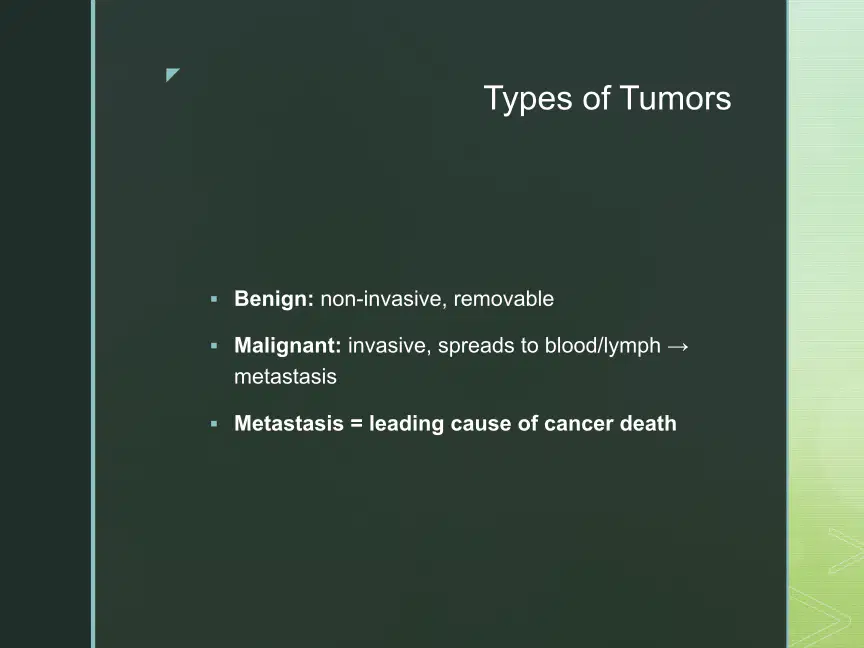
Which of the following statements about benign and malignant tumors is/are correct?

1

Benign tumors are invasive and spread to other tissues.

2

Malignant tumors can metastasize and are the leading cause of cancer death.

3

Benign tumors are removable and non-invasive.

4

Malignant tumors are always non-removable.

12

Fill in the Blanks

13

media

14

Multiple Choice

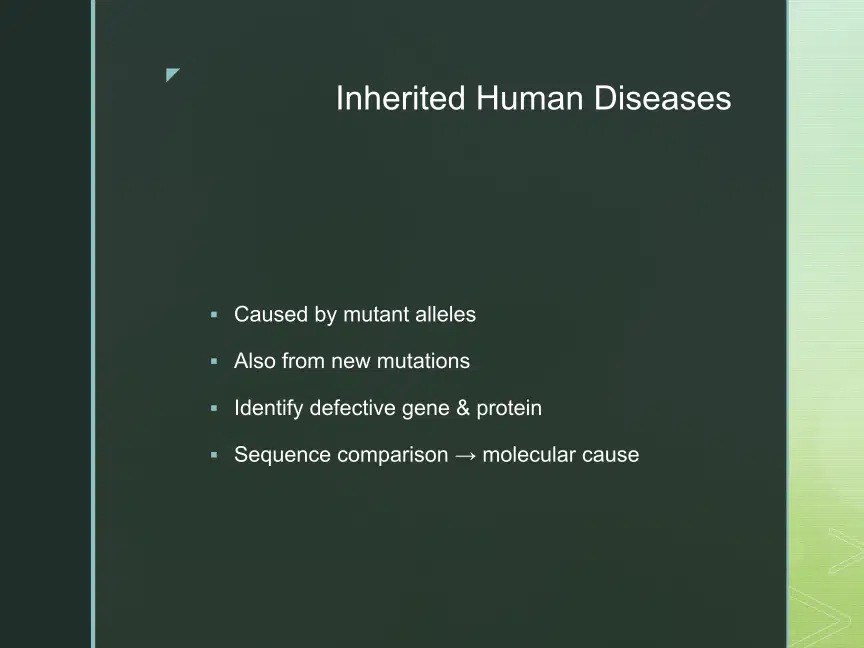
Which of the following is NOT a characteristic of inherited human diseases as described in the slide?

1

Caused by mutant alleles

2

Always caused by environmental factors

3

Can result from new mutations

4

Can be studied by sequence comparison

15

media

16

Multiple Choice

Question image

What type of mutation involves substituting a DNA base with a different base?

1

point mutation

2

frameshift mutation

3

silent mutation

4

chromosomal mutation

17

Fill in the Blanks

18

media

19

Multiple Choice

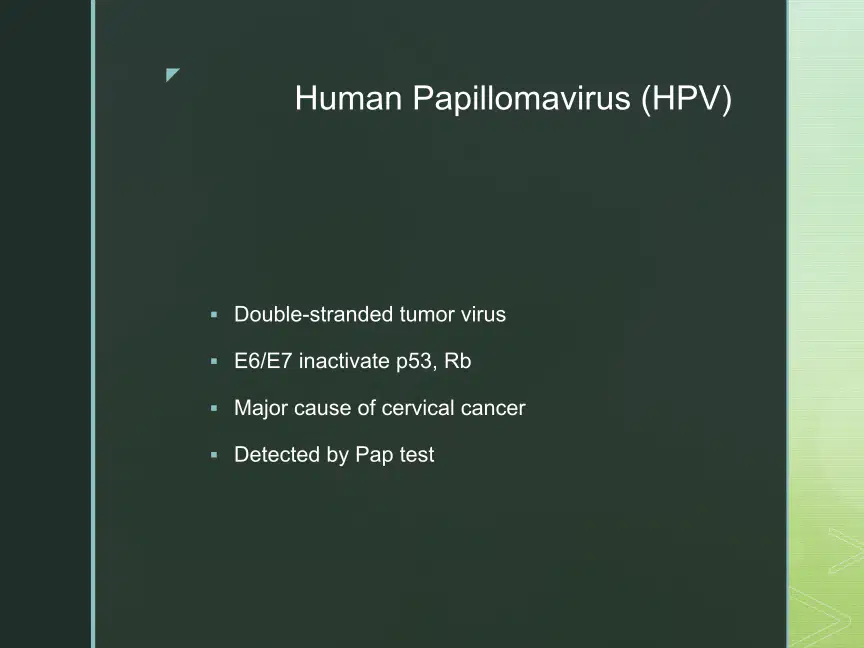
Which of the following is a major cause of cervical cancer?

1

Human Papillomavirus (HPV)

2

Hepatitis C Virus (HCV)

3

Cytomegalovirus (CMV)

4

Chlamydia

20

media

21

Fill in the Blanks

22

media

23

media

24

Fill in the Blanks

25

media

26

media

27

media

28

media

29

media

30

Multiple Choice

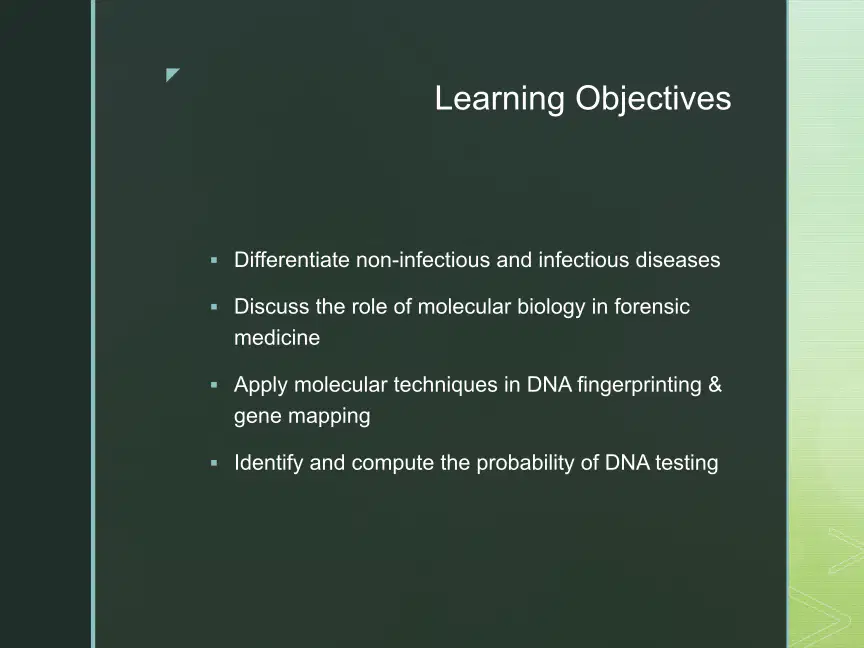
Which of the following is NOT a learning objective for the lesson on the role of molecular biology in forensic science?

1

Differentiate non-infectious and infectious diseases

2

Discuss the role of molecular biology in forensic medicine

3

Describe the process of photosynthesis

4

Apply molecular techniques in DNA fingerprinting & gene mapping

31

media

32

Open Ended

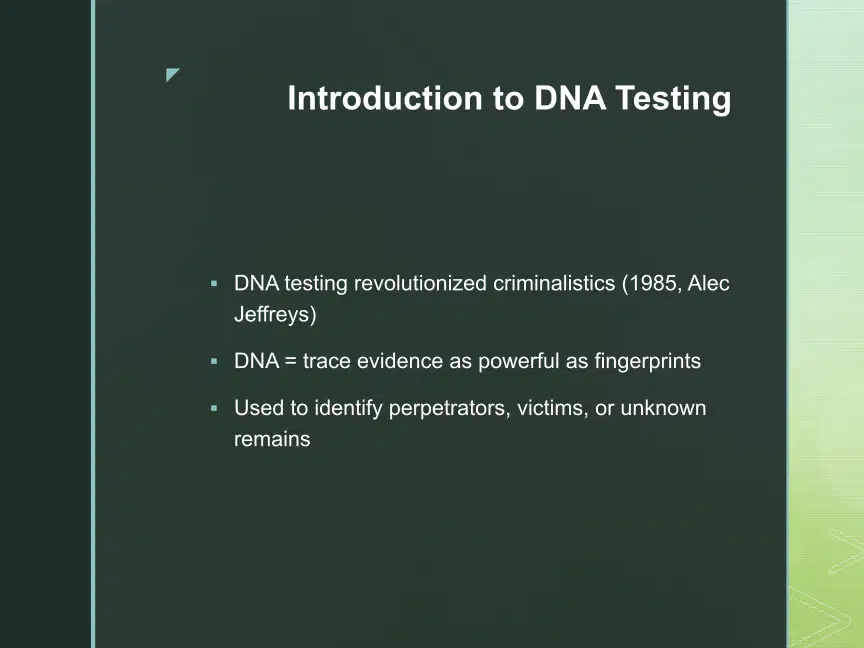
Explain how DNA testing revolutionized criminalistics and its significance in forensic investigations.

33

Multiple Choice

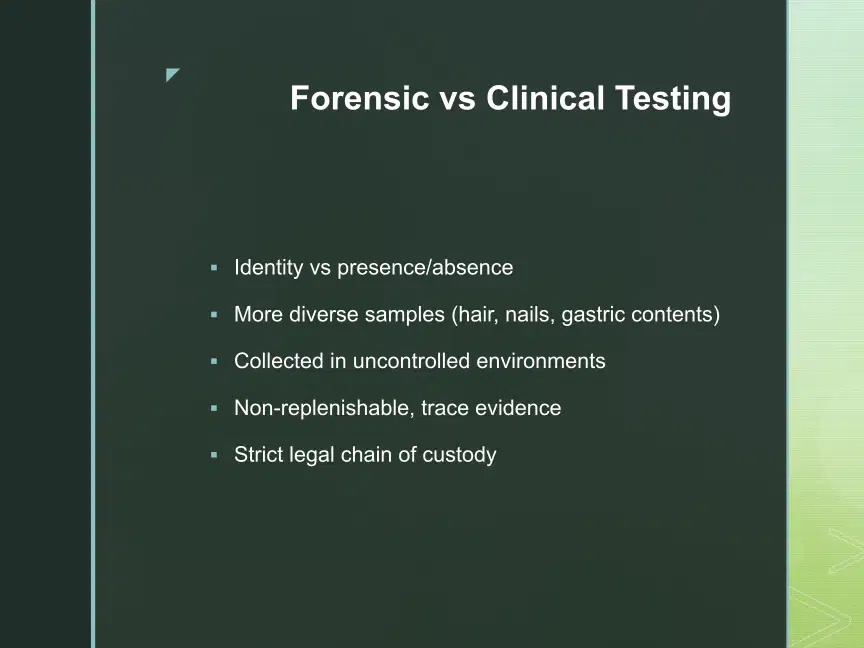
Which of the following are key differences between forensic and clinical testing?

1

Forensic testing focuses on identity, uses diverse samples, and requires a strict legal chain of custody

2

Clinical testing is always performed in uncontrolled environments

3

Forensic testing is replenishable and does not require a legal chain of custody

4

Clinical testing uses only blood samples

34

media

35

Fill in the Blanks

36

media

37

Multiple Choice

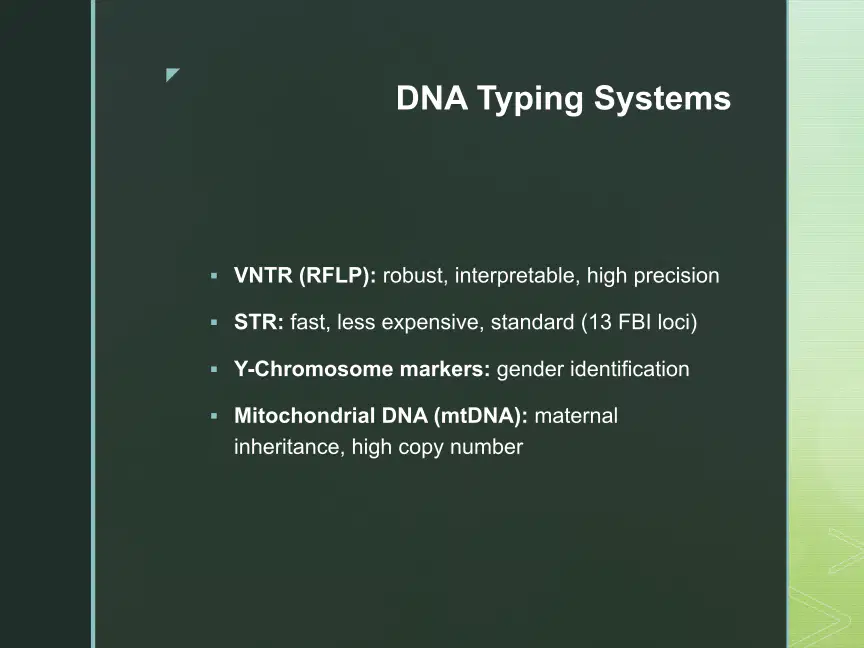
Which DNA typing system is primarily used for gender identification?

1

VNTR (RFLP)

2

STR

3

Y-Chromosome markers

4

Mitochondrial DNA (mtDNA)

38

media

39

Fill in the Blanks

40

media

41

Multiple Choice

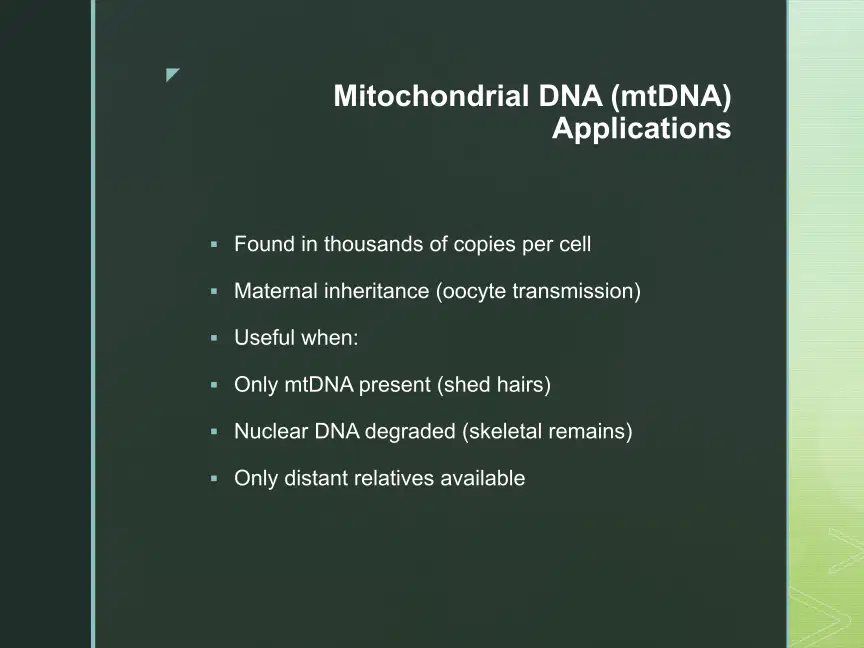
In which scenario is mitochondrial DNA (mtDNA) analysis most useful?

1

When only shed hairs are available as evidence

2

When nuclear DNA is intact and abundant

3

When only paternal relatives are available

4

When there is no need for DNA analysis

42

media

43

Open Ended

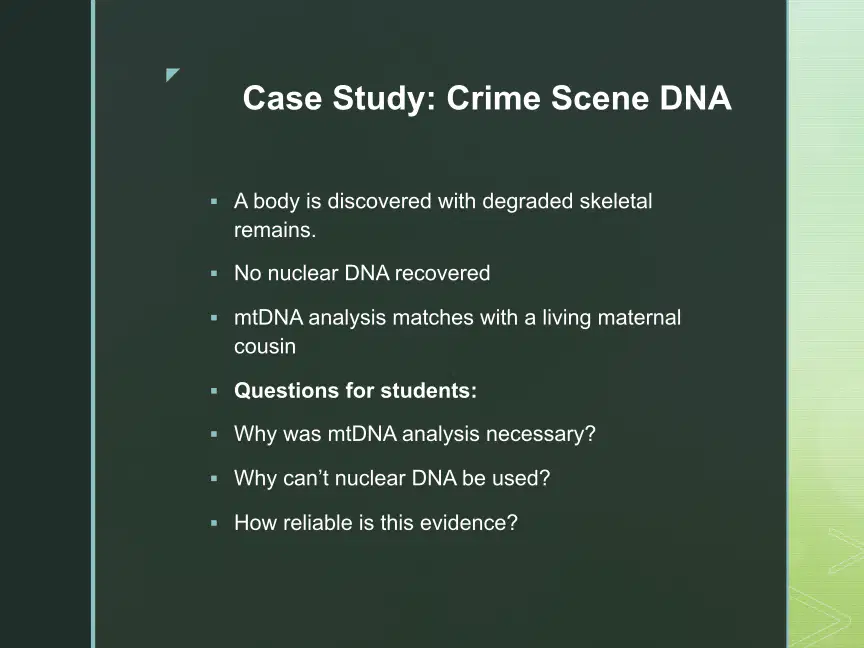
Why was mtDNA analysis necessary in the crime scene case study?

44

media

45

Multiple Choice

Which of the following is NOT a role of molecular methods in disease diagnosis as discussed in the lesson?

1

Detecting HPV, HIV, HCV, CMV, and bacterial STIs

2

Identifying key genes involved in cancer

3

Differentiating between viral and bacterial infections only

4

Applying concepts in evaluating diagnostic methods used in Medical Technology

46

Open Ended

How does molecular biology contribute to the diagnosis of diseases?

media

Show answer

Auto Play

Slide 1 / 46

SLIDE