Search Header Logo
Unit 2 Review- APES

Unit 2 Review- APES

Assessment

Presentation

Science

11th - 12th Grade

Easy

NGSS
MS-LS4-4, MS-LS2-4, MS-LS2-5

+17

Standards-aligned

Created by

JASMINE RODRIGUEZ

Used 2+ times

FREE Resource

38 Slides • 141 Questions

1

​Unit 2- AP Environmental Science Review

By JASMINE RODRIGUEZ

2

Topics covered during Unit 2

2.1- Intro to biodiversity
2.2- Ecosystem Services
2.3- Island biogeography
2.4- Ecological Tolerance
2.5- Natural Disruptances to ecosystems
2.6- Adaptations
2.7- Ecological Succession

3

Review Day

Answer all the questions that follow to review for your Unit 2 Exam
Try your best to do it without your notes and see how you score,
if you score below an 80% please redo the review.

4

Multiple Choice

If an island is closer to the mainland, how will this impact the biodiversity?

1

There will be a higher level of biodiversity here than an island that is further away.

2

There will be a lower level of biodiversity here than an island that is further away.

3

There will be no difference in biodiversity on islands based on distance to mainland.

5

Multiple Choice

Primary succession occurs in an area that has:

1

soil

2

no soil

3

some soil

4

none of these

6

Multiple Choice

Question image

Surtsey is an island located south of Iceland. The island was formed by a volcanic eruption and first appeared in 1963. The table below contains descriptions if changes in the population and diversity of species on Surtsey. Which of these lists the descriptions in the correct order of ecological succession on Surtsey?

1

I, II, IV, III

2

IV, III, I, II

3

III, I, II, IV

4

II, IV, I, III

7

Multiple Choice

If an ecosystem experiences a natural disaster, which criterion increases an organism’s chance of survival?

1

there are few abiotic factors in the environment

2

the organisms are large

3

the population size is small

4

the species exhibit inherited genetic variation

8

Multiple Choice

The growth of which of the following usually occurs first in primary succession?

1

lichens

2

grasses

3

trees

4

shrubs

9

Multiple Choice

Which of these is a main difference between primary and secondary succession?

1

Primary succession happens slowly, and secondary succession happens rapidly.

2

Small plants grow first during primary succession, while large trees grow first in secondary succession.

3

Primary succession occurs after a natural disaster, but secondary succession occurs before a natural disaster.

4

Primary succession is the colonization of new sites, while secondary succession is colonization of previously inhabited sites.

10

Multiple Choice

After a volcanic eruption has covered an area with lava, which of the following is the most likely order of succession in the repopulation of the area?

1

Grasses, trees, mosses, lichens

2

Shrubs, grasses, trees, lichens

3

Lichens, grasses, shrubs, trees

4

Mosses, grasses, lichens, trees

11

Multiple Choice

A farmer stops cultivating a large tract of farmland and abandons it. The natural changes taking place soon afterwards, such as the growth of wild grasses and weeds, can be considered secondary succession and not primary succession because-

1

A new ecosystem develops.

2

There is already soil present.

3

The land is not controlled by humans.

4

Wild grasses and weeds make soil from rock.

12

Multiple Choice

___ are the first organisms to colonize an area and begin the process of ecological succession.

1

foundational organisms

2

introductory organisms

3

primary organisms

4

pioneer species

13

Multiple Choice

What is an example of an area that is likely to undergo primary succession?

1

Glaciers melt and leave exposed rock

2

Plants die from drought and decompose

3

Land is bulldozed and soil remains

14

Multiple Choice

Which of the following is the correct order of ecological succession?

1

grass - shrubs - lichens - trees

2

lichens - shrubs - grasses - trees

3

lichens - grasses - shrubs - trees

4

grasses - lichens - shrubs - trees

15

Multiple Choice

What is the main difference between primary and secondary ecological succession?

1

Primary begins WITHOUT soil; Secondary begins WITH soil

2

Primary is the first state and secondary is the second stage

3

Primary builds plant community; secondary builds animal community

4

Primary begins WITH soil; Secondary begins WITHOUT soil

16

Multiple Choice

What is the term that describes a steady and stable community?

1

peak community

2

turf community

3

climax community

4

disturbed community

17

Multiple Choice

Which is faster: Primary or Secondary Succession?

1

Primary Succession

2

Secondary Succession

3

Both Take The Same Amount of Time

18

Multiple Choice

Which of the following is NOT a pioneer species?

1

Shrubs

2

Lichen

3

Mosses

4

Fungi

19

Multiple Choice

T or F: Succession increases biodiversity.

1

true

2

false

20

Multiple Choice

The Final stage of ecological succession is...

1

Mature Tree Growth

2

Climax Community

3

Pioneer Community

4

Primary Succession

21

Multiple Choice

A bare rock community must first undergo...

1

the break down of soil in primary succession

2

the formation of grasses in secondary succesion

3

creating a climax community

4

the growth of trees on it

22

Multiple Choice

Natural disasters such as flooding and tornadoes are linked to ________________.
1
primary
2
secondary
3
old field
4
ecosystem

23

Multiple Choice

Question image
After a forest fire, an ecosystem would start regrowth through -
1
primary succession
2
secondary succession
3
climax community
4
limiting factors

24

Multiple Choice

Which is the correct order in primary succession?
1
Rocks, Lichens & Mosses, Bushes & Shrubs, Trees
2
Lichens & Mosses, Rocks, Trees, Bushes & Shrubs 
3
Trees, Bushes and Shrubs, Lichens & Mosses, Lichens & Mosses
4
Rocks, Grass, Trees, Bushes & Shrubs

25

Multiple Choice

ends in a climax community
1
primary succession 
2
secondary succession
3
both types of succession

26

Multiple Choice

What is the first organism in aquatic succession?

1

Fish

2

Algae

3

Water lilies

4

Frogs

27

Multiple Choice

Which of the following is a characteristic of a keystone species?

1

They are always the largest species in an ecosystem

2

They have no impact on the biodiversity of an ecosystem

3

Removal of them can cause drastic changes in an ecosystem

4

They are always the smallest species in an ecosystem

28

Multiple Choice

Which of the following is an example of a keystone species?

1

Elephant

2

Grass

3

Butterfly

4

Algae

29

Multiple Choice

Which of the following is NOT a characteristic of a Keystone Species?

1

They have a large effect on their environment relative to their abundance

2

Removing them causes significant changes in the ecosystem

3

They are always the largest species in the ecosystem

4

Their actions can affect the types and numbers of other species in their ecosystem

30

Multiple Choice

What is the role of indicator species in monitoring environmental changes?

1

They provide early warnings of damage to a community or an ecosystem

2

They have no role in monitoring environmental changes

3

They are responsible for causing environmental changes

4

They prevent environmental changes from occurring

31

Multiple Choice

Which of the following is NOT a factor that impacts ecological tolerance?

1

Temperature

2

pH

3

Humidity

4

Level of biodiversity

32

Multiple Choice

What is ecological succession?

1

A set of environmental conditions within which an organism can best survive

2

An organism's ability to adapt to its environment

3

A peak community where the organisms are stable

4

The process of change in the species structure of an ecological community over time

33

Multiple Choice

Question image

What stage of ecological succession is being shown?

1

Primary succession

2

Secondary succession

3

Tertiary succession

4

Climax community

34

Multiple Choice

True or False: A wildfire that destroys all organisms in the area would cause a climax community to have to undergo primary succession once more.

1

True

2

False

35

Multiple Choice

Which of the following is NOT considered to be a natural disruption to an ecosystem?

1

Volcanic eruption

2

Hurricane

3

Air pollution

4

Earthquake

36

Multiple Choice

Which ecosystem is the most biodiverse?

1

Temperate deciduous forest

2

Tropical rainforest

3

Boreal forest

4

Savanna

37

Multiple Choice

In a food web, what is another term for "top predator"?

1

Tertiary consumer

2

Climax consumer

3

Parasite

4

Apex predator

38

Multiple Choice

When a community is stable with little to no change, what level of ecological succession is taking place?

1

Primary succession

2

Secondary succession

3

Tertiary succession

4

Climax community

39

Multiple Choice

Which of the following is NOT a type of ecosystem service?

1

Cultural

2

Regulating

3

Recreational

4

Provisional

40

Multiple Choice

True or false: An ecosystem with high genetic diversity is healthier than an ecosystem with low genetic diversity.

1

True

2

False

41

Multiple Choice

Which of these drawings would be found in a healthy ecosystem?

1
2

42

Multiple Choice

Question image
When there is higher biodiversity
1
more organisms are likely to die because they can't adapt to environmental changes.
2
there is less diversity.
3
there is more diversity and higher sustainability of life.
4
there is more diversity and lower sustainability of life

43

Multiple Choice

Question image
High biodiversity is 
1
having a lot of the same organism.
2
having a few of the same organism.
3
having a lot of variety of different organisms.
4
only having one of each organism. 

44

Multiple Choice

Question image

Which of the following forms of biodiversity describes all of the different types of biotic factors in an ecosystem?

1

Species

2

Habitat

3

Genetic

4

None of the Above

45

Multiple Choice

Question image

What has a higher biodiversity: a rain forest or a desert?

1

Rain forest

2

Desert

3

They have a similar biodiversity

46

Multiple Choice

Question image

Why is biodiversity in an ecosystem so important?

1

Because it can help humans where to determine good places to develop farm land.

2

Because places that have a healthy biodiversity are unaffected by major disturbances.

3

Because having a high biodiversity allows ecosystems to withstand major changes.

4

Because having a high biodiversity allows for fewer opportunities of competition for similar resources.

47

Multiple Choice

The greater the ____________________, the more likely a species is to survive changes to their environment

1

Genetic Diversity

2

Species Diversity

3

Ecosystem Diversity

48

Multiple Choice

Greater ____________________ means there are more habitats to support different types of organisms.

1

Ecosystem Diversity

2

Species Diversity

3

Genetic Diversity

49

Multiple Select

What are the 3 types of biodiversity (SELECT 3)

1

Genetic

2

Species

3

Ecosystem

4

Size

5

Biotic

50

Multiple Choice

In our classroom, we have a high amount of __________?

1

Species Diversity

2

Genetic Diversity

3

Ecosystem Diversity

4

Industrial Diversity

51

Multiple Choice

The level of biodiversity that involves a variety of habitats is _____ diversity.

1

ecosystem

2

population

3

genetic

4

species

52

Multiple Choice

The more different types of organisms and the more relationships that can occur between organisms the greater the...

1

Species Diversity

2

Genetic Diversity

3

Ecosystem Diversity

53

Multiple Choice

Greater ____________________ means there are more habitats to support different types of organisms.

1

Ecosystem Diversity

2

Species Diversity

3

Genetic Diversity

54

Multiple Choice

Highest species richness will be found on ____ and ___ islands and less species richness will be found on ___ and ___ islands.

1

small and near; large and far

2

large and far; small and near

3

large and near; small and far

4

small and far; large and near

55

Multiple Choice

Based on the theory of island biogeography, which of the following is the most likely reason that an island in the ocean that is 5 kilometers from a continent would have a higher number of species than one that is 15 kilometers from a continent?

1

There are more species that have the ability to travel 5 kilometers than can travel 15 kilometers.

2

Islands that are closer to continents always have a wider range of habitats than more distant islands do.

3

There are smaller populations of each species on islands that are at greater distances from continents.

4

Islands that are closer to continents always have more ecological niches than more distant islands do.

56

Multiple Choice

Based on the theory of island biogeography, which of the following would most likely experience the greatest decline of specialist species if an invasive species emigrated from the mainland?

1

A small island a far distance from the mainland

2

A small island in close proximity to the mainland

3

A large island a far distance from the mainland

4

A large island in close proximity to the mainland

57

Multiple Choice

Larger islands have __ extinction rates.

1

greater

2

lower

58

Multiple Choice

The four types of ecosystem services are

1

Provisioning, regulating, cultural, moderating

2

Provisioning, regulating, supervision, intervention

3

Regulating, provisioning, supporting, cultural

4

Regulating, provisioning, moderating, reoccurring

59

Multiple Choice

The four types of ecosystem services are

1

Provisioning, regulating, cultural, moderating

2

Provisioning, regulating, supervision, intervention

3

Regulating, provisioning, supporting, cultural

4

Regulating, provisioning, moderating, reoccurring

60

Multiple Choice

Question image

Which community has higher species evenness?

1

Community A

2

Community B

61

Multiple Choice

Species richness is

1

a measure of how all of the individual organisms in an ecosystem are balanced between the different species.

2

the total number of different species found in an ecosystem

62

Multiple Choice

True or false: An ecosystem with high genetic diversity is healthier than an ecosystem with low genetic diversity.

1

True

2

False

63

Multiple Choice

The theory of island biogeography suggests that species richness is affected by which of the following factors?


I. island distance from mainland

II. how the island is formed

III. island size

1

II only

2

III only

3

I and III

4

II and III

64

Multiple Choice

Jay has 3 green marbles, 4 red skittles, and 5 twix. What is the species richness?

1

3

2

12

3

1.5

4

0.50

65

Multiple Choice

Question image

Which is the best description of the two communities shown?

1

Community 1 has a higher evenness but lower richness than Community 2.

2

Community 1 has a higher evenness and equal richness to Community 2.

3

Community 2 has a higher evenness and higher richness than Community 1.

4

Community 2 has a higher evenness but lower richness than Community 1.

66

Multiple Choice

The relative abundance of individuals within each species refers to the

1

Species Richness

2

Genetic Diversity

3

Species Evenness

4

Ecological Diversity

67

Multiple Choice

A reduction in the genetic diversity of a population caused by a reduction in its size.

1

genetic drift

2

gene flow

3

bottleneck effect

4

founder effect

68

Multiple Choice

Question image

Click the image to enlarge it. Which community has higher biodiversity EVENNESS?

1

Community 1

2

Community 2

3

They are the same

69

Multiple Choice

Obtaining lumber from a forest would be considered what type of ecosystem service?

1

Provisioning

2

Regulating

3

Supporting

4

Cultural

70

Multiple Choice

Tourism in Yellowstone National Park would be considered what type of ecosystem service?

1

Provisioning

2

Regulating

3

Supporting

4

Cultural

71

Multiple Choice

What is the ecological range of tolerance?

1

The range of conditions that an organism can endure before injury or death

2

The range of conditions that humans can tolerate in their environment

3

The range of conditions that specialists can tolerate in their habitat

4

The range of conditions that generalists can tolerate in their habitat

72

Multiple Choice

Question image

Which of the following is an example of natural selection?

1

Bald Eagles are hunted until near extinction, population recovers.

2

Small group of iguanas floats to an island, starts a new population.

3

Red fox pups are more likely to survive in a snowy environment if they are born white.

4

Farmer chooses seeds from largest apples to plant next year. This results in larger apples from year to year.

73

Multiple Choice

Question image
Two savanna communities both contain 15 plant species. In community A, each of the 15 species is represented by 20 individuals. In community B, 10 of the species are each represented by 12 individuals; the remaining 5 species are each represented by 3 individuals. Which statement best describes the two communities?
1
Community A has the same biodiversity as community B
2
Both communities have the same species evenness
3
Community B has a higher species richness
4
Community A has higher species evenness

74

Multiple Choice

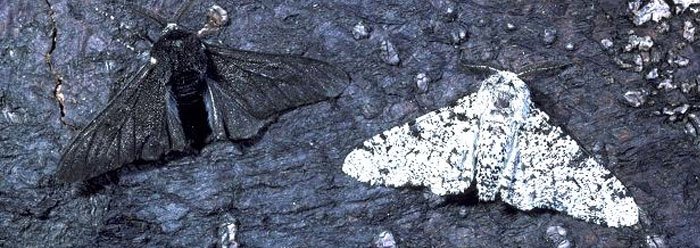
Why do peppered moths tend to be the same color as the trees on which they live?
1
The coloring goes along with tasting like the tree. 
2
It keeps the moth the same temperature as the tree. 
3
It makes the moths faster than the birds
4
It makes the moths harder to see.

75

Multiple Choice

Adaptation is

1

the process that makes an organism look better

2

the process in which weak organisms are killed off

3

the process in which an organism becomes better adapted to its environment

4

the process in which oxygen is transformed into glucose

76

Multiple Choice

Adapatation are caused by

1

natural selection

2

harsh environmets

3

unique organisms

4

evolution

77

Multiple Choice

Adapatations lead to...

1

Unique organisms

2

Evolution

3

Mutations

4

Stronger Organsisms

78

Multiple Choice

Which would be an adaptation useful in a cold biome?

1

Being of a smaller size

2

Being active during the cooler times of day

3

Blubber/fat

4

Having dark fur

79

Multiple Choice

Plants in a cold biome such as the tundra will most likely have which adaptation?

1

have broad extended leaves

2

seasonaly loose their leaves

3

thin branches

4

Thin needle like leaves

80

Multiple Choice

Which of the following best shows the process of evolution?

1

A lizard's color becomes brown as it sits on a log

2

A bear goes into hibernation.

3

A bear goes into hibernation.

4

A population of mosquitoes develops resistance to a pesticide.

81

Multiple Choice

What is the best definition of animal adaptation?

1

Changes to an animal's diet.

2

Characteristics that help animals survive.

3

Characteristics of an animal's habitat.

4

Skills learned in order to hunt.

82

Multiple Choice

The example of the peppered (brown) moths living near English industrial cities demonstrates that
1
A change in an environment can result in the evolution of species living there
2
Evolution occurs so slowly that is it not possible to determine that it has happened in less than a million years
3
The environment near these cities has always favored dark colored moths

83

Multiple Choice

Why are advantageous traits more likely to be passed onto offspring?
1
Because they are more likely to survive and reproduce.
2
Because they come from dominant alleles.
3
Because they come from recessive alleles.
4
Because the trait is an acquired phenotype.

84

Multiple Choice

Any variation that can help a species survive in a given environment is called...
1
an adapatation
2
a characteristic
3
a homologous structure
4
a vestigial structure

85

Multiple Choice

Which organisms are most likely to survive?
1
the best adapted
2
the fastest
3
the strongest
4
the most domesticated (tamed)

86

Multiple Choice

Question image
The trees these moths used to live on were white, but have been covered in soot from coal factories. Which moth will be more successful in this environment?
1
Dark moth
2
Light moth
3
Both will be equally successful
4
Neither will be successful

87

Multiple Choice

Why did the number of white peppered moths decrease so much by 1895?

1

they did not blend in with the trees and birds ate them

2

they tasted better to the birds than the black moths

3

they were easier to reach on the trees

4

white moths flew away to find better trees to blend in with

88

Multiple Choice

Do organisms "decide" to evolve and change?

1

Yes, they know they need to change to survive

2

No, their population changes because of natural selection

89

Multiple Choice

The theory of evolution by natural selection means that what is changing over time?
1
The inherited traits of a population.
2
The acquired traits of a population.
3
Hair color and eye color
4
Attractive features.

90

Multiple Choice

Natural selection is the process by which
1
change occurs in the genetic characteristics of individuals that live together in an environment from one generation to another
2
organisms with traits well-suited to their environment reproduce at a greater rate than less well-adapted organisms in the same environment
3
use and disuse of a characteristic leads to evolutionary change
4
baseball players pass on the trait for strong arm muscles to children

91

Multiple Choice

In natural selection, the selective agent is the
1
humans
2
mutations
3
breeders
4
environment

92

Multiple Choice

Which process results in greater genetic diversity in offspring?

1

photosynthesis

2

recombination of DNA

3

crossing over during mitosis

4

inbreeding

93

Multiple Choice

How did the Galapagos finches evolve into different species?

1

Adapting to different environments on different islands

2

Interbreeding with other bird species

3

Random genetic mutations

4

Migration from the mainland

94

Explanation Slide...

The correct choice illustrates natural selection, as red fox pups born white have a survival advantage in snowy environments, leading to a higher likelihood of passing on their genes.

95

Multiple Choice

Question image

Which statement below is true of mutations

1

are intentional, not random, changes in the genetic code

2

are never passed on to successive generations

3

will never improve an organisms chances of survival

4

will increase the genetic diversity of in a population if it is beneficial

96

Explanation Slide...

Mutations can introduce new traits into a population. If these mutations are beneficial, they can enhance survival and reproduction, thus increasing genetic diversity.

97

Multiple Choice

Question image

Which statement below would not indicate a bottleneck occurred in a population?

1

there are reduced population numbers

2

there is lower genetic diversity

3

species are better suited to adapt to future environmental changes

4

extinction may occur

98

Explanation Slide...

The statement 'species are better suited to adapt to future environmental changes' does not indicate a bottleneck, as bottlenecks typically lead to reduced adaptability, not improved resilience to change.

99

Multiple Choice

Question image

If a few individuals from a mainland population colonize an island, which of these is true?

1

the genotypes of the island represent all the genotypes in the mainland population

2

the genetic diversity on the island will be much greater than the genetic diversity on the mainland

3

the island population will be much more susceptible to a disturbance

4

the island population will be less susceptible to extinction

100

Explanation Slide...

The island population, derived from a small number of colonizers, will have limited genetic diversity. This makes it more vulnerable to disturbances, as it lacks the genetic variation needed to adapt to changes or threats.

101

Multiple Choice

Question image

This mechanism of evolution occurs when individuals migrate between populations.

1

Extinction

2

Gene flow

3

Genetic drift

4

Natural Selection

102

Explanation Slide...

Gene flow is the mechanism of evolution that occurs when individuals migrate between populations, allowing for the exchange of genetic material. This process can increase genetic diversity within populations.

103

Multiple Choice

Question image

One day a group of scientists collected a small group of brown anole lizards from a large group of the lizards.  Then they placed this small group of lizards on an island that had no brown anole lizards on it.  What is this an example of?

1

Bottleneck Effect

2

Hardy Effect

3

Founder Effect

4

None of These

104

Explanation Slide...

This scenario illustrates the Founder Effect, where a small group of individuals is isolated from a larger population, leading to reduced genetic diversity and different evolutionary paths on the new island.

105

Multiple Choice

Question image

Zone where a stable healthy population survives

1

zone of intolerance

2

optimal range

3

zone of physiological stress

4

limiting factors

106

Explanation Slide...

The optimal range is the zone where environmental conditions are ideal for a species, allowing for a stable and healthy population. In contrast, the other options indicate stress or limitations that hinder survival.

107

Multiple Choice

Question image

Zone where organisms cannot survive

1

zone of intolerance

2

range of tolerance

3

optimal range

4

zone of physiological stress

108

Explanation Slide...

The 'zone of intolerance' refers to areas where environmental conditions are so extreme that organisms cannot survive. This contrasts with the 'range of tolerance' and 'optimal range', where organisms can thrive.

109

Multiple Choice

Factors in an ecosystem that can control the population of organisms. Can be both biotic and abiotic

1

range of tolerance

2

limiting factors

3

zone of intolerance

4

optimal range

110

Explanation Slide...

Limiting factors are conditions in an ecosystem that restrict the growth, abundance, or distribution of organisms. They can be biotic (like predators) or abiotic (like temperature), making them the correct choice.

111

Multiple Choice

Question image

This zone has few organisms where the temperature is either too low or too high. The old and weak fish die in this zone.

1

Zone of Physiological Stress

2

Zone of Intolerance

3

Zone of Optimum Range

4

Zone of Invalidity

112

Explanation Slide...

The 'Zone of Physiological Stress' is characterized by extreme temperatures that limit organism survival, leading to the death of old and weak fish. This aligns with the description provided in the question.

113

Multiple Choice

Question image

Ecosystem services

1

are the processes by which life-supporting resources are produced.

2

indicate the current state of the environment.

3

are valued for their beauty.

4

refer to abiotic features of the environment.

114

Explanation Slide...

Ecosystem services are essential processes that produce life-supporting resources, such as clean air, water, and food. This definition highlights their critical role in maintaining ecological balance and supporting human life.

115

Multiple Choice

Which is NOT one of the five ecosystem services that are used to calculate instrumental value?

1

species biodiversity

2

provisioning

3

support systems

4

regulating services

116

Explanation Slide...

Species biodiversity is not one of the five ecosystem services used to calculate instrumental value. The correct services include resilience, support systems, and regulating services.

117

Multiple Choice

Question image

Which of the following is true about island biodiversity?

1

Small islands are more likely to have more immigrated species

2

Small islands have higher biodiversity than large islands

3

Small islands have more resources and as a result may have more species

4

Small islands have fewer resources and as a result may have fewer species

118

Explanation Slide...

Small islands typically have fewer resources, such as limited land area and habitat diversity, which can lead to lower species richness compared to larger islands. Thus, they may support fewer species.

119

Multiple Choice

Question image

What prediction is correct about island biogeography?

1

Smaller islands have more resources, and will have more biodiversity

2

Larger islands have more space for resources, but will have less biodiversity due to competition

3

Islands closer to mainland will be more diverse due to more successful dispersal.

4

There is more diversity far away from the mainland because some species fly.

120

Explanation Slide...

Islands closer to the mainland have higher biodiversity because they receive more species through successful dispersal. This contrasts with more isolated islands, which may have fewer species due to limited dispersal opportunities.

121

Multiple Choice

Question image

Evolved resistance to a pesticide is an example of

1

a nonadaptive process

2

a bottleneck effect

3

natural selection

4

artificial selection

122

Explanation Slide...

Evolved resistance to a pesticide occurs when certain individuals survive and reproduce due to human use of pesticides, making it a case of artificial selection, where humans influence the survival of specific traits.

123

Multiple Choice

Question image

What is the ecological range of tolerance ?

1

The range of conditions that an organism can endure before injury or death

2

The range of conditions that humans can tolerate in their environment

3

The range of conditions that specialists can tolerate in their habitat

4

The range of conditions that generalists can tolerate in their habitat

124

Explanation Slide...

The ecological range of tolerance refers to the range of environmental conditions an organism can withstand before experiencing harm or death. This definition aligns with the correct answer, emphasizing the organism's limits.

125

Multiple Choice

Which of the following is an example of a natural disturbance ?

1

Forest fires caused by human activities

2

Tornados

3

Fish kills from pollution

4

Coral reef bleaching

126

Explanation Slide...

Tornados are natural disturbances caused by atmospheric conditions, unlike the other options which are influenced by human activities or environmental stressors. Therefore, tornados are the correct example of a natural disturbance.

127

Multiple Choice

Question image

What is the main reason for the natural changes in Earth's climate over geologic time?

1

Human activities

2

Changes in the earth's orbit and tilt

3

Natural disturbances

4

Genetic biodiversity

128

Explanation Slide...

The main reason for natural climate changes over geologic time is due to variations in the Earth's orbit and tilt, known as Milankovitch cycles, which affect solar radiation distribution and climate patterns.

129

Multiple Choice

What is the term used for species that thrive in a narrow range of environmental conditions?

1

Generalists

2

Specialists

3

Ecological tolerance

4

Genetic biodiversity

130

Explanation Slide...

The term 'specialists' refers to species that thrive in a narrow range of environmental conditions, unlike 'generalists' which can adapt to a wider range. Therefore, 'specialists' is the correct answer.

131

Multiple Choice

Which of the following is an example of a periodic natural disturbance?

1

Hurricanes

2

Earthquakes

3

Dry-wet seasons

4

Volcanoes

132

Explanation Slide...

Dry-wet seasons are periodic natural disturbances that occur regularly, influencing ecosystems. In contrast, hurricanes, earthquakes, and volcanoes are irregular events, making dry-wet seasons the correct choice.

133

Multiple Choice

Which of the following is an example of an episodic natural disturbance?

1

Hurricanes

2

Earthquakes

3

Dry-wet seasons

4

Volcanoes

134

Explanation Slide...

Hurricanes are episodic natural disturbances as they occur suddenly and have a specific duration. In contrast, earthquakes and volcanoes are also episodic, but hurricanes are more commonly recognized as such due to their predictable seasonality.

135

Multiple Choice

Which of the following is an example of a random natural disturbance?

1

Hurricanes

2

Forest fire

3

Dry-wet seasons

4

Volcanoes

136

Explanation Slide...

Volcanoes are considered random natural disturbances because their eruptions occur unpredictably, unlike hurricanes and forest fires, which can be influenced by specific conditions. Dry-wet seasons are regular patterns, not random.

137

Multiple Choice

Question image

What is the main factor that makes populations of salmon more resistant to disturbances?

1

Genetic biodiversity

2

Human activities

3

Changes in the earth's climate

4

Natural disturbances

138

Explanation Slide...

Genetic biodiversity enhances the resilience of salmon populations by providing a wider range of traits that can help them adapt to environmental changes and disturbances, making them more robust against threats.

139

Match

Match the following

Mutation

Gene Flow

Genetic Drift

Bottle Neck

Founders Effect

Change in DNA sequence

Increases genetic variation

Usually decreases genetic variation

Population gets smaller (Natural Disaster)

Starting a new population

140

Multiple Choice

Question image

Natural Climate Change can cause which of the following?

1

ice ages

2

pollution

3

asteroid strikes

4

volcanoes

141

Explanation Slide...

Natural climate change can lead to significant shifts in Earth's climate, including the onset of ice ages. Unlike pollution, asteroid strikes, and volcanoes, which are not direct results of climate change, ice ages are a clear consequence.

142

Multiple Choice

What is a period of very low precipitation?

1

famine

2

flood

3

drought

4

desert

143

Explanation Slide...

A drought is defined as a prolonged period of very low precipitation, leading to water shortages. Unlike famine or flood, which relate to food scarcity or excess water, drought specifically refers to insufficient rainfall.

144

Multiple Choice

Question image

Which type of natural disturbance usually takes the longest to recover from?

1

periodic

2

episodic

3

random

4

endemic

145

Explanation Slide...

Random disturbances, such as earthquakes or volcanic eruptions, can cause extensive and unpredictable damage, leading to longer recovery times compared to periodic, episodic, or endemic disturbances.

146

Multiple Choice

Question image

Which fish would survive best in a pond that is kept at 23 degrees Celsius?

1

Brook Trout

2

Carp

147

Explanation Slide...

Carp are more tolerant of warmer water temperatures, thriving in conditions around 23 degrees Celsius. In contrast, Brook Trout prefer cooler waters, making them less suited for survival in this temperature.

148

Multiple Choice

Question image

Which fish would survive best in a pond that is kept at 16 degrees Celsius?

1

Brook Trout

2

Carp

149

Explanation Slide...

Brook Trout thrive in cooler waters, ideally between 10-16 degrees Celsius. At 16 degrees, they can survive well, while Carp prefer warmer temperatures, making Brook Trout the better choice for this pond.

150

Multiple Choice

Organisms can tolerate any range of temperature, salinity, and pH. True or false?

1

True

2

False

151

Explanation Slide...

False. Organisms have specific ranges of tolerance for temperature, salinity, and pH. Extreme conditions can be harmful or lethal, indicating that not all organisms can tolerate any range.

152

Multiple Choice

A population's zone of intolerance is...

1

the range where organisms survive, grow, and reproduce

2

the range where organisms survive, but experience lack of growth and decreased activity

3

the range where organisms will die

153

Explanation Slide...

A population's zone of intolerance refers to conditions that are too extreme for survival. Therefore, the correct answer is the range where organisms will die, as they cannot withstand such unfavorable conditions.

154

Multiple Choice

Question image

A trait or change in lifestyle that helps a plant or animal survive in its environment

1

adaptation

2

evolution

3

homologous

4

vestigial

155

Explanation Slide...

An adaptation is a trait or change in lifestyle that enhances a plant or animal's ability to survive in its environment. It is crucial for survival, unlike evolution, which refers to broader changes over time.

156

Multiple Choice

Question image

Genetic diversity is increased through:

1

genetic drift

2

gene flow

157

Explanation Slide...

Gene flow increases genetic diversity by introducing new alleles from one population to another, enhancing variation. In contrast, genetic drift can reduce diversity by causing allele frequencies to change randomly.

158

Labelling

Choose the RANDOM processes that can cause evolution

Drag labels to their correct position on the image

Common ancestry

Bottleneck Effect
Founder's Effect

Gene flow

Mutation

Genetic drift

Homology

159

Dropdown

Question image
Humans have changed physically over millions of years. ​
is a change in a species over the span on many generations.

160

Explanation Slide...

Evolution is the process of change in a species over many generations, making it the correct choice. Natural selection and genetic drift are mechanisms of evolution, while fitness refers to an organism's ability to survive and reproduce.

161

Drag and Drop

Evolution works on ​​
NOT on ​
Drag these tiles and drop them in the correct blank above
Species
Individuals

162

Explanation Slide...

Evolution operates on species over generations, leading to changes in populations. Individuals do not evolve; they may adapt, but evolution is a process that affects entire species over time.

163

Match

Each scenario represents a different mechanism for evolution; match them:

light colored snails on the beach survive better because their predators cannot see them

humans created varieties of crop foods from wild plants

The O blood type exists due to the lack of a protein that people with type A or B would have.

An elk dies from a broken leg & cannot pass on its genes

natural selection

artificial selection

mutation

genetic drift

164

Match

Match the mechanism of evolution to the correct visual representation.

Gene flow (migration)

Bottleneck effect (genetic drift)

Founder effect (genetic drift)

165

Drag and Drop

Evolution is the ​
in the ​
of a ​
in a ​
over ​
Drag these tiles and drop them in the correct blank above

frequency

change

trait

population

time

mutation

species

a year

166

Explanation Slide...

Evolution is the change in the frequency of a trait in a population over time. This highlights how traits can vary and adapt within species across generations.

167

Match

Match the following

Grey wolves migrate to red wolf population and interbreed

Mosquitos become resistant to DDT pesticide

Reindeer are transferred to an isolated island

Flooding in Louisiana causes raccoon population to decrease by 40%

Sea Otters are hunted to near extinction and have little genetic variation in their populations

Gene Flow

Natural Selection

Founder Effect

Genetic Drift

Bottleneck Effect

168

Multiple Choice

Which of the following is an example of a generalist species?

1

Pandas

2

Koalas

3

Racoons

4

Orchids

169

Multiple Choice

Which of the following is an example of a natural disturbance?

1

Forest fires caused by human activities

2

Tornados

3

Fish kills from pollution

4

Coral reef bleaching

170

Multiple Choice

What is the main reason for the natural changes in Earth's climate over geologic time?

1

Human activities

2

Changes in the earth's orbit and tilt

3

Natural disturbances

4

Genetic biodiversity

171

Multiple Choice

What is the term used for species that thrive in a narrow range of environmental conditions?

1

Generalists

2

Specialists

3

Ecological tolerance

4

Genetic biodiversity

172

Multiple Choice

Which of the following is an example of a periodic natural disturbance?

1

Hurricanes

2

Earthquakes

3

Dry-wet seasons

4

Volcanoes

173

Multiple Choice

Which of the following is an example of an episodic natural disturbance?

1

Hurricanes

2

Earthquakes

3

Dry-wet seasons

4

Volcanoes

174

Multiple Choice

Which of the following is an example of a random natural disturbance?

1

Hurricanes

2

Forest fire

3

Dry-wet seasons

4

Volcanoes

175

Multiple Choice

What is the main factor that makes populations of salmon more resistant to disturbances?

1

Genetic biodiversity

2

Human activities

3

Changes in the earth's climate

4

Natural disturbances

176

Multiple Choice

Natural Climate Change can cause which of the following?

1

ice ages

2

pollution

3

asteroid strikes

4

volcanoes

177

Multiple Choice

What is a period of very low precipitation?

1

famine

2

flood

3

drought

4

desert

178

Multiple Choice

Which type of natural disturbance usually takes the longest to recover from?

1

periodic

2

episodic

3

random

4

endemic

179

Drag and Drop

A​
species like ​
​ are more like to have a higher​
to ​
than a ​
species.
Drag these tiles and drop them in the correct blank above
generalist
tolerance
rats
natural disturbances
specialist
predator
habitat
invasive species
migration
koalas

​Unit 2- AP Environmental Science Review

By JASMINE RODRIGUEZ

Show answer

Auto Play

Slide 1 / 179

SLIDE