

All About Canada | Government and Economy

Presentation
•
Social Studies
•
6th Grade - University
•
Practice Problem
•
Medium

Heather Watkins
Used 6+ times
FREE Resource
6 Slides • 4 Questions
1
All About Canada | Government and Economy

2
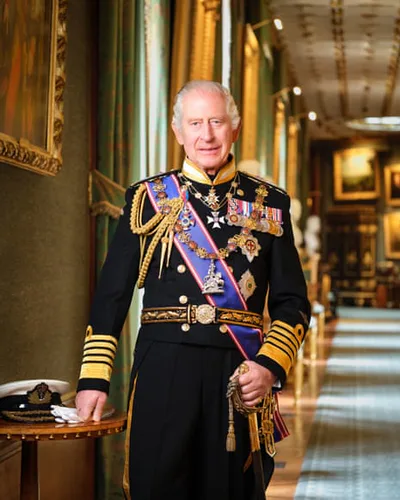
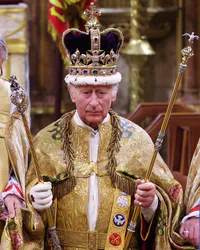
Officially, Canada's government is defined as a "Constitutional Monarchy". Because despite being an independent nation, Canada still has close government ties with the United Kingdom.
Technically, the King of England is the head of state in Canada. He does play some role in Canada's government, but still has little real power.
The Kimg appoints a "Governor General" too look out for the UK's interest in Canada.
Canada's Government Today: Part 1 | What is a "Constitutional Monarchy"?
Today, Canada's government functions mostly like a parliamentary democracy.
Citizens are able to vote for members of parliament at age 18 in only one legislative house of Canada's parliament known as the House of Commons.
The Governor General (appointed by the King of England), appoints all members to the other house of Canada's parliament known as the "Senate".
Then, the majority political party in both the Senate and House of Commons appoint the Prime Minister.
3
Multiple Choice

Who is the head of state in Canada but has no real power in government?
governor
monarch
prime minister
4
Canada's Government Today: Part 2 | What about the rights of the provinces, territories, and citizens?
Governments of the provinces in Canada today function much like states do in the US.
Provinces are free to set their own taxes, manage natural resources, and run hospitals, schools, and prisons.
Each province has its own legislature and leader, known as a "Premier". However, the Queen also has a representative in each province known as a "Lieutenant Governor".
As for the territories, they are not free to do any of the things a province can. Even though they have local governments, they are ultimately managed by Canada's parliament.
Today both the federal and province governments afford Canadians many rights written out in their Constitution known as the "Charter of Rights".
Canadians can vote (at 18), they have freedom of speech, assembly, media, religion, also the right to communicate with the government in French or English!


5
Multiple Choice
How do provinces function in Canada?
Much like states do in the US. They set taxes and manage infrastructure hospitals, natural resources, school, prisons, etc.
Provinces have little power of their own. Most provinces are under the direct control of Canada's parliament.
Canada's provinces actually have more power than Canada's Parliament. They determine who is Prime Minister and select the Governor General as well.
Each province in Canada functions differently. Some have lots of power and independence, while others depend on Parliament for nearly everything.
6
How does Canada's economy compare to the world, the US, Latin American, and European countries we've studied?
Canadians have a high standard of living. Their GDP per capita is $47,000.
Canada's economy is about 79% free market and 21% command. Canada emphasizes technology and industry like the US.
However, 90% of Canada's land is government owned and healthcare is also regulated through the government and taxes. (In the US citizens buy private insurance, and 90% of the land is owned by the people).
COUNTRY | GDP PER CAPITA (2019) |
|---|---|
United States | $57,000 |
Australia | $49,000 |
Germany | $48,000 |
CANADA | $47,000 |
United Kingdom | $42,000 |
Russia | $26,000 |
Mexico | $19,000 |
(World Average) | $17,000 |
Brazil | $15,000 |
Cuba | $12,000 |


7
Multiple Choice
Which of the following accurately describes Canada's economy?
-79% market/21% command.
-Government owns most of the land.
-Roughly $47,000 GDP per capita.
-21% market/79% command.
-Citizens own most of the land.
-Roughly $20,000 GDP per capita.
-50% market/50% command.
-Land ownership is split between government and citizens.
-Roughly $57,000 GDP per capita.
-67% market/33% command.
-United Kingdom controls Canada's land.
-Roughly $35,000 GDP per capita.
8
How is Canada growing their GDP and economy?
Canada's biggest GDP growth factor is by far natural resources. Many Canadians work in the natural resource sector. Canada ranks in the top-5 for worldwide forestry land, metals, minerals, fresh water, fish, and wheat, and other resources.
Canada also invests in human capital by pouring billions of tax dollars into tech/trade schools, universities, and public schools.
Canada has also begun investing in capital goods by improving factories and machinery to become more efficient and environmentally clean.
Lastly, Canada is friendly to entrepreneurs. On average it takes only 2 days to open a business.

9
What are Canada's specializations?
As you know, Canada specializes most in a wide variety of natural resources, particularly wood and fish. But there Canada specializes in other things as well to try and diversify their economy.
Thanks to the country's investment in human capital, Canada is also the world's third largest producer in video-game software.
Ubisoft (pictured bottom-right) is the biggest video-game producer in the world. Ubisoft has most of its offices in Canada and France.


10
Multiple Choice
Which of the following is NOT one of Canada's top specializations today?
Fishing
Fruits and Vegetables
Timber/Lumber
Video Games
All About Canada | Government and Economy
Show answer
Auto Play
Slide 1 / 10
SLIDE
Popular Resources on Wayground

11 questions
Hallway & Bathroom Expectations

Quiz
•
6th - 8th Grade
10 questions
HCS SCI 03 Summer School Assessment 2
Quiz
•
3rd Grade
11 questions
Home Scope
Quiz
•
7th - 8th Grade
12 questions
2026 TAP Technology in the Classroom
Presentation
•
Professional Development
15 questions
HCS SCI 05 Summer School Assessment 2 Review
Quiz
•
5th Grade
15 questions
HCS SCI 04 Summer School Review 2
Quiz
•
4th Grade
59 questions
Geometry Unit 3 Review
Quiz
•
9th - 12th Grade
14 questions
FAST ELA READING SMAPLE TEST MATERIALS

Passage
•
3rd Grade