

Module 2 Unit 1 Lesson 2 slides

Presentation
•
English
•
3rd Grade
•
Practice Problem
•
Easy
+45
Standards-aligned

Allison LaSure
Used 1+ times
FREE Resource
29 Slides • 28 Questions
1
2
Multiple Choice
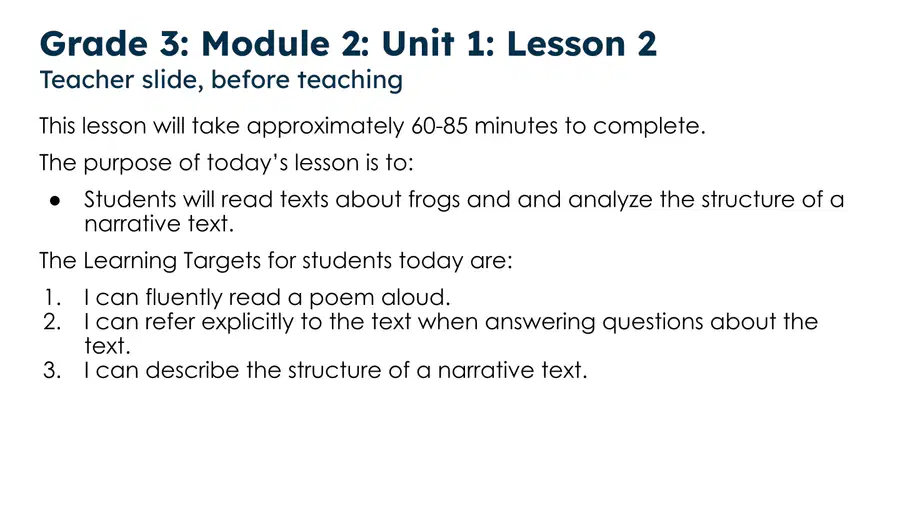
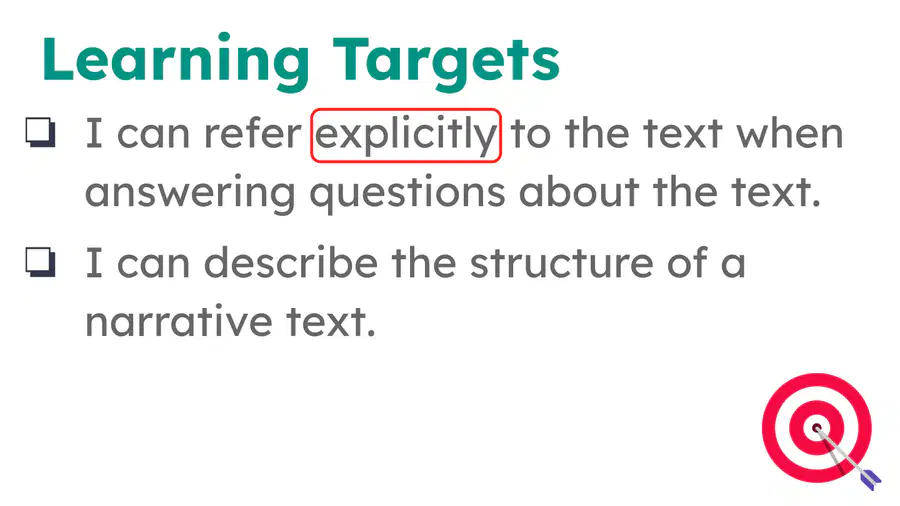
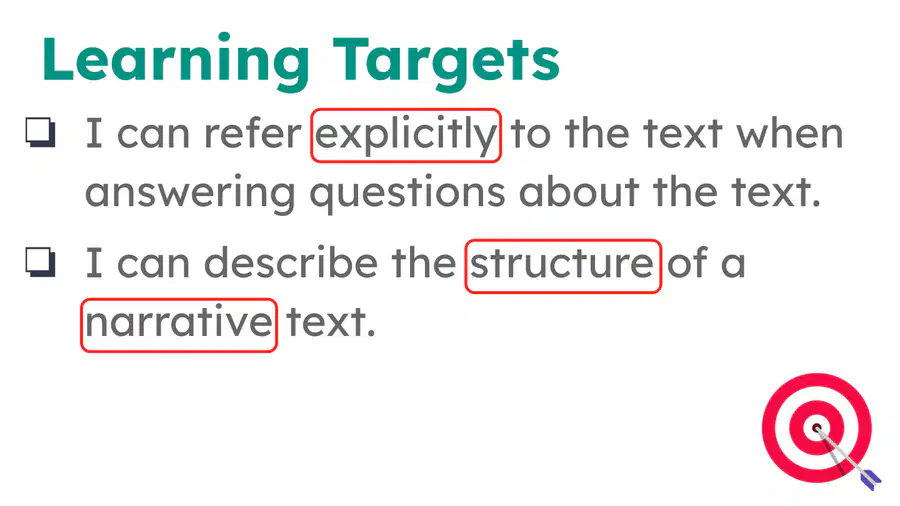
Which of the following is a learning target mentioned in the slides?
I can write a poem about frogs.
I can describe the structure of a narrative text.
I can draw a picture of a polliwog.
I can memorize the dictionary.
3
Open Ended
Why is it important to refer explicitly to the text when answering questions about it?
4
5
Open Ended
How do you think being able to refer explicitly to a text can help you when answering questions about it?
6
Multiple Choice
Why is it important to understand the structure of narrative texts?
It helps us enjoy stories more deeply and understand their meaning.
It makes reading faster but less meaningful.
It is only useful for writing, not reading.
It is not important for young readers.
7
8
9
Multiple Select
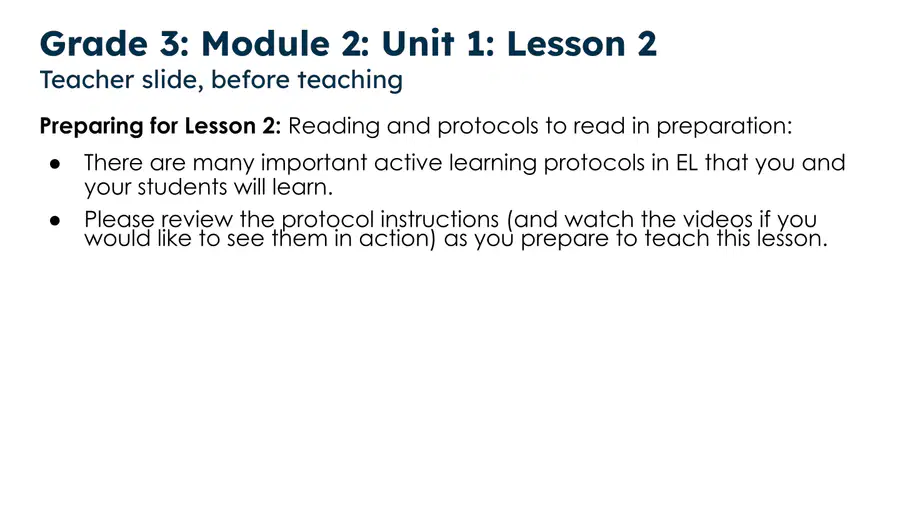
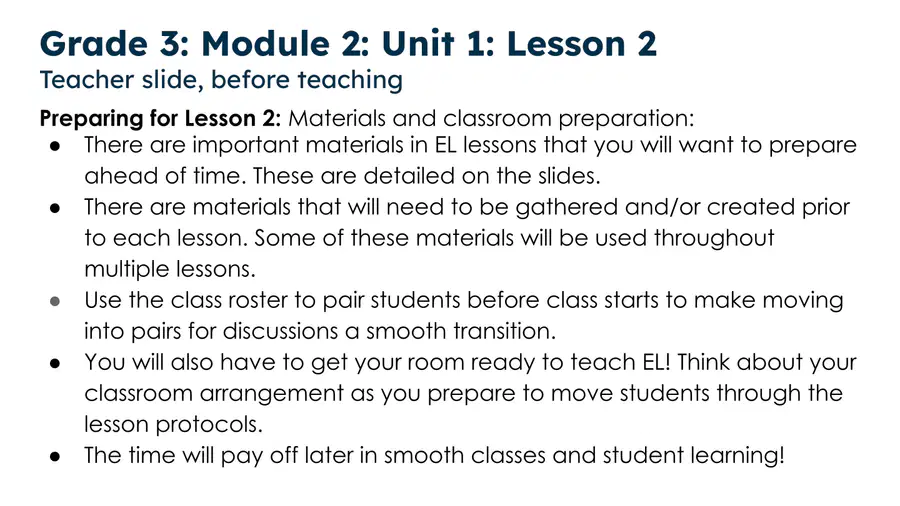
Select all the actions that are recommended for preparing for Lesson 2 in EL.
Review protocol instructions
Gather and create materials ahead of time
Pair students using the class roster
Skip classroom arrangement
10
Multiple Choice
Why is it important to use the class roster to pair students before class starts, as suggested in the preparation for Lesson 2?
To make moving into pairs for discussions a smooth transition
To make the class longer
To avoid using any materials
To skip classroom arrangement
11
Multiple Choice
Which of the following is an important step to prepare for Lesson 2 in EL according to the teacher slides?
Reviewing protocol instructions and watching videos
Skipping the preparation of materials
Ignoring the class roster
Not arranging the classroom
12
13
14
Fill in the Blanks
Type answer...
15
16
17
Multiple Choice
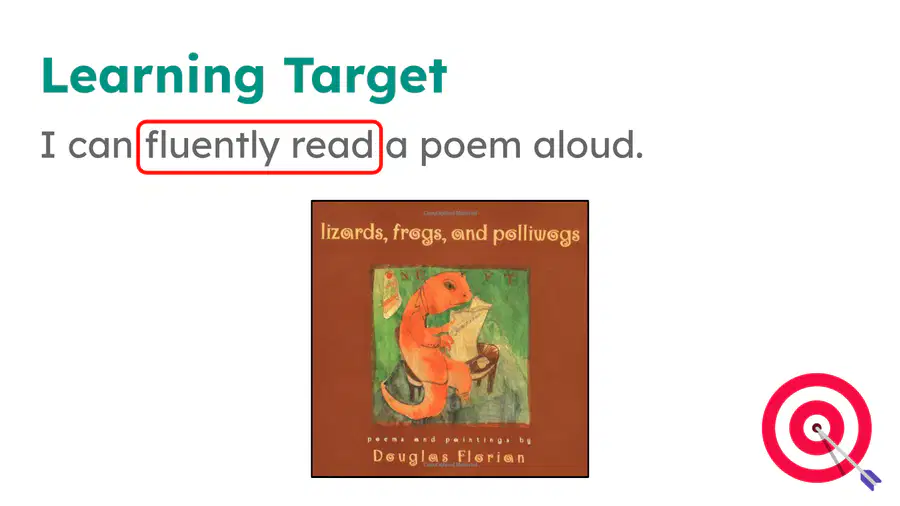
Which book is shown as an example for the learning target 'I can fluently read a poem aloud'?
Lizards, frogs, and polliwogs
The Polliwogs
Why the Frog Has a Long Tongue
Frogs and Lizards
18
Open Ended
What does it mean to read a poem fluently?
19

20

21
Multiple Choice
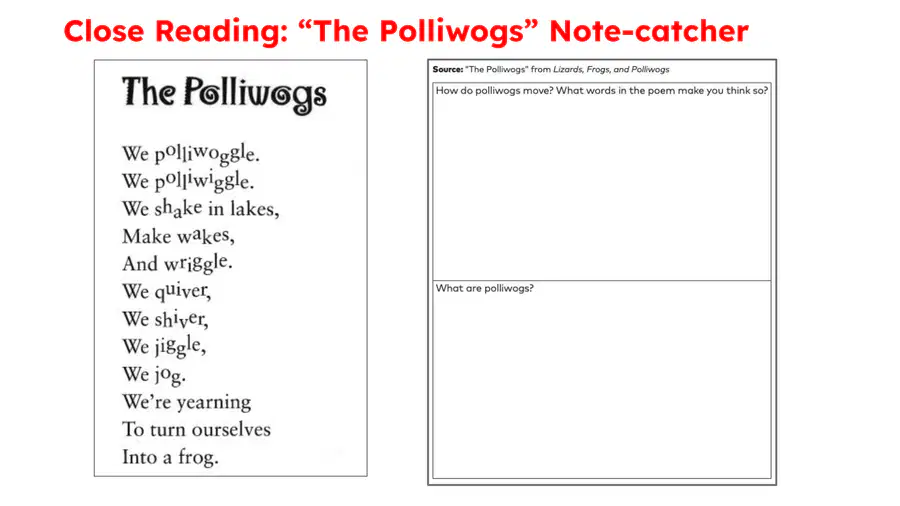
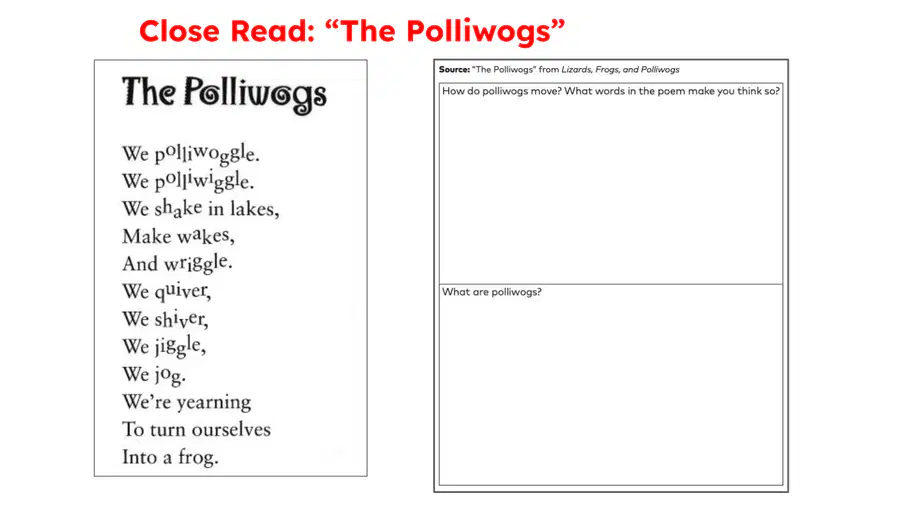
According to the poem 'The Polliwogs', what are polliwogs yearning to become?
A lizard
A frog
A fish
A turtle
22
23
24
25
Multiple Select
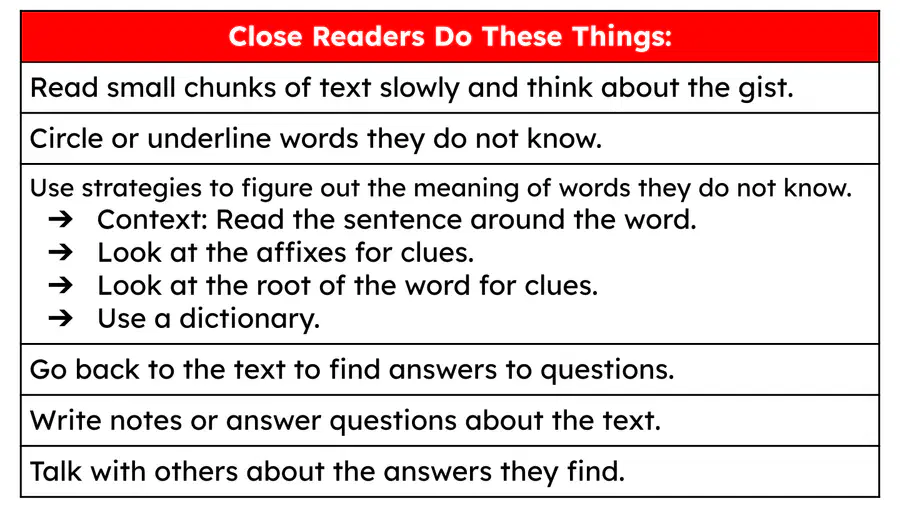
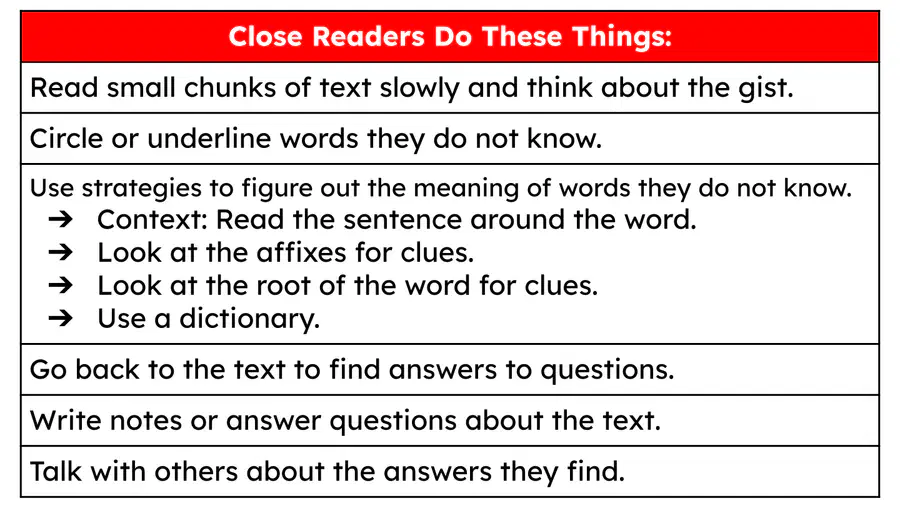
What strategies do close readers use to figure out the meaning of unknown words? Select all that apply.
Read the sentence around the word for context.
Look at the affixes for clues.
Guess the meaning based on the first letter.
Use a dictionary.
26
27
Fill in the Blanks
Type answer...
28
Open Ended
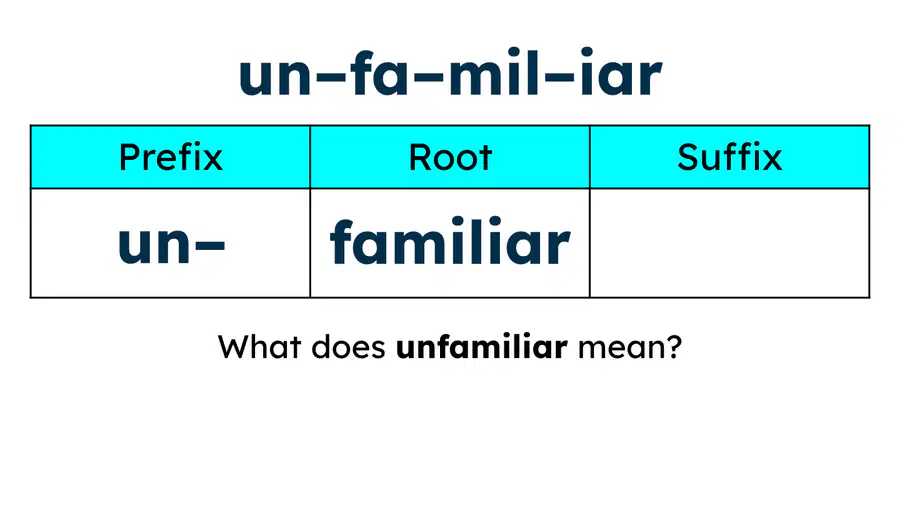
Explain how understanding the structure of a word, such as prefix, root, and suffix, can help you determine its meaning.
29
30
31
32
Multiple Choice
Which of the following is NOT a strategy close readers use to figure out the meaning of unknown words?
Read the sentence around the word for context.
Look at the affixes for clues.
Ignore the word and keep reading.
Use a dictionary.
33
34
Multiple Select
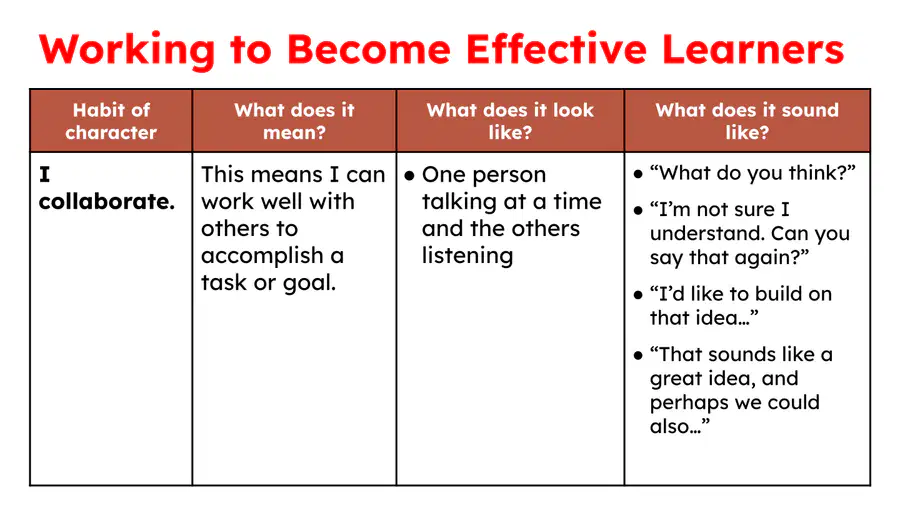
Which of the following actions are examples of collaborating effectively?
One person talking at a time and others listening
Everyone talking at once
Ignoring others' ideas
Building on others' ideas
35
Multiple Choice
What does it mean to collaborate as an effective learner?
To work alone on tasks.
To work well with others to accomplish a task or goal.
To talk over others during group work.
To ignore others' ideas.
36
37
Fill in the Blanks
Type answer...
38
Open Ended
What are polliwogs?
39
Open Ended
How do polliwogs move? What words in the poem make you think so?
40
41
42
43
Open Ended
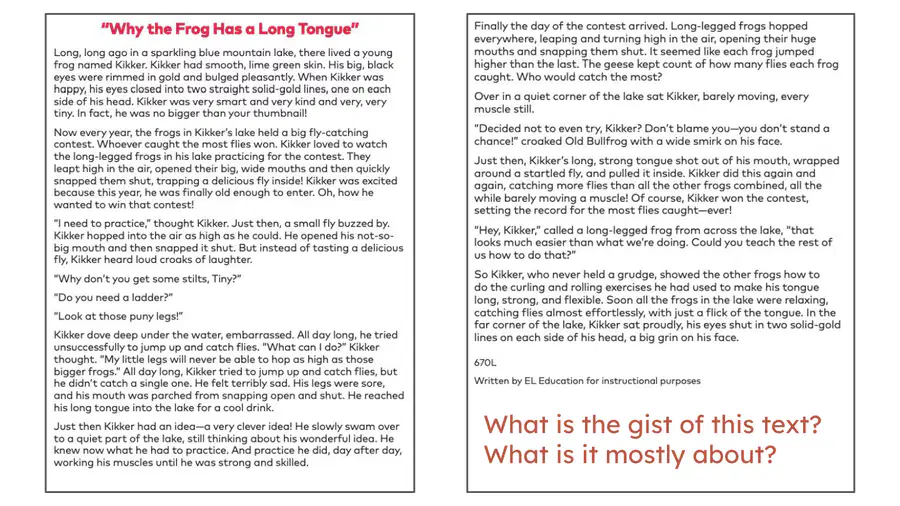
According to the story, what problem did Kikker face and how did he solve it?
44
Multiple Choice
What is the gist of the text 'Why the Frog Has a Long Tongue'?
It explains why frogs live in lakes.
It tells a story about how a frog got a long tongue to catch flies.
It describes the life cycle of a frog.
It is about a frog who wanted to be friends with other animals.
45
46
Fill in the Blanks
Type answer...
47
Multiple Select
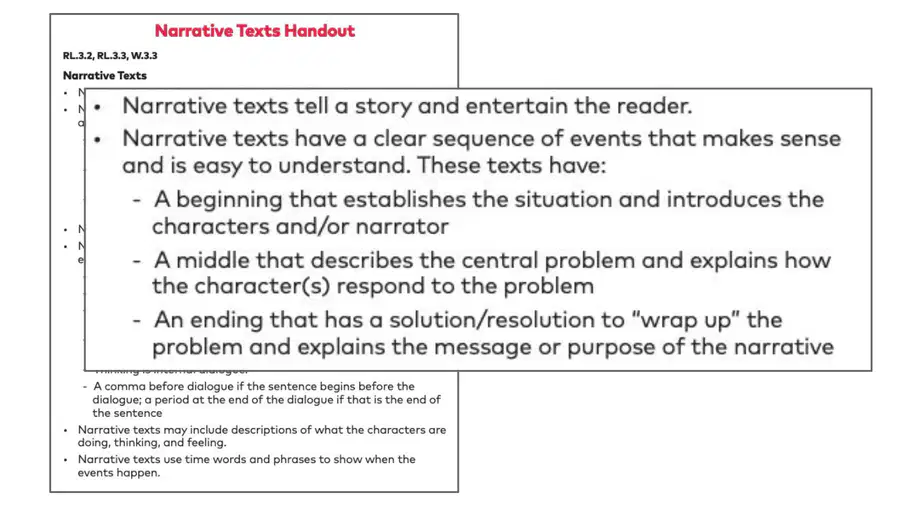
Which of the following are features of narrative texts?
They tell a story and entertain the reader.
They have a clear sequence of events.
They only provide factual information.
They include a beginning, middle, and end.
48
49
Multiple Choice
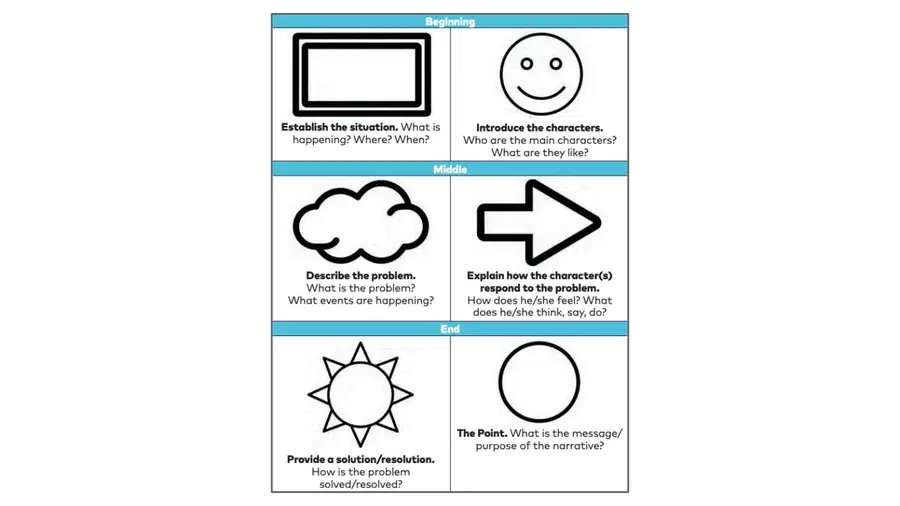
What is the purpose of the ending in a narrative text?
To introduce new characters
To describe the setting
To provide a solution or resolution to the problem
To list facts about the topic
50

51
52
Open Ended
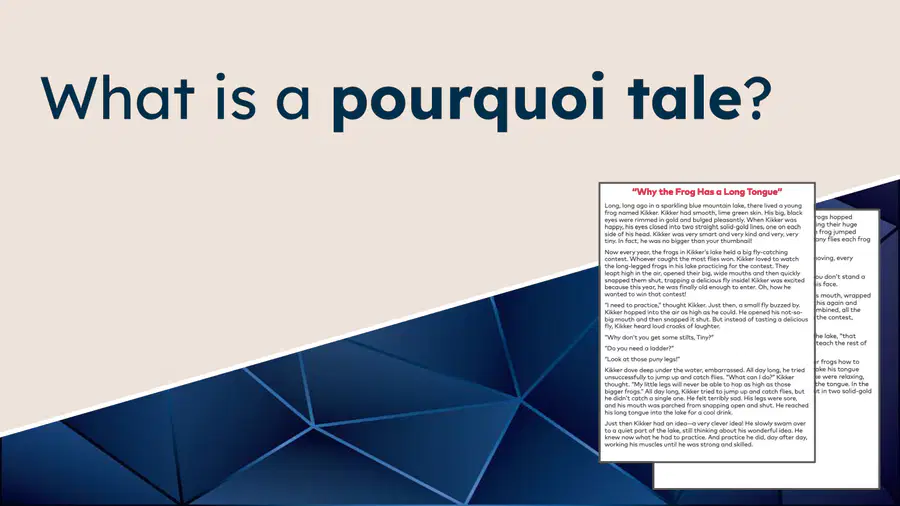
What is a pourquoi tale?
53
54
55
56
Open Ended
How confident do you feel about describing the structure of a narrative text after today's lesson?
57
Multiple Choice
What are the main learning targets for today's lesson on narrative texts?
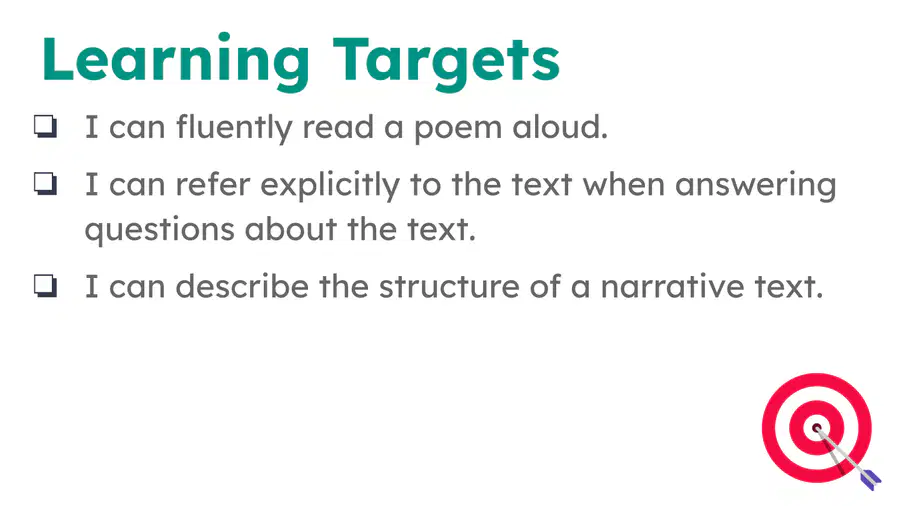
Reading a poem aloud, referring to the text when answering questions, and describing the structure of a narrative text.
Writing a story, drawing a frog, and memorizing a poem.
Learning about different types of poetry, writing a summary, and acting out a story.
Reading about frogs, writing a poem, and answering math questions.
Show answer
Auto Play
Slide 1 / 57
SLIDE
Similar Resources on Wayground

52 questions
NIK 2 - Review Unit 2&3
Presentation
•
2nd - 3rd Grade
52 questions
Bài thuyết trình chưa có tiêu đề
Presentation
•
3rd Grade
50 questions
Adverbs
Presentation
•
3rd Grade
49 questions
1.14 Lesson
Presentation
•
3rd Grade
51 questions
English Year 4 - Chapter 1 (Where are you From?) #1
Presentation
•
4th Grade
55 questions
Edward Tulane Chapters 9-11 & Vocab
Presentation
•
3rd - 5th Grade
48 questions
5.15_3.6E_G3RLA_Chevalier
Presentation
•
3rd Grade
55 questions
Reciprocal Reading - What do Parents do?
Presentation
•
4th Grade
Popular Resources on Wayground
20 questions
Math Review

Quiz
•
3rd Grade
15 questions
Fast food
Quiz
•
7th Grade
20 questions
Context Clues
Quiz
•
6th Grade
20 questions
Inferences
Quiz
•
4th Grade
19 questions
Classifying Quadrilaterals
Quiz
•
3rd Grade
20 questions
Figurative Language Review
Quiz
•
6th Grade
20 questions
Equivalent Fractions
Quiz
•
3rd Grade
10 questions
Identify Fractions, Mixed Numbers & Improper Fractions
Quiz
•
3rd - 4th Grade
Discover more resources for English
41 questions
Reading Practice - Comprehension
Quiz
•
3rd Grade
20 questions
Reading & Test Testing Strategies
Quiz
•
3rd - 5th Grade
20 questions
Prefix and Suffix Review
Quiz
•
3rd - 5th Grade
20 questions
3rd Grade Grammar Review
Quiz
•
3rd Grade
10 questions
Reading Comprehension
Quiz
•
3rd - 5th Grade
12 questions
Context Clues Vocabulary
Quiz
•
3rd Grade
20 questions
Memorial Day 3rd-5th
Quiz
•
3rd Grade
20 questions
Main Idea Quiz
Quiz
•
3rd - 4th Grade