Search Header Logo
U5 Ecology Biomes

U5 Ecology Biomes

Assessment

Presentation

Biology

9th - 12th Grade

Practice Problem

Hard

Created by

Christopher Powers

FREE Resource

10 Slides • 17 Questions

1

media

2

media

3

Multiple Choice

Why is it important to understand the roles of biotic and abiotic factors in biomes?

1

To identify endangered species

2

To predict weather patterns

3

To understand ecosystem health and balance

4

To measure soil fertility

4

media

5

Multiple Choice

Which of the following is NOT an example of a biome?

1

Desert

2

Rainforest

3

Mountain

4

Savanna

6

media

7

Multiple Select

Which of the following are abiotic factors?

1

Sunlight

2

Animals

3

Water

4

Fungi

8

Hotspot

click all hotspots that are biotic.

9

media

10

Fill in the Blanks

Type answer...

11

media

12

Open Ended

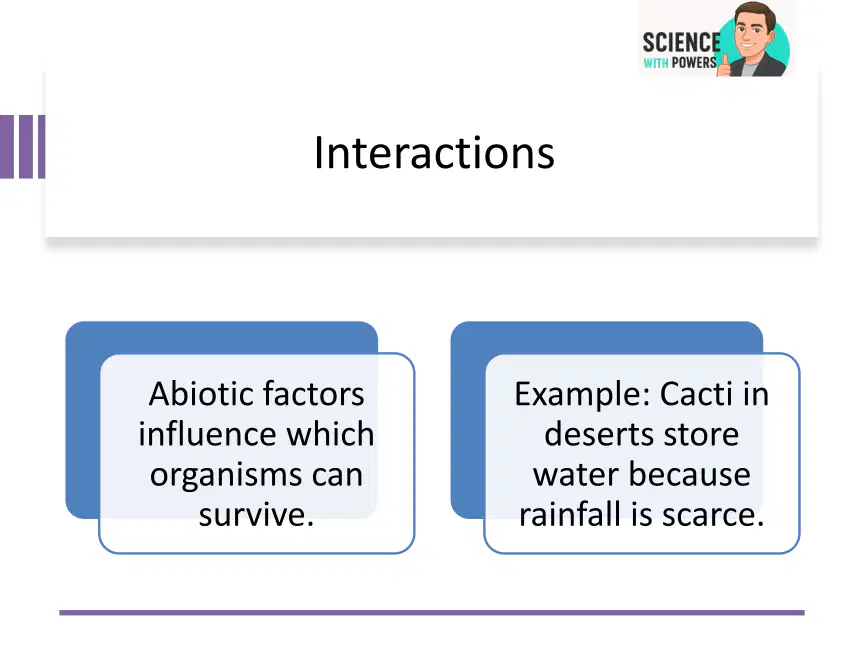
Explain how abiotic and biotic factors interact to influence which organisms can survive in a biome.

13

media

14

Multiple Choice

Which adaptation helps cacti survive in the desert biome?

1

Storing water

2

Growing tall leaves

3

Living in groups

4

Producing sweet fruit

15

media

16

Hotspot

Select the abiotic factors

17

Match

Question image

Match the following terms with the best description.

Some abiotic factors in an ecosystem

Some biotic factors in an ecosystem

Breaks down waste and dead organisms

Every food chain begins with this

Makes their own food

Rock, water, sun, wind

Plants, animals, microbes

decomposers

sun

producer

18

Open Ended

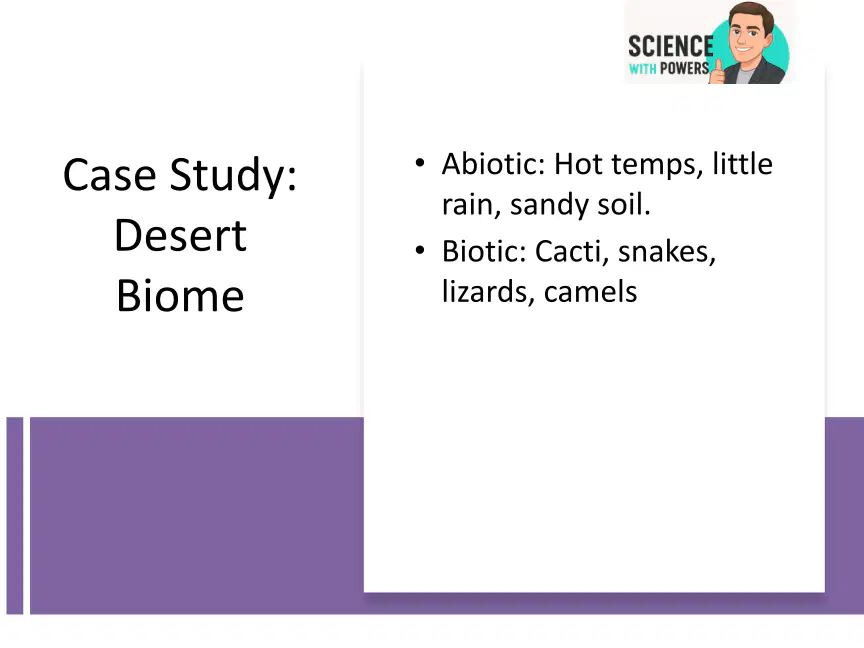
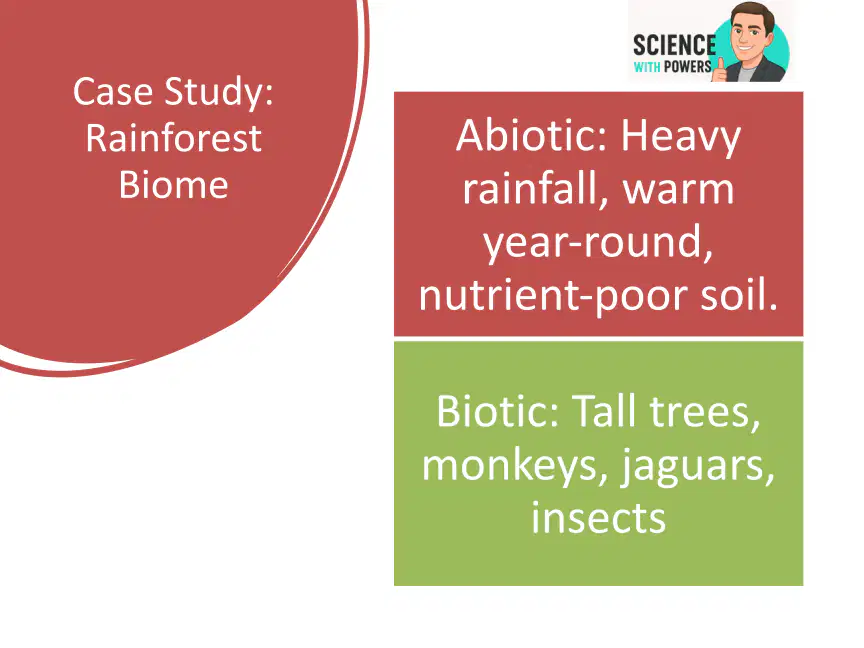
Compare the abiotic and biotic factors of the desert biome and the rainforest biome.

19

media

20

Multiple Select

Which of the following human activities can alter the balance between abiotic and biotic factors in an ecosystem?

1

Deforestation

2

Recycling

3

Pollution

4

Climate change

21

media

22

Multiple Choice

What is the difference between biotic and abiotic factors?

1
Biotic factors are non-living elements; abiotic factors are living organisms.
2
Biotic factors include climate and soil; abiotic factors include plants and animals.
3
Biotic factors are chemical substances; abiotic factors are biological processes.
4
Biotic factors are living organisms; abiotic factors are non-living elements.

23

Multiple Choice

What is one question you still have about biomes or the interaction of biotic and abiotic factors?

1
How do plants adapt to different soil types in a biome?
2
How do changes in temperature and precipitation patterns influence species diversity in different biomes?
3
What role do decomposers play in the food chain of a biome?
4
What are the main types of biomes found on Earth?

24

Multiple Choice

Question image
All these organisms share the same
1
Biome
2
Population
3
Community
4
Habitat

25

Match

Question image

Match the following

Deciduous Forest

Tropical Rainforest

Coniferous Forest

Grassland

Tundra

Forest with trees that shed their leaves

High rainfall and dense vegetation

Forest with cone-bearing trees

Wide open spaces with grass and few trees

Cold, treeless, and low-growing vegetation

26

Multiple Choice

Question image

Plants that grow well in the shade formed by the rainforest canopy

1

Sun based plants

2
Palm trees, succulents, and daffodils
3

Understory Pants

4
Tulips, roses, and dandelions

27

Multiple Choice

Question image

Grassland located closer to the equator, can receive up to 120 cm of rain per year.

1

Grasslands

2

Savanna

3

Deserts

4

Tundra

media

Show answer

Auto Play

Slide 1 / 27

SLIDE