Search Header Logo
Plant Transport Systems

Plant Transport Systems

Assessment

Presentation

Biology

9th - 11th Grade

Medium

NGSS
MS-LS1-2, MS-LS2-1, MS-LS1-7

+1

Standards-aligned

Created by

Nicola Duffield

Used 325+ times

FREE Resource

11 Slides • 10 Questions

1

Plant Transport Systems

Xylem and Phloem

Slide image

2

Do It Now

1. Name a specialised plant cell.

2. Which cells in a leaf contain air spaces?

3. Which cells in a leaf contain lots of chloroplasts?

4. Which gas moves into a leaf?

5. Which green chemical is found in chloroplasts?


Stretch It: How are leaves adapted for maximum light absorption?


Stretch It further?: Explain what happens to a plant if you put it in a dark cupboard?

3

Do It Now

1. Xylem, phloem, palisade, guard cell

2. Spongy mesophyll cells

3. Palisade cells

4. Carbon dioxide

5. Chlorophyll


Stretch It: Leaves are wide and flat to absorb lots of light, they have veins to carry water and sugars, lots of chloroplasts, and have stomata for gas exchange


Stretch It further?: There is no light for the plant to absorb so no photosynthesis occurs and the plant will eventually die

4

Learning Objectives

  • Identify the transport vessels in a plant

  • Describe the structure of xylem and phloem

  • Explain how these vessels are adapted to their jobs

5

Multiple Choice

What type of cells are found in plant roots to help absorb water and minerals?

1

Palisade cells

2

Spongy mesophyll cells

3

Stomata

4

Root hair cells

6

Fill in the Blank

Type answer...

7

Multiple Choice

What process allows water to be absorbed into roots?

1

Diffusion

2

Osmosis

3

Active Transport

8

Multiple Choice

What process allows mineral ions to be absorbed into the plant roots?

1

Diffusion

2

Osmosis

3

Active Transport

9

Root Hair Cells

Root hair cells are found in the roots of plants.

They provide a large surface area for the absorption of water and minerals

Water moves by osmosis from a high concentration in the soil to a low concentration in the cell.

Minerals move by active transport as there are few minerals in the soil but lots in the cell.

Slide image

10

Xylem

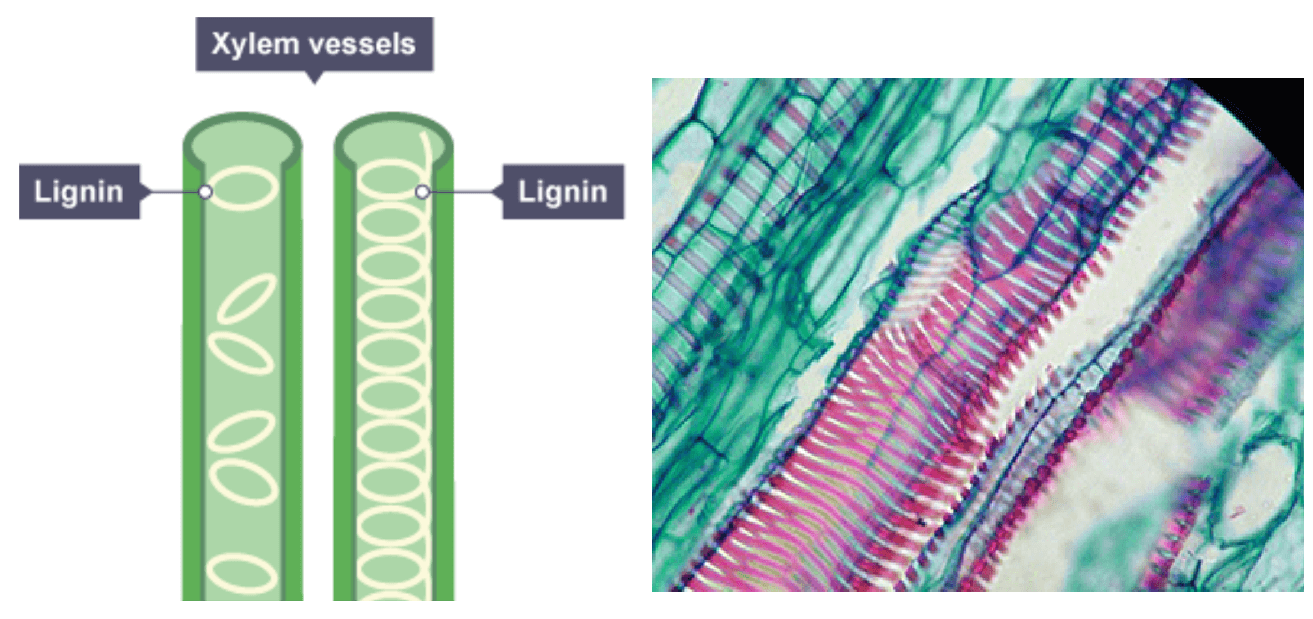
Water and minerals move from the roots to the leaves in xylem vessels.

Xylem vessels are long, thin, hollow tubes made of dead cells.

The cell walls contain lignin, which kills the cell but makes them strong and waterproof.

Water can only move up the xylem vessels.

11

Slide image

Xylem Vessels

12

Phloem

Phloem vessels carry sugars (in sap) from the leaves to the rest of the plant.

They are living cells, joined end to end with gaps between them called sieve plates to allow some substances through

They have very few organelles but have a companion cell next to them to provide them with energy.

Phloem vessels transport sugars in both up and down a plant.

13

Slide image

Phloem Vessels

14

Multiple Choice

Which vessel contains lignin?

1

Phloem

2

Xylem

15

Multiple Choice

Which vessel transports substances in both directions?

1

Xylem

2

Phloem

16

Multiple Choice

What do mitochondria do?

1

Produce proteins

2

Release energy

3

Control movement of substances

4

Support the cell

17

Multiple Select

Which organelles would you find in a plant cell but not in an animal cell?

1

Mitochondria

2

Cell wall

3

Vacuole

4

Cell membrane

5

Nucleus

18

Fill in the Blank

Type answer...

19

Slide image


20

Slide image

21

Poll

How do we feel about this topic so far?

I understand!

I think I get it

I need to go through this again

Help!

Plant Transport Systems

Xylem and Phloem

Slide image

Show answer

Auto Play

Slide 1 / 21

SLIDE