

Conductivity of Solutions CER

Presentation
•
Chemistry
•
9th - 12th Grade
•
Medium
+2
Standards-aligned

Robert Johnson
Used 4+ times
FREE Resource
18 Slides • 42 Questions
1
By Robert Johnson


2
All liquids make electricity more dangerous.

3
Valence Electrons
Bohr models
Ions
Octet Rule
oxidation number
Lewis Dot Structures
conductor
insulator
ionic compound
electrolyte
molecular compound
molecular acid
4
The group number = number of valence electrons (1-18, ignore the 1, so Group 17 elements have 7
Exceptions: Transition Metals and Lanthanide and Actinide Series.
Located in the energy level farthest from the nucleus of an atom.

5
Multiple Choice
6
Multiple Choice
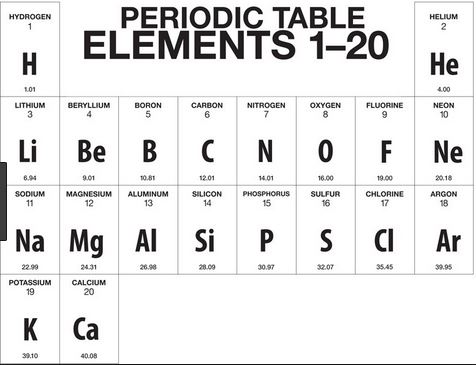
How many valence electrons does Hydrogen Have?
1 Valence electron
2 Valence electron
3 Valence electron
4 Valence electron
5 Valence electron
7
Multiple Choice
How many valence electrons does Helium Have?
1 Valence electron
2 Valence electron
3 Valence electron
4 Valence electron
5 Valence electron
8
Multiple Choice
How many valence electrons does Nitrogen Have?
1 Valence electron
2 Valence electron
3 Valence electron
4 Valence electron
5 Valence electron
9
Multiple Choice
How many valence electrons does Silicon Have?
1 Valence electron
2 Valence electron
3 Valence electron
4 Valence electron
5 Valence electron
10
Multiple Choice
How many valence electrons does Lithium Have?
1 Valence electron
2 Valence electron
3 Valence electron
4 Valence electron
5 Valence electron
11

Model that helps determine the number of valence electrons for an atom, along with how many energy levels the atom uses.
Bohr Model
12
Multiple Choice
What is a valence electron?
Electrons in the first energy shell
Electrons in the second energy shell
Electrons in the outer shell
Total number of electrons
13
Multiple Choice

How many valence electrons?
2
3
4
5
14
Multiple Choice

How many valence electrons?
2
3
4
5
15
Cations (+) and Anion (-)
Atoms that gain or lose electrons are called ions.
They are involved in chemical bonds.

16
Multiple Choice
17
Multiple Choice
What is a positive ion called?
anion
cation
isotope
covalent
18
Multiple Choice
19
Multiple Choice
Na has 1 valence electron. It will have a charge of _______
+1
+2
-1
-2
20
Atoms will exchange valence electrons in an attempts to have a full outer energy level.
8 valence electrons produce stable atoms.
The exchange of valence electrons results in bonding, and the creation of compounds.
Examples Nitrogen (N3-) =5 valence electrons, Group 15 or 5A
Needs 3 more valence electrons to get to 8.
The superscript is negative because electrons are negatively charged.

21
Multiple Choice
How many electrons would a Nitrogen ion gain/lose? If it has 5 valence electrons.
lose 5
gain 5
lose 3
gain 3
22
Multiple Choice
What is the ion formed from Sulfur? If it has 6 valence electrons.
S+2
S-2
S+6
S-6
23
Multiple Choice
How many electrons would a Calcium ion gain/lose? If it has 2 valence electrons.
lose 1
gain 1
lose 2
gain 2
24
Multiple Choice
A Bromine ion gains 1 electron, which of the following is the correct symbol for a Bromine ion?
Br-1
Br+1
Br+7
Br-7
25
Multiple Choice
If an element has 3 valence electrons, what charge will likely form on its ion ?
+3
+5
-3
-5
26
Key Takeaways:
Metals tend to form cations, Nonmetals tend to form anions.
Metals: oxidation number is the number of valence electrons with a + written after.
Nonmetals: oxidation number is 8- number of valence electrons with a - written after.
Na+ = Na 1+
Cl- = Cl 1-
Ca 2+
O 2-
N 3-
Al 3+
27
Multiple Choice
What is the oxidation number for elements in Group 2?
+1
+2
-1
-2
28
Multiple Choice
What is the oxidation number of elements in Group 18?
-1
-2
0
+1
29
Multiple Choice
What is the oxidation number of elements in the Halogen family (Group 17)?
+1
+2
-1
-2
30
The element symbol and dots are used to represent valence electrons for an atom.

This is a useful tool to model chemical bonding
Don't double up the electrons until you have at least 1 dot in the top, bottom, right , and left. Check out C!
31
Metals act as conductors of heat and electricity
Nonmetals act as insulators of heat and electricity
Metals tend to give up valence electrons to form ionic bonds.
Nonmetals tend to give up valence electrons to form ionic bonds.
Nonmetals will "share" electrons with other nonmetals to form covalent or molecular bonds.
32
Multiple Choice
What is the main difference between conductors and insulators?
Conductors allow the flow of electricity, while insulators do not.
Conductors are always solid, while insulators can be liquid or gas.
Conductors are always transparent, while insulators are always opaque.
Conductors allow the flow of water, while insulators do not.
33
Multiple Choice
Give an example of a good conductor of electricity.
Copper
Glass
Wood
Plastic
34
Multiple Choice
Explain why metals are good conductors of electricity.
Metals have no free electrons to conduct electricity.
Metals are good conductors because they are insulators.
Metals have a high resistance to the flow of electricity.
Metals have free electrons that can move easily through the material, allowing electricity to flow.
35
Multiple Choice
What is the role of electrons in conducting materials?
They facilitate the flow of electric current.
They repel electric current
They have no effect on electric current
They absorb electric current
36
Multiple Choice
Why do insulators not conduct electricity?
Tightly bound electrons
Low resistance
Loose electrons
High conductivity
37
Multiple Choice
How does the structure of conductors differ from insulators?
Conductors have a structure that blocks the flow of electrons.
Insulators have a structure that allows the flow of electrons.
Conductors have a structure that allows the flow of electrons.
Conductors and insulators have the same structure.
38
Multiple Choice
What are some common uses of conductors in everyday life?
Electrical wiring, metal utensils, metal pipes
Glassware, ceramic plates, cardboard boxes
Plastic utensils, rubber pipes, wooden furniture
Paper clips, rubber bands, plastic bags
39
Multiple Choice
Explain the concept of resistance in conductors and insulators.
Resistance is the measure of temperature in conductors and insulators.
Resistance is the measure of opposition to the flow of electric current in conductors and insulators.
Resistance is the measure of attraction to the flow of electric current in conductors and insulators.
Resistance is the measure of speed of electric current in conductors and insulators.
40
Metals transfer valence electrons to nonmetals
Octet Rule comes into play here.
The transfer of valence electrons create a chemical bonds
41
Multiple Choice
42
Multiple Choice
43
Multiple Choice
44
Multiple Choice
45
Free moving ions that carry electric charges
Ionic compounds dissociate when dropped in solution (NaCl) -> Na+ Cl-
Acids and bases go through ionization with the solvent they are place in.
46
Multiple Choice
A substance that conducts an electrical current when dissolved in water is called
catalyst
metalloid
electrolyte
nonelectrolyte
47
Multiple Choice
Which of the following is not an electrolyte?
KBr
LiOH
RbNO3
CH4
48
aka Covalent Compound
Share valence electrons to create strong bonds.
Can be single, double, or triple bonds
Single bond = sigma bond ( stronger than ionic)
Double bond = 1 sigma bond + 1 pi bond (mid)
Triple bond = 1 sigma + 2 pi bonds (Very strong)
49
Multiple Choice
True or False: a molecular compound is the same thing as a covalent compound.
50
Multiple Choice
Covalent or molecular compounds involve the sharing of _______ to be considered chemical bonds.
electrons
valence electrons
51
Match
Match the following:
single bond
double bond
triple bond
sigma bond
1 sigma bond + 1 pi bond
1 sigma bond + 2 pi bonds
sigma bond
1 sigma bond + 1 pi bond
1 sigma bond + 2 pi bonds
52
Reorder
Reorder the following based on bond strong weakest to highest
Ionic bond
single covalent bond
double bond
triple bond
53
The strength of an acid determines the amount of ionization that occurs
Due to the high concentration of mobile ions, solutions of strong acids are strong electrolytes and are excellent conductors of electricity.
The low concentration of charge-carrying ions means that weak acid solutions are weak electrolytes and are poor conductors of electricity compared to strong acids.
54
Multiple Choice
Why are strong acids good conductors?
55
Multiple Choice
Why are weak acids poor conductors of electricity?
56
Multiple Choice
Compare and Contrast dissociation with ionization.
57


58


59

Ionic Compounds have measure and often high conductivity
Some acids have very high conductivity, some have zero.
The true molecular compounds have zero conductivity
60
Little to no ions in solution are generated when the conductivity is zero.
Weak acids generate few ions in solution.
Molecular compounds have zero conductivity.
Ionic compounds have high conductivity.
Small to large amounts of ions are generated in solution when conductivity is high.
conductive solution allow electricity to pass through making it more dangerous for us than if it were a pure ionic compound.
In theory, a pure molecular solution with 0 conductivity would not conduct electricity .
WARNING: this is beyond dangerous to attempt because a pure ionic solution is difficult to make, and the dangers of electricity are real.
By Robert Johnson
Show answer
Auto Play
Slide 1 / 60
SLIDE
Similar Resources on Wayground

60 questions
AC2.3.0 Ionic and Metallic Properties
Presentation
•
9th - 12th Grade
57 questions
U2, L3:Radioactivity and Nuclear Energy
Presentation
•
9th - 12th Grade
53 questions
Minerals
Presentation
•
9th - 12th Grade
53 questions
Minerals
Presentation
•
9th - 12th Grade
51 questions
Chemistry 1-4: Electrons in Atoms
Presentation
•
10th - 12th Grade
51 questions
Acids and Bases
Presentation
•
9th - 12th Grade
52 questions
Unit 5 Test Review
Presentation
•
10th - 12th Grade
50 questions
Unit 2 Review
Presentation
•
10th - 12th Grade
Popular Resources on Wayground
10 questions
How much do you know about our Portrait of an Eagle?

Quiz
•
10th Grade
10 questions
Fast Food Slogans
Quiz
•
6th - 8th Grade
21 questions
Continents and Oceans
Quiz
•
6th Grade
20 questions
Parts of Speech
Quiz
•
5th Grade
16 questions
Subject & Predicate
Quiz
•
5th Grade
25 questions
Multiplication Facts
Quiz
•
5th Grade
12 questions
Map Skills
Quiz
•
3rd Grade
22 questions
Continents and Oceans
Quiz
•
5th Grade
Discover more resources for Chemistry
20 questions
Metric Conversions
Quiz
•
11th Grade
20 questions
electron configurations and orbital notation
Quiz
•
9th - 12th Grade
26 questions
Atomic Structure, Isotopes and Ions
Quiz
•
10th Grade
20 questions
Periodic Trends
Quiz
•
10th Grade
5 questions
Atomic Theory Intro Video

Interactive video
•
10th Grade
20 questions
COUNTING ATOMS
Quiz
•
10th Grade
20 questions
Practice: E-Con, Orbital Notation, Noble Gas Notation
Quiz
•
10th Grade
11 questions
Balancing Chemical Equations
Presentation
•
9th Grade