
The Periodic Table

Presentation
•
Chemistry
•
9th Grade
•
Practice Problem
•
Easy
Standards-aligned

LILIANA RAMIREZ
Used 3+ times
FREE Resource
26 Slides • 23 Questions
1
2
Open Ended
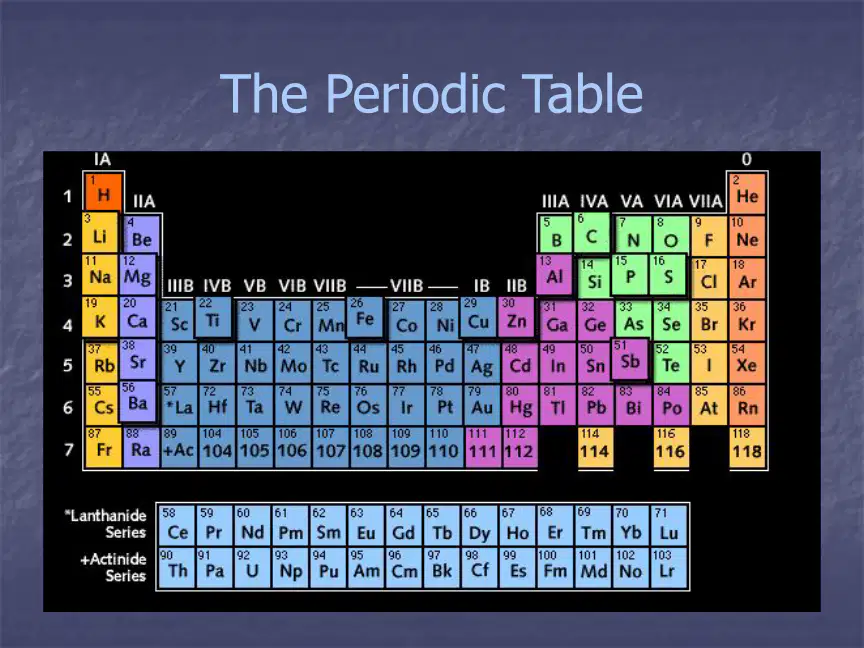
Why is the periodic table considered an important tool in chemistry?
3
4
Multiple Choice
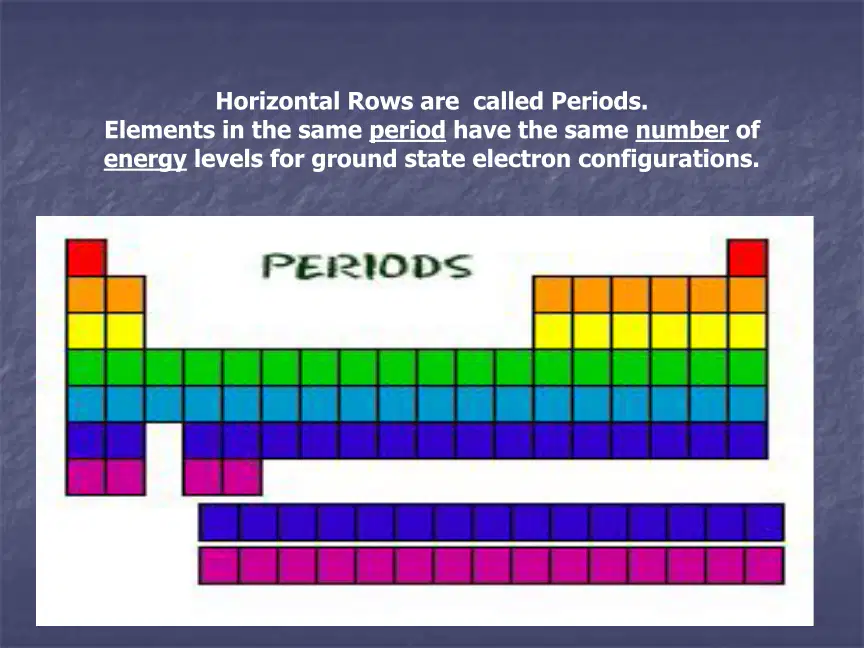
What do all elements in the same period of the periodic table have in common?
They have the same number of protons
They have the same number of energy levels
They have similar chemical properties
They have the same atomic mass
5
6
Multiple Choice
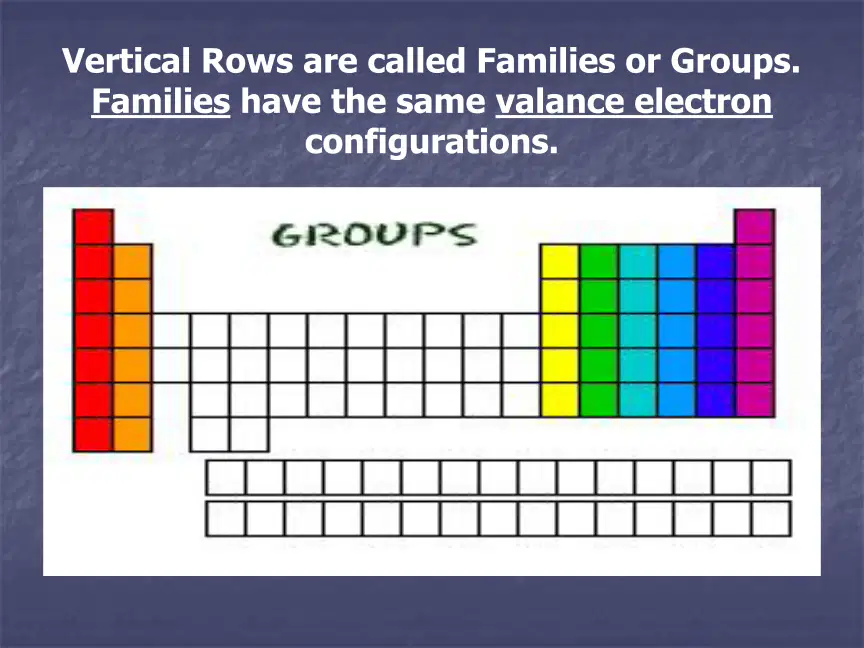
What is the main characteristic that members of the same group (family) in the periodic table share?
They have the same number of valence electrons.
They have the same atomic number.
They are all metals.
They are all gases.
7
8
9
Multiple Choice
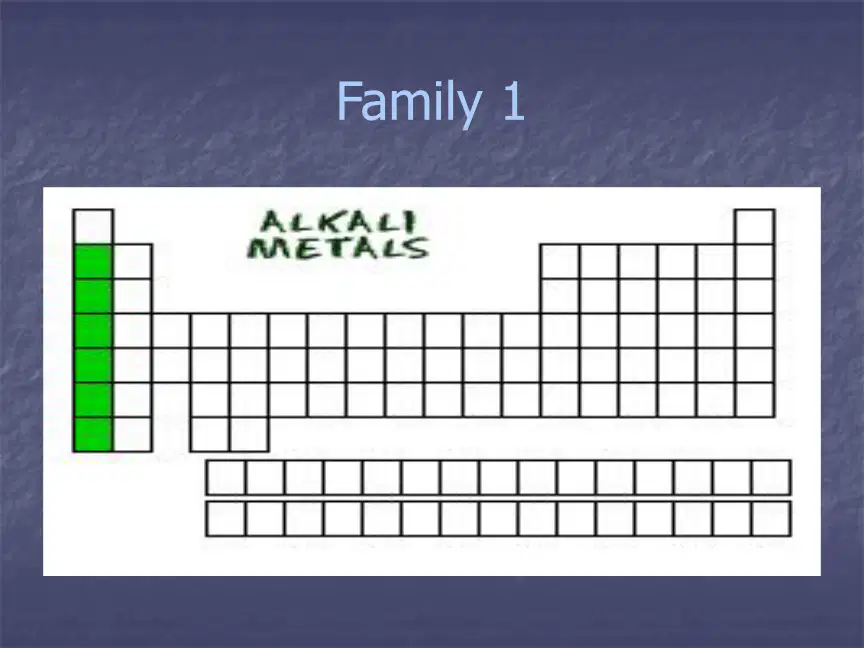
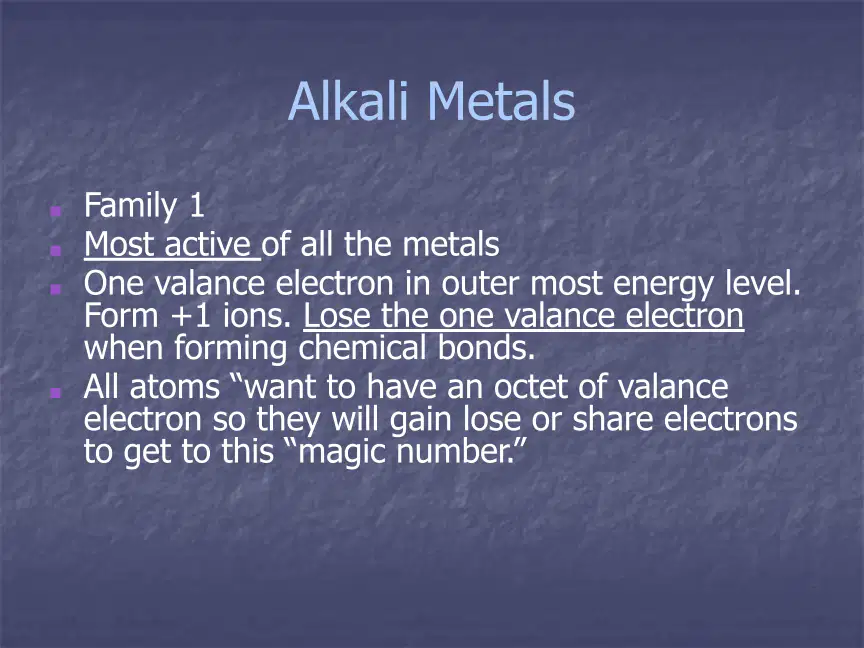
Which of the following statements about alkali metals is correct?
They are the most active metals and have one valence electron.
They are the least active metals and have two valence electrons.
They form -1 ions when bonding.
They gain electrons to form bonds.
10
11
12
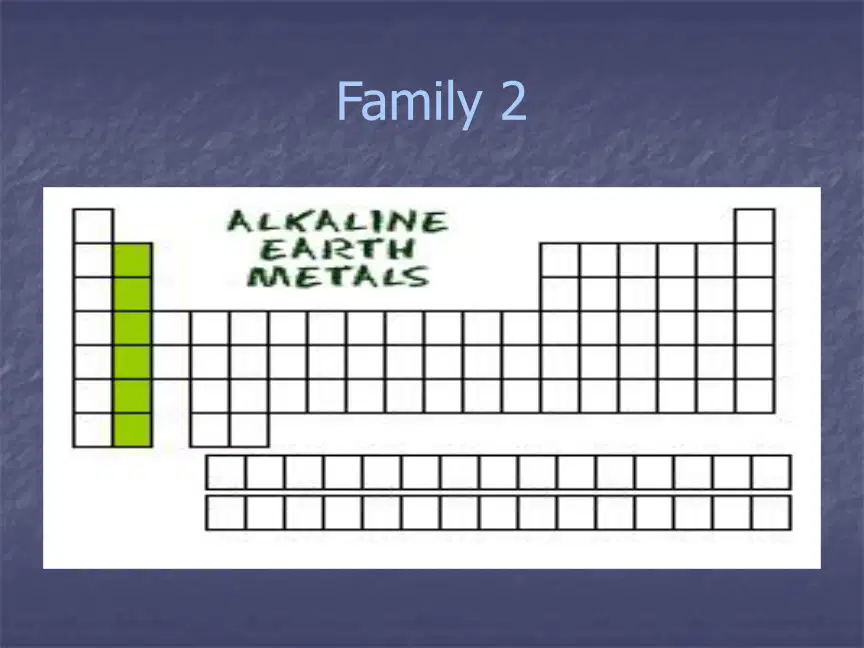
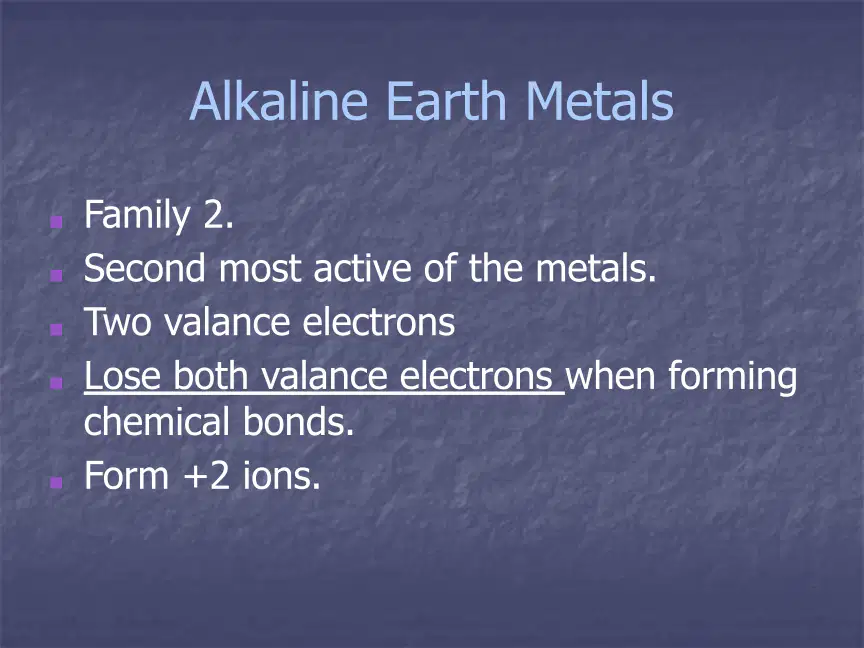
Fill in the Blanks
Alkaline earth metals form ions with a charge of
13
14
Multiple Select
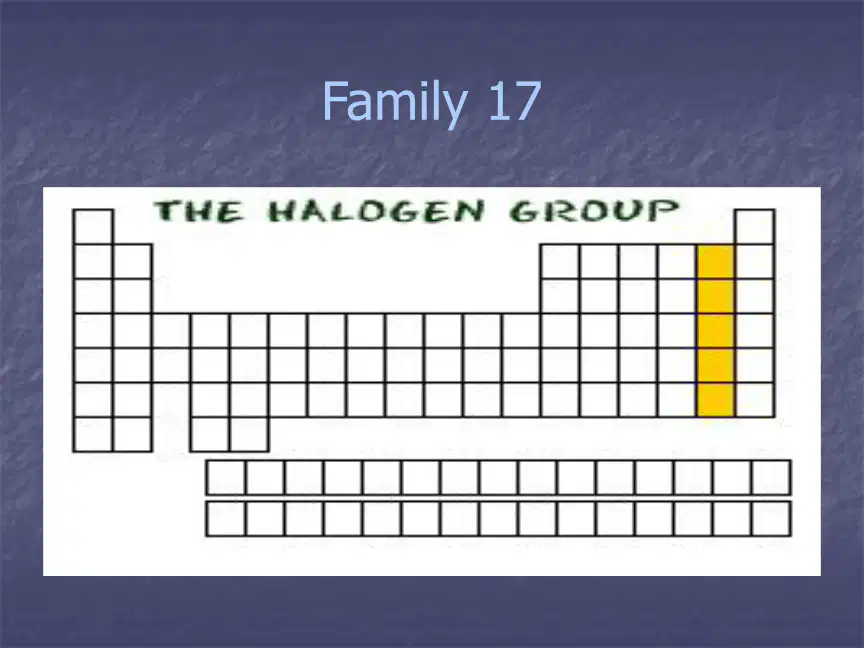
Select all correct statements about the halogen group.
They are found in Family 17 of the periodic table.
They are metals.
They are highly reactive nonmetals.
They have seven valence electrons.
15
16
Multiple Choice
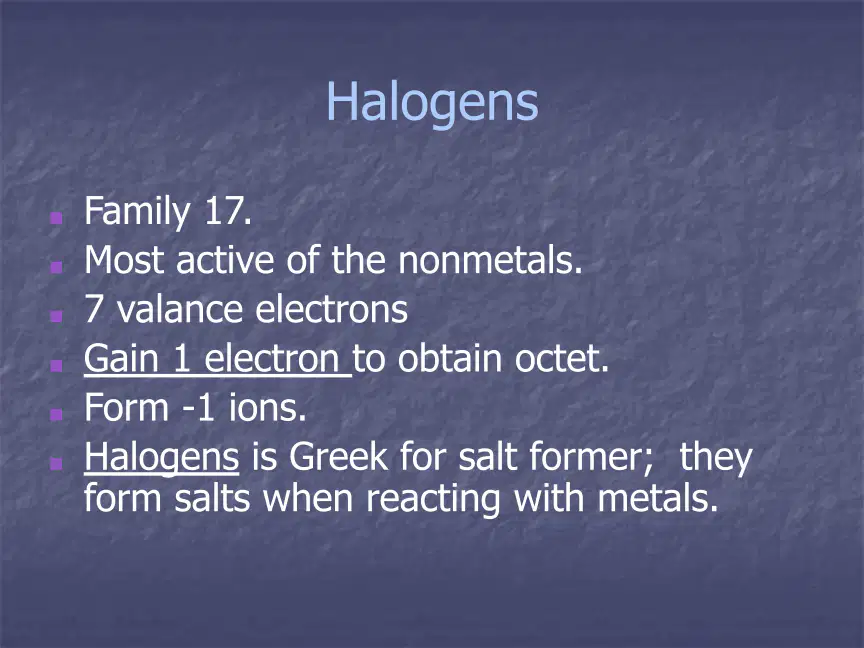
Which family of elements is known as the most active nonmetals and forms salts when reacting with metals?
Halogens
Noble gases
Transition metals
Alkali metals
17
18
19
Multiple Choice
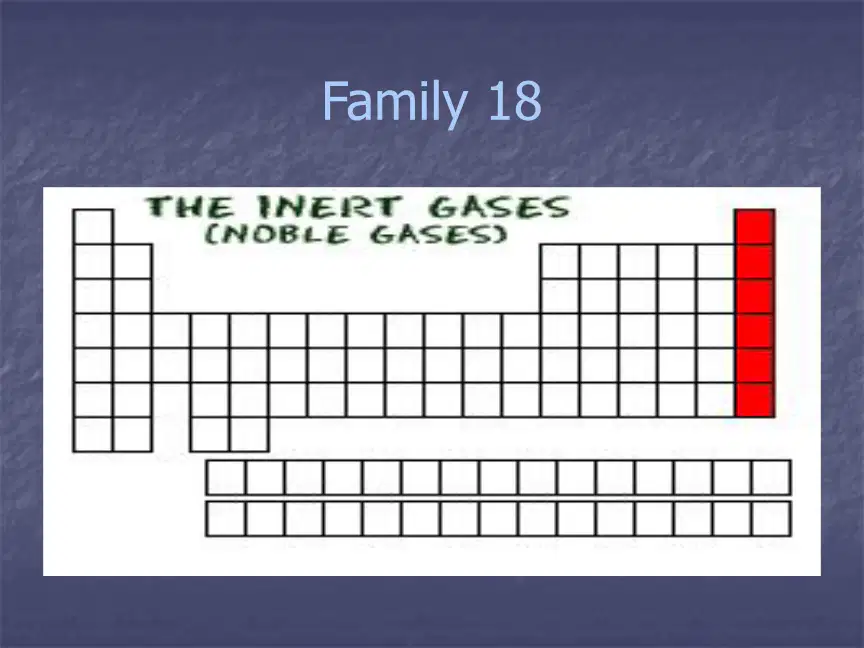
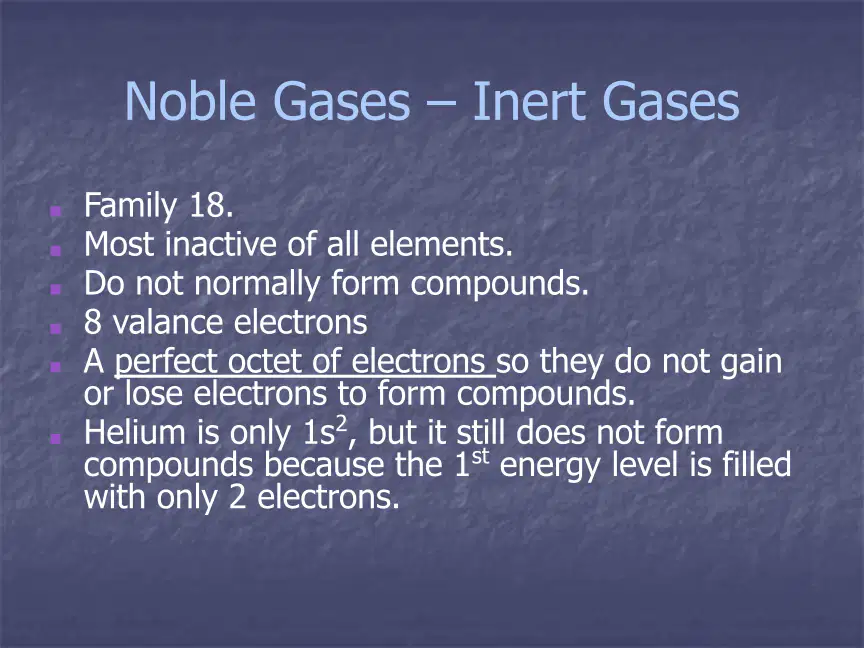
Which of the following statements about noble gases is correct?
They have 8 valence electrons and do not normally form compounds.
They are highly reactive and form many compounds.
They have 7 valence electrons and gain 1 electron to form an octet.
They are found in Family 17 of the periodic table.
20
21
22
Multiple Select
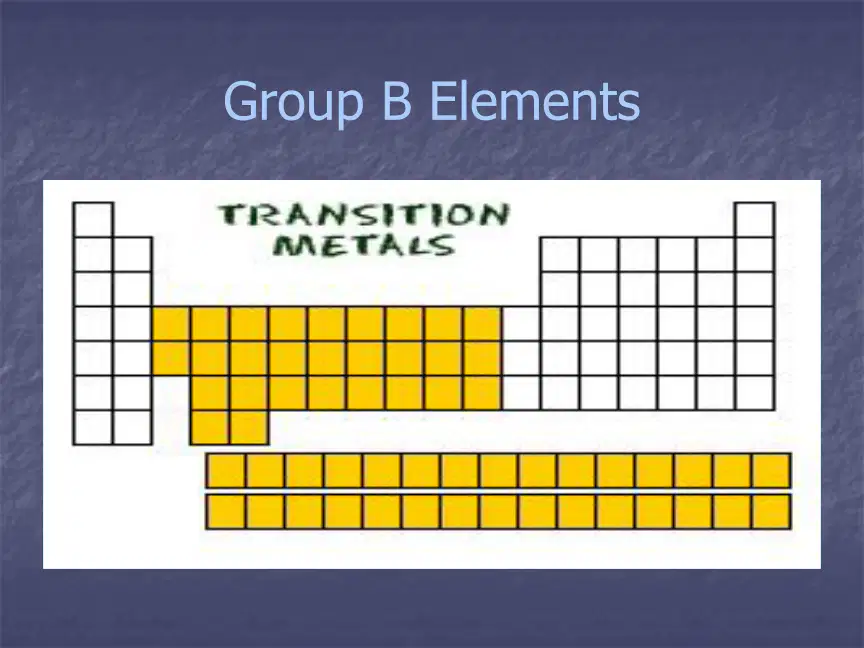
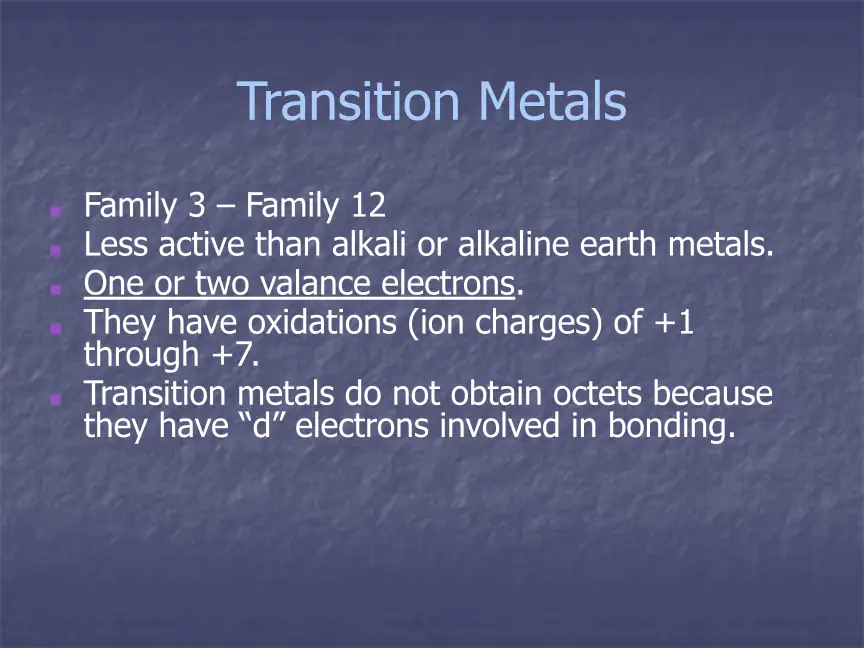
Select all correct statements about transition metals.
They have one or two valence electrons.
They are less active than alkali metals.
They always have a charge of -1.
They do not obtain octets because of 'd' electrons.
23
Multiple Choice
Transition metals are found in which families of the periodic table?
Family 3 – Family 12
Family 13 – Family 18
Family 1 – Family 2
Family 17 – Family 18
24
25
Fill in the Blanks
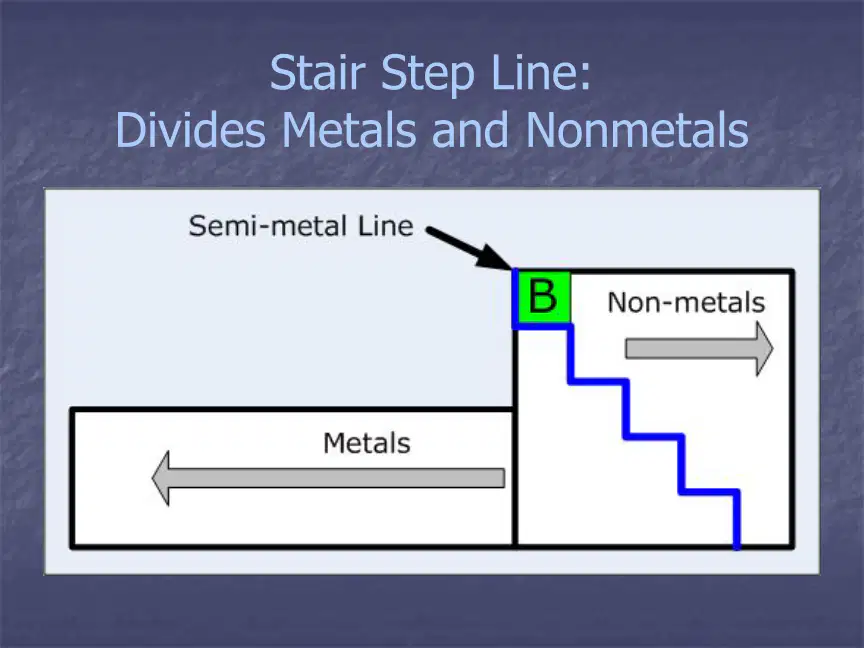
The stair step line on the periodic table divides
26
27
Multiple Select
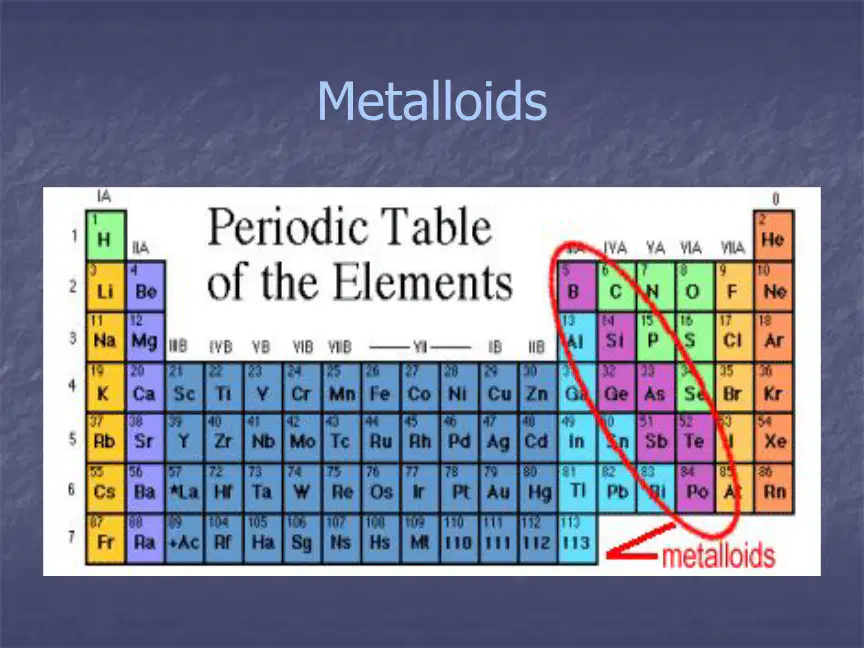
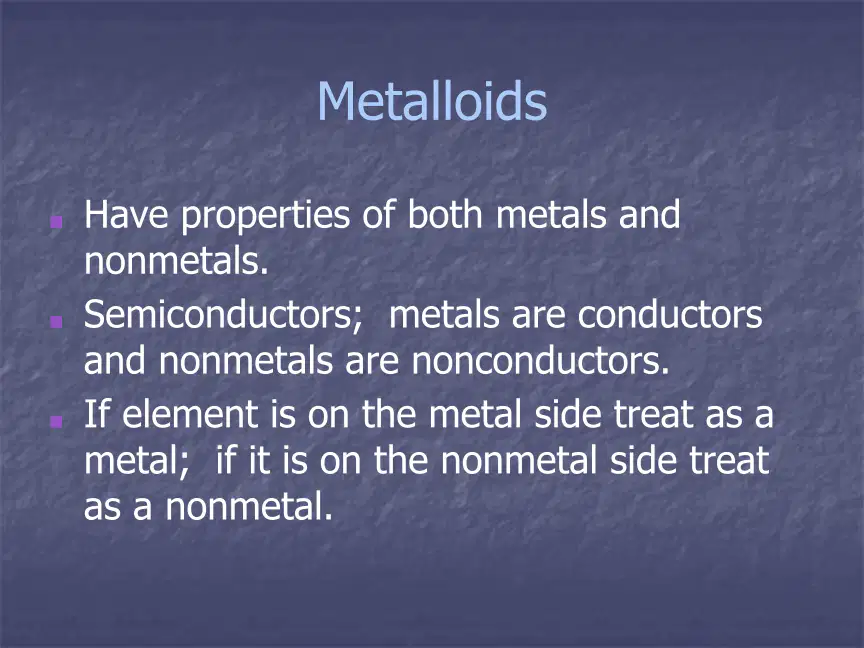
Which of the following elements are classified as metalloids?
Boron (B)
Silicon (Si)
Oxygen (O)
Arsenic (As)
28
29
Multiple Choice
Which of the following statements best describes metalloids?
They have properties of both metals and nonmetals.
They are only good conductors of electricity.
They are only found on the left side of the periodic table.
They are all gases at room temperature.
30
31
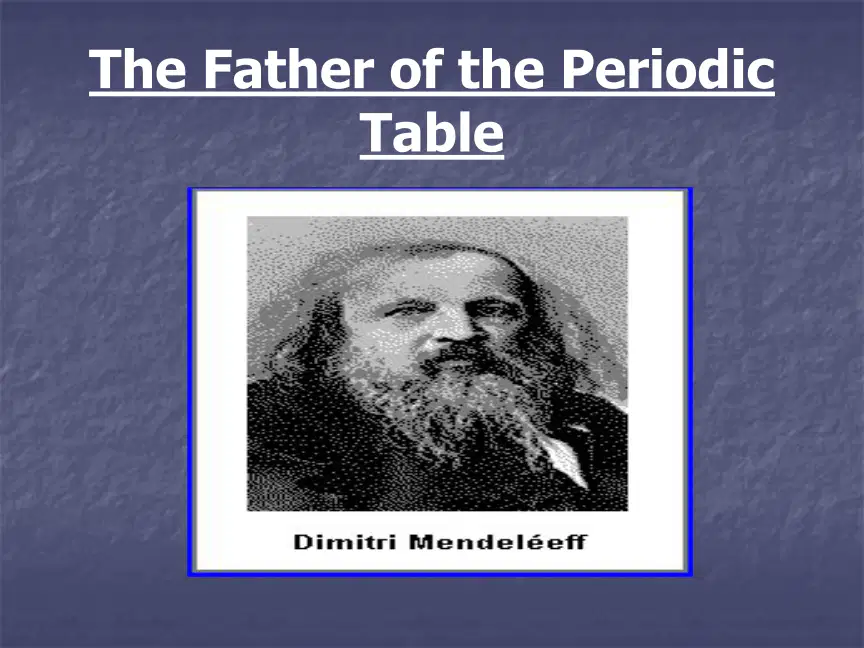
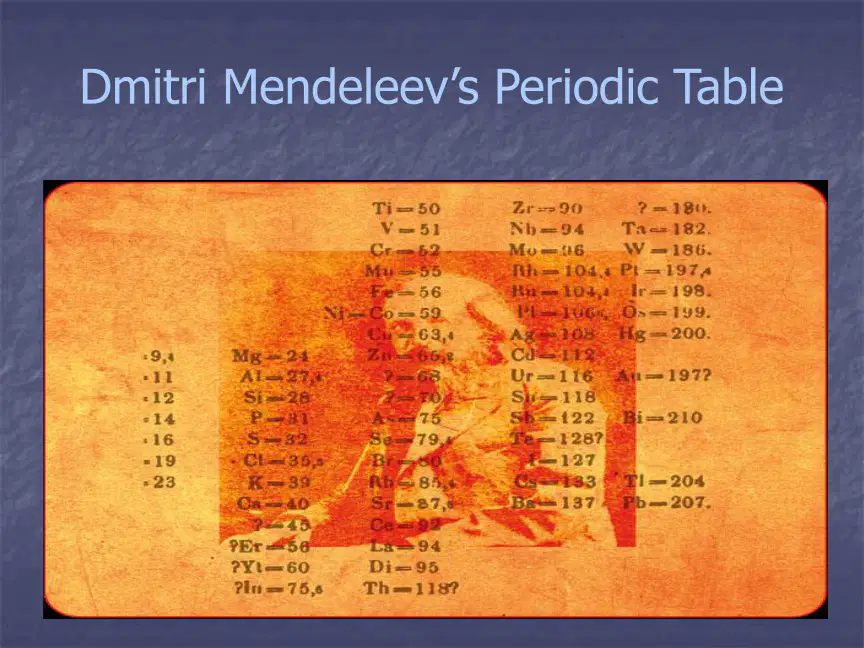
Fill in the Blanks
Dmitri Mendeleev is known as the father of the
32
33
34
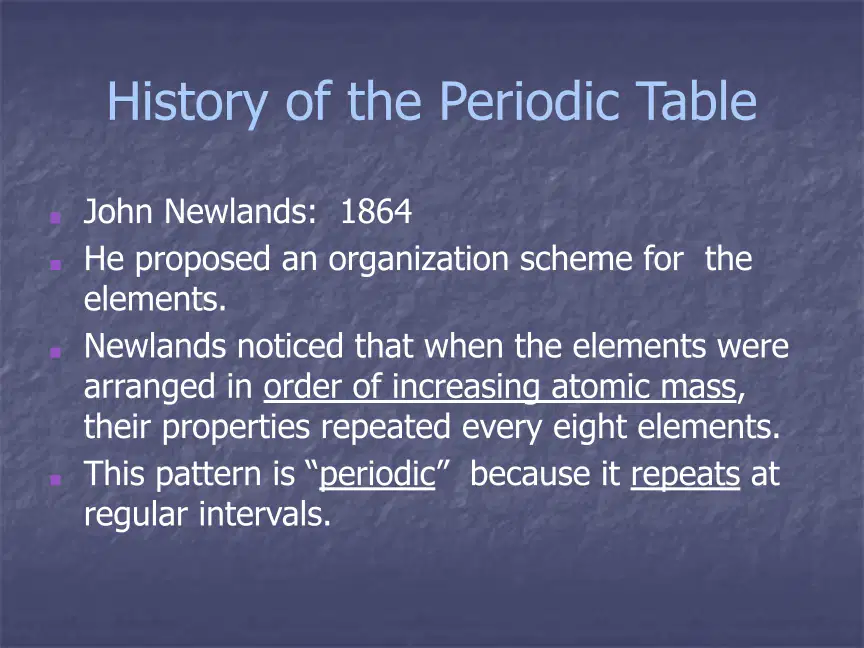
Multiple Choice
What was the main criterion used by John Newlands to arrange the elements in his periodic table?
Increasing atomic mass
Increasing atomic number
Decreasing atomic mass
Alphabetical order
35
36
Fill in the Blanks
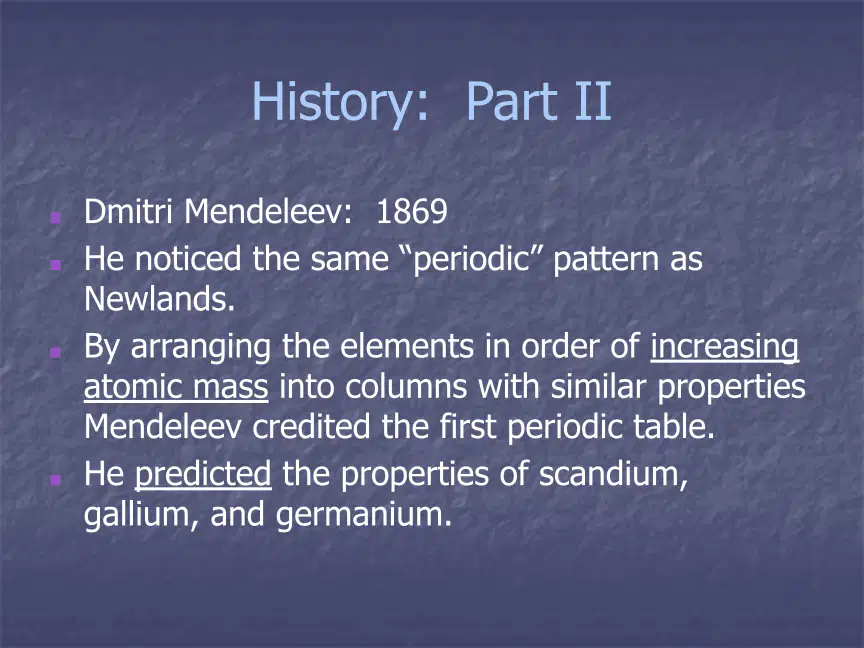
Mendeleev predicted the properties of elements such as
37
38
Multiple Choice
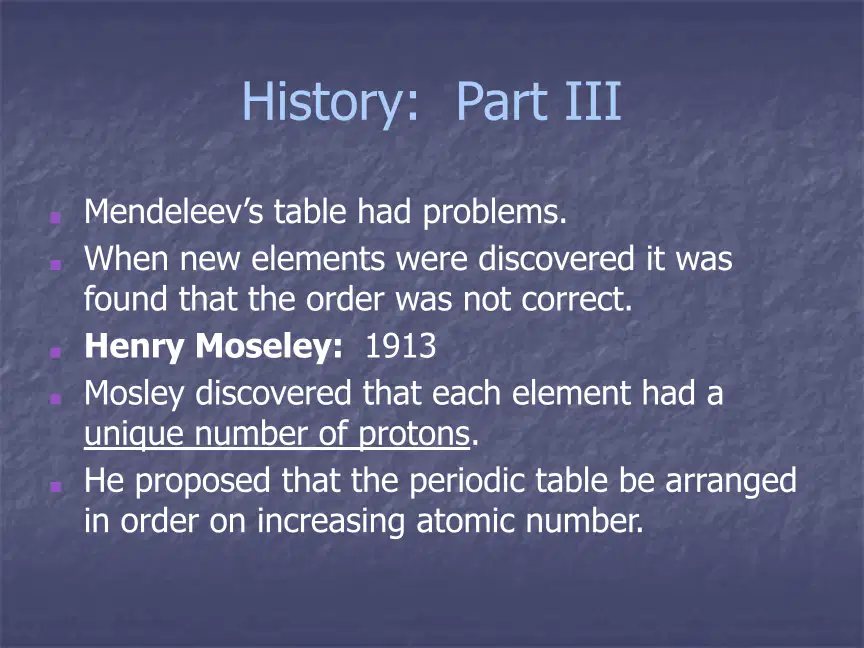
Who proposed that the periodic table should be arranged in order of increasing atomic number?
Dmitri Mendeleev
Henry Moseley
John Dalton
Marie Curie
39
40
Multiple Select
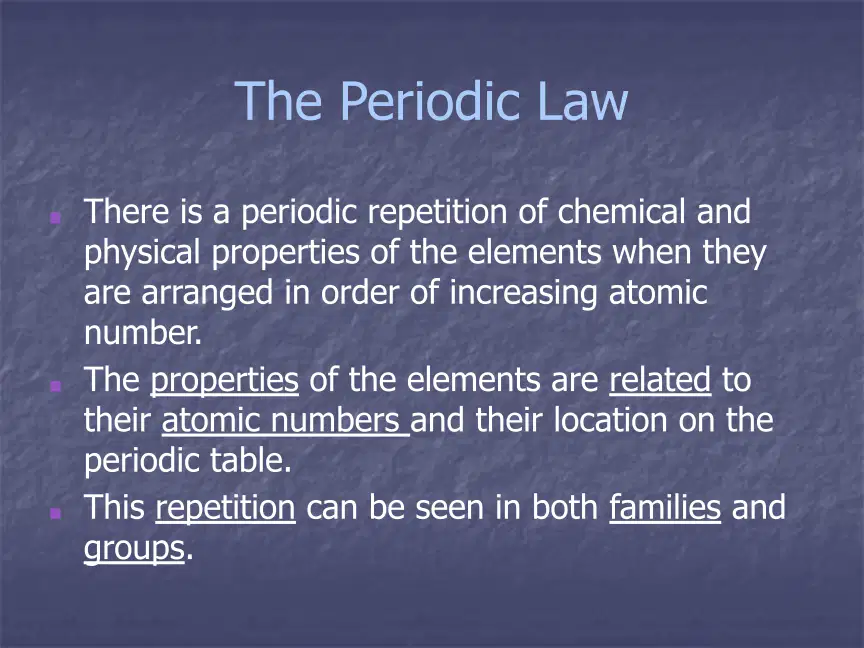
Which of the following statements about the periodic law are correct?
The properties of elements repeat periodically when arranged by atomic number.
The periodic table is arranged by increasing atomic mass.
Element properties are related to their atomic numbers.
Repetition of properties can be seen in both families and groups.
41
42
Multiple Choice
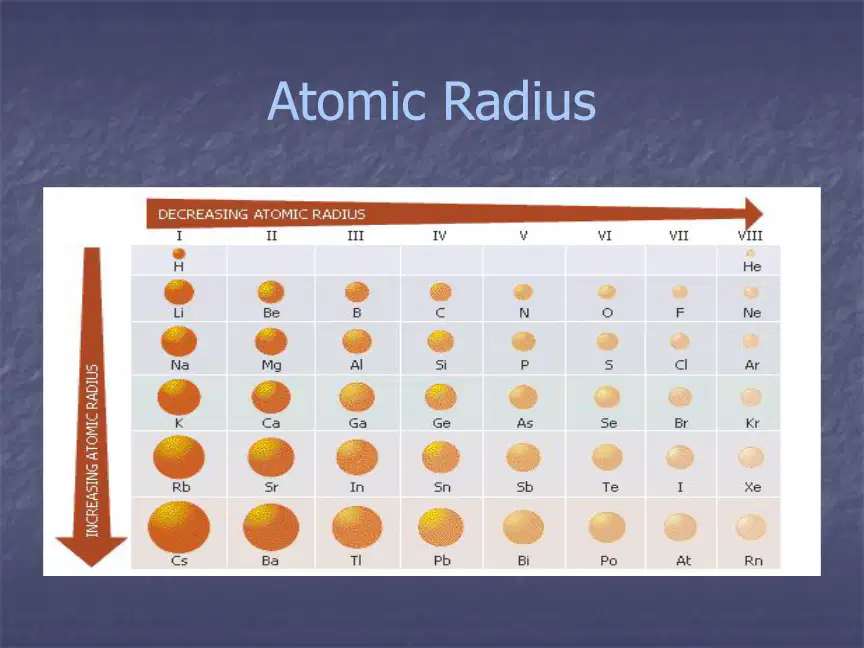
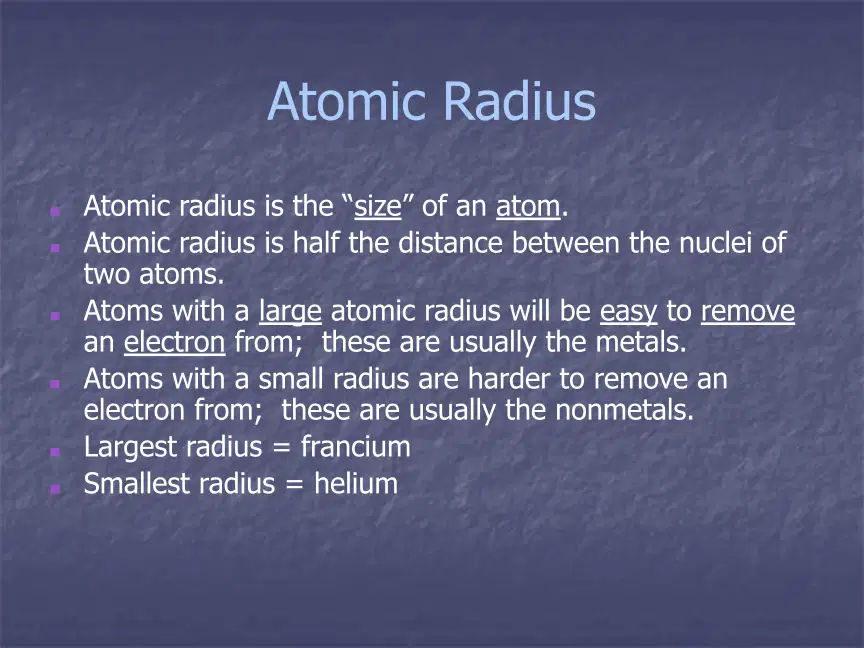
Based on the diagram, which element has the largest atomic radius?
Helium
Francium
Oxygen
Sodium
43
44
Fill in the Blanks
The smallest atomic radius among the elements is found in
45
46
Open Ended
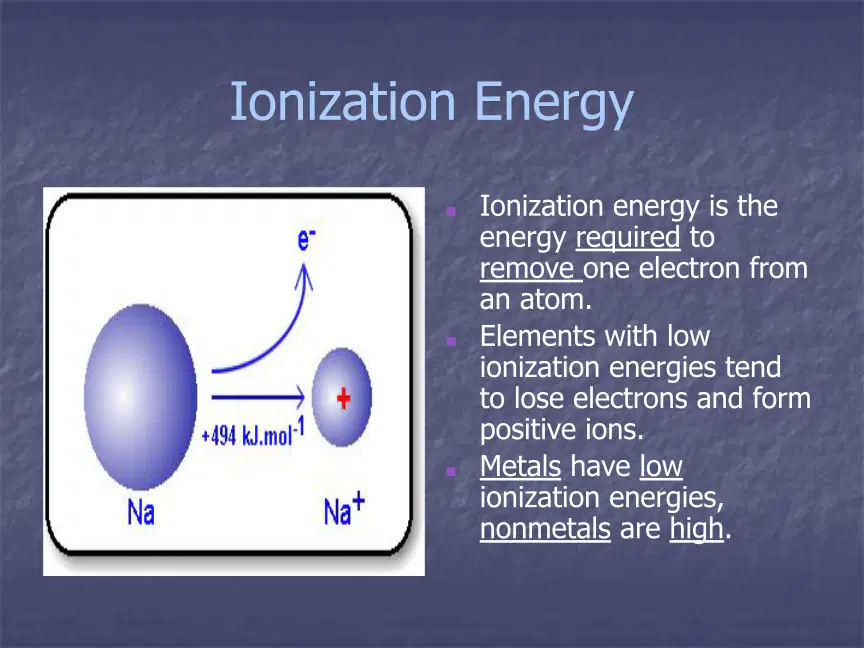
Explain why metals tend to have lower ionization energies compared to nonmetals.
47
48
Multiple Choice
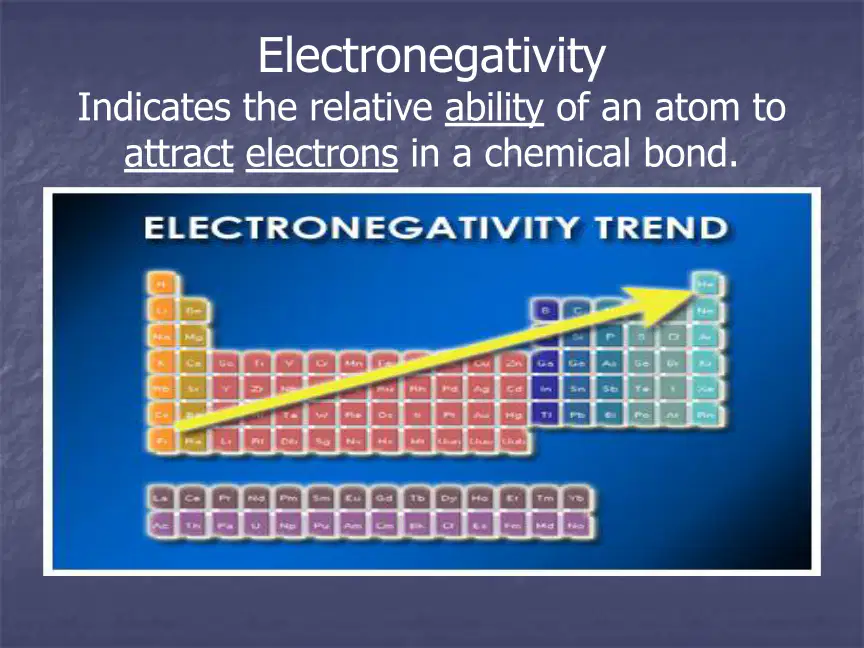
What does electronegativity indicate about an atom?
Its ability to lose electrons
Its ability to attract electrons in a chemical bond
Its atomic mass
Its number of protons
49
Open Ended
What is the significance of periods in the periodic table?
Show answer
Auto Play
Slide 1 / 49
SLIDE
Similar Resources on Wayground

41 questions
The Judicial Branch/Supreme Court
Presentation
•
9th Grade
42 questions
Measurements of Matters
Presentation
•
9th Grade
42 questions
Latin America Map 1
Presentation
•
9th Grade
45 questions
Ecology Final Review
Presentation
•
9th Grade
44 questions
3.1 - 3.3 Quiz Review_Alg1
Presentation
•
9th Grade
40 questions
Grade 9 General Unit 3 Lesson 1
Presentation
•
9th Grade
42 questions
Ser vs. Estar
Presentation
•
9th Grade
45 questions
Chemical Names and Formulas
Presentation
•
9th - 10th Grade
Popular Resources on Wayground
10 questions
How much do you know about our Portrait of an Eagle?

Quiz
•
10th Grade
10 questions
Fast Food Slogans
Quiz
•
6th - 8th Grade
21 questions
Continents and Oceans
Quiz
•
6th Grade
20 questions
Parts of Speech
Quiz
•
5th Grade
16 questions
Subject & Predicate
Quiz
•
5th Grade
25 questions
Multiplication Facts
Quiz
•
5th Grade
12 questions
Map Skills
Quiz
•
3rd Grade
22 questions
Continents and Oceans
Quiz
•
5th Grade
Discover more resources for Chemistry
20 questions
electron configurations and orbital notation
Quiz
•
9th - 12th Grade
11 questions
Balancing Chemical Equations
Presentation
•
9th Grade
21 questions
IP: Electron Configuration Part 1
Quiz
•
9th Grade
10 questions
Mastering Significant Figures in Chemistry

Interactive video
•
6th - 10th Grade
21 questions
Isotopes and Ions
Quiz
•
9th Grade
30 questions
Atoms, Ions and Isotopes
Quiz
•
9th - 12th Grade
21 questions
Atomic Structure: Atoms, Isotopes & Ions...Oh, My!
Quiz
•
9th - 12th Grade
19 questions
Isotopes & Ions
Quiz
•
9th Grade