

Kepler's Laws

Presentation
•
Science
•
9th - 12th Grade
•
Hard
Standards-aligned

ALLISON MINTEER
FREE Resource
8 Slides • 15 Questions
1
2
3
Multiple Choice
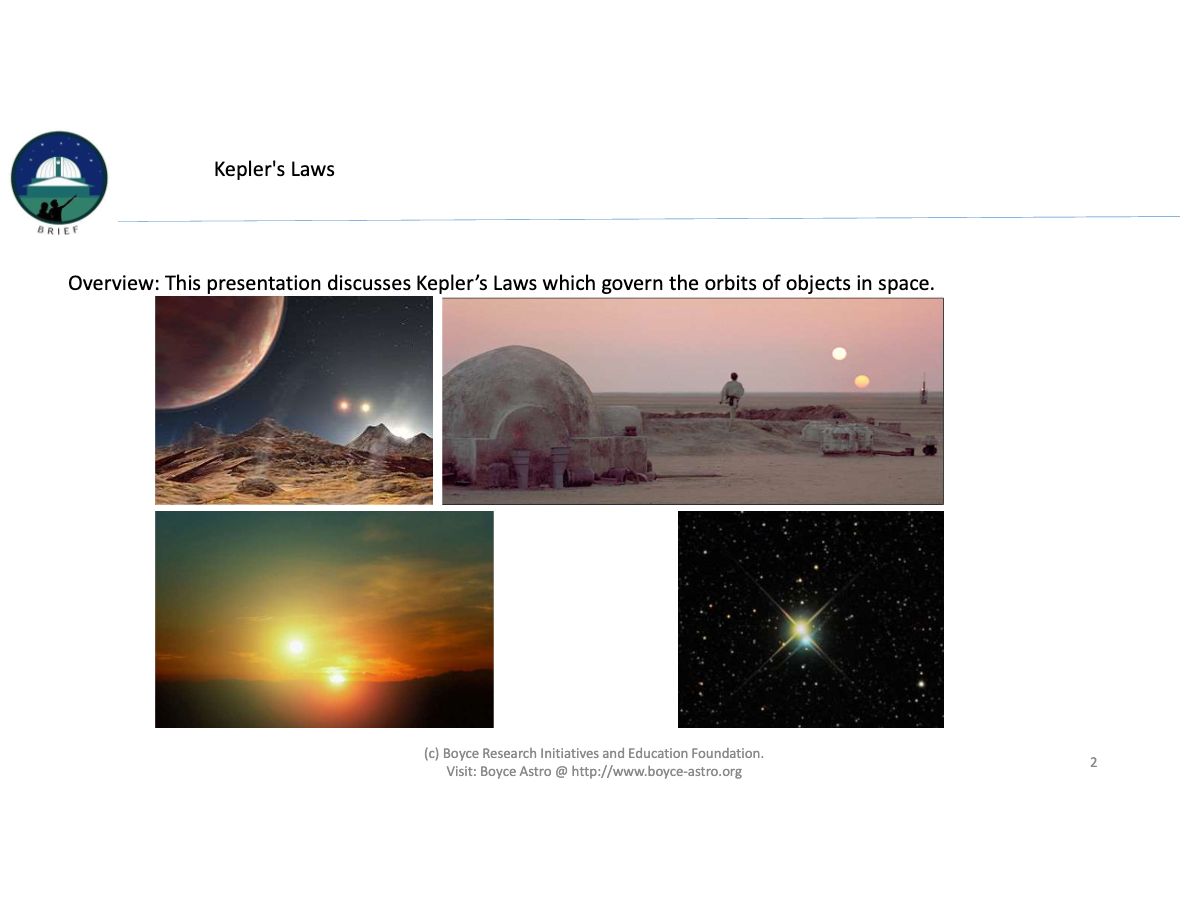
Which of the following best describes what Kepler's Laws help us understand?
The orbits of objects in space
The composition of stars
The temperature of planets
The distance between galaxies
4
Fill in the Blanks
Kepler's Laws govern the orbits of objects in
5
6
Multiple Choice
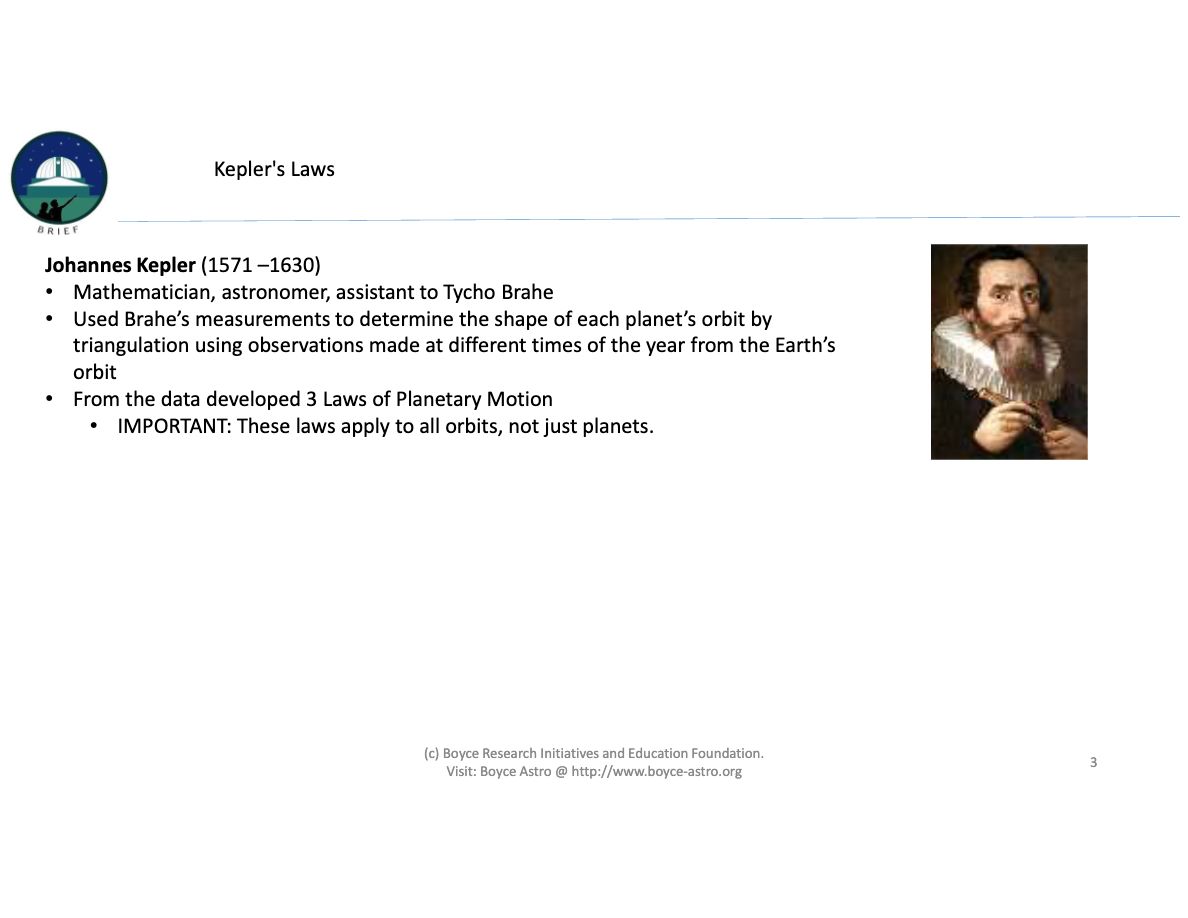
Who was Johannes Kepler and what was his main contribution to astronomy?
An astronomer with a additional talent in mathematics, who developed the 3 Laws of Planetary Motion
A physicist who discovered gravity
An astronomer who invented the telescope
A philosopher who studied the stars
7
8
Multiple Select
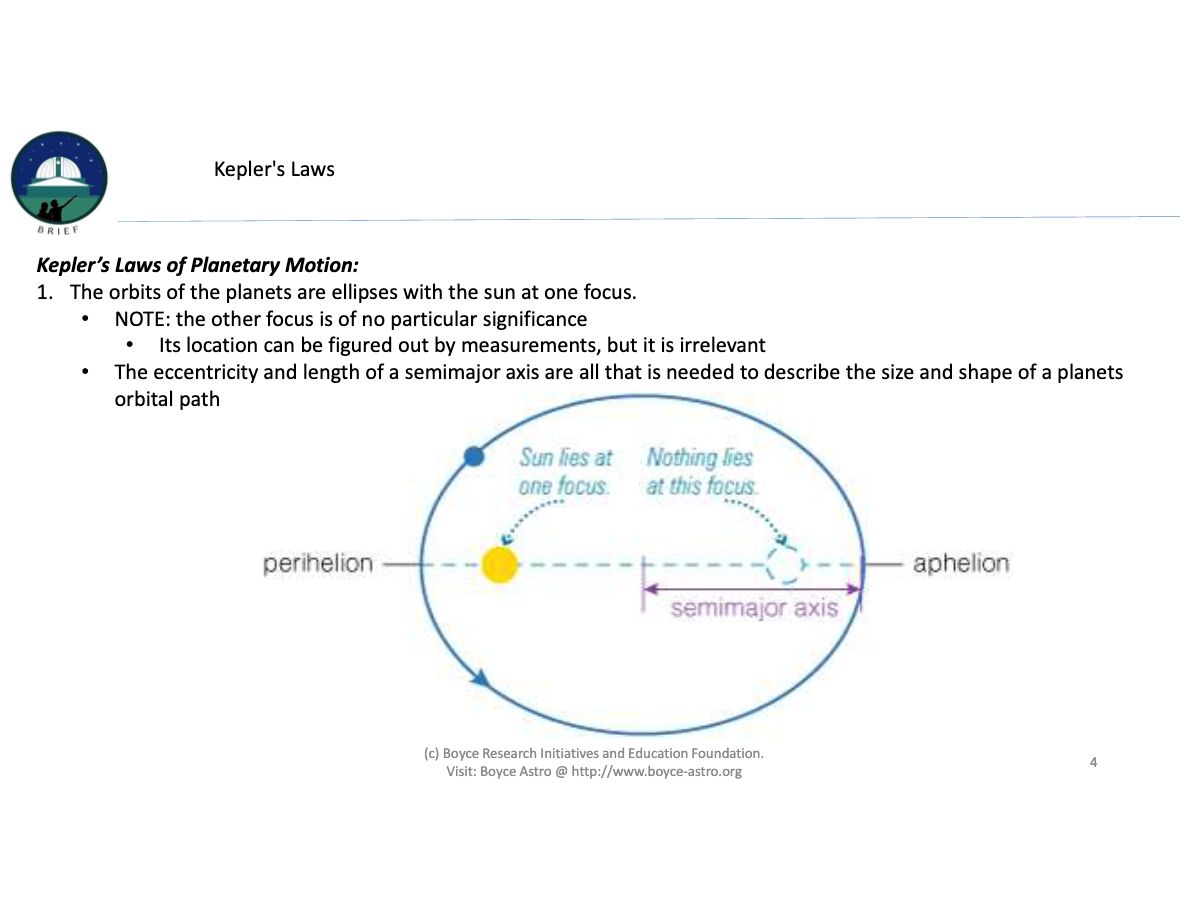
Which of the following statements are true about the orbits of planets according to Kepler's First Law?
The orbits are ellipses with the sun at one focus
The other focus is of no particular significance
The orbits are perfect circles
The eccentricity and length of a semimajor axis describe the orbit
9
Dropdown
10
11

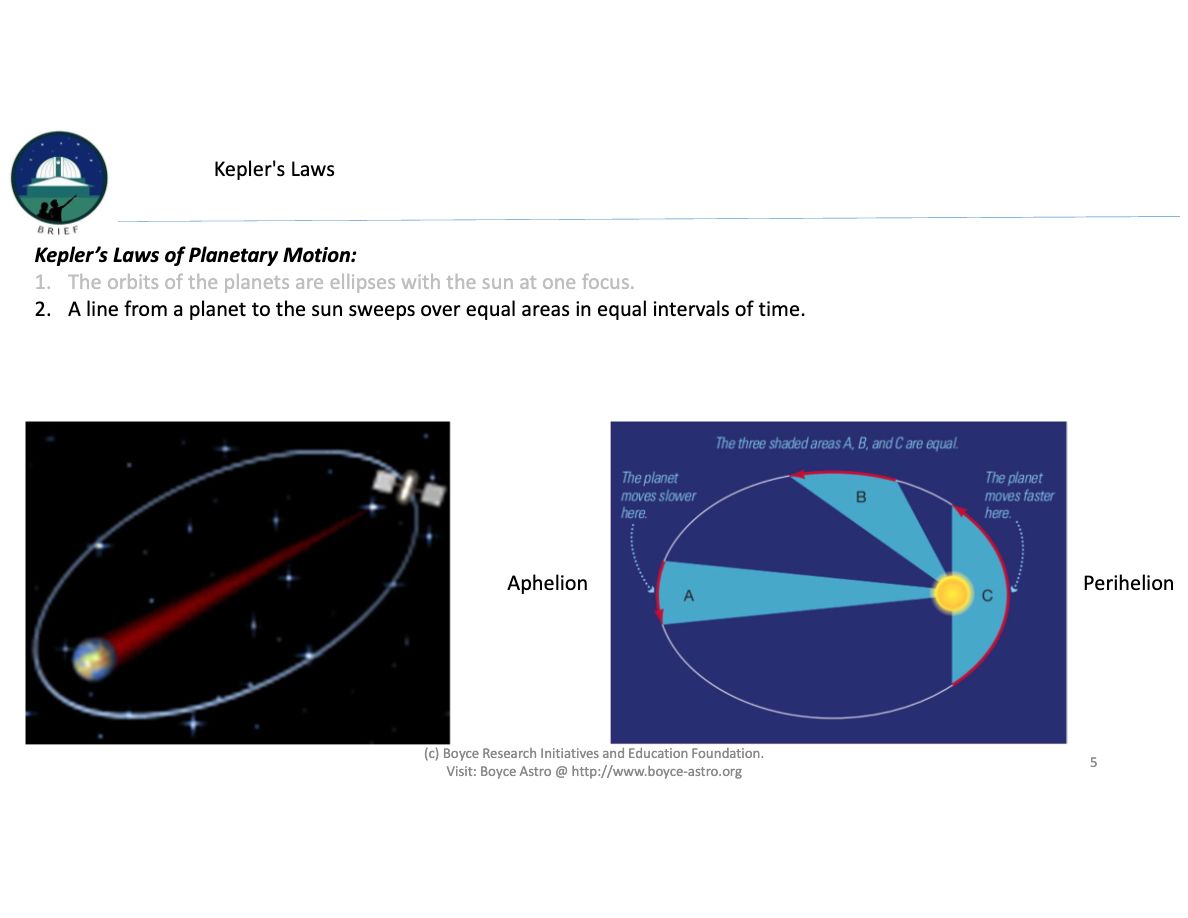
Aphelion is when the orbiting body is farthest away from the the sun.
Perihelion is where the orbiting body is closest to the sun.
Aphelion vs Perihelion
12
Multiple Choice
According to Kepler's Second Law, what does a line from a planet to the sun do over equal intervals of time?
Sweeps over equal areas
Moves at a constant speed
Remains stationary
Changes direction randomly
13
Multiple Choice
14
15
Fill in the Blanks
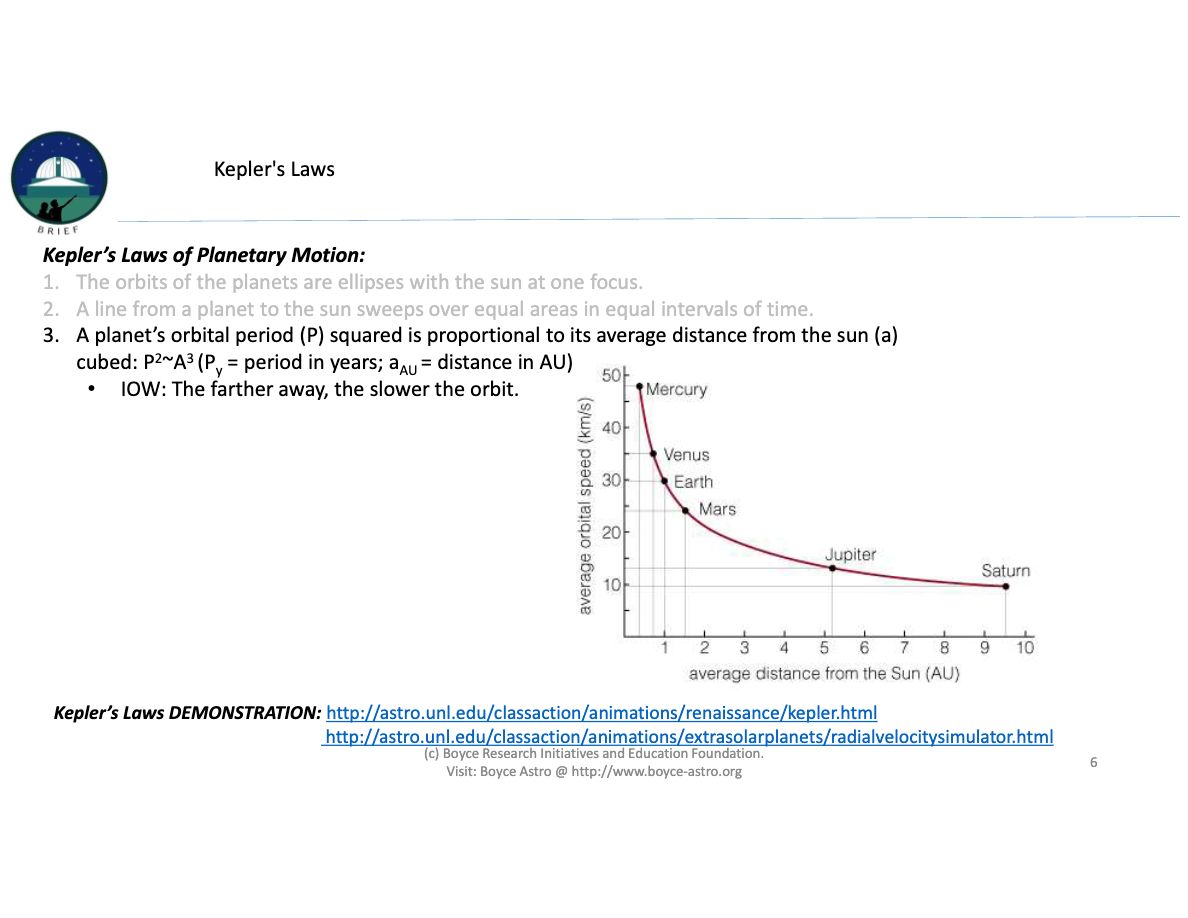
Kepler's Third Law states that the square of a planet's orbital period is proportional to the cube of its average distance from the
16
17
Multiple Choice
18
Multiple Choice
19
Multiple Choice
20
Multiple Choice
21
Multiple Choice
The point in a planets orbit where it is FARTHEST away from the sun
22
Multiple Choice
The point in a planets orbit where it is CLOSEST to the sun
23
Multiple Choice
Show answer
Auto Play
Slide 1 / 23
SLIDE
Similar Resources on Wayground

17 questions
Waves
Presentation
•
9th - 11th Grade
20 questions
Evolution of Plant Transport System
Presentation
•
9th - 12th Grade
21 questions
Unit 7: Energy Transformations
Presentation
•
9th - 12th Grade
19 questions
Marine and brackish biomes
Presentation
•
9th - 12th Grade
17 questions
Genetics Review Part 2 (Practice)
Presentation
•
6th - 9th Grade
20 questions
Cell Differentiation and Specialized Cells
Presentation
•
9th - 12th Grade
18 questions
INDLS Sedimentary Rocks
Presentation
•
8th - 12th Grade
18 questions
Passive and Active transport
Presentation
•
9th - 11th Grade
Popular Resources on Wayground
10 questions
How much do you know about our Portrait of an Eagle?

Quiz
•
10th Grade
10 questions
Fast Food Slogans
Quiz
•
6th - 8th Grade
21 questions
Continents and Oceans
Quiz
•
6th Grade
20 questions
Parts of Speech
Quiz
•
5th Grade
16 questions
Subject & Predicate
Quiz
•
5th Grade
25 questions
Multiplication Facts
Quiz
•
5th Grade
12 questions
Map Skills
Quiz
•
3rd Grade
22 questions
Continents and Oceans
Quiz
•
5th Grade
Discover more resources for Science
10 questions
Exploring Chemical and Physical Changes

Interactive video
•
6th - 10th Grade
20 questions
Atomic Structure
Quiz
•
9th Grade
10 questions
Decoding the Periodic Table of Elements
Interactive video
•
6th - 10th Grade
10 questions
Exploring the Periodic Table
Interactive video
•
6th - 10th Grade
14 questions
Physical and Chemical Changes
Quiz
•
10th Grade
22 questions
Periodic Table Review
Quiz
•
9th - 12th Grade
20 questions
Observation vs. Inference
Quiz
•
7th - 9th Grade
14 questions
Periodic Trends
Interactive video
•
11th Grade