Search Header Logo
Dr. B

Dr. B

Assessment

Presentation

Other

University

Practice Problem

Easy

Created by

MJ Miller

Used 2+ times

FREE Resource

30 Slides • 8 Questions

1
media

2

media

3

media

4

media

5

media

6

media

7

Multiple Choice

LO 2:

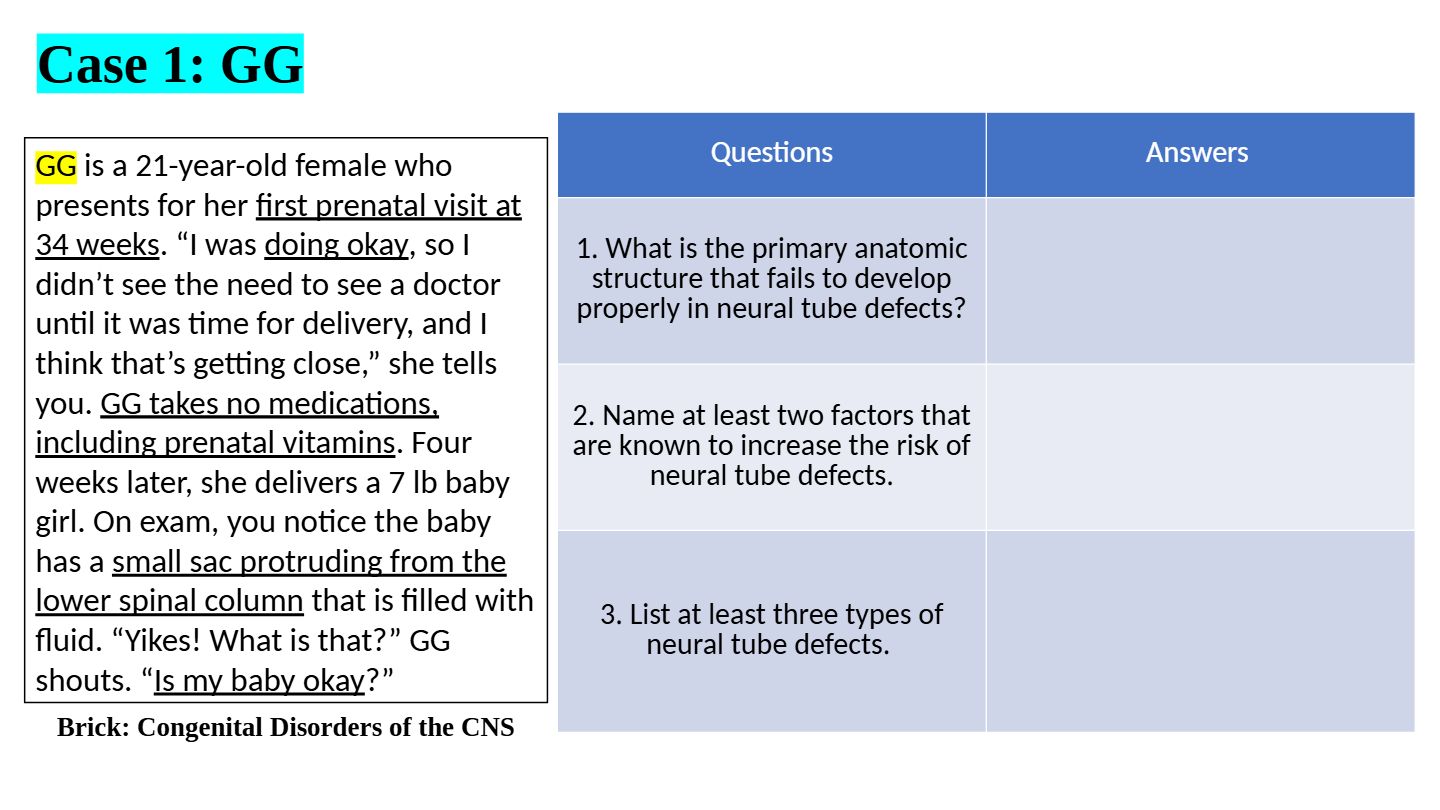
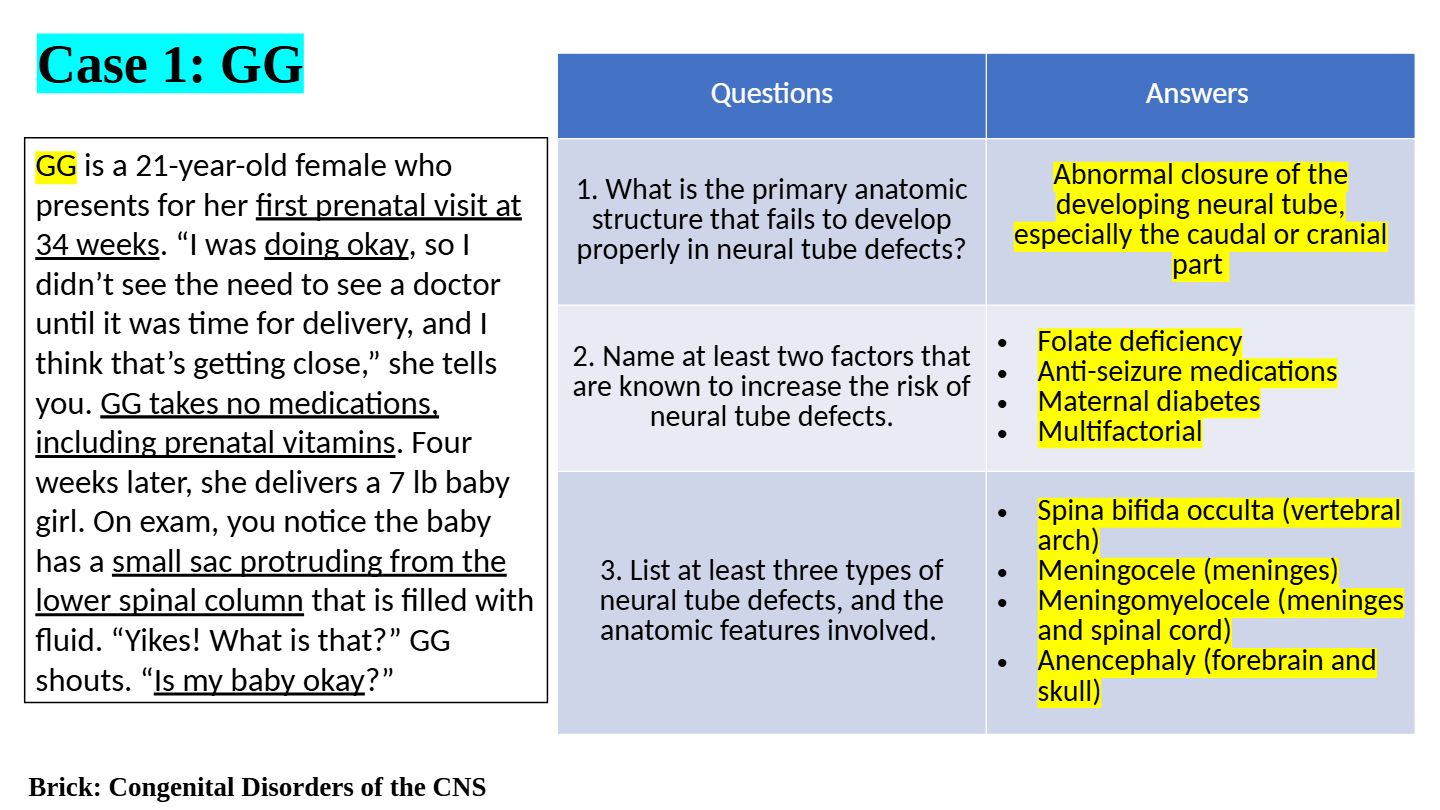
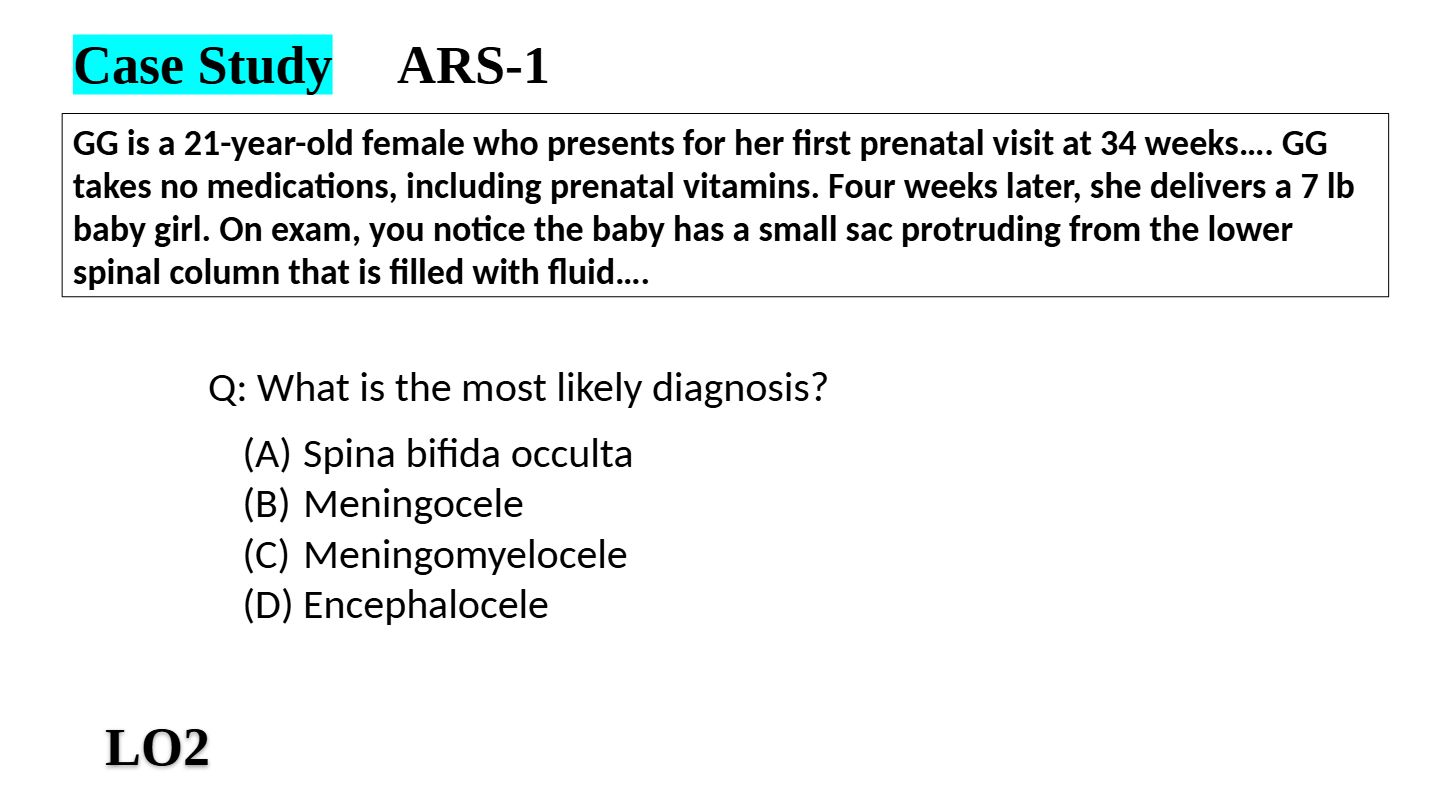
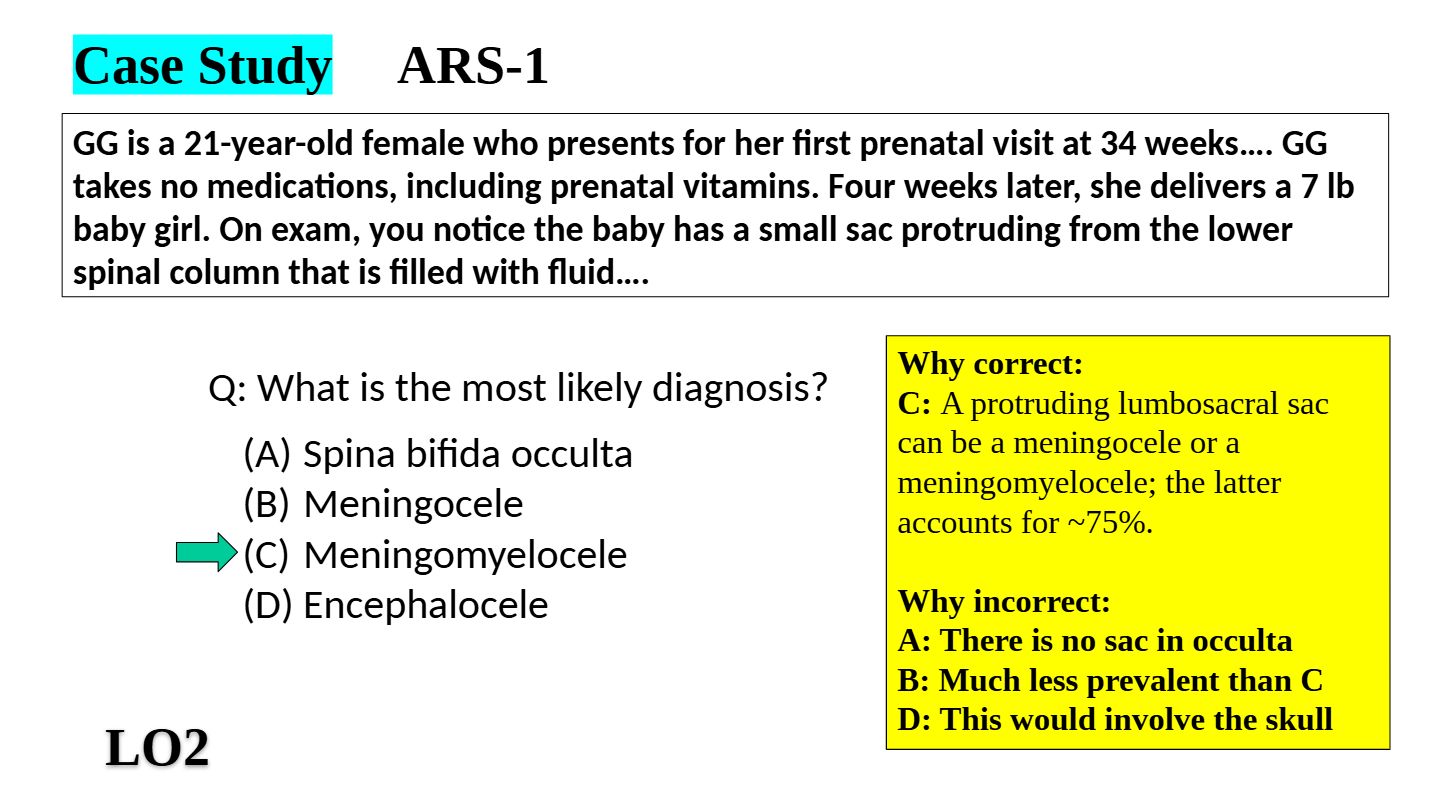
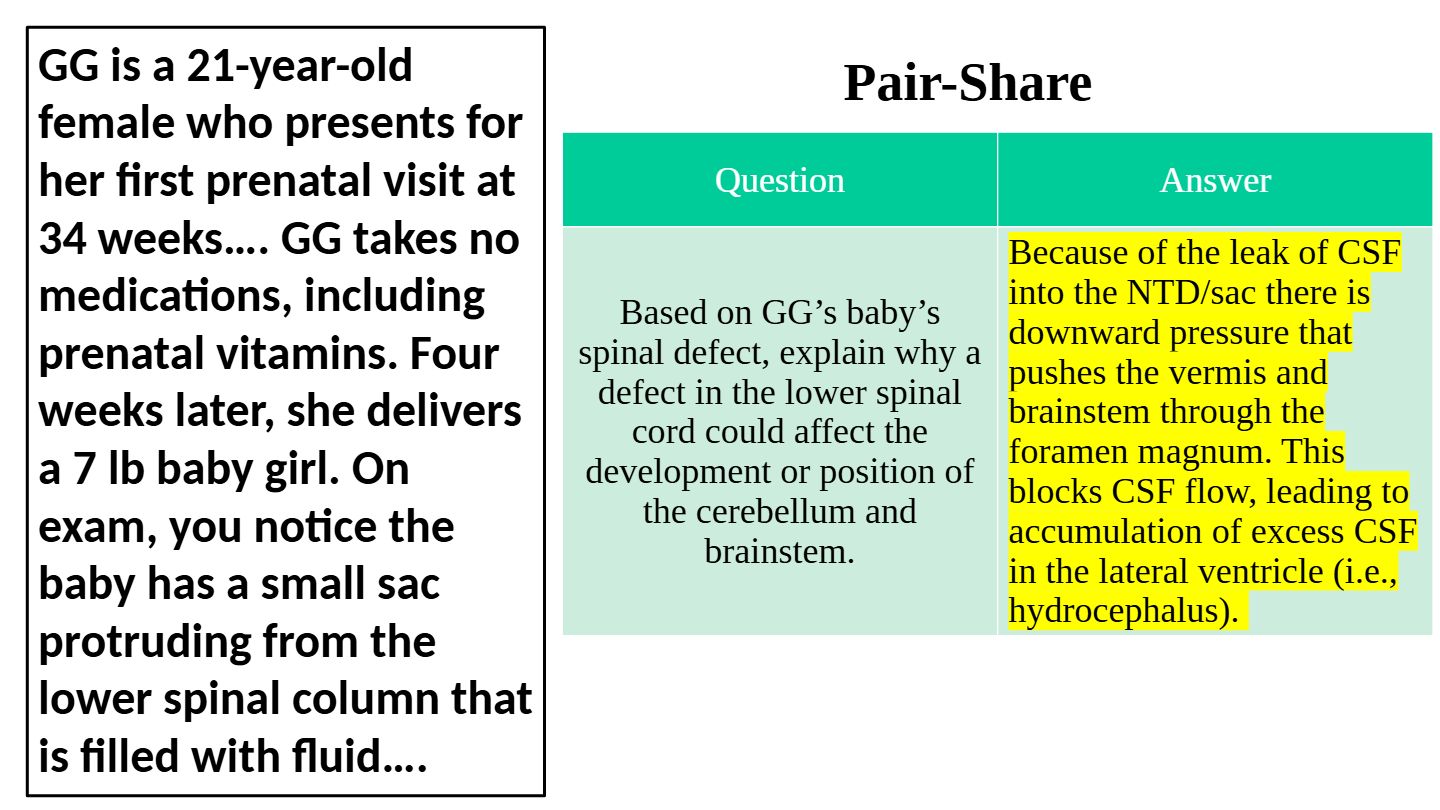
GG is a 21-year-old female who presents for her first prenatal visit at 34 weeks…. GG takes no medications, including prenatal vitamins. Four weeks later, she delivers a 7 lb baby girl. On exam, you notice the baby has a small sac protruding from the lower spinal column that is filled with fluid….​ Q: What is the most likely diagnosis?

1

Spina bifida occulta

2

Meningocele

3

Meningomyelocele

4

Encephalocele

8

media

9

media

10

media

11

Multiple Choice

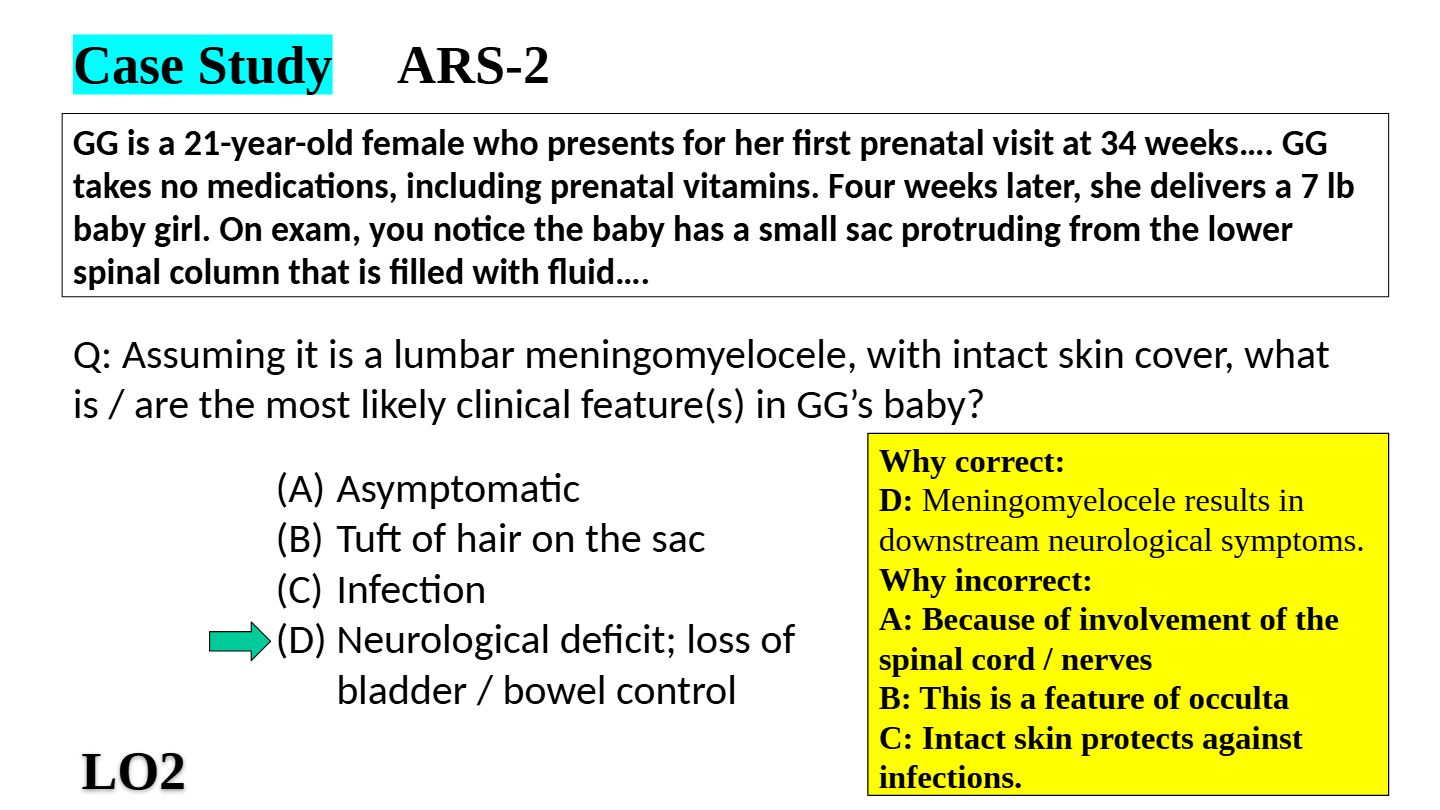
LO 2: GG is a 21-year-old female who presents for her first prenatal visit at 34 weeks…. GG takes no medications, including prenatal vitamins. Four weeks later, she delivers a 7 lb baby girl. On exam, you notice the baby has a small sac protruding from the lower spinal column that is filled with fluid….Q: Assuming it is a lumbar meningomyelocele, with intact skin cover, what is/ are the most likely clinical feature(s) in GG’s baby?​

1

Asymptomatic

2

Tuft of hair on the sac

3

Infection

4

Neurological deficit; loss of bladder / bowel control

12

media

13

media

14

Multiple Choice

LO 2, 6:

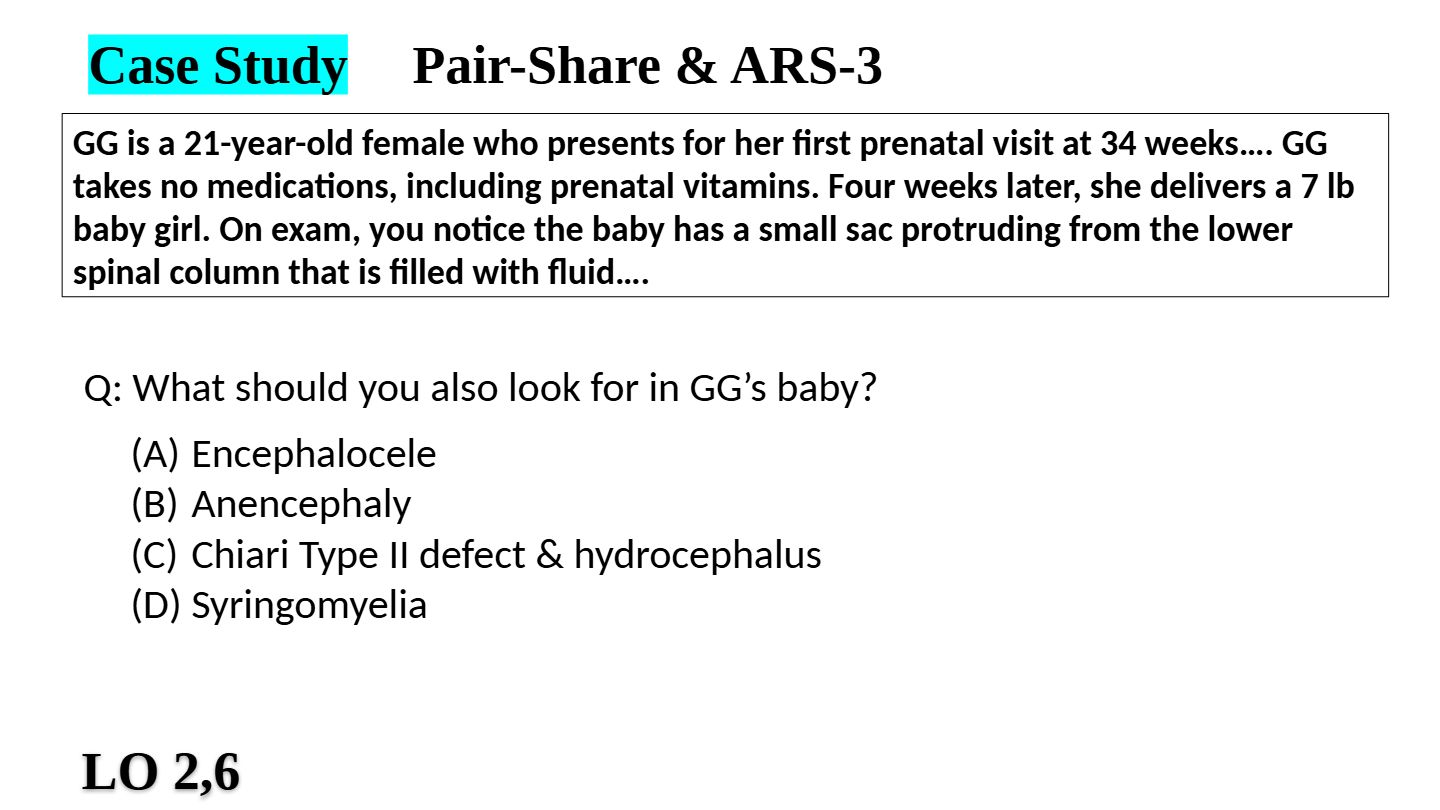
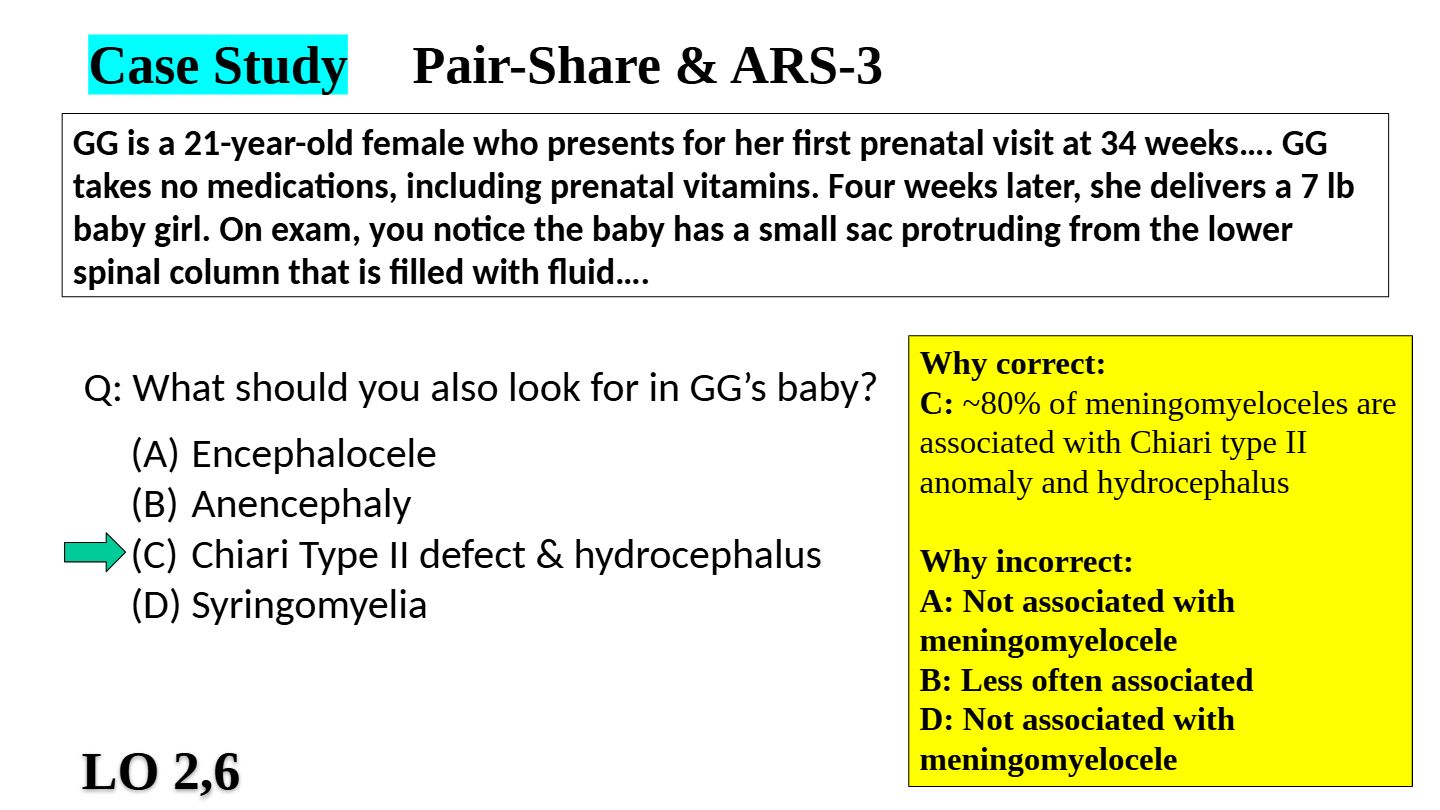
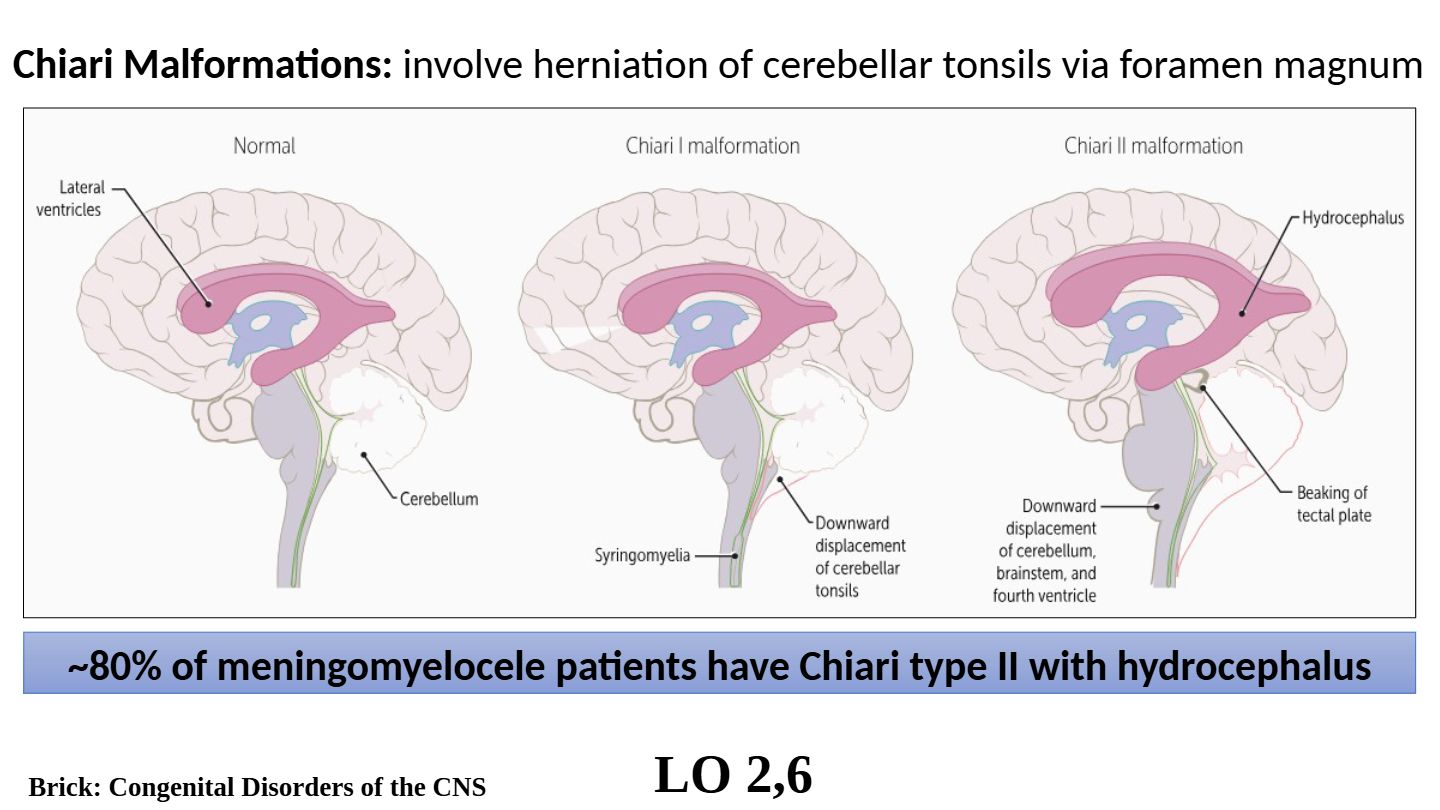
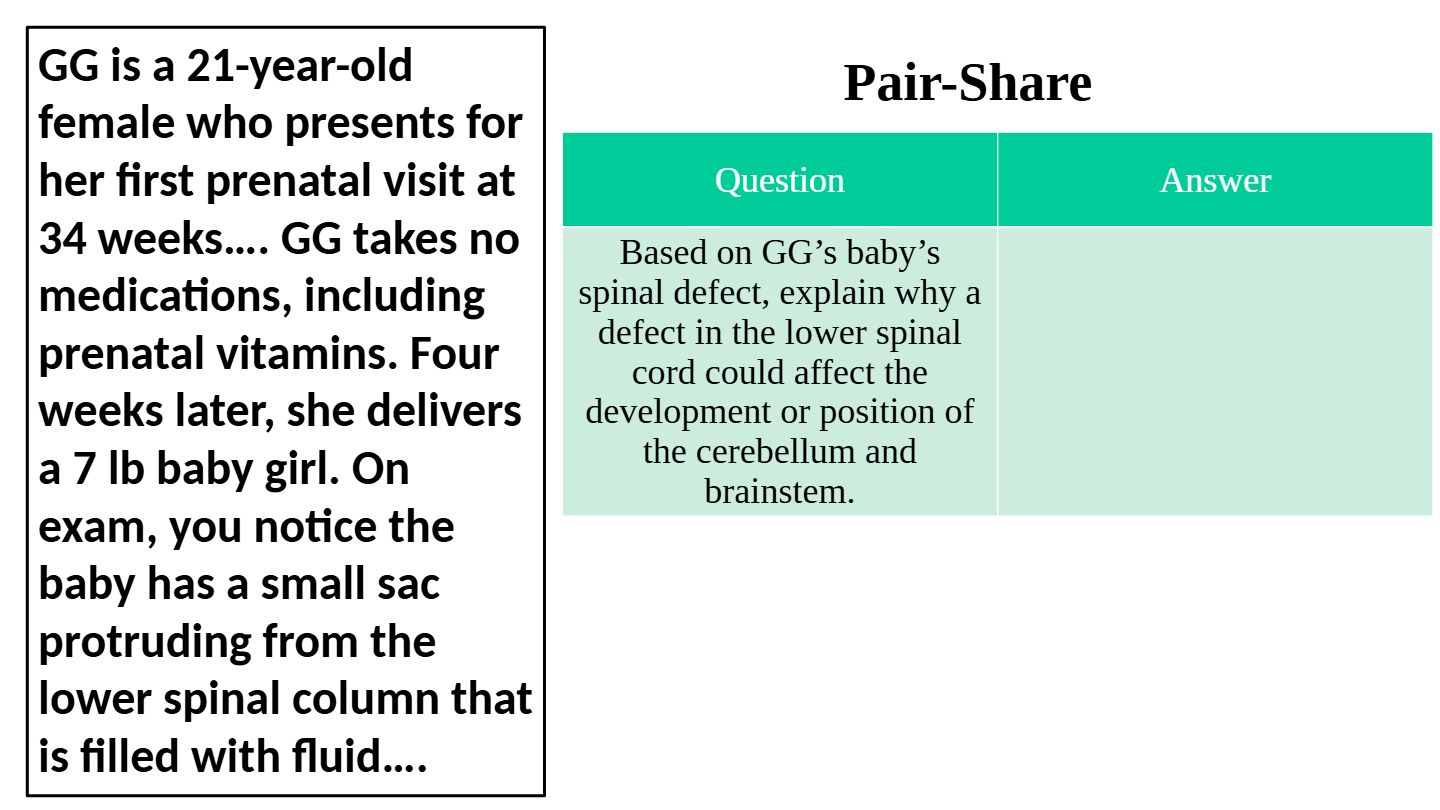
GG is a 21-year-old female who presents for her first prenatal visit at 34 weeks…. GG takes no medications, including prenatal vitamins. Four weeks later, she delivers a 7 lb baby girl. On exam, you notice the baby has a small sac protruding from the lower spinal column that is filled with fluid….​ Q: What should you also look for in GG’s baby?

1

Encephalocele

2

Anencephaly

3

Chiari Type II defect & hydrocephalus

4

Syringomyelia

15

media

16

media

17

media

18

media

19

media

20

Multiple Choice

LO 2, 6:

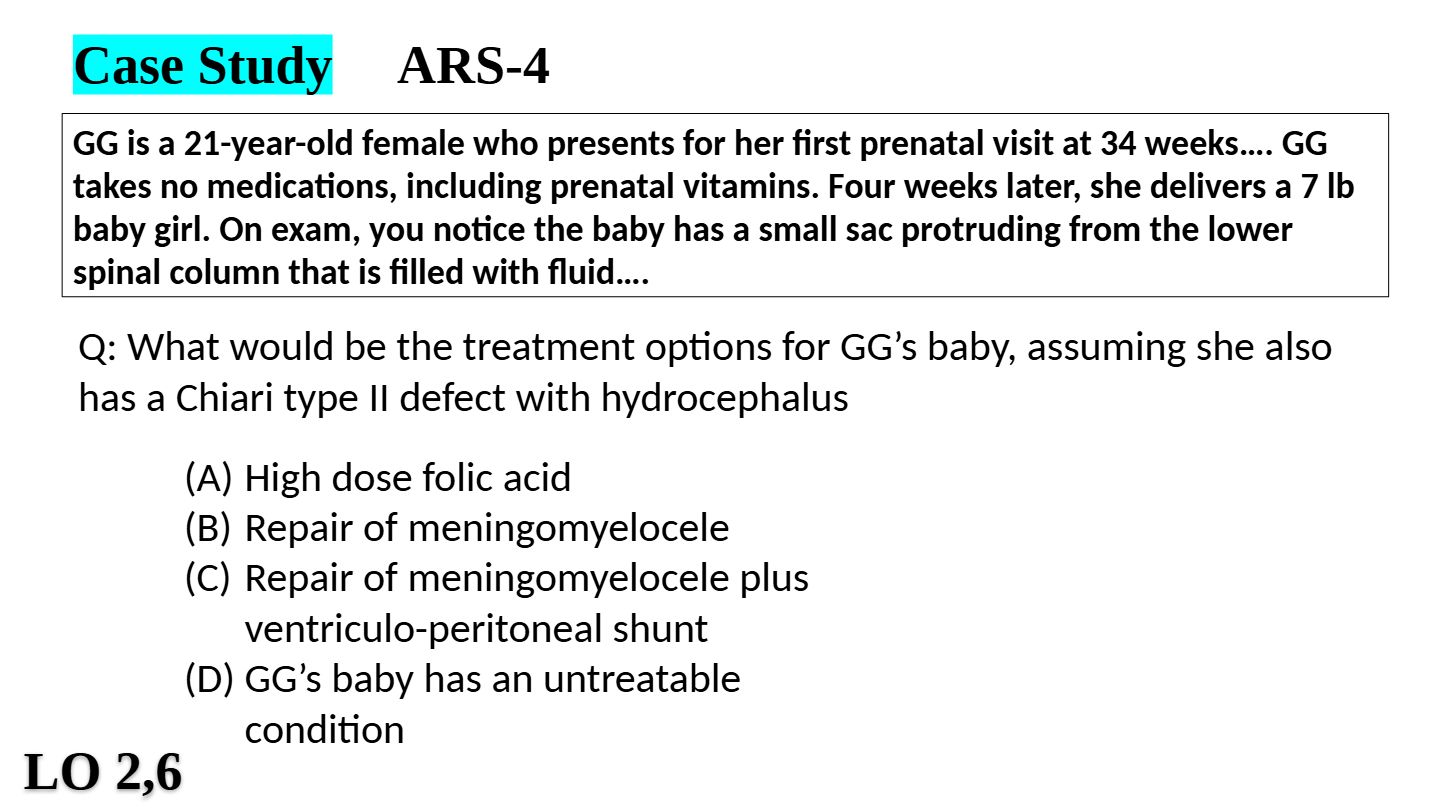
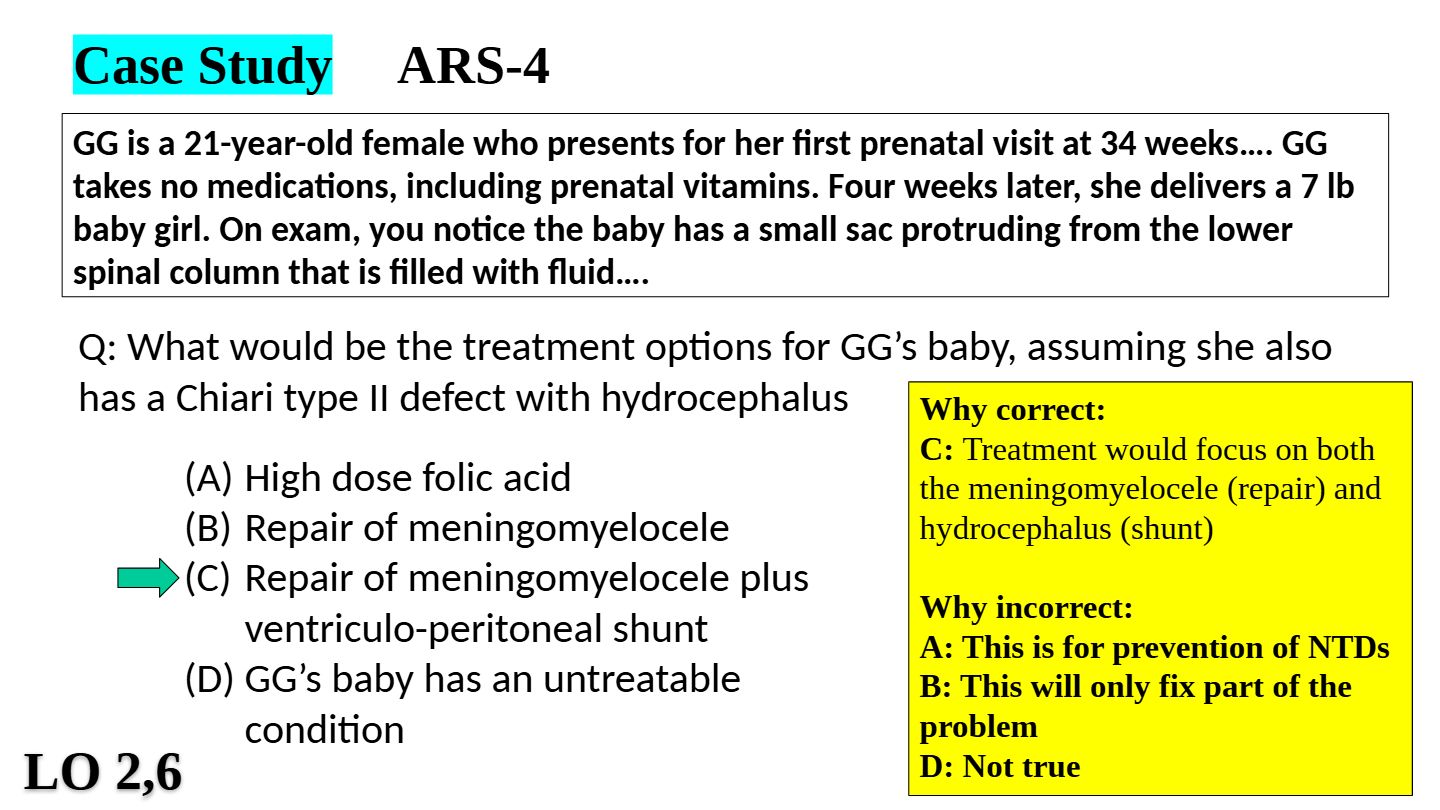
GG is a 21-year-old female who presents for her first prenatal visit at 34 weeks…. GG takes no medications, including prenatal vitamins. Four weeks later, she delivers a 7 lb baby girl. On exam, you notice the baby has a small sac protruding from the lower spinal column that is filled with fluid….​ Q: What would be the treatment options for GG’s baby, assuming she also has a Chiari type II defect with hydrocephalus​

1

High dose folic acid

2

Repair of meningomyelocele

3

Repair of meningomyelocele plus ventriculo-peritoneal shunt

4

GG’s baby has an untreatable condition

21

media

22

media

23

media

24

Multiple Choice

LO 1

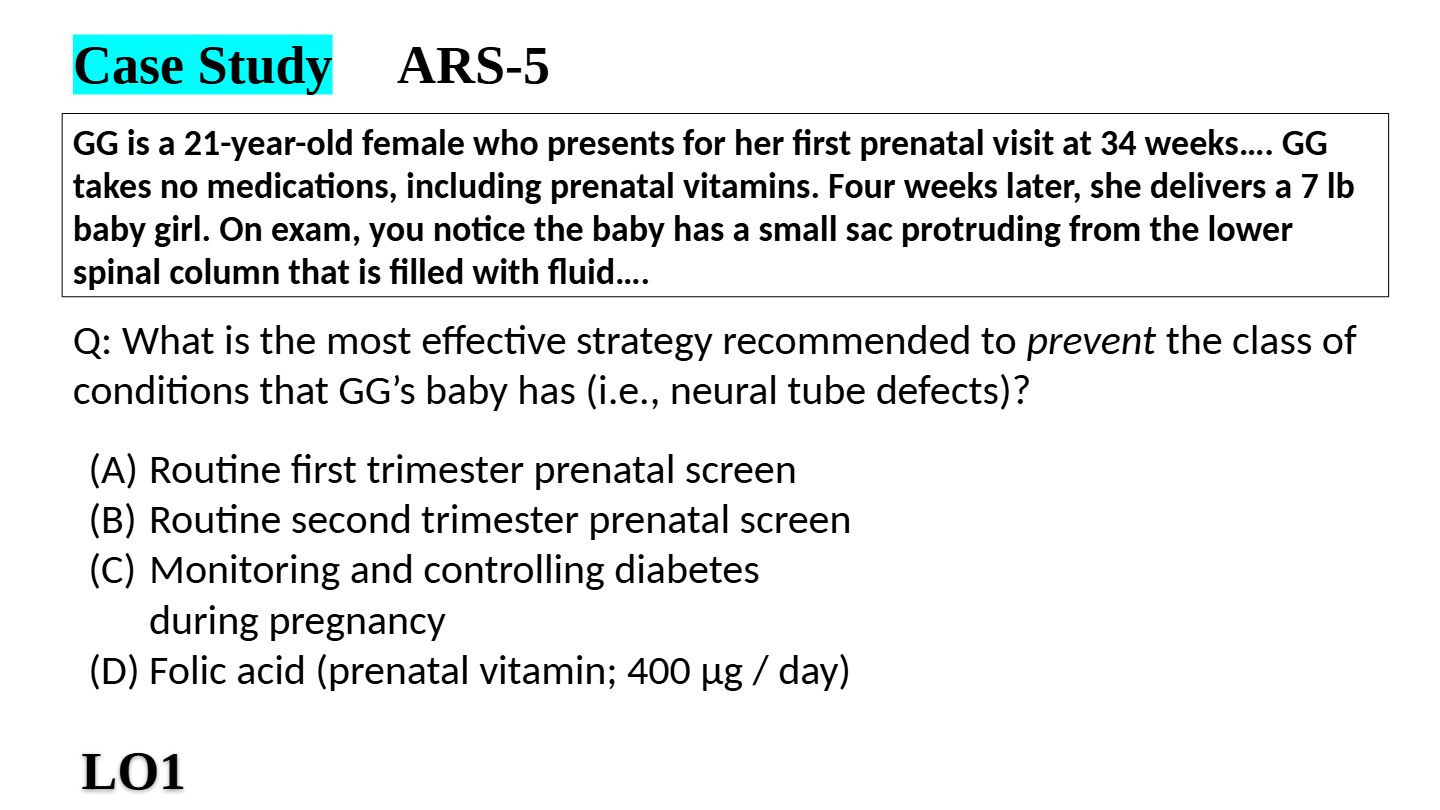
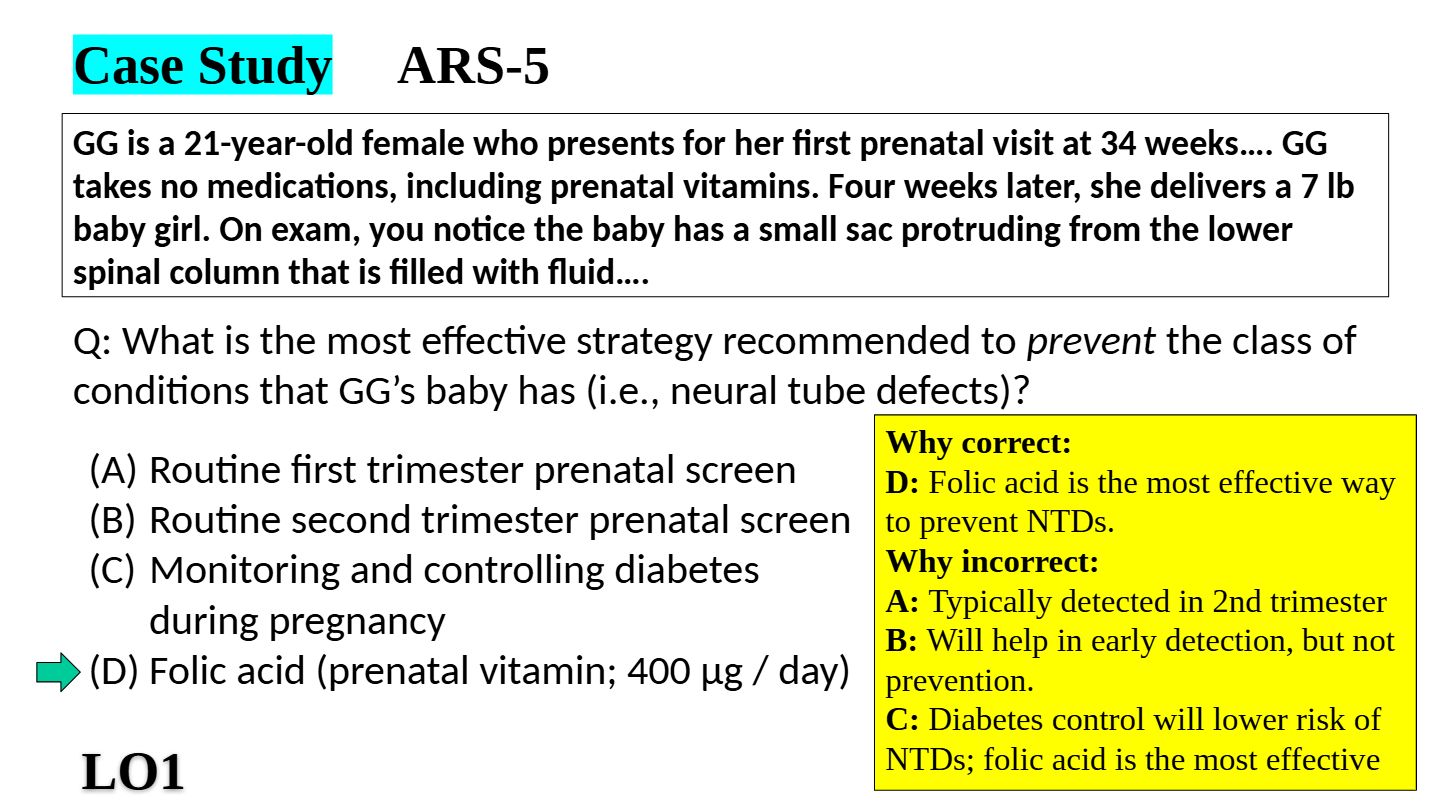
GG is a 21-year-old female who presents for her first prenatal visit at 34 weeks…. GG takes no medications, including prenatal vitamins. Four weeks later, she delivers a 7 lb baby girl. On exam, you notice the baby has a small sac protruding from the lower spinal column that is filled with fluid….​ Q: What is the most effective strategy recommended to prevent the class of conditions that GG’s baby has (i.e., neural tube defects)?​

1

Routine first trimester prenatal screen

2

Routine second trimester prenatal screen

3

Monitoring and controlling diabetes during pregnancy

4

Folic acid (prenatal vitamin; 400 µg / day)​

25

media

26

media

27

Multiple Choice

LO 1

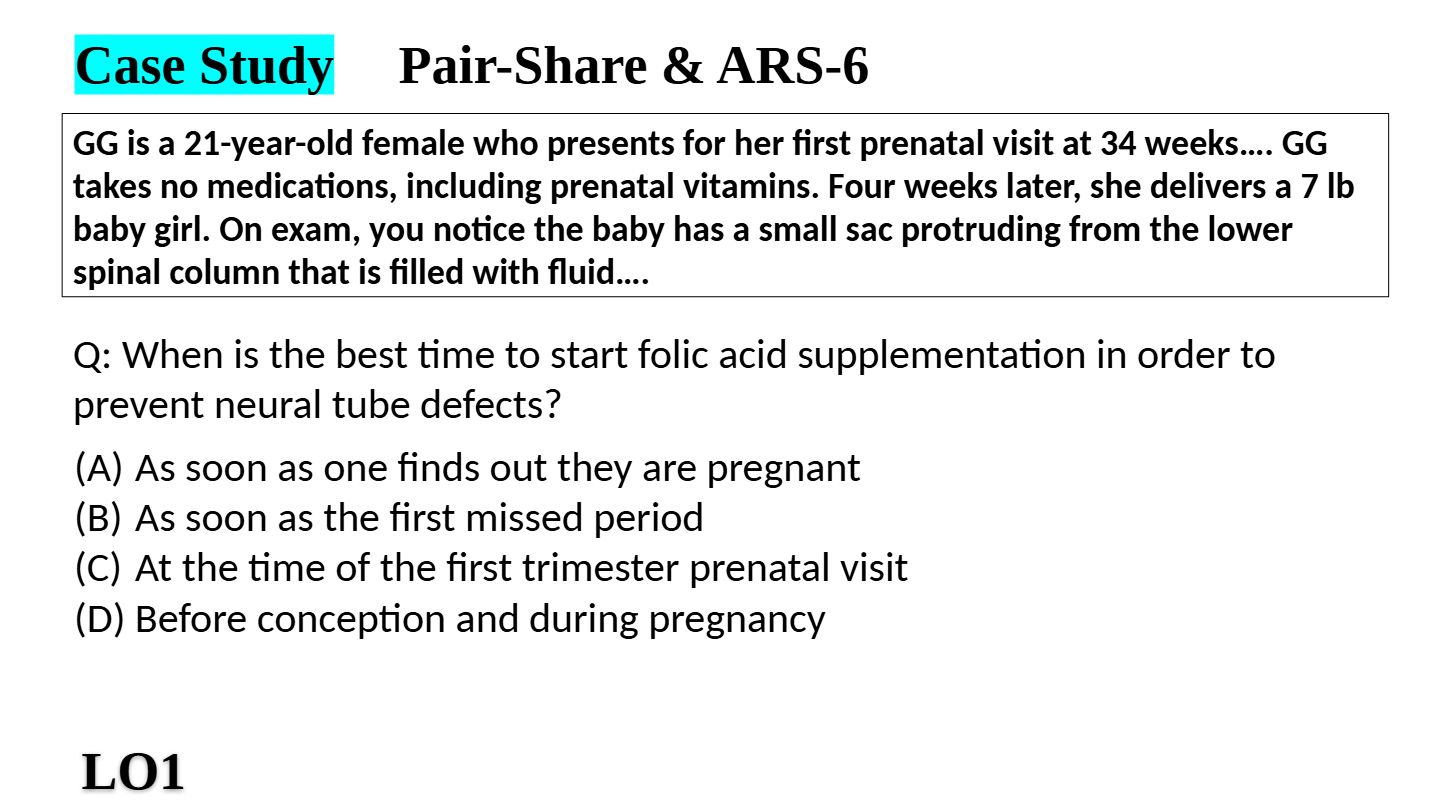
GG is a 21-year-old female who presents for her first prenatal visit at 34 weeks…. GG takes no medications, including prenatal vitamins. Four weeks later, she delivers a 7 lb baby girl. On exam, you notice the baby has a small sac protruding from the lower spinal column that is filled with fluid….​ Q: When is the best time to start folic acid supplementation in order to prevent neural tube defects?

1

As soon as one finds out they are pregnant

2

As soon as the first missed period

3

At the time of the first trimester prenatal visit

4

Before conception and during pregnancy

28

media

29

media

30

media

31

media

32

Multiple Choice

LO 3

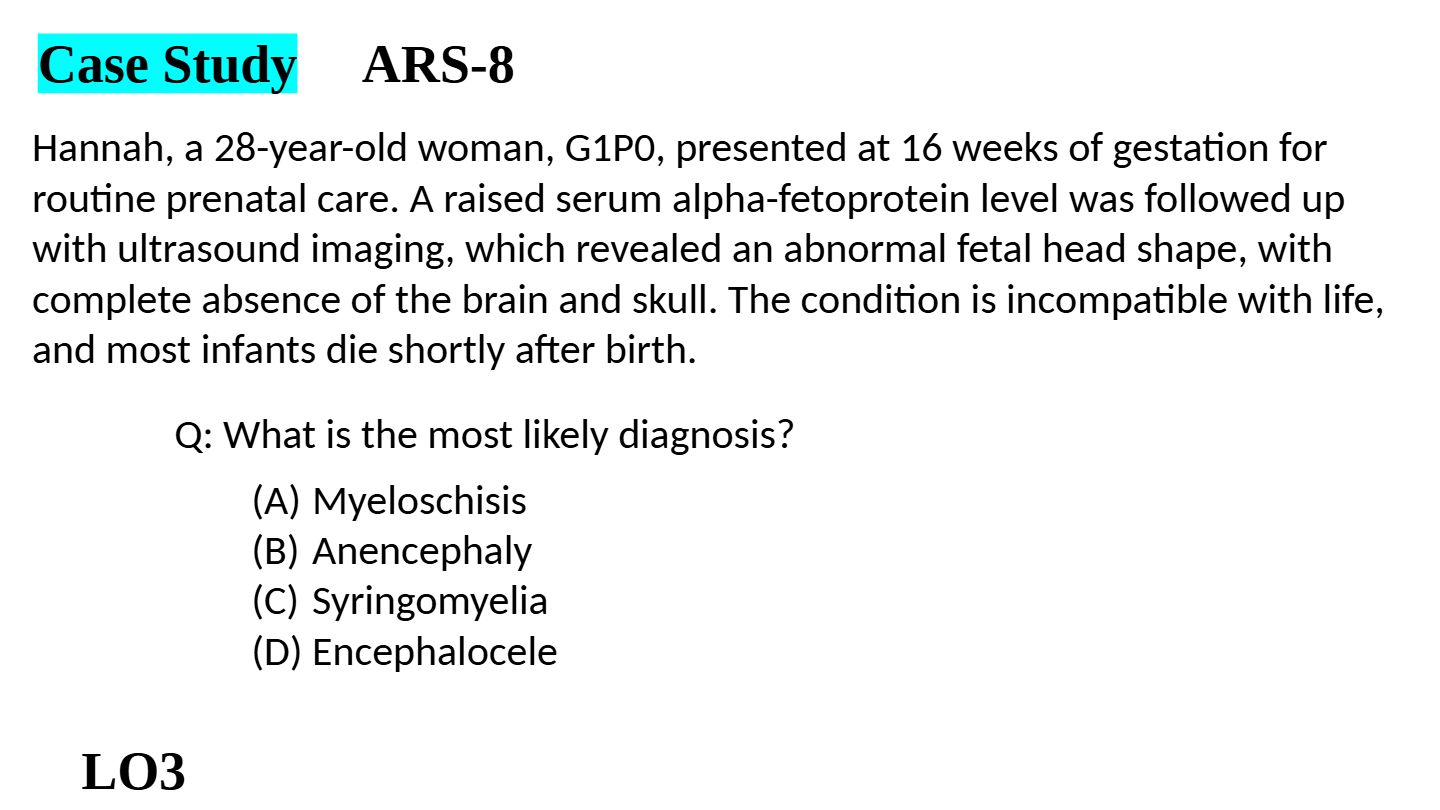
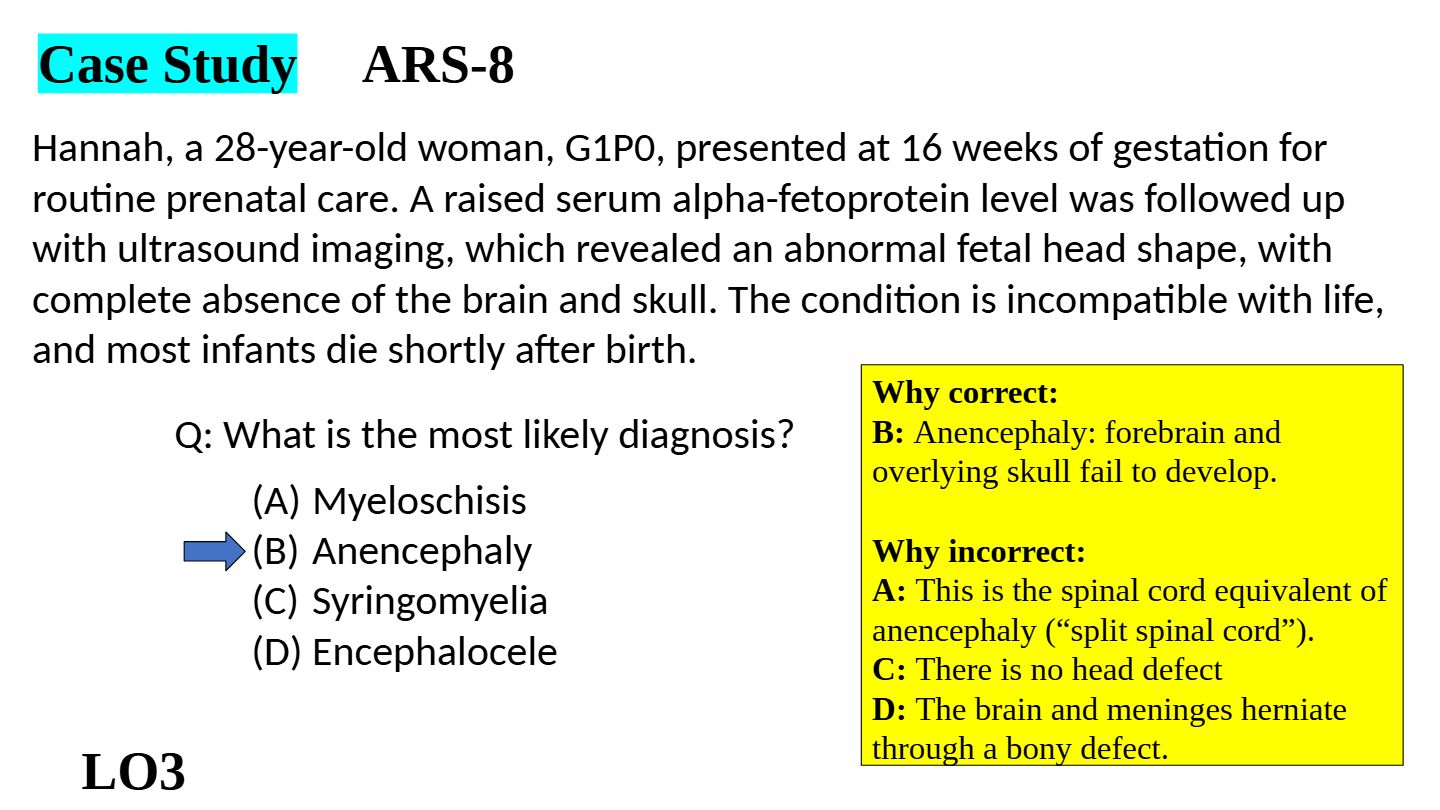
Hannah, a 28-year-old woman, G1P0, presented at 16 weeks of gestation for routine prenatal care. A raised serum alpha-fetoprotein level was followed up with ultrasound imaging, which revealed an abnormal fetal head shape, with complete absence of the brain and skull. The condition is incompatible with life and most infants die shortly after birth.

Q: What is the most likely diagnosis?​

1

Myeloschisis

2

Anencephaly

3

Syringomyelia

4

Encephalocele

33

media

34

media

35

Multiple Choice

LO 1

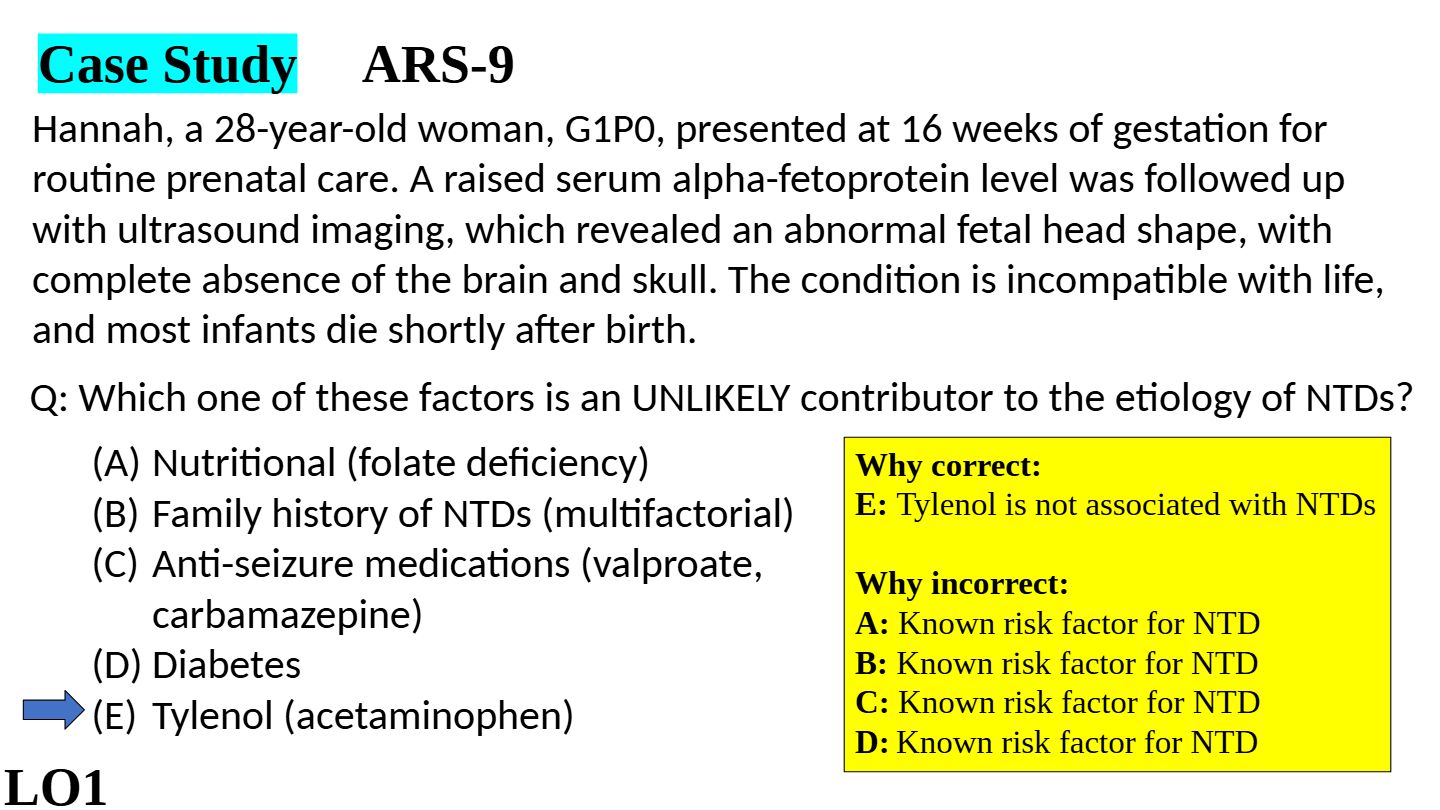
Hannah, a 28-year-old woman, G1P0, presented at 16 weeks of gestation for routine prenatal care. A raised serum alpha-fetoprotein level was followed up with ultrasound imaging, which revealed an abnormal fetal head shape, with complete absence of the brain and skull. The condition is incompatible with life, and most infants die shortly after birth. ​ Q: Which one of these factors is an UNLIKELY contributor to the etiology of NTDs?​

1

Nutritional (folate deficiency)

2

Family history of NTDs (multifactorial)

3

Anti-seizure medications (valproate, carbamazepine)

4

Diabetes

5

Tylenol (acetaminophen)

36

media

37

media

38

media
media

Show answer

Auto Play

Slide 1 / 38

SLIDE