

USHC 3.CE_CX_Assess Progressive_Context Urban Demographics

Presentation
•
Social Studies
•
9th - 12th Grade
•
Practice Problem
•
Easy

Chris Hapeshis
Used 3+ times
FREE Resource
35 Slides • 24 Questions
1

2

3
Multiple Choice
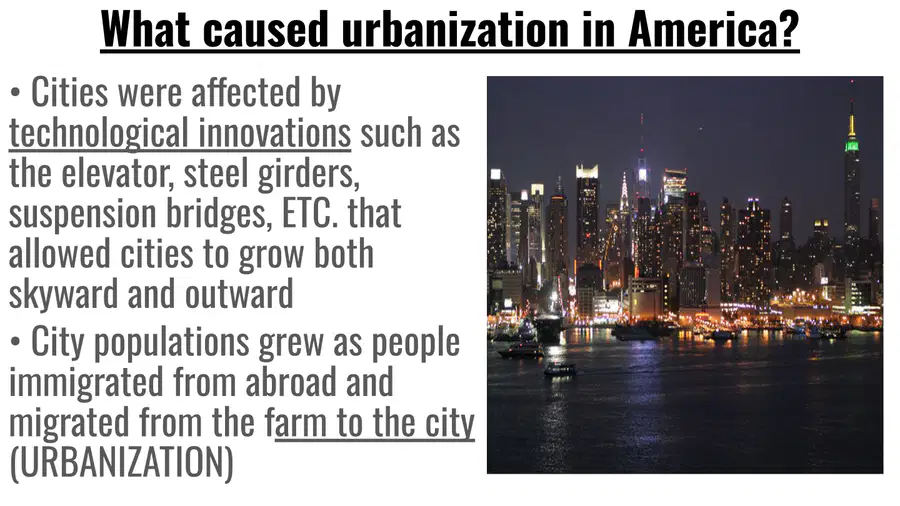
Which of the following best describes the main reason cities developed in America during the 19th century?
They were centers of trade, transportation hubs, and industrial production.
They were primarily agricultural communities.
They were established for religious freedom.
They were created as military outposts.
4
5
Fill in the Blanks
6
Multiple Choice
Which of the following technological innovations contributed to urbanization in America?
Elevator
Steam engine
Cotton gin
Telegraph
7
8

9
10
Multiple Select
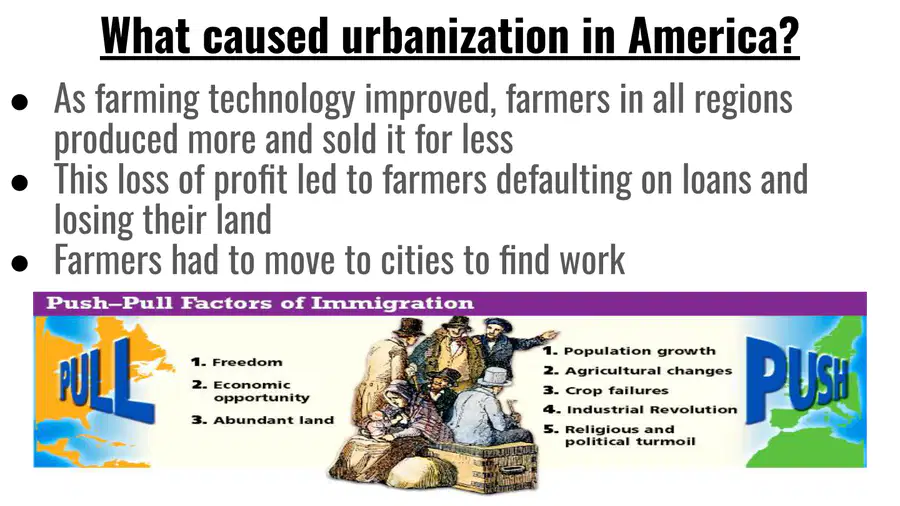
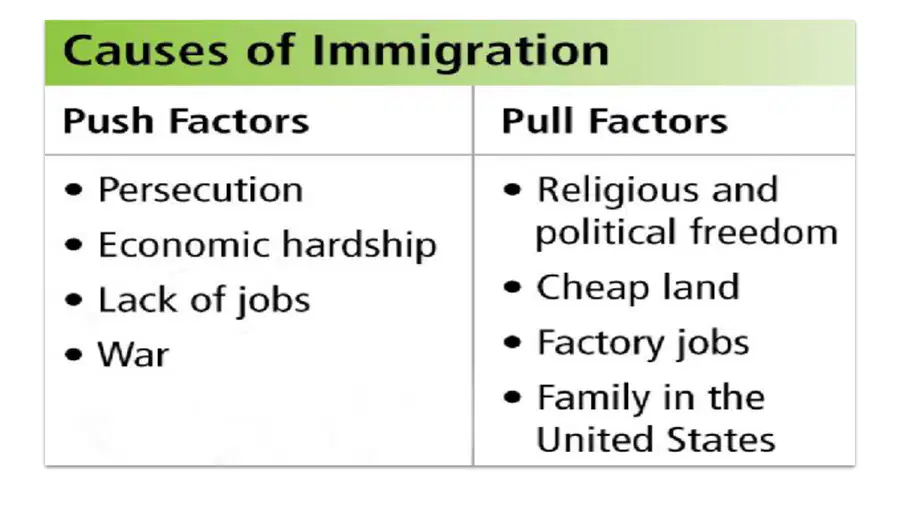
Which of the following are considered 'push factors' that led to immigration to the United States?
Persecution
Economic hardship
Cheap land
Lack of jobs
11

12
Categorize
Italians
Russians
Poland
Greece
The "New Immigrants" of this time period came from southern and eastern Europe. Place each group into the region from which they came.
13

14
Fill in the Blanks
15
16
Fill in the Blanks
17
18
Multiple Select
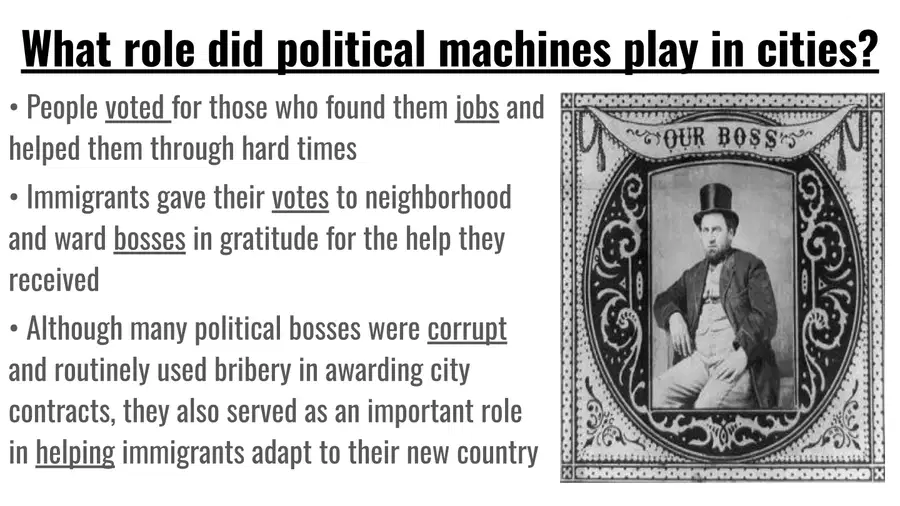
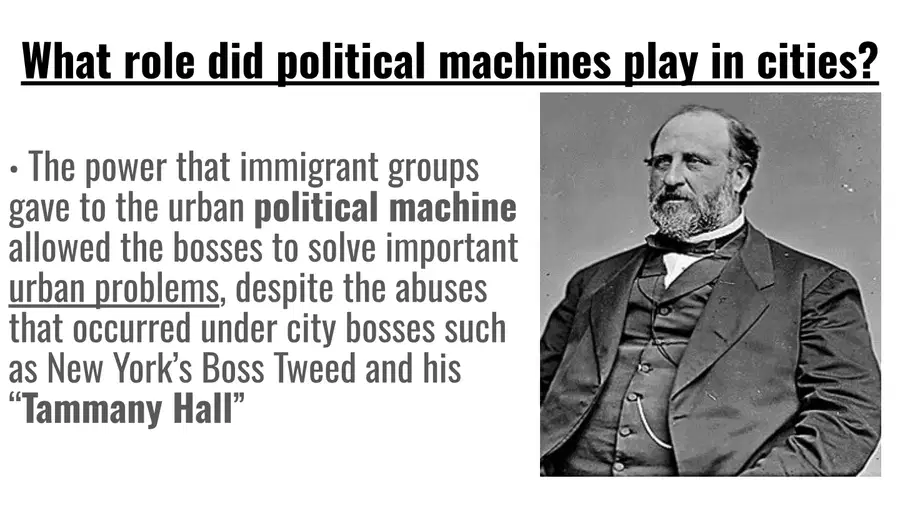
Which THREE of the following were roles played by political machines in cities?
Providing jobs and assistance to immigrants
Solving urban problems
Promoting fair elections
Using bribery and corruption
19
 Video from Google Slides
20

21
Drag and Drop

22
Multiple Select
Which of the following were problems caused by increasingly crowded city conditions during urbanization?
Housing shortages
Improved transportation
Sanitation issues
Increased crime
23
24
Multiple Choice
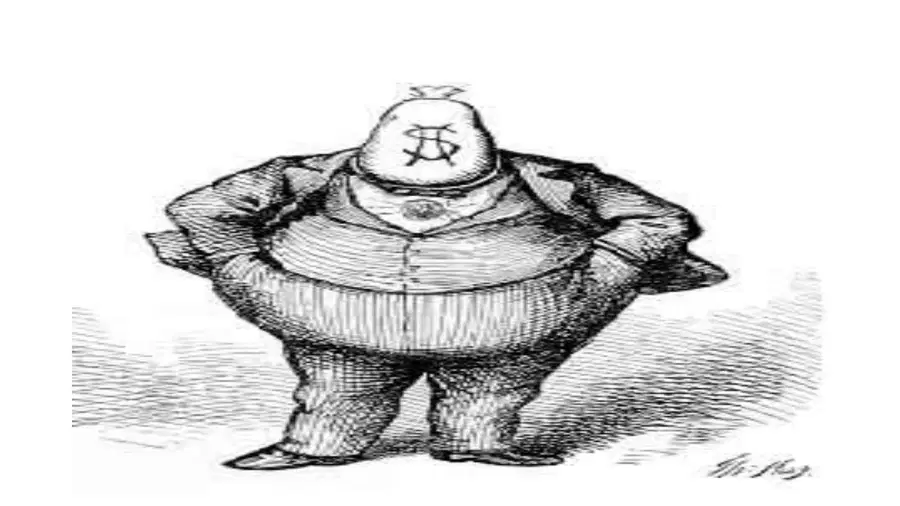
What message does the cartoon in the last image convey about political bosses during the era of urbanization?
they all wore pinstripes
they gained both wealth and power
William "Boss" Tweed was the only true Boss
they were considered "progressives"
25

26
27
Multiple Choice
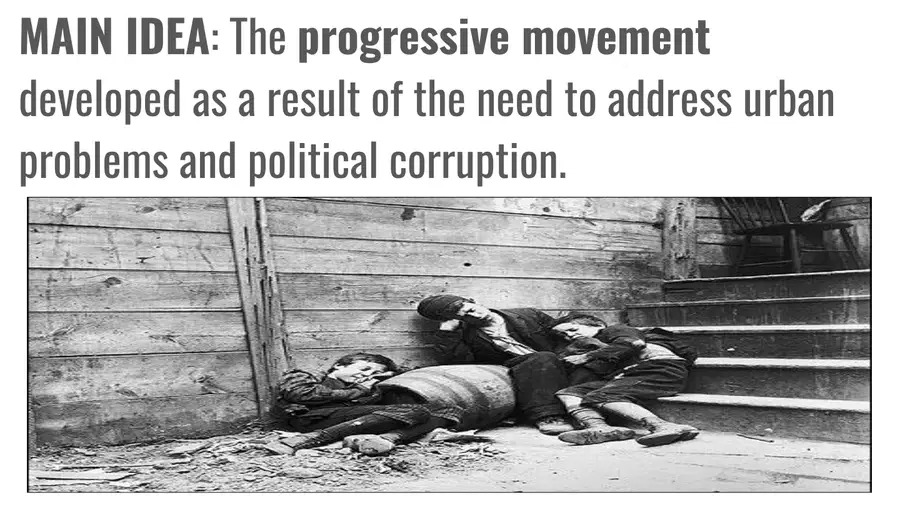
What was the main idea behind the Progressive Movement?
To address urban problems and political corruption.
To promote laissez-faire economics.
To encourage industrial monopolies.
To reduce government involvement in society.
28

29
30
Multiple Choice
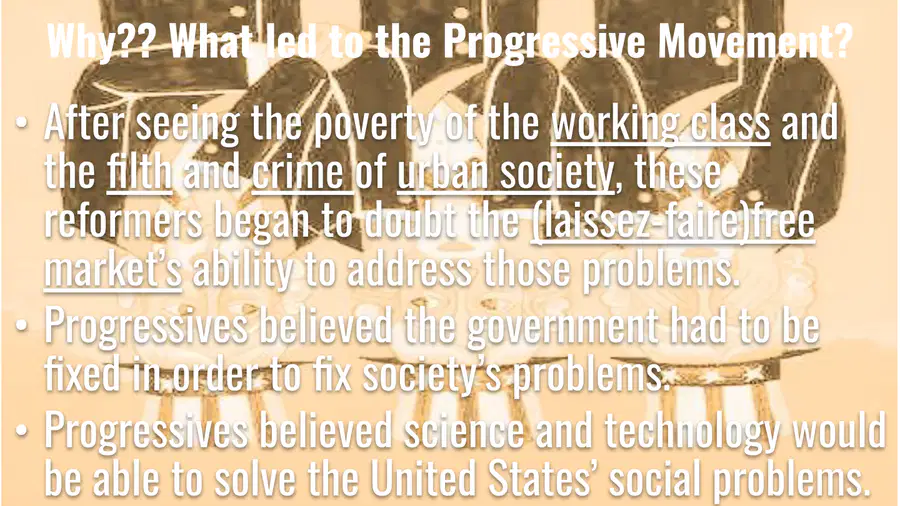
What were some of the main urban problems that led to the rise of the Progressive Movement, and what solutions were proposed to address them?
Crowding, poor housing, danger, potential for fire, and poor sanitation; solutions included skyscrapers, building codes, streetlights, electric lights, and public-health departments.
Lack of education, unemployment, and lack of transportation; solutions included new schools, job training, and public buses.
Overpopulation, pollution, and lack of entertainment; solutions included birth control, recycling programs, and theaters.
Crime, lack of food, and lack of water; solutions included more police, food banks, and water wells.
31

32
33
Fill in the Blanks
34
Multiple Select
Which of the following beliefs were generally held by Progressives?
Industrialization and urbanization had created many social problems.
The government should take more responsibility for social problems.
The free market alone could solve all social problems.
Science and technology could help solve social problems.
35
36
Multiple Choice
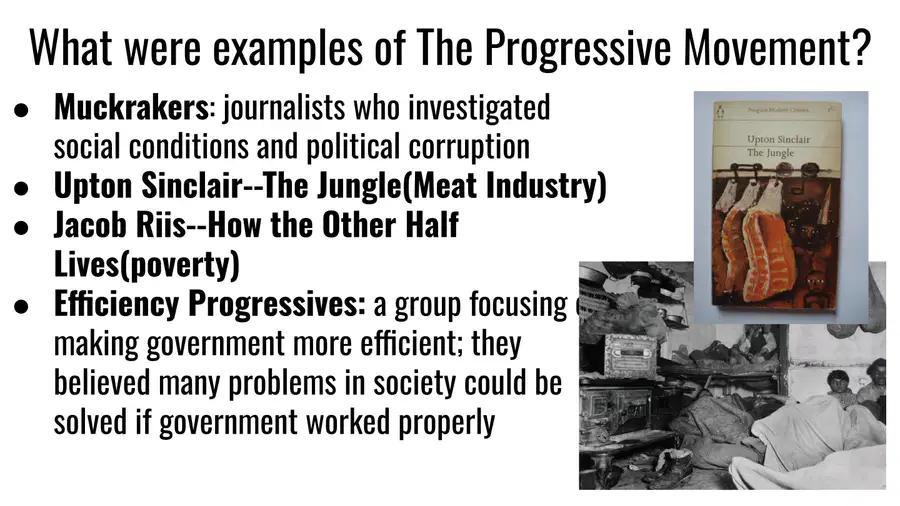
Which of the following was NOT an example of the Progressive Movement?
Muckrakers investigating social conditions
Upton Sinclair writing The Jungle
Jacob Riis exposing poverty
The creation of the Federal Reserve
37
 Video from Google Slides
38

39
40
Fill in the Blanks
41
Multiple Select
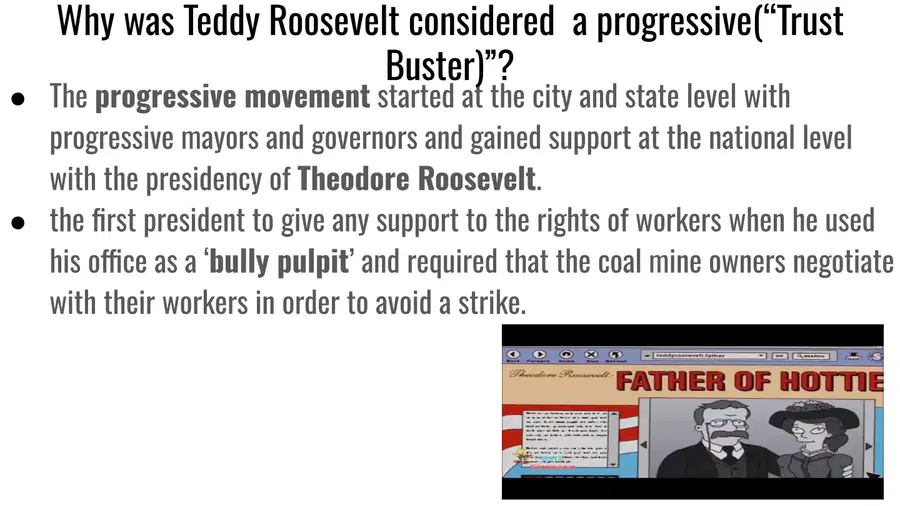
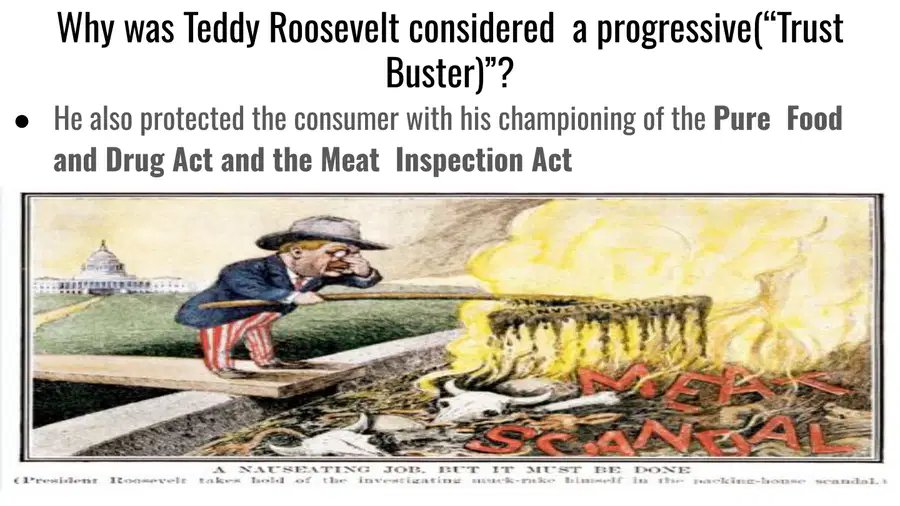
Which of the following actions contributed to Theodore Roosevelt's reputation as a 'trust-buster'?
Supporting the Sherman Antitrust Act
Enhancing the powers of the Interstate Commerce Commission
Championing the Pure Food and Drug Act
Opposing all forms of government regulation
42
43
44
Multiple Choice
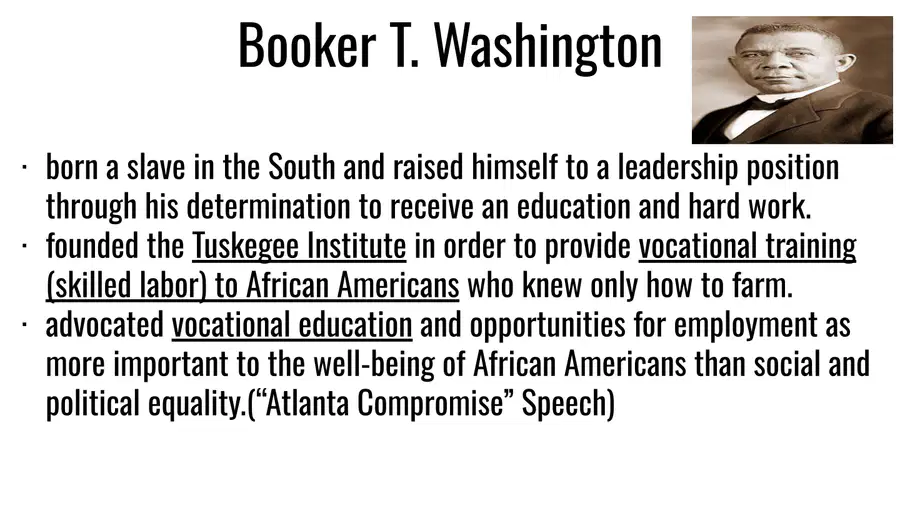
What was Booker T. Washington's main approach to improving the lives of African Americans?
Promoting political protests
Focusing on vocational education and employment
Encouraging migration to the North
Demanding immediate social equality
45
46
Labelling
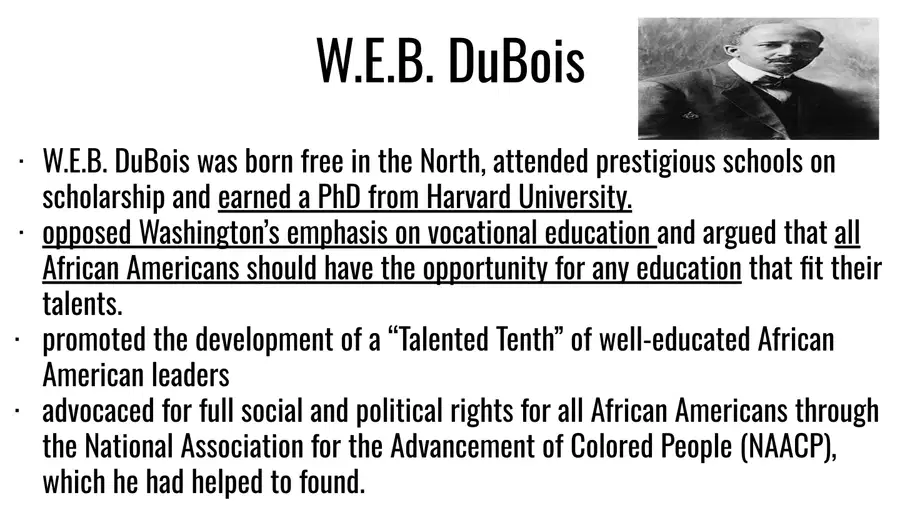
Label the Venn Diagram to compare and contrast the ideas/accomplishments of Washington and Dubois.
Vocation School
Tuskegee Institute
Gradual Change
championed African American rights
NAACP
Immediate Change
47
48
49
50
51
Fill in the Blanks
52

53
Match
Match the following
16th Amendment
17th Amedment
18th Amendment
19th Amendment
income tax
Direct election of Senators
prohibition of alcohol
Women's Suffrage
income tax
Direct election of Senators
prohibition of alcohol
Women's Suffrage
54
Match

Match the following Progressive Era
IDA B. Wells
(Stop Lynching)
Jane Addams
(Hull House)
Sinclair
(Drug & Food Act)
W.E.B Dubois
(NAACP)
Susan B. Anthony
(Women Suffrage)
IDA B. Wells
(Stop Lynching)
Jane Addams
(Hull House)
Sinclair
(Drug & Food Act)
W.E.B Dubois
(NAACP)
Susan B. Anthony
(Women Suffrage)
55
56
57
58
59
Multiple Choice
Effects: Improved safety conditions, Reduced work hours, Restrictions on child labor
Which of the following best completes this diagram?
Show answer
Auto Play
Slide 1 / 59
SLIDE
Similar Resources on Wayground

52 questions
Los Quehaceres (Pre-song story)
Presentation
•
9th - 12th Grade
53 questions
Quelle heure est-il?
Presentation
•
9th - 12th Grade
52 questions
Schizophrenia
Presentation
•
9th - 12th Grade
52 questions
Lesson 5 - Using Communication Skills
Presentation
•
9th - 12th Grade
53 questions
Wildlife Conservation
Presentation
•
9th - 12th Grade
57 questions
Lesson 1: 1920s- A Return to Normalcy
Presentation
•
9th - 12th Grade
57 questions
Government - Unit 1 - Lesson 2
Presentation
•
9th - 12th Grade
Popular Resources on Wayground
10 questions
HCS SCI 03 Summer School Assessment 1

Quiz
•
3rd Grade
15 questions
HCS SCI 05 Summer School Assessment 1 Review
Quiz
•
5th Grade
22 questions
Day 9 Equations and Inequalities Review
Quiz
•
9th Grade
10 questions
Writing and Identifying Ratios Practice
Quiz
•
5th - 6th Grade
7 questions
PYRAMID PERSPECTIVES part 1
Presentation
•
9th - 12th Grade
12 questions
Understanding the Fourth of July
Quiz
•
9th Grade
15 questions
Soccer World Cup Quiz Questions
Quiz
•
7th Grade