
New ACT Elements

Presentation
•
English
•
1st Grade
•
Practice Problem
•
Hard

Sheri Porubski
FREE Resource
6 Slides • 0 Questions
1
2
English:
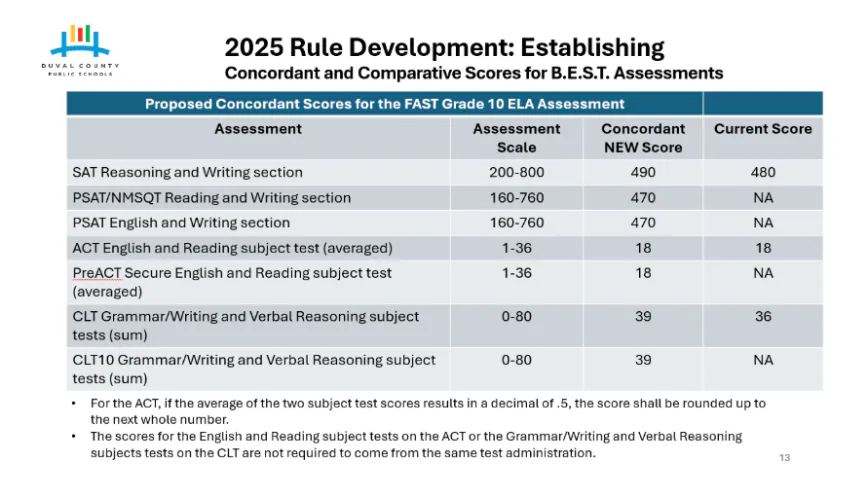
75 questions is now 50
45 minutes is now 35
You have 35 minutes to answer 50 questions instead of 45 minutes to answer 75
Reading:
40 questions is now 36
35 minutes is now 40
You have 40 minutes to answer 36 questions instead of 35 minutes to answer 40
Science is now optional
3
Conventions of Standard English (Grammar, Usage, and Punctuation)
Usage and mechanics: This is the grammar and punctuation component of the test.
Sentence structure: Questions assess your ability to identify and correct issues like run-on sentences, fragments, and subordinate clauses.
Punctuation: This includes questions on commas, apostrophes, and periods. Grammar: This covers areas like subject-verb agreement, pronoun agreement, and adjective/adverb usage. or phrase, or to eliminate redundant information.
4
Production of Writing (Rhetorical Skills) Strategy:
These questions ask you to add, delete, or revise sentences to achieve a specific goal.
Organization: You will be tested on how well a passage is structured and how to improve logical flow, often by rearranging sentences or adding transitional phrases.
Unity and cohesion: You need to ensure that sentences and paragraphs logically fit together and contribute to the overall purpose of the passage.
Knowledge of Language
Style and tone: This category focuses on word choice, clarity, and maintaining a consistent style and tone throughout the writing.
Precision and conciseness: You may be asked to choose the most precise word
5
Passage types (1 literary, 3 informational)
Prose Fiction: Excerpts from novels and short stories, focusing on character and setting.
Social Science: Passages on topics like psychology or economics.
Humanities: Essays and memoirs on subjects like art and music.
Natural Science: Passages covering biology, chemistry, physics, etc..
6
Skills assessed
Key Ideas and Details: Locating and interpreting specific information and main ideas.
Craft and Structure: Understanding vocabulary in context, author's tone, and purpose.
Integration of Knowledge and Ideas: Drawing generalizations, making comparisons, and identifying cause-effect relationships.
Visual and Quantitative Information: Interpreting information presented in charts or graphs (though this is a minor component).
Show answer
Auto Play
Slide 1 / 6
SLIDE
Similar Resources on Wayground

6 questions
Ways to Make Long e
Presentation
•
1st Grade
6 questions
Flat Stanley: Chapters 4 & 5
Presentation
•
1st Grade
6 questions
Angielski
Presentation
•
1st Grade
6 questions
REVIEW 1 LỚP BEARS 1
Presentation
•
1st Grade
6 questions
Inglés I- Clases 35y36
Presentation
•
1st Grade
6 questions
Starter lesson (̶◉͛‿◉̶)
Presentation
•
1st Grade
6 questions
Adjective
Presentation
•
1st Grade
6 questions
Term 3: Comprehension-1(c)
Presentation
•
1st Grade
Popular Resources on Wayground
10 questions
Safety Day 2026 – Student Review

Quiz
•
9th Grade
21 questions
Continents and Oceans
Quiz
•
6th Grade
20 questions
Parts of Speech
Quiz
•
5th Grade
16 questions
Subject & Predicate
Quiz
•
5th Grade
25 questions
Multiplication Facts
Quiz
•
5th Grade
12 questions
Map Skills
Quiz
•
3rd Grade
22 questions
Continents and Oceans
Quiz
•
5th Grade
15 questions
Rounding Decimals
Quiz
•
5th Grade
Discover more resources for English
10 questions
Exploring Subject and Predicate in English Grammar

Interactive video
•
1st - 5th Grade
15 questions
Nouns
Quiz
•
1st Grade
15 questions
Word Study Check - PRACTICE
Quiz
•
1st - 5th Grade
20 questions
Morphology Quiz- aqua/ion
Quiz
•
1st - 5th Grade
12 questions
Nouns and Verbs
Quiz
•
KG - 2nd Grade
15 questions
CVC Words
Quiz
•
1st Grade
15 questions
Short Vowels
Quiz
•
KG - 2nd Grade
10 questions
Exploring Similes and Metaphors in Figurative Language
Interactive video
•
1st - 5th Grade