
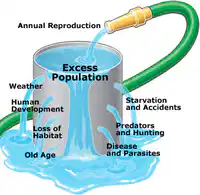
Limiting Factors Carrying Capacity

Presentation
•
Science
•
9th - 12th Grade
•
Practice Problem
•
Easy
+4
Standards-aligned

Aisha Clark
Used 3+ times
FREE Resource
30 Slides • 28 Questions
1

2

3
Multiple Choice
Which of the following best describes the difference between carrying capacity and ecological footprint?
Carrying capacity is about the number of organisms an environment can support, while ecological footprint is about the resources needed to support those organisms.
Carrying capacity refers to the amount of water available, while ecological footprint refers to the number of predators.
Carrying capacity is only relevant to plants, while ecological footprint is only relevant to animals.
Carrying capacity and ecological footprint mean the same thing.
4
Open Ended
How does the concept of carrying capacity influence the size and sustainability of populations in an ecosystem?
5

6
Multiple Choice
Which of the following best defines carrying capacity?
The number of people, other living organisms, or crops that a region can support without environmental degradation.
The maximum number of species in an ecosystem.
The amount of food available in an ecosystem.
The number of predators in an ecosystem.
7
8
Open Ended
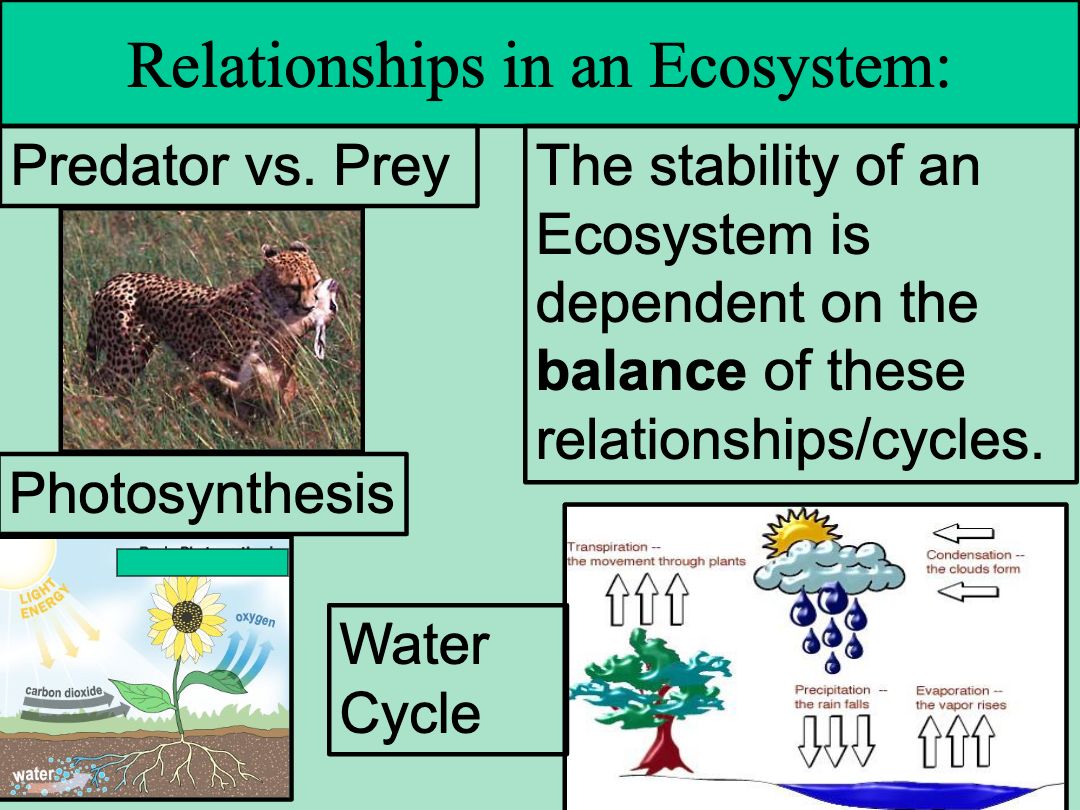
Explain how the balance of relationships such as predator vs. prey, photosynthesis, and the water cycle contribute to the stability of an ecosystem.
9

10
Multiple Select
Which of the following are factors that can affect overall population size?
Number of births
Number of deaths
Number of members entering or leaving the population
Amount of sunlight
11

12
Open Ended
What are some examples of factors that limit the size of a student population in a classroom?
13

14
Open Ended
What is carrying capacity and what are 3 factors that can affect overall population size?
15

16
Fill in the Blanks
Anything that limits or decreases the size of a population is called a
Type answer...
17

18
Multiple Choice
Which of the following is an abiotic factor that may limit the size of a population?
Sunlight
Competition
Predation
Parasitism
19

20
Open Ended
Explain how both abiotic and biotic factors can limit the size of a population. Use examples from the slides to support your answer.
21

22
Multiple Select
Which of the following are examples of indirect competition in an ecosystem?
Finches with different beak shapes competing for food
A cheetah hunting a gazelle
Two bears fighting over territory
Plants competing for sunlight
23

24
Fill in the Blanks
Direct competition in an ecosystem usually involves organisms that
Type answer...
25

26
Open Ended
How does the predator-prey relationship create cyclical changes in population sizes over time?
27

28
Multiple Choice
Are predator-prey relationships examples of direct or indirect competition?
Direct competition
Indirect competition
29

30
Open Ended
Why might it be good to have predators in an ecosystem?
31

32
Multiple Choice
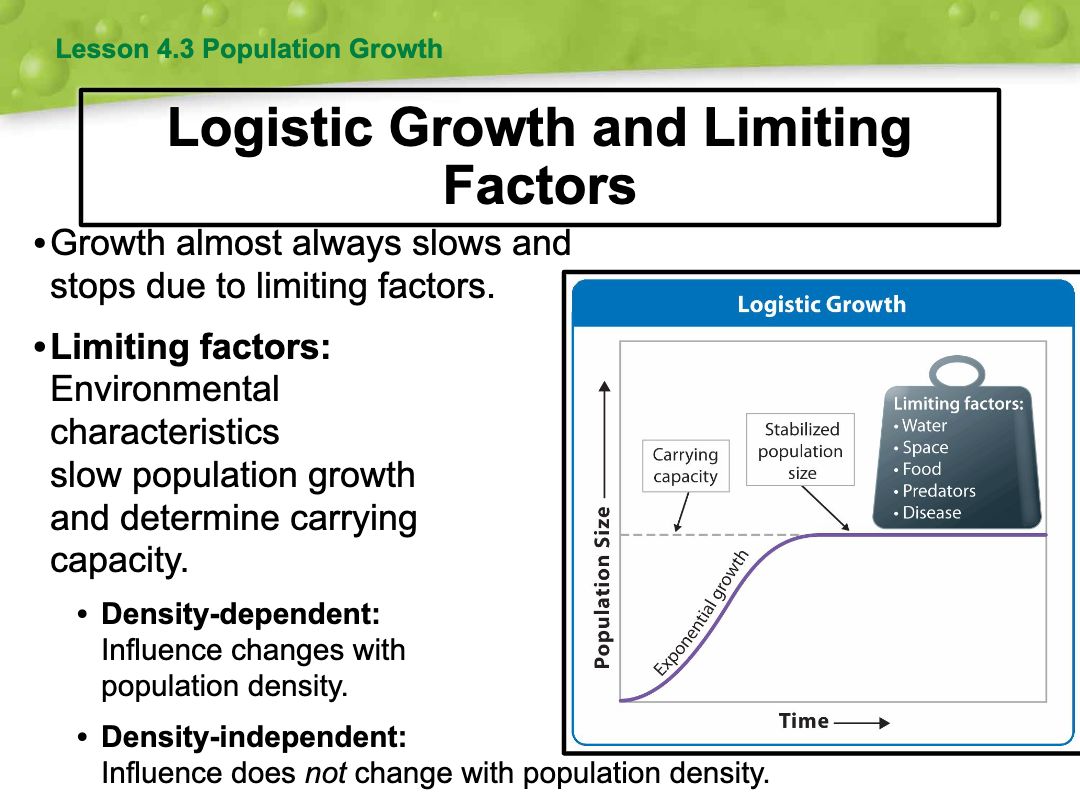
Which of the following best describes carrying capacity in an ecosystem?
The maximum number of organisms the ecosystem can support
The number of predators in an ecosystem
The amount of food available in an ecosystem
The number of births in a population
33

34
Multiple Choice
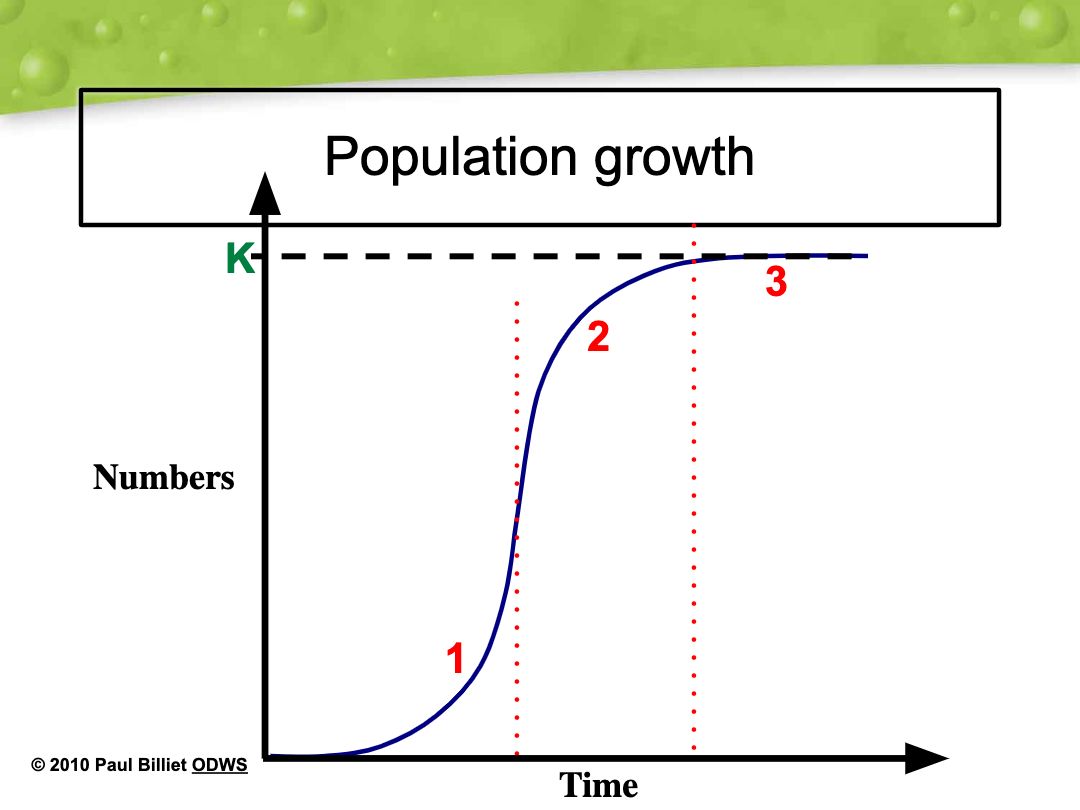
What usually happens to a new, small population as it grows over time?
It increases until carrying capacity is reached and then stabilizes
It decreases steadily
It remains the same size
It increases without limit
35

36
Open Ended
Name two factors that can cause the carrying capacity of an environment to change.
37

38
Fill in the Blanks
From 1800 to today, the human population has grown from about 1 billion to more than
Type answer...
39

40
Multiple Select
Which of the following are ways populations can change?
Natality
Mortality
Immigration
All of the above
41

42
Multiple Choice
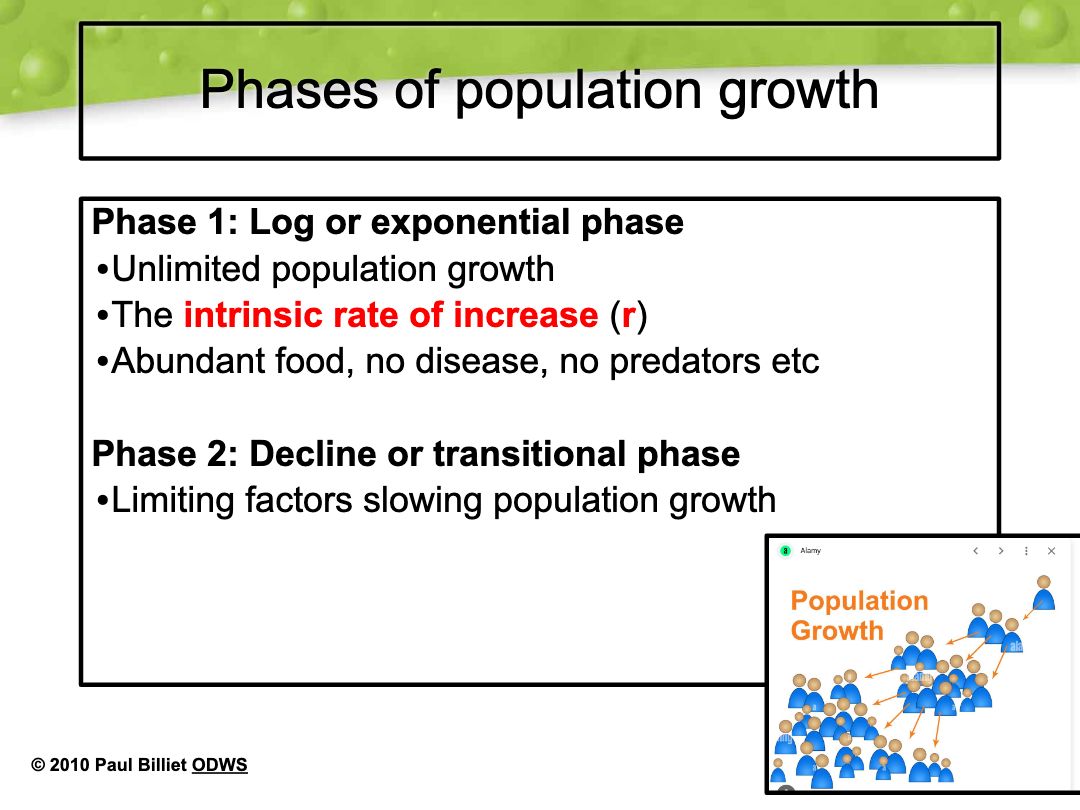
Which of the following factors can lead to exponential population growth?
High birth rates under ideal conditions
High death rates due to disease
Increased emigration
Low immigration
43
44
Open Ended
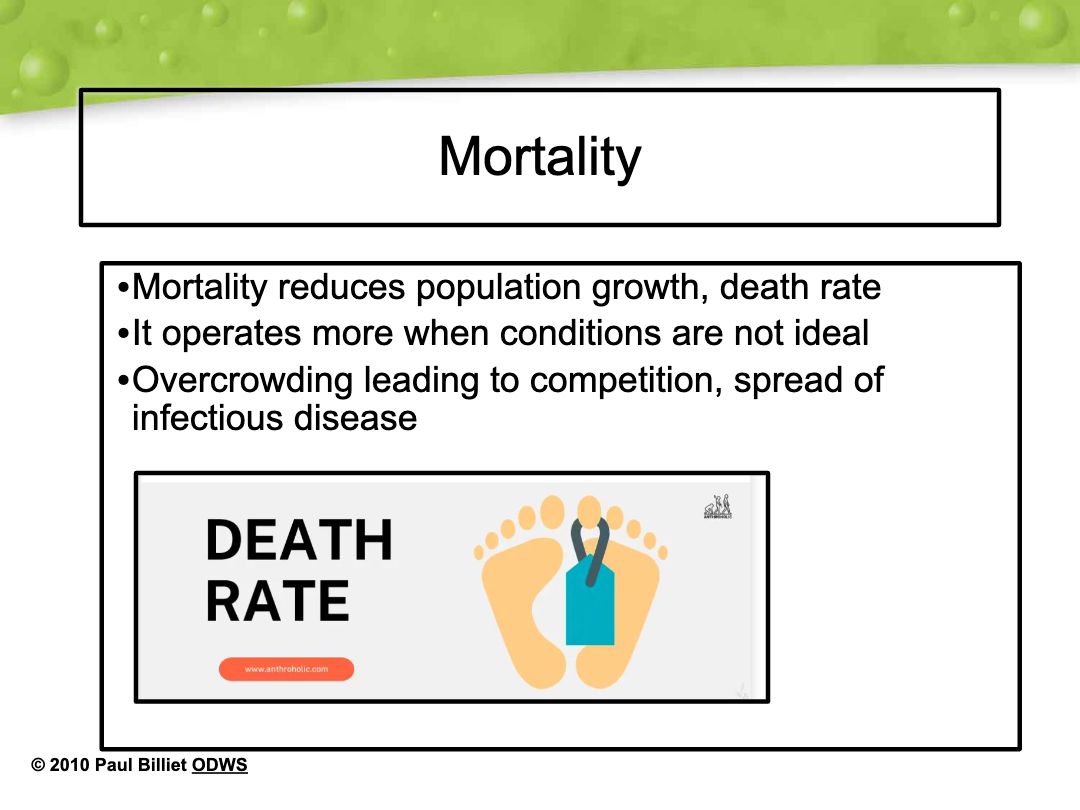
How do mortality and natality together influence the growth of a population?
45

46
Multiple Select
Which of the following statements about survivorship curves is/are correct?
Type I curves show high survival in early and middle life, followed by a rapid decline in later life.
Type II curves show a constant death rate over the organism's life span.
Type III curves show high mortality early in life, with few individuals surviving to old age.
Type I curves show high mortality early in life.
47

48
Fill in the Blanks
A population's size can be temporarily affected by seasonal movement into and out of an area, a process known as
Type answer...
49

50
51
Multiple Choice
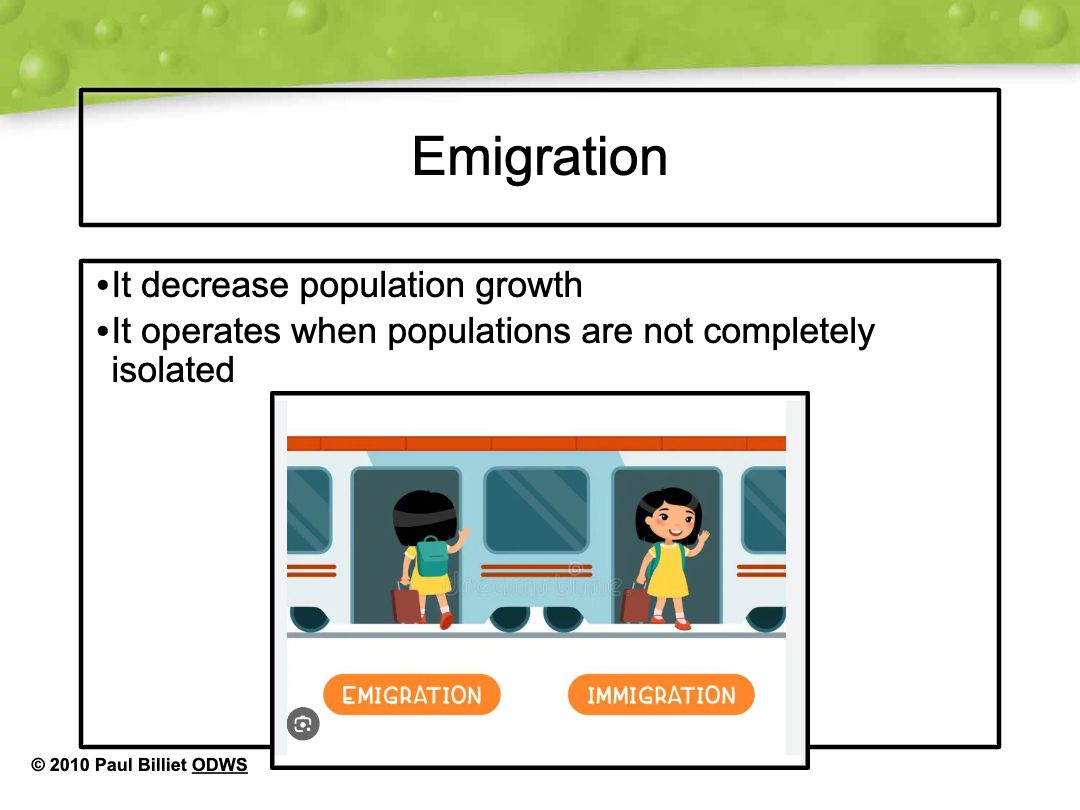
Which of the following is true about immigration and emigration?
Immigration increases population growth, while emigration decreases it.
Both immigration and emigration increase population growth.
Both immigration and emigration decrease population growth.
Immigration decreases population growth, while emigration increases it.
52
Open Ended
Explain how immigration and emigration can affect the population size of a species.
53

54
55
56
57
Open Ended
What is one question you still have about population ecology or carrying capacity after today's lesson?
58
Open Ended
How are populations limited by the carrying capacity of the environment?
Show answer
Auto Play
Slide 1 / 58
SLIDE
Similar Resources on Wayground

55 questions
Energy and Changes in State Lesson
Presentation
•
9th - 12th Grade
51 questions
AKS 7 Review
Presentation
•
9th - 12th Grade
52 questions
Biodiversity Lesson
Presentation
•
9th - 12th Grade
52 questions
Biodiversity and Species
Presentation
•
9th - 12th Grade
52 questions
Biodiversity Introduction
Presentation
•
9th - 12th Grade
52 questions
Biodiversity Easy
Presentation
•
9th - 12th Grade
55 questions
Amendments 11-27
Presentation
•
9th - 12th Grade
Popular Resources on Wayground
10 questions
Safety Day 2026 – Student Review

Quiz
•
9th Grade
21 questions
Continents and Oceans
Quiz
•
6th Grade
20 questions
Parts of Speech
Quiz
•
5th Grade
16 questions
Subject & Predicate
Quiz
•
5th Grade
25 questions
Multiplication Facts
Quiz
•
5th Grade
12 questions
Map Skills
Quiz
•
3rd Grade
22 questions
Continents and Oceans
Quiz
•
5th Grade
15 questions
Rounding Decimals
Quiz
•
5th Grade
Discover more resources for Science
10 questions
Exploring Chemical and Physical Changes

Interactive video
•
6th - 10th Grade
20 questions
Atomic Structure
Quiz
•
9th Grade
10 questions
Exploring the Electromagnetic Spectrum for Middle School Science
Interactive video
•
6th - 10th Grade
10 questions
Exploring Force and Motion Concepts
Interactive video
•
6th - 10th Grade
10 questions
Exploring Air Masses and Weather Fronts
Interactive video
•
6th - 10th Grade
14 questions
Periodic Trends
Interactive video
•
11th Grade
10 questions
Exploring the States of Matter
Interactive video
•
6th - 10th Grade
10 questions
Exploring Forces: Net Force, Normal Force, Gravity, and Friction
Interactive video
•
6th - 10th Grade