Search Header Logo
Study guide unit 2

Study guide unit 2

Assessment

Presentation

•

Science

•

9th - 12th Grade

•

Hard

•
NGSS
MS-LS1-2, HS-LS1-1, HS-LS1-6

+14

Standards-aligned

Created by

GHS Biology undefined

Used 1+ times

FREE Resource

8 Slides • 48 Questions

1

​Study guide Unit 2

By GHS Biology

2

media
media

CHO
Fast/short term energy
Cell wall of plants is made of this
RING shapes
Main source of Energy
-
OSE
Monosaccharide vs polysaccharide

Carbohydrate

ALSO CHO
LONG term energy
Fat and oils
Cell membrane is MOSTLY made of lipids
Glycerol vs fatty acid
Hydrophobic

Lipid

media

3

media
media

CHON
Muscle growth and repair
Protein CHANNEL
R group, letter N
Enzymes
End in ACE
AMINO ACIDS and polypeptide

PRotein

CHONP
DNA, genetic code
Nucleotide vs DNA and RNA

has a letter P on it

Nucleic Acid

media
media

4

Multiple Select

Which of the following elements are found in all macromolecules?

1
2
3
4

5

Multiple Choice

Group contains fats and oils

1

carbohydrates

2

lipids

3

proteins

4

nucleic acids

6

Multiple Choice

Glucose is an example

1

carbohydrates

2

lipids

3

proteins

4

nucleic acids

7

Multiple Select

Contains the elements carbon, hydrogen, and oxygen. Pick 2 answers

1

carbohydrates

2

lipids

3

proteins

4

nucleic acids

8

Multiple Choice

Made of monomers called amino acids

1

carbohydrates

2

lipids

3

proteins

4

nucleic acids

9

Multiple Choice

Contains the elements, carbon, hydrogen, oxygen, and nitrogen.

1

carbohydrates

2

lipids

3

proteins

4

nucleic acids

10

Multiple Choice

DNA and RNA are examples

1

carbohydrates

2

lipids

3

proteins

4

nucleic acids

11

Multiple Choice

These are ALL hydrophobic

1

carbohydrates

2

lipids

3

proteins

4

nucleic acids

12

Multiple Choice

Starch and cellulose are examples

1

carbohydrates

2

lipids

3

proteins

4

nucleic acids

13

Multiple Choice

Contains the elements carbon, hydrogen, nitrogen, and phosphorus

1

carbohydrates

2

lipids

3

proteins

4

nucleic acids

14

Multiple Choice

Question image
The picture indicates which macromolecule? 
1
Carbohydrates
2
Lipids
3
Proteins
4
Nucleic Acid

15

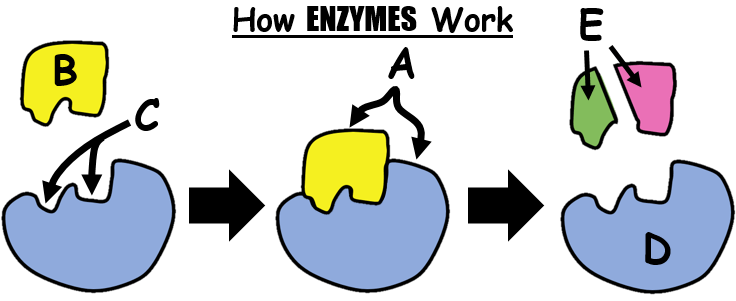
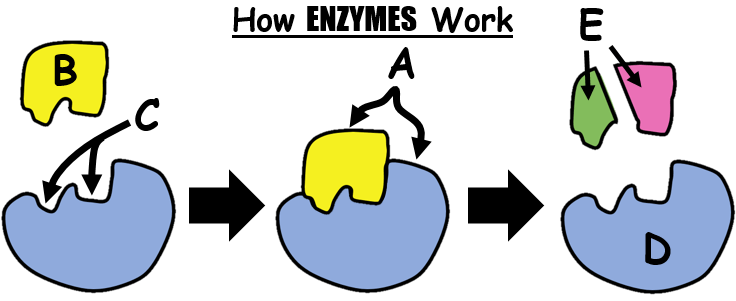
Remember enzymes are proteins
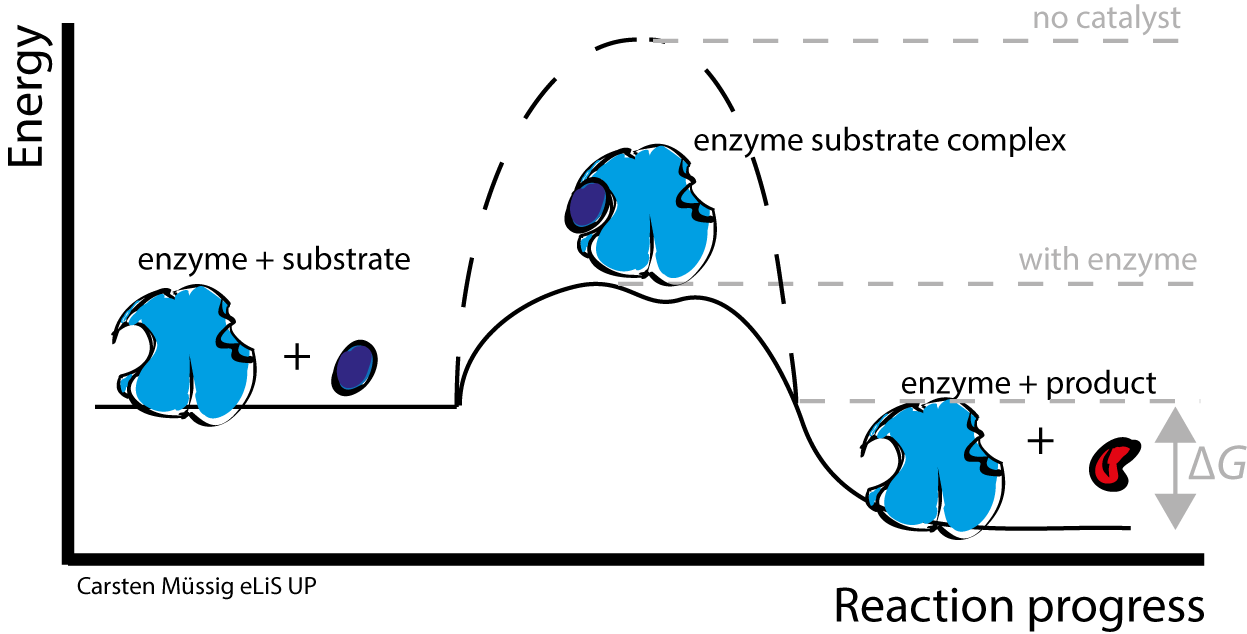
LOWER the rate of reaction
This SPEEDs up the reaction
ACE, lactASE
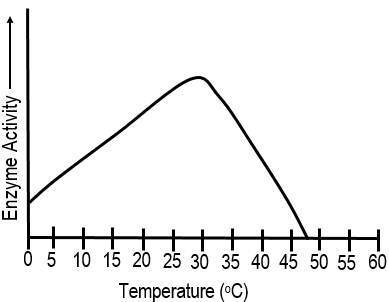
Ph and Temperature DENATURES enzyme
Breaks reactants or builds products
Substrates bind at the active site to make a product

Enzymes

media
media

16

Multiple Choice

With what 3 letters do enzymes typically end?
1
-ose
2
-ase
3
-ese
4
-tic

17

Multiple Choice

Enzymes are an example of

1

Lipids

2

Carbohydrate

3

Protein

4

Nucleic Acid

18

Multiple Choice

Question image
Letter B...
1
active site
2
enzyme
3
substrate
4
products

19

Multiple Choice

Question image
Letter E...
1
active site
2
enzyme
3
substrate
4
products

20

Multiple Choice

Question image
An enzyme speeds up a reaction by
1
lowering the activation energy.
2
raising the activation energy.
3
releasing energy.
4
absorbing energy.

21

Multiple Choice

Question image
Based on the graph, what temperature does this enzyme work best? 
1
15 C
2
40 C
3
30 C
4
47 C

22

Multiple Choice

Enzymes will make a reaction go _______ and use ______ energy.
1
faster, less
2
faster, more
3
slower, less
4
slower, more

23

Multiple Choice

What happens to an enzyme when it is denatured?
1
Activation energy is lowered.
2
It becomes stronger.
3
It loses its shape.
4
Activation energy is raised.

24

media

Miller urey experiment (Abiogenesis and Amino acids)
Primitive earth (no oxygen)
Biogenesis
Spontaneous generation
Redi Experiment
CELL THEORY

Origin of life

media
media

25

Multiple Choice

Which types of organisms developed first due to the early environmental conditions on Earth?

1

prokaryotic and aerobic

2

prokaryotic and anaerobic

3

eukaryotic and aerobic

4

eukaryotic and anaerobic

26

Multiple Choice

What gas was necessary for complex (eukaryotic) life to evolve?
1
Carbon dioxide
2
Oxygen
3
Dihydrogen monoxide
4
Methane

27

Multiple Choice

Question image
Which type of cell came first?
1
Eukaryotic
2
Prokaryotic
3
Plant
4
Both Eukaryotic and Prokaryotic cells evolved around the same time

28

Multiple Choice

Question image
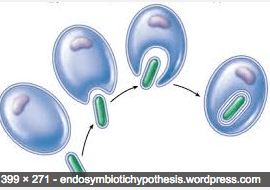
What process is shown within this diagram?
1
Natural selection
2
Endosymbiosis
3
Chemical evolution
4
Abiogenesis

29

Multiple Choice

According to Redi's Experiment it was disproved that...

1

Life appears always in the presence of life...

2

Life appeared from inorganic matter

3

Flyes appear on rotten meat when exposed to air

4

The use of filters does stopped the growing of flyes

30

Multiple Choice

Which statement best describes conditions on early Earth?
1
hot with volcanic activity and electrical storms
2
dry land covered with volcanic dust
3
cold oceans
4
dark and dusty with abundant water

31

​

media

NO membrane bound organelle,
PRO rhymes with NO...No nucleus
Small, simple
Bacteria and Archaebacteria
DR CC

Prokaryote

EU- DO have a nucleus
Large complex Multicelluluar
Animals, Plants, Protista, Fungai
DR CC

Eukaryote

32

Multiple Choice

Which of the following is not a characteristic of a Prokaryotic cell?
1
unicellular
2
floating DNA
3
very small
4
complex

33

Multiple Choice

Which of the following is a characteristic of both Eukaryotic and Prokaryotic cells?
1
ribosomes
2
nucleus
3
membrane bound organelles
4
simple

34

Multiple Choice

Prokaryotic cells include bacteria.
1
True
2
False

35

Multiple Choice

Question image

What do you see?

1

a prokaryotic cell

2

the bottom of the ocean

3

a white blood cell

4

an eukaryotic cell

36

Multiple Choice

Question image

What do you see?

1

a white blood cell

2

an eukaryotic cell

3

DNA

4

a prokaryotic cell

37

media

Organelles

media
media

38

Multiple Choice

Question image

What is the function of the organelle depicted in the photo?

1

To dispose of waste in the cell.

2

To capture sunlight and convert it into glucose for the cell.

3

To release energy into the cell.

4

To control what leaves and enters the cell.

39

Multiple Choice

Which photo shows the mitochondrion of the cell?

1
2
3
4

40

Multiple Choice

This organelle is found in both plant and animal cells, but is usually much bigger in plant cells.

1
2
3
4

41

Multiple Choice

Question image

The purple organelle in photo depicts which organelle?

1

Nucleus

2

Endoplasmic Reticulum

3

Lysosome

4

Ribosome

42

Multiple Choice

A large central vacuole is found in a _____ cell.

1

animal

2

plant

43

Multiple Choice

Question image

Identify the structure that is indicated by the arrow in the image.

1

cell wall

2

central vacuole

3

chloroplast

4

cell membrane

44

Multiple Choice

Which of these organelles is not found in a animal cell?

1

Cell Membrane

2

Nucleus

3

Mitochondria

4

Cell Wall

45

Multiple Choice

Which organelle serves as an internal transport system, and can be either "rough" or "smooth"?

1

Nucleus

2

Mitochondria

3

Cell Wall

4

Endoplasmic Reticulum

46

Multiple Choice

Which organelle makes proteins?

1

Mitochondria

2

Chloroplast

3

Ribosome

4

Lysosome

47

  • Moderation of temperature leads to high specific heat

  • Universal solvent, polar dissolves polar

  • Expansion upon freezing, less dense floats on water

Other properties

Positive and negative sides
Covalent and hydrogen bonds
Cohesion
Adhesion
Capillary action

Polarity

Water properties

48

Multiple Choice

What kind of molecule is water?

1

Ionic

2

Polar Covalent

3

Nonpolar Covalent

4

Metallic

49

Multiple Choice

Which of the following is an example of COHESION?

1

water sticking to water

2

water sticking to glass

3

oil sticking to plastic

4

hydrogen sticking to oxygen

50

Multiple Choice

Which of the following is the CORRECT list of water's properties?

Read Carefully!

1

adhesion, cohesion, high specific heat, universal solvent

2

adhesion, cohesion, low specific heat, universal solvent

3

adhesion, no cohesion, low specific heat, universal solute

4

no adhesion, cohesion, high specific heat, universal solute

51

Multiple Choice

Question image

You body sweats to help prevent you from overheating. How does water regulate temperature?

1

it lets heat pass through it

2

it absorbs a lot of heat, then decreases in temperature

3

it absorbs a lot of heat, but only increases a little in temperature

4

heat is afraid of water and avoids it

52

Multiple Choice

Water is polar. What does that mean?

1

it is a molecule with opposite charges on opposite ends

2

it is a molecule with no charge

3

it is a molecule with identical charges on opposite ends

4

it is a molecule with too many protons

53

Multiple Choice

Water sticks well to many materials. What term relates to this property of water?

1

cohesion

2

adhesion

3

density

4

surface tension

54

Multiple Choice

Question image

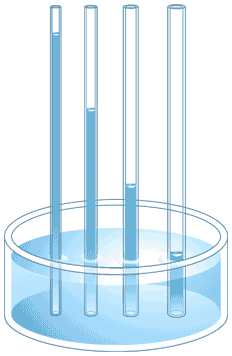
What is the term for water's ability to defy gravity and climb up a tube?

1

Capillary Action

2

Specific Heat

3

Universal Solvent

4

Magic

55

Multiple Choice

Question image

Why does ice float?

1

water expands when it freezes, making ice less dense than water

2

water compacts when it freezes, making ice more dense than water

3

hydrogen bonds in water push the ice to the surface

4

ice is afraid of water, and avoids it

56

Multiple Choice

Question image

A water strider can skate along the top of a pond because:

1

covalent bonds result in water cohesion (surface tension)

2

hydrogen bonds result in water cohesion (surface tension)

3

water striders have adapted to take advantage of water cohesion

4

water striders are afraid of water and avoid it

​Study guide Unit 2

By GHS Biology

Show answer

Auto Play

Slide 1 / 56

SLIDE