Search Header Logo
  1. Resource Library
  2. Science
  3. Biology
  4. History Of Life On Earth
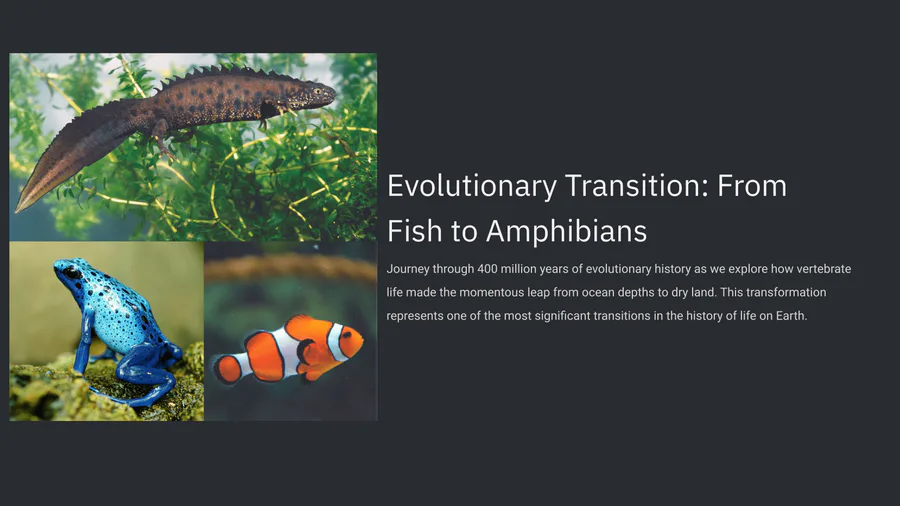
  5. Evolutionary Transition: From Fish To Amphibians
Evolutionary Transition: From Fish to Amphibians

Evolutionary Transition: From Fish to Amphibians

Assessment

Presentation

Science

9th - 12th Grade

Practice Problem

Medium

NGSS
MS-LS4-2, MS-LS1-5, MS-LS2-1

+2

Standards-aligned

Created by

LaKoda Sparks

Used 3+ times

FREE Resource

17 Slides • 16 Questions

1
media

2

Open Ended

Why is the evolutionary transition from fish to amphibians considered one of the most significant events in the history of life on Earth?

3

media

4

media

5

media

6

Multiple Choice

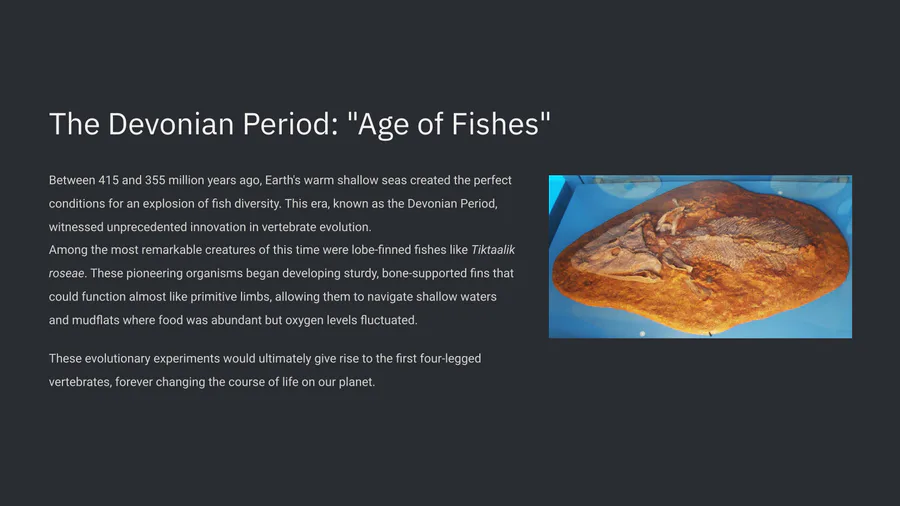
What evolutionary innovation during the Devonian Period allowed some fish to eventually give rise to the first four-legged vertebrates?

1

Development of bone-supported fins

2

Development of gills

3

Development of scales

4

Development of swim bladders

7

media

8

Multiple Select

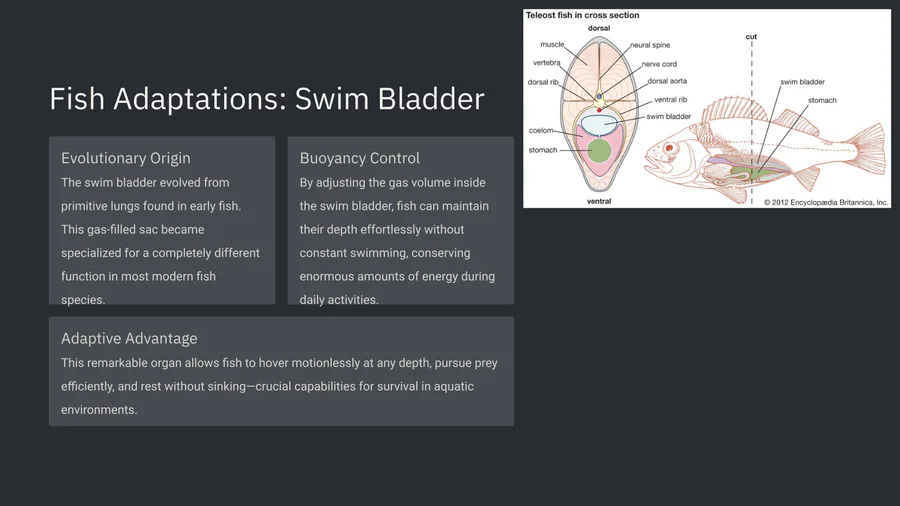
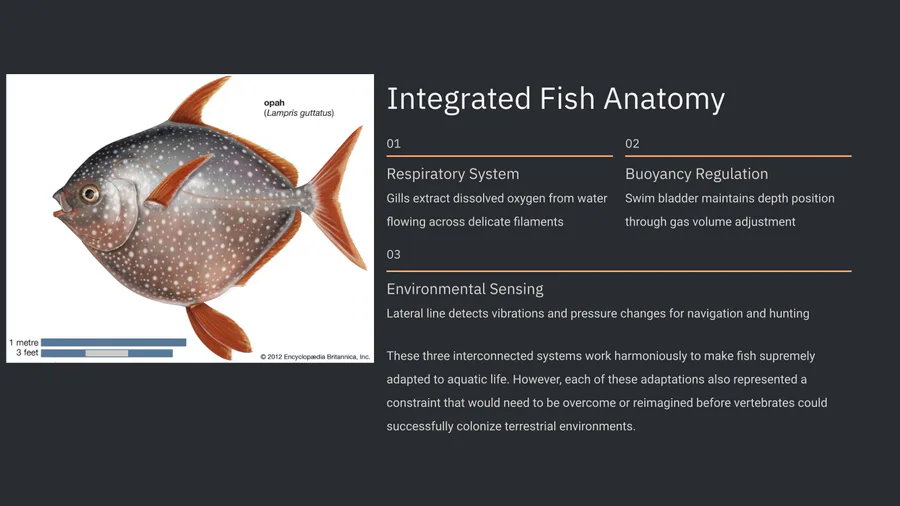
Which of the following are functions of the swim bladder in modern fish?

1

Maintaining buoyancy

2

Extracting oxygen from water

3

Conserving energy during daily activities

4

Hovering motionlessly at any depth

9

media

10

Multiple Choice

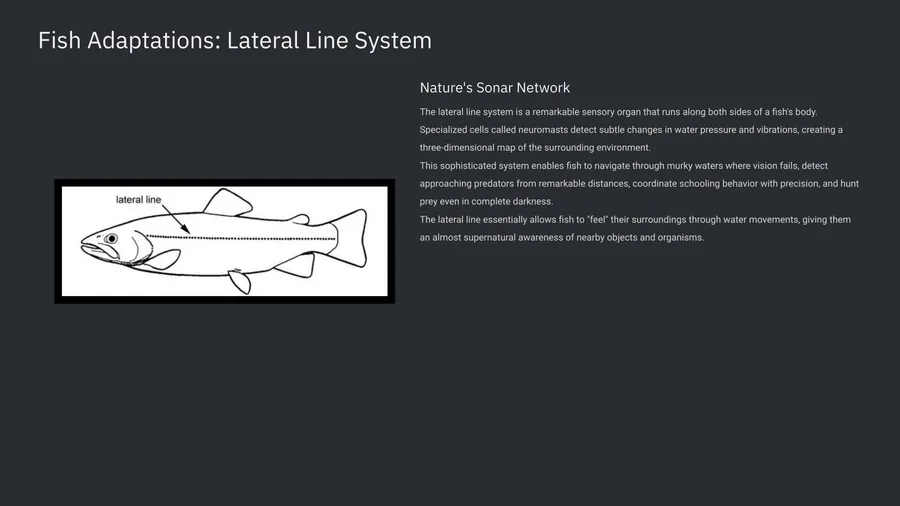
Which adaptation allows fish to sense their environment even in complete darkness?

1

Swim bladder

2

Lateral line system

3

Gills

4

Scales

11

Fill in the Blanks

Type answer...

12

media

13

Multiple Select

According to the integrated fish anatomy, which systems are crucial for a fish's adaptation to aquatic life?

1

Respiratory system

2

Buoyancy regulation

3

Environmental sensing

4

Digestive system

14

media

15

media

16

Multiple Choice

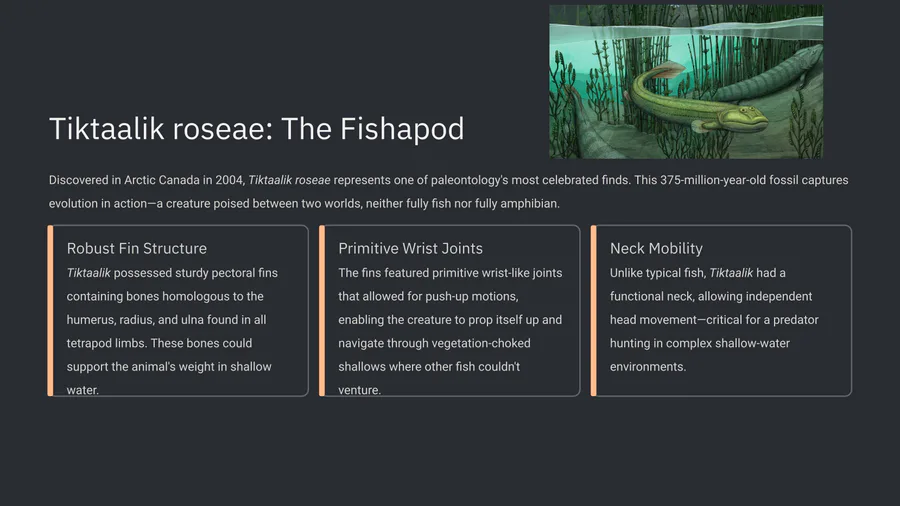
Which of the following features allowed Tiktaalik roseae to support its body weight in shallow water?

1

Primitive wrist joints

2

Robust fin structure

3

Neck mobility

4

Gills

17

media

18

Multiple Choice

Based on the features of Tiktaalik and the challenges of moving to land, which adaptations would have been most useful for the first vertebrates colonizing terrestrial environments?

1

Gills for underwater breathing

2

Robust fins with wrist joints

3

Thin, dry skin

4

Large eyes for night vision

19

Multiple Choice

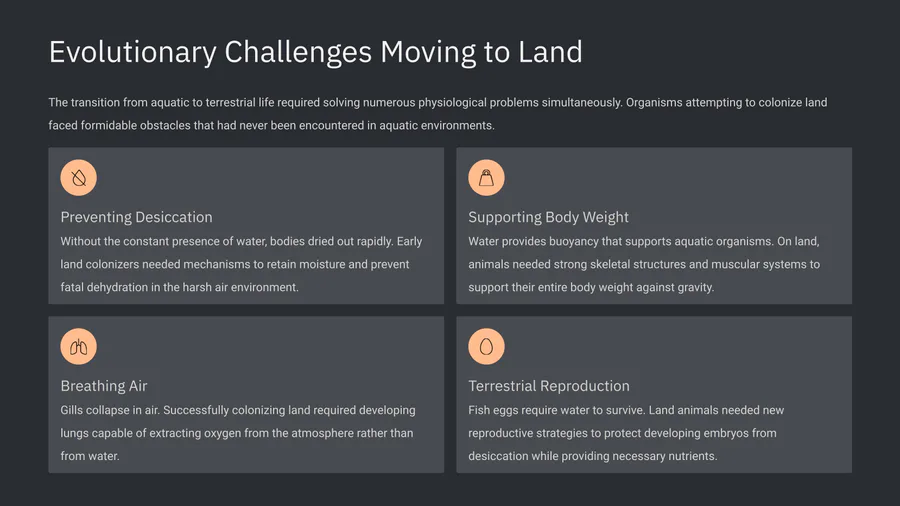
What were two major evolutionary challenges organisms faced when moving from water to land?

1

Preventing desiccation and supporting body weight

2

Finding food and escaping predators

3

Developing eyesight and hearing

4

Growing larger in size

20

media

21

media

22

Open Ended

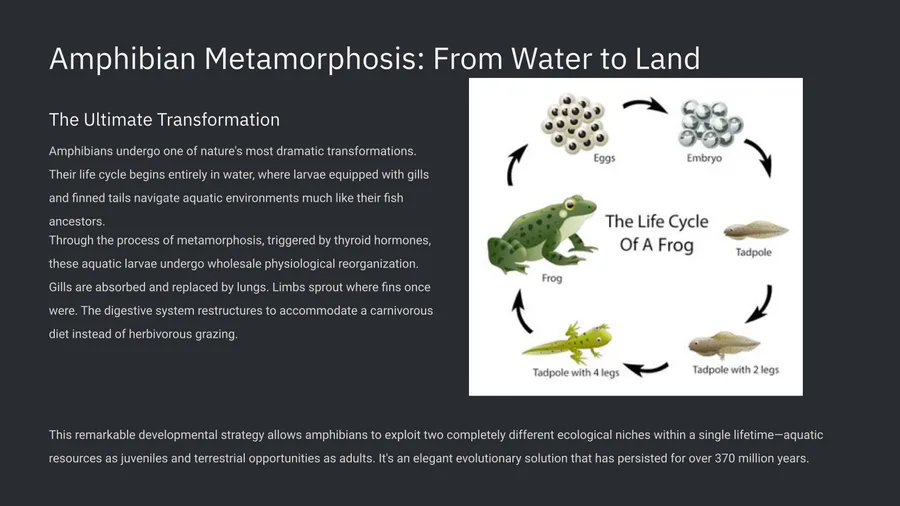
Explain how amphibian metamorphosis enables amphibians to exploit both aquatic and terrestrial environments during their life cycle.

23

media

24

Open Ended

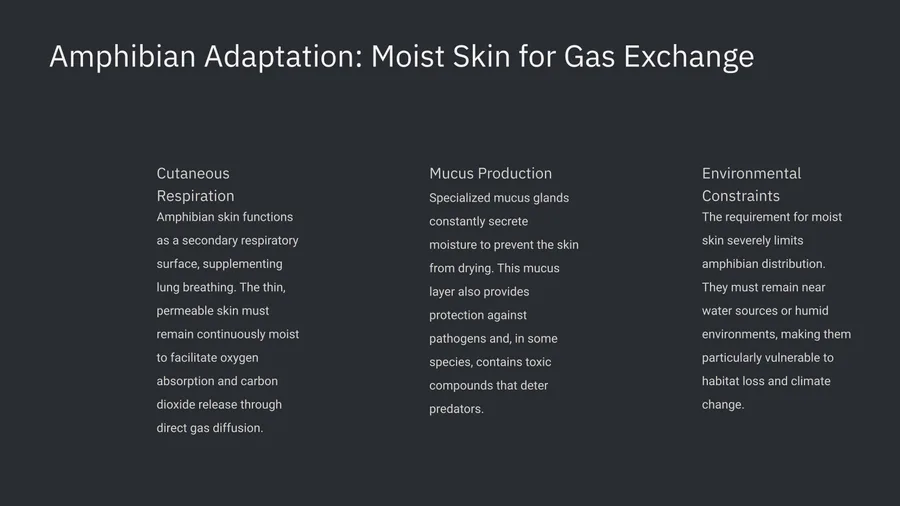
Describe one way in which mucus production benefits amphibians.

25

Fill in the Blanks

Type answer...

26

media

27

Multiple Choice

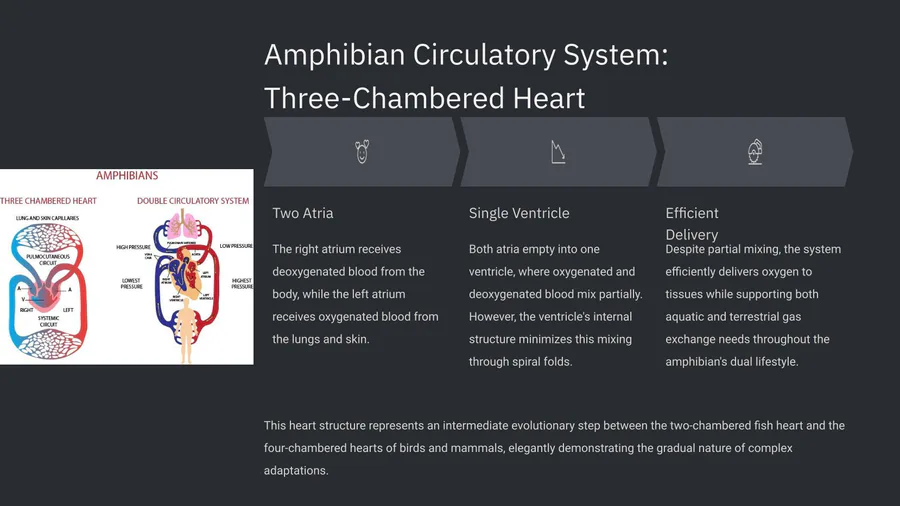
What is the main function of the spiral folds in the single ventricle of an amphibian's three-chambered heart?

1

To minimize the mixing of oxygenated and deoxygenated blood

2

To increase the heart rate

3

To separate the atria

4

To pump blood at higher pressure

28

media

29

Multiple Select

Which of the following are true about the amphibian life cycle?

1

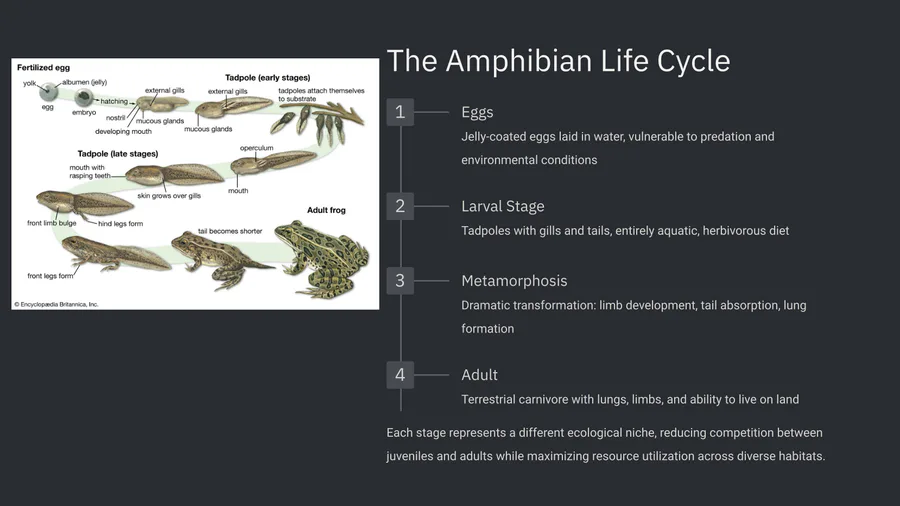
Tadpoles have gills and are aquatic

2

Metamorphosis includes limb development and tail absorption

3

Adult frogs are herbivores

4

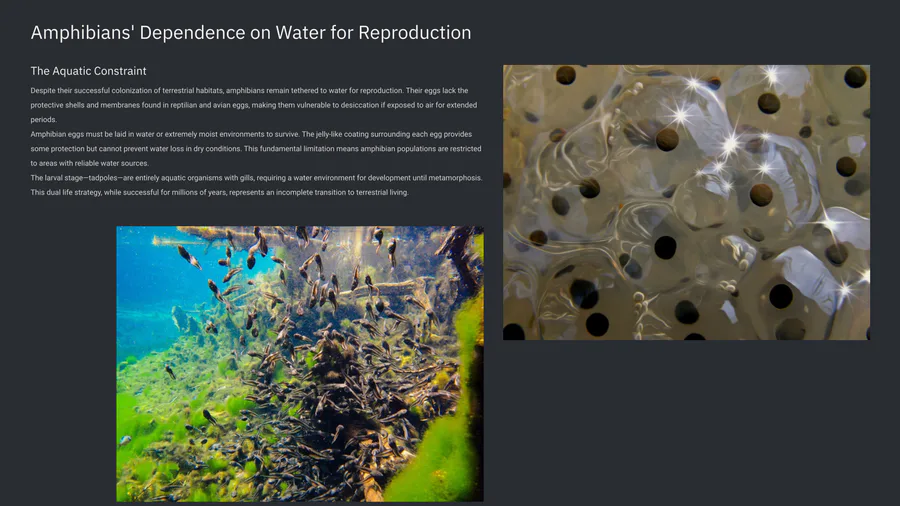
Eggs are vulnerable to environmental conditions

30

media

31

Fill in the Blanks

Type answer...

32

media

33

Multiple Choice

What is one of the most significant evolutionary transitions in the history of life on Earth, as described in the lesson?

1

The transition from fish to amphibians

2

The extinction of dinosaurs

3

The evolution of mammals

4

The development of flowering plants

media

Show answer

Auto Play

Slide 1 / 33

SLIDE