

Scientific Models

Presentation
•
Science
•
6th Grade
•
Medium
+4
Standards-aligned

Barbara White
Used 7+ times
FREE Resource
9 Slides • 9 Questions
1

Middle School

2
Define a scientific model and understand its main purpose in the field of science.
Explain the reasons scientists rely on models to better understand the natural world.
Identify different types of scientific models and give real-world examples for each type.
Describe the limitations of scientific models and why they are not always perfect.


3
Key Vocabulary

Scientific Model
A scientific model represents an idea, object, or process to help us understand complex things.

Visual Model
Visual models are models you can see, like diagrams, maps, and even computer simulations.

Physical Model
A physical model is a three-dimensional, touchable copy of an object for hands-on study.
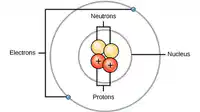
Conceptual Model
Conceptual models are ideas or theories that help explain complex things in a much simpler way.
4
What is a Scientific Model?
A model is a simple version of a complex idea or object.
Scientists use models to understand, explain, and make predictions about our world.
They help study things too big, small, dangerous, or complex to see.
Models make it safer and cheaper to test scientific ideas and predictions.


5
Multiple Choice
According to the slide, what is the primary reason scientists use models?
To make complex systems easier to understand and predict.
To create perfect, identical copies of real-world objects.
To replace the need for real experiments entirely.
To prove that scientific theories are always correct.
6
Concrete Models
Physical models are 3D objects you can touch, like a globe or a model of a molecule.
Visual models are representations you can see, such as diagrams, maps, or computer simulations.
A drawing of a butterfly’s anatomy is an example of a simple but effective visual model.

Abstract Models

Mathematical models use formulas and equations to represent a system or process in the world.
For example, equations can model and predict how a disease might spread through a population.
Conceptual models are abstract ideas that help explain how something works, such as the atomic model.
7
Multiple Choice
A globe that shows the Earth's geography is an example of which type of model?
A Physical Model
A Visual Model
A Conceptual Model
A Mathematical Model
8
Examples of Models in Action
Engineers build model bridges to test designs before constructing the real, expensive ones.
Crash test dummies are models of people used to test car safety rather than using actual humans for testing.
Paper airplane designs help us learn how wing shape affects an airplane’s flight.
A drawing of a tadpole is a visual model to see its anatomy.


9
Multiple Choice
Why are crash test dummies used in experiments instead of real people?
Because they are the same size as a real car.
Because they can drive the car themselves.
Because crash test dummies are heavier than real people.
Because it is too dangerous and expensive to use a real person.
10
Limitations and Evaluation of Models
Models are not perfect because they are simplified versions of real things.
A model airplane is smaller and cannot fly like a real airplane.
Because of these limitations, we can evaluate and rank different models.
A 3D model is often better than a simple flat drawing.


11
Multiple Choice
What is a major limitation of scientific models mentioned on the slide?
They are always completely accurate in every detail.
They are always more expensive to make than the real object.
They can only be used for things that are very small.
They are simplified and not perfectly representative of the real thing.
12
Misconception | Correction |
|---|---|
Models can perfectly represent real-world systems. | Models are simplifications and always have limitations. |
It is always better to use a model than the real thing. | Models are used when studying the real thing is impractical or unsafe. |
13 Multiple Choice Why would an engineer choose to build a model of a new bridge design instead of immediately constructing the actual bridge? Building the model takes more time than building the real bridge. Models are always more stable than the real structures. The model bridge can be used by real traffic. It is safer and less expensive to test the design with a model first. 14 Multiple Choice If an epidemiologist creates a set of equations to predict how a virus will spread through a population, what type of model are they using? A Conceptual Model A Mathematical Model A Physical Model A Visual Model 15 Multiple Choice A student builds a model boat out of clay to see if the design will float, even though the real boat will be made of steel. How does this difference in material represent a key limitation of the model? The clay model will be larger than the real steel boat. The model can only be tested in a small tub, not the ocean. The clay model cannot be painted the same color as the steel boat. The model may not accurately predict the real boat's buoyancy and stability. 16 Multiple Choice A group of students wants to create the best possible model of the solar system to show how planets orbit the sun. Based on the idea of evaluating models, which of these would be the most effective and dynamic model? A list of the planets' names and sizes. A colored drawing of the planets in a line. A moving 3D model with planets that revolve around the sun. A static 3D model with planets that do not move. 17 Models are simple tools to understand big, small, or complex things. There are different types, like visual, physical, and mathematical models. Real-world examples include crash test dummies and building models. All models have limitations and are not perfect copies of reality. 18 Poll On a scale of 1-4, how confident are you about the concepts covered in today's review? 1 2 3 4 Show answer Auto Play Slide 1 / 18 SLIDE 15 questions Energy Resources Presentation • 6th Grade 15 questions Moon Phases Presentation • 6th Grade 15 questions Solution, Colloid and Suspension Presentation • 6th Grade 14 questions Unit 1 Lesson 3 Water Cycle Presentation • 6th Grade 13 questions Speed v. Velocity Presentation • 8th Grade 16 questions Science Presentation • 6th Grade 13 questions Ecology 2021 Presentation • 6th Grade 12 questions Energy Transformations Presentation • 6th Grade 10 questions How much do you know about our Portrait of an Eagle? Quiz • 10th Grade 10 questions Fast Food Slogans Quiz • 6th - 8th Grade 21 questions Continents and Oceans Quiz • 6th Grade 20 questions Parts of Speech Quiz • 5th Grade 16 questions Subject & Predicate Quiz • 5th Grade 25 questions Multiplication Facts Quiz • 5th Grade 12 questions Map Skills Quiz • 3rd Grade 22 questions Continents and Oceans Quiz • 5th Grade 10 questions 6.6D - Relative Density Review Quiz • 6th Grade 20 questions Claim, Evidence and Reasoning (CER) Quiz • 6th - 8th Grade 20 questions Density Quiz • 6th Grade 10 questions Exploring Chemical and Physical Changes Interactive video • 6th - 10th Grade 20 questions Food Chains & Food Webs Quiz • 5th - 7th Grade 18 questions Interpreting Distance/Time Graphs Quiz • 6th Grade 10 questions Decoding the Periodic Table of Elements Interactive video • 6th - 10th Grade 15 questions Potential and Kinetic Energy Quiz • 6th Grade |


