

Conflicts in the Middle East

Presentation
•
Social Studies
•
7th Grade
•
Practice Problem
•
Medium

Xavier Howard
Used 1+ times
FREE Resource
23 Slides • 22 Questions
1
2
3
Open Ended
Why is it important to study the causes and effects of continuing conflicts in the Middle East?
4
5
Multiple Choice
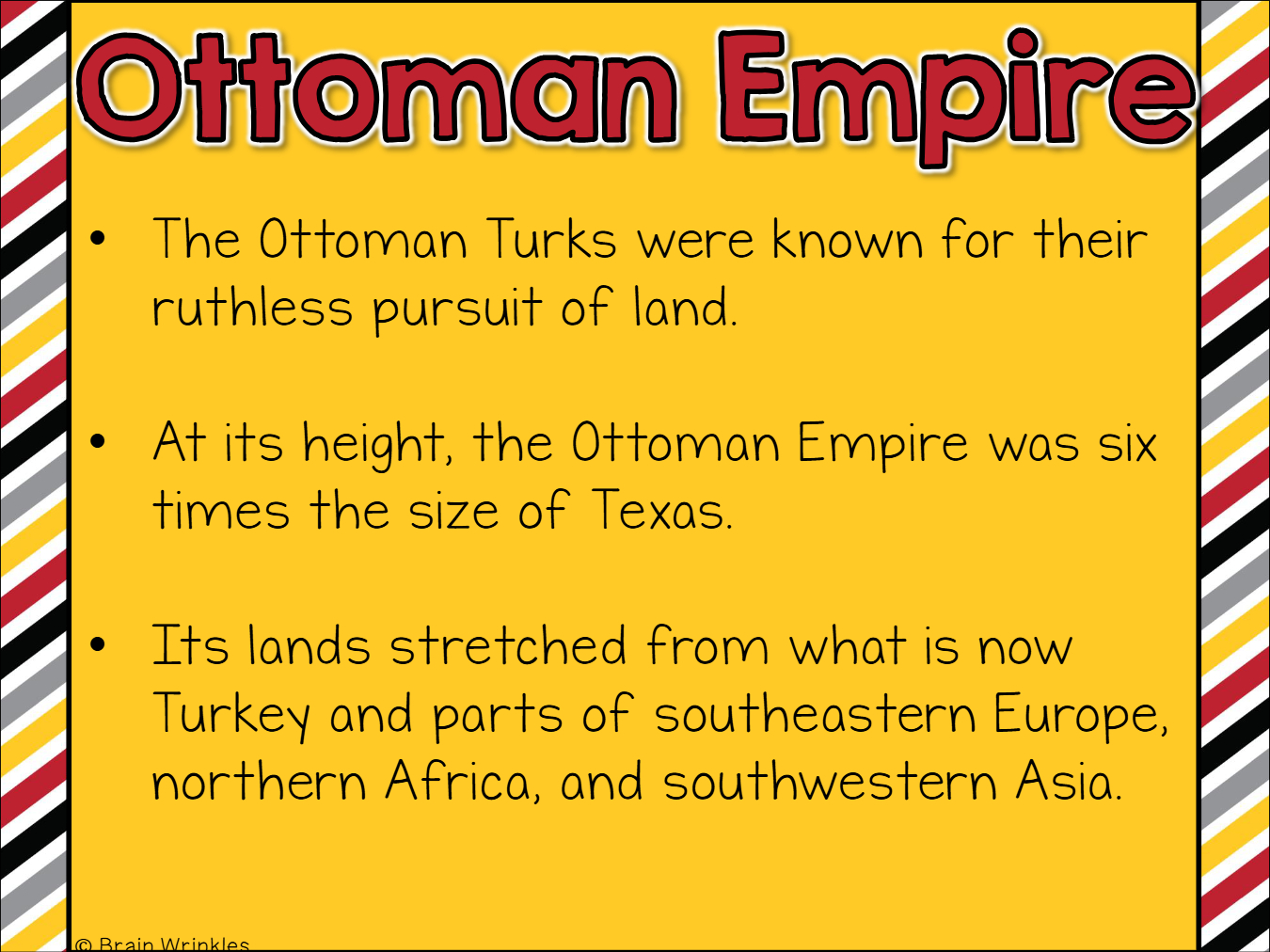
Which regions were included in the Ottoman Empire at its height?
Turkey, southeastern Europe, northern Africa, southwestern Asia
India, China, and Japan
Australia and New Zealand
North America and South America
6
7
Multiple Choice
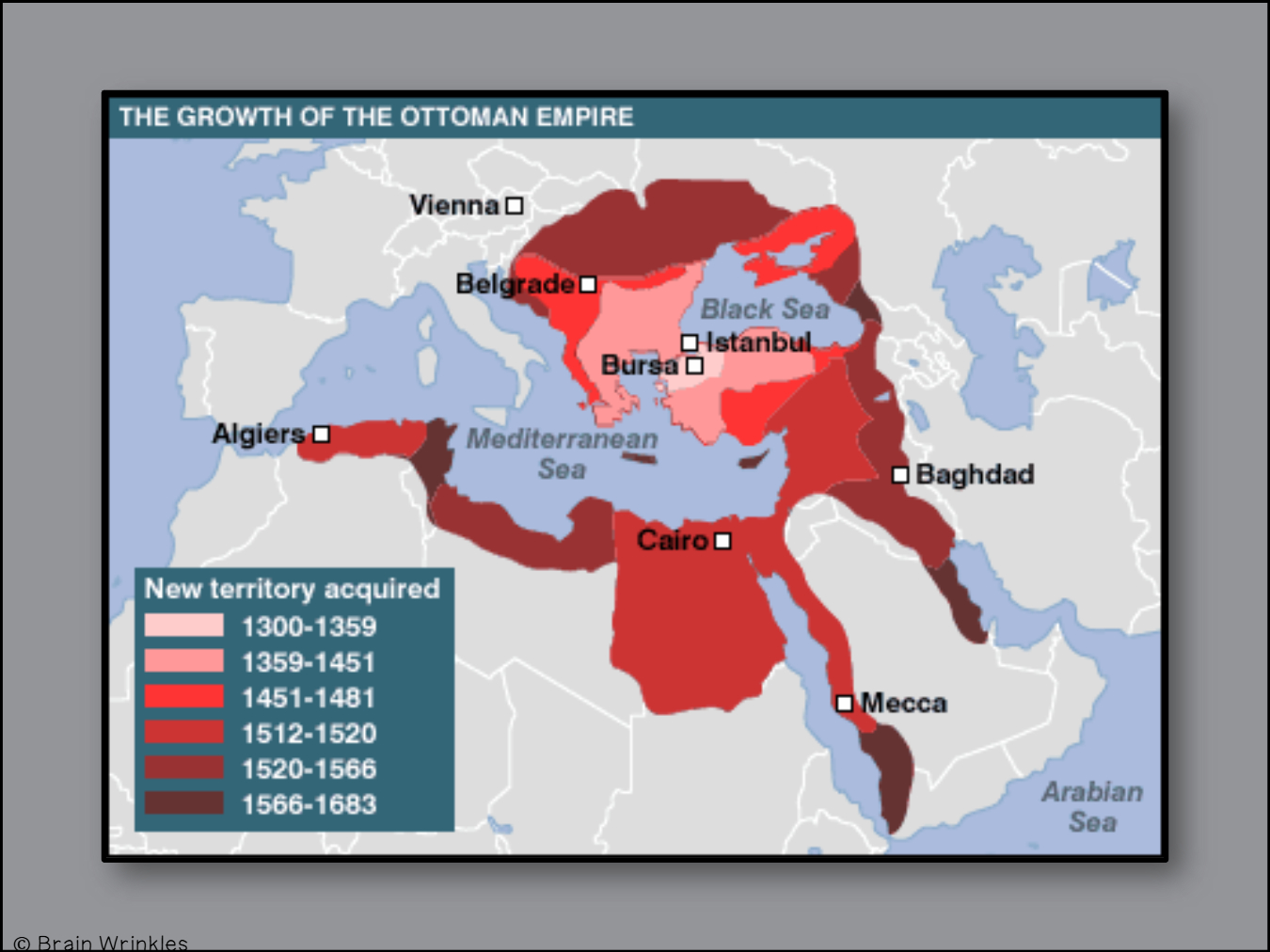
Based on the map, which city was NOT part of the Ottoman Empire's territory during its greatest expansion?
Vienna
Istanbul
Baghdad
Cairo
8
9
10
Open Ended
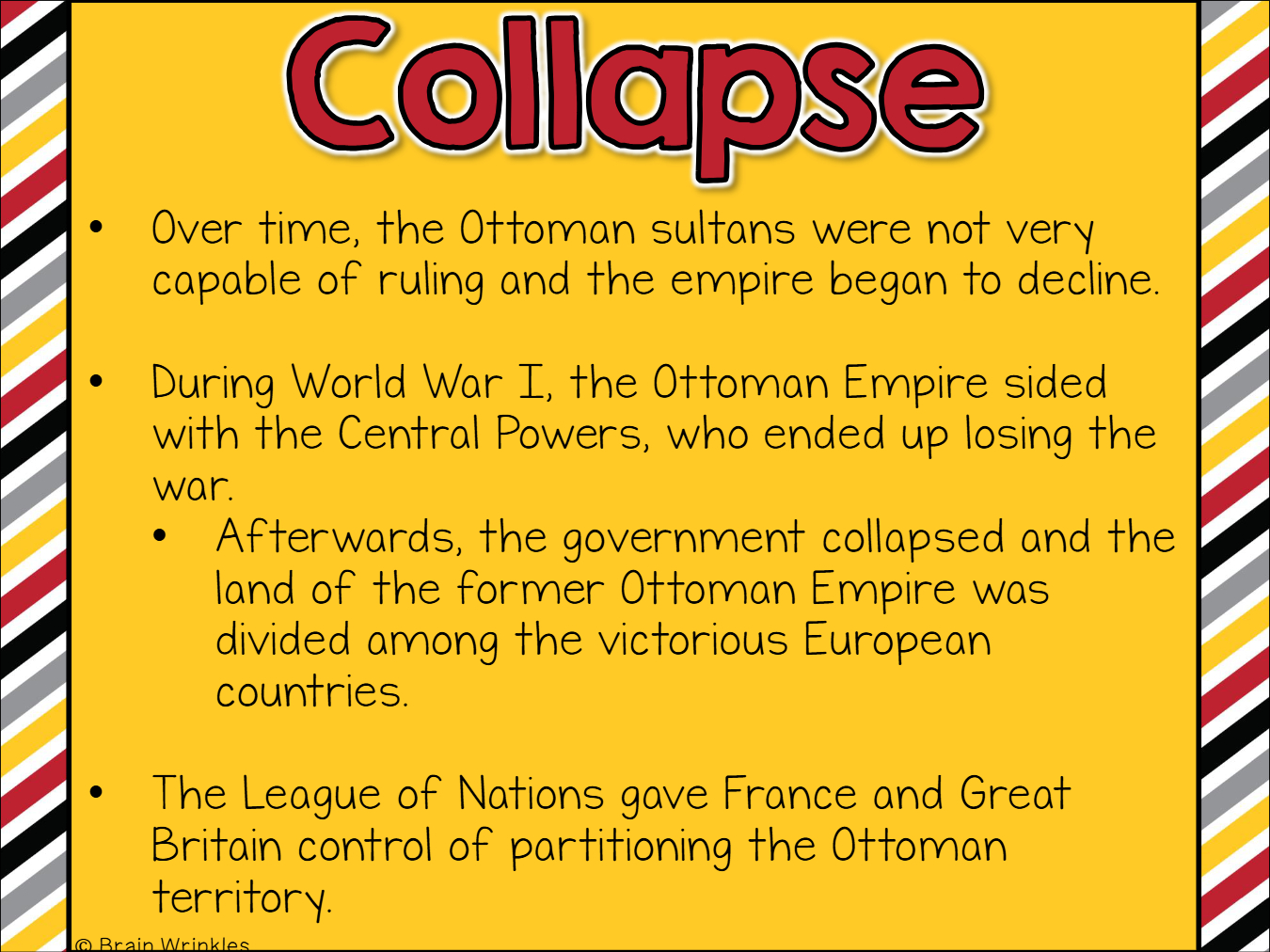
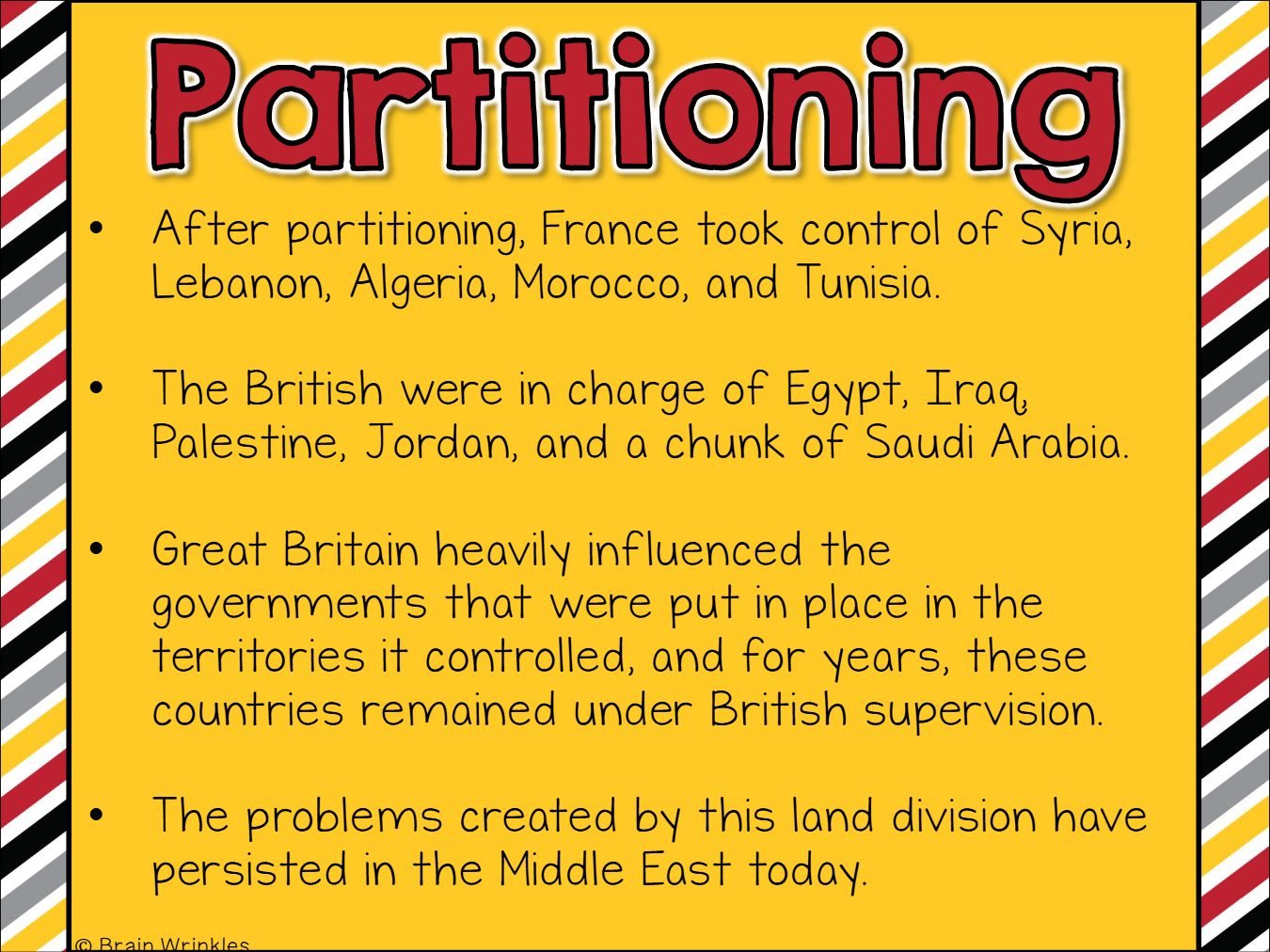
Explain how the collapse of the Ottoman Empire after World War I led to the partitioning of its territory among European powers.
11
12
Fill in the Blanks
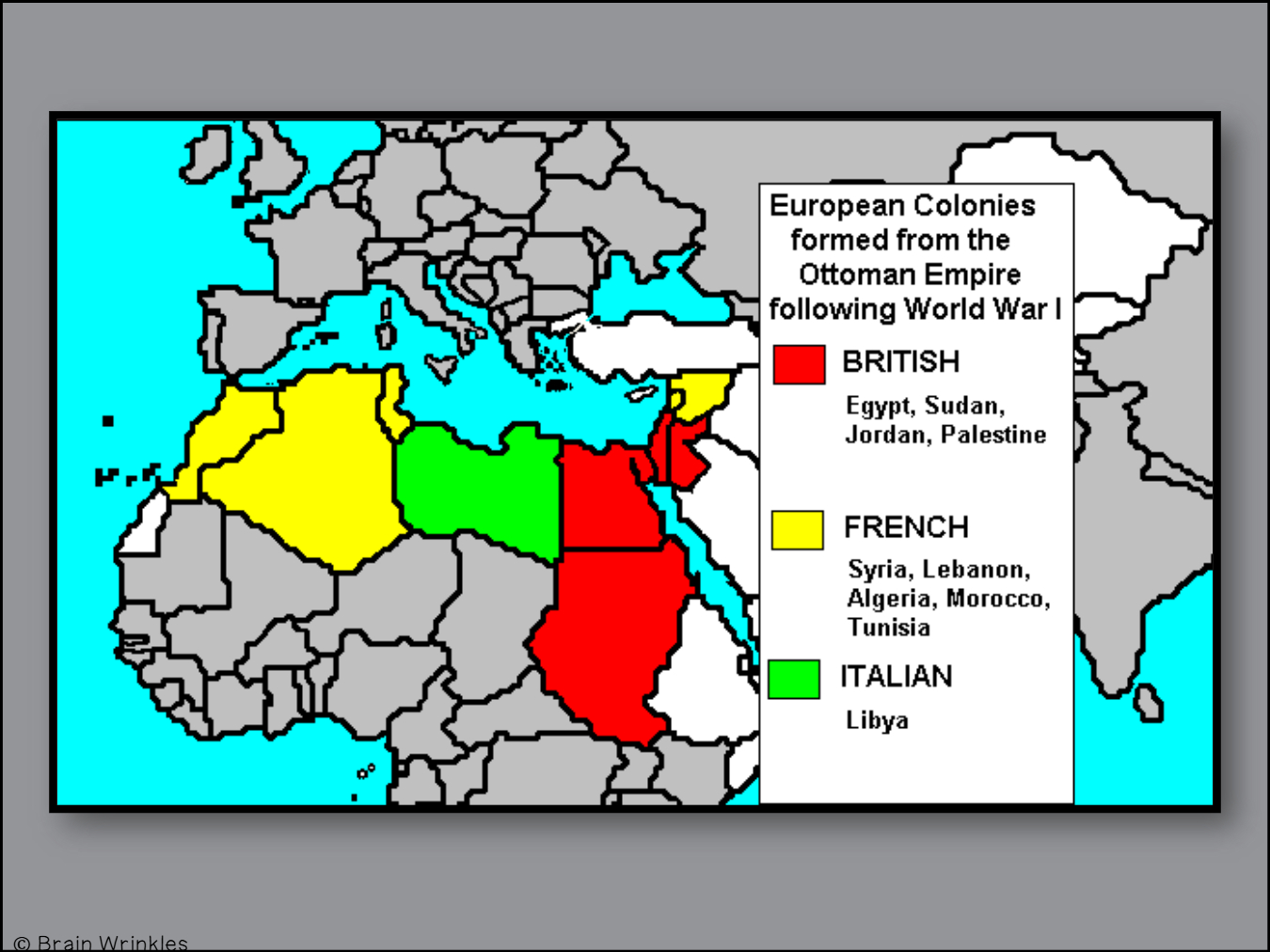
After World War I, the British controlled Egypt, Sudan, Jordan, and
Type answer...
13
Multiple Select
Which countries took control of former Ottoman territories after partitioning? Select all that apply.
France
Great Britain
Italy
Germany
14
15
Open Ended
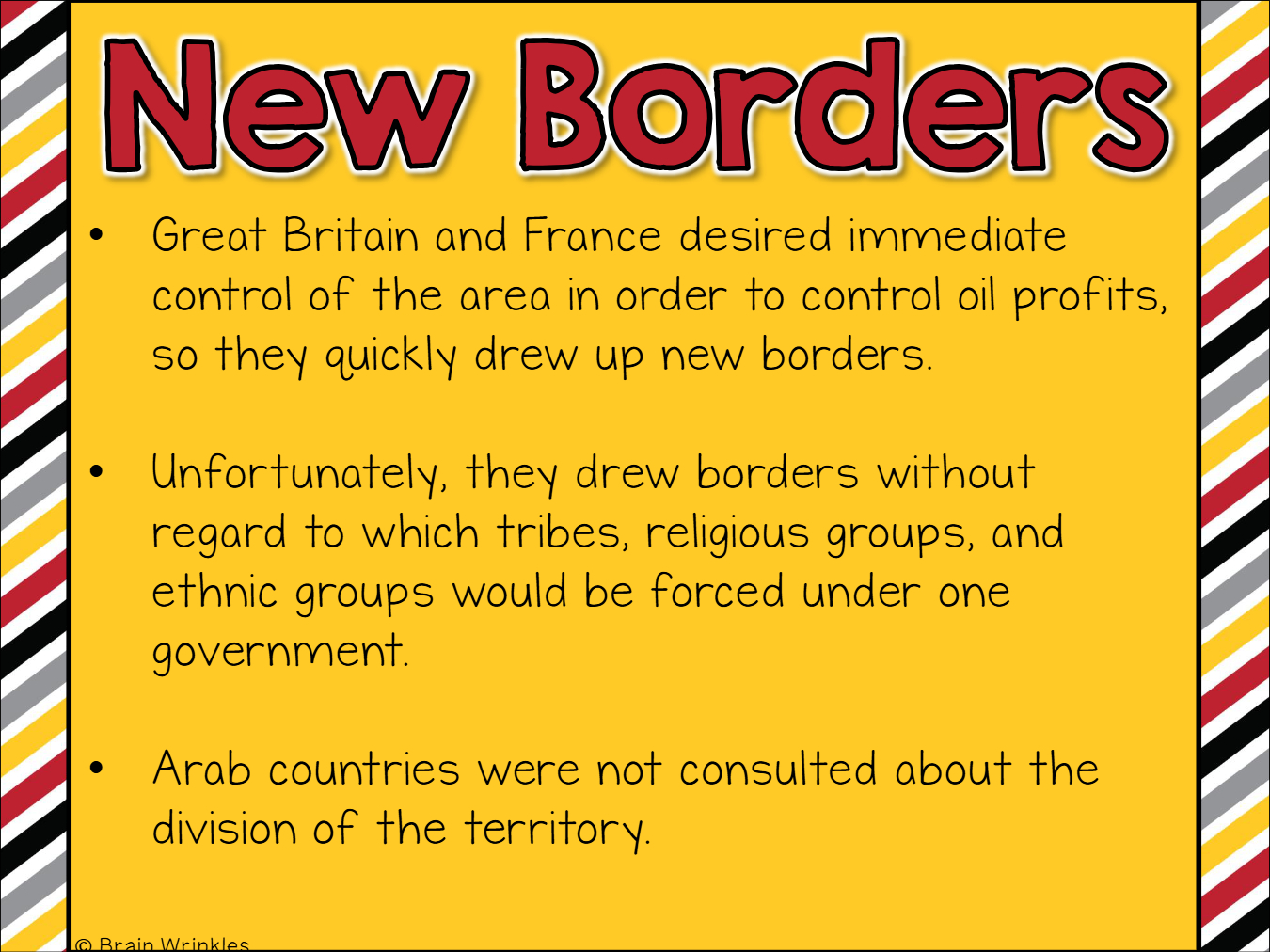
How did the creation of new borders by European powers impact the ethnic and religious groups in the former Ottoman Empire territories?
16
17
Multiple Choice
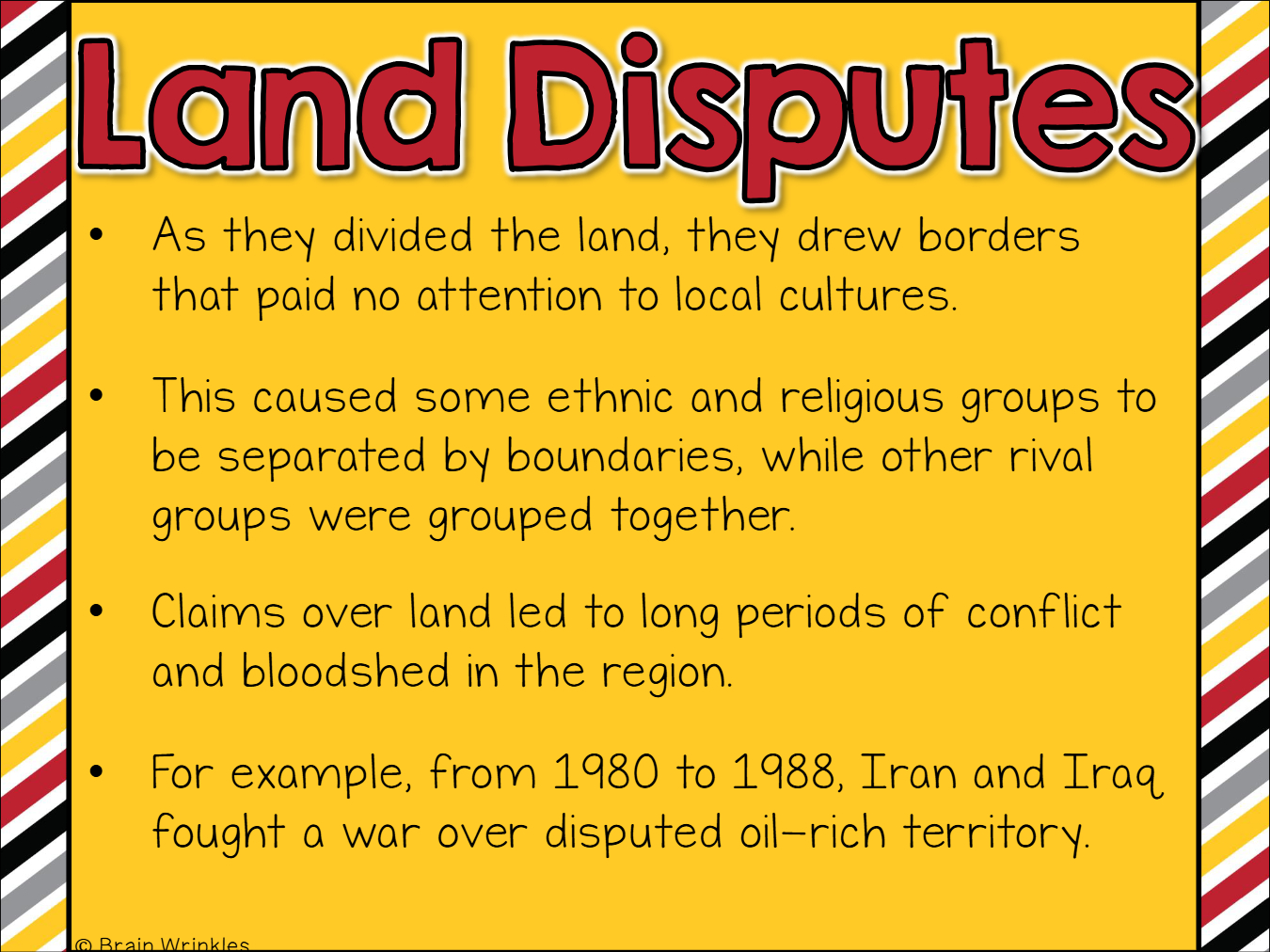
What were some consequences of drawing borders without considering local cultures in the Middle East?
Ethnic and religious groups were separated or grouped together, leading to conflict.
Borders were drawn to benefit local cultures.
No conflicts arose from the new borders.
Countries gained more natural resources.
18
19
20
Fill in the Blanks
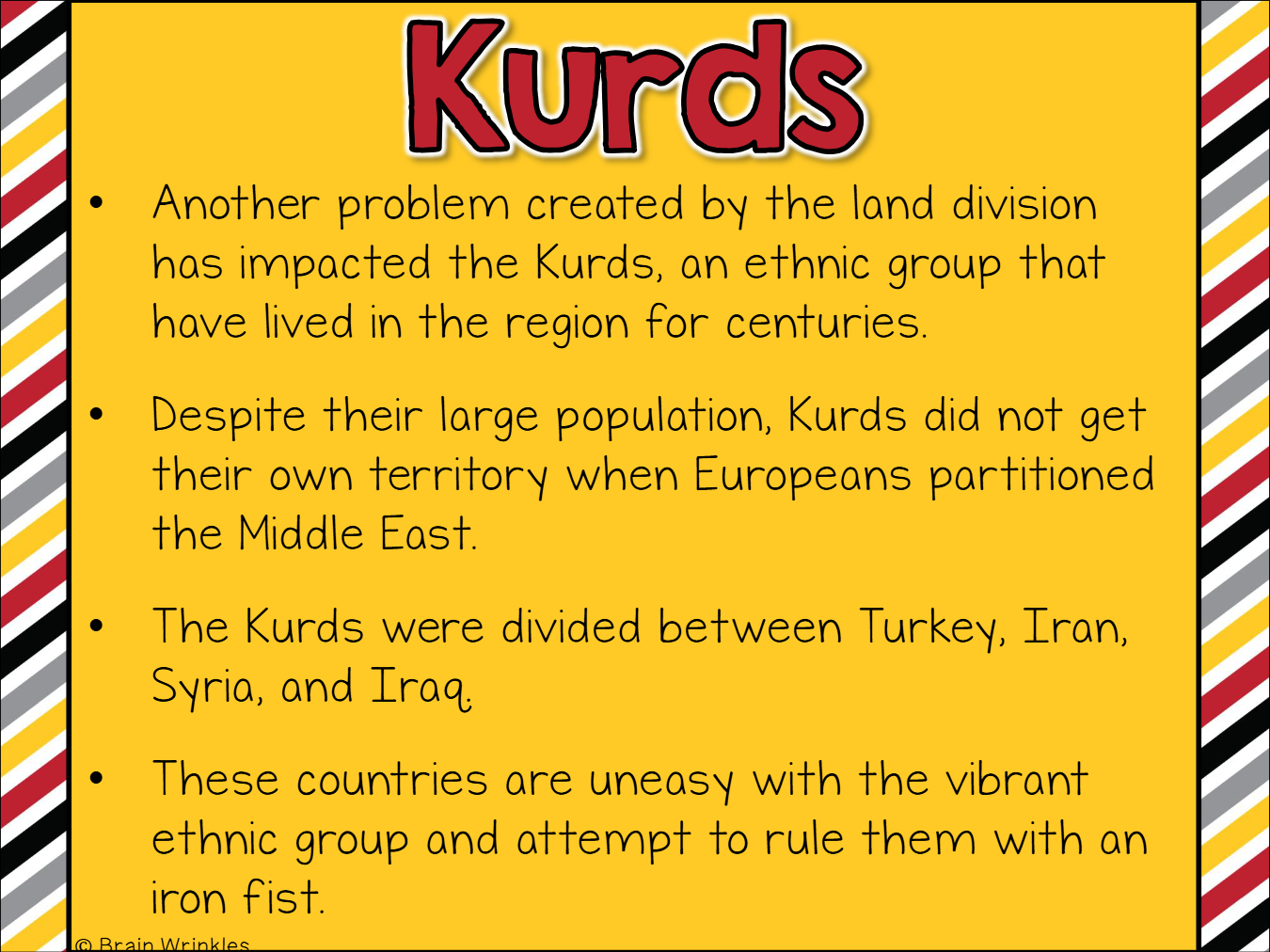
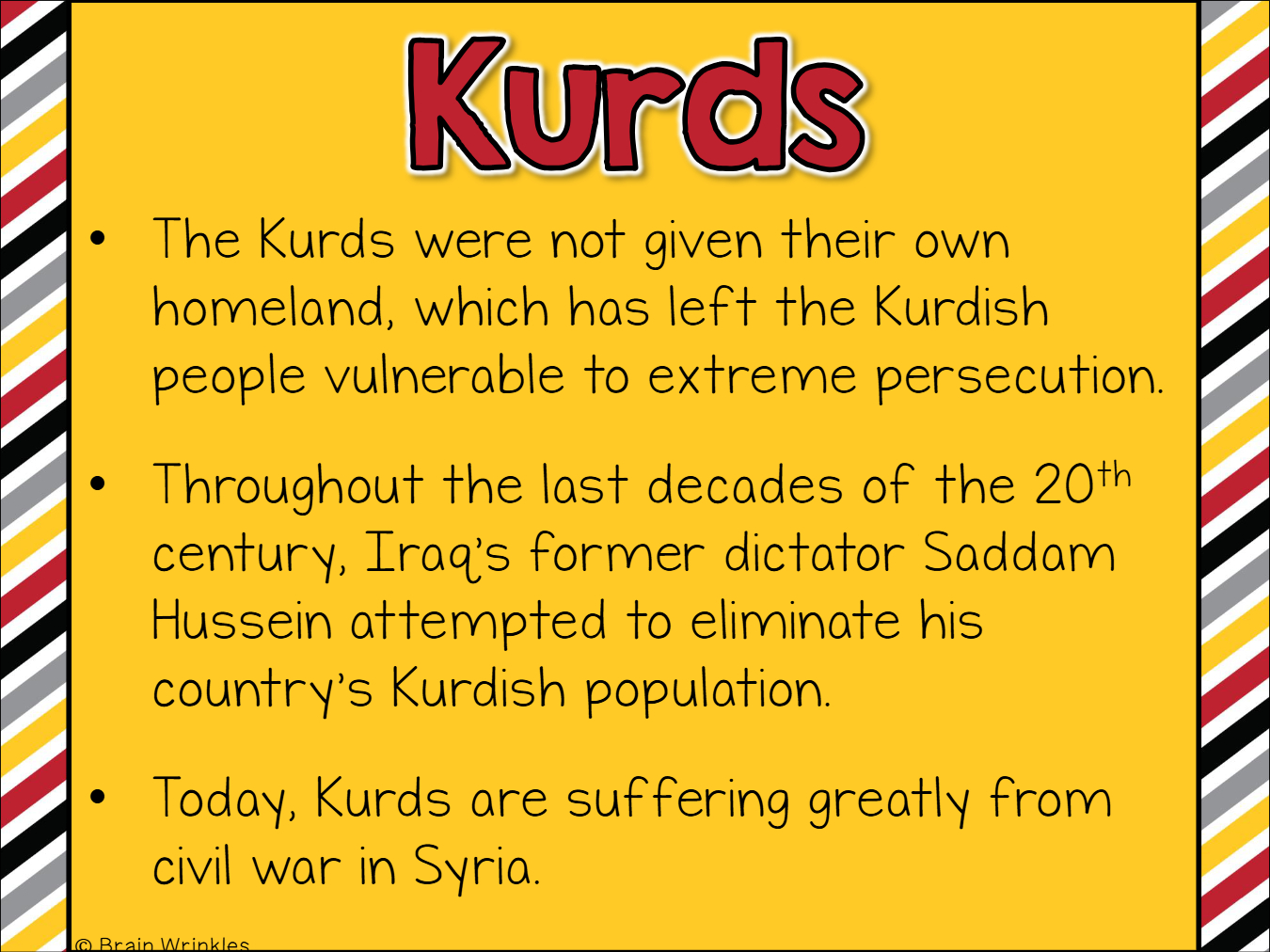
The Kurds were divided between Turkey, Iran, Syria, and
Type answer...
21
22
Multiple Choice
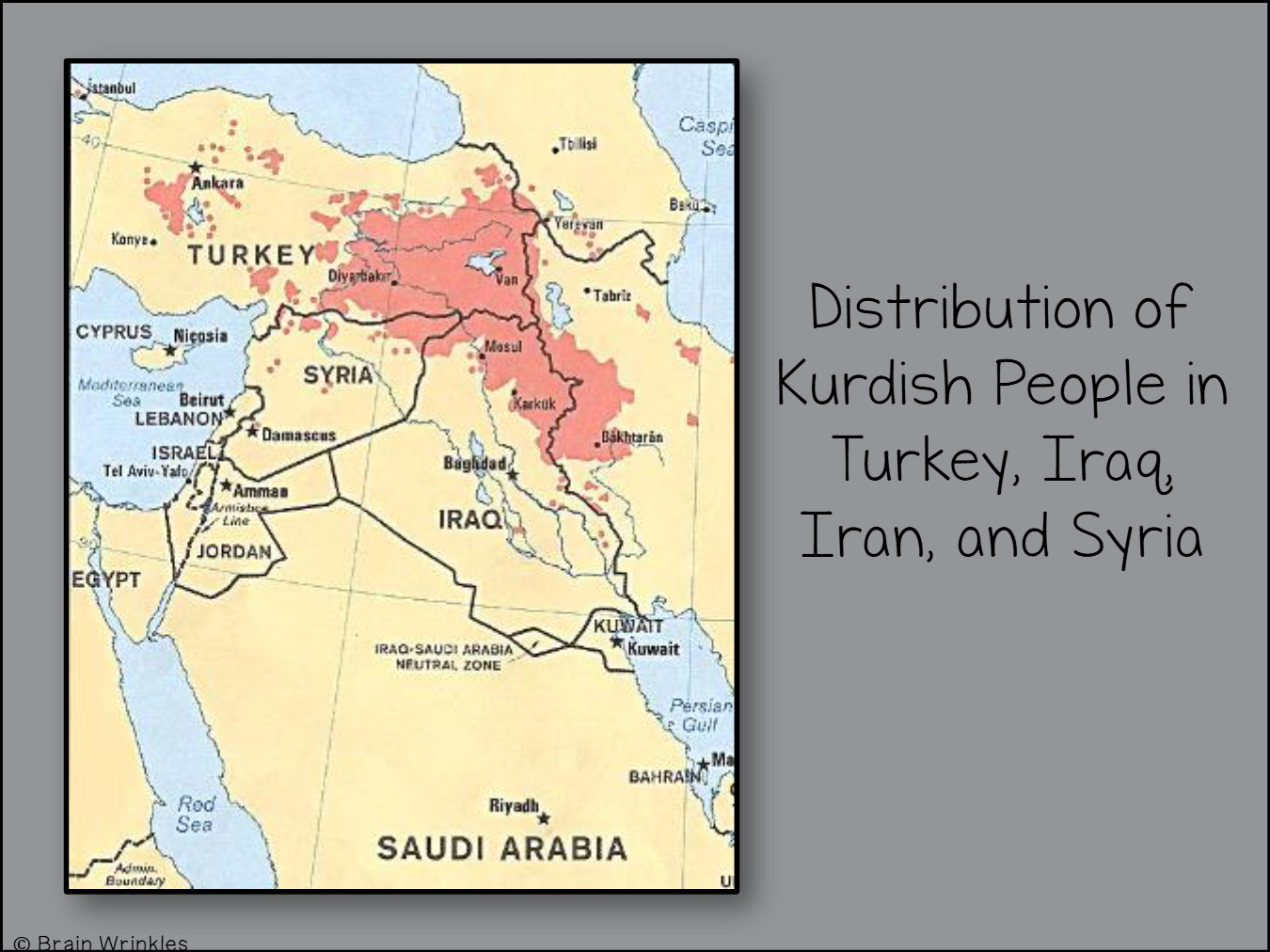
Which countries are home to significant Kurdish populations according to the map?
Turkey, Iran, Syria, Iraq
Egypt, Jordan, Saudi Arabia, Israel
Lebanon, Cyprus, Kuwait, Bahrain
Turkey, Israel, Iran, Saudi Arabia
23
24
Fill in the Blanks
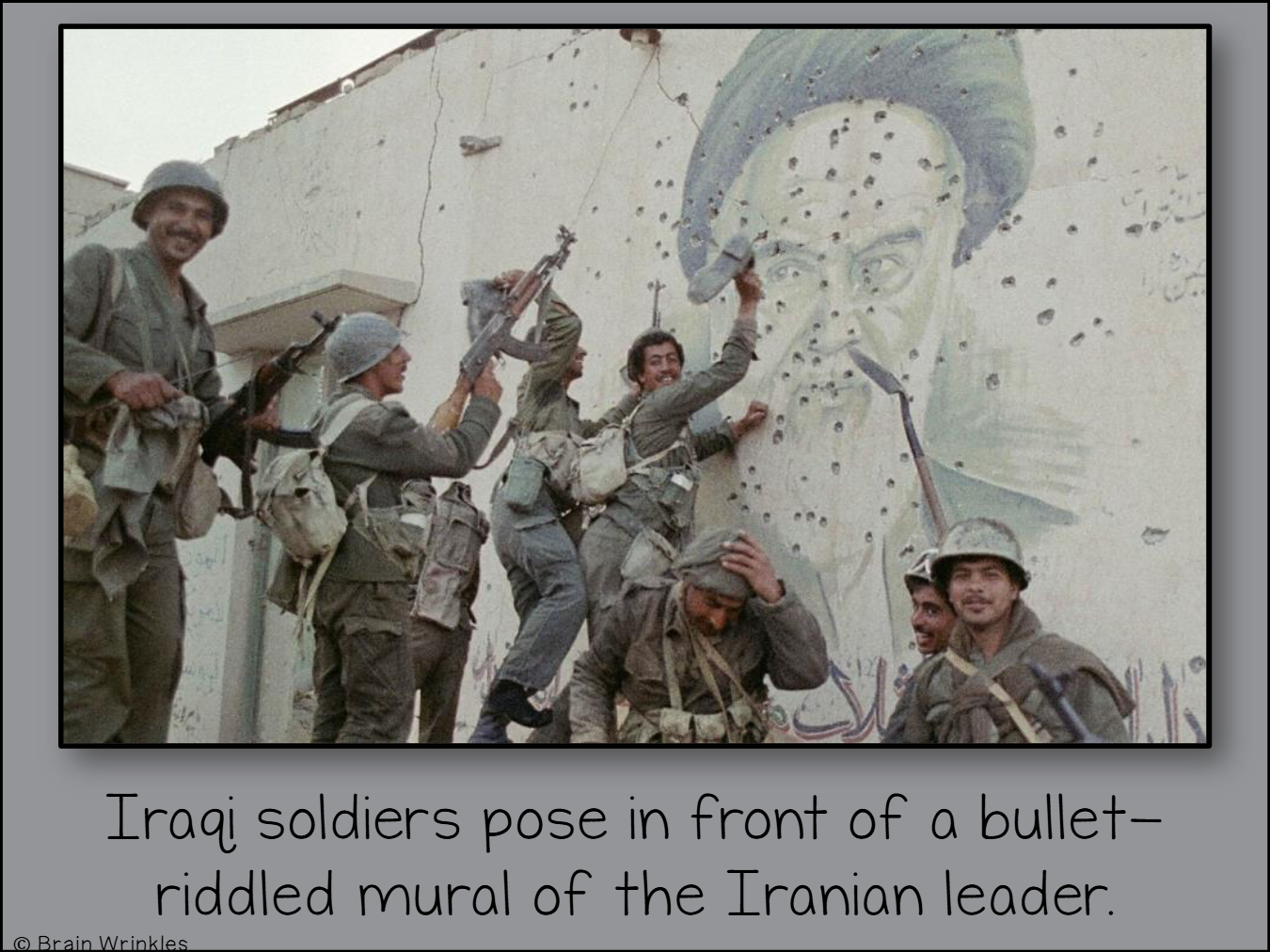
Throughout the last decades of the 20th century, Iraq’s former dictator Saddam Hussein attempted to eliminate his country’s
Type answer...
25
Open Ended
Describe some of the challenges faced by the Kurdish people as a result of not having their own homeland.
26
27
28
Multiple Choice
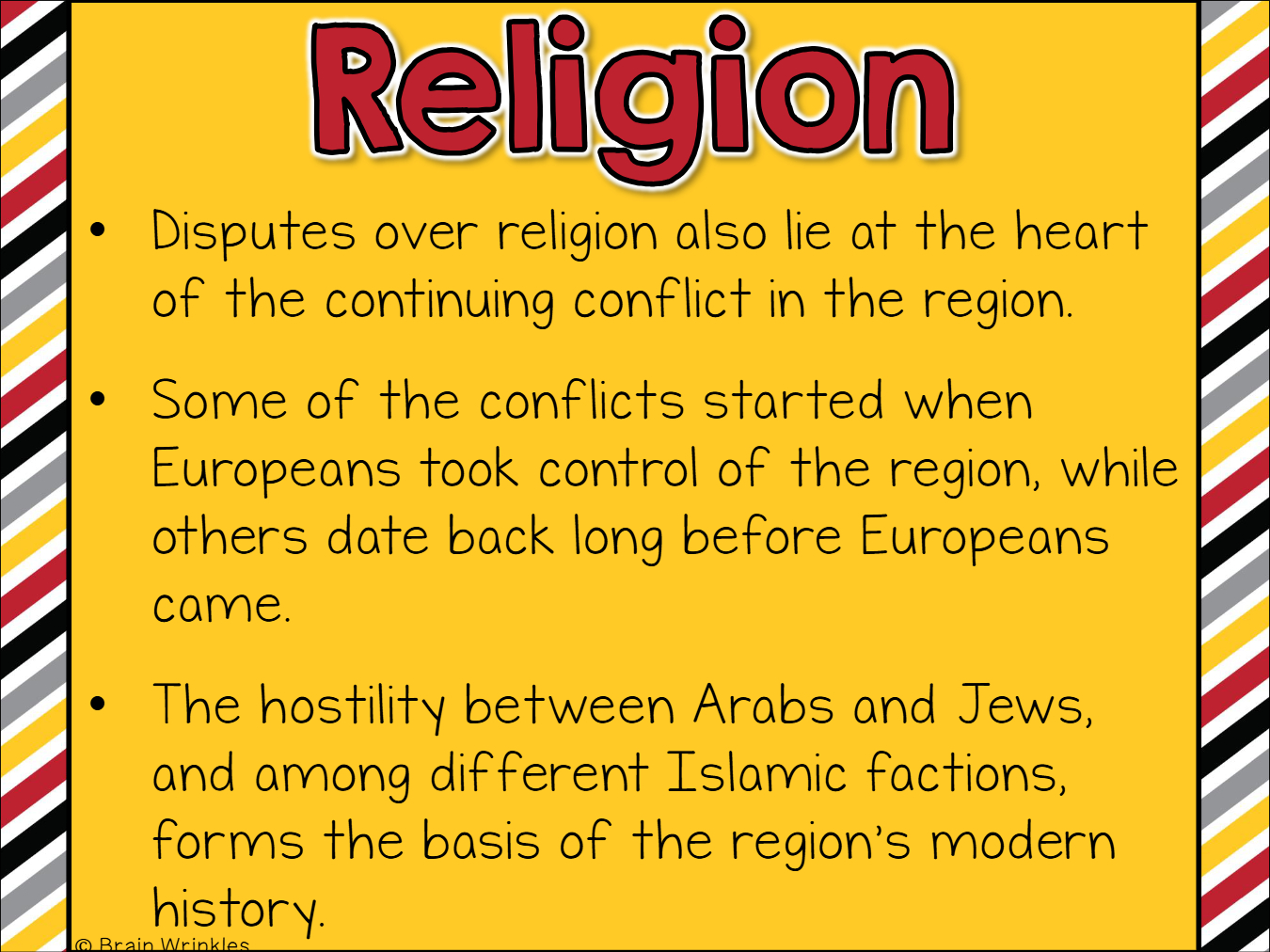
What role has religion played in the ongoing conflict in the region discussed in the images?
It has been a source of unity and peace.
It has contributed to disputes and hostility.
It has had no impact on the conflict.
It has only affected economic issues.
29
30
Fill in the Blanks
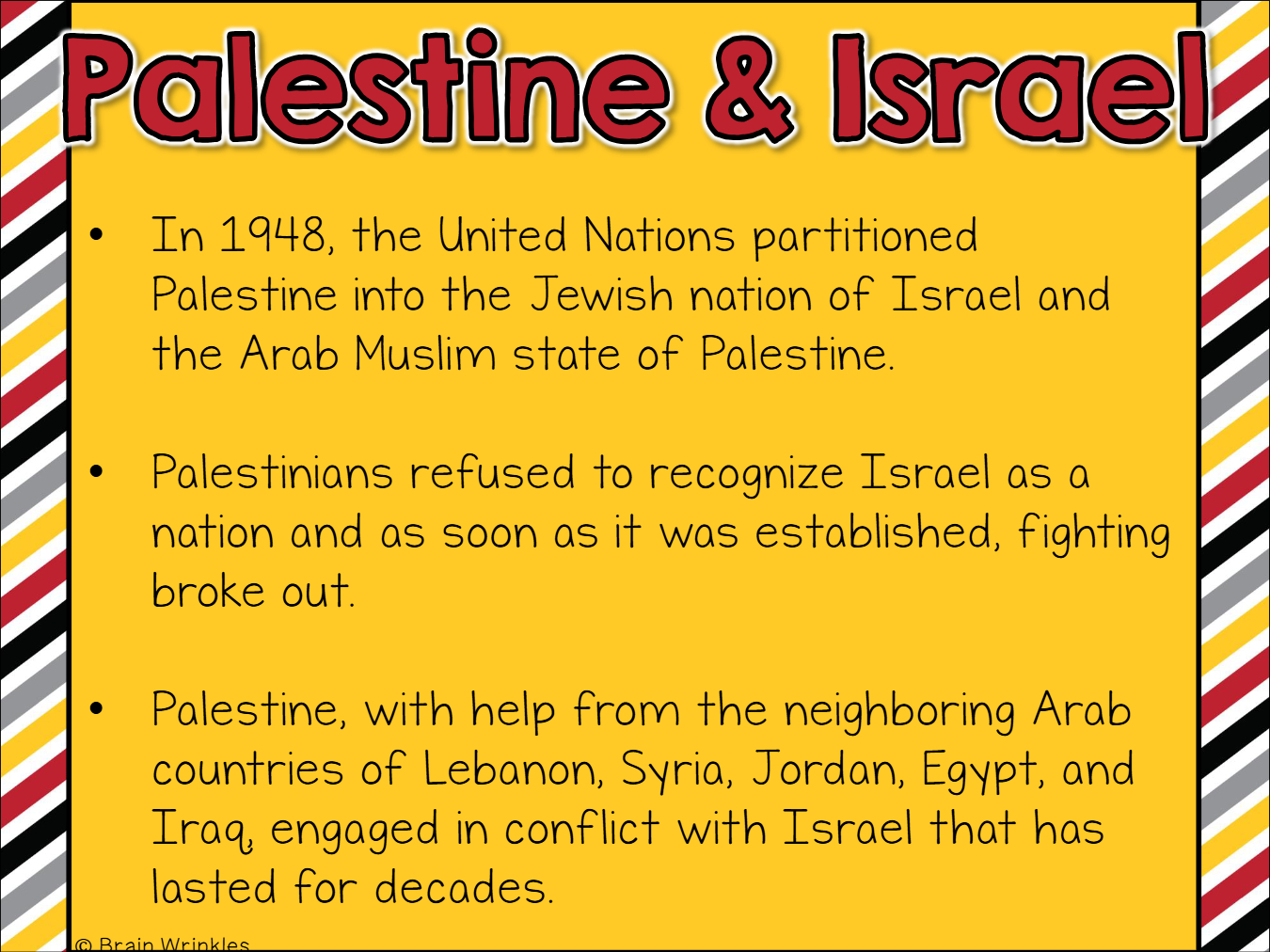
The United Nations partitioned Palestine into the Jewish nation of
Type answer...
31
Open Ended
Explain how the United Nations' partition plan of 1948 affected the relationship between Palestine and Israel.
32
33
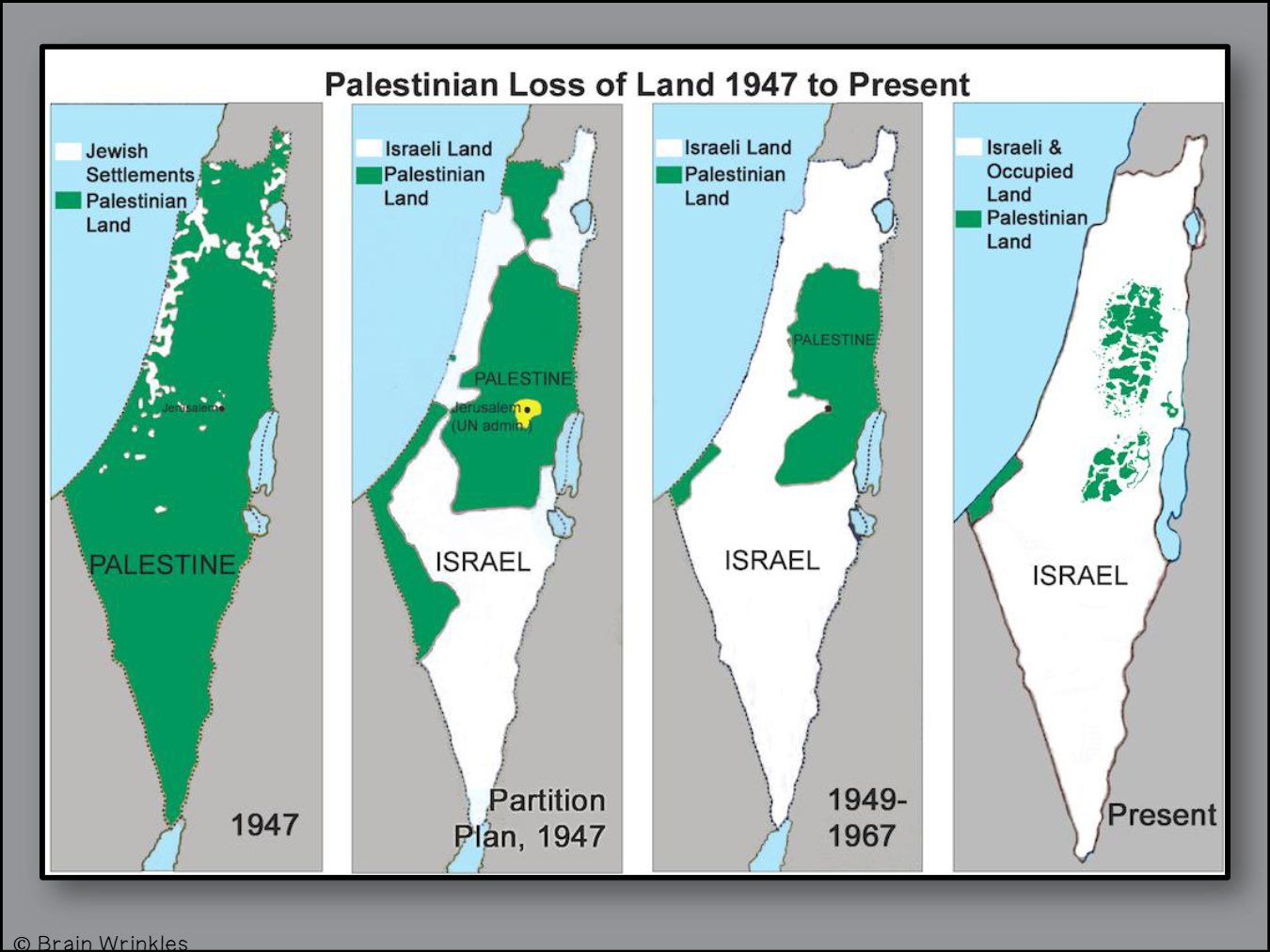
Multiple Choice
Which of the following statements are supported by the map showing Palestinian loss of land from 1947 to present?
Palestinian land has increased over time.
Israeli land has expanded since 1947.
Jewish settlements have decreased.
The partition plan created equal land for both groups.
34
35
36
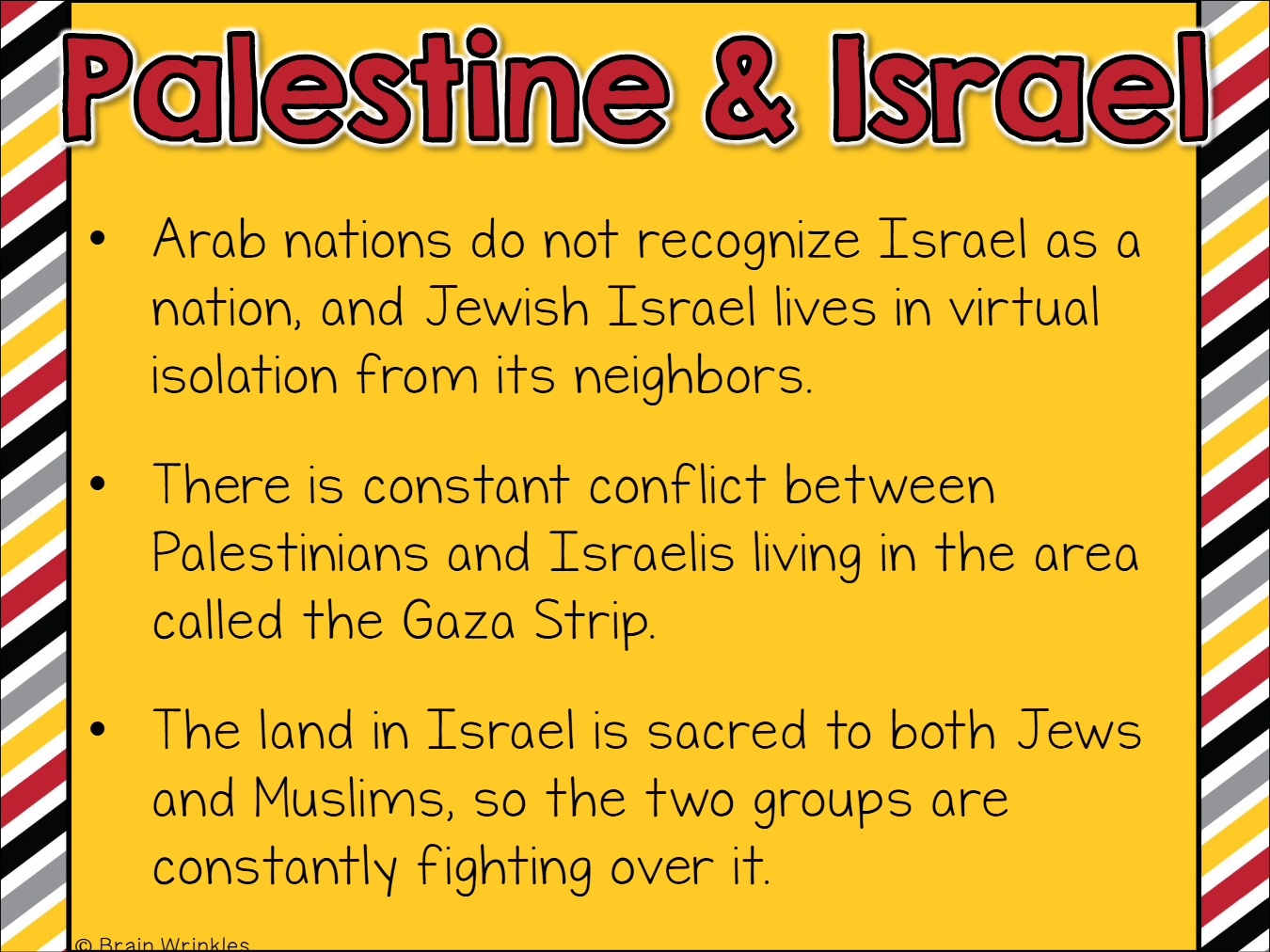
Open Ended
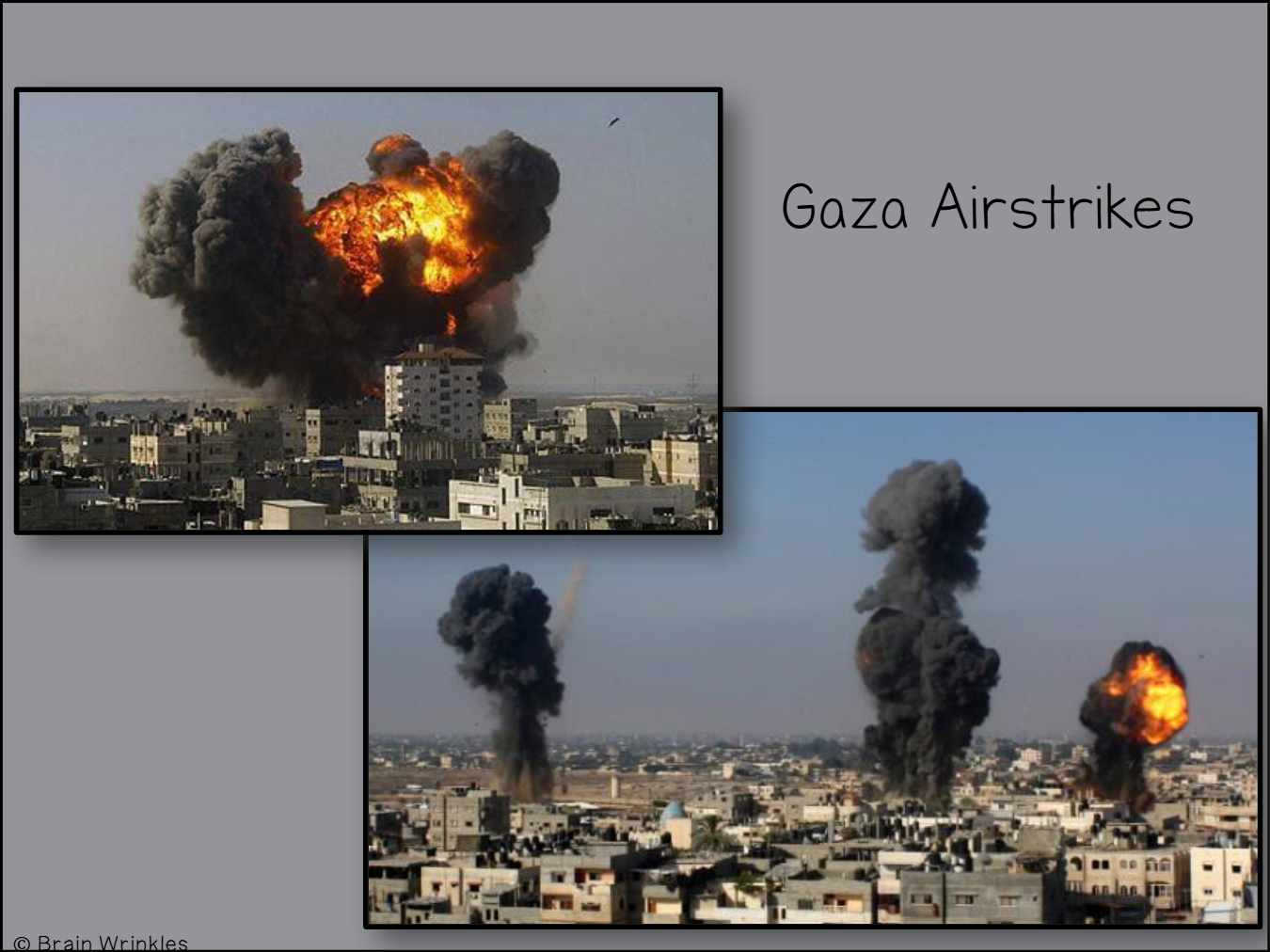
Describe the significance of the Gaza Strip in the conflict between Palestinians and Israelis.
37
38
39
40
Multiple Choice
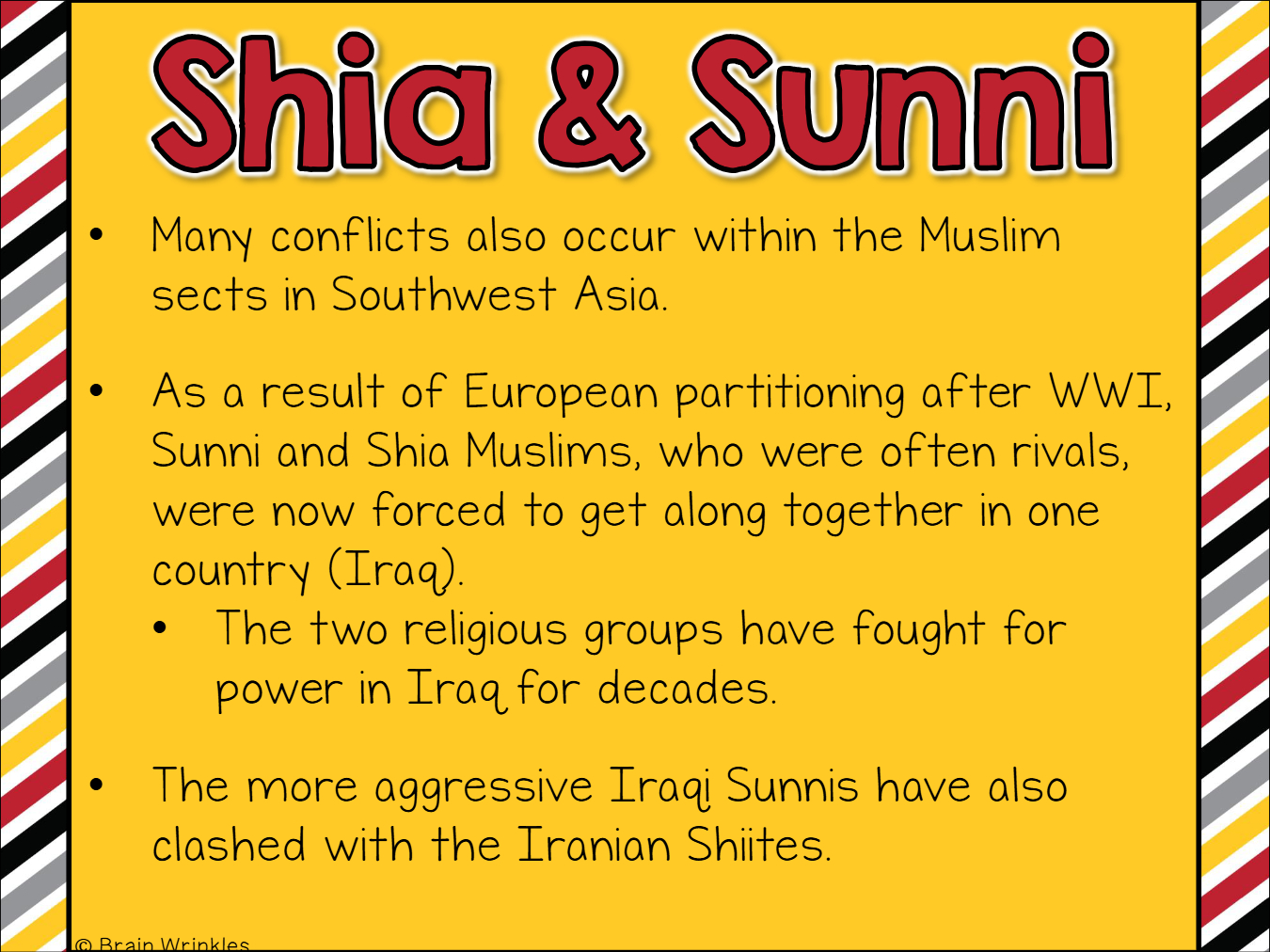
Which of the following best explains the impact of European partitioning after World War I on Sunni and Shia Muslims in Iraq?
It led to peaceful coexistence between the groups.
It forced rival groups to live together, leading to conflict.
It resulted in the migration of both groups out of Iraq.
It eliminated religious differences between the groups.
41
42
Multiple Select
Which of the following statements are true about the conflicts between Shia and Sunni Muslims in Southwest Asia?
European partitioning after WWI contributed to tensions.
Iraqi Sunnis have clashed with Iranian Shiites.
Shia and Sunni Muslims have always lived peacefully together.
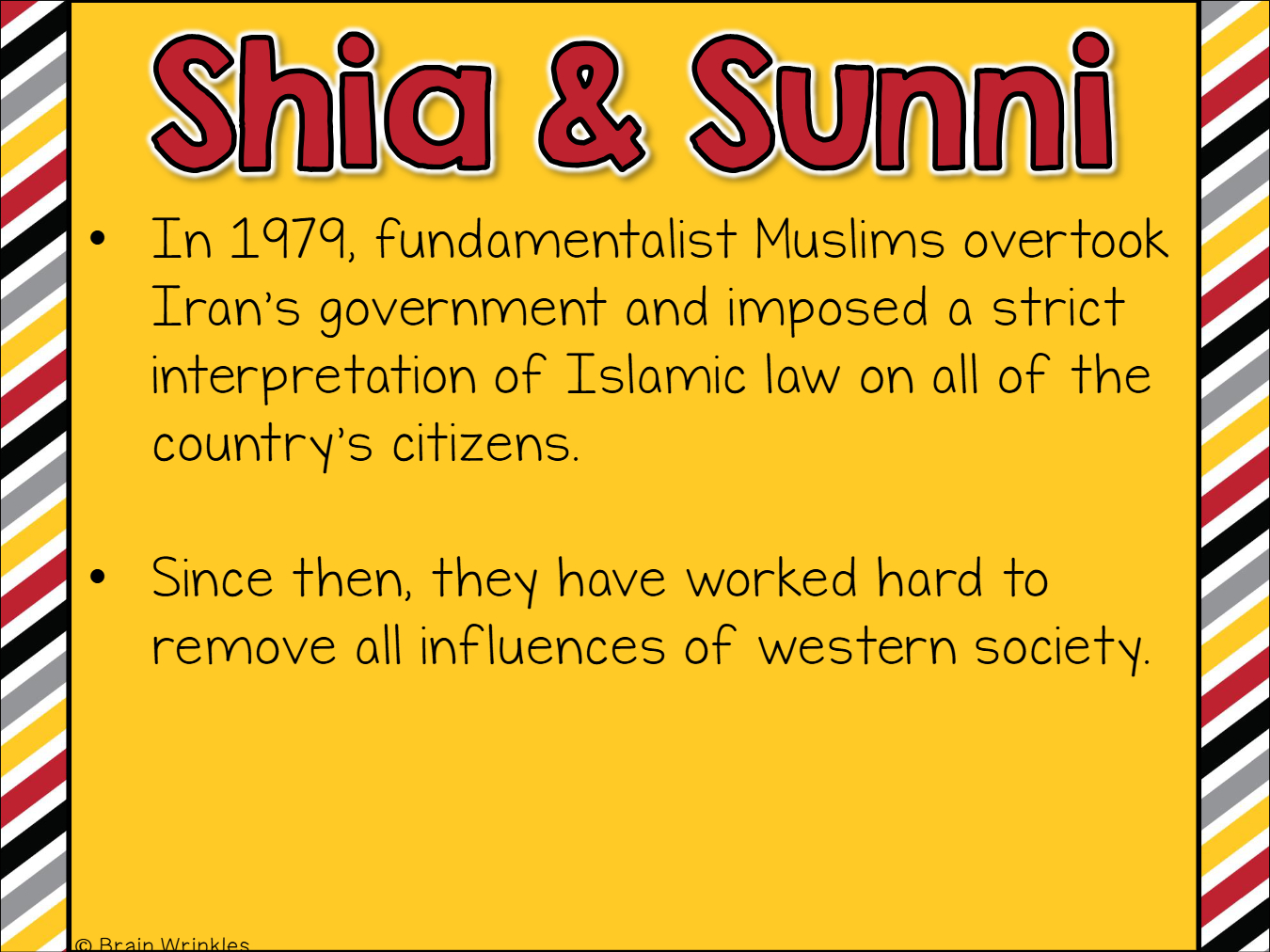
Fundamentalist Muslims imposed strict Islamic law in Iran in 1979.
43
Open Ended
How did the events of 1979 in Iran influence the country's relationship with western society?
44
Multiple Choice
Which of the following conflicts is associated with land and religion in the Middle East?
The Palestinian-Israeli conflict
The Cold War
The American Civil War
The Korean War
45
Open Ended
Reflecting on today's lesson, how do you think European partitioning after World War I contributed to ongoing conflicts in the Middle East?
Show answer
Auto Play
Slide 1 / 45
SLIDE
Similar Resources on Wayground

38 questions
13 Colonies - Name by Name!
Presentation
•
6th Grade
40 questions
Rates and Unit Rates
Presentation
•
7th Grade
40 questions
Industrial Revolution Section 3-4
Presentation
•
7th Grade
38 questions
Science 7 Year End Review - Unit B
Presentation
•
7th Grade
42 questions
Finding Slope and Y-Intercept from Equations, Tables and Graphs
Presentation
•
7th Grade
37 questions
Cotton and Cattle lesson
Presentation
•
7th - 8th Grade
40 questions
Economics
Presentation
•
7th Grade
37 questions
Texas Native Americans- Part 3
Presentation
•
7th Grade
Popular Resources on Wayground
10 questions
How much do you know about our Portrait of an Eagle?

Quiz
•
10th Grade
10 questions
Fast Food Slogans
Quiz
•
6th - 8th Grade
21 questions
Continents and Oceans
Quiz
•
6th Grade
20 questions
Parts of Speech
Quiz
•
5th Grade
16 questions
Subject & Predicate
Quiz
•
5th Grade
25 questions
Multiplication Facts
Quiz
•
5th Grade
12 questions
Map Skills
Quiz
•
3rd Grade
22 questions
Continents and Oceans
Quiz
•
5th Grade
Discover more resources for Social Studies
10 questions
Exploring the Age of Exploration: Key Events and Figures

Interactive video
•
6th - 10th Grade
13 questions
13 Colonies Map Quiz
Quiz
•
6th - 8th Grade
19 questions
Unit 3 Spanish Colonial Era
Quiz
•
7th Grade
10 questions
Pillars of Free Enterprise
Quiz
•
6th - 8th Grade
26 questions
QA 1 Review
Quiz
•
6th - 8th Grade
10 questions
Exploring the 13 Colonies Regions
Interactive video
•
6th - 10th Grade
21 questions
ss.7.cg.1.1- Ancient Influences
Quiz
•
7th Grade
21 questions
Unit 2 Age of Contact 7th gr
Quiz
•
7th Grade