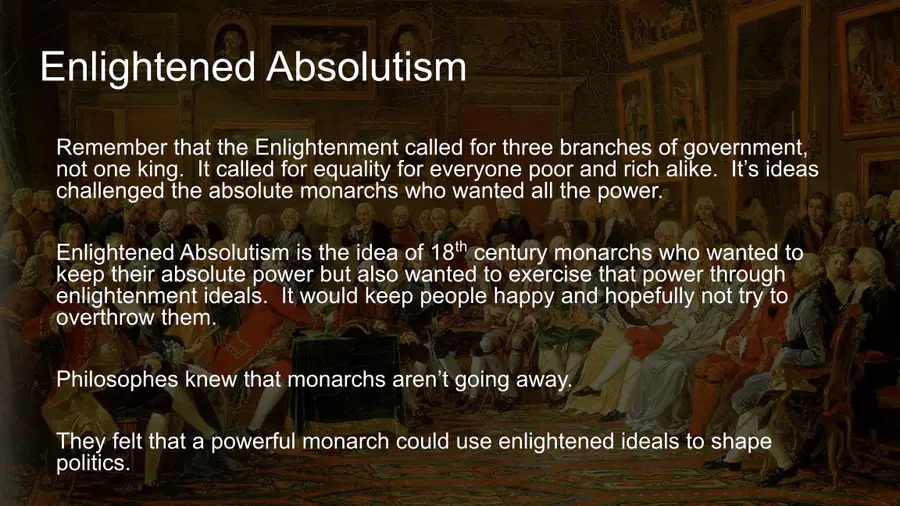
Notebook page 2: Enlightened Absolutism
Presentation
•
History
•
10th Grade
•
Practice Problem
•
Easy
Standards-aligned
Richard DeStefano
Used 5+ times
FREE Resource
10 Slides • 13 Questions
1
2
Match
First a review from previous lesson. Match the following philosophers with their ideas.
Rousseau
John Locke
Montesquieu
Voltaire
Wollstoncraft
The Social Contract
Natural Rights
Separation of governmental powers.
Religious Toleration
Equal Education for men and women
The Social Contract
Natural Rights
Separation of governmental powers.
Religious Toleration
Equal Education for men and women
3
4
Multiple Choice
Which of the following best captures the contradiction at the heart of Enlightened Absolutism?
Monarchs gave up power to elected assemblies.
Monarchs rejected Enlightenment thought entirely.
Monarchs tried to blend Enlightenment ideals with absolute power.
Monarchs ruled through popular consent only.
5
6
Multiple Choice
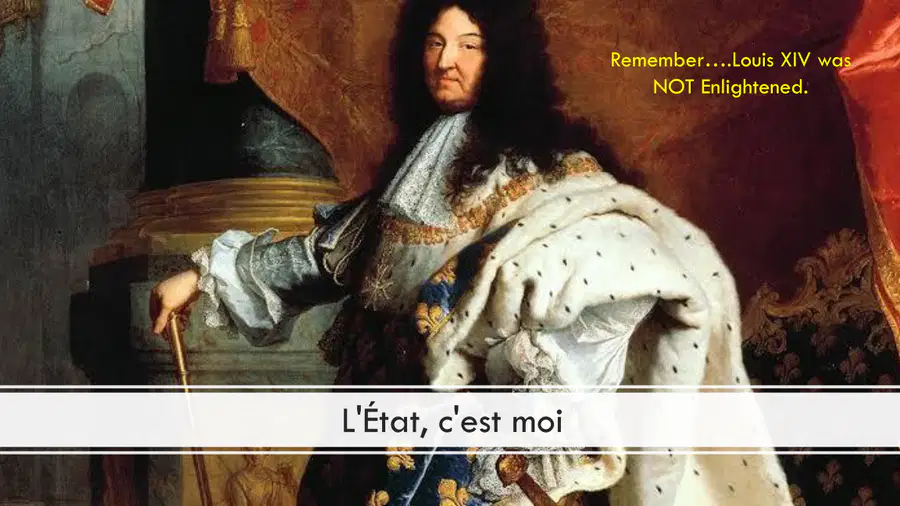
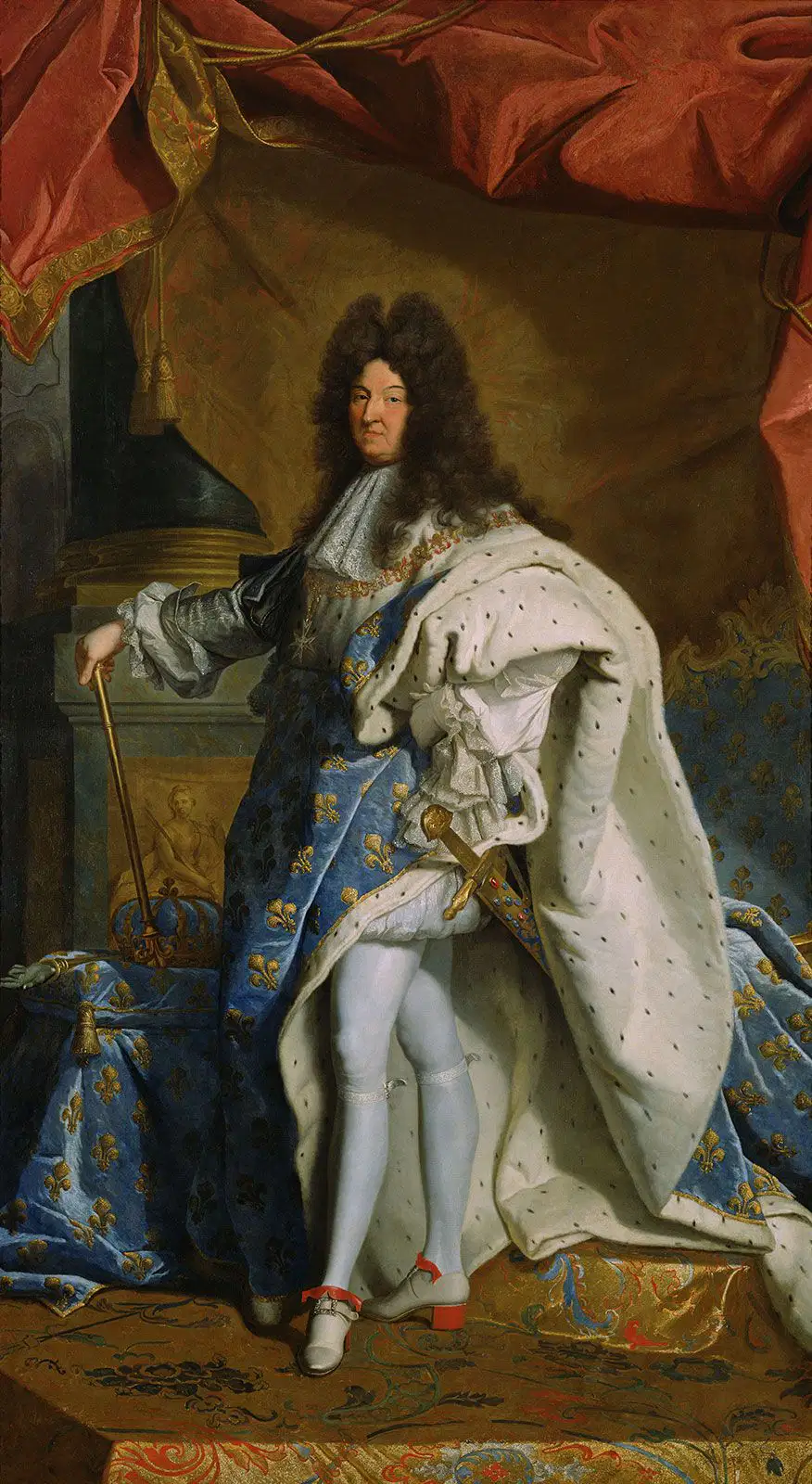
Which monarch is associated with the phrase "L'État, c'est moi" and what does it signify about his rule?
Louis XIV, signifying absolute monarchy
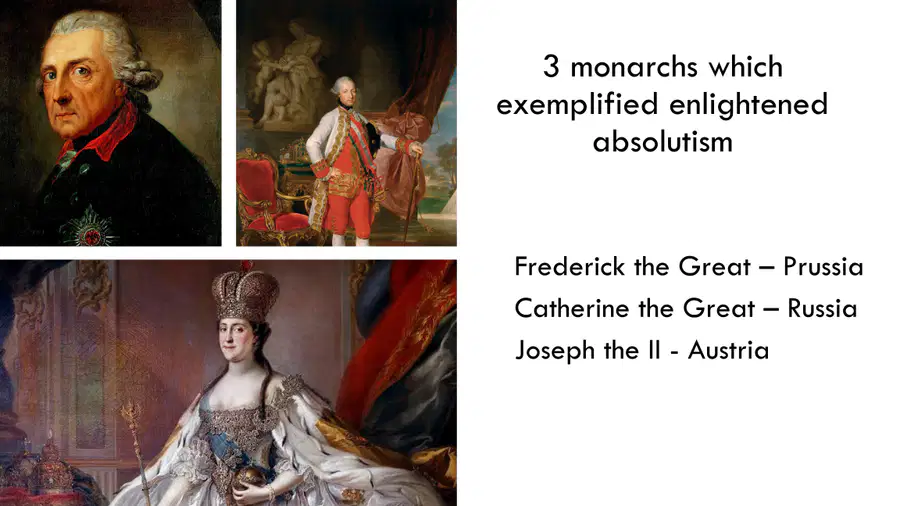
Frederick the Great, signifying enlightened rule
Catherine the Great, signifying expansionism
Joseph II, signifying religious tolerance
7
8
9
Multiple Choice
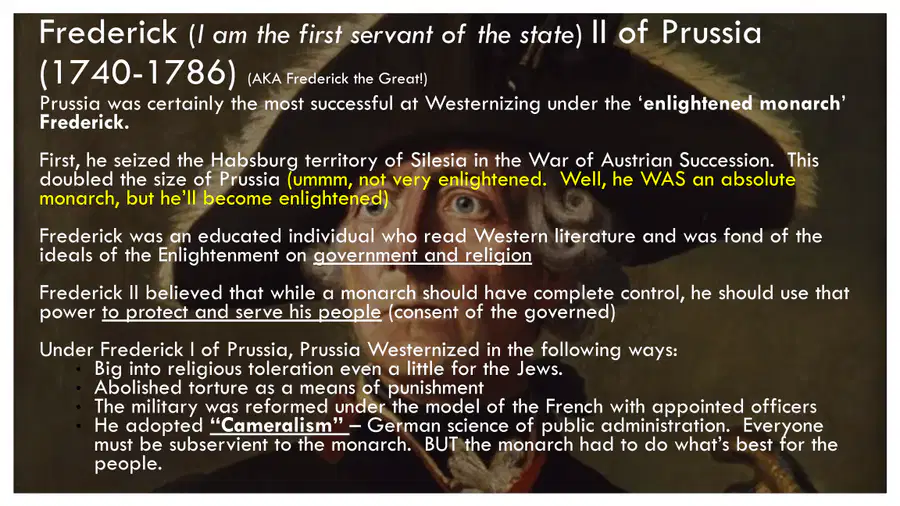
What was Frederick the Great’s statement “I am the first servant of the state” meant to express?
Monarchs should be chosen by the people.
The monarch existed to serve the people’s welfare.
The state existed to glorify the monarch.
Religion was superior to politics.
10
Multiple Select
Which of the following reforms did Frederick the Great implement in Prussia? Select all that apply.
Abolished torture as a means of punishment
Expanded serfdom
Promoted religious toleration
Centralized power among nobles
11
12
Multiple Choice
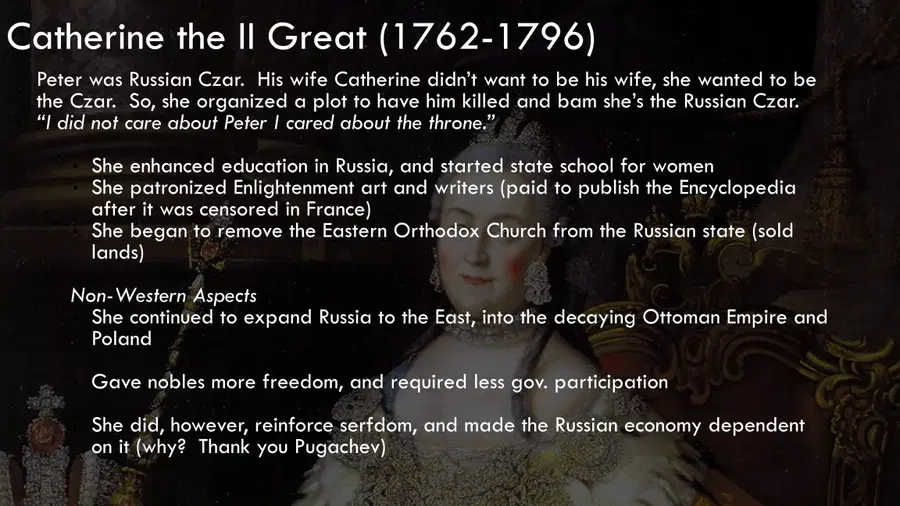
Why was Catherine the Great’s rule considered partly enlightened but ultimately contradictory?
She abolished serfdom but censored Enlightenment writings.
She gave power to nobles but limited education.
She banned religion but promoted slavery.
She encouraged women’s education but reinforced serfdom.
13
14
Multiple Choice
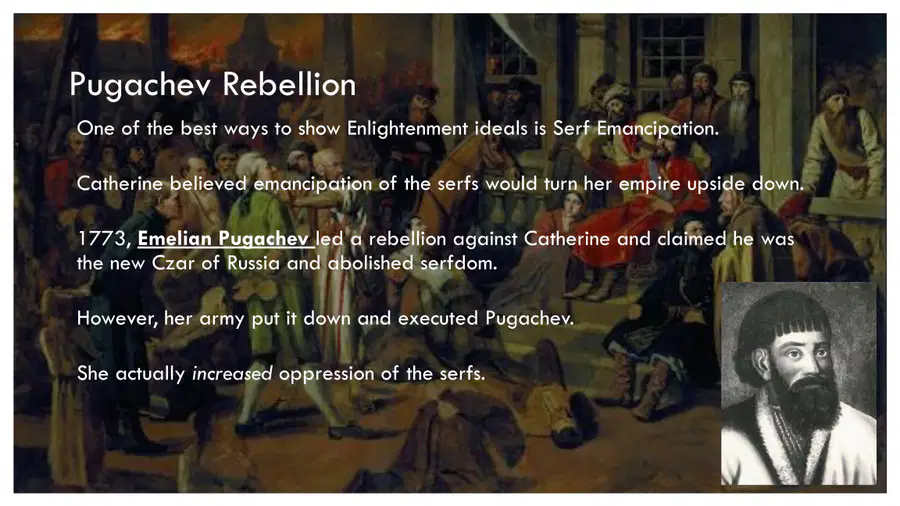
What was the outcome of the Pugachev Rebellion for Russian serfs under Catherine the Great?
Serfdom was abolished
Oppression of serfs increased
Serfs gained more freedom
Catherine was overthrown
15
16
Multiple Choice
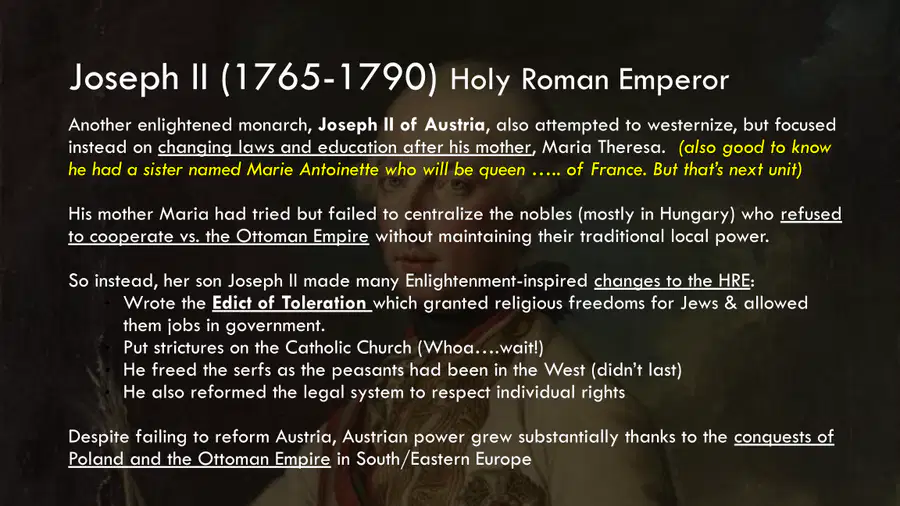
Joseph II’s Edict of Toleration was significant because it—
United Austria and Prussia under one ruler.
Reduced the power of nobles in Hungary.
Ended serfdom permanently in the Habsburg Empire.
Granted religious freedoms to Jews and limited Church influence.
17
Multiple Choice
Why did Joseph II’s attempts at reform ultimately fail?
His empire was destroyed by foreign invasion.
He lacked support from Frederick and Catherine.
The Church and nobility resisted his centralizing efforts.
His mother opposed Enlightenment ideas.
18
19
Multiple Choice
Which of the following statements best reflects the Haskalah movement?
It emphasized the compatibility between Jewish faith and Enlightenment reason.
It was a rejection of Enlightenment thought by Jewish scholars.
It promoted absolutism as the ideal form of Jewish government.
It sought to strengthen Church influence in politics.
20
Multiple Choice
How did the Haskalah movement challenge the anti-Jewish policies in Europe, and what were the differing responses of rulers such as Joseph II, Catherine, and Frederick?
By promoting Jewish assimilation and education, with all rulers supporting these reforms
By advocating for Jewish separation from European society, with all rulers opposing these reforms
By claiming anti-Jewish policies were inconsistent with Enlightenment thinking, with Joseph II supporting Jewish toleration but Catherine and Frederick rejecting it
By encouraging Jewish migration out of Europe, with Joseph II, Catherine, and Frederick all supporting this move
21
22
Multiple Choice
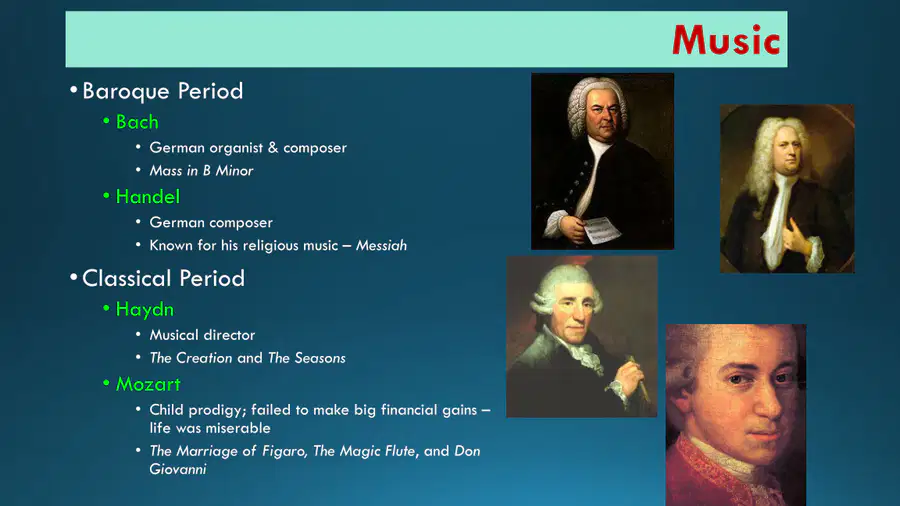
Which of the following best describes how Enlightenment ideals influenced the arts during this period?
Religious themes disappeared entirely from music.
Baroque music emphasized simplicity over complexity.
Classical composers like Mozart and Haydn reflected Enlightenment balance and order.
Music was banned under most Enlightened Monarchs.
23
Multiple Choice
How did Enlightened Absolutism attempt to balance absolute monarch power with Enlightenment ideals?
By abolishing monarchy and establishing democracy
By sharing power equally among all citizens
By maintaining monarch power but adopting Enlightenment reforms
By creating a parliament to limit monarch authority
Show answer
Auto Play
Slide 1 / 23
SLIDE

Similar Resources on Wayground
16 questions
Pearl Harbor
Presentation
•
10th Grade
18 questions
The Election of 1800
Presentation
•
10th Grade
18 questions
WWI Ends
Presentation
•
9th Grade
19 questions
Little Bighorn
Presentation
•
9th - 10th Grade
18 questions
Significant Figures
Presentation
•
10th Grade
18 questions
El amor 1. Thich y Eterno resplandor
Presentation
•
KG
19 questions
Vietnam: Moving Toward Conflict
Presentation
•
10th Grade
18 questions
World War I
Presentation
•
10th Grade
Popular Resources on Wayground
5 questions
A Home on the Shore
Quiz
•
3rd Grade
28 questions
US History Regents Review
Quiz
•
11th Grade
6 questions
A Horse Tale
Quiz
•
3rd Grade
20 questions
Math Review
Quiz
•
3rd Grade
10 questions
Juneteenth History and Significance
Interactive video
•
5th - 8th Grade
20 questions
Dividing Fractions
Quiz
•
5th Grade
55 questions
A Long Walk to Water Final Review
Quiz
•
6th - 8th Grade
10 questions
Equation Word Problems
Quiz
•
7th Grade
Discover more resources for History
20 questions
Insurance
Quiz
•
9th - 12th Grade
10 questions
Juneteenth: History and Significance
Interactive video
•
7th - 12th Grade
6 questions
Mayan Mathematics part 1
Presentation
•
9th - 12th Grade
40 questions
Flags of the World
Quiz
•
KG - Professional Dev...
10 questions
Unit 9 Quiz
Quiz
•
9th - 12th Grade