Search Header Logo
Land and sea breeze Assessment

Land and sea breeze Assessment

Assessment

Presentation

Science

11th Grade

Medium

NGSS
MS-ESS2-5, MS-ESS2-6

Standards-aligned

Created by

Tim Gault

Used 5+ times

FREE Resource

4 Slides • 8 Questions

1

media

2

media

click on arrow

3

media

click on arrow

4

Multiple Choice

Question image
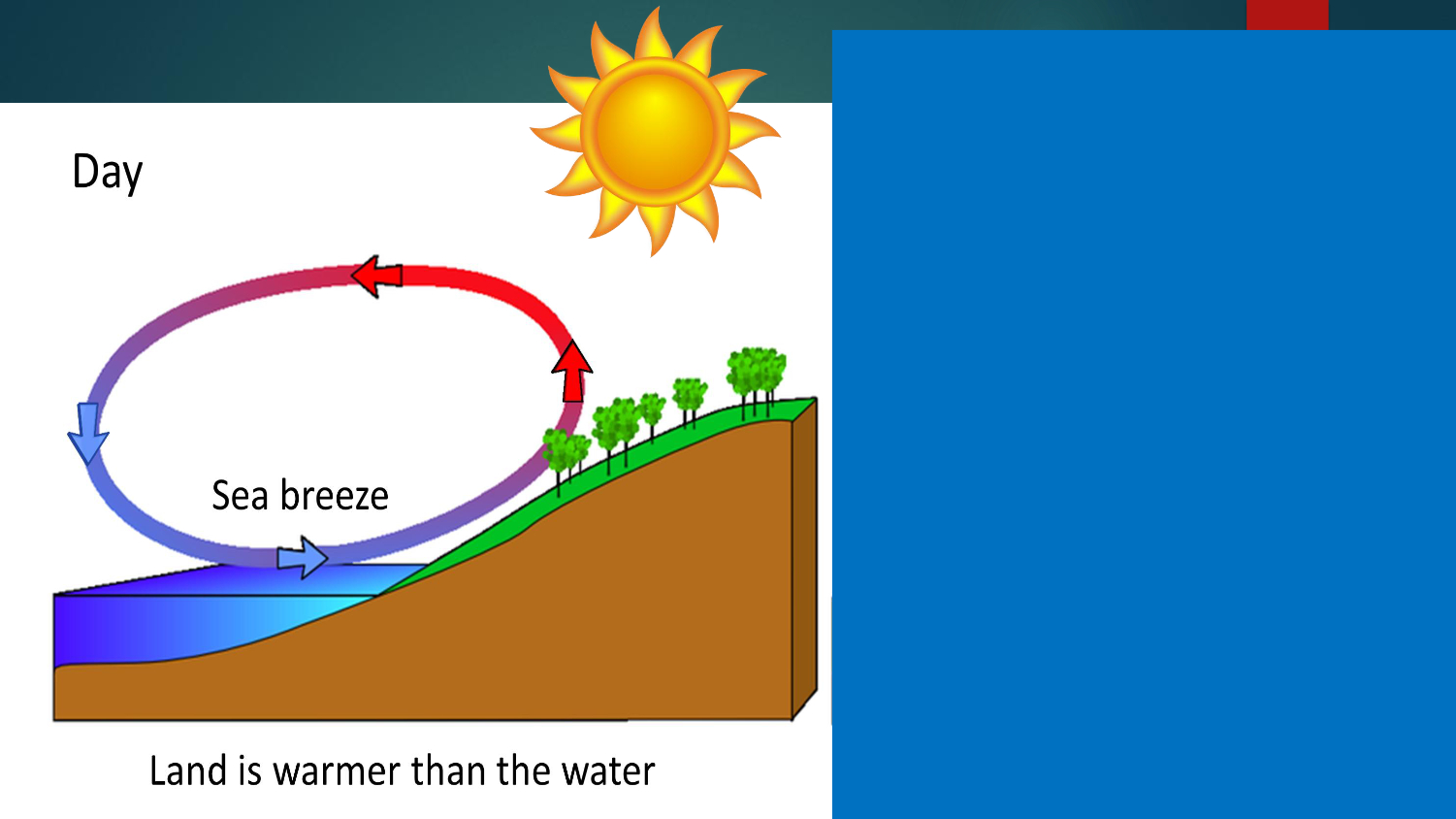
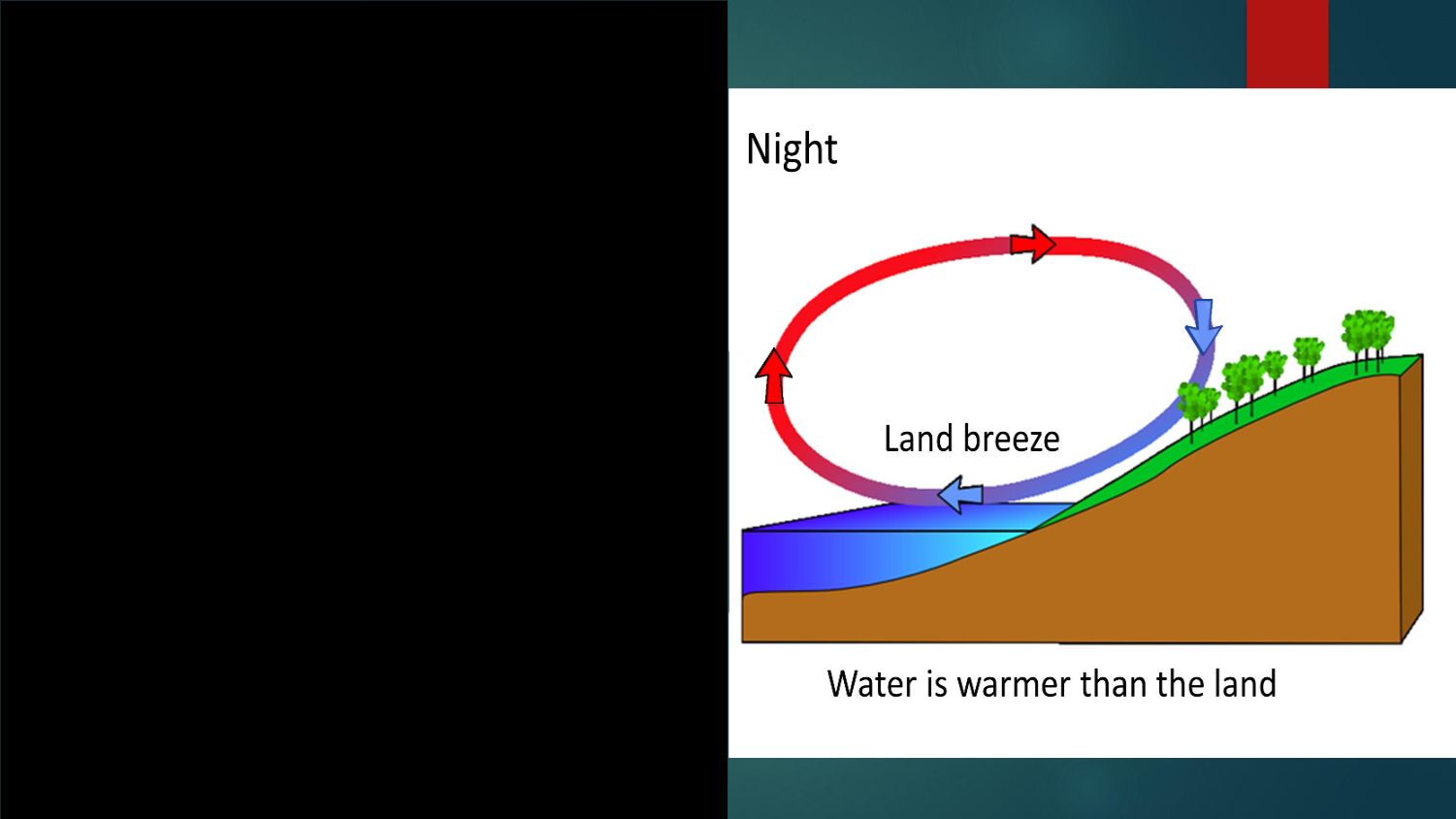
Is this a land or a sea breeze?
1
land breeze
2
sea breeze

5

Multiple Select

Question image

What causes the formation of a land breeze?

(more than one)

1

The land's nighttime temperature is less than the sea surface temperature

2

Wind blowing from the sea to the land

3

Higher pressure over the land

6

Multiple Choice

Question image

During a land breeze, what causes the air to rise?

1

the cool air from the sea

2

The sun heating the sea

3

The warm land surface

4

The moon's gravitational pull

7

Labelling

What type of breeze is shown?

Drag labels to their correct position on the image

Sea Breeze

Land Breeze

8

Multiple Select

Question image

Which of the following factors contribute to the formation of a sea breeze? (more than one)

1

Differential heating between land and water

2

Changes in air density and pressure

3

Resulting horizontal air movement

4

All of the above

9

Multiple Choice

Question image

Why is the study of land and sea breezes important for understanding local weather patterns?

1

Because they influence temperature and wind near coastal areas

2

Because they only occur in deserts

3

Because they are responsible for ocean currents

4

Because they cause earthquakes

10

Labelling

Air density - label

Drag labels to their correct position on the image

less dense

more dense

11

Dropdown

Question image
Land and sea breezes are created because during the day, when the sun is up, the ​
heats up ​
than the ocean. At night, when the sun is down, the land cools off more ​
than the ocean. This difference in ​
creates the breezes.

12

media

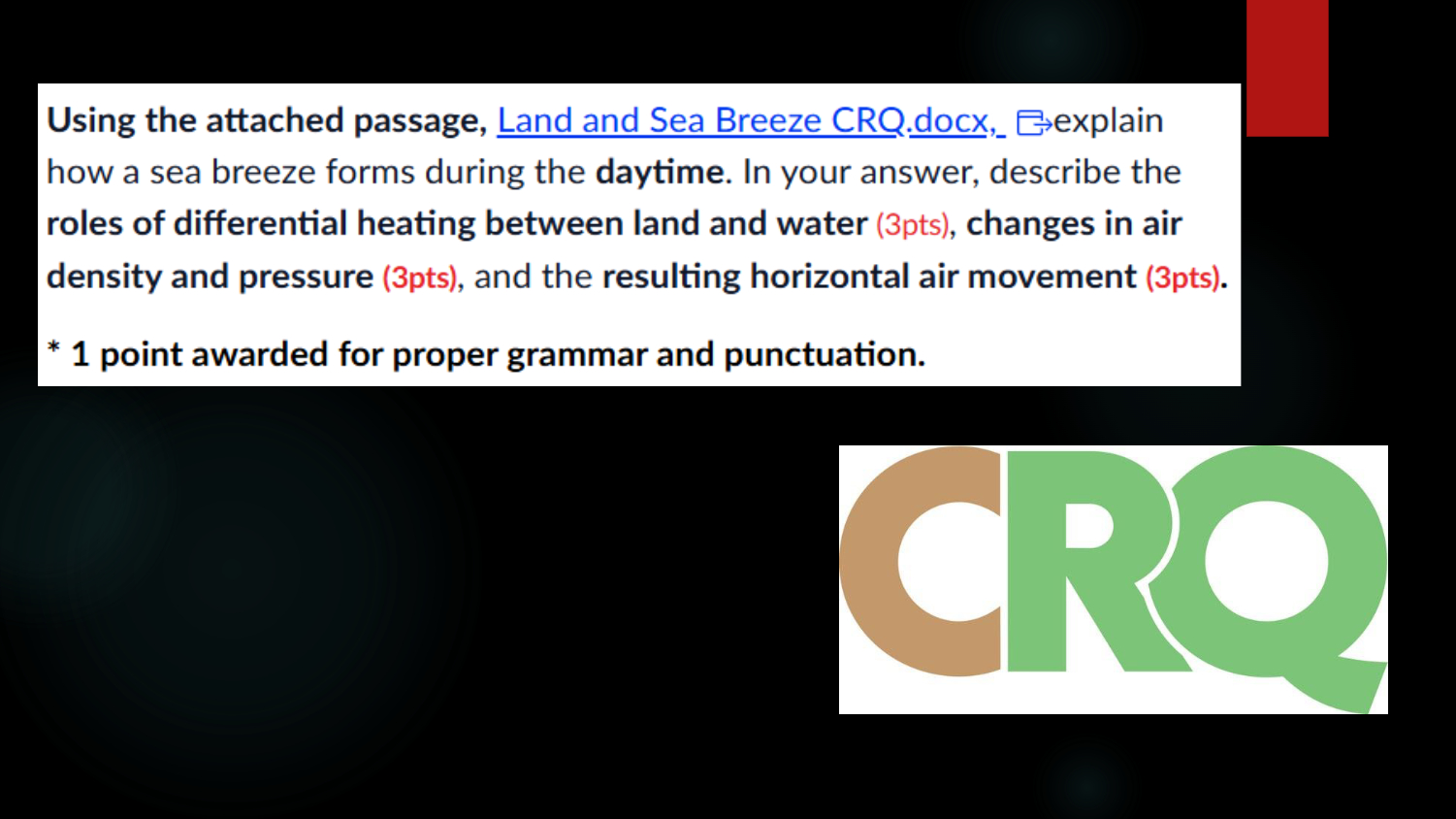
​Complete this weeks CRQ

media

Show answer

Auto Play

Slide 1 / 12

SLIDE