

Thinking Like A Historian

Presentation
•
Social Studies
•
8th Grade
•
Practice Problem
•
Medium

DUNSTAN MARSH
Used 16+ times
FREE Resource
15 Slides • 13 Questions
1

2
Multiple Choice
Why is it important to think like a historian when studying the past?
To memorize dates and names
To understand the significance and context of events
To ignore different perspectives
To focus only on recent history
3
4
5
Multiple Choice
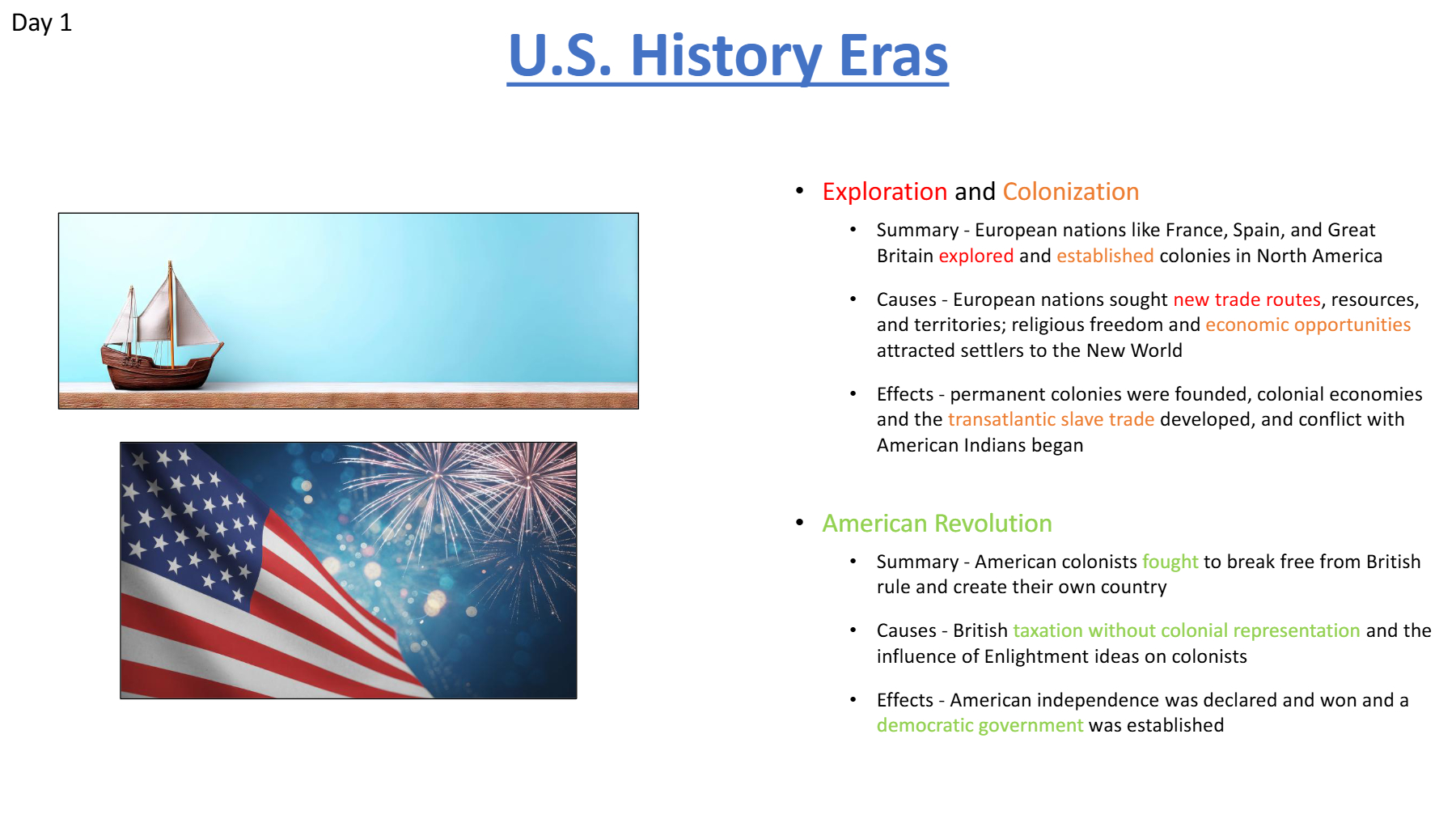
Which of the following was a major effect of European exploration and colonization in North America?
Development of the transatlantic slave trade
Establishment of democratic government
Expansion of manufactured goods
Growth of national pride
6
7
Multiple Select
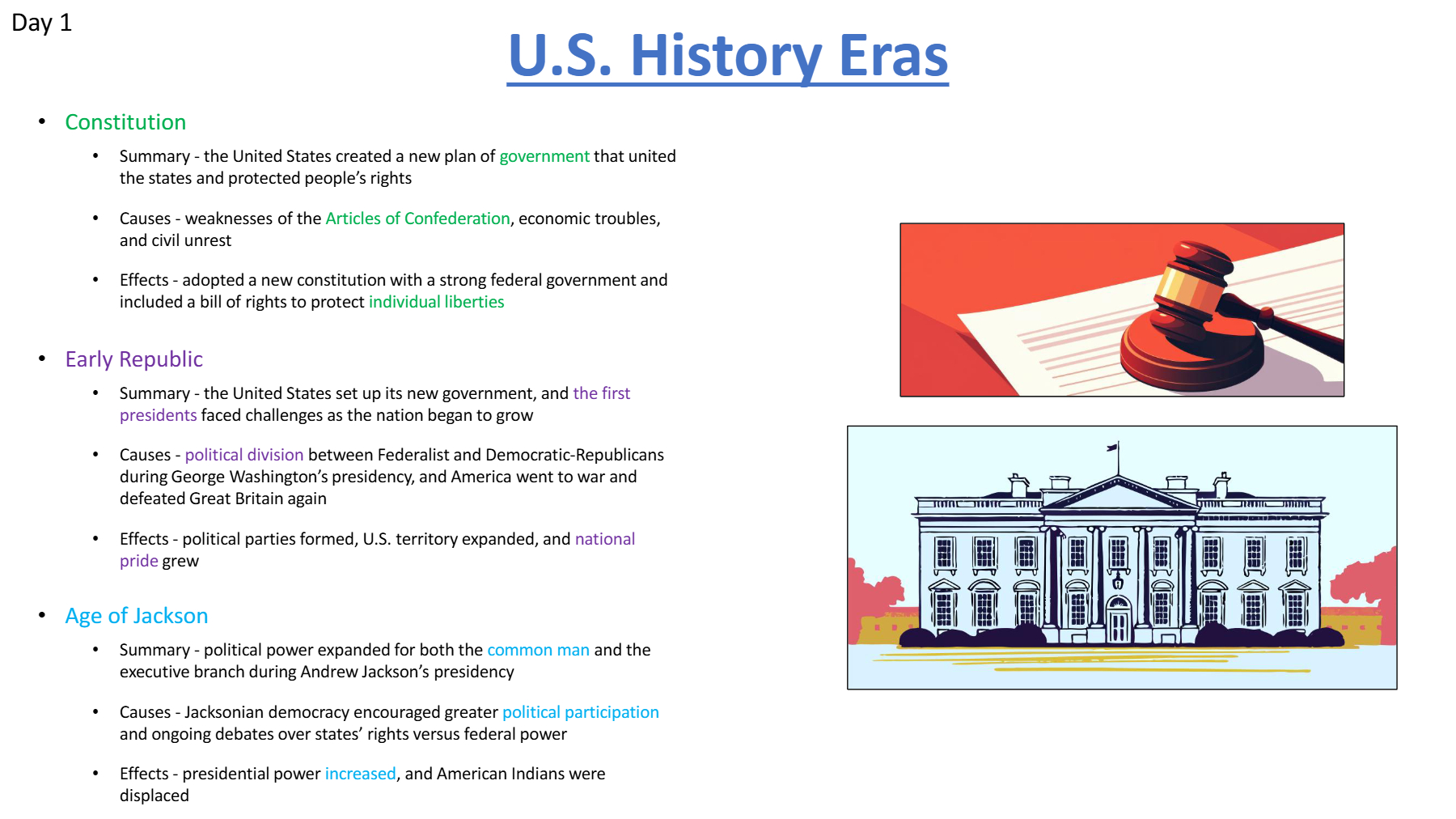
Which of the following were effects of the Age of Jackson?
Presidential power increased
American Indians were displaced
Abolition movement grew
National pride grew
8
9
Fill in the Blanks
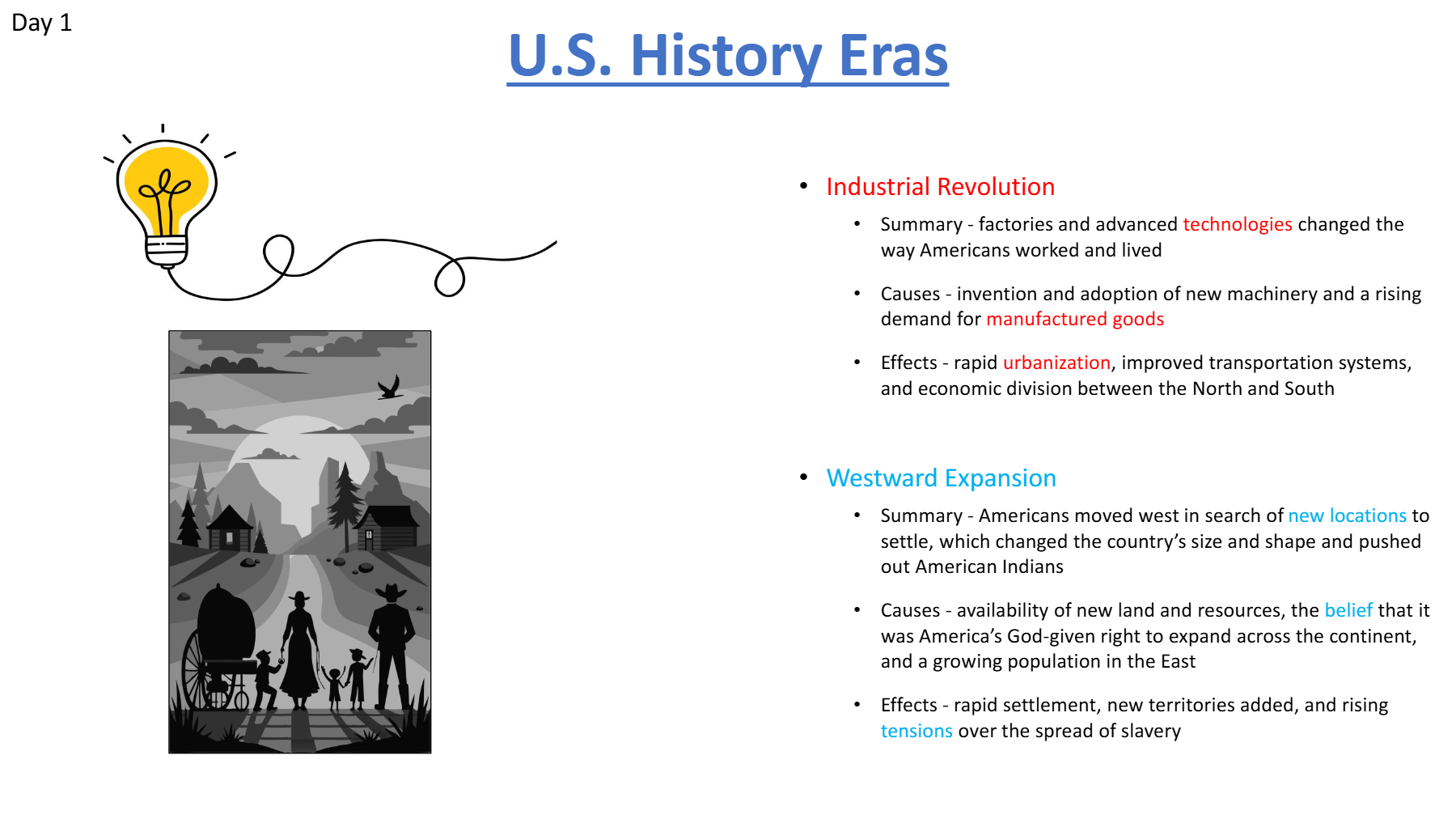
Factories and advanced
10
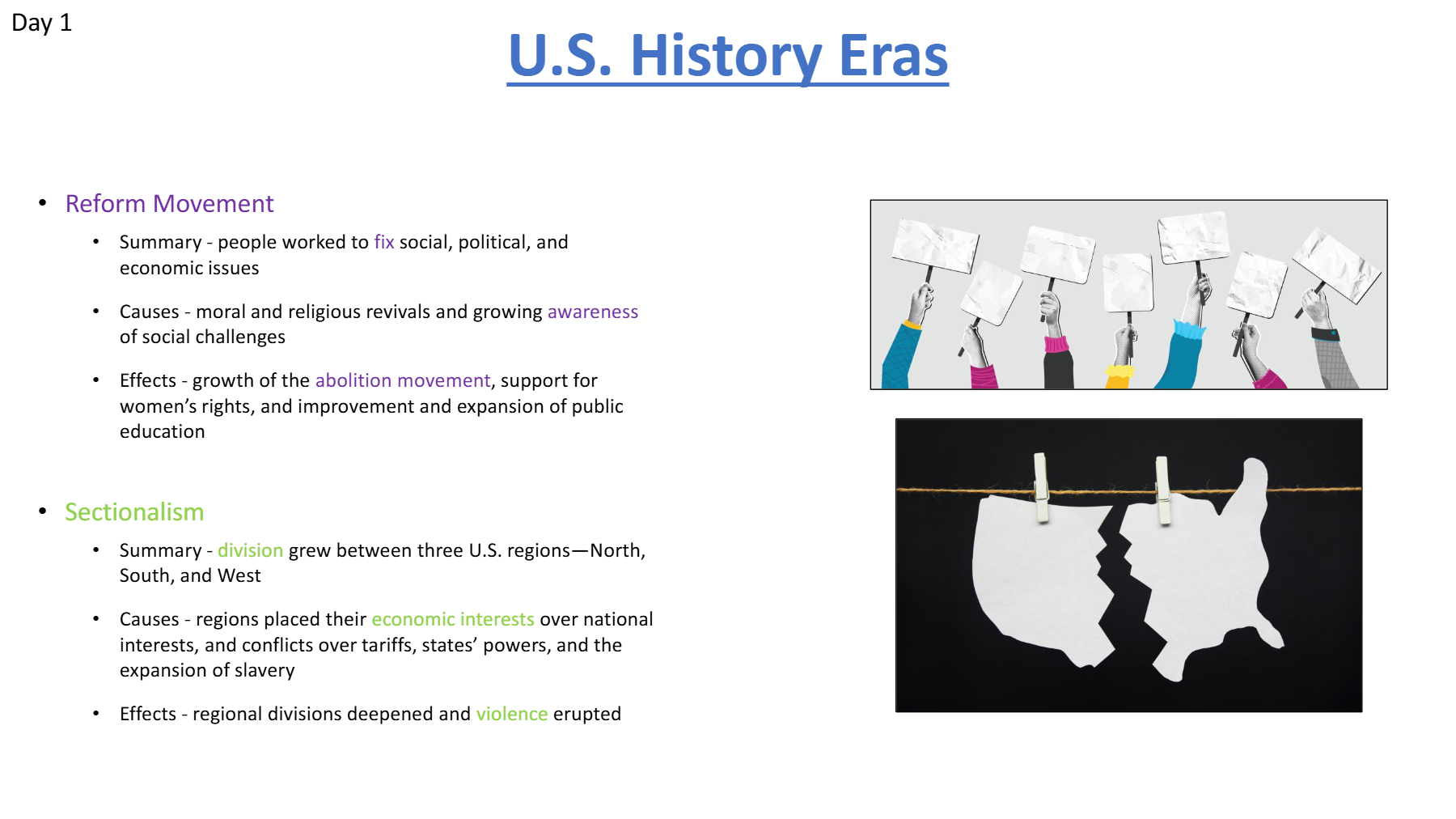
11
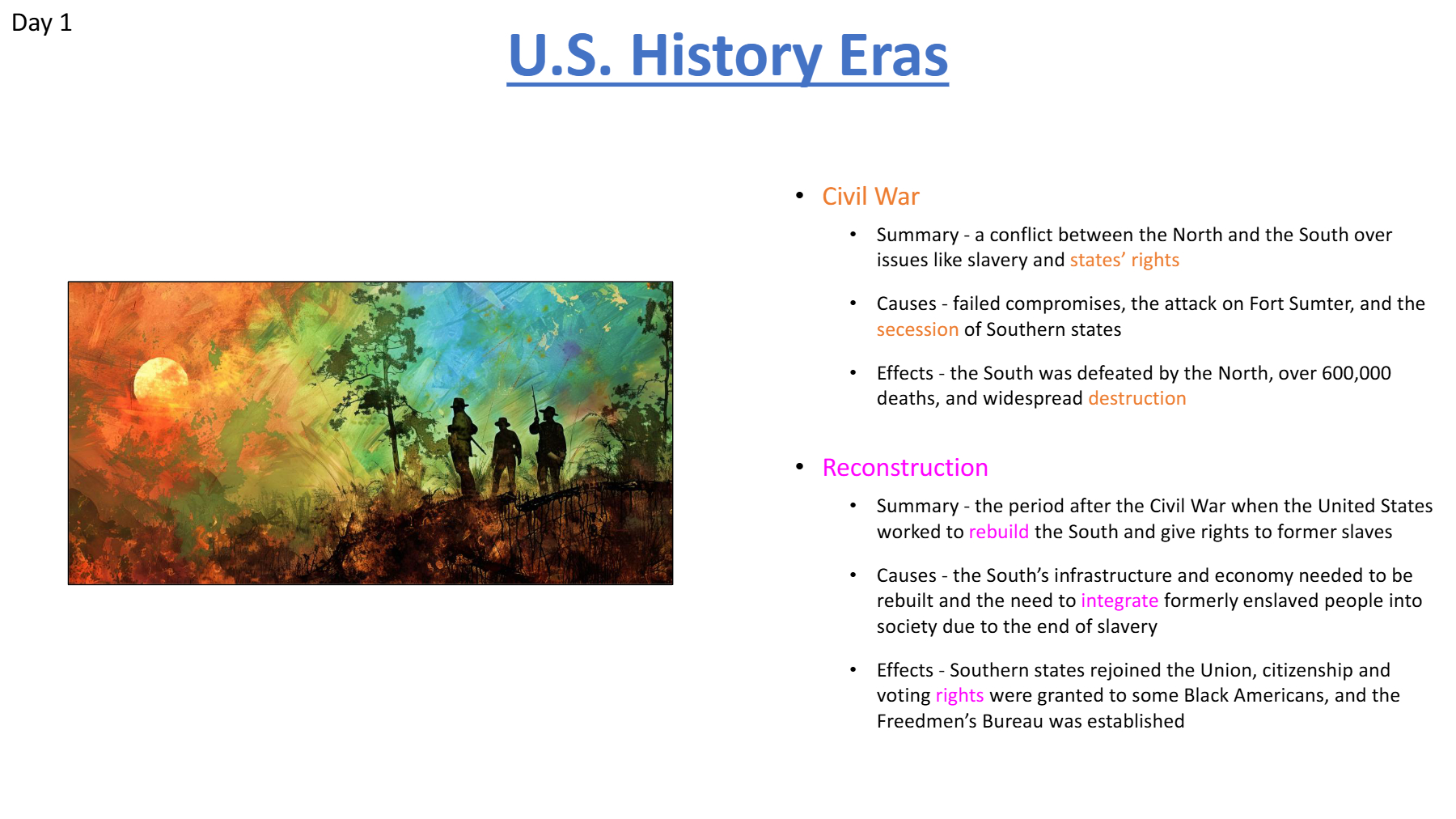
12
Open Ended
Describe how sectionalism contributed to the outbreak of the Civil War.
13
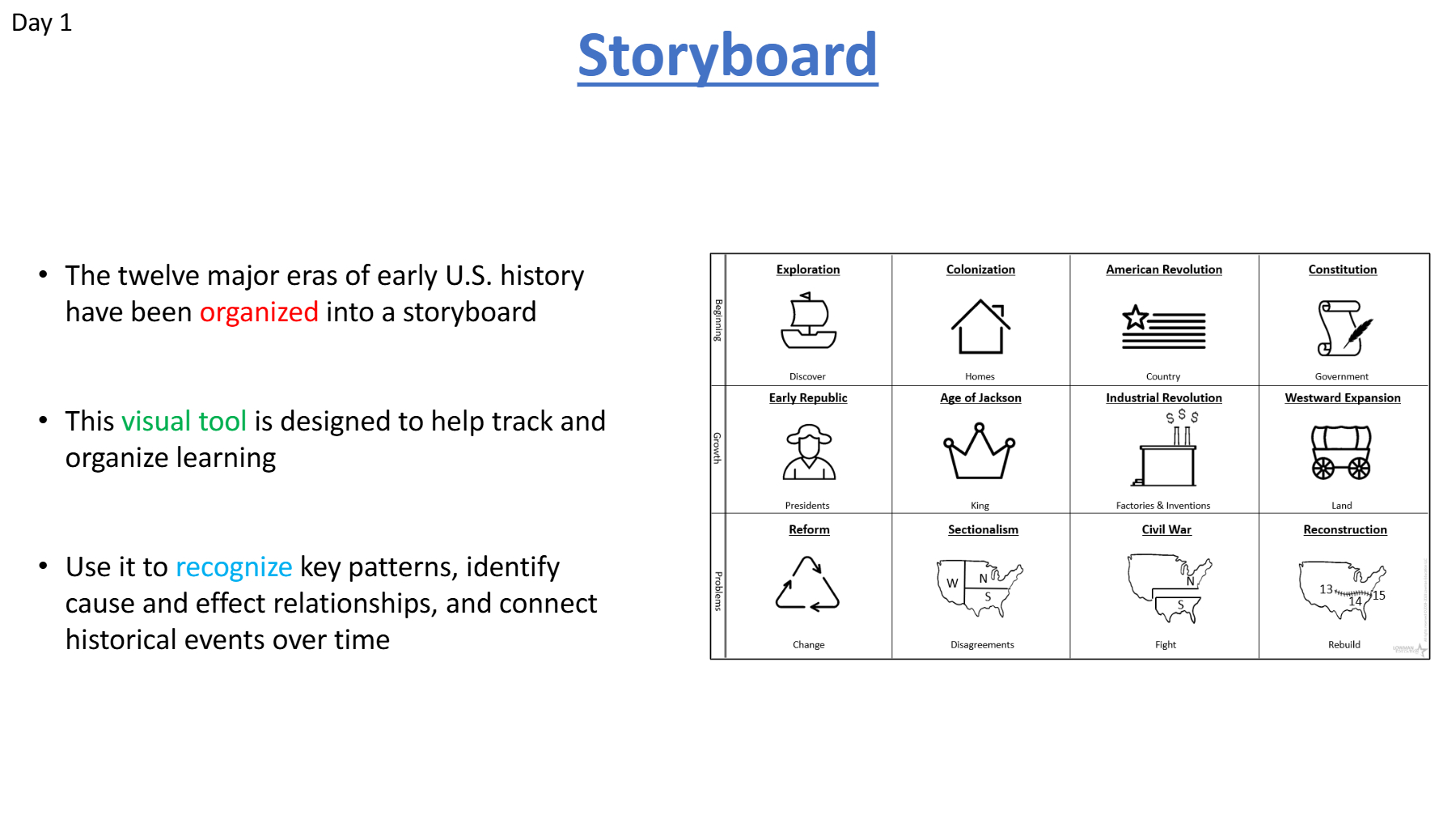
14
Multiple Choice
What is the purpose of the storyboard shown in the last image?
To help track and organize learning about U.S. history eras
To display famous historical figures
To show economic growth in the U.S.
To illustrate technological inventions
15
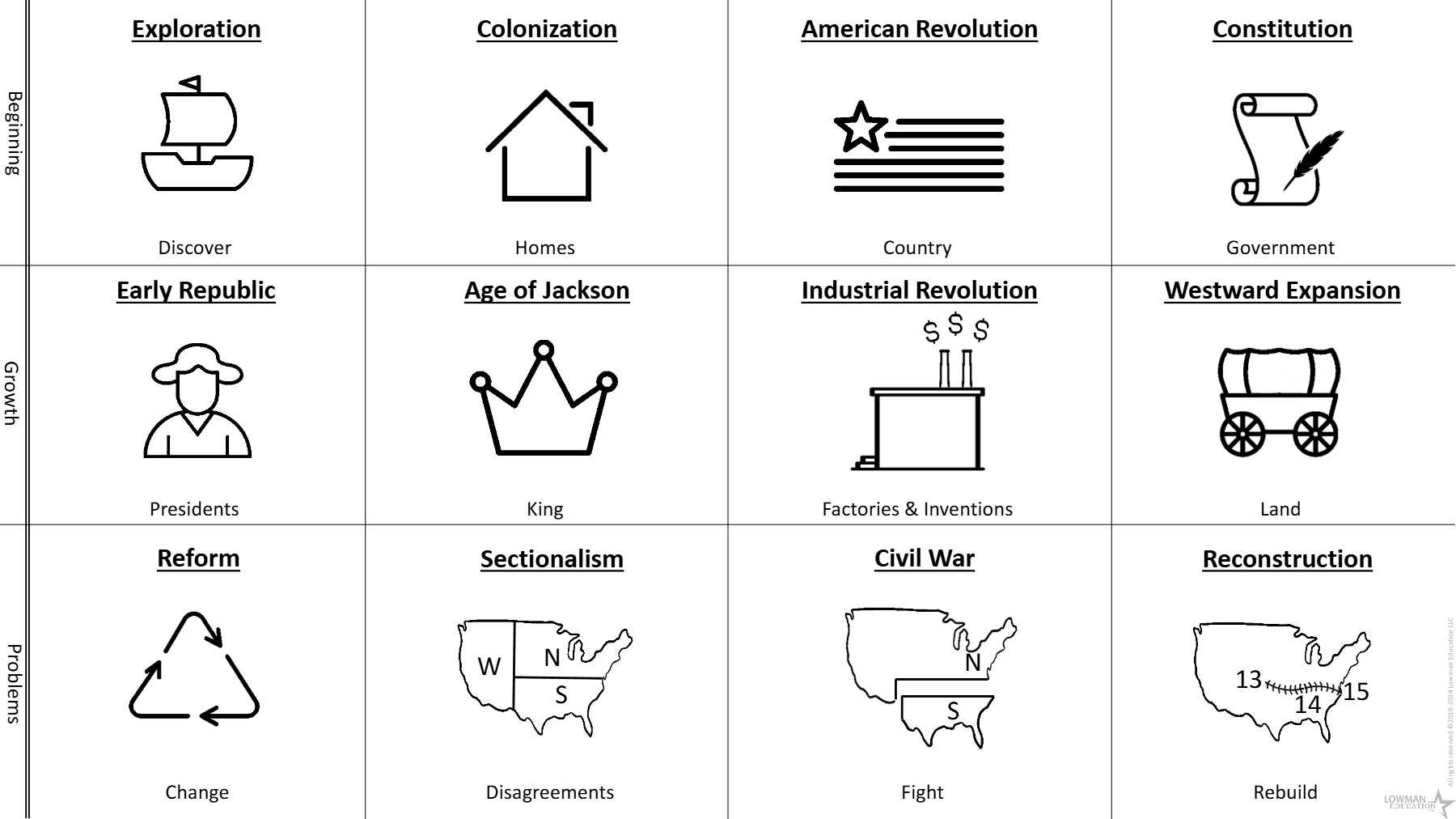
16
17
Multiple Choice
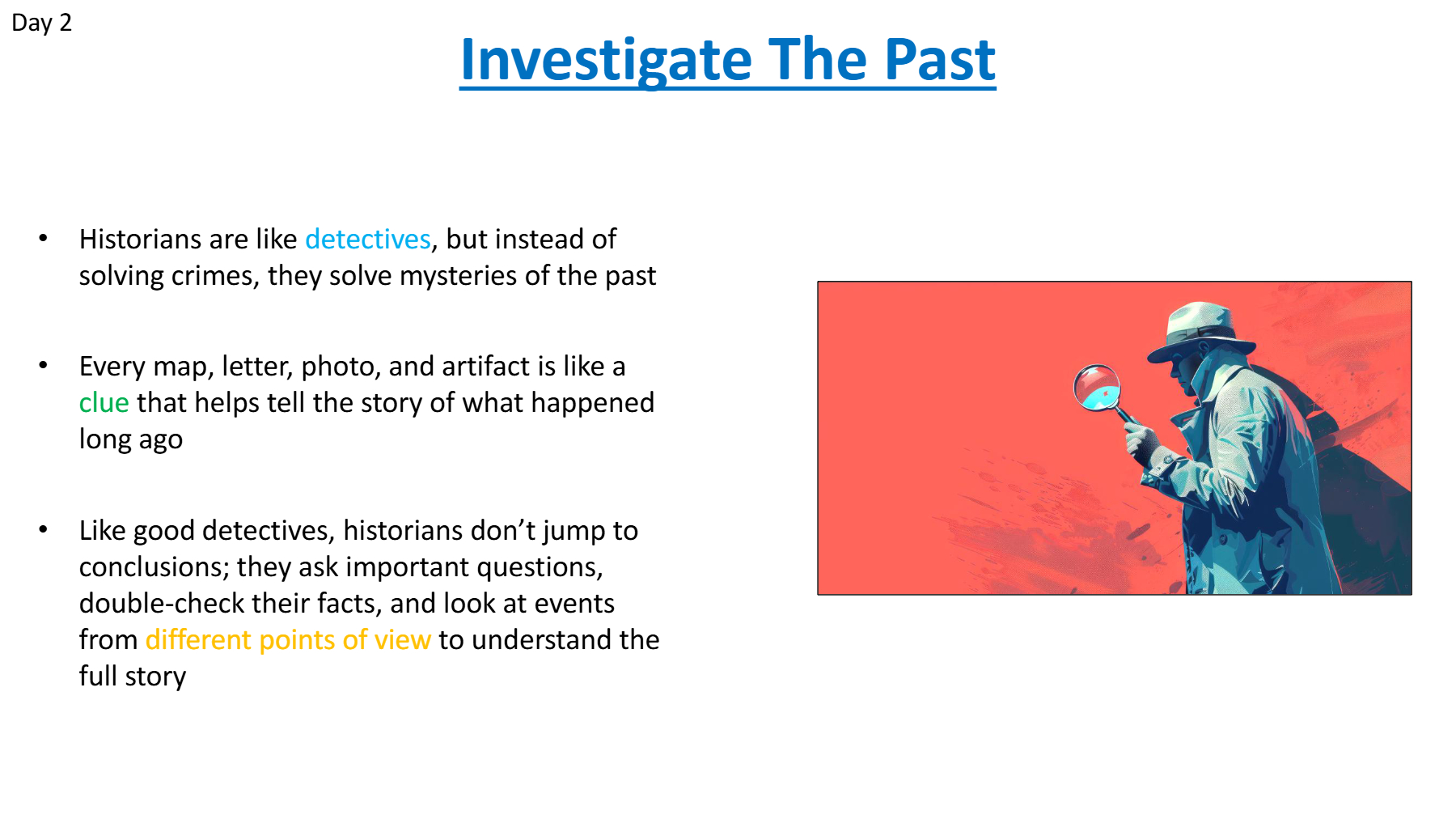
How do historians act like detectives when investigating the past?
They solve crimes using clues from the present.
They use clues from the past to solve mysteries about what happened long ago.
They only use written documents to find answers.
They rely on a single point of view to understand history.
18
19
Open Ended
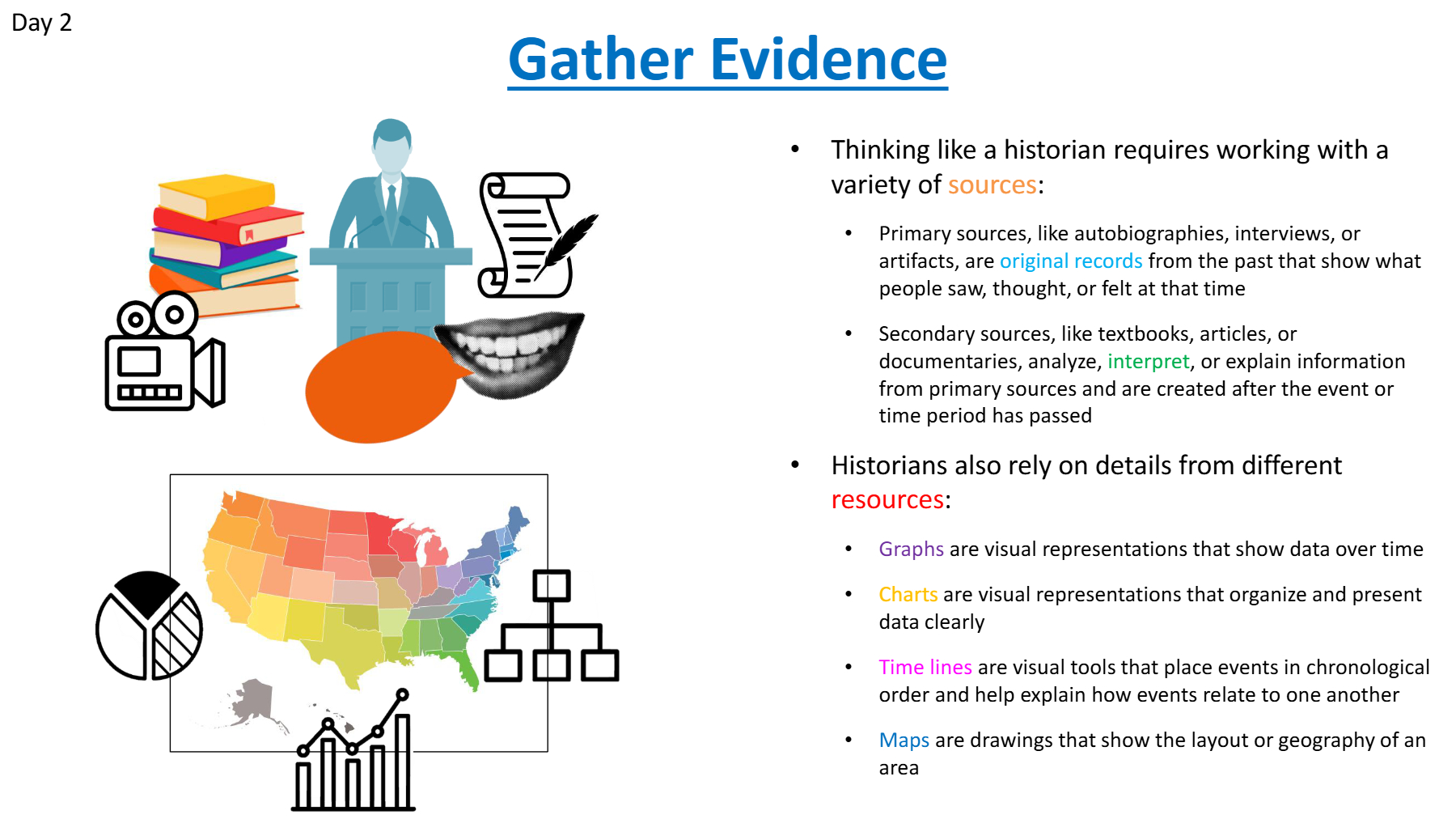
Explain the difference between primary and secondary sources and give an example of each.
20
21
Fill in the Blanks
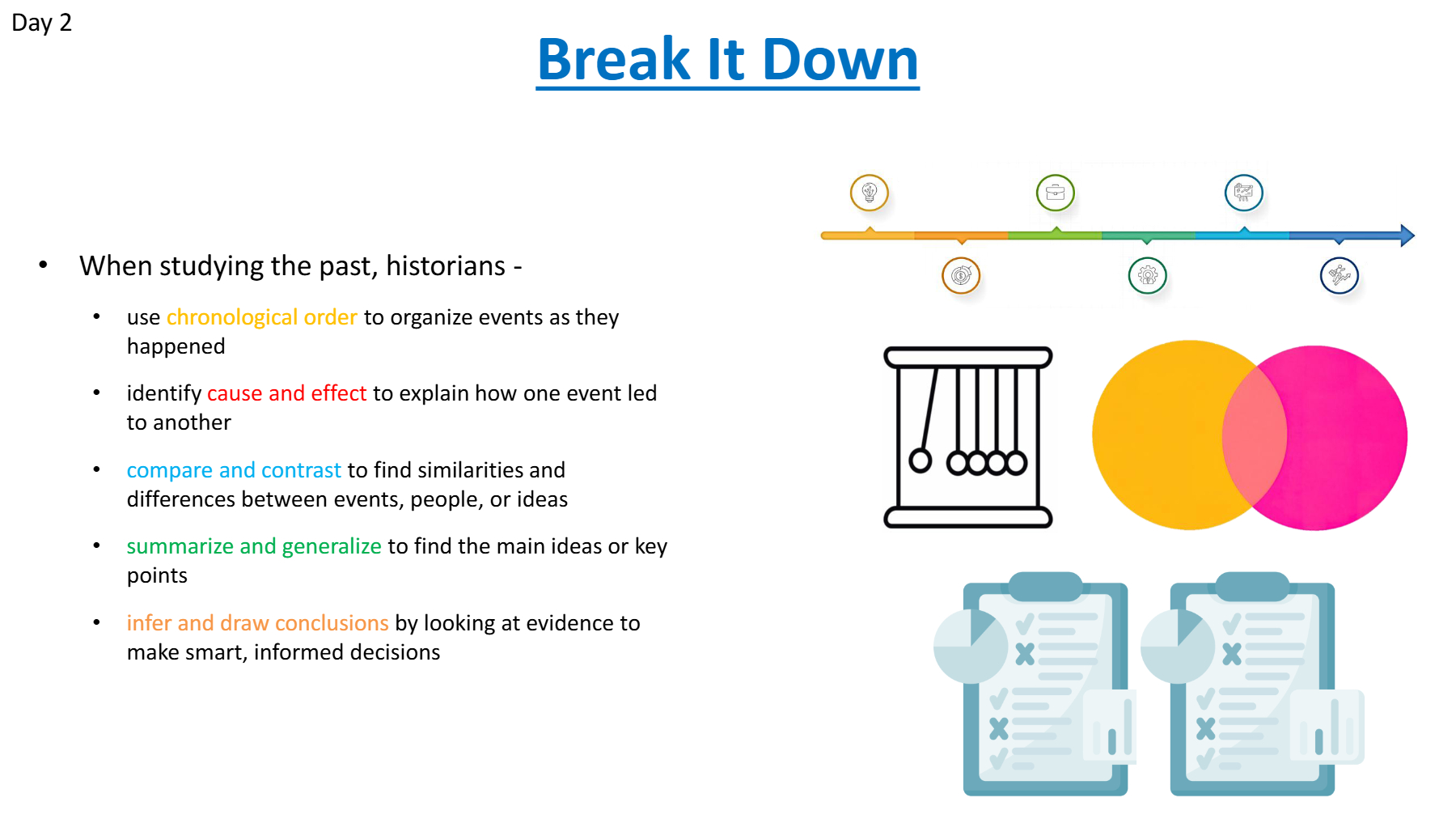
When studying the past, historians use chronological order to organize events as they happened. Another important skill is to identify
22
23
Multiple Choice
Which of the following are important things historians check for to determine if a source is reliable?
Validity and credibility
Bias
Accuracy
All of the above
24
25
Multiple Select
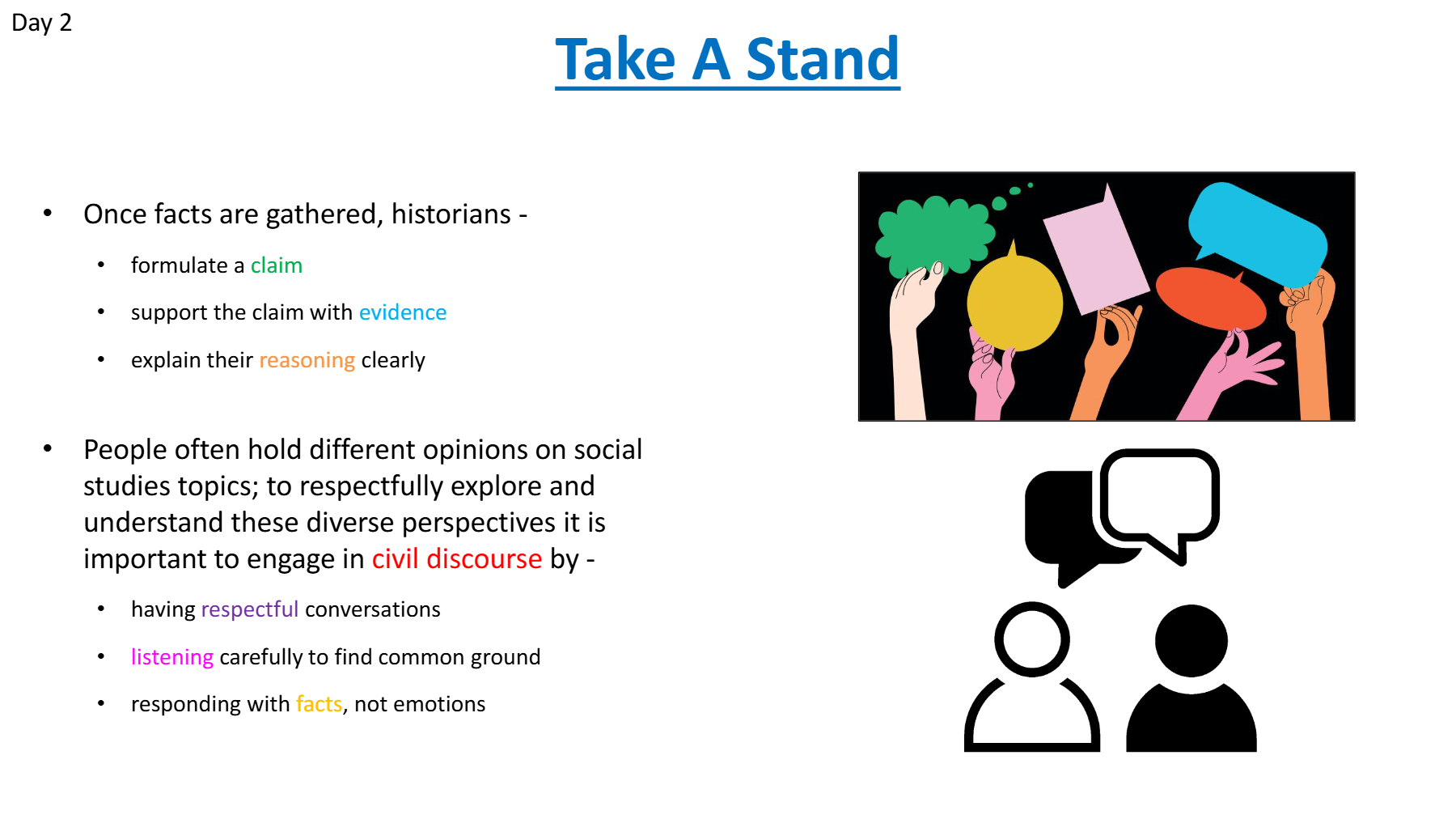
Select all the actions that help engage in civil discourse when discussing social studies topics.
Having respectful conversations
Listening carefully to find common ground
Responding with facts, not emotions
Ignoring other people's opinions
26
27
Fill in the Blanks
History is divided into major time periods called
28
Multiple Choice
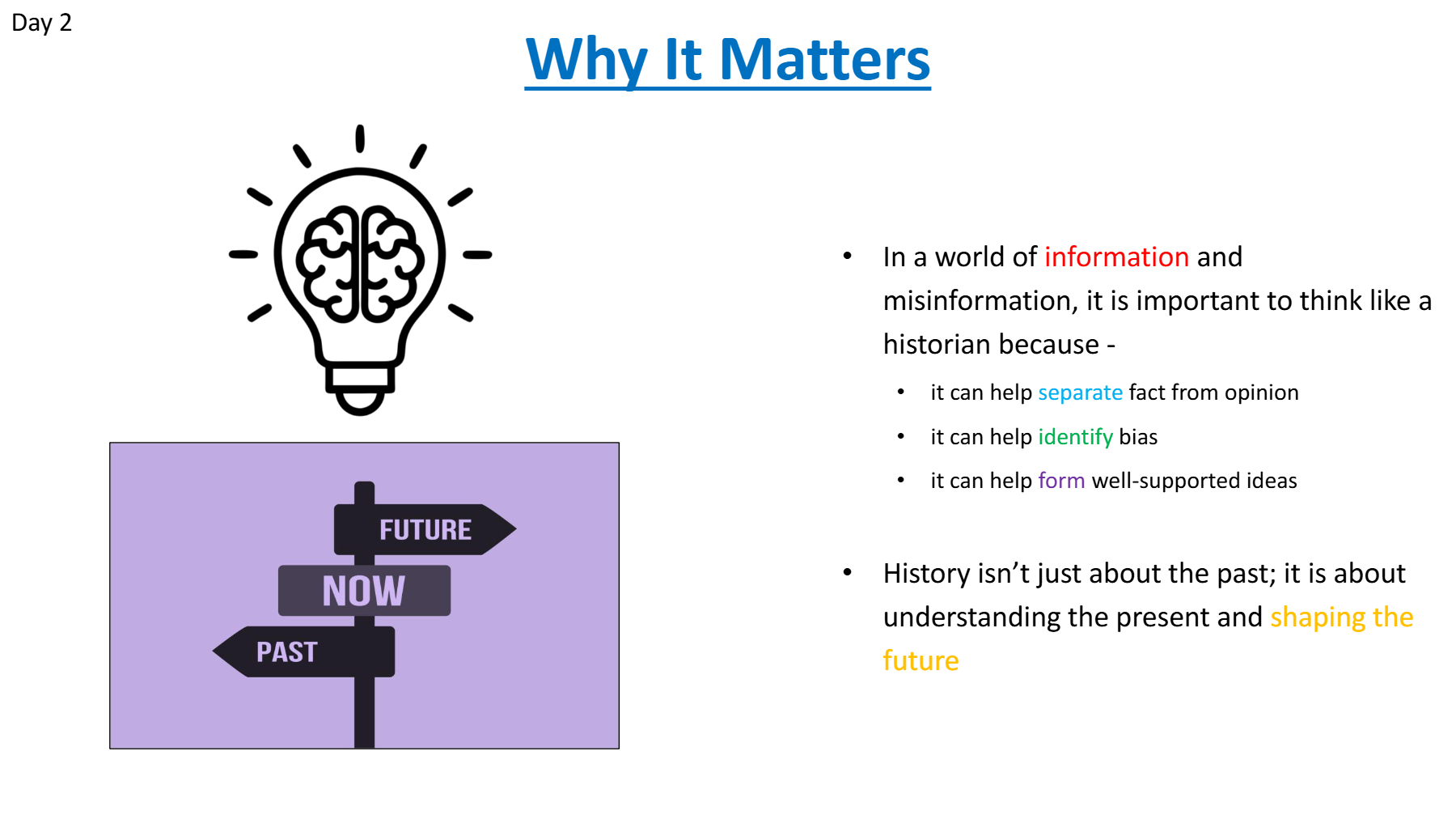
Why is it important to think like a historian in today's world of information and misinformation?
Because it helps separate fact from opinion, identify bias, and form well-supported ideas.
Because historians only study the past.
Because historians ignore opinions and focus only on facts.
Because history is not relevant to the present or future.
Show answer
Auto Play
Slide 1 / 28
SLIDE
Similar Resources on Wayground

19 questions
War of 1812
Presentation
•
7th - 8th Grade
21 questions
The Legislative Branch
Presentation
•
7th Grade
21 questions
TCI 9.6 The Amendment Process
Presentation
•
8th Grade
23 questions
French and Indian War
Presentation
•
8th Grade
24 questions
Lesson 8.1 Early Quarrels and Accomplishments
Presentation
•
8th Grade
19 questions
Checks and Balances in Georgia Government
Presentation
•
8th Grade
23 questions
The Trans-Atlantic Slave Trade
Presentation
•
7th - 8th Grade
18 questions
Types of Economic Systems
Presentation
•
8th Grade
Popular Resources on Wayground
10 questions
Safety Day 2026 – Student Review

Quiz
•
9th Grade
21 questions
Continents and Oceans
Quiz
•
6th Grade
20 questions
Parts of Speech
Quiz
•
5th Grade
16 questions
Subject & Predicate
Quiz
•
5th Grade
25 questions
Multiplication Facts
Quiz
•
5th Grade
12 questions
Map Skills
Quiz
•
3rd Grade
22 questions
Continents and Oceans
Quiz
•
5th Grade
15 questions
Rounding Decimals
Quiz
•
5th Grade
Discover more resources for Social Studies
19 questions
Foundations of America
Quiz
•
6th - 8th Grade
10 questions
Exploring the Age of Exploration: Key Events and Figures

Interactive video
•
6th - 10th Grade
20 questions
Articles of Confederation
Quiz
•
8th Grade
15 questions
Middle Ages of the Middle East Vocab List (CFA #2)
Quiz
•
6th - 8th Grade
13 questions
American Revolution Review
Quiz
•
8th Grade
18 questions
American Revolution Unit 3
Quiz
•
8th Grade
10 questions
Indigenous Peoples' Day Quiz
Quiz
•
8th Grade
5 questions
American Revolutionary War
Interactive video
•
8th Grade