Search Header Logo
Star Notes & Questions

Star Notes & Questions

Assessment

Presentation

Science

9th - 12th Grade

Practice Problem

Easy

NGSS
HS-ESS1-3, HS-ESS1-1, HS-ESS1-2

+5

Standards-aligned

Created by

Meghan Lyle

Used 6+ times

FREE Resource

31 Slides • 23 Questions

1

media

2

media

3

Multiple Choice

Question image

In nuclear fusion, less massive atoms are forced together to create more massive atoms. Does this process release, absorb or maintain energy?

1
Absorb energy
2
Maintain energy
3
Release energy

4

media

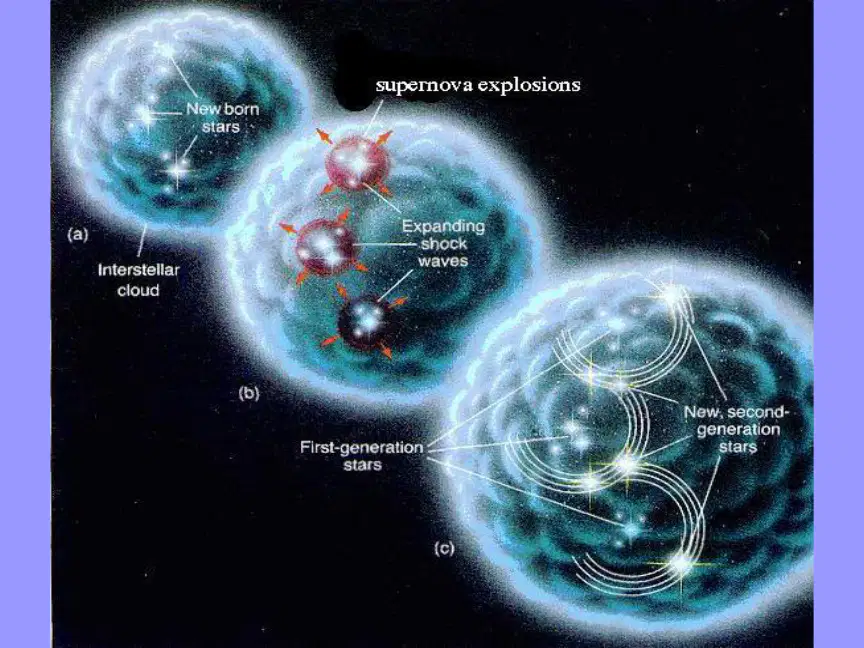
Where do stars come from?

5

Multiple Choice

On the last slide, what is being created in the image?

1

New born stars

2

Expanding shock waves

3

First-generation stars

4

New, second-generation stars

6

media

7

Multiple Choice

What are the primary elements that make up a star?

1

A) Oxygen and Carbon

2

B) Hydrogen and Helium

3

C) Nitrogen and Sulfur

4

D) Iron and Silicon

8

media

9

media

This is what spectrographs look like from real stars

10

media

11

Multiple Choice

What does a spectroscope do?

1

It measures temperature

2

It breaks light apart

3

It shows the mass of stars

4

It captures images of stars

12

media

13

Multiple Choice

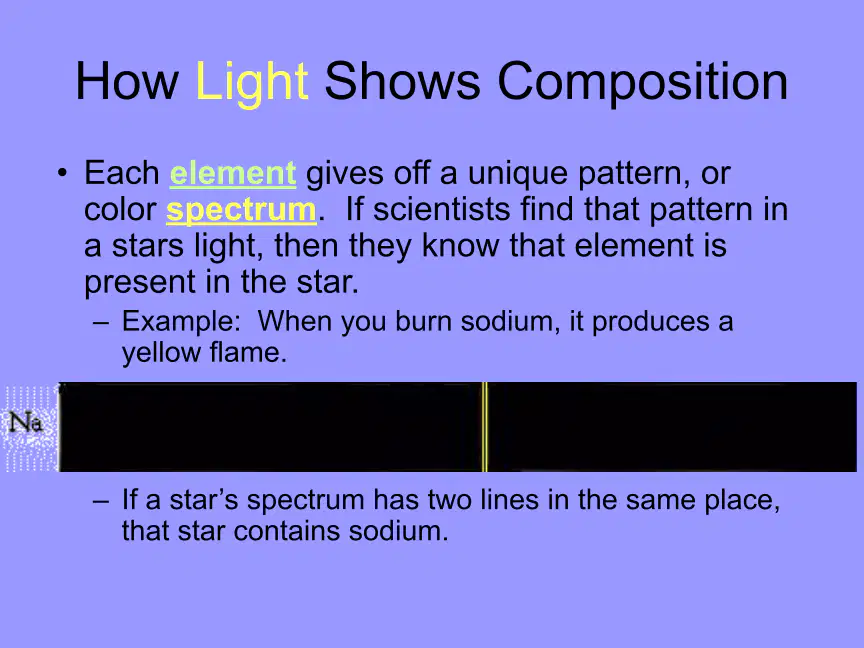
What does each element give off that is unique to it?

1

Color spectrum

2

Light wave

3

Energy pattern

4

Sound frequency

14

media

15

media

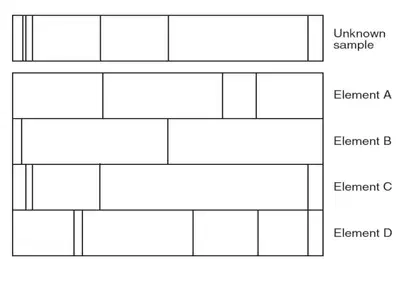
Let's figure out this star's elements together

16

Multiple Select

Question image

The bottom spectrum shown to the left is the elemental emission reading for a distant star. Use the reference spectra to analyze the star spectrum to answer the following question. What are the elements that the star is NOT emitting?

1

Hydrogen (H)

2

Lithium (Li)

3

Sodium (Na)

4

Helium (He)

17

Multiple Choice

What do astronomers match up to determine the composition of a star?

1

The lines on the spectrum

2

The brightness of the star

3

The distance from Earth

4

The color of the star

18

media

19

Multiple Choice

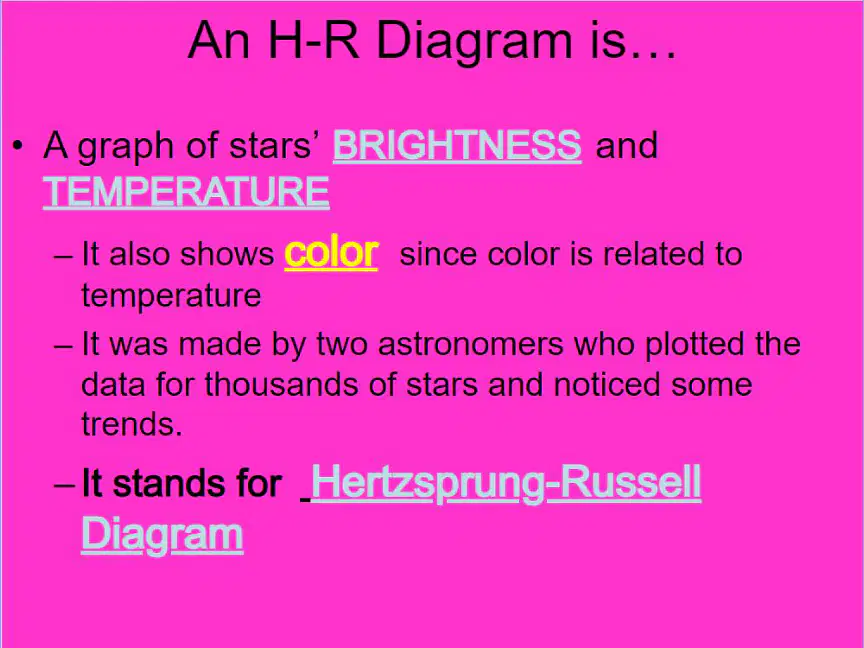
What color indicates the hottest stars according to the diagram?

1

Blue

2

Red

3

Yellow

4

White

20

media

21

Multiple Select

What are the three factors that determine the brightness of a star?

1

Size

2

Temperature

3

Distance from us

4

Color

22

Multiple Choice

Which describes how bright a star is when viewed from Earth? For example, a closer, dim star will appear brighter to us than a farther, bright star.

1

parallax

2

red shift

3

absolute magnitude

4

apparent magnitude

23

Multiple Choice

Which describes how bright a star actually is, regardless of how bright the star is to us on Earth. For example, the distance brighter star has a higher (this).

1
parallax
2
red shift
3
absolute magnitude
4
apparent magnitude

24

media

25

media

26

Skip the couple lines in your notes that start with "Measuring the Distance to Stars" and Parallax

27

media

28

Multiple Choice

Question image

A lightyear is:

1

A unit for volume.

2

A unit for distance.

3

A unit for time.

4

A unit for weight

29

Multiple Choice

Question image

A lightyear is:

1

How much light the Sun gives off in one year.

2

A year in which very little happens.

3

The time it take light to travel the distance from the Sun to the Earth.

4

The distance light travels in one year.

30

Multiple Choice

What is the distance that light can travel in one year, known as a light-year?

1

5,865,696,000,000 miles

2

93 million miles

3

1 AU

4

1 million miles

31

Multiple Choice

An Astronomical Unit (AU) is based on...

1
the average distance from the Earth to the Sun
2
the distance from the Earth to Jupiter
3
the distance from the Earth to the Moon
4
the distance from the Earth to Mars

32

media

33

media

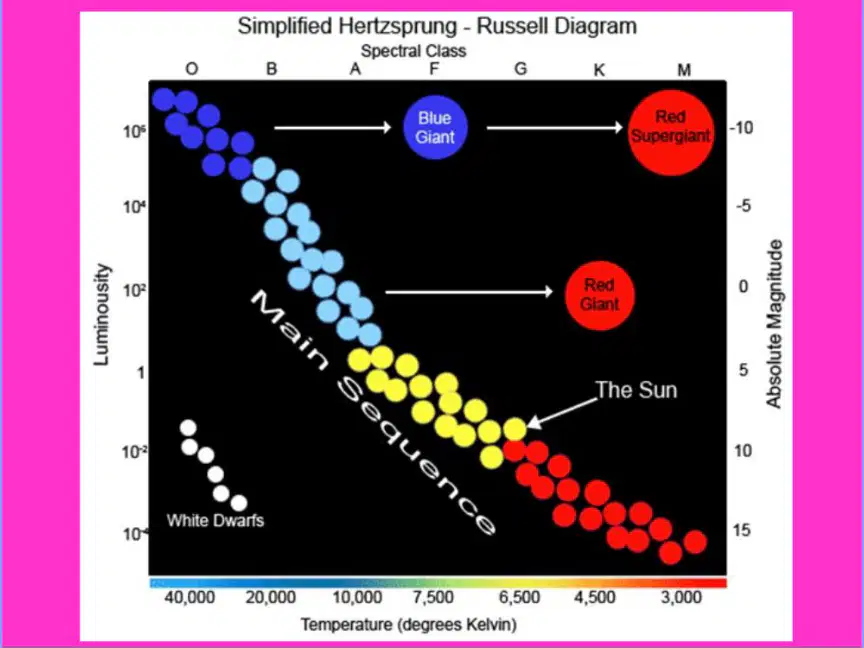
Blue


Yellow

Red

Write this:

34

media

35

media

36

Multiple Choice

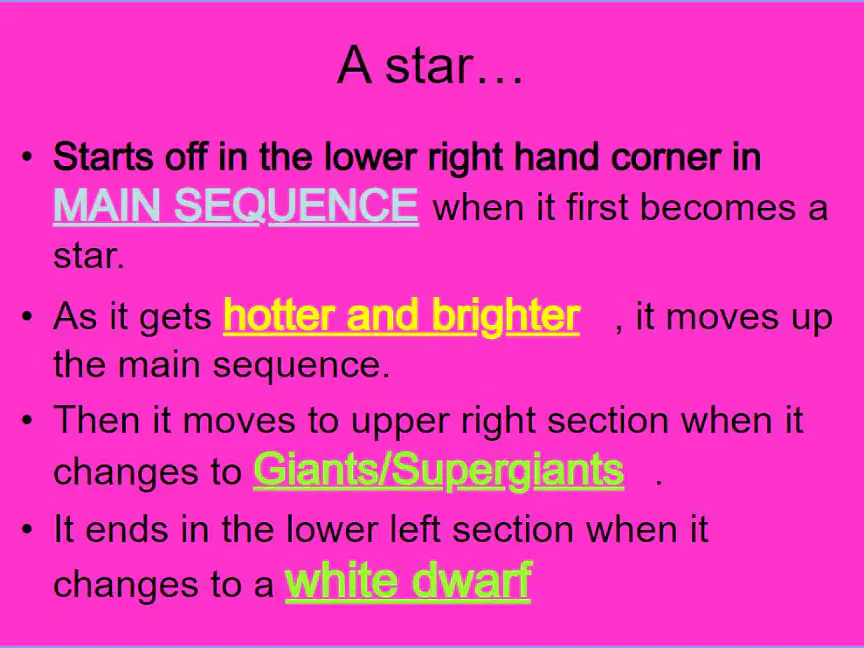
Where in the life cycle of a star is our sun (as described in the diagram)?

1

Main Sequence

2

Giants/Supergiants

3

White Dwarf

4

Red Giant

37

media

38

media

39

media

40

Fill in the Blanks

41

media

42

Multiple Choice

Question image

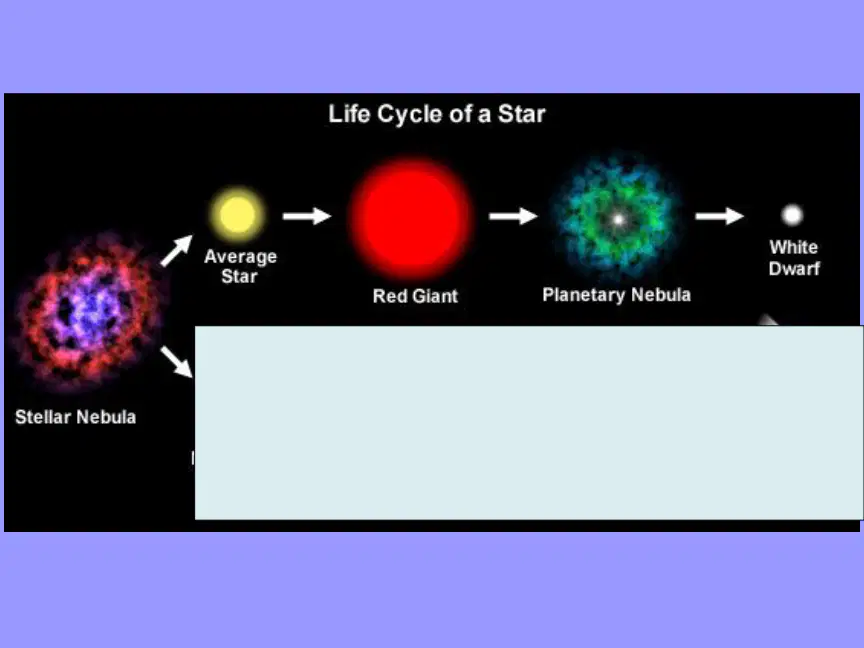
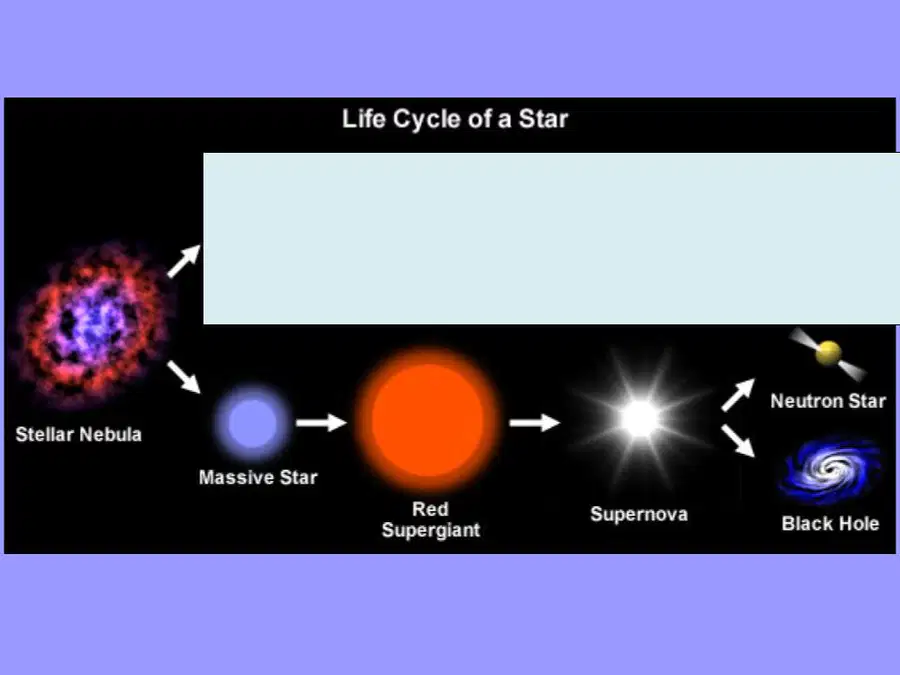
A collection of gas and dust where new stars are born is known as a...

1

Planetary Nebula

2

Black Hole

3

Supernova

4

Stellar Nebula

43

media

44

media

45

media

46

media

47

media

48

media

49

media

50

Multiple Choice

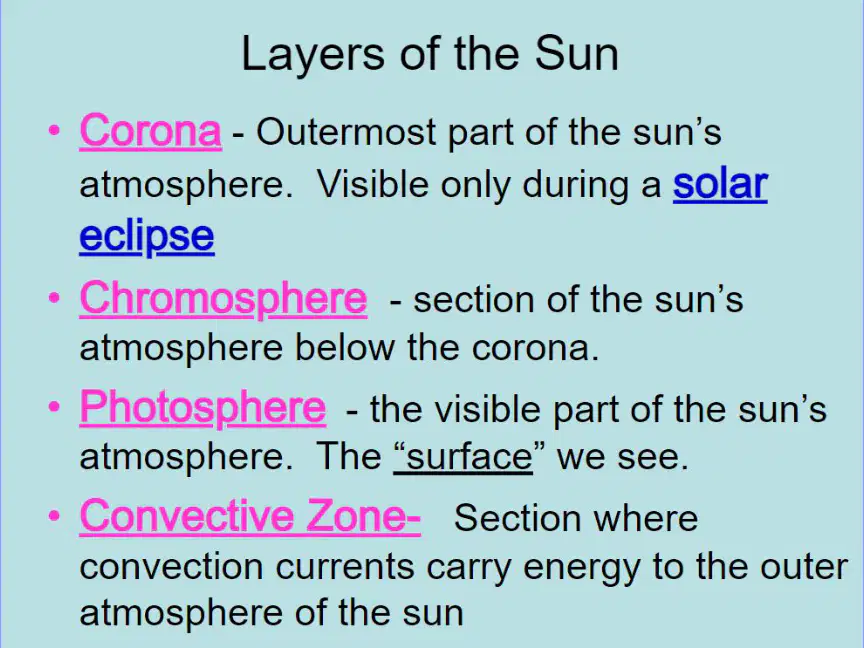
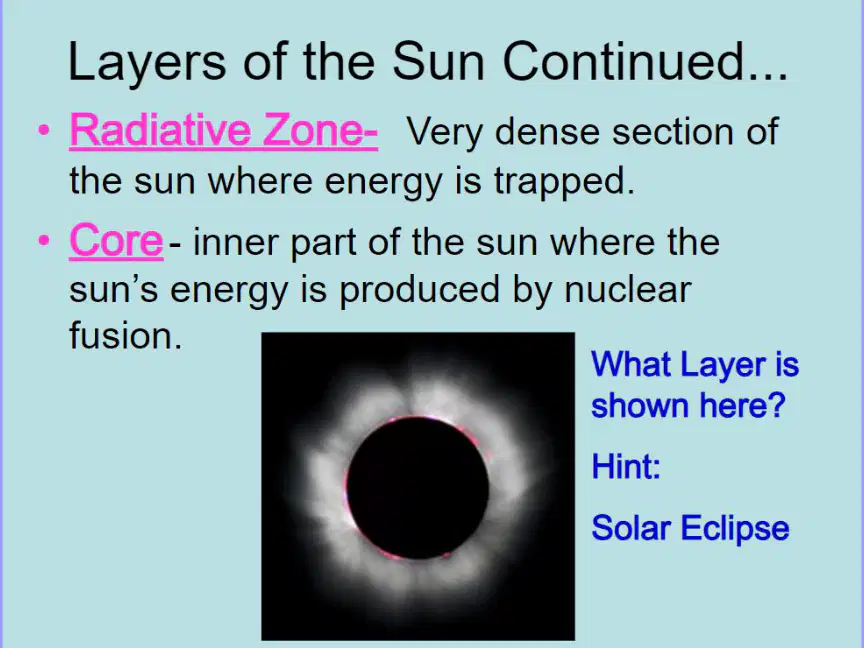
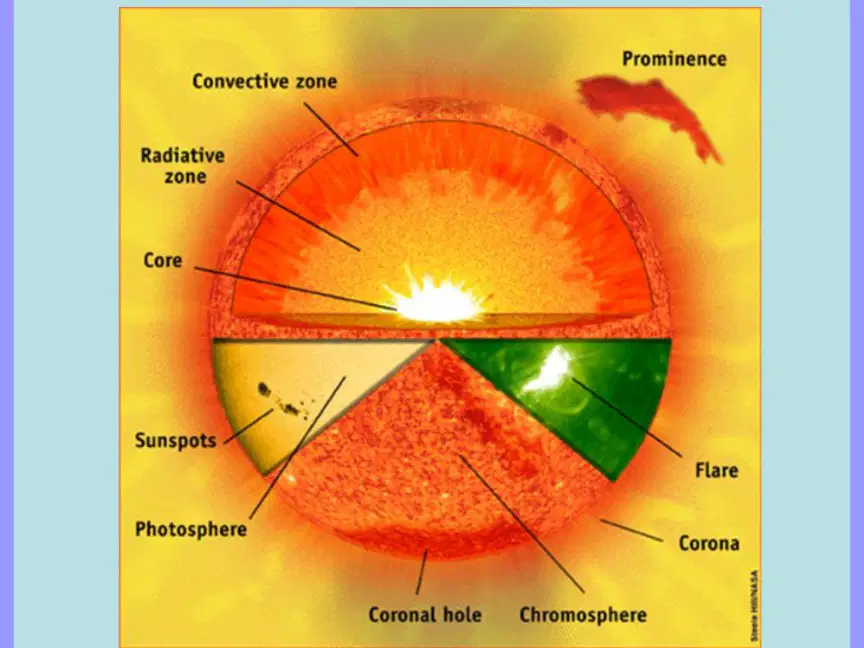
What is the outermost layer of the Sun called?

1

Chromosphere

2

Photosphere

3

Corona

4

Core

51

Multiple Choice

Which layer of the Sun is located directly below the Corona?

1

Radiative Zone

2

Core

3

Chromosphere

4

Convection Zone

52

Multiple Choice

Identify the part of the Sun that is the centermost layer.

1

Core

2

Radiative Zone

3

Convection Zone

4

Photosphere

53

Multiple Choice

Which layer of the Sun is responsible for energy transfer by radiation rather than by convection?

1

Convection Zone

2

Radiative Zone

3

Core

4

Photosphere

54

Multiple Choice

Which layer of the Sun is responsible for energy transfer by convection rather than by radiation?

1

Convection Zone

2

Radiative Zone

3

Core

4

Photosphere

media

Show answer

Auto Play

Slide 1 / 54

SLIDE