

Elements of Drama

Presentation
•
English
•
11th Grade
•
Practice Problem
•
Medium
+16
Standards-aligned

Citori Swink
Used 3+ times
FREE Resource
17 Slides • 17 Questions
1
2
3
Multiple Choice
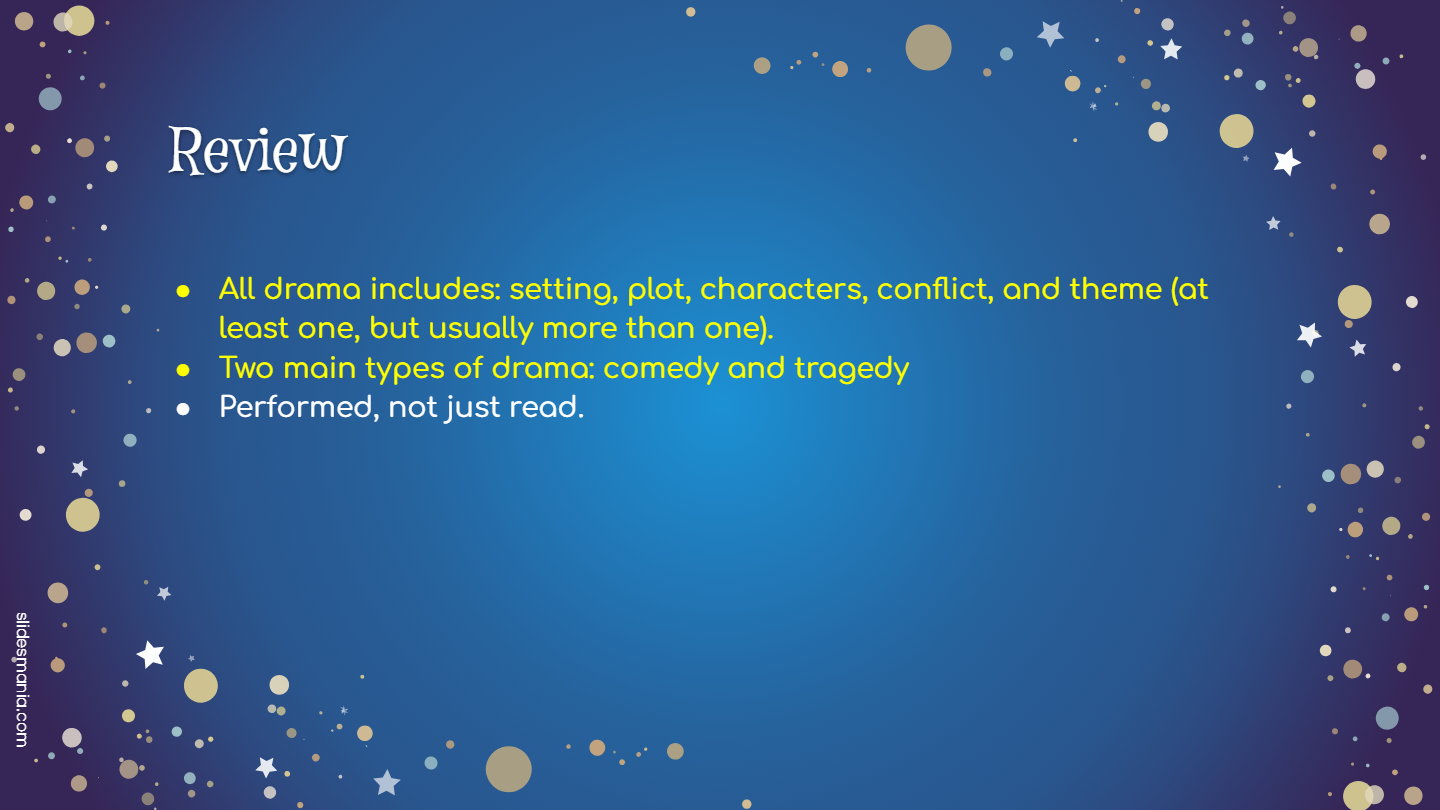
Which of the following is NOT typically considered an element of drama?
Setting
Plot
Character
Rhyme
4
Open Ended
Why do you think drama is performed rather than just read? What might be the significance of experiencing drama as a performance?
5

6
7
Multiple Select
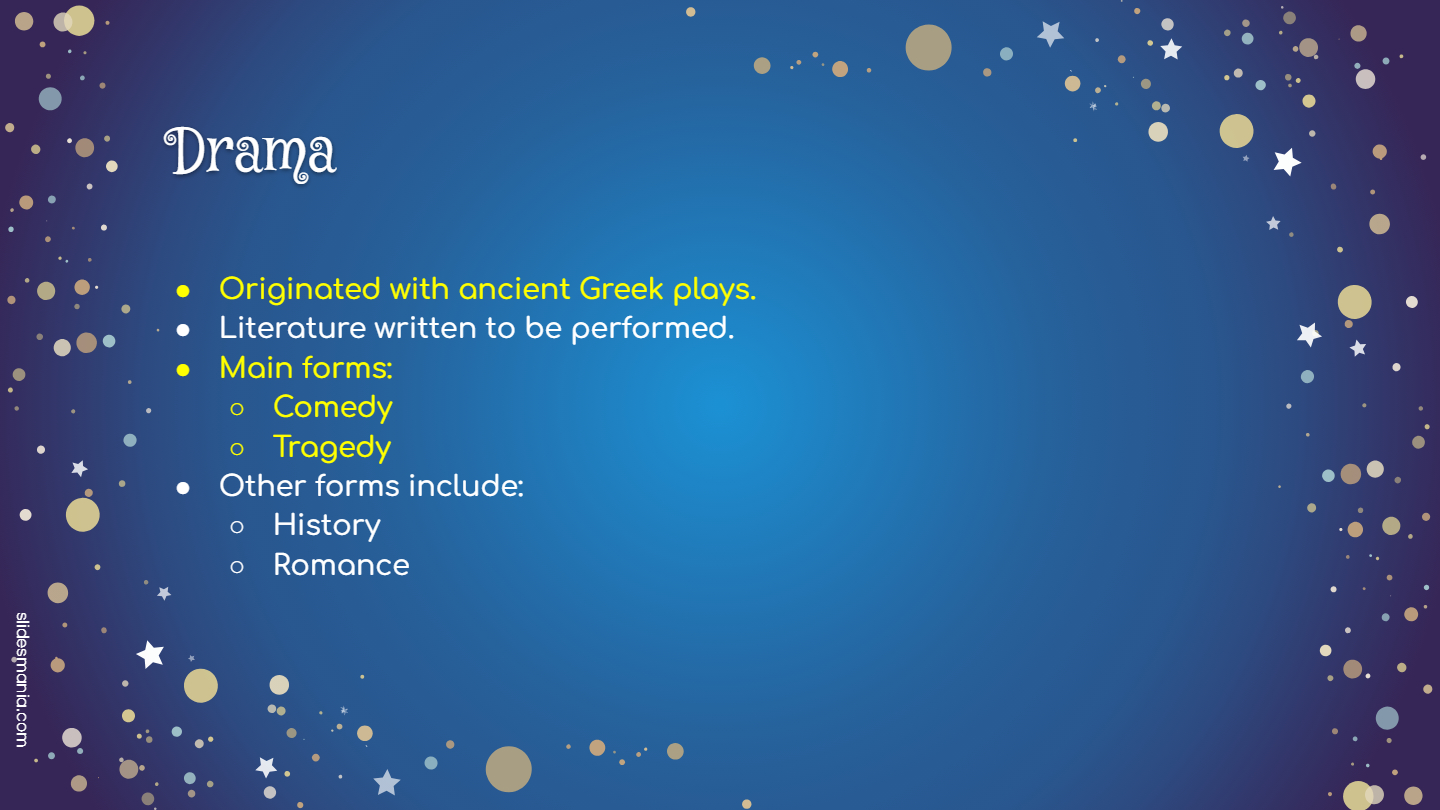
Which of the following is NOT a main form of drama? (select all that apply)
Comedy
Tragedy
History
Romance
8
9
10
Multiple Select
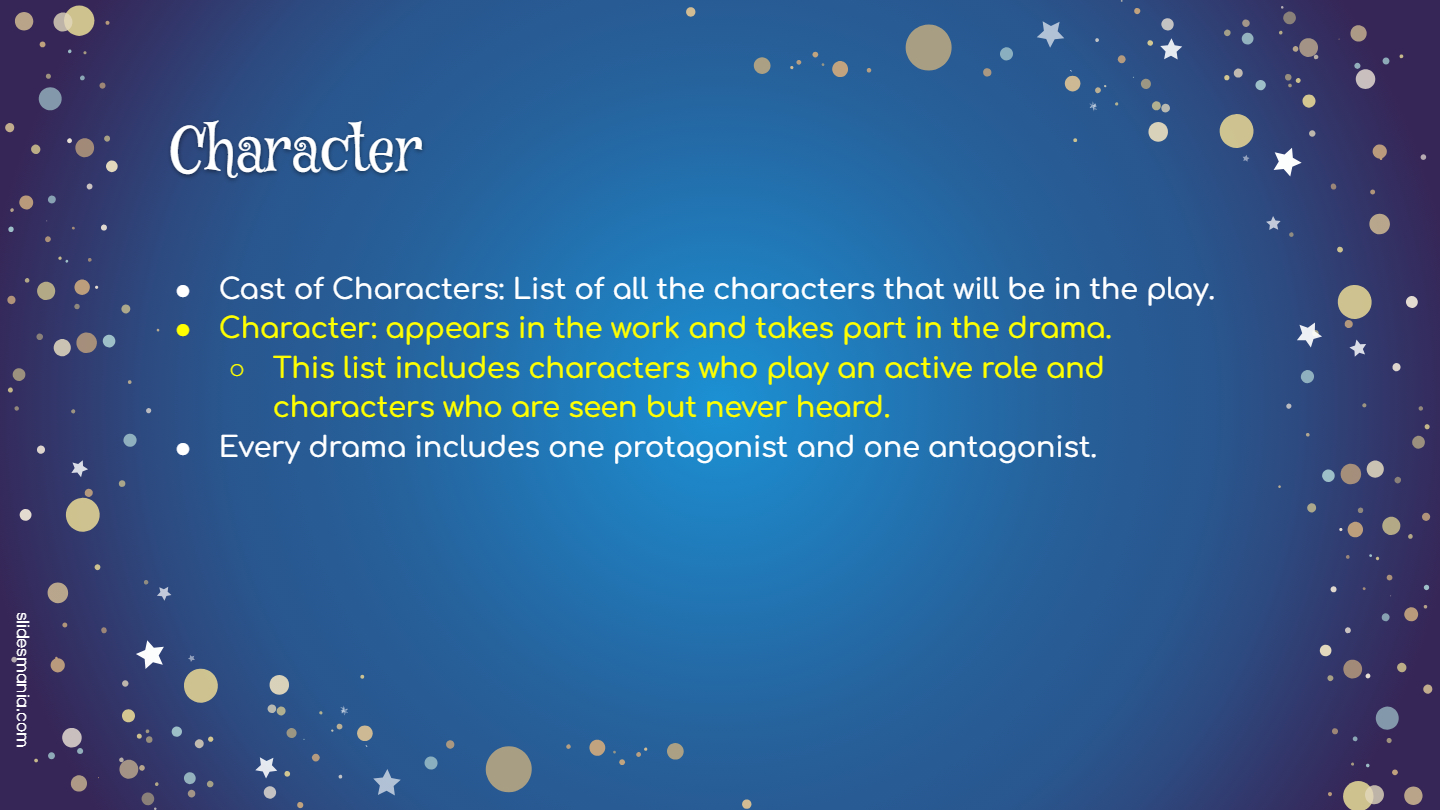
Which of the following statements about a character in drama is correct? (select all that apply)
A character always plays an active role in the drama.
Every drama includes only one character.
A character can be seen but never heard.
A character never takes part in the drama.
11
12
Fill in the Blanks
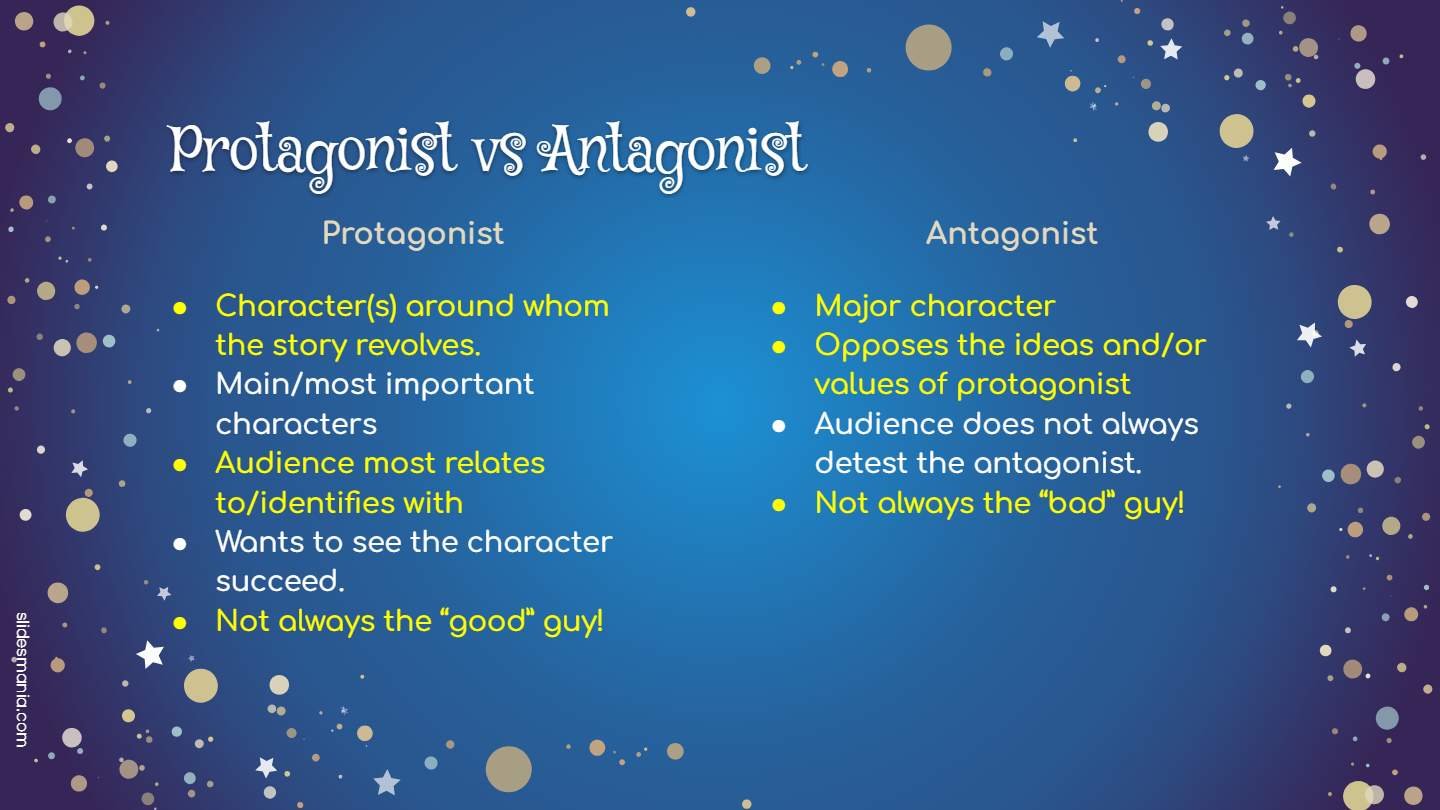
The audience most relates to the
13
14
Multiple Choice
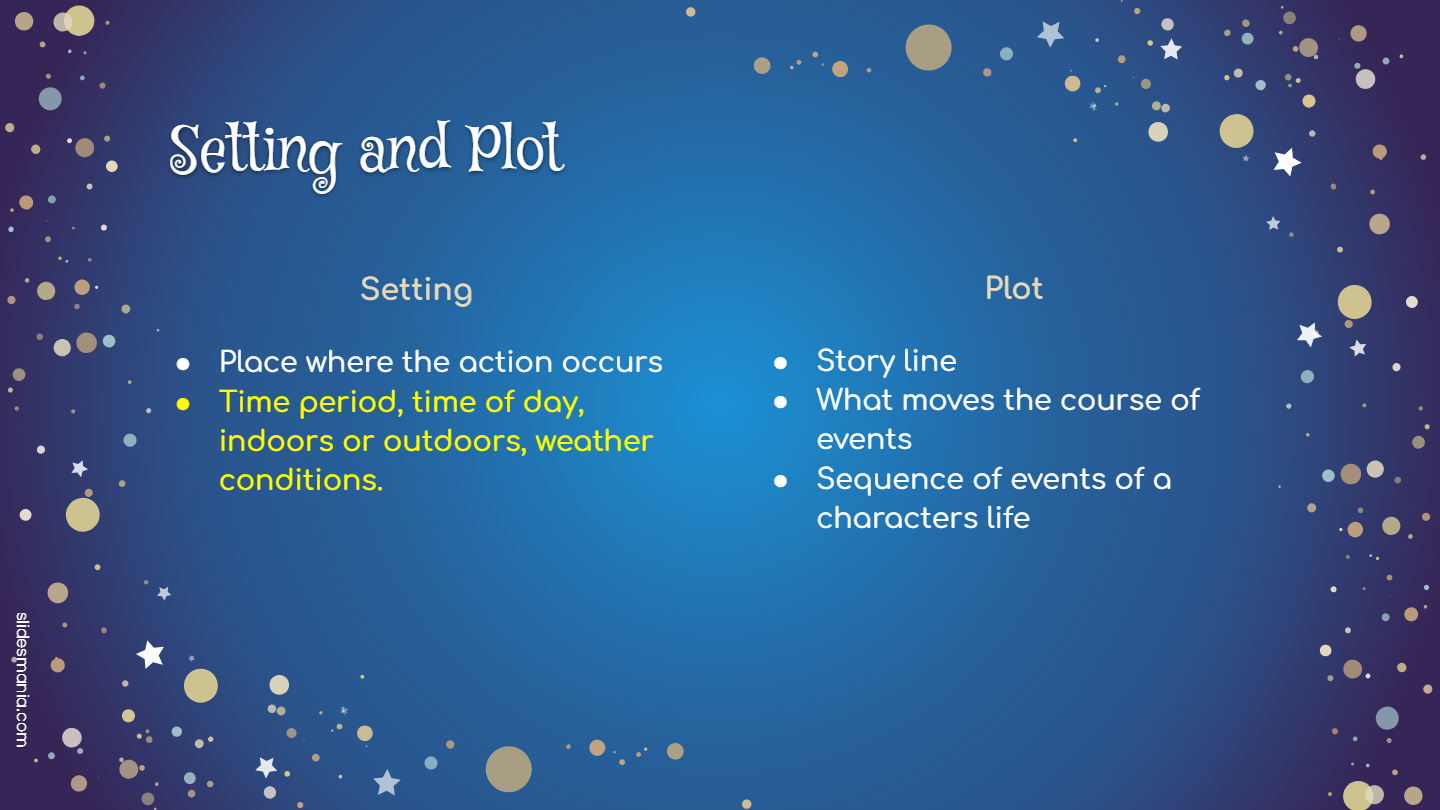
Which of the following is NOT typically part of the setting in a drama?
Time period
Weather conditions
Sequence of events
Place where the action occurs
15
16
Multiple Choice
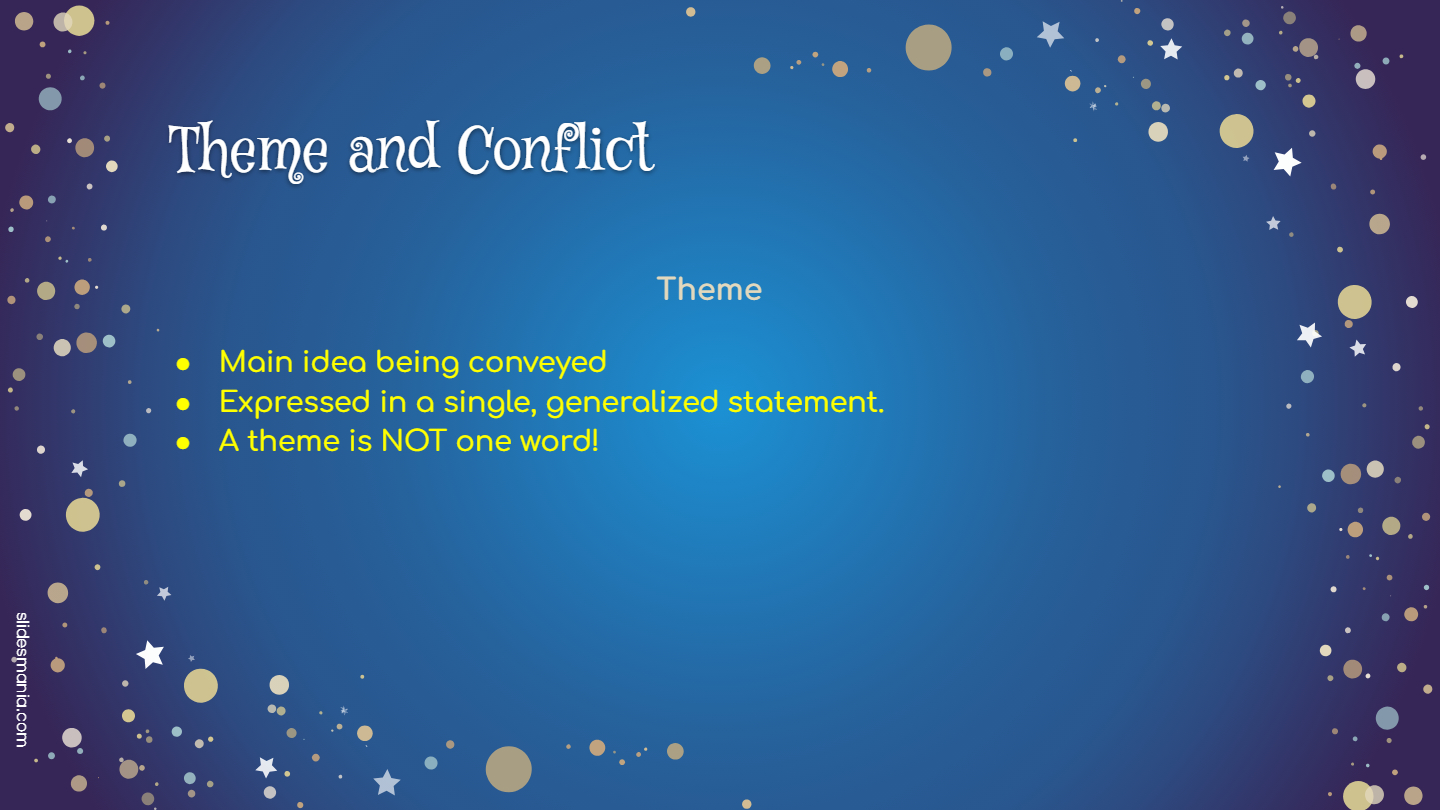
Which of the following best describes a theme in literature?
A single word that summarizes the story
The main idea expressed in a generalized statement
A list of characters in the story
The setting of the story
17
18
Multiple Select
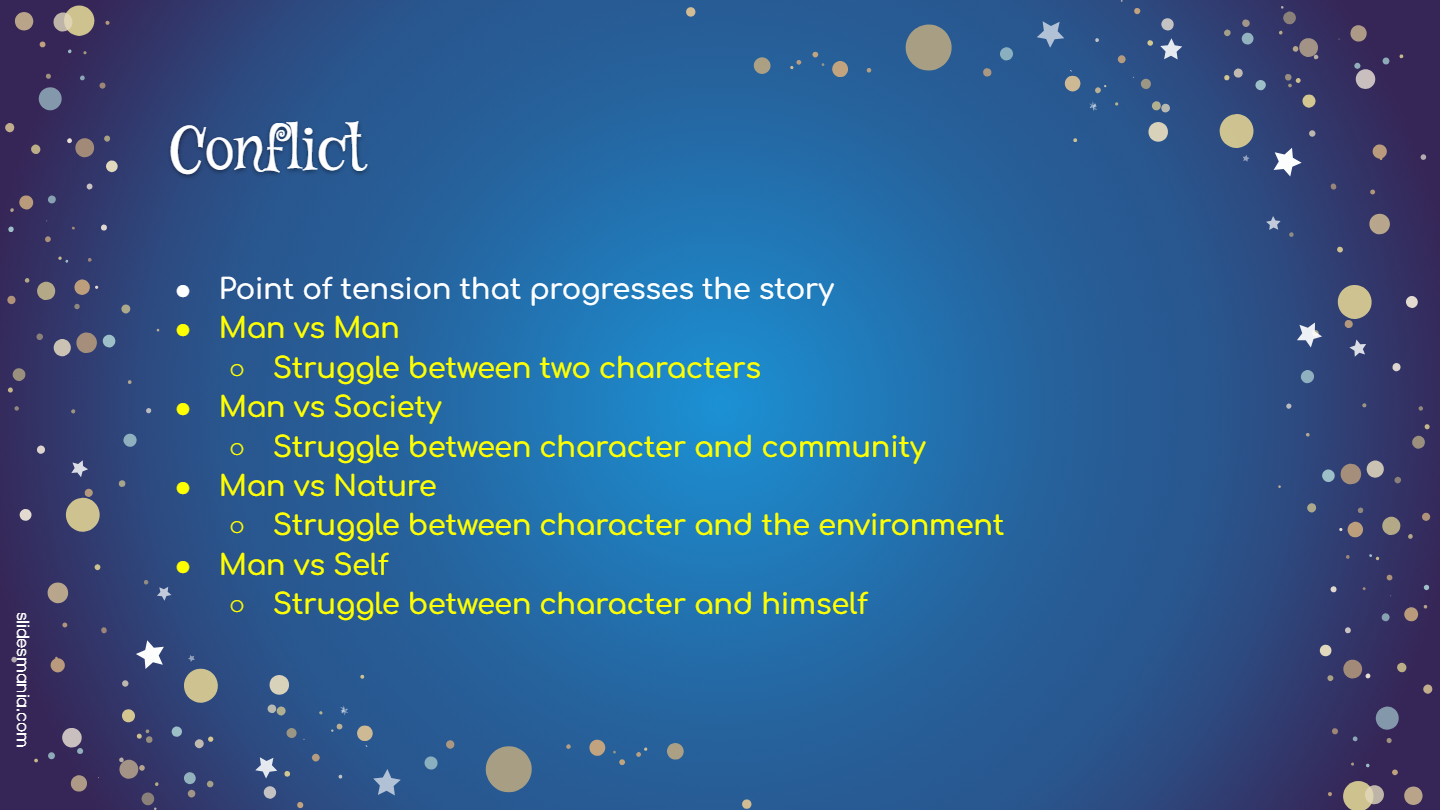
Identify all types of conflict described in the lesson. (select all that apply)
Man vs Man
Man vs Technology
Man vs Nature
Man vs Self
19
20
Open Ended
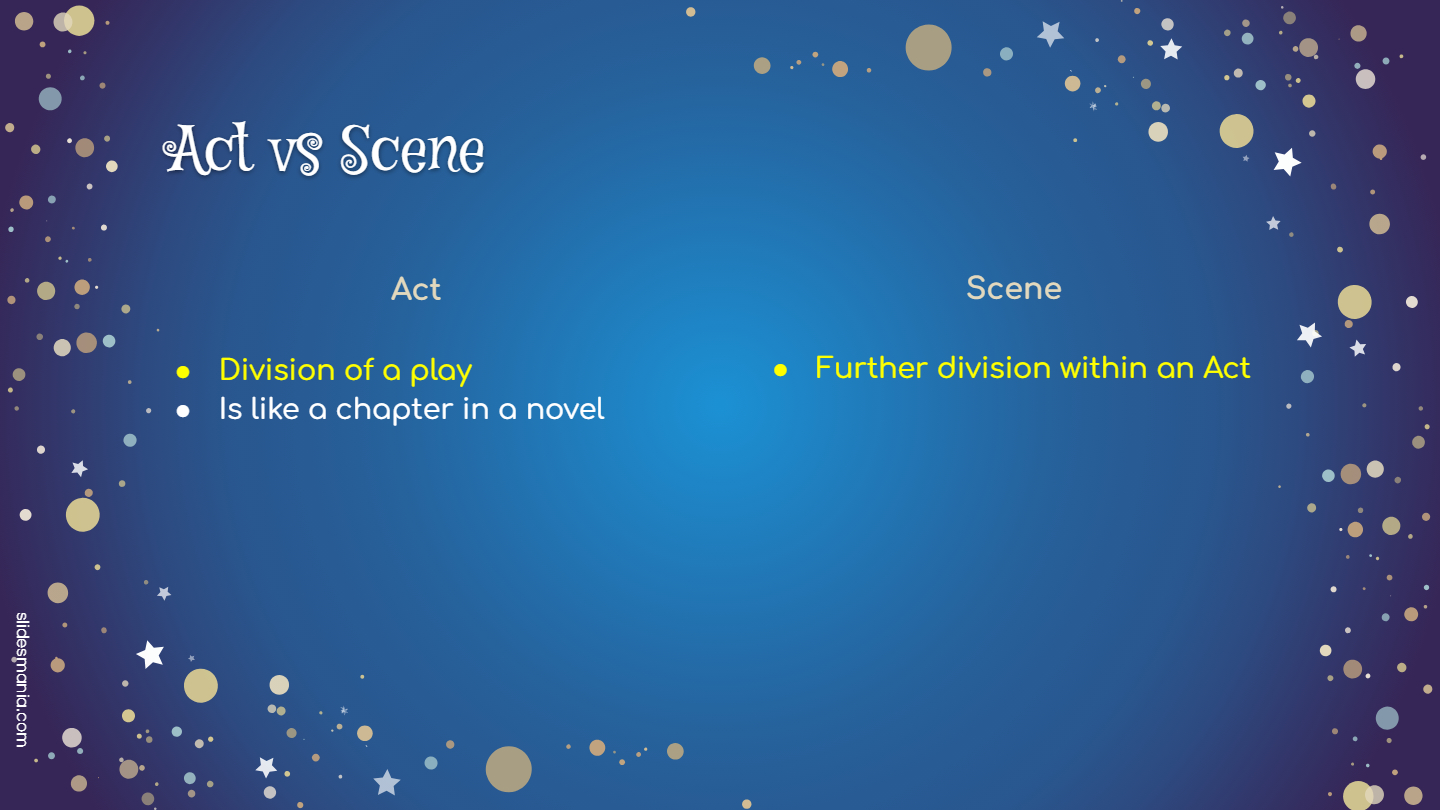
Explain how the concepts of 'Act' and 'Scene' help organize a play. Provide examples from any play you know.
21
22
Fill in the Blanks
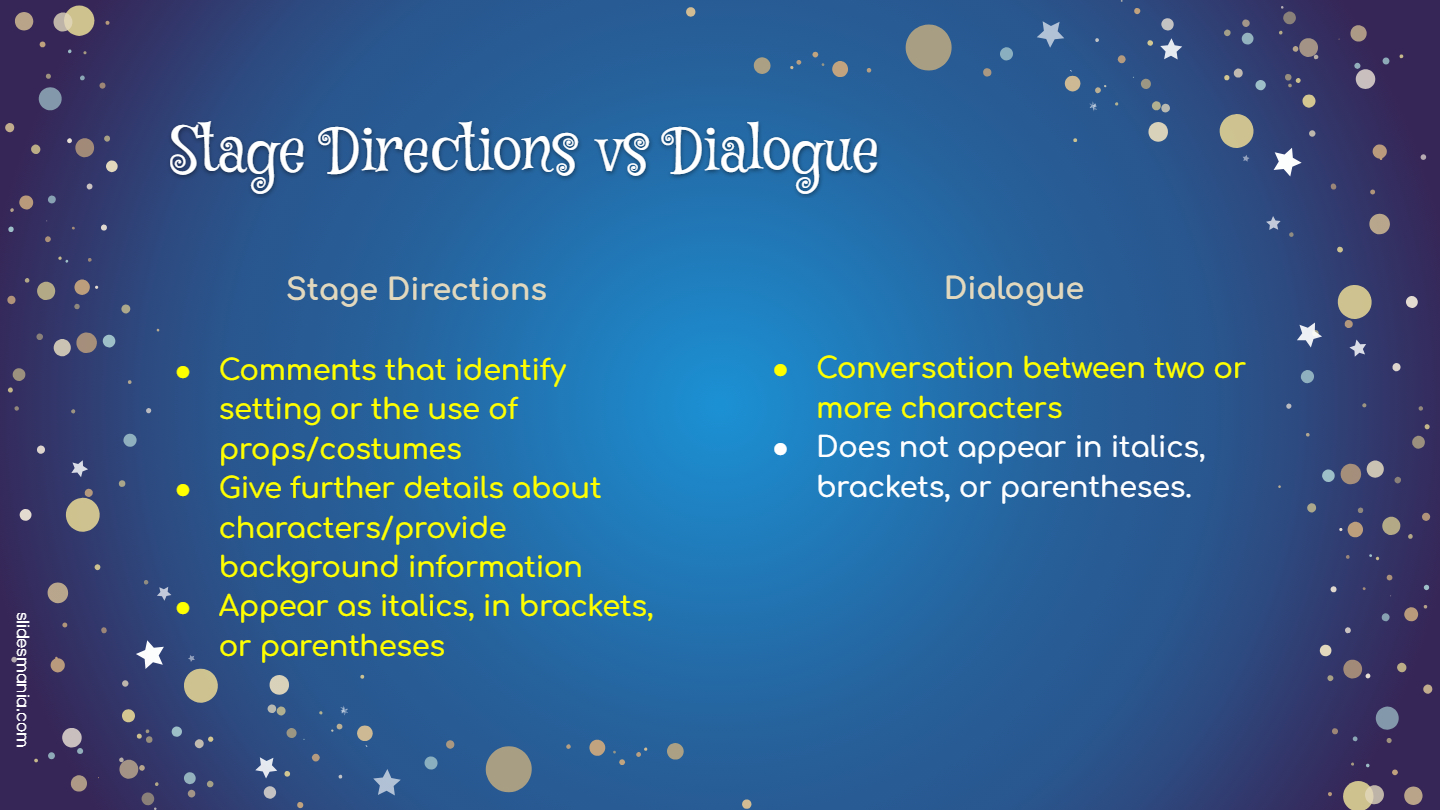
Stage directions appear as
23
24
Open Ended
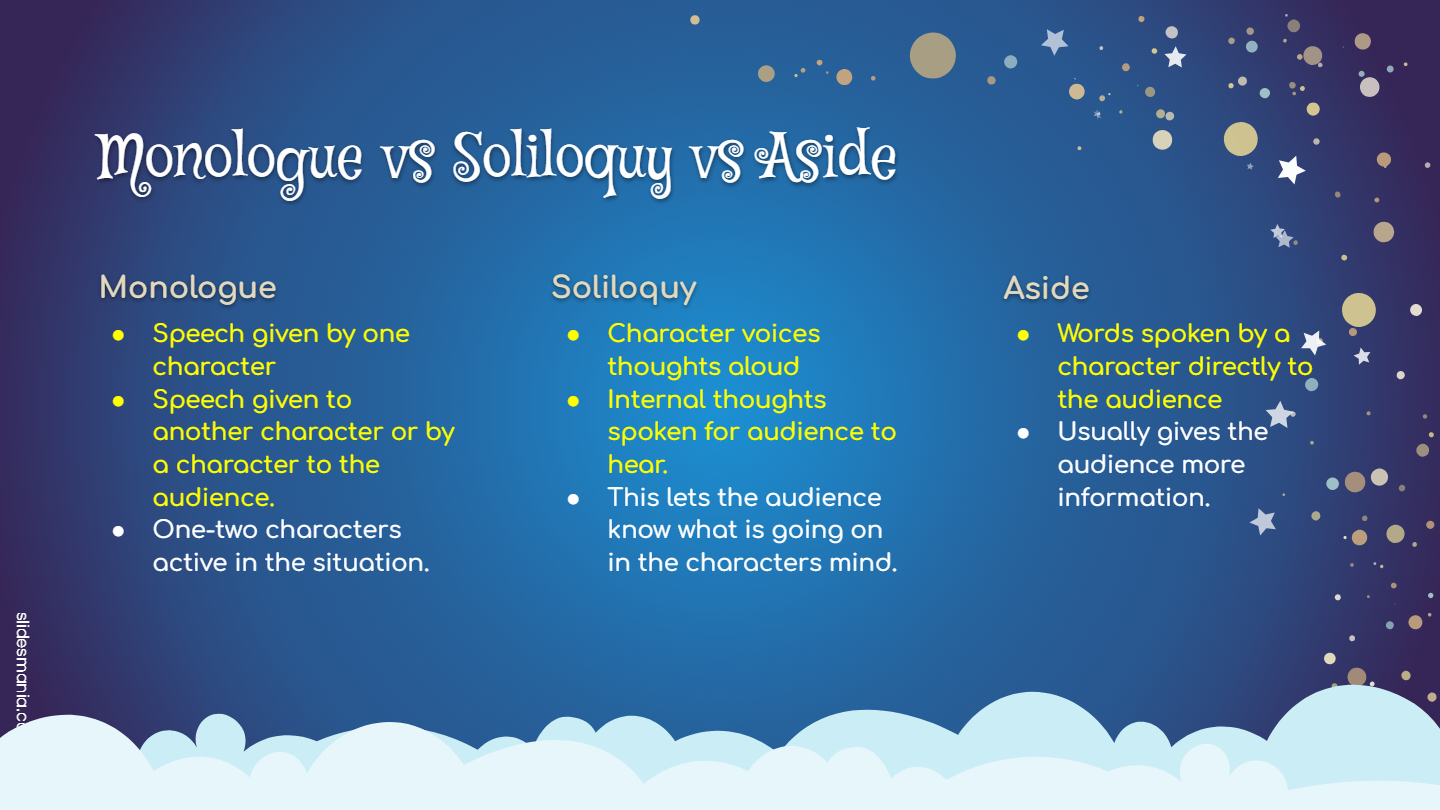
Compare and contrast a monologue and a soliloquy. How do they serve different purposes in a play?
25
26
Multiple Choice
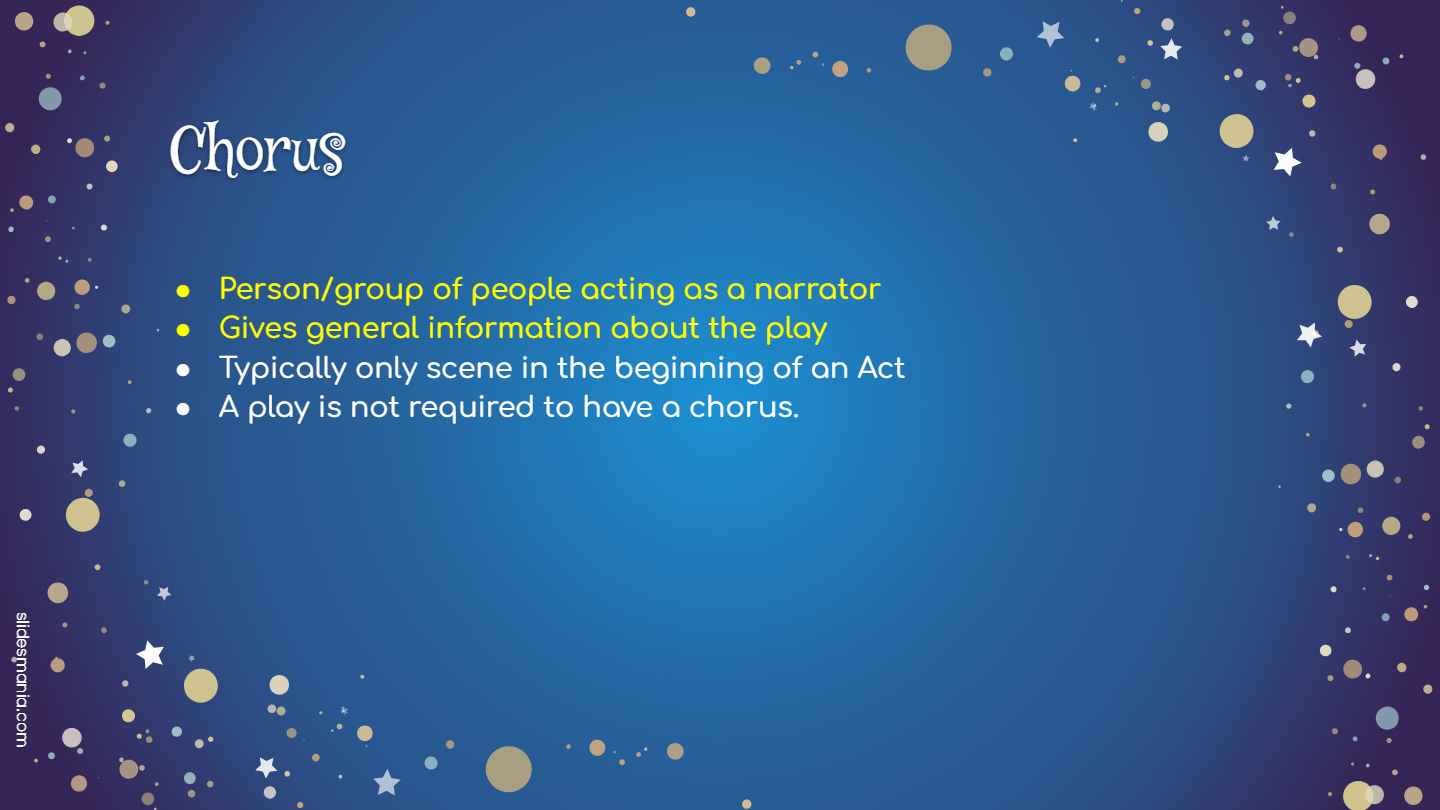
What is the role of the chorus in a play?
To act as a narrator and provide general information
To play the main character
To direct the actors on stage
To write the script
27
28
Multiple Choice
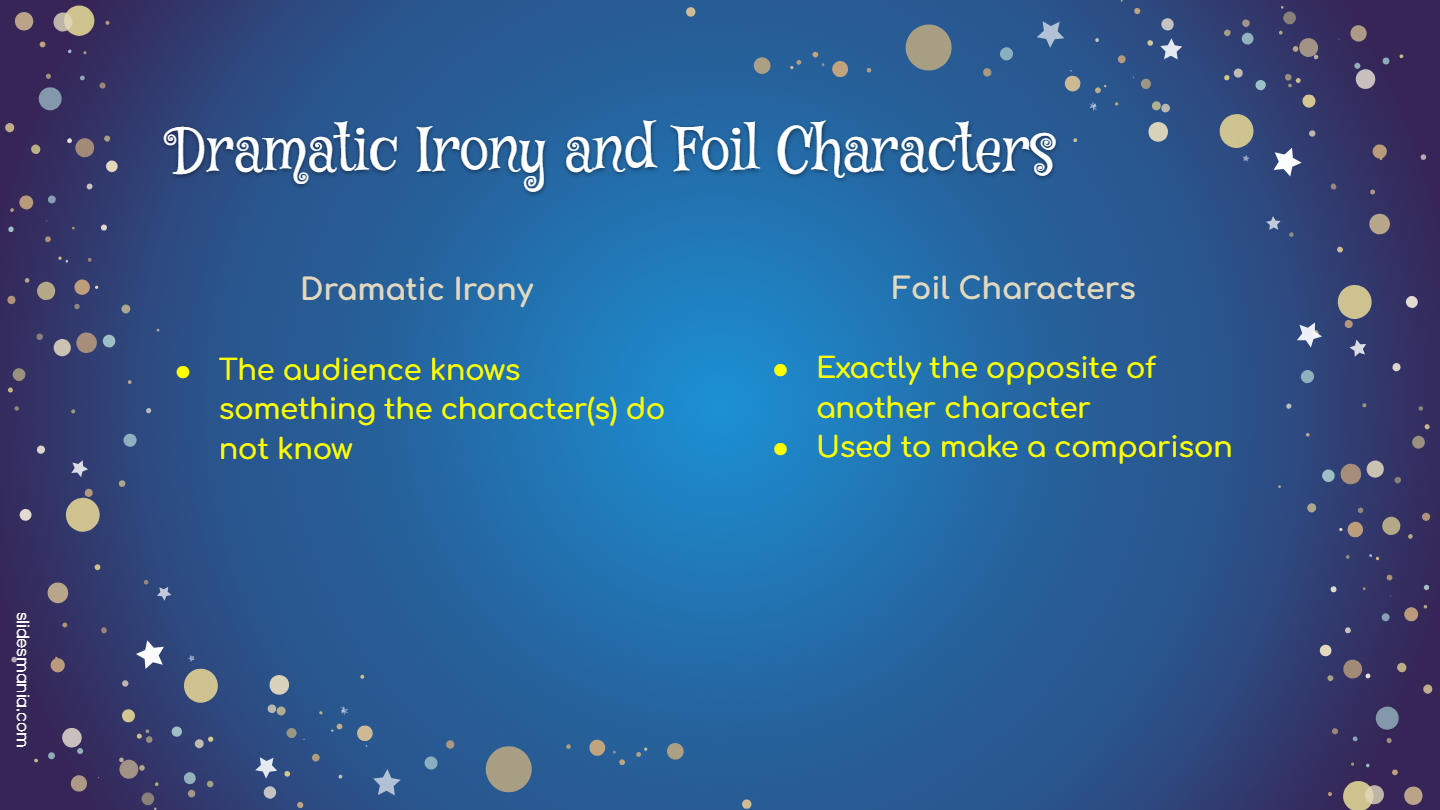
Which of the following best describes the difference between dramatic irony and foil characters?
Dramatic irony involves the audience knowing something the characters do not, while foil characters are used to make a comparison by being the opposite of another character.
Dramatic irony is when two characters are compared, while foil characters are when the audience knows something the characters do not.
Dramatic irony and foil characters both involve wordplay and double meanings.
Foil characters are always the main characters, while dramatic irony is only used in poetry.
29
30
Open Ended
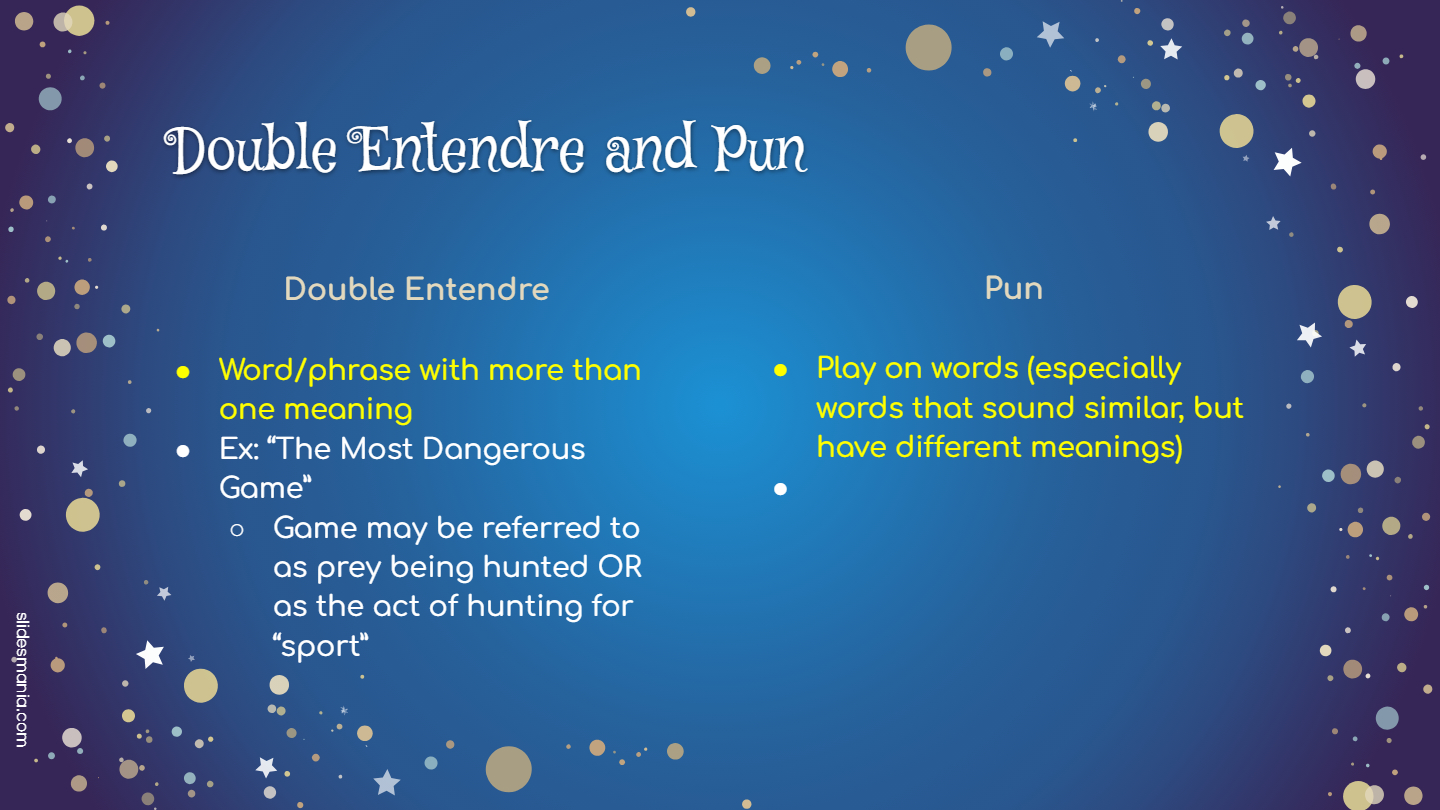
Explain how double entendre and pun differ in their use of language and meaning.
31
32
Fill in the Blanks
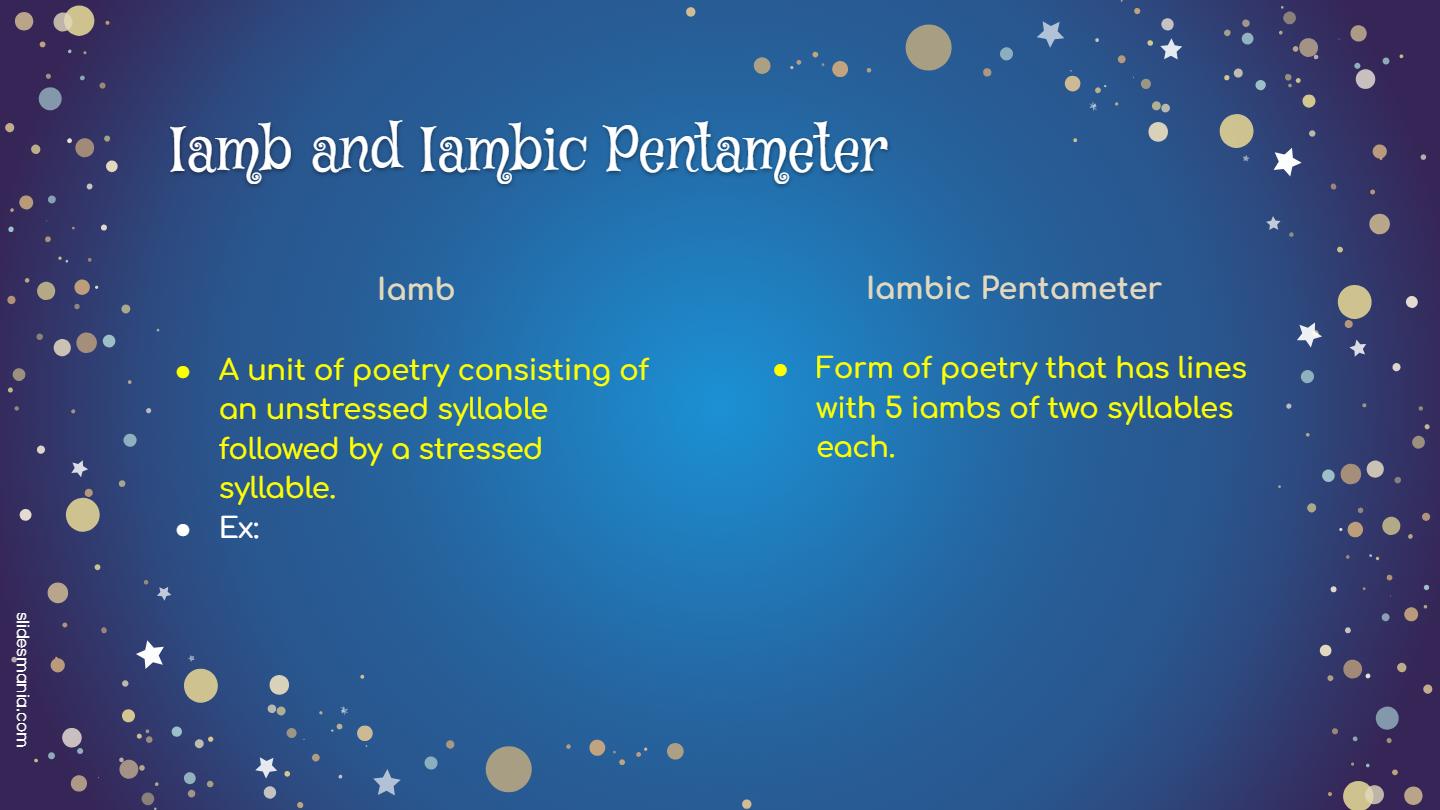
A line of poetry written in iambic pentameter contains
33
Multiple Choice
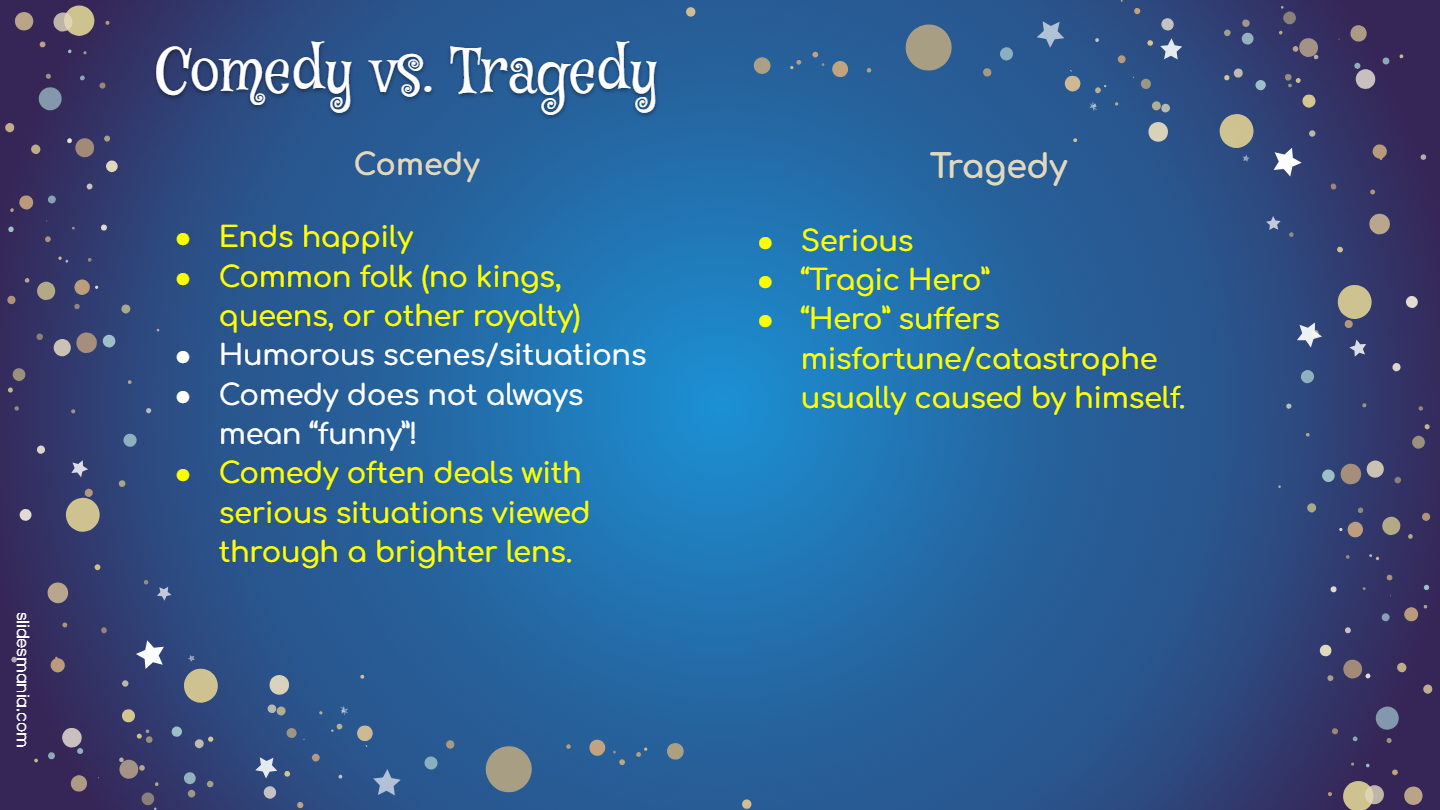
RECALL: What are the two main types of drama?
Comedy and tragedy
Romance and mystery
Action and adventure
Horror and thriller
34
Open Ended
Reflecting on today's lesson, how do you think the elements of drama (setting, plot, characters, conflict, and theme) contribute to making a play engaging for the audience?
Show answer
Auto Play
Slide 1 / 34
SLIDE
Similar Resources on Wayground

26 questions
Introduction to the Cold War
Presentation
•
11th Grade
28 questions
unit6 much/many
Presentation
•
11th Grade
28 questions
At the health club
Presentation
•
11th Grade
29 questions
Suggestion & Recommendation
Presentation
•
11th Grade
26 questions
Subject Verb Agreement SAT
Presentation
•
11th Grade
25 questions
Parallelism
Presentation
•
11th Grade
25 questions
ENGLISH DOWNLOAD B1+ : UNIT 1-VOCABULARY 2
Presentation
•
11th Grade
24 questions
Government Response to the Great Depression
Presentation
•
11th Grade
Popular Resources on Wayground
10 questions
How much do you know about our Portrait of an Eagle?

Quiz
•
10th Grade
10 questions
Fast Food Slogans
Quiz
•
6th - 8th Grade
21 questions
Continents and Oceans
Quiz
•
6th Grade
20 questions
Parts of Speech
Quiz
•
5th Grade
16 questions
Subject & Predicate
Quiz
•
5th Grade
25 questions
Multiplication Facts
Quiz
•
5th Grade
12 questions
Map Skills
Quiz
•
3rd Grade
22 questions
Continents and Oceans
Quiz
•
5th Grade
Discover more resources for English
10 questions
Exploring Narrative Writing Techniques

Interactive video
•
11th Grade
19 questions
Understanding the Circle of Control
Quiz
•
9th - 12th Grade
15 questions
ACT English Practice
Quiz
•
11th - 12th Grade
31 questions
AP Vocab Group 5
Quiz
•
9th - 12th Grade
22 questions
Topic Vs Theme
Quiz
•
3rd - 12th Grade
20 questions
Vocab Group 5
Quiz
•
9th - 12th Grade
12 questions
RI.8.5/RL.8.5
Quiz
•
5th - 12th Grade
20 questions
The Crucible Act 1
Quiz
•
11th Grade