

Unit 5: Physical Properties Review

Presentation
•
Chemistry
•
9th - 12th Grade
•
Practice Problem
•
Easy
+3
Standards-aligned

Uriah Bocker
Used 8+ times
FREE Resource
7 Slides • 10 Questions
1
By Uriah Bocker
2
Match
Match the following
Sublimation
Deposition
Condensation
Evaporation
Melting
Solid to Gas
Gas to Solid
Gas to Liquid
Liquid to Gas
Solid to Liquid
Solid to Gas
Gas to Solid
Gas to Liquid
Liquid to Gas
Solid to Liquid
3
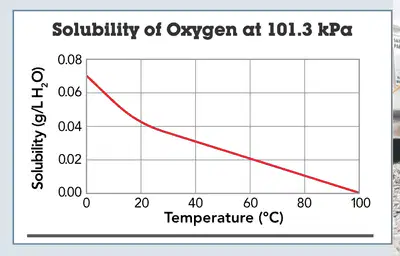
Unlike solids, the solubility of gas decreases with temperature.
Solubility Curves of Gases
4
Fill in the Blanks
The solubility of a gas
Type answer...
5
Normal Melting/Boiling Points are at STP
101.3 kPa and 0 C
Remember to think about what phase change is happening
boiling - liquid to gas
melting - solid to liquid
6
Open Ended
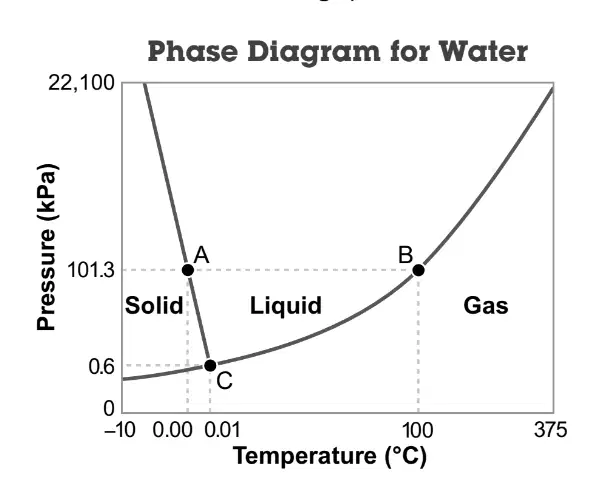
What phase is present at 90 C and 20 kPa?
7
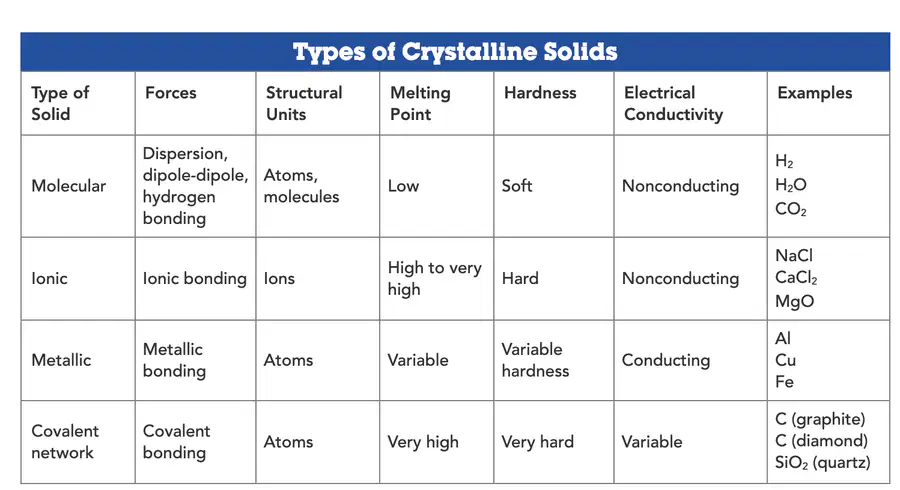
Molecular (covalent) are the weakest. Covalent Network are the strongest (it will take a lot of energy to break them apart)
8
Reorder
Reorder the following from lowest boiling point to highest
Molecular (covalent)
Ionic
Metallic
Covalent Network
9
Open Ended
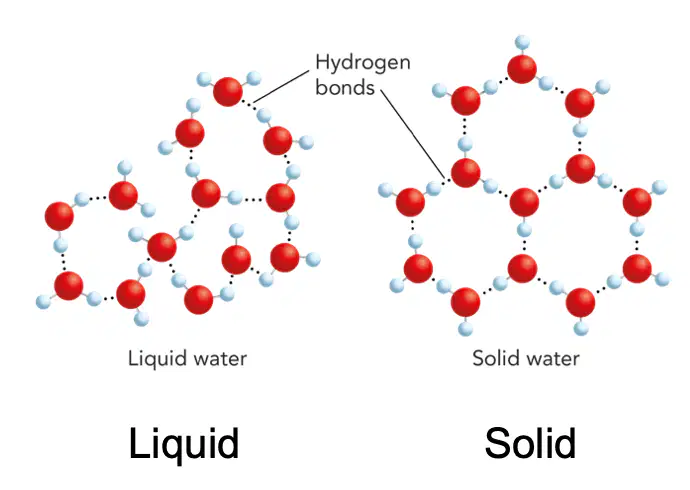
Why is ice less dense than liquid water?
10

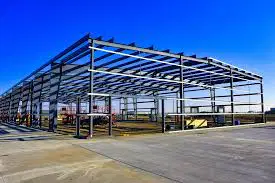
Mixture of two things. (one must be metal)
Usually better than the original.
Alloy
Steel is a mixture of iron and carbon. Iron is a softer metal, adding carbon makes it stronger and more durable.
Steel
11
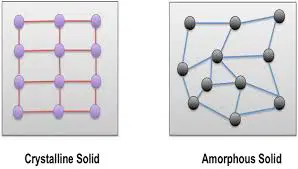
Highly ordered and structured
Crystal Solids
Irregular - lack order
Amorphous Solids
12
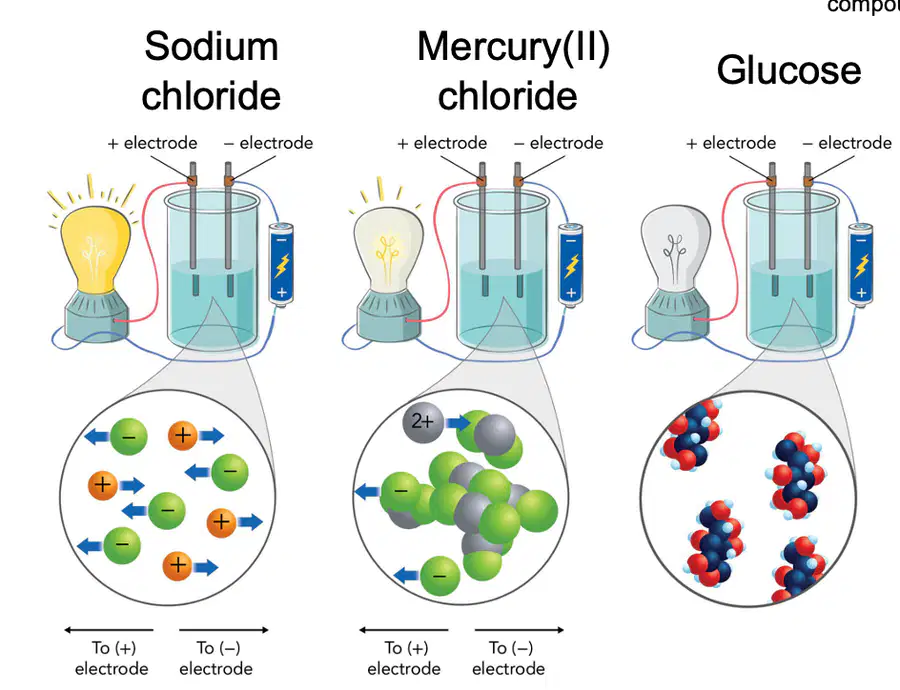
Ionic and some acids can COMPLETELY dissolve in water into ions, allowing them to conduct electricity. (Look for metals)
13
Categorize
KCl
MgI
LiCl
C6H12O6
CCl4
Cl2
Each of the given substances acts as an electrolyte or a non-electrolyte. Based on this characteristic behavior, label each as E (electrolyte) or NE (non-electrolyte)
14
Categorize
Sodium & Bromine
Carbon & Fluorine
Magnesium & Oxygen
Chlorine & Iodine
Predict whether an ionic or molecular compound forms when the following elements combine:
15
Multiple Choice
What happens to gas particles within a closed container when the temperature increases?
The kinetic energy of the particles decreases
The kinetic energy of the particles increases
The kinetic energy of the particles stays the same
The kinetic energy of the particles decreases, then increases
16
Multiple Choice
Water’s high surface tension allows insects called water striders to stand on the surface of water. What would you expect to happen to a water strider if you poured detergent, a surfactant, into the water that the water strider is standing on?
It would sink into the water
It would move over the water more easily
It would be stuck to the same spot in the water
It would slip and slide over the surface of the water
17
Dropdown
By Uriah Bocker
Show answer
Auto Play
Slide 1 / 17
SLIDE
Similar Resources on Wayground

14 questions
Periodic Table and Trends
Presentation
•
10th - 12th Grade
12 questions
Entropy
Presentation
•
9th - 12th Grade
12 questions
-AR THE SPANISH REGULAR VERBS
Presentation
•
9th - 12th Grade
12 questions
Experience 3: Atomic Emission Spectra
Presentation
•
9th - 12th Grade
13 questions
Classification of Matter
Presentation
•
9th - 12th Grade
11 questions
Intermolecular Forces
Presentation
•
9th - 12th Grade
15 questions
Nuclear Fission vs Nuclear Fusion
Presentation
•
9th - 12th Grade
15 questions
Reading solubility curves
Presentation
•
9th - 12th Grade
Popular Resources on Wayground
10 questions
Safety Day 2026 – Student Review

Quiz
•
9th Grade
21 questions
Continents and Oceans
Quiz
•
6th Grade
20 questions
Parts of Speech
Quiz
•
5th Grade
16 questions
Subject & Predicate
Quiz
•
5th Grade
25 questions
Multiplication Facts
Quiz
•
5th Grade
12 questions
Map Skills
Quiz
•
3rd Grade
22 questions
Continents and Oceans
Quiz
•
5th Grade
15 questions
Rounding Decimals
Quiz
•
5th Grade
Discover more resources for Chemistry
20 questions
electron configurations and orbital notation
Quiz
•
9th - 12th Grade
20 questions
Periodic Table Trends
Quiz
•
11th Grade
25 questions
Writing and Naming Binary Ionic compounds
Quiz
•
10th Grade
20 questions
COUNTING ATOMS
Quiz
•
10th Grade
50 questions
Unit 3: Atomic Assault Summative Review
Quiz
•
11th Grade
20 questions
Physical or Chemical Change/Phases
Quiz
•
8th Grade - University
15 questions
Periodicity Module Exam Practice Quiz
Quiz
•
9th - 12th Grade
20 questions
Naming Ionic Compounds
Quiz
•
10th Grade