

Columbian Exchange 2025

Presentation
•
Social Studies
•
9th - 12th Grade
•
Practice Problem
•
Hard

Michelle Cox
FREE Resource
30 Slides • 27 Questions
1
2
3
Open Ended
How do you think the exchange of plants, animals, and diseases between the Eastern and Western Hemispheres might have impacted societies on both sides?
4
Multiple Choice
Why was the Columbian Exchange a significant event in world history?
It led to the discovery of new continents.
It resulted in the exchange of plants, animals, and diseases between the Eastern and Western Hemispheres.
It caused the fall of major empires.
It was the beginning of modern technology.
5
6
Multiple Choice
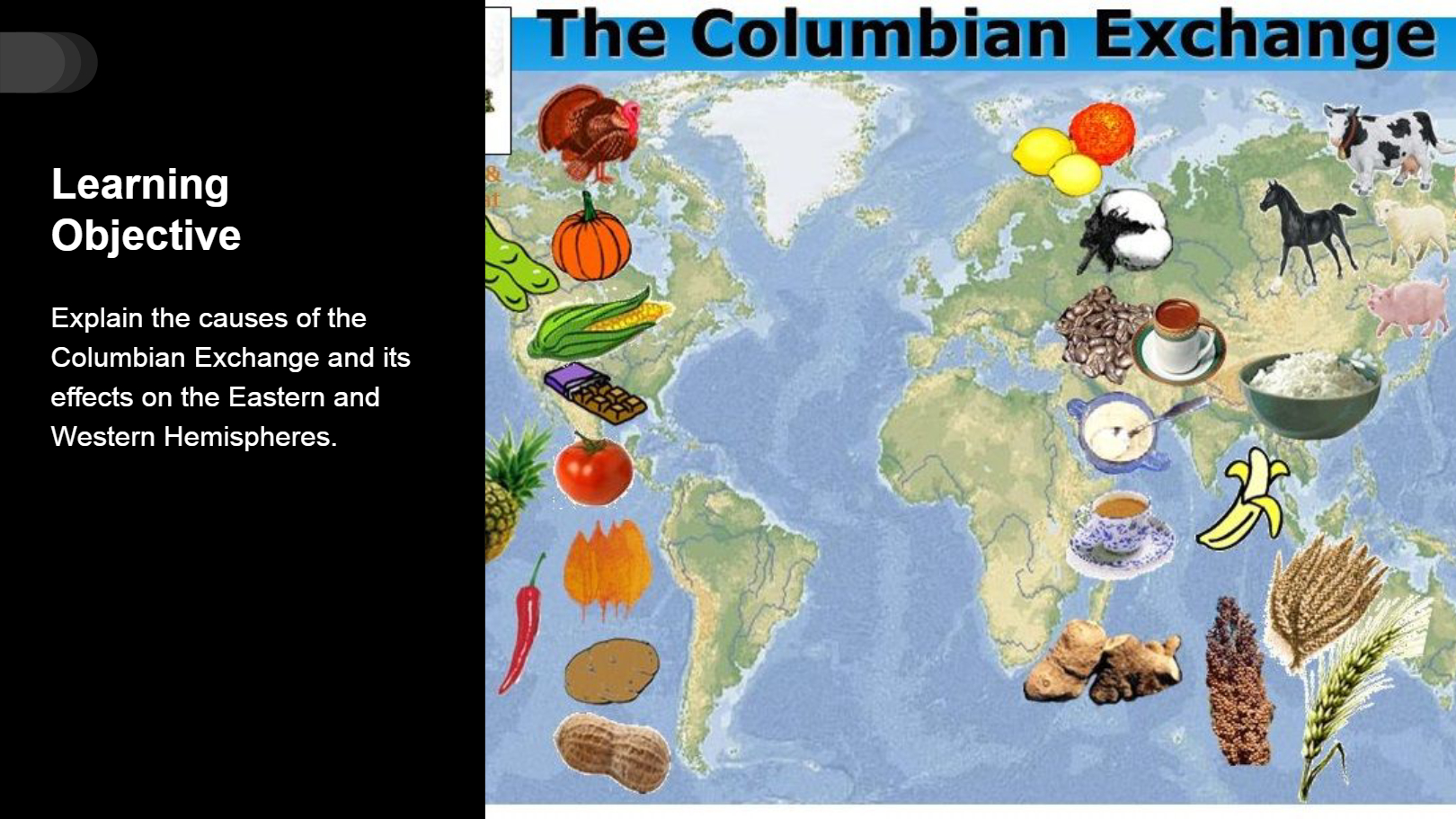
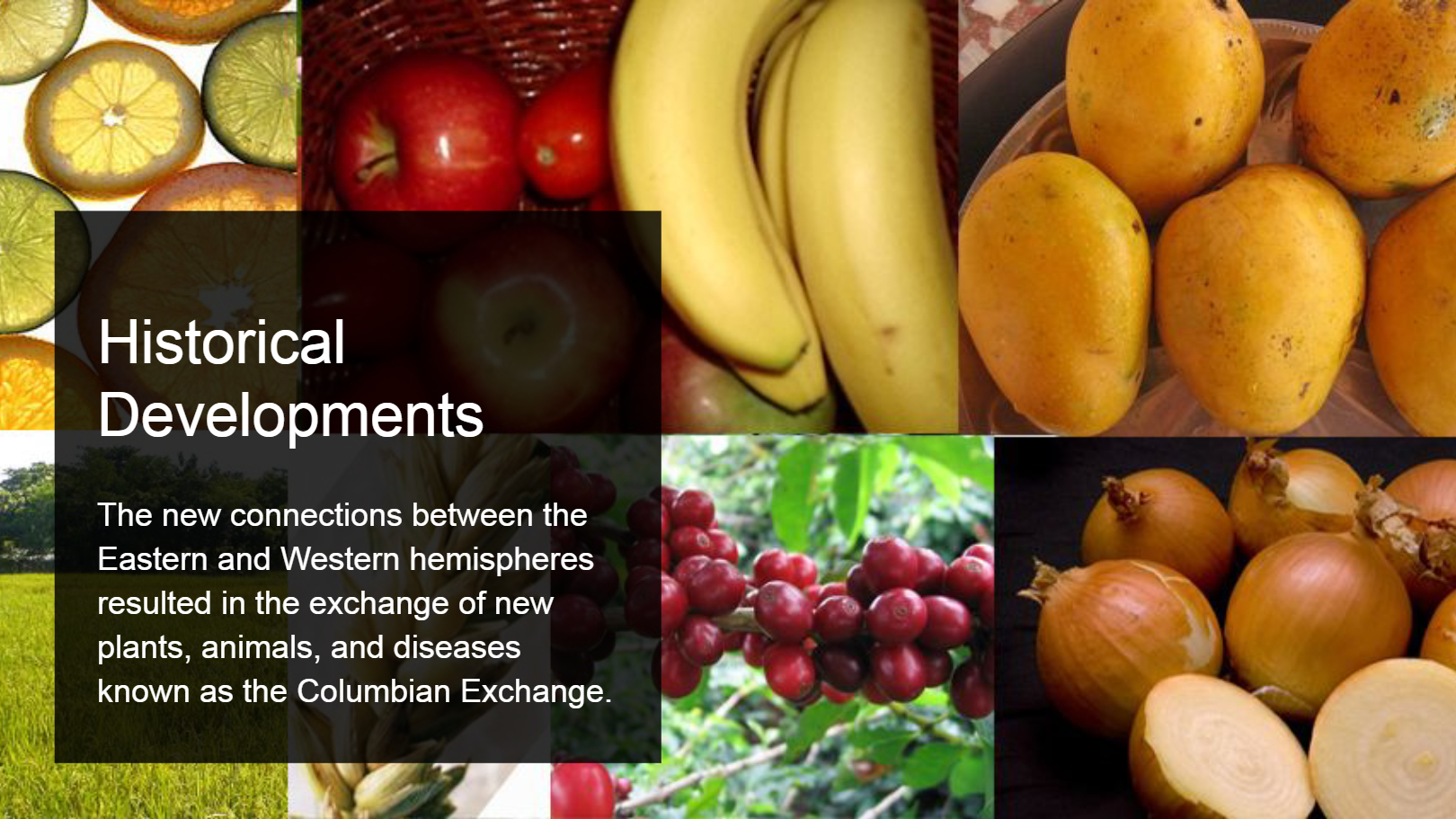
Which of the following best describes the Columbian Exchange?
The exchange of goods and ideas between Asia and Africa
The transfer of plants, animals, and diseases between the Eastern and Western hemispheres
The migration of people from Europe to the Americas
The spread of technology from Europe to Asia
7
8
Open Ended
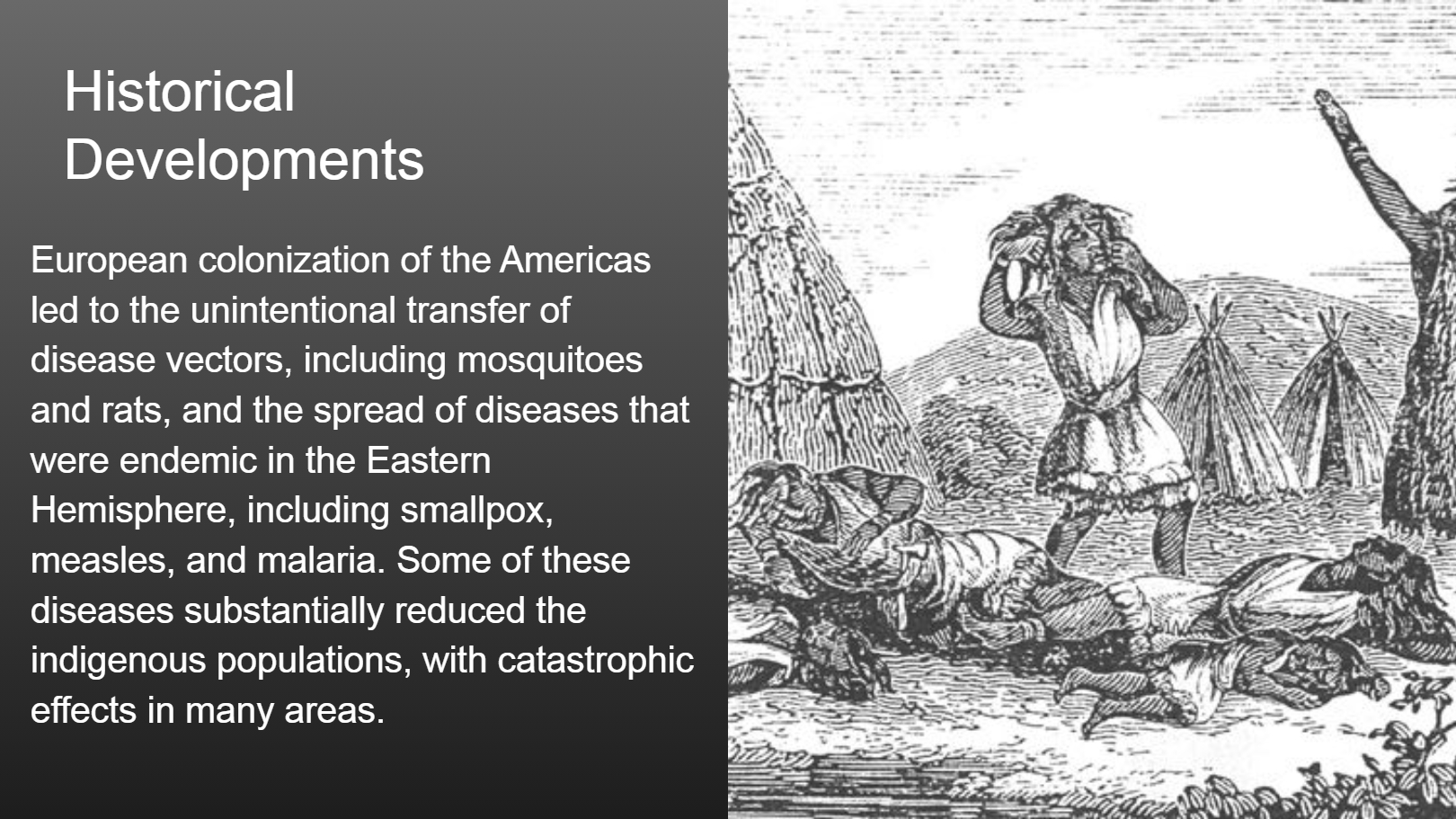
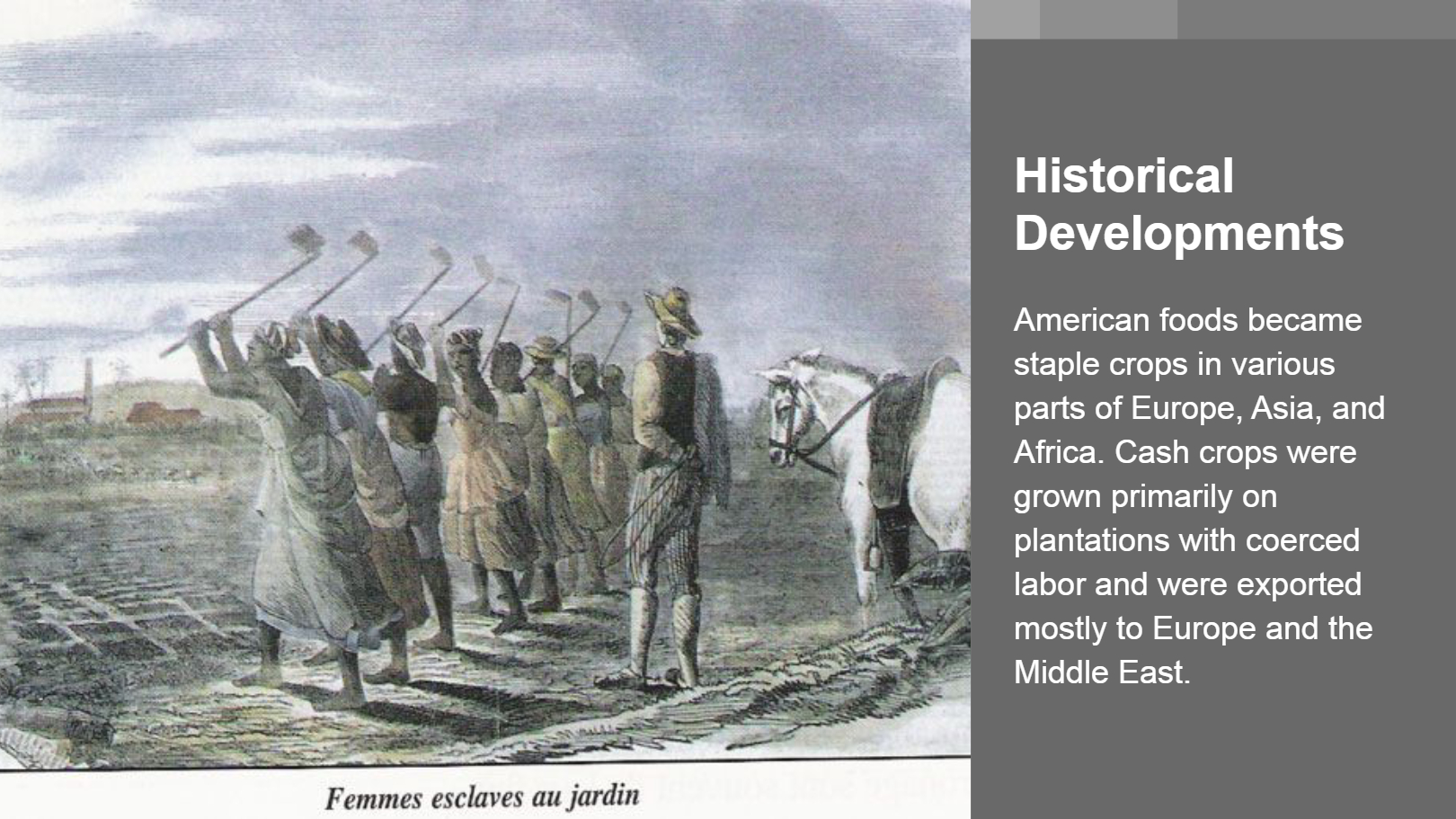
Explain how the transfer of disease vectors during European colonization affected indigenous populations in the Americas.
9
10
11
Fill in the Blanks
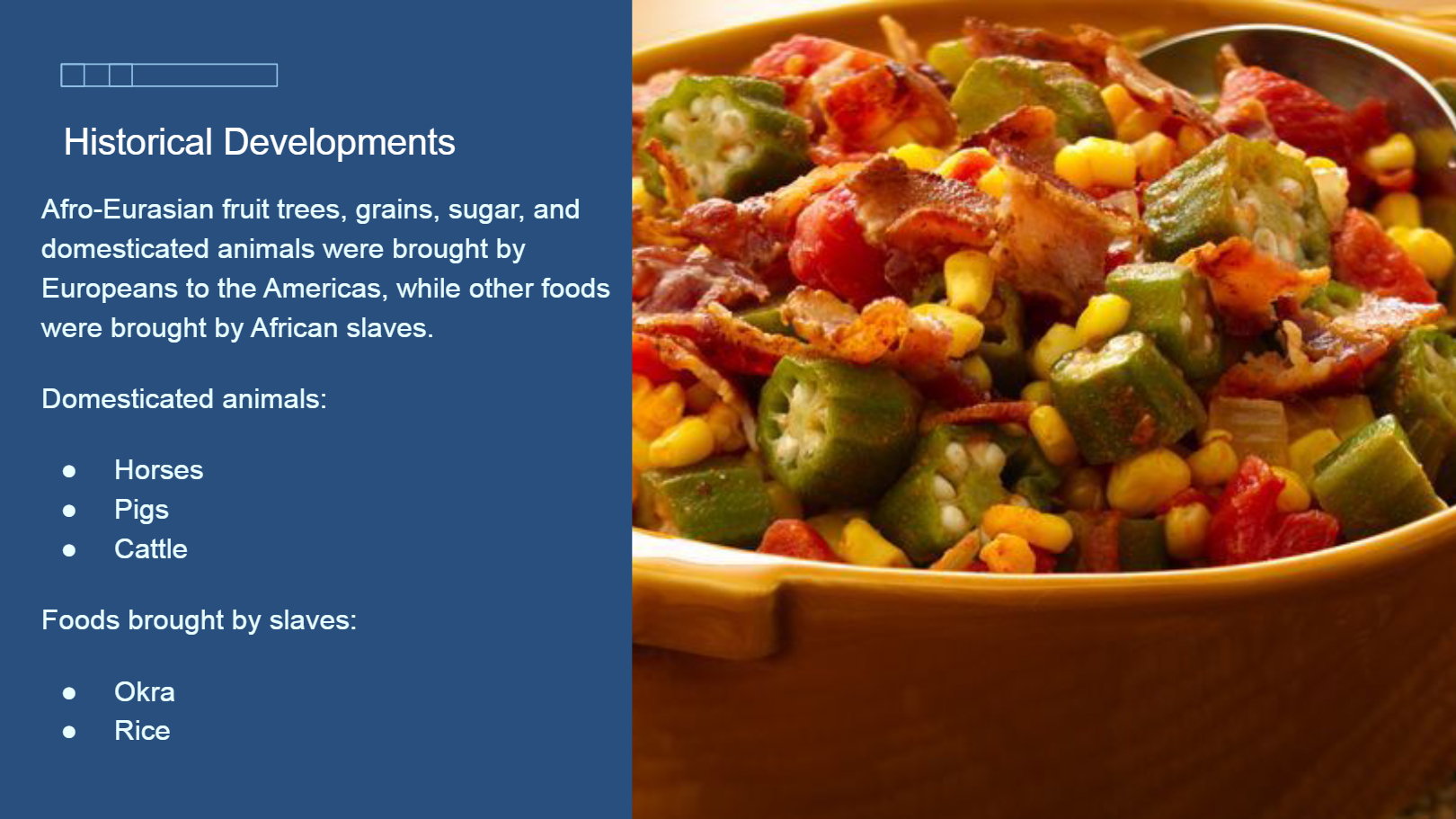
Afro-Eurasian domesticated animals brought to the Americas included horses, pigs, and
Type answer...
12
13
Open Ended
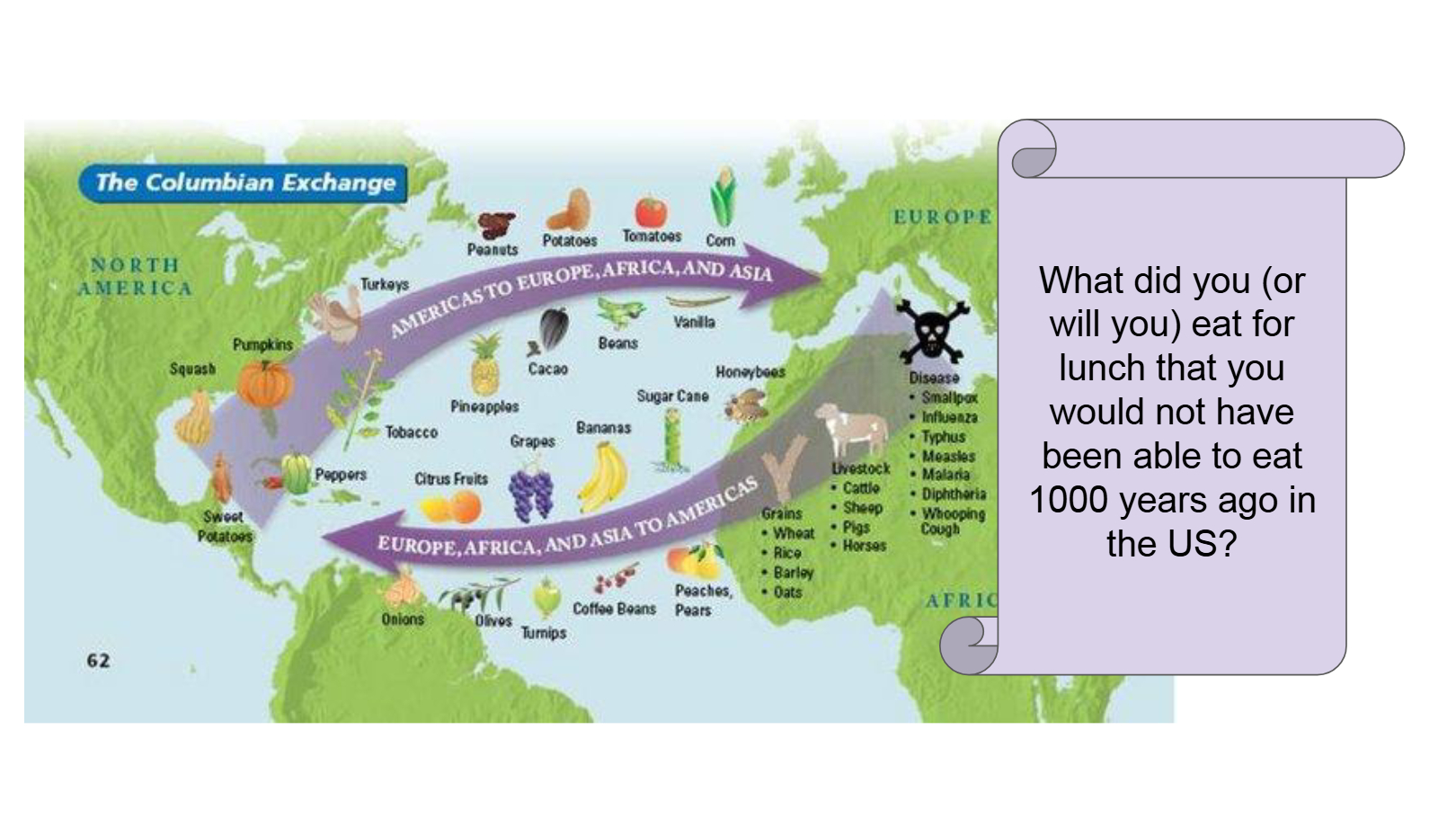
What did you (or will you) eat for lunch that you would not have been able to eat 1000 years ago in the US?
14
Multiple Choice
Which of the following were staple crops exported from the Americas to Europe, Asia, and Africa?
Rice, wheat, barley, oats
Potatoes, maize, sweet potatoes, tomatoes
Sugar cane, coffee, grapes, olives
Bananas, pineapples, vanilla, cacao
15

16
Multiple Choice
Which food would NOT exist in its modern form without the Columbian Exchange, as referenced in the meme?
Pizza
Rice
Okra
Sweet potatoes
17
18
19
20
Multiple Choice
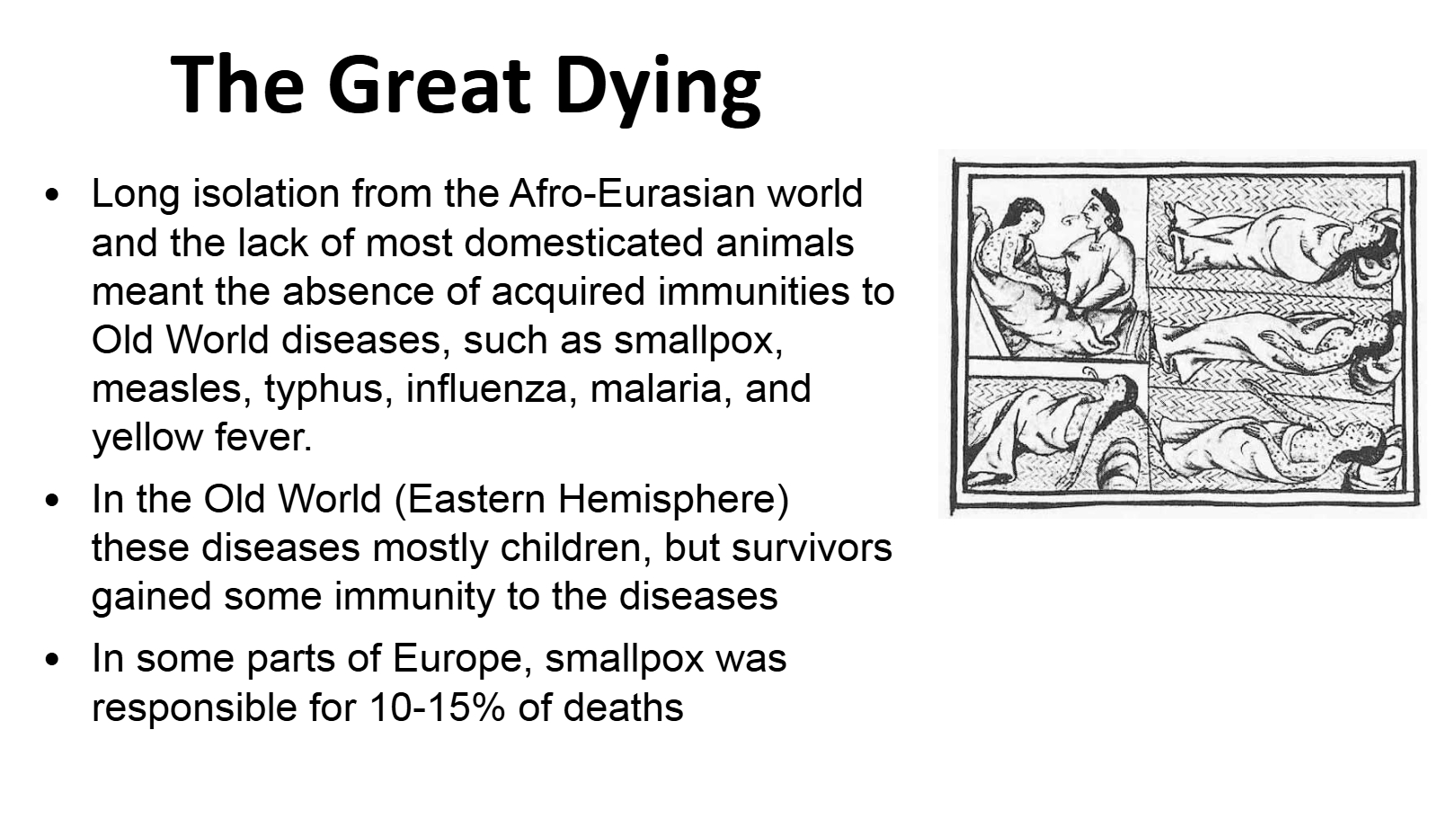
Which diseases were introduced to the Americas as a result of the Columbian Exchange, and what impact did they have on the native populations?
Smallpox, measles, typhus, influenza, malaria, and yellow fever; they caused massive population decline among natives.
Malaria, tuberculosis, and polio; they had little effect on native populations.
Chickenpox, rabies, and mumps; they increased native populations.
Ebola, HIV, and SARS; they caused minor illnesses among natives.
21
22
Multiple Choice
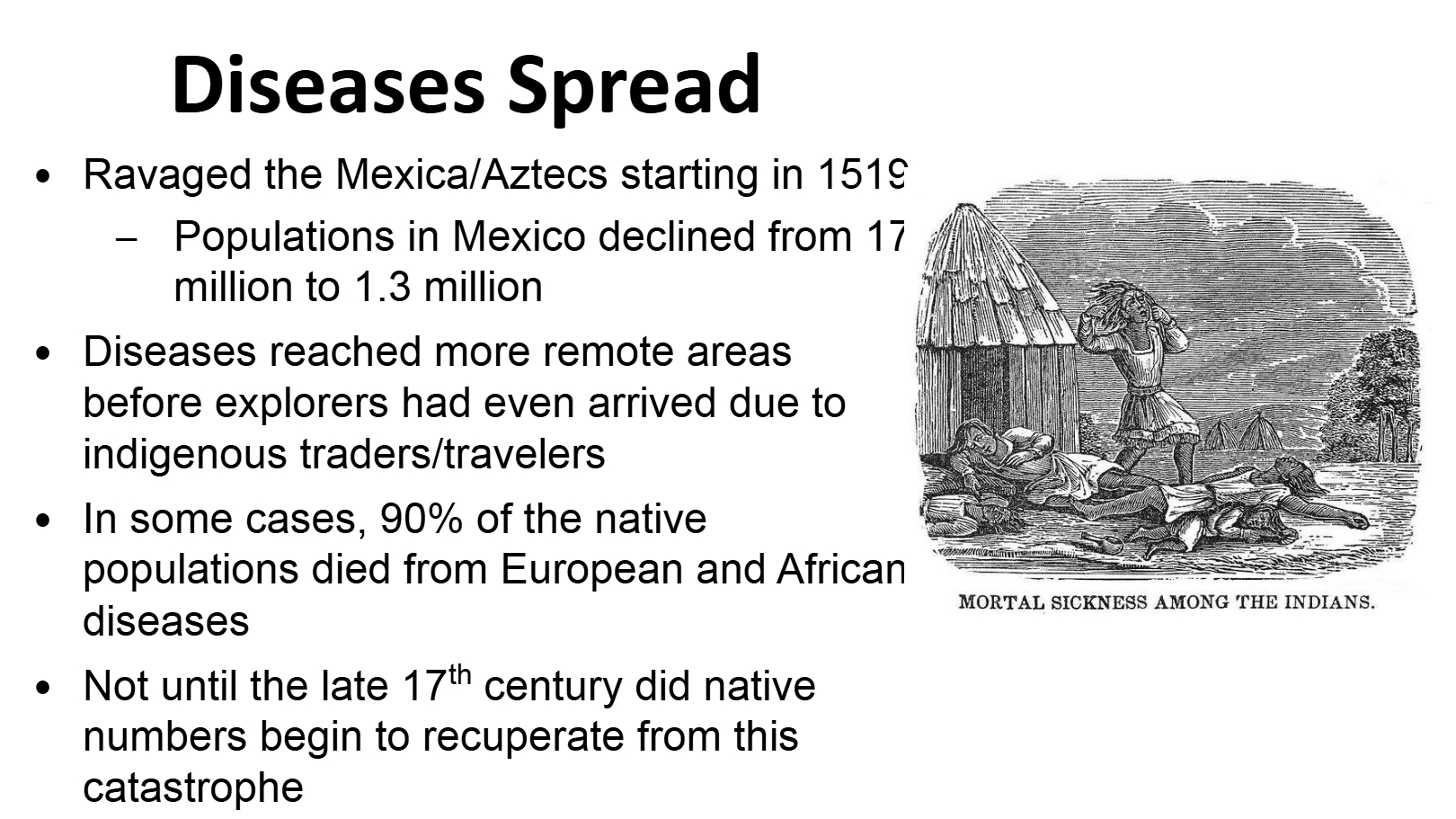
Which of the following statements best describes the effect of European and African diseases on indigenous populations in the Americas?
They caused a dramatic decline in native populations, sometimes up to 90%.
They had no significant effect on native populations.
They only affected European settlers.
They led to an increase in native populations due to improved immunity.
23
Fill in the Blanks
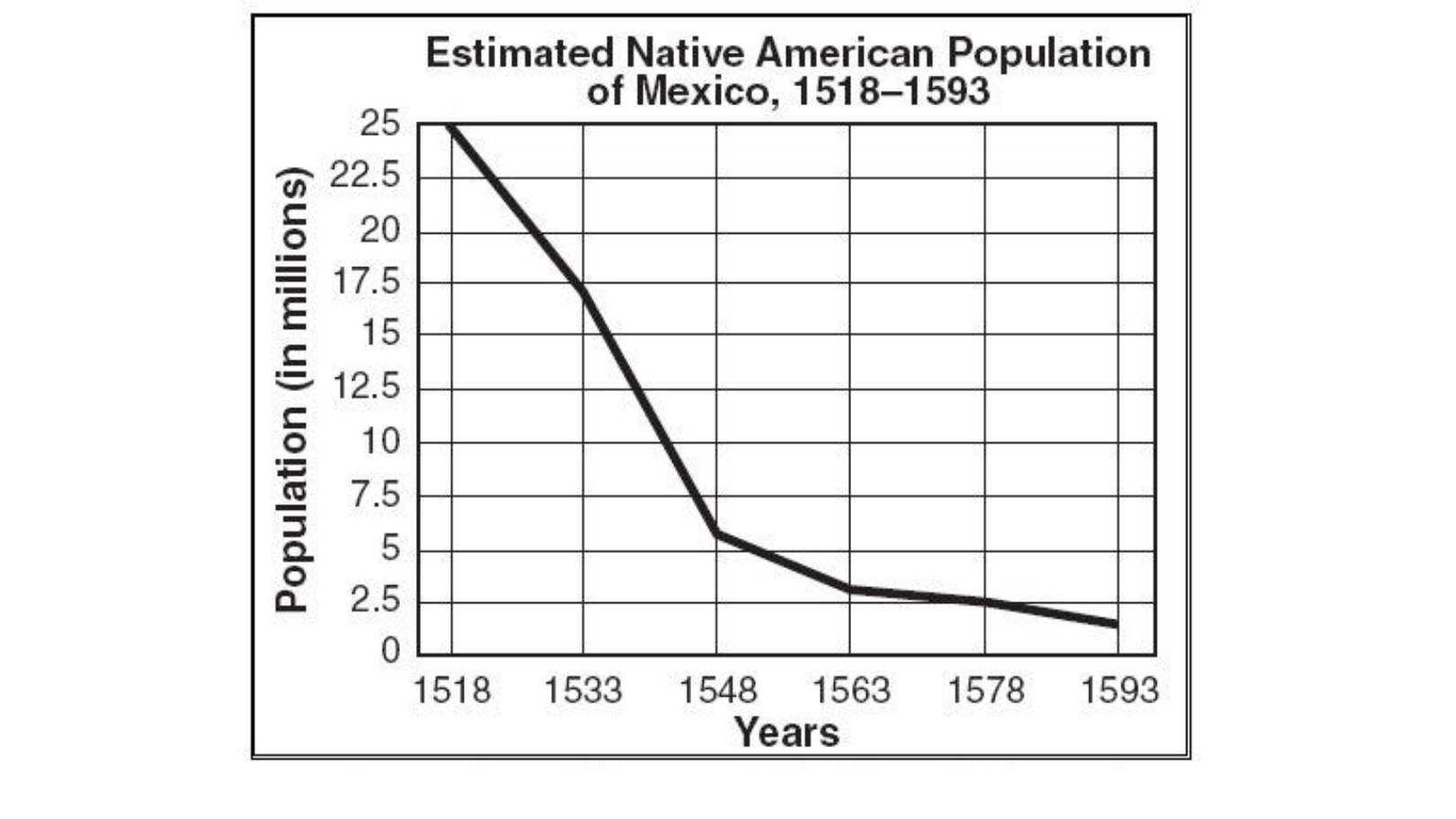
The population of Native Americans in Mexico declined from about 25 million in 1518 to
Type answer...
24
25
Open Ended
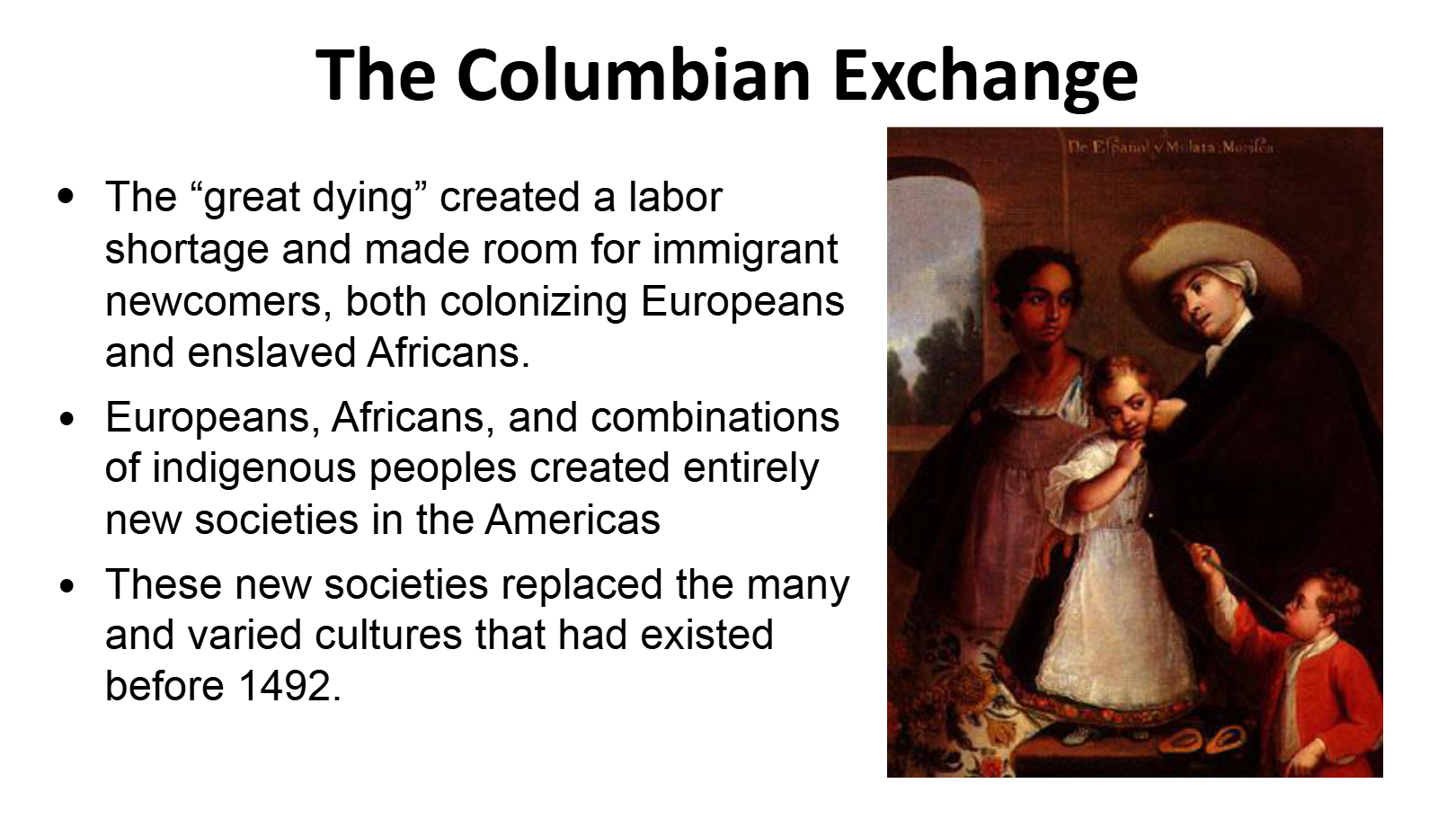
What were some of the social and cultural consequences of the 'great dying' for indigenous peoples in the Americas?
26
27
Multiple Choice
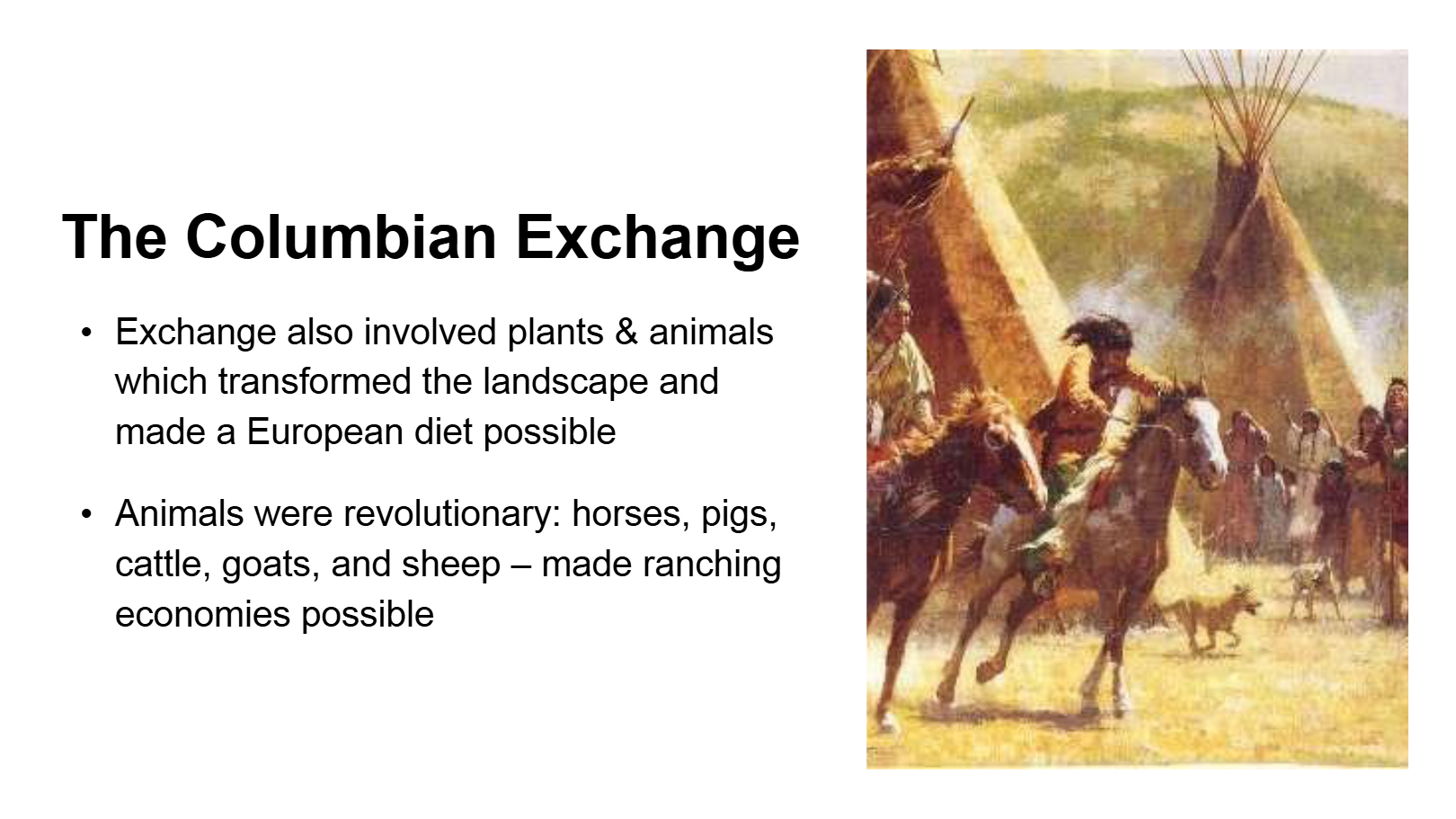
Which of the following animals were introduced to the Americas during the Columbian Exchange and contributed to the development of ranching economies?
Horses, pigs, cattle, goats, and sheep
Dogs, cats, chickens, and ducks
Llamas, alpacas, guinea pigs, and turkeys
Elephants, camels, zebras, and lions
28
Open Ended
Explain how the Columbian Exchange transformed societies in the Americas beyond just the spread of disease.
29
30
Multiple Choice
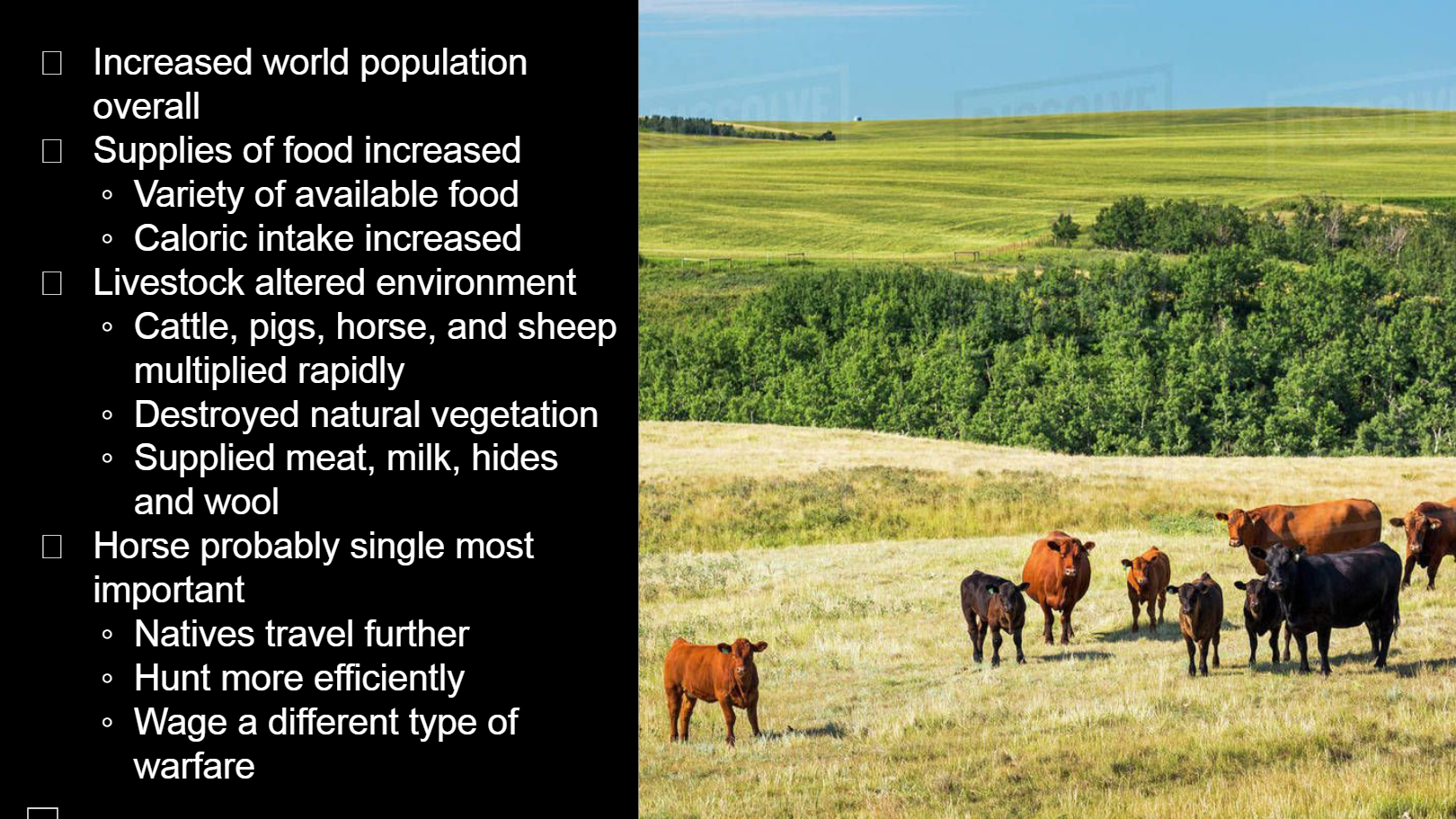
Which of the following was NOT a direct effect of the introduction of livestock such as cattle, pigs, horses, and sheep to new environments?
Supplied meat, milk, hides and wool
Destroyed natural vegetation
Increased world population overall
Decreased caloric intake
31
32
Open Ended
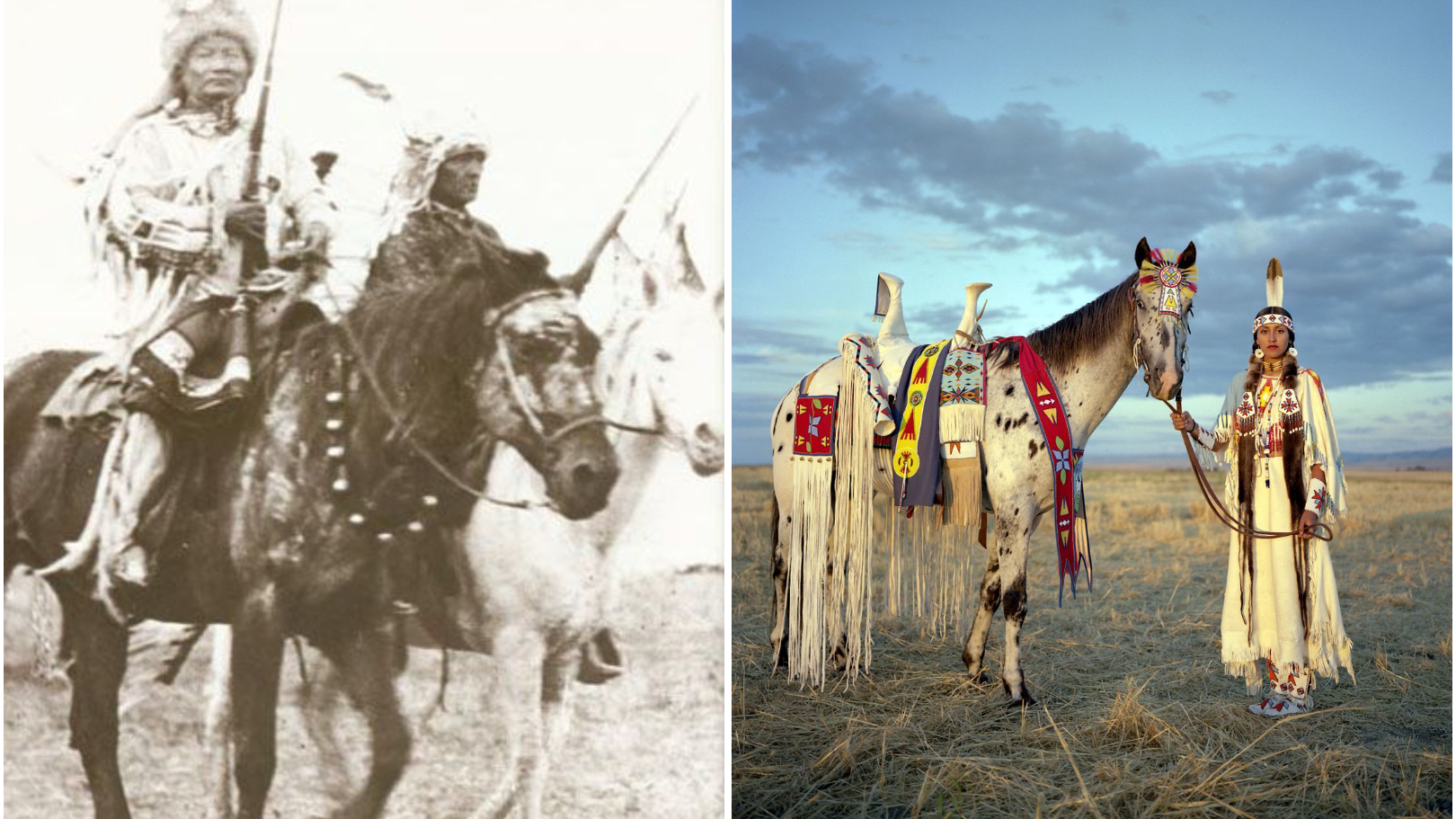
Explain how the introduction of the horse changed the lives of Native peoples in the Americas.
33
34
Fill in the Blanks
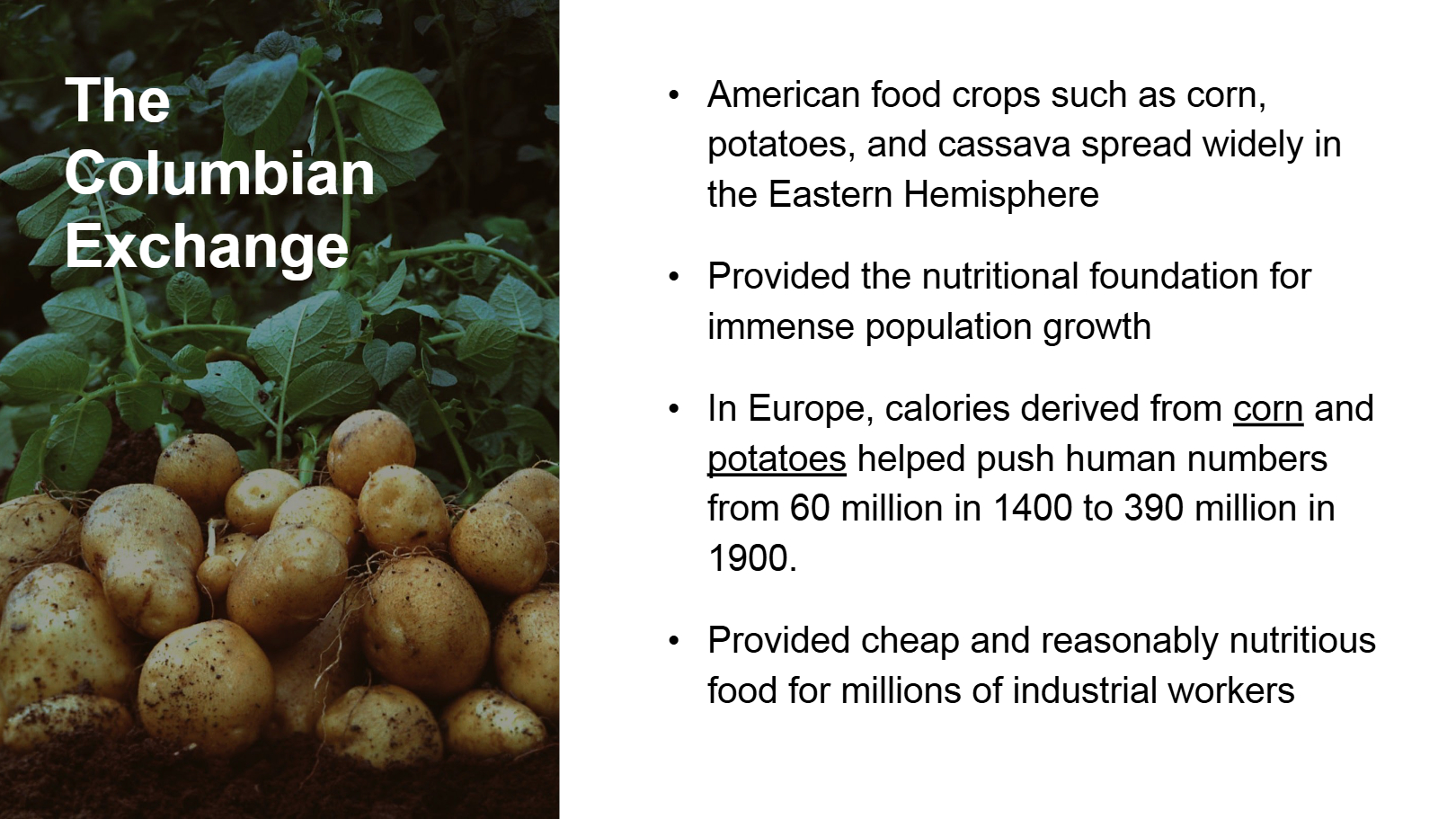
The Columbian Exchange provided cheap and reasonably nutritious food for millions of
Type answer...
35
Multiple Choice
Which American food crops contributed to population growth in the Eastern Hemisphere after the Columbian Exchange?
Corn, potatoes, cassava
Wheat, rice, barley
Tomatoes, peppers, squash
Bananas, oranges, grapes
36
37
38
39
Open Ended
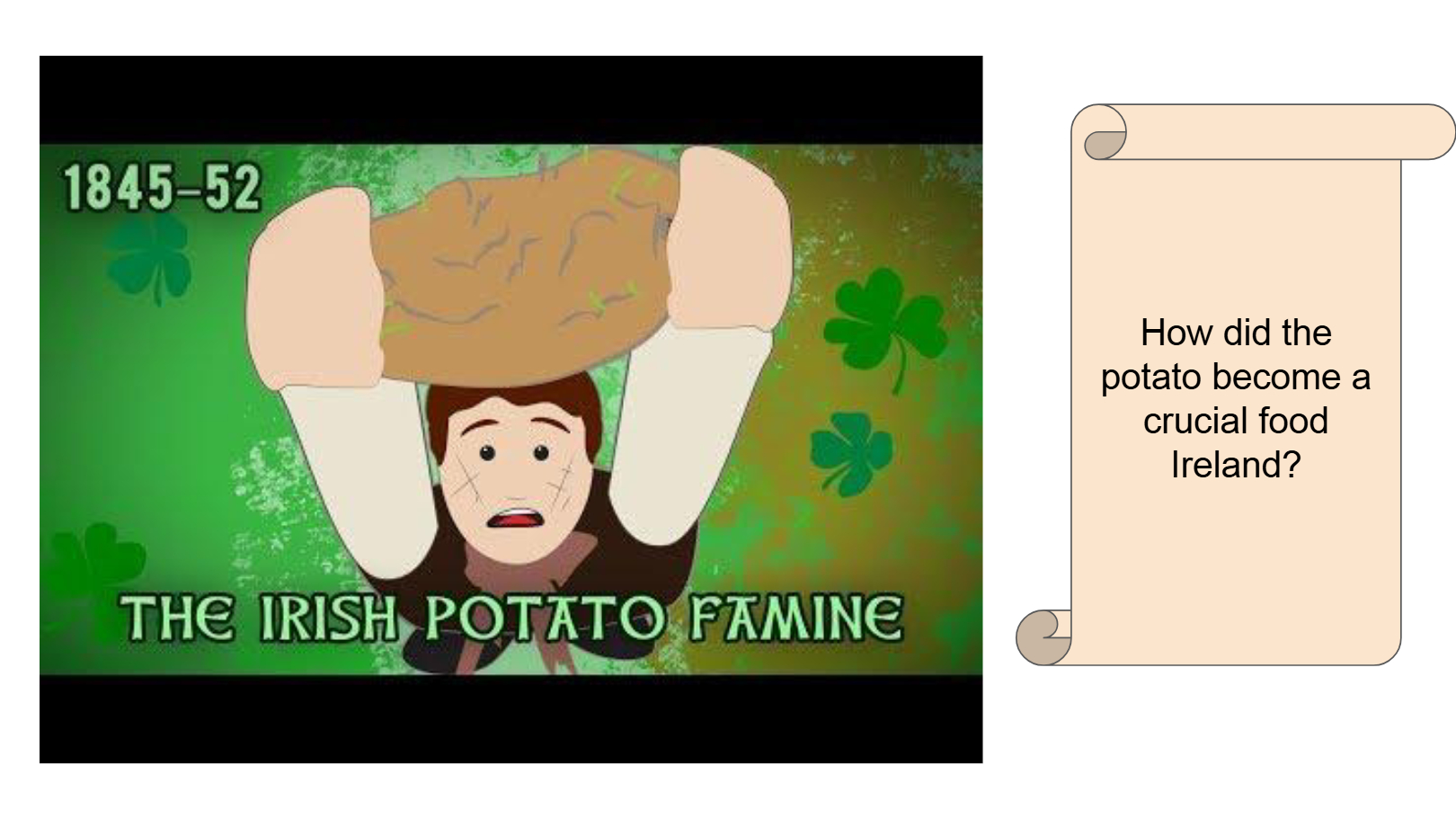
How did the potato become a crucial food in Ireland?
40
41
Multiple Choice
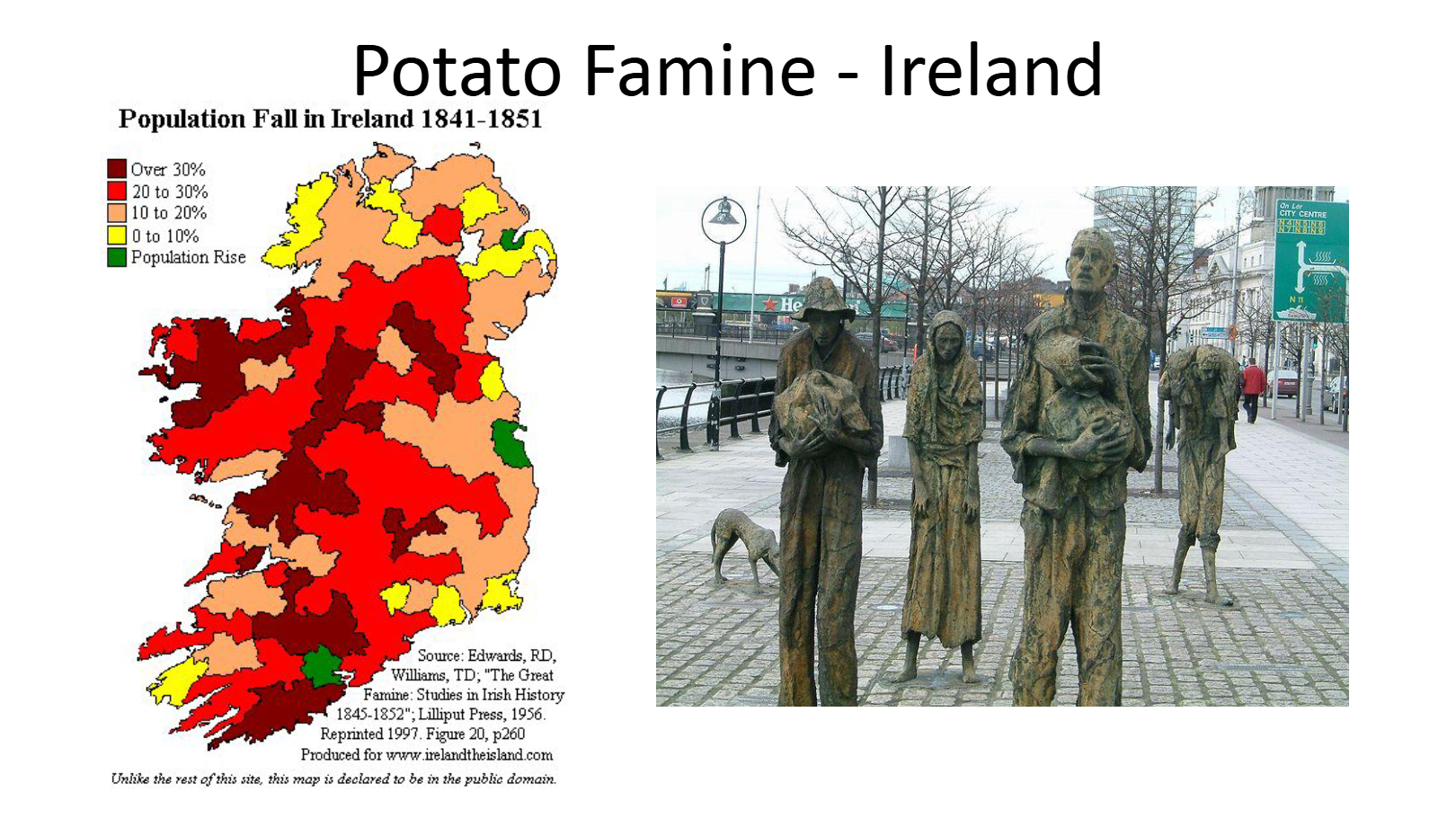
Which regions in Ireland experienced the greatest population decline during the Potato Famine of 1841-1851?
Northern Ireland
Western and Southern Ireland
Eastern Ireland
Central Ireland
42
43
Multiple Choice
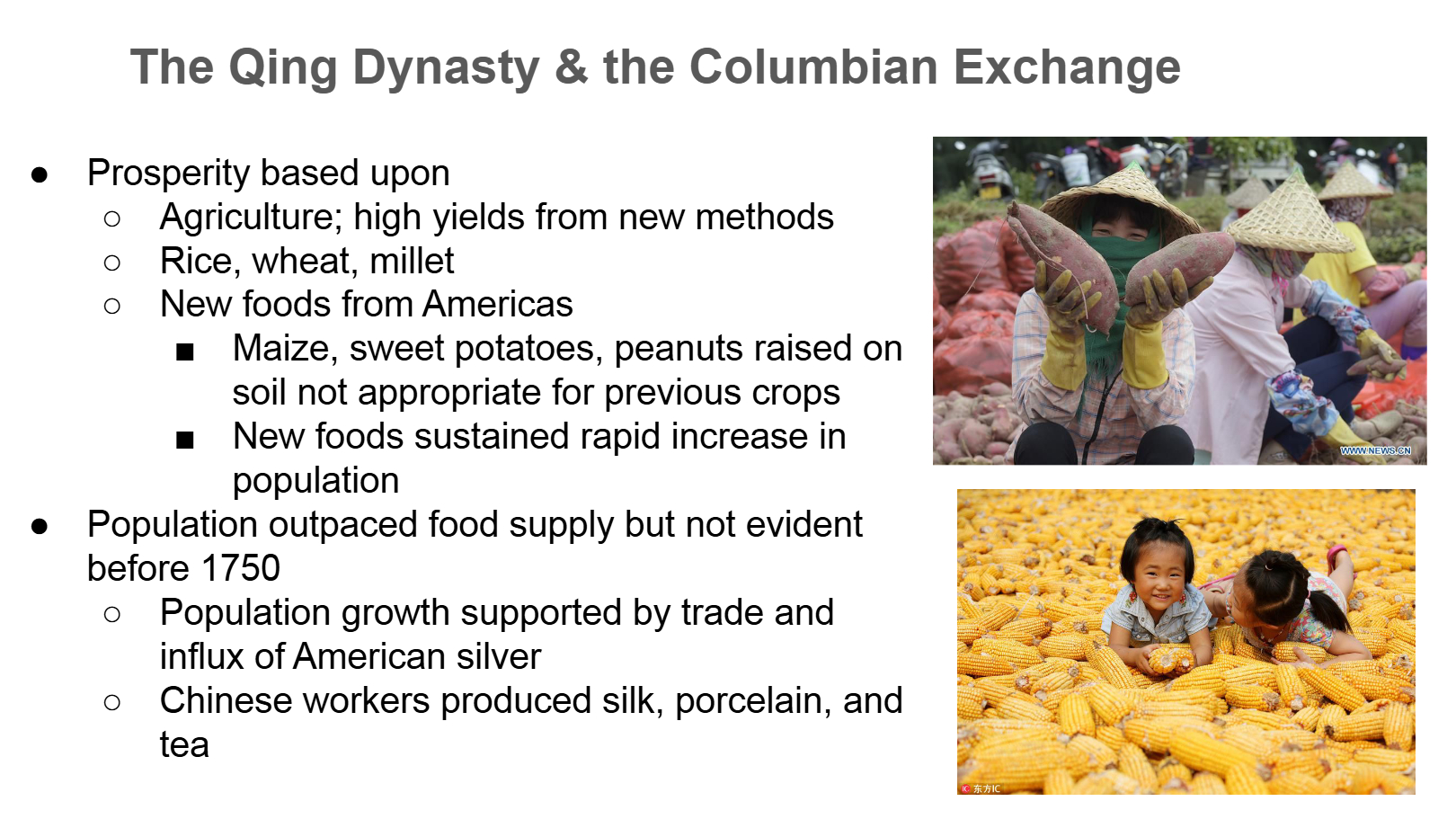
How did the introduction of new foods from the Americas impact the population growth during the Qing Dynasty?
It caused a decrease in population due to crop failures.
It had no significant impact on population growth.
It sustained a rapid increase in population.
It led to the decline of traditional crops only.
44
45
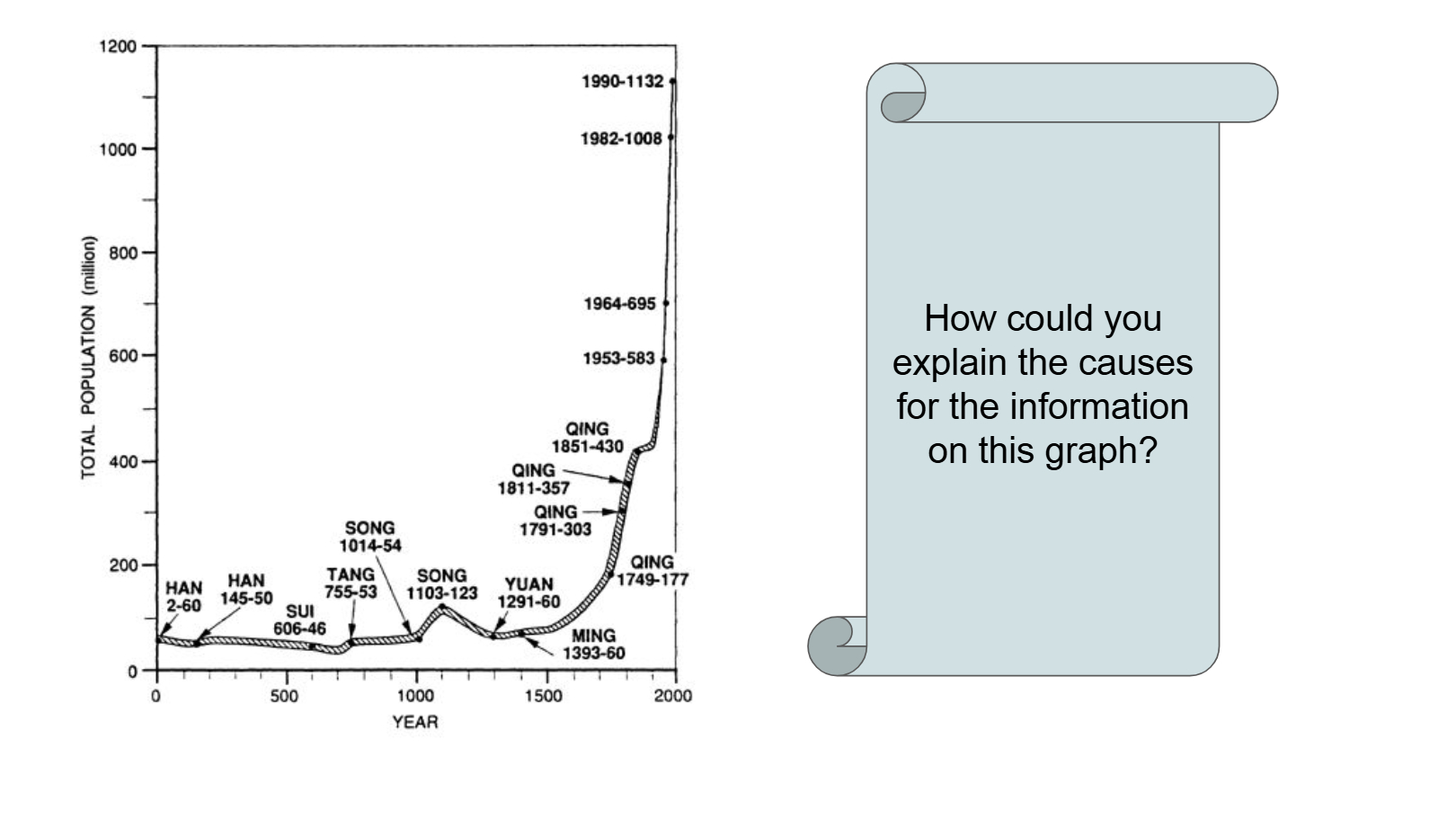
Open Ended
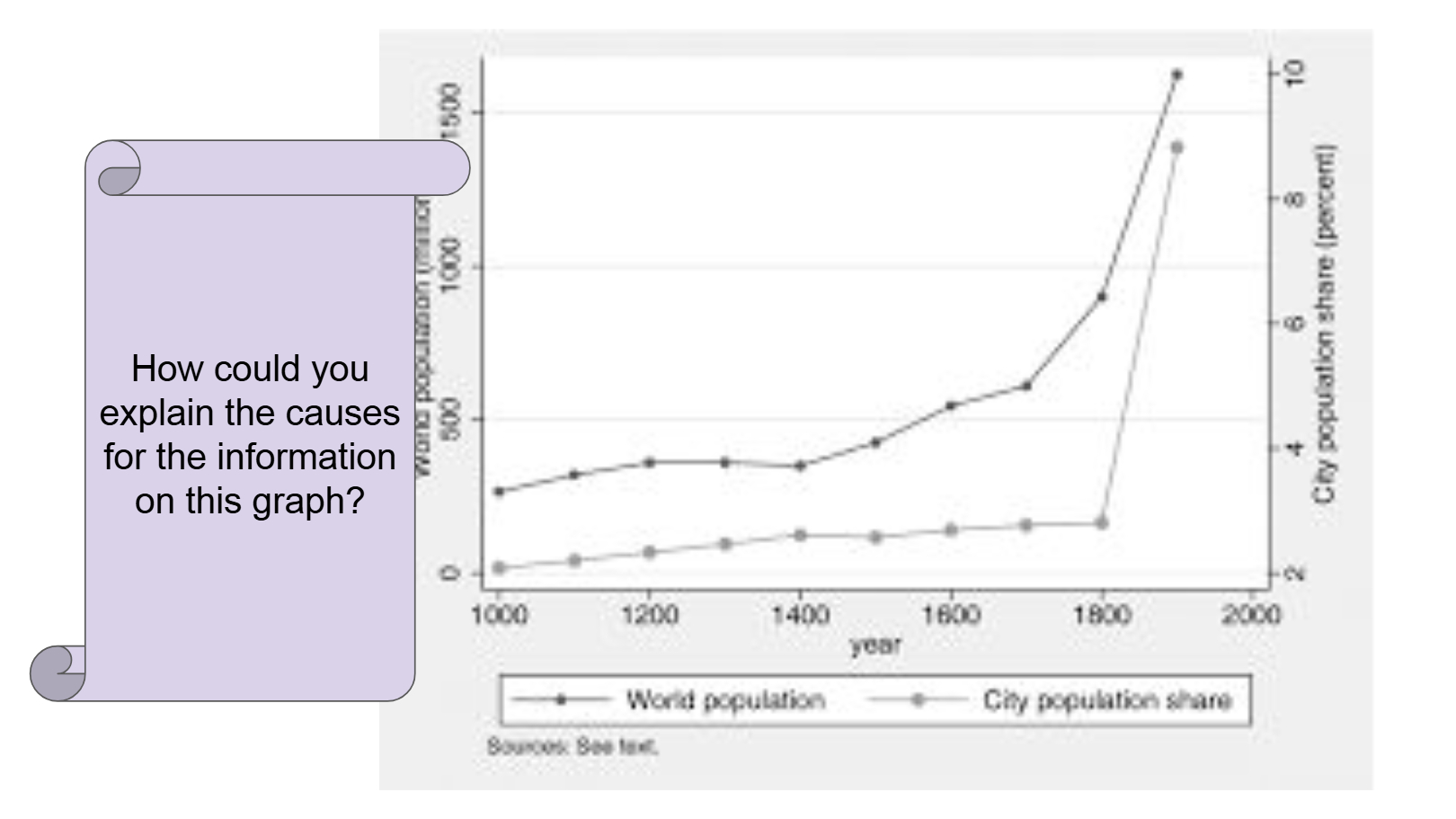
How could you explain the causes for the information on this graph?
46
47
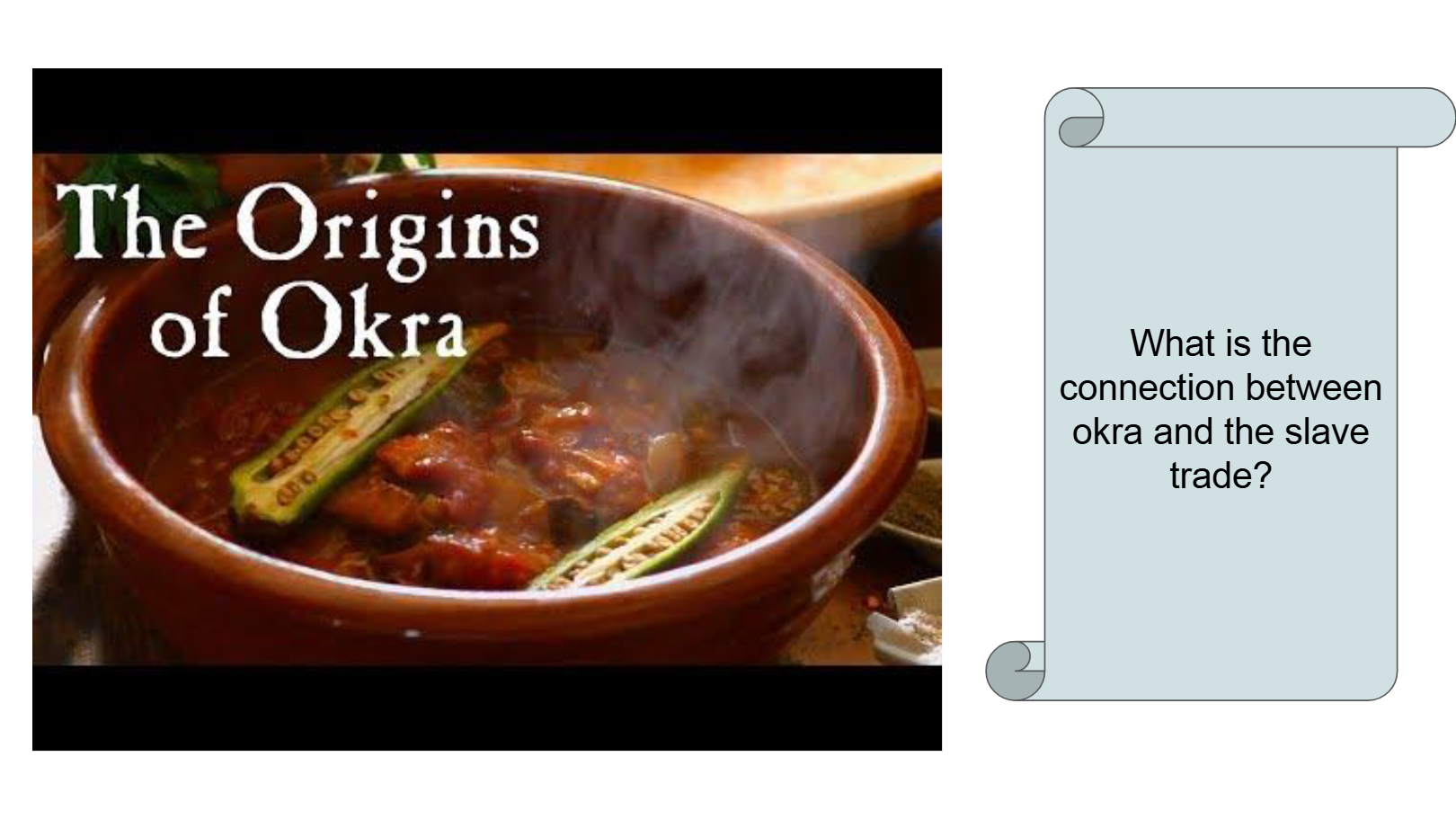
Open Ended
What is the connection between okra and the slave trade?
48
49
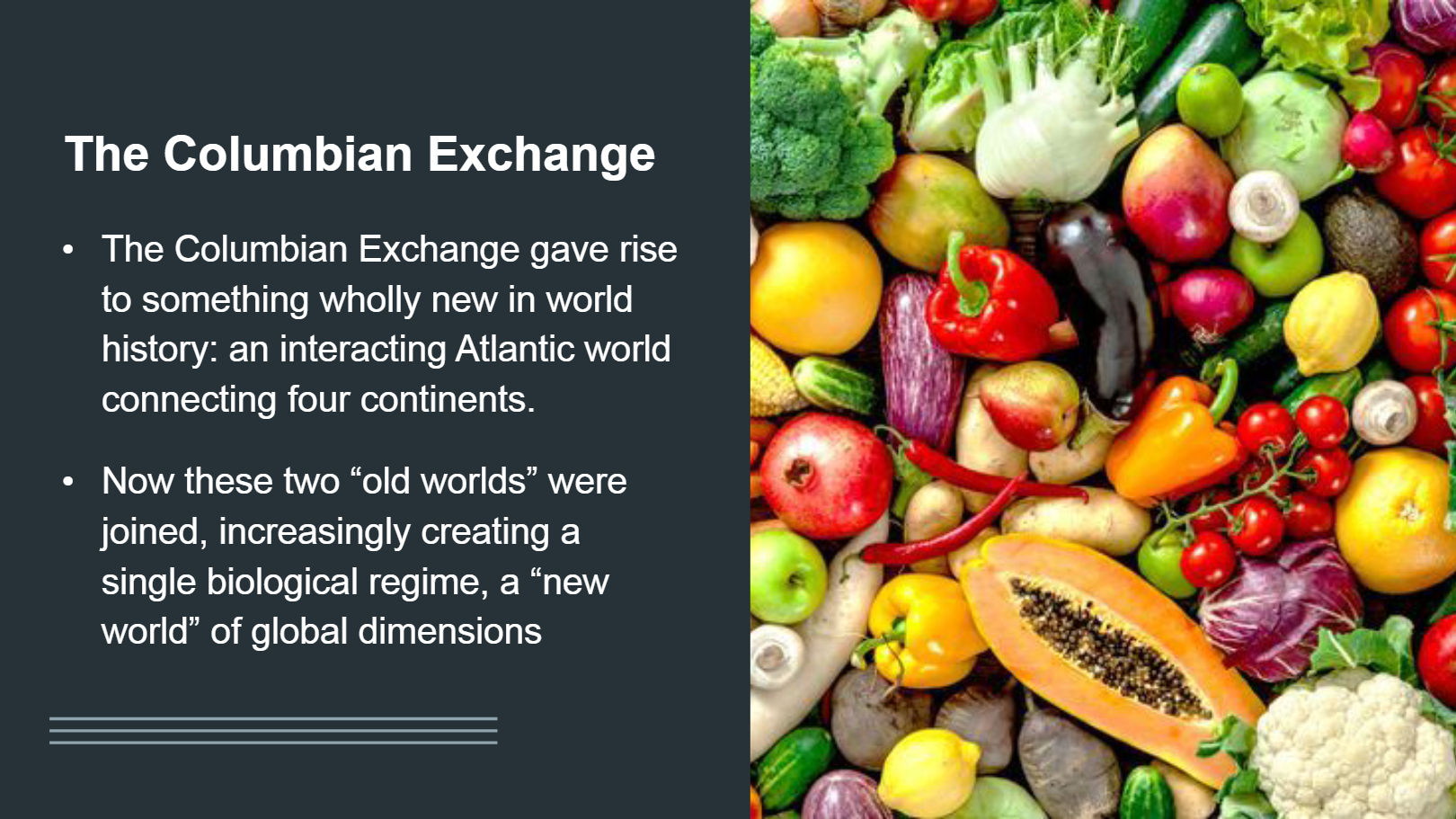
Fill in the Blanks
The Columbian Exchange connected four continents, creating a new world of global dimensions. Fill in the blank: The Columbian Exchange gave rise to an interacting
Type answer...
50
51
Multiple Choice
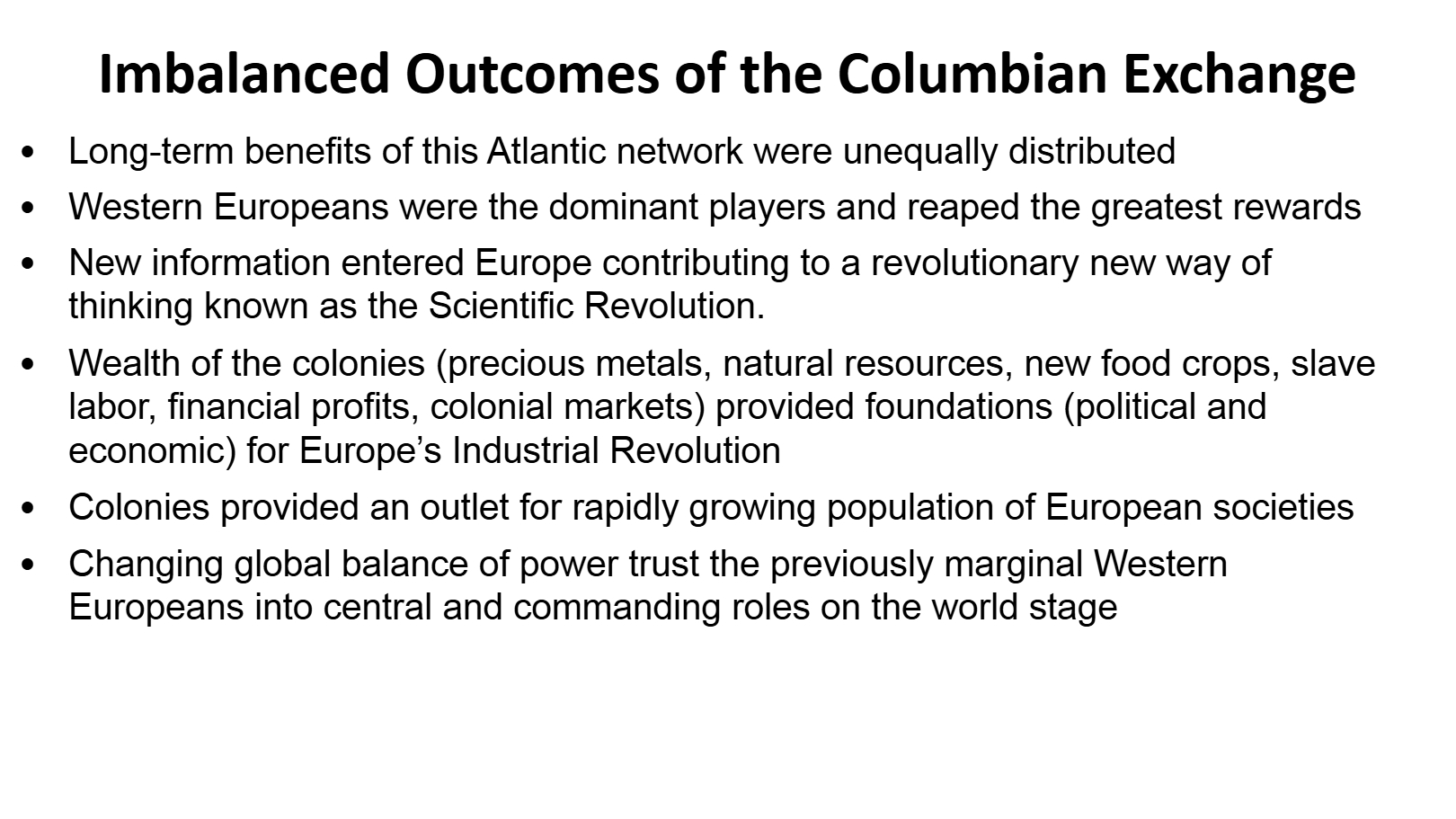
Which of the following were outcomes of the Columbian Exchange for Europe?
Decline in scientific knowledge
Foundations for the Industrial Revolution
Loss of colonial markets
Decrease in population
52
53
54
55
56
Open Ended
Reflecting on what you learned about the Columbian Exchange, what is one question you still have or one aspect you would like to explore further?
57
Multiple Choice
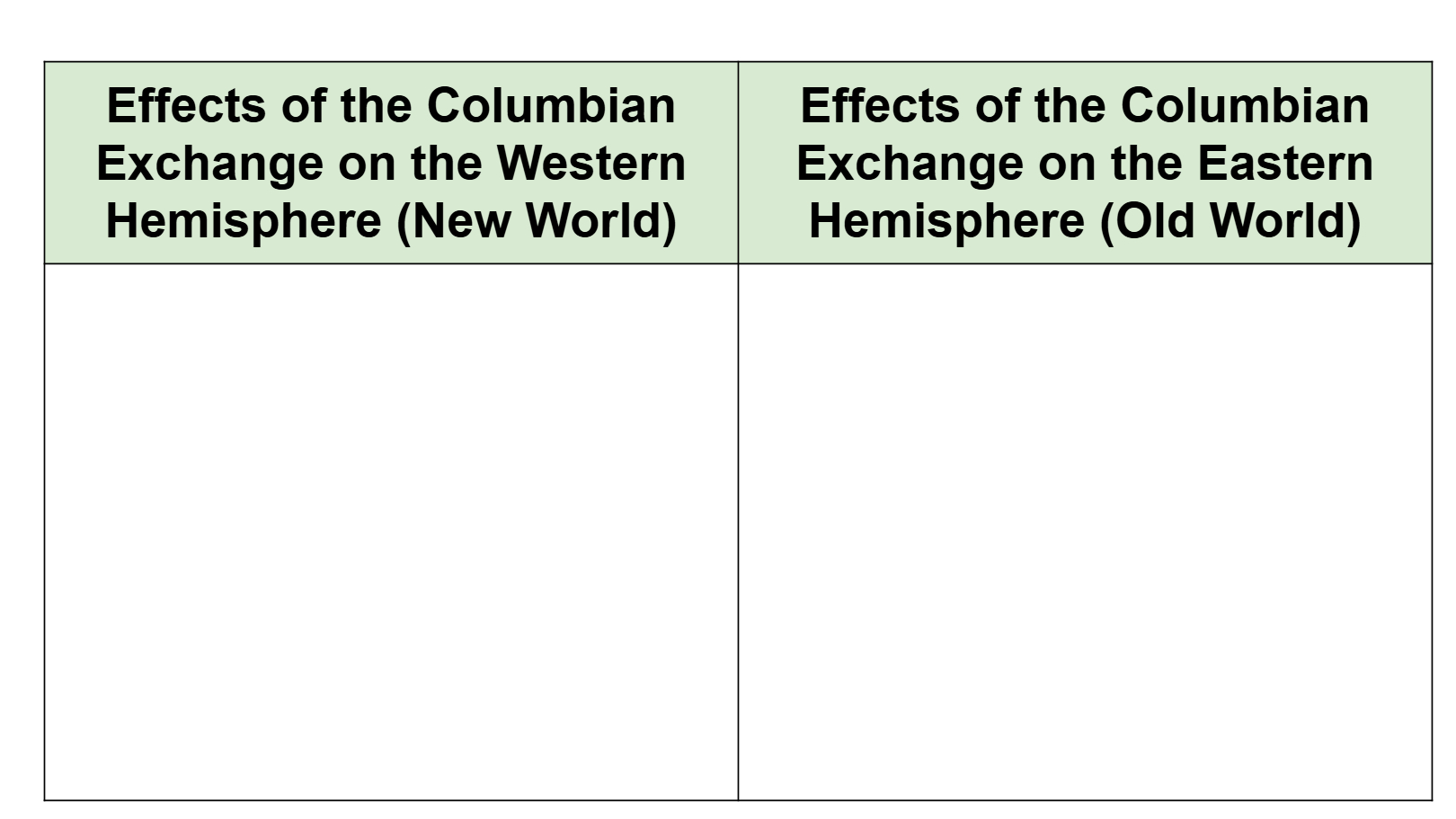
What were some of the major effects of the Columbian Exchange on the Eastern and Western Hemispheres?
Introduction of new crops and animals
Spread of diseases
Increase in global trade
All of the above
Show answer
Auto Play
Slide 1 / 57
SLIDE
Similar Resources on Wayground

52 questions
Category 3 Day 1 Review
Presentation
•
9th - 12th Grade
51 questions
9.1 Las Celebraciones
Presentation
•
9th - 12th Grade
55 questions
Amendments 11-27
Presentation
•
9th - 12th Grade
49 questions
AP Psychology Sensation and Perception
Presentation
•
9th - 12th Grade
53 questions
Price system
Presentation
•
10th - 12th Grade
49 questions
American Government 1.9, The Executive Branch
Presentation
•
10th - 12th Grade
51 questions
Nouns and Pronouns
Presentation
•
9th - 12th Grade
Popular Resources on Wayground
10 questions
Safety Day 2026 – Student Review

Quiz
•
9th Grade
21 questions
Continents and Oceans
Quiz
•
6th Grade
20 questions
Parts of Speech
Quiz
•
5th Grade
16 questions
Subject & Predicate
Quiz
•
5th Grade
25 questions
Multiplication Facts
Quiz
•
5th Grade
12 questions
Map Skills
Quiz
•
3rd Grade
22 questions
Continents and Oceans
Quiz
•
5th Grade
15 questions
Rounding Decimals
Quiz
•
5th Grade
Discover more resources for Social Studies
10 questions
Exploring the Age of Exploration: Key Events and Figures

Interactive video
•
6th - 10th Grade
9 questions
Exploring Ancient Mesopotamia and Its Civilizations
Interactive video
•
10th Grade
20 questions
Chapter 8 Test "Types of Business Organizations"
Quiz
•
12th Grade
39 questions
Unit 7 Key Terms
Quiz
•
11th Grade - University
10 questions
Debating the Legacy of Christopher Columbus
Interactive video
•
6th - 10th Grade
38 questions
Unit 6 Key Terms
Quiz
•
11th Grade - University
27 questions
World Geography - Q1 9week Test
Quiz
•
9th Grade
22 questions
U3T2 Vocab FAC: Domestic Policy
Quiz
•
10th Grade