Search Header Logo
 Political Leaders of Ancient Greece - Day 1

Political Leaders of Ancient Greece - Day 1

Assessment

Presentation

History

9th Grade

Practice Problem

Hard

Created by

Allison Bair

Used 3+ times

FREE Resource

11 Slides • 14 Questions

1

Rupert Matthews is an English author and politician. He has written over 200 books on history. The following is an excerpt from his book The Battle of Thermopylae: A Campaign in Context, published in 2006.

media

2

Multiple Choice

Question image

Who is the historian? And when was the account written?

1

Ernle Bradford, 1980 CE

2

Herodotus, 450 - 420 BCE

3

Rupert Matthews, 2006 CE

4

Ctesias, 389 BCE

3

Multiple Choice

Question image

Based on this source, about how many Persians do you think there were at the

Battle of Thermopylae?

1

10,000

2

350.000

3

200,000

4

800,000

4

Poll

Do you find this evidence reliable and

convincing?

Yes

No

5

media

6

media

7

media

8

Multiple Choice

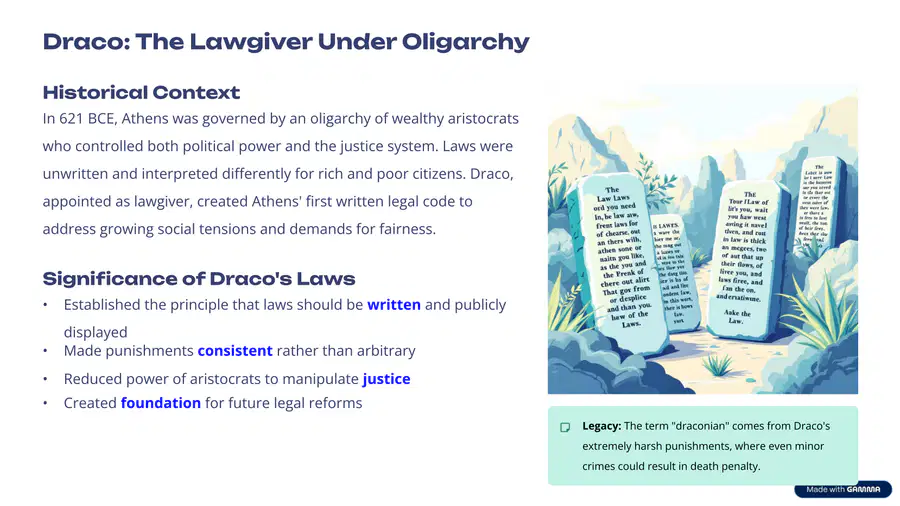
What principle did Draco's laws establish regarding the display of laws?

1

Laws should be secret

2

Laws should be unwritten

3

Laws should be displayed publicly

4

Laws should be interpreted differently

9

media

10

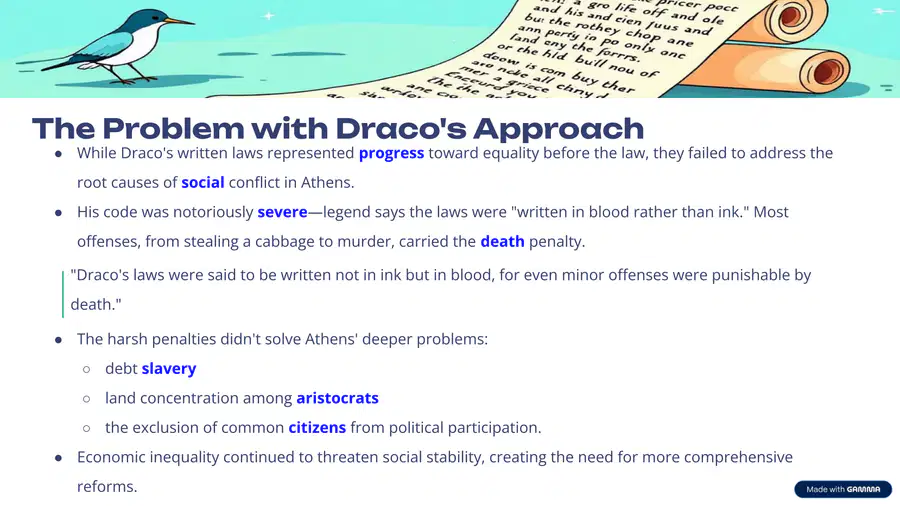
Multiple Choice

What were the main issues with Draco's laws in Athens?

1

They were too lenient

2

They addressed social conflict

3

They were written in blood

4

They solved economic inequality

11

media

12

Multiple Select

What were the key reforms implemented by Solon in Athens?

1

Seisachtheia

2

Council of 400

3

Prohibited debt slavery

4

Created classes based on birth

13

media

Page 102

14

media

15

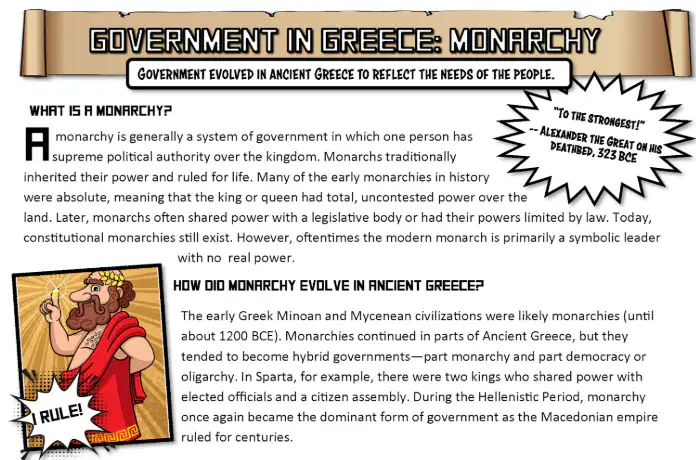
Multiple Select

Question image

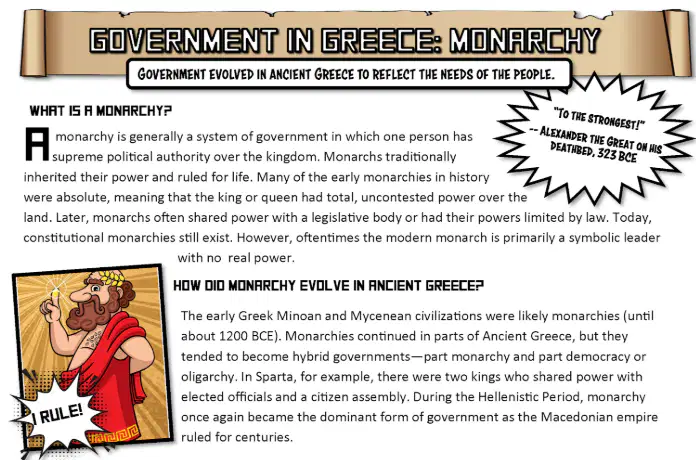
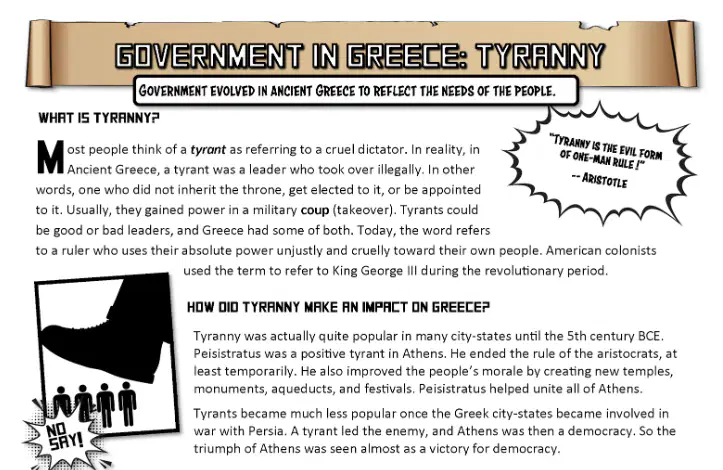
Two main characteristics of this government

1

inherited power and ruled for life

2

overlapped with other forms of government

3

total, uncontested power

4

small group of elites

16

Multiple Choice

Question image

How did this government change overtime in order to better suit the needs of the Ancient Greeks?

1

Wealthy people demanded more power, and reforms were made to improve life.

2

Ended the rule of aristocrats, but became less popular after the war with Persia

3

Evolved into a hybrid form of government

4

Citizens gained more rights and responsibilities

17

media

18

Multiple Select

Question image

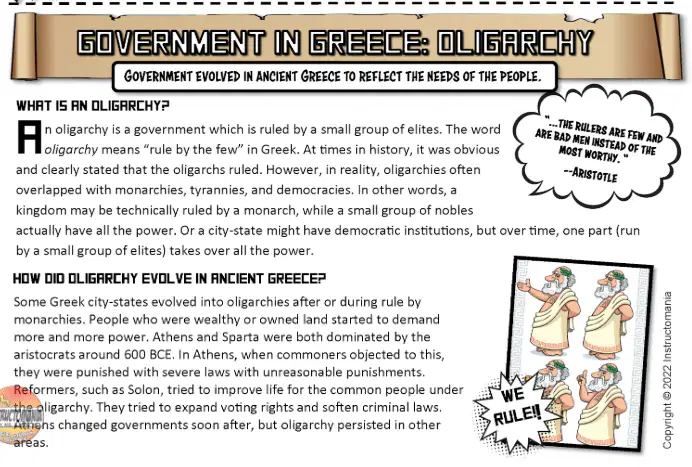
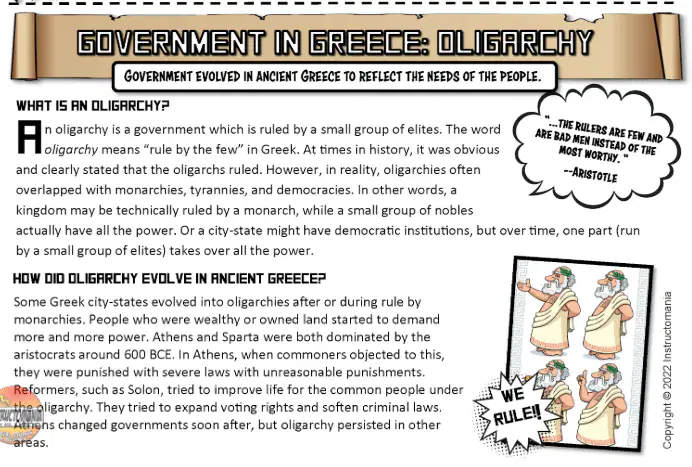
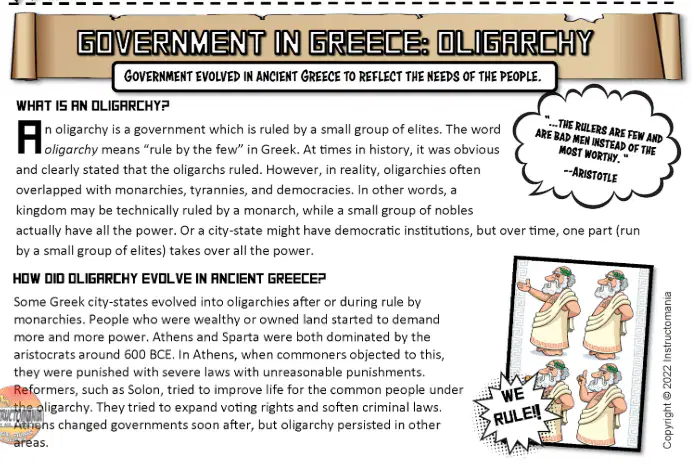
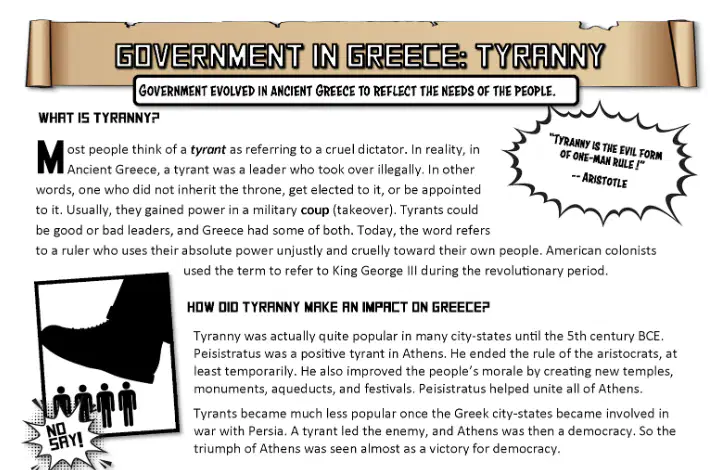
Two main characteristics of this government

1

inherited power and ruled for life

2

overlapped with other forms of government

3

total, uncontested power

4

small group of elites

19

Multiple Choice

Question image

How did this government change overtime in order to better suit the needs of the Ancient Greeks?

1

Wealthy people demanded more power, and reforms were made to improve life.

2

Ended the rule of aristocrats, but became less popular after the war with Persia

3

Evolved into a hybrid form of government

4

Citizens gained more rights and responsibilities

20

media

21

Multiple Select

Question image

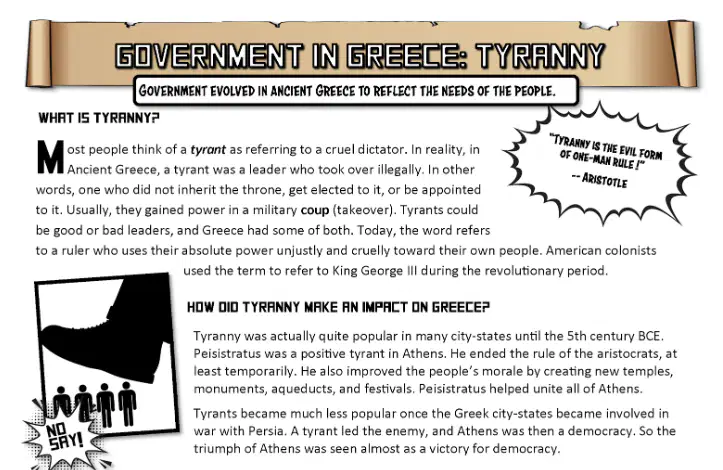
Two main characteristics of this government

1

took power illegally

2

gained power through millitary conquest

3

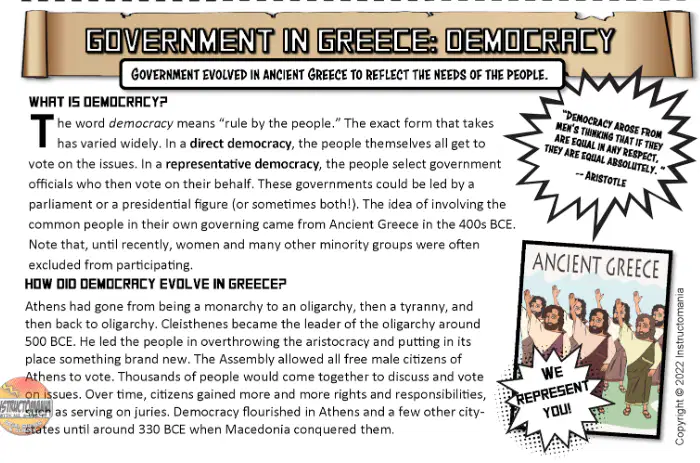
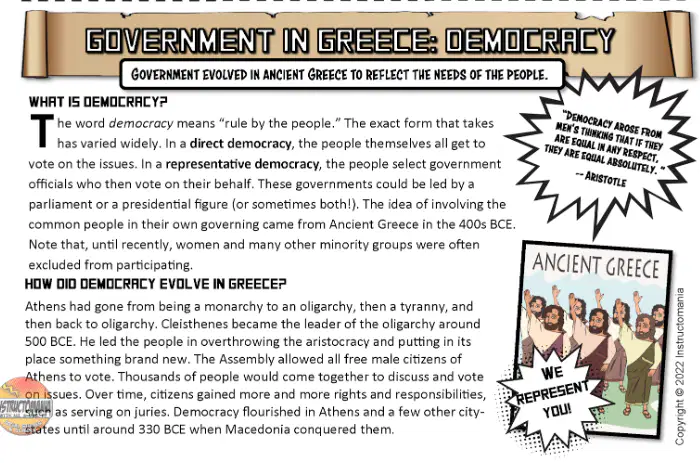
people vote on issues

4

common people involved in governing

22

Multiple Choice

Question image

How did this government change overtime in order to better suit the needs of the Ancient Greeks?

1

Wealthy people demanded more power, and reforms were made to improve life.

2

Ended the rule of aristocrats, but became less popular after the war with Persia

3

Evolved into a hybrid form of government

4

Citizens gained more rights and responsibilities

23

media

24

Multiple Select

Question image

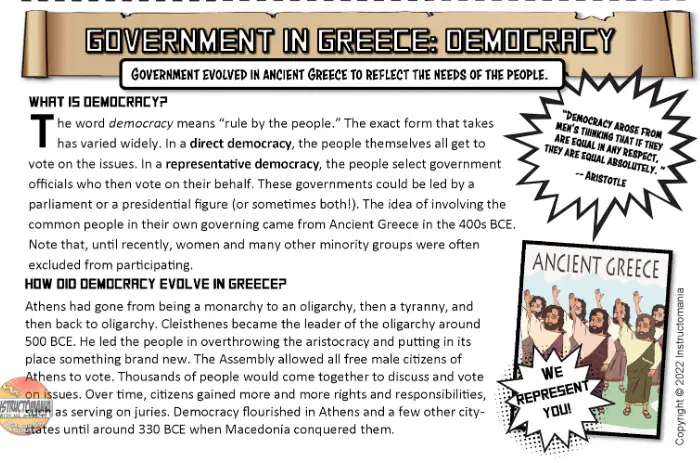
Two main characteristics of this government

1

took power illegally

2

gained power through millitary conquest

3

people vote on issues

4

common people involved in governing

25

Multiple Choice

Question image

How did this government change overtime in order to better suit the needs of the Ancient Greeks?

1

Wealthy people demanded more power, and reforms were made to improve life.

2

Ended the rule of aristocrats, but became less popular after the war with Persia

3

Evolved into a hybrid form of government

4

Citizens gained more rights and responsibilities

Rupert Matthews is an English author and politician. He has written over 200 books on history. The following is an excerpt from his book The Battle of Thermopylae: A Campaign in Context, published in 2006.

media

Show answer

Auto Play

Slide 1 / 25

SLIDE