Untitled Presentation
Presentation
•
Biology
•
University
•
Practice Problem
•
Hard
Gf Putri duyung
FREE Resource
33 Slides • 21 Questions
1
2
Open Ended
Increased food production is essential to feed the growing human population. Some experts suggest that technology will be the answer. One application of technology is to clone a single plant to produce large numbers of it to grow as a single crop.
Explain how using cloning to produce a single crop could actually lead to a loss of the entire crop.
3
4
Multiple Choice
What significant discovery was made in 1978 regarding stem cells?
Stem cells can form all types of blood cells
Stem cells are only found in embryos
Stem cells cannot regenerate
Stem cells are only present in adults
5
6
Multiple Choice
The diagram shows an unidentified cell and its potential paths of differentiation. How is it possible for this to occur?
Each cell contains different activated gene sequences in the DNA.
Each cell contains amino acids that direct the traits displayed.
Each cell contains amino acids that are unique to the cell.
Each cell contains different strands of DNA chromosomes.
7
8
Multiple Choice
Which of the following is true about cell differentiation?
Different cells contain different DNA, which leads to specialization
All cells eventually reach G0 and stop dividing
Different cells have the same DNA, but express different genes--leading to specialization
Even though a cell is differentiated, it can always turn into another cell type
9
10
Multiple Choice
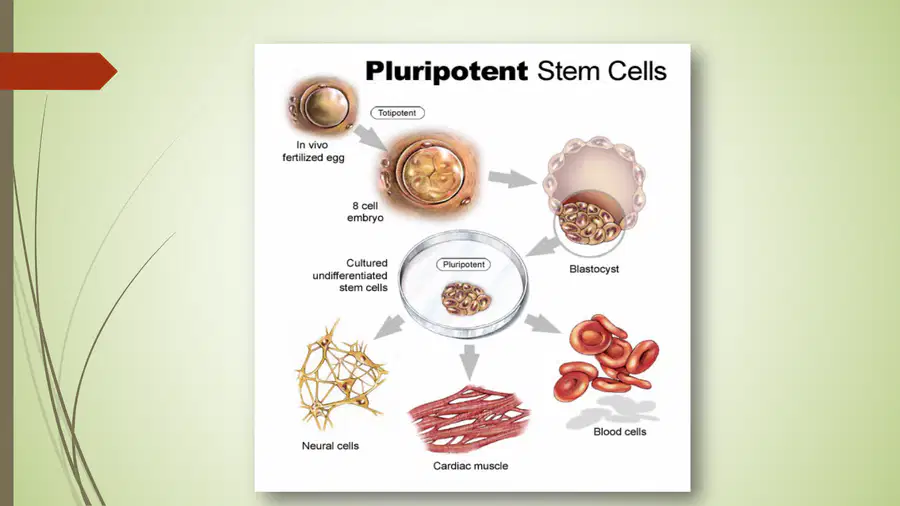
What are the four types of stem cells represented in the diagram?
Totipotent
Pluripotent
Multipotent
Unipotent
11
12
13
Reorder
Reorder the following
zygote
morula
blastula
gastrula
14
15
16
Multiple Choice
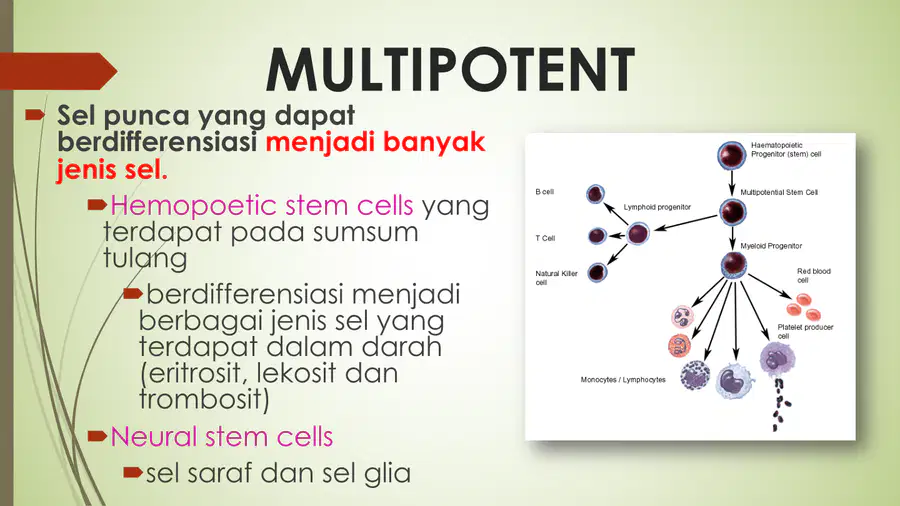
What are the types of cells that multipotent stem cells can differentiate into?
B cells
T cells
Natural Killer cells
All of the above
17
18
Multiple Choice
When a stem cell divides, it produces two daughter cells. One daughter cell will remain a stem cell, while the other daughter cell will differentiate into a specialized cell. Which factor will most directly determine what type of specialized cell will be produced?
The size of the cell
The length of the cell cycle
The number of chromosomes that are replicated
The genes that are expressed
19
20
21
Multiple Choice
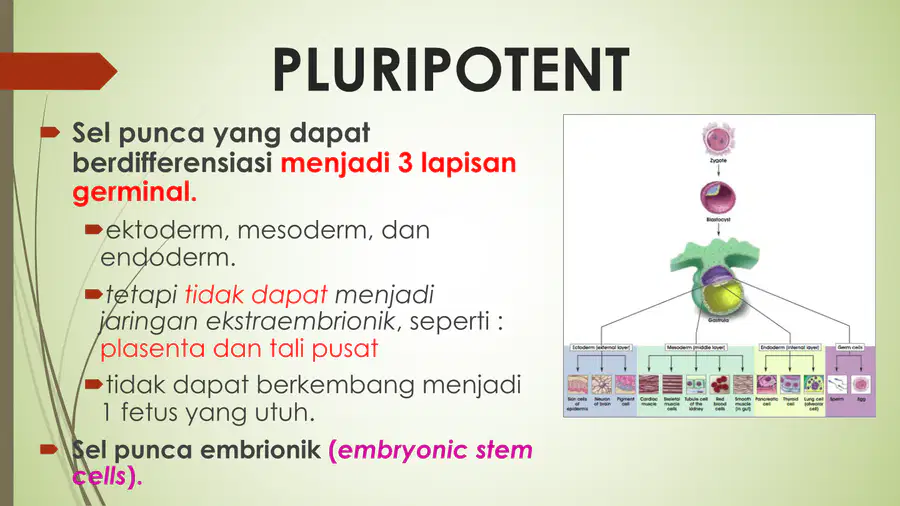
What are the three germ layers that pluripotent stem cells can differentiate into?
Ectoderm
Mesoderm
Endoderm
All of the above
22
23
Multiple Choice
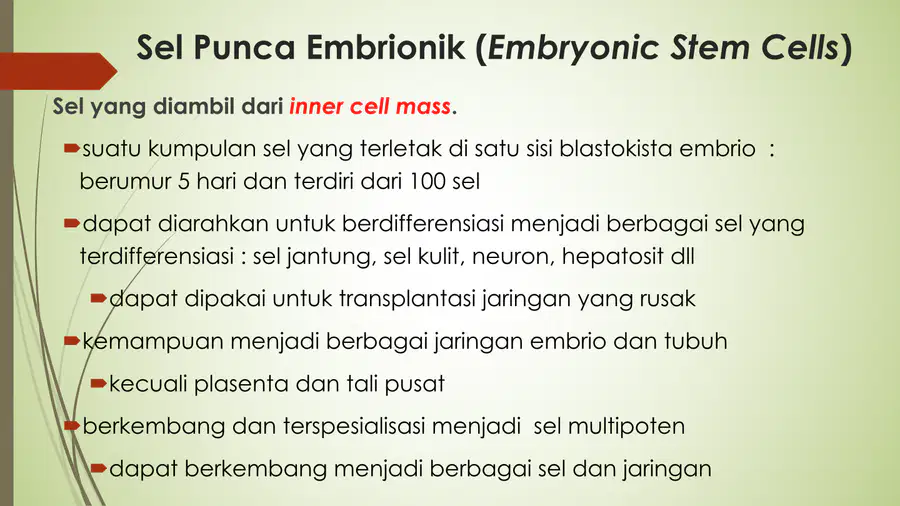
What are the characteristics of embryonic stem cells as represented in the diagram?
Immortal
Normal Karyotype
Tumorigenic
Allogenic
24
25
Multiple Choice
What does it mean for a cell to be immortal?
It can age and die
It can differentiate into any cell type
It can replicate indefinitely
It can only survive in specific conditions
26
27
Multiple Choice
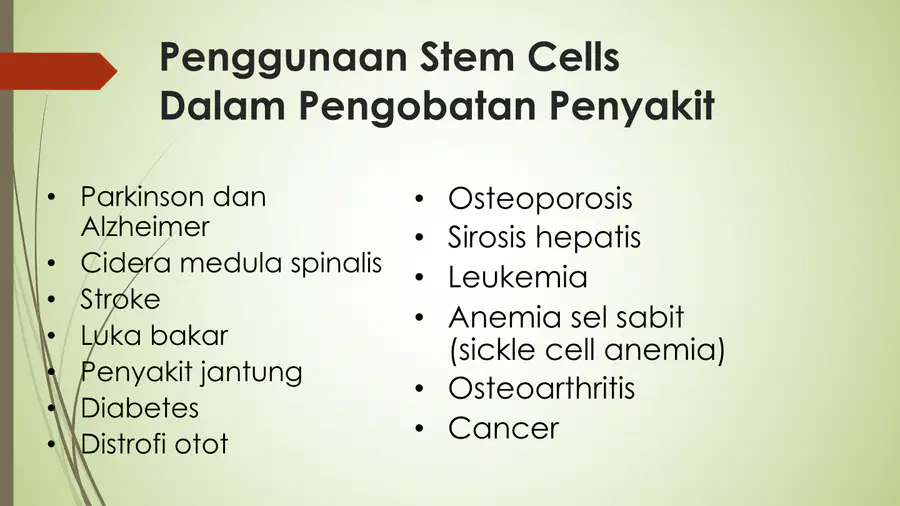
What are the applications of stem cells in medicine?
Somatic Cell Nuclear Transfer (SCNT)
Research to study biological processes in organisms
Research to discover and develop new drugs
Cell-based therapy
28
29
30
Multiple Choice
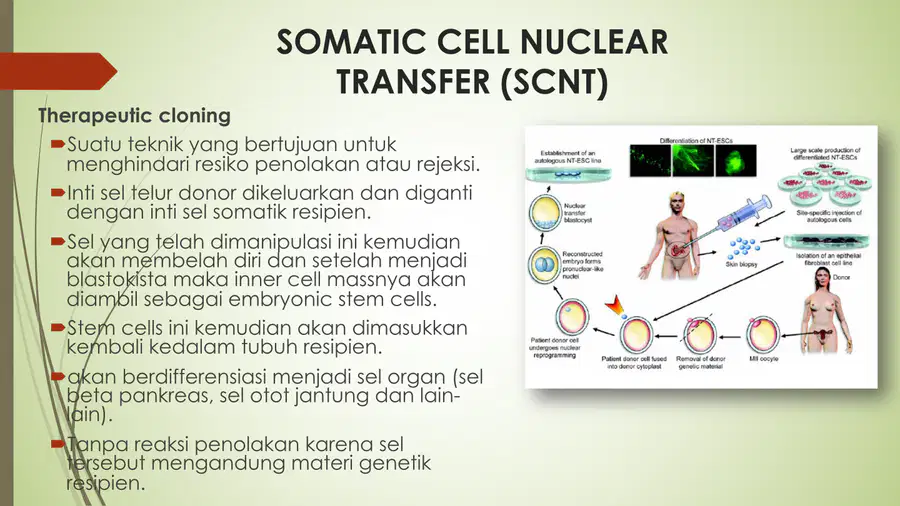
What is the purpose of therapeutic cloning as described in the image?
To create identical organisms
To avoid rejection risks
To produce more stem cells
To clone animals for research
31
32
Multiple Choice
What are the two main areas of research mentioned for studying biological processes in organisms?
Growth and development of organisms
Growth and development of cancer
Effects of drugs on various networks
Development of new drugs
33
34
Multiple Choice
Which characteristic of stem cells makes them useful for treating Stargardt’s disease?
They can differentiate into retinal cells.
They are readily available from especially created embryos.
They transport white blood cells to the eyes.
They divide by binary fission so provide sufficient cells.
35
36
Multiple Choice
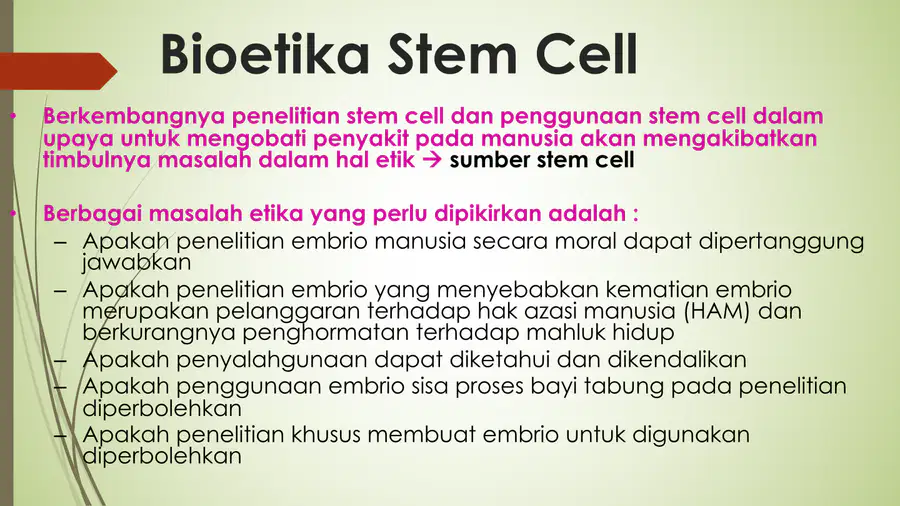
What are the ethical issues that need to be considered regarding stem cell research?
Moral accountability of human embryo research
Violation of human rights
Misuse of stem cells
Permissibility of embryo use
37
38
Multiple Choice
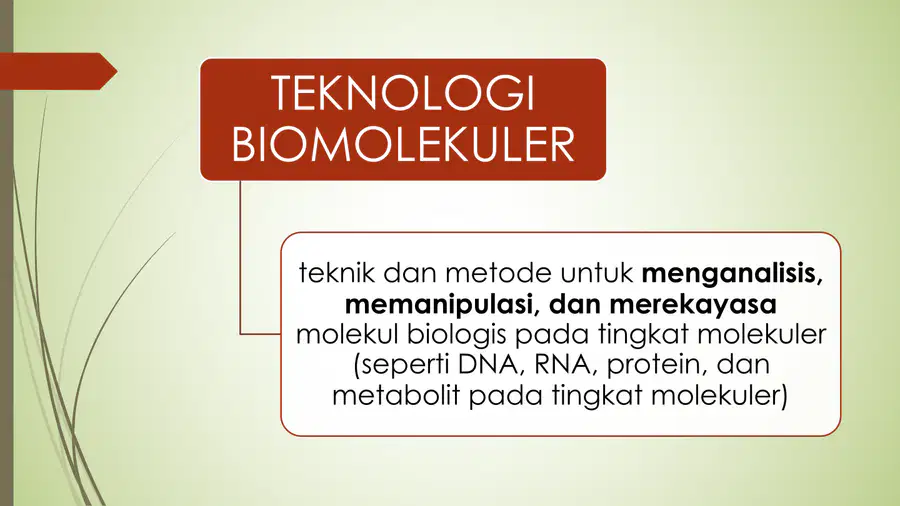
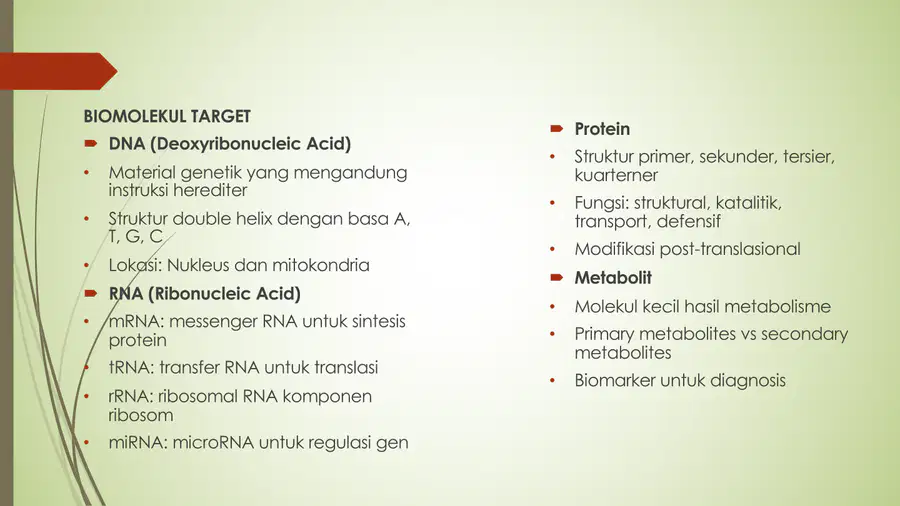
What are the techniques and methods used for analyzing, manipulating, and engineering biological molecules at the molecular level?
DNA analysis
RNA manipulation
Protein engineering
Metabolite synthesis
39
40
41
Multiple Choice
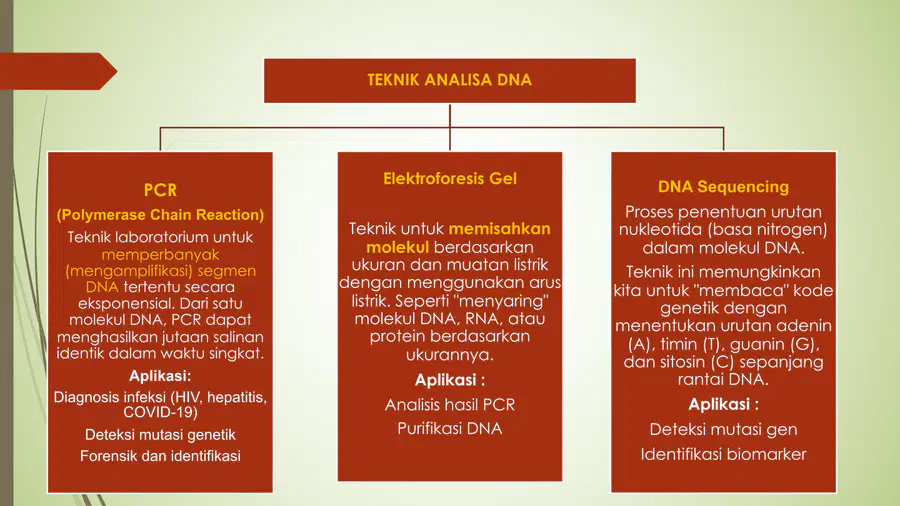
The photograph shows a laboratory investigator examining samples of DNA in a procedure called PCR, or polymerase chain reaction. Using PCR, the investigator can create thousands or even millions of copies of a fragment of DNA for closer investigation. In which of these situations would PCR be most useful?
When only a small amount of DNA is available, such as at a crime scene
When the DNA of identical twins is being mapped
When the genome of a population is being analyzed for preventable diseases
When the blood type of a DNA donor is known
42
43
Multiple Choice
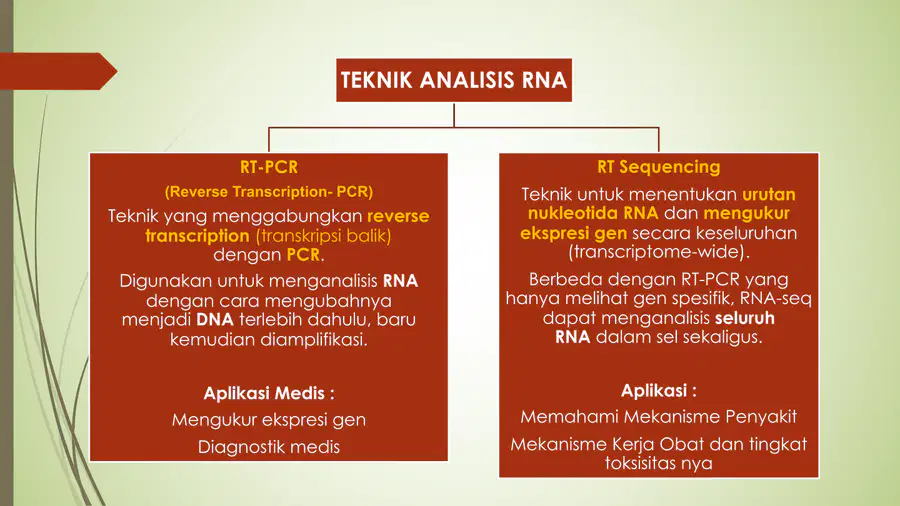
What is the main difference between RT-PCR and RT Sequencing?
RT-PCR analyzes specific genes
RT Sequencing analyzes all RNA
RT-PCR is used for diagnostics
RT Sequencing is faster
44
45
46
Multiple Choice
What is a potential risk of using viral vectors in gene therapy?
They can cause allergic reactions.
They may integrate randomly into the genome, possibly causing cancer.
They can only carry very small genes.
They are less efficient than non-viral vectors.
47
48
49
50
51
52
53
54
Poll
How confident do you feel about this topic now?
Show answer
Auto Play
Slide 1 / 54
SLIDE

Similar Resources on Wayground
50 questions
9/6 Virus Structure and Reproduction
Presentation
•
12th Grade
46 questions
Musical Instruments
Presentation
•
University
48 questions
Enzyme
Presentation
•
12th Grade
48 questions
Genes to proteins
Presentation
•
12th Grade
51 questions
Human Biology - Chapter 11 - The Nervous System
Presentation
•
University
50 questions
U1L7 Nitrogen WG APES
Presentation
•
12th Grade - University
48 questions
Chapter 18 - Endocrine System
Presentation
•
University
Popular Resources on Wayground
20 questions
Math Review
Quiz
•
3rd Grade
15 questions
Fast food
Quiz
•
7th Grade
20 questions
Context Clues
Quiz
•
6th Grade
20 questions
Inferences
Quiz
•
4th Grade
19 questions
Classifying Quadrilaterals
Quiz
•
3rd Grade
20 questions
Figurative Language Review
Quiz
•
6th Grade
20 questions
Equivalent Fractions
Quiz
•
3rd Grade
10 questions
Identify Fractions, Mixed Numbers & Improper Fractions
Quiz
•
3rd - 4th Grade