Nuclear Applications notes and review
Presentation
•
Science
•
9th - 12th Grade
•
Easy
+6
Standards-aligned
STEPHANIE SLUSS
Used 3+ times
FREE Resource
9 Slides • 21 Questions
1
2
3
4
Multiple Choice
What are the key differences between fission and fusion in nuclear chemistry?
Fission involves splitting atoms, while fusion involves combining them.
Fission releases energy, while fusion does not.
Fission occurs in stars, while fusion occurs in nuclear reactors.
Fission is a natural process, while fusion is artificial.
5
Drag and Drop
To power itself, the sun is constantly generating a nuclear reaction in its core, in which hydrogen nuclei are combined to form helium. This process is known as
6
Multiple Choice
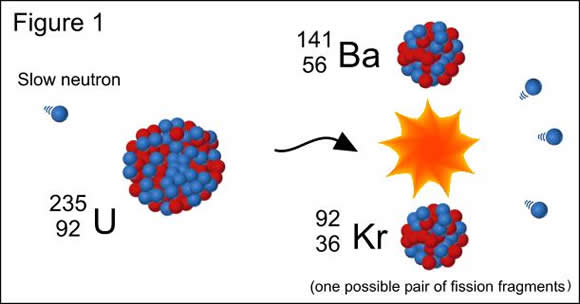
What is the process that occurs in fission reactions?
Atoms combine to form heavier atoms
Heavy atoms break apart into lighter atoms
Atoms remain unchanged
Atoms are destroyed
7
Multiple Choice
In fusion reactions, two lighter elements combine to form a heavier one. What is the product of hydrogen fusion?
Hydrogen
Neutron
Energy
Helium
8
Multiple Choice
9
10
Multiple Choice
What is the process through which Nuclear Power is generated?
Fission of Uranium-235
Fusion of Uranium-238
Combustion of Coal
Solar Energy Conversion
11
Multiple Choice
12
13
Multiple Select
What are the positives and negatives of nuclear power?
Uses fewer resources
Creates air pollution
Produces greenhouse gases
Danger of accidents
14
Multiple Choice
What does 99Tc do in nuclear medicine?
Locates cancerous tumors
Detects thyroid diseases
Used on many different internal organs
Introduces radioactive isotopes
15
16
Multiple Choice
What is the role of 32P in nuclear medicine?
It detects thyroid diseases
It is used on many internal organs
It locates cancerous tumors
It is used for isotope scanning
17
18
Multiple Choice
What is the primary purpose of radiotherapy in nuclear medicine?
To kill all cells indiscriminately
To kill rapidly dividing cells like cancer
To enhance the growth of tumors
To prevent radiation sickness
19
Now try these review questions
Please use your journal as needed
You will be reviewing Radiation and the particles that are important to this process
20
Multiple Choice
When {238} U {92} becomes {234} Th {90}, what type of decay has taken place?
alpha
beta
gamma
positron
21
Multiple Choice
Which of the following is composed of high-energy electromagnetic radiation?
alpha particles
beta particles
gamma rays
x-rays
22
Multiple Select
Which statements are true about fission? Two answer choices are required.
Fission occurs in the sun.
Fission is used in nuclear power plants.
Fission occurs when a heavier nucleus splits into light nuclei.
Fission occurs when light nuclei combine to form a heavier nucleus.
23
Multiple Choice
Which of these is a high-energy electron?
beta particle
helium nucleus
alpha particle
positron
24
Multiple Choice
_____ use the large release of energy associated with nuclear fission to generate electrical power.
Nuclear power plants
Radiation therapies
Diagnostic imaging
Nuclear energy
25
Multiple Choice
Gamma radiation causes _____ in atomic mass of an atom.
a gain
a loss
no change
26
Multiple Choice
Which process occurs by the combining of atomic nuclei?
decay
fission
denaturation
fusion
27
Multiple Choice
What type of radiation is most difficult to block?
alpha particles
beta particles
gamma rays
x-rays
28
Multiple Choice
Which of these has a structure that is identical to that of an alpha particle?
helium-3 nucleus
helium-4 nucleus
hydrogen-2 nucleus
hydrogen-3 nucleus
29
Multiple Choice
What type of decay has taken place when iodine-131 becomes xenon-131?
gamma
positron
alpha
beta
30
Finished?
Happy with score, go to canvas and complete review games
Not happy with score? You can retake
Show answer
Auto Play
Slide 1 / 30
SLIDE

Similar Resources on Wayground
21 questions
Nuclear
Presentation
•
10th - 12th Grade
27 questions
Cold War Test Review
Presentation
•
9th - 12th Grade
24 questions
Work And Energy
Presentation
•
9th - 12th Grade
23 questions
Simulasi Psikotes
Presentation
•
KG
24 questions
Mitosis Interactive Presentation
Presentation
•
9th - 12th Grade
24 questions
Discovering New Worlds Notes
Presentation
•
9th - 12th Grade
22 questions
Bio 14.4 LESSON Mutation
Presentation
•
9th Grade - University
20 questions
Physical Science Part 2: Exothermic, Energy sources
Presentation
•
9th - 12th Grade
Popular Resources on Wayground
10 questions
5.P.1.3 Distance/Time Graphs
Quiz
•
5th Grade
10 questions
Fire Drill
Quiz
•
2nd - 5th Grade
20 questions
Equivalent Fractions
Quiz
•
3rd Grade
22 questions
School Wide Vocab Group 1 Master
Quiz
•
6th - 8th Grade
20 questions
Main Idea and Details
Quiz
•
5th Grade
20 questions
Context Clues
Quiz
•
6th Grade
20 questions
Inferences
Quiz
•
4th Grade
12 questions
What makes Nebraska's government unique?
Quiz
•
4th - 5th Grade
Discover more resources for Science
10 questions
Exploring the Layers of the Earth
Interactive video
•
6th - 10th Grade
25 questions
Naming Ionic and Covalent Compounds
Quiz
•
9th Grade
20 questions
Balancing Chemical Equations
Quiz
•
9th Grade
15 questions
Protein synthesis
Quiz
•
9th Grade
20 questions
Human Impact on the Environment Review #2
Quiz
•
9th Grade
20 questions
Newton's Laws of Motion
Quiz
•
9th Grade
20 questions
Mendelian Genetics Review
Quiz
•
9th Grade
16 questions
Balancing Chemical Equations and Types of Reactions
Quiz
•
9th - 10th Grade