
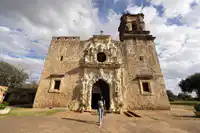
7th Grade Mission life

Presentation
•
Social Studies
•
7th Grade
•
Practice Problem
•
Easy

Daniel Cisneros
Used 1+ times
FREE Resource
10 Slides • 9 Questions
1
By Daniel Cisneros
2
Life in the missions and settlements was complex because different groups living in the same small area had different needs and viewpoints. Sometimes those needs conflicted. The friars were interested in converting Native Americans to Christianity and a Spanish way of life. Many Native Americans, however, had no interest in becoming Christians or giving up their ways of life. However, some did adapt to a life of work and prayer at the missions.
3
4
Friar's Responsibilities In the mission
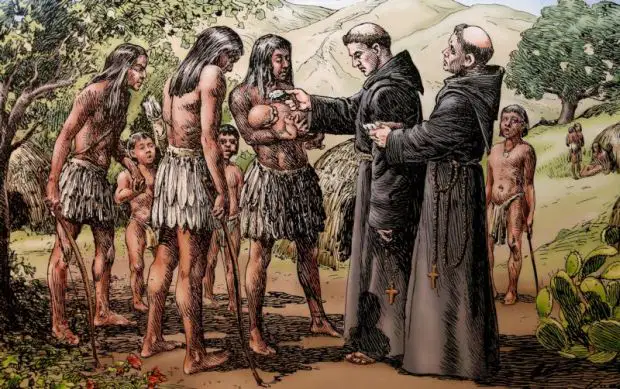
In order to carry out their duty, friars left their homeland to spread their religion in a foreign land. Their daily lives were routined and well ordered. They had set times of day to pray, eat, relax, and study.
It was the job of the friars to bring Native Americans into the mission so they would adopt its routine of work, prayer, and meals. Friars were expected to teach Native Americans the Spanish language and Spanish customs, farming and ranching, as well as trades such as masonry, blacksmithing, pottery making, and weaving. Most importantly, mission friars were expected to make the Native American people accept the Catholic religion as their own and be baptized. Friars also provided for the religious needs of soldiers in the presidio and the Spanish settlers.
5
6
Open Ended
What are four things friars were expected to do?
7
Native Americans were not forced to live at a mission. Many agreed to for protection from their enemies. At times they might leave the mission to take part in traditional practices, such as their own cultural events, hunting, or trading with other Native Americans. However, while there, they followed the mission routine. They began the day with prayer and religious instruction and afterward gathered for breakfast. Then it was time to work—farming, tending livestock, or learning a trade or craft. At noon they gathered for lunch, rested, and then returned to work until sundown. After more religious practice, they ate and then slept.
8
Multiple Choice
Why would native Americans move to a Mission?
For Money
For Protection
For Education
For New jobs
9
Open Ended
Describe the typical day of a Native American living in a Mission.
10
Friars and soldiers differed in their views of whether to use force or to be more accommodating with the Native Americans. The mission staff felt that the soldiers had a poor relationship with the Native Americans. This caused the presidios to be built at some distance from the mission. If the mission was under attack, though, the soldiers were then too far away to help in time. Also, this isolation could sometimes prevent the friars and the soldiers from working well together.
11
Open Ended
How did the relationship between Native Americans and soldiers impact the missions?
12
A soldier’s life alternated between excitement and boredom. His chief task was to protect the mission and settlers from attacks by the French and raids by Native Americans. Although Native Americans were not forced to enter the missions, soldiers were sometimes sent out to help bring back people or groups who left. Soldiers also conducted supply trains, escorted groups of settlers, and carried the mail. The rest of their time was spent in routine tasks, such as tending horses and maintaining the presidio. Soldiers also spent long hours on guard duty.
Soldiers’ pay was low, and it was often late due to the isolated locations of the presidios. Soldiers had to buy their own uniforms, guns, ammunition, and food. Often they paid their commanding officers for these items. The officers overcharged the soldiers, forcing them to stay in the army to pay off the debt.
13
Multiple Choice
The Main Responsibility of the Soldiers was to ____
establish trade with the British
Protect the missions from the French and Natives
Protect the missions from the British and the Natives
Establish trade with the French
14
Open Ended
What were at least 2 other responsibilities of the soldiers?
15
Open Ended
What were some negative aspects of being a soldier?
16
Settlers were often the wives and children of the soldiers. They raised livestock, and ran ranches. As settlements grew, they attracted craft workers and merchants
The Spanish colonial period is the story of Texas diversity. People of Spanish, Mexican, Native American, and African ancestry intermarried and raised children. Through language, custom, and tradition, all these cultures came to influence Texas.
People of Mexican heritage came to consider Texas home. The locations of many missions were far enough from Mexico that residents began to develop a unique culture. These Mexicans in Texas were referred to as Tejanos. Tejano culture continues to be a strong influence throughout Texas to this day.
Also among the settlers were mestizos, people of mixed Spanish and Native American heritage. There were also African Americans in Spanish colonial Texas, both enslaved and free. Some African Americans were free farmers, property owners, and tradesmen. Their cultures and experiences would also contribute to the diversity of Texas. The majority of slaves were brought to Texas in the 1800s
17
Open Ended
What were four different ethnic groups in colonial Texas?
18
Native American groups like the Coahuiltecan, were nomadic and traveled to areas to hunt and gather food. Other groups, like the Apache and Comanche, were warrior cultures. Their use of horses let them travel farther and faster and gave them advantages in battle. The main reason some Native Americans agreed to live in missions was for protection from enemies. Apache and other warrior groups were less likely to attack people within missions and protected by presidios. Missions also gave native peoples a greater and more dependable supply of food. As Native Americans adapted to mission life, they tried to maintain their own traditions, for example, by hunting and trading with other native peoples. Native American disinterest and disease were two factors in the failure of many missions. Sometimes Native Americans decided that the food and security offered by the missions did not outweigh the advantages of their traditional lifestyles. Many others became sick with European diseases imported by the Spanish. Deaths due to disease kept many missions from growing.
19
Open Ended
What were two reasons Native Americans would be attracted towards missions? What were two reasons Native Americans lost interest in the missions?
By Daniel Cisneros
Show answer
Auto Play
Slide 1 / 19
SLIDE
Similar Resources on Wayground

14 questions
French and Indian War
Presentation
•
7th Grade
14 questions
Applying the Five Themes of Geography
Presentation
•
7th Grade
15 questions
The Renaissance
Presentation
•
7th Grade
15 questions
Types of Elections
Presentation
•
7th Grade
14 questions
Government Systems of SW Asia DT #2 Re-Performance Lesson
Presentation
•
7th Grade
15 questions
Day 3 Convention of 1836
Presentation
•
7th Grade
14 questions
Economics Trade Barriers
Presentation
•
6th - 7th Grade
14 questions
Texas Revolution
Presentation
•
7th - 8th Grade
Popular Resources on Wayground
10 questions
How much do you know about our Portrait of an Eagle?

Quiz
•
10th Grade
10 questions
Fast Food Slogans
Quiz
•
6th - 8th Grade
21 questions
Continents and Oceans
Quiz
•
6th Grade
20 questions
Parts of Speech
Quiz
•
5th Grade
16 questions
Subject & Predicate
Quiz
•
5th Grade
25 questions
Multiplication Facts
Quiz
•
5th Grade
12 questions
Map Skills
Quiz
•
3rd Grade
22 questions
Continents and Oceans
Quiz
•
5th Grade
Discover more resources for Social Studies
10 questions
Exploring the Age of Exploration: Key Events and Figures

Interactive video
•
6th - 10th Grade
13 questions
13 Colonies Map Quiz
Quiz
•
6th - 8th Grade
19 questions
Unit 3 Spanish Colonial Era
Quiz
•
7th Grade
10 questions
Pillars of Free Enterprise
Quiz
•
6th - 8th Grade
26 questions
QA 1 Review
Quiz
•
6th - 8th Grade
10 questions
Exploring the 13 Colonies Regions
Interactive video
•
6th - 10th Grade
21 questions
ss.7.cg.1.1- Ancient Influences
Quiz
•
7th Grade
21 questions
Unit 2 Age of Contact 7th gr
Quiz
•
7th Grade