Search Header Logo
FINAL Study Guide (Ch 3.3)

FINAL Study Guide (Ch 3.3)

Assessment

Presentation

Science

6th - 8th Grade

Easy

NGSS
HS-LS1-4, MS-LS1-6, HS-LS1-7

+27

Standards-aligned

Created by

Victor Castillo

Used 2+ times

FREE Resource

20 Slides • 116 Questions

1

​FINAL Study Guide (Photosynthesis, Cellular Respiration, Cell Division)

By Victor Castillo

2

Photosynthesis (ch.3.3) and
Cellular Respiration (ch.3.4)

media

3

Vocabulary Words to Know

4

Multiple Choice

Process used by plants and other autotrophs to capture light energy and use it to power chemical reactions that convert carbon dioxide and water into oxygen and energy-rich carbohydrates such as sugars and starches

1

Photosynthesis

2

ATP synthase

3

Calvin Cycle

4

Photosystems

5

Multiple Choice

Organism that obtains food by consuming other living things; also called a consumer

1

Autotroph

2

Heterotroph

3

Chlorophyll

4

Stroma

6

Multiple Choice

Compound used by cells to store and release energy

1

ATP

2

ATP synthase

3

Stroma

4

NADP+

7

Multiple Choice

Principal pigment of plants and other photosynthetic organisms

1

Stroma

2

Chlorophyll

3

NADP+

4

ATP

8

Multiple Choice

A chemical reaction in autotrophs, including plants, that allows them to make their own food.

1

algae

2

enzyme

3

producer

4

photosynthesis

9

Multiple Choice

The chemical reaction of photosynthesis takes place in the _______ of the plant cell.

1

nucleus

2

chloroplast

3

carbon dioxide

4

cell wall

10

Drag and Drop

Living things that can make their own food are called ​
or ​
.
Drag these tiles and drop them in the correct blank above
autotrophs
producers
bacteria
stem cells
heterotrophs

11

Dropdown

Photosynthesis uses ​
from the sun, ​
from the air and ​
to produce the sugar they need for energy.

12

Multiple Choice

The green pigment in plants that aids in the photosynthesis reaction is called __

1

chlorophyll

2

chloroplast

3

stomata

4

cytoplasm

13

Multiple Choice

The sugar produced through photosynthesis is sent to the plant cell's ______ to make ATP.

1

nucleus

2

Golgi apparatus

3

mitochondria

4

chloroplast

14

Multiple Choice

Question image
__________ energy from the sun is changed intto __________ energy during photosynthesis
1
Chemical energy to light energy
2
Light energy to chemical energy
3
Thermal energy to light energy
4
Electrical energy to chemical enerfy

15

Multiple Choice

Question image

The openings that are found in the leaves of plants are called:

1

Stomata

2

Chlorophyll

3

Xylem

4

Chloroplast

16

Multiple Choice

The process of photosynthesis takes place in the:

1

Leaves of the Plant.

2

Stem of the plant.

3

Roots of the plant.

4

All of the above.

17

Multiple Choice

Question image
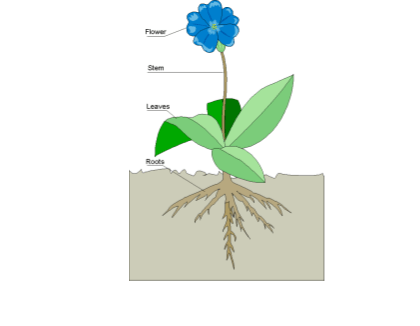
Which plant part absorbs water and nutrients?
1
Leaf
2
Stem
3
Roots
4
Flower

18

Multiple Choice

Question image
Which plant part collects the sun's energy and makes food?
1
Leaf
2
Stem
3
Roots
4
Flower

19

Multiple Choice

Question image
What is the name of the green pigment inside plants?
1
Monophyll
2
Chlorophyll
3
Epiphyll
4
Glorophyll

20

Match

Match the following

any substance formed in a chemical reaction

any substance that undergoes chemical change in a reaction

the process by which light energy, carbon dioxide and water are converted to glucose, and oxygen is released

an organic molecule referred to as a simple sugar, simple carbohydrate or monosaccharide

a substance present in all living cells that provides energy for many metabolic processes

product

reactant

photosynthesis

glucose

ATP

21

Match

Match the following

a product of respiration and reactant of photosynthesis, it is present in air and produced by burning organic compounds

a cell organelle that produces energy for the cell; the site of cellular respiration

stored energy

the process by which the cell produces energy, or ATP

makes up 21% of the Earth's atmosphere, and is a product of photosynthesis and a reactant of respiration

carbon dioxide

mitochondria

chemical energy

cellular respiration

oxygen

22

Photosynthesis (ch.3.3) and
Cellular Respiration (ch.3.4)

media

23

Formula of Photosynthesis:


Photosynthesis occurs in Chloroplast.
The process of photosynthesis takes place in the chloroplasts, specifically using chlorophyll, the green pigment involved in photosynthesis.

Chlorophyll has the ability to trap the sun's energy, and use it to rearrange those carbon dioxide and water molecules into the glucose.

media
media
media

24

PHOTOSYNTHESIS is the process whereby plants, algae, some bacteria, use the energy of the sun to synthesize organic compounds (sugars) from inorganic compounds (CO2 and water).


Photosynthesis is coined into two Greek words:

   PHOTO = produced by light 

SYNTHESIS = a whole made of parts put together.

media
media

25

CELLULAR RESPIRATION
is the process where nutrients (glucose) are broken apart and ENERGY is released.

Formula of Cellular Respiration


Cellular Respiration

1. Aerobic Respiration: total breakdown of glucose with help of oxygen to produce ATP (energy)

It Occurs in cytoplasm and mitochondria of cells


media
media
media

26

Multiple Choice

What happens during photosynthesis?

1

The cell uses oxygen to make food.

2

The cell uses the energy in sunlight to make glucose (sugar).

3

The cell uses glucose to make oxygen.

4

The cell uses the energy in sunlight to make carbon dioxide.

27

Multiple Choice

How does photosynthesis benefit heterotrophs?

1

It adds carbon dioxide to the air.

2

It creates food that they can eat.

3

It eliminates harmful sugars.

4

It creates clean water.

28

Multiple Choice

What captures energy from sunlight during photosynthesis?

1

solar cells

2

stomata

3

chlorophyll and other pigments

4

carbohydrates

29

Multiple Choice

The process that provides energy for cells without using oxygen is

1

hydration

2

fermentation

3

carbonation

4

respiration

30

Multiple Choice

What happens during cellular respiration?

1

Oxygen is released into the air.

2

Glucose is broken down to release energy.

3

Carbohydrates are released into the bloodstream.

4

Water and Carbon Dioxide are converted into energy.

31

Multiple Choice

Which of the following needs oxygen to survive?

1

plants

2

animals

3

plants and animals

4

none of the above

32

Multiple Choice

Question image

The graph shows how dissolved O2 and CO2 levels changed in a pond over 24 hours. The dissolved CO2 level is high at night and low during the day. The dissolved O2 level is low at night and high during the day. Which of the following causes the dissolved O2 concentration to decrease during the night?

1

Decreased temperature during the night

2

Decreased photosynthesis during the night

3

Increased temperature during the day

4

Increased respiration during the day

33

Multiple Choice

Which of the following are the raw materials for cellular respiration?

1

6CO2 + 6H2O

2

6H2O + 6O2

3

C6H12O6 + 6O2

4

C6H12O6 + 6H2O

34

Multiple Choice

Which of the following are the products of cellular respiration?

1

6CO2 + 6H2O + energy

2

6H2O + 6O2 + energy

3

C6H12O6 + 6O2 + energy

4

C6H12O6 + 6H2O + energy

35

Multiple Choice

Compare/Contrast Photosynthesis and Respiration - Fill in the following table with the correct phrase or term(s).

1

Purpose: Photosynthesis: To convert light energy into chemical energy (glucose); Cellular Respiration: To release energy from glucose Takes place in which type of cells? Photosynthesis: Plant cells (and some algae); Cellular Respiration: both plants and animal cells. Takes place in which cell organelle? Photosynthesis: Chloroplast; Cellular Respiration: Mitochondria

2

Purpose: Photosynthesis: To break down glucose for energy; Cellular Respiration: To create glucose from energy Takes place in which type of cells? Photosynthesis: Animal cells only; Cellular Respiration: Plant cells only Takes place in which cell organelle? Photosynthesis: Mitochondria; Cellular Respiration: Chloroplast

3

Purpose: Photosynthesis: To convert chemical energy into light energy; Cellular Respiration: To store energy in glucose Takes place in which type of cells? Photosynthesis: All eukaryotic cells; Cellular Respiration: Only prokaryotic cells Takes place in which cell organelle? Photosynthesis: Nucleus; Cellular Respiration: Ribosome

4

Purpose: Photosynthesis: To release energy from glucose; Cellular Respiration: To convert light energy into chemical energy Takes place in which type of cells? Photosynthesis: Animal cells; Cellular Respiration: Plant cells Takes place in which cell organelle? Photosynthesis: Ribosome; Cellular Respiration: Nucleus

36

Multiple Choice

Write out the full chemical equation for photosynthesis using symbols:

1

6CO₂ + 6H₂O → C₆H₁₂O₆ + 6O₂

2

C₆H₁₂O₆ + 6O₂ → 6CO₂ + 6H₂O

3

CO₂ + H₂O → CH₄ + O₂

4

6CO₂ + 12H₂O → C₆H₁₂O₆ + 12O₂

37

Multiple Choice

Select the full chemical equation for cellular respiration using symbols:

1

C6H12O6 + 6O2 → 6CO2 + 6H2O + energy

2

6CO2 + 6H2O → C6H12O6 + 6O2

3

C6H12O6 + 6CO2 → 6O2 + 6H2O + energy

4

C6H12O6 + 6O2 → 6H2O + 6CO2

38

Labelling

Identify the directions indicated by the arrows pointing to the leaf.
Drag labels to their correct position on the image
Glucose
Water
Oxygen
Carbon dioxide

39

Multiple Choice

The processes of photosynthesis and cellular respiration can be considered a cycle because:

1

the products of one process are the reactants of the other

2

they both occur only in plants

3

they both require sunlight to function

4

they both produce oxygen as a main product

40

Multiple Choice

Stomata are ________, found mainly on the surfaces of leaves, that regulate gas exchange and water loss, making them essential for plant survival.

1

tiny openings

2

large roots

3

flower petals

4

woody stems

41

Multiple Choice

Animals don’t make food from energy in sunlight because they are ______________________. (fill in the blank) Do animals still depend on the sun for energy? Explain why or why not.

1

heterotrophs. Yes, animals still depend on the sun for energy because they eat plants or other animals that eat plants, and plants get their energy from the sun.

2

autotrophs. No, animals do not depend on the sun for energy because they produce their own food.

3

producers. Yes, animals depend on the sun for energy because they directly absorb sunlight.

4

decomposers. No, animals do not depend on the sun for energy because they get energy from breaking down dead matter.

42

Multiple Choice

Oxygen is essential to humans, but not carbon dioxide, because:

1

Oxygen is required for cellular respiration, while carbon dioxide is a waste product.

2

Carbon dioxide is needed for energy production, while oxygen is not.

3

Oxygen is harmful to humans, while carbon dioxide is beneficial.

4

Both oxygen and carbon dioxide are equally essential to humans.

43

Drag and Drop

Fermentation releases​ ​
energy in comparison to cellular respiration.

Drag these tiles and drop them in the correct blank above
equal
less
more
none

44

Multiple Choice

Plants get the water they need to survive through their_______

1
leaves
2
roots
3
stems
4
flowers

45

Labelling

Label the diagram

Drag labels to their correct position on the image

mitochondria

chloroplast

glucose

oxygen

water

carbon dioxide

46

Dropdown

Question image
Cellular respiration occurs in the ​

47

Hotspot

Select the organelle that performs photosynthesis.

48

Labelling

Label the image with the raw materials (reactants) & products:

Drag labels to their correct position on the image

Oxygen (O2)

Glucose (C6H12O6)

ATP

Carbon Dioxide (CO2)

49

Dropdown

Question image
Process X represents ​
which occurs in the ​
. Process Y represents ​
which occurs in the ​
. Do both plant and animals cells complete cellular respiration? ​

50

Categorize

Options (5)

glucose

oxygen

carbon dioxide

water

ATP

Question image

What are the reactants and products of cellular respiration

Reactants
Products

51

Labelling

Label the following cellular processes and equations.

Drag labels to their correct position on the image

Photosynthesis

Respiration

C6H12O6 + 6O2

6CO2 + 6H2O

52

Labelling

This image is showing Photosynthesis and Cellular Respiration. Label reactants and products of the processes shown.

Drag labels to their correct position on the image

Oxygen & Glucose

Mitochondria

Chloroplast

Sun

ATP

Water & Carbon Dioxide

53

Cell Division (Ch 3.5)

media

54

The World of Mitosis

  • Mitosis is the process of cell division that results in two identical daughter cells.

  • It is essential for growth, repair, and asexual reproduction in organisms.

55

Mitosis: Asexual Reproduction

Mitosis is a cell division process that allows organisms to reproduce asexually. It ensures that each new cell receives an identical set of chromosomes, resulting in genetically identical offspring.

56

The World of Mitosis

  • Key stages of mitosis include prophase, metaphase, anaphase, and telophase.

  • After telophase a new cell is created

57

Multiple Choice

Which statement is true about mitosis?

1

It creates a new, identical cell

2

It helps with photosynthesis

3

It is a form of sexual reproduction

58

The Cell Cycle. Watch the first 2 minutes

59

The Significance of Mitosis

  • Mitosis is a crucial process for growth, repair, and reproduction in organisms.

  • It ensures cellular division and genetic stability by producing two identical daughter cells.

60

Phases of Mitosis

media

61

Multiple Choice

Question image
During which phase of the cell cycle does the cell spend the most time?
1

Mitosis

2

Cytokinesis

3

Interphase

62

Multiple Choice

Identical cells formed during cell division are called:

1

daughter organelles

2

daughter cycles

3

daughter nucleus

4

daughter cells

63

Multiple Choice

____________ ensures that our bodies grow and repair

themselves.

1

The cell growth

2

The cell repair

3

The cell recycle

4

The cell cycle

64

Match

Match the following

Interphase

Mitosis

DNA durng Interphase

DNA during Mitosis

Cell grows, copies DNA, and does its job

Cell Division

Chromatin

Chromosomes

65

Multiple Choice

Question image

Directions: Fill in the blanks to complete the concept map for the cell cycle. Cell Cycle has three stages which are: ________, ________, ________.

1

Interphase, Mitosis, Cytokinesis

2

Prophase, Metaphase, Anaphase

3

G1, S, G2

4

Meiosis, Telophase, Anaphase

66

Multiple Choice

Question image

Fill in the blanks to complete the concept map for the cell cycle.

Interphase consists of ________ and _________

1

Growth, DNA replication

2

Cell division, protein synthesis

3

Energy production, waste removal

4

Photosynthesis, respiration

67

Multiple Choice

Question image

Directions: Fill in the blanks to complete the concept map for the cell cycle.

Mitosis consists of ______________ Division

1

Nuclear Division

2

Cell Membrane Division

3

Cytoplasmic Division

4

Organelle Division

68

Multiple Choice

Question image

Directions: Fill in the blanks to complete the concept map for the cell cycle.

Cytokinesis consists of ___________ Division

1

Cytoplasm/Cell Division

2

Nuclear Division

3

Cell Membrane Division

4

Genetic Division

69

Multiple Choice

Question image

What is the name and number of the step shown in the first image?

1

Prophase (1)

2

Metaphase (2)

3

Anaphase (3)

4

Telophase (4)

70

Multiple Choice

1. DNA is found in the ________________________ of a cell.

1

nucleus

2

cytoplasm

3

cell membrane

4

mitochondria

71

Multiple Choice

The shape of DNA is called a _____________________________.

1

double helix

2

triple helix

3

beta sheet

4

alpha spiral

72

Multiple Choice

DNA is important because:

1

it carries genetic information essential for growth and development.

2

it provides energy for cellular activities.

3

it helps in the digestion of food.

4

it controls the body's temperature.

73

Multiple Choice

Explain the base pair rule

1

Base pair rule: Adenine (A) pairs with Thymine (T), and Cytosine (C) pairs with Guanine (G).

2

Base pair rule: Adenine (A) pairs with Guanine (G), and Cytosine (C) pairs with Thymine (T).

3

Base pair rule: Adenine (A) pairs with Cytosine (C), and Thymine (T) pairs with Guanine (G).

4

Base pair rule: Adenine (A) pairs with Thymine (T), and Cytosine (C) pairs with Adenine (A).

74

Multiple Choice

DNA replication involves two main steps. Which of the following best summarizes these steps?

1

Unzipping the DNA and creating new strands

2

Transcription and translation

3

Replication and mutation

4

Splicing and editing

75

Multiple Choice

Cellular division is needed for which of the following reasons?

1

Growth, replace, reproduction, and develop

2

Energy production, movement, and digestion

3

Respiration, photosynthesis, and excretion

4

Transport, insulation, and protection

76

Multiple Choice

Describe and explain the changes a young cell will undergo as it completes the cell cycle.

1

A young cell undergoes growth, DNA replication, preparation for division, and finally divides into two daughter cells, each with identical genetic material.

2

A young cell only increases in size and does not replicate its DNA before division.

3

A young cell immediately divides without any preparation or change.

4

A young cell loses its genetic material as it moves through the cell cycle.

77

Multiple Choice

Define: Chromosomes

1

Chromosomes are thread-like structures made of DNA and proteins that carry genetic information.

2

Chromosomes are small organelles responsible for energy production in cells.

3

Chromosomes are the liquid part of the cell that surrounds the nucleus.

4

Chromosomes are structures that help in the digestion of food within the cell.

78

Multiple Choice

Define: Mitosis

1

Mitosis is the process of cell division where one cell splits to form two identical daughter cells.

2

Mitosis is the process by which cells fuse together to form a single larger cell.

3

Mitosis is the process of cell death where cells break down and are removed from the body.

4

Mitosis is the process of genetic recombination during the formation of gametes.

79

Multiple Choice

Define: Telophase

1

Telophase is the stage of cell division where the chromosomes arrive at opposite poles and two new nuclear membranes form around them.

2

Telophase is the stage of cell division where the chromosomes line up at the center of the cell.

3

Telophase is the stage of cell division where the cell splits into two daughter cells.

4

Telophase is the stage of cell division where the chromosomes condense and become visible.

80

Multiple Choice

Define: Interphase

1

Interphase is the phase of the cell cycle where the cell grows, performs its normal functions, and duplicates its DNA.

2

Interphase is the phase where the cell divides into two daughter cells.

3

Interphase is the phase where the cell undergoes mitosis.

4

Interphase is the phase where the cell dies and is replaced by a new cell.

81

Multiple Choice

Define: Metaphase

1

Metaphase is the stage of cell division where chromosomes align in the middle of the cell.

2

Metaphase is the stage where the cell splits into two identical cells.

3

Metaphase is the stage where the nuclear envelope reforms around chromosomes.

4

Metaphase is the stage where DNA is replicated.

82

Multiple Choice

Define: Nuclear membrane

1

The nuclear membrane is the double-layered structure that surrounds the nucleus in a cell, protecting its contents.

2

The nuclear membrane is the outermost layer of the cell that controls what enters and leaves the cell.

3

The nuclear membrane is a single-layered structure found only in plant cells.

4

The nuclear membrane is the part of the cell responsible for producing energy.

83

Multiple Choice

Define: Prophase

1

Prophase is the stage of cell division where chromosomes condense and the nuclear membrane breaks down.

2

Prophase is the stage where the cell splits into two identical daughter cells.

3

Prophase is the stage where DNA is replicated before cell division.

4

Prophase is the stage where the chromosomes line up in the center of the cell.

84

Multiple Choice

Define: Anaphase

1

Anaphase is the stage of cell division where sister chromatids are pulled apart to opposite sides of the cell.

2

Anaphase is the stage of cell division where chromosomes line up at the center of the cell.

3

Anaphase is the stage of cell division where the nuclear envelope reforms around chromosomes.

4

Anaphase is the stage of cell division where the cell grows and carries out normal functions.

85

Multiple Choice

Define: Cytokinesis

1

Cytokinesis is the final stage of cell division where the cytoplasm divides, resulting in two separate cells.

2

Cytokinesis is the process where chromosomes are duplicated during cell division.

3

Cytokinesis is the stage where the nuclear envelope reforms around chromosomes.

4

Cytokinesis is the initial phase of mitosis where spindle fibers begin to form.

86

Multiple Choice

What does DNA stand for?

1

deoxyribose

2

different needs accommodated

3

deoxyribonucleic acid

4

did not answer

87

Multiple Choice

Which is NOT one of our main base pairs?

1

guanine

2

thymine

3

uracil

4

cytosine

5

adenine

88

Multiple Choice

Adenine pairs with:

1

cytosine

2

thymine

3

guanine

89

Multiple Choice

Cytosine pairs with:

1

cytosine

2

adenine

3

guanine

90

Multiple Choice

Thymine pairs with:

1

adenine

2

cytosine

3

guanine

91

Multiple Choice

Define the base pair rule:

1

It identifies the code DNA shows

2

It explains how base pairs are broken up

3

It explains why DNA gets unzipped

4

It determines which base pairs match up

92

Multiple Choice

What happens during the FIRST part of DNA replication?

1

The DNA strand is unzipped

2

New strands of DNA are put together

3

A new strand of DNA is complete

4

Cells divide and duplicate themselves

93

Multiple Choice

What happens during the SECOND part of DNA replication?

1

The DNA strand is unzipped

2

New strands of DNA are put together

3

A new strand of DNA is complete

4

Cells divide and duplicate themselves

94

Multiple Choice

What will the matching sequence be on a strand that reads AAGCTAT?
1
AACGATA
2
TTCGTTA
3
CCTGATA
4
TTCGATA

95

Multiple Choice

Guanine bonds with ______________.
1
Adenine
2
Guanine
3
Cytosine
4
Thymine

96

Multiple Choice

What are the 4 nitrogen bases?
1
adenine, thymine, cytoplasm, and guanine
2
adenine, thymine cytosine, and guanine
3
adenine, thymine, cytosine, and gylcerol
4
adenine, thymine, cytosine, and glucose

97

Multiple Choice

Which sequence of DNA bases would pair with this partial strand
ATG TGA CAG
1
ATG TGA CAG
2
TAC ACT GTC
3
GTA AGT GAC
4
CAT TCA CTG

98

Multiple Choice

Which shows the correct complementary base pairing for DNA?
1
C-A, T-G
2
A-G, C-T
3
C-G, U-A
4
T-A, G-C

99

Multiple Choice

Question image
The drawing shows the structure of what molecule?
1
A DNA molecule
2
A lipid molecule
3
A carbohydrate molecule
4
A protein molecule

100

Multiple Choice

4. The bases form complimentary base pairs. Which pairs shown are correct?
1
A - T and C - G
2
A - C and T - G
3
A - G and C - T

101

Multiple Choice

If a DNA sequence is CATCAT, what are the matching base pairs?

1

ACGTAC

2

MEOW

3

GTAGTA

4

GCCTAT

102

Multiple Choice

Question image

Which phase of the Cell Cycle does a cell spend most of its time in?

1

Mitosis

2

Interphase

3

Cytokinesis

103

Multiple Choice

How many phases are there to mitosis?

1

6

2

1

3

4

104

Multiple Choice

During metaphase what organelles line up in the middle of the cell?

1

The nucleus

2

Chromosomes

3

Centrioles

4

Cytoplasm

105

Explanation Slide...

Peep those chromosomes!!

media

106

Multiple Choice

During telophase, what organelle is now reappearing... twice?

1

The nucleus

2

Chromosomes

3

Cell membrane

4

Cytoplasm

107

Explanation Slide...

See the 2 new nuclei in the 2 forming cells with chromatids inside.

media

108

Multiple Select

Select everything that happens during anaphase.

1

The cell stretches out

2

The nucleus reappears

3

Chromosomes are pulled apart to opposite ends of the cell

4

The cell splits into 2 daughter cells

109

Explanation Slide...

Here is Anaphase. See the chromosomes getting pulled apart? And the cell is stretching out like a balloon.

media

110

Multiple Choice

During what phase of the Cell Cycle does the cell finally split into 2 daughter cells?

1

Interphase

2

Mitosis

3

Cytokinesis

111

Explanation Slide...

Cytokinesis!

media

112

Multiple Select

What are the names of the 3 main parts of the Cell Cycle?

1

Interphase

2

Anaphase

3

Mitosis

4

Cytokinesis

113

Explanation Slide...

Only Interphase, Mitosis, and Cytokinesis.

media

114

Fill in the Blank

At the end of the cell cycle, there are ___ daughter cells. (Give me a number!)

115

Explanation Slide...

Two daughter cells :)

media

116

Multiple Choice

True or False: The daughter cells created at the end of the cell cycle are identical to the parent cell they came from.

1

True

2

False

117

Multiple Choice

Question image

Which phase is this in?

1

Interphase

2

Metaphase

3

Anaphase

4

Telephase

118

Multiple Choice

Question image

Which phase is this in?

1

Interphase

2

Metaphase

3

Anaphase

4

Telephase

119

Multiple Choice

Question image

Which phase is this in?

1

Prophase

2

Metaphase

3

Anaphase

4

Telephase

120

Multiple Choice

Question image

Which phase is this in?

1

Prophase

2

Metaphase

3

Anaphase

4

Telephase

121

Multiple Choice

Question image

Which phase is this in?

1

Prophase

2

Metaphase

3

Anaphase

4

Telephase

122

Multiple Choice

Question image

Which phase is this in?

1

Prophase

2

Interphase

3

Anaphase

4

Cytokinesis

123

Reorder

Reorder the following

Prophase

Metaphase

Anaphase

Telephase

cytokenises

1
2
3
4
5

124

Multiple Choice

Question image
In mitosis, the two resulting cells are
1
different from the starting cell and identical to each other.
2
different from the starting cell and different from each other.
3
identical to the starting cell and different from each other.
4
identical to the starting cell and identical to each other.

125

Multiple Select

What happens in interphase (choose 2)

1

Cell grows and developes

2

DNA lines up in middle

3

DNA pulls apart

4

DNA replicates

126

Multiple Select

What happens in Prophase (choose 3)

1

DNA condenses (packs up)

2

Spindle fibers appear

3

Daughter cells separate

4

DNA lines up in middle

5

Nuclear envelope (membrane) dissolves

127

Multiple Choice

What happens in metaphase? (choose 1)

1

DNA splits apart

2

Cell divides

3

DNA lines up in middle

4

New nuclei form

128

Multiple Choice

What happens in anaphase? (choose 1)

1

DNA replicates

2

Chromatids pull apart to opposite sides

3

DNA lines up in middle

4

Cell divides

129

Multiple Select

What happens in telophase? (choose 2)

1

Two new nuclei form

2

Daughter cells separate into two cells

3

DNA pulls apart to opposite sides

4

cytoplasm begins to pinch apart

130

Multiple Choice

What happens in cytokinesis? (choose 1)

1

Daughter cells separate completely as cytoplasm is split into two

2

Nuclear envelope dissolves

3

DNA separates apart to opposite sides of the cell

4

DNA replicates

131

Multiple Choice

Question image
The structure shown in the diagram is a _____________?
1
chromatid
2
chromosome
3
centromere
4
DNA

132

Multiple Choice

Question image
Why would it be important to replicate DNA before a cell divides in mitosis or meiosis?
1
In order for genetic information to be transferred into daughter cells.
2
In order for the cell to be able to increase in size.
3
In order for the DNA to be contained in the nucleus.
4
In order for the cell to re-order the DNA sequencing in the new cells.

133

Multiple Choice

Which of these lists presents the stages of the cell cycle in the correct order?
1
interphase, mitosis, cytokinesis
2
cytokinesis, mitosis, interphase
3
mitosis, interphase, cytokinesis
4
interphase, cytokinesis, mitosis

134

Multiple Choice

Before cells can divide, what must be copied?
1
mitochondria
2
cytoplasm
3
DNA
4
Cell Wall

135

Labelling

Label the picture

Drag labels to their correct position on the image

Anaphase

Metaphase

Cytokinesis

Telophase

Prophase

Interphase

136

Drag and Drop

Question image
5.A

Drag and drop the names of the steps of mitosis in order according to the picture.


1. ​
2. ​
3. ​
4. ​
Drag these tiles and drop them in the correct blank above
Prophase
Metaphase
Anaphase
Telophase

​FINAL Study Guide (Photosynthesis, Cellular Respiration, Cell Division)

By Victor Castillo

Show answer

Auto Play

Slide 1 / 136

SLIDE